Luxury Handbag Guides
This index is the editorial hub for every guide published on handbagmaison.com: 380 of them, arranged into twelve clusters that follow the order a real programme runs in, from brief and sourcing through development, sampling, quality control, packaging and launch. Each cluster below states the question it answers, points to its pillar page and lists the guides readers open first. Every figure quoted anywhere in this library is the one we work to: MOQ 500 pcs per style / colourway, sampling 6-10 working days, bulk production 35-50 days, AQL 2.5 (ISO 2859-1), FOB Xiamen.
How this library is organised
Three hundred and eighty guides is too many to browse, so the library is built around decisions rather than dates. Every guide answers one question a buyer, designer or founder actually asks: how thick the leather should be, what a sample round costs, how an inspection report is read. Nothing here is written for a shopper, and no market note appears without a consequence for the specification.
The clusters are ordered the way a programme runs. You brief a maison, source the material set, develop the specification, approve samples, set inspection gates, specify packaging, then plan the collection against demand. Read in that order, the library turns scattered reading into a working method, and each stage ends with a document you can send.
What every guide assumes
- You are specifying or buying a handbag programme, not shopping for one.
- You need a written specification before any number means anything.
- Sampling runs 6-10 working days, or 12-15 for complex builds.
- Bulk production runs 35-50 days from the approved sample.
- Inspection follows AQL 2.5 (ISO 2859-1) with staged gates.
- Shipments are quoted FOB Xiamen unless a guide states otherwise.
The twelve clusters at a glance
Use this table as a switchboard. Find the question you are holding, then open the pillar page named in that row; each pillar links to every guide inside its cluster, and the three guides listed under each heading below are the ones readers open first.
| Cluster | The question it answers | Start here | Guides |
|---|---|---|---|
| Maison and programme fundamentals | What a maison does and what a programme costs | Maison pillar | 28 guides |
| High-end sourcing | How a buying team qualifies and compares partners | Sourcing pillar | 27 guides |
| Development and specification | How a brief becomes a costed tech pack | Programme pillar | 27 guides |
| Premium production planning | How a premium run is planned, costed and booked | Premium production pillar | 27 guides |
| Designer production and atelier work | How drawings become a repeatable bulk run | Designer production pillar | 27 guides |
| Materials and exotic leather | Which leather, hardware and lining to specify | Materials pillar | 54 guides |
| Craftsmanship and hand work | Which hand operations change how a bag wears | Atelier pillar | 28 guides |
| Sampling and prototyping | How many rounds a style needs and what they cost | Sampling pillar | 27 guides |
| Quality control and inspection | How gates, tolerances and defect classes are set | Quality control pillar | 27 guides |
| Packaging and presentation | How a bag is protected, boxed and presented | Packaging pillar | 27 guides |
| Trends, market and resale | What demand signals mean for a collection plan | Trends pillar | 54 guides |
| Silhouettes and collection shape | Which shapes belong in a first collection | Silhouette pillar | 27 guides |
Maison and programme fundamentals
Start here if you are deciding what kind of partner a maison is and what a programme costs. This cluster covers the brief, the calendar from sketch to delivery, how brand identity is protected, and what a small luxury collection can realistically contain. Open the maison pillar for the full map.
What a maison actually does
The work a maison takes on, from brief to delivery, and where it differs from an agency.
Programme cost, line by line
How a maison programme is costed, including tooling, sampling and unit economics.
Sketch to delivery calendar
A realistic timeline for a first collection, with every gate dated in working days.
High-end sourcing
This cluster is for buying teams: how to qualify a partner, what to ask on a first call, how audits are run, and how two quotes are compared line by line. The sourcing pillar sets out five qualification gates before any price discussion.
Qualifying a partner properly
The five gates a buying team should run before comparing any commercial figure.
Questions to ask before quoting
The enquiry list that separates a real capability statement from a brochure claim.
Sourcing cost structure
Where cost sits in a sourced programme: material, hardware, labour, testing and freight.
Development and specification
Here a brief becomes something costable. These guides cover the tech pack, sample approval, lead times out of Xiamen, tooling and the questions to settle before a quote is signed. Begin with the programme pillar, which maps the four development stages.
How a programme really runs
The four stages from enquiry to bulk, with the document issued at each one.
Cost breakdown, explained
How a unit price is assembled, and which lines move when quantity changes.
Five questions before signing
Named lots, change clauses, report liability and inspection terms before you commit.
Premium production planning
Planning questions live here: what a premium run costs, how capacity is booked, what certification evidence looks like, and how a first-time label onboards. The premium production pillar carries the complete cost and calendar model.
Cost structure of a premium run
Material, labour, tooling, testing and packing laid out as comparable cost lines.
Onboarding a first collection
The sequence a new label goes through, from first enquiry to released bulk order.
Certification evidence to request
Which audit and test documents to ask for, and what a valid report contains.
Designer production and atelier work
For labels turning drawings into a repeatable run: tech packs, timelines, capsule drops, and the point at which craft survives scale. The designer production pillar walks the nine steps from sketch through to bulk release.
Sketches into finished bags
How a drawing is translated into pattern, specification and a buildable sample.
Capsule drops, planned properly
How a small drop is scheduled so sampling and packaging land in the same window.
Checklist before sampling
The eleven items to settle before the first pattern is cut, from hardware to tolerance.
Materials and exotic leather
The largest cluster, because material choice sets cost, durability and compliance at once. It covers calfskin against lambskin, ostrich against crocodile, tannery selection, colour consistency, hardware pairing, lining and species documentation. Start at the materials pillar.
Choosing leather for a line
Grade, thickness, finish and cut yield matched to the silhouette you intend to build.
Exotic leather documentation
What a buyer must hold before an exotic skin can be shipped across a border.
Hardware pairing rules
Base metal, plating thickness and finish matched to leather weight and bag structure.
Craftsmanship and hand work
Which hand operations are worth paying for, and which are decoration. Stitch density, saddle stitching, strap reinforcement, pattern cutting and hand finishing are all documented here, with the atelier pillar as the entry point.
Stitch density, explained
How stitches per inch affect strength, appearance and the labour minutes in a quote.
How straps are reinforced
Interlining, folding and load-path detail behind a strap that does not stretch.
Inspecting craft on a sample
A bench-side method for judging finishing before a sample is approved for bulk.
Sampling and prototyping
Sampling is where most calendars slip. These guides cover how many rounds a style needs, what the fees cover, how revisions are communicated, and how a pilot run is defined. The sampling pillar gives the 6-10 working day cycle in full.
How to approve a sample
The approval sequence, what to mark up, and what a signed-off sample commits you to.
Mistakes that delay production
The revision habits that push a bulk date out by weeks, and how to avoid them.
Fit samples against production samples
Why the two sample types exist and which decisions belong to each round.
Quality control and inspection
Inspection is a set of decisions made before the run, not a report issued at the end. Defect classification, tolerances, shade control, in-line against final inspection and third-party testing are covered here; the quality control pillar sets the gates.
AQL 2.5 in practice
How the sampling plan is applied to a handbag run, lot by lot and defect by defect.
Defect classification guide
Critical, major and minor defined for leather, hardware, stitching and finishing.
Measurement tolerances
Acceptable deviation on dimensions, strap drop and panel alignment before release.
Packaging and presentation
Packaging is a specification like any other: board grade, dust bag weight, inserts, foil and print method, each with its own minimum and lead time. The packaging pillar shows how a presentation set is planned for a collection.
Packaging minimums, explained
Where order minimums sit on boxes, dust bags, inserts and printed care cards.
Specifying a dust bag
Fabric weight, closure, print method and the flocking detail that signals quality.
Protection in transit
Board grade, void fill and drop testing that keep a finished bag presentation-ready.
Trends, market and resale
Market reading with a production consequence: resale pricing, quiet luxury, traceability expectations, waitlists and emerging demand. Each guide ends with what to change in the specification. The trends pillar is the entry point.
Resale value shapes design
How second-hand pricing feeds back into construction, hardware and material choice.
Traceability expectations
What buyers now expect a brand to prove about material origin and process.
Market size and growth
Demand signals translated into capacity planning and collection size decisions.
Silhouettes, hardware and collection shape
Which shapes belong in a first collection, and what each costs to build: top handle, quilted, structured against soft, mini against medium. Sizing, framing and hardware selection are covered in the silhouette pillar.
Choosing silhouettes for a brand
How to build a range that reads as one house without repeating a single shape.
Structured against soft construction
Framing, interlining and pattern consequences of a structured or relaxed body.
How silhouette drives pricing
Why two bags of the same size carry different labour minutes and unit costs.
Three reading paths through the library
Different deadlines need different routes. Pick one of these three instead of reading top to bottom.
- Launching within ninety days: maison fundamentals, development and specification, sampling, then packaging minimums, in that order.
- Buying team on a first China programme: sourcing qualification, cost comparison, inspection gates, then FOB Xiamen logistics.
- Re-cutting an existing style: materials selection, craftsmanship inspection, sampling rounds, then tolerance setting.
The numbers behind every guide
One set of figures is used across the whole library so guides can be compared without re-reading the assumptions. They are published once here rather than repeated loosely, and they are the same figures that appear on the pillar pages and in every quotation.
Locked programme data
How these guides are researched and maintained
Each guide is written from programme work: tech packs, inspection reports, cost sheets and material test results, rather than from secondary summaries. Where a standard is cited, the citation is the institution that owns it, so a reader can check the requirement at source instead of trusting a paraphrase.
Guides are revised when a figure changes. Locked commercial data is identical on every page of this site, so a guide quoting a different number is out of date and is corrected before it is re-published; corrections are noted on the pillar page of the affected cluster. Programme work runs through our validated partner factory Quanzhou Yingming Bags, which has handled handbag programmes since 2014.
What to send when you want a number
A quotation is only as good as the specification behind it. Send the silhouette, dimensions, material set with thickness, hardware base metal and plating thickness, lining, stitch density, quantity per colourway, target delivery window, testing scope and trade term. A benchmark such as USD 4.80 for a custom turn-lock only means something when those assumptions sit beside it.
Ready to brief a programme?
Send the specification and quantity per colourway and we will return a costed plan with sampling dates and inspection gates. Start on the contact and quote page, or read the frequently asked questions first.
Where this index goes next
New guides are added cluster by cluster, and each pillar page carries the current reading order for its cluster. If a question is not answered anywhere in these twelve clusters, send it to the team: unanswered buyer questions become the next guide in the relevant cluster, and the entry is added to the table above.
Frequently Asked Questions
How many guides are in this library?
There are 380 guides, split across twelve clusters of 27 to 54 entries each. Every cluster has one pillar page that introduces the subject, states the locked programme figures that apply to it, and links to every guide inside it. The table at the top of this page lists all twelve clusters with their starting point and guide count.
What is the minimum order quantity on this site?
MOQ is 500 pcs per style / colourway across every programme described in this library. The figure is stated once here and repeated identically on each pillar page, so a guide quoting a different number is out of date. Quantity per colourway matters more than total order size, because each colourway is cut and assembled as its own lot.
How long does sampling take?
Sampling runs 6-10 working days for a standard style and 12-15 working days for complex builds, measured from an approved tech pack and confirmed material set. Time added by late hardware decisions, unconfirmed leather or unclear revision notes is the most common cause of a slipped bulk date, and it is entirely avoidable.
How long does bulk production take?
Bulk production runs 35-50 days from the approved sample, depending on construction, material lead time and order size. The window assumes the specification is frozen at sample approval. Any change to material, hardware or finishing after that point restarts part of the clock, which is why revision notes are collected before release.
What inspection standard do these guides use?
Inspection follows AQL 2.5 (ISO 2859-1), applied with staged gates rather than a single final check. Guides in the quality control cluster cover defect classification, measurement tolerances, shade control and the difference between in-line and final inspection, so the sampling plan can be agreed before a run starts.
Where are shipments quoted from?
Shipments are quoted FOB Xiamen unless a guide states otherwise. Quoting one trade term across the library keeps figures comparable between clusters: a landed-cost comparison that mixes trade terms will always mislead. Freight, insurance and duty sit with the buyer under this term and are planned separately from production.
Which cluster should I read first?
Read the cluster that matches the decision in front of you. If you are choosing a partner, start with sourcing; if you are costing a style, start with development and specification; if you are already approved and planning dates, start with sampling. The three reading paths on this page give a short route for each situation.
Do the guides cover exotic leather documentation?
Yes. The materials cluster covers species documentation, tannery selection, grade and thickness, colour consistency and hardware pairing for exotic skins. Documentation is treated as part of the specification rather than paperwork at the end, because a skin without the correct papers cannot be shipped across a border at all.
How much does a custom hardware fitting cost?
A custom turn-lock lands at about USD 4.80 per unit at 500 pcs, with tooling quoted separately as a one-off charge that is reused on later drops of the same style. The figure only means something with base metal, plating thickness and finish written beside it, which is why hardware is specified in the tech pack.
How do I compare two quotations fairly?
Break both into the same lines: leather grade and thickness, hardware base metal and plating thickness, lining and interlining, labour minutes, tooling, testing, packing and trade terms. Two totals can look close while describing different bags, so the comparison has to happen at specification level before it happens at price level.
Are the figures in this library kept up to date?
Yes. Locked commercial data is identical on every page of this site, and any guide quoting a different number is corrected before re-publication. Standards referenced in the guides are cited to the institution that owns them, so a reader can confirm the current requirement at source rather than relying on our summary.
Can I request a guide on a subject that is missing?
Yes. Unanswered buyer questions become the next guide in the relevant cluster, and new entries are added to the cluster table on this page. Send the question with the specification or decision it affects, and it will be scheduled into the cluster that already covers that stage of the programme.
People Also Ask
What is a handbag maison?
A handbag maison is a partner that takes a brief through development, sampling, production and inspection while protecting the identity of the label it works for. The maison cluster on this index covers what the role includes, what a programme costs and how the calendar runs.
What does AQL 2.5 mean on a handbag run?
AQL 2.5 (ISO 2859-1) is the accepted quality level used to size a random inspection sample and set the number of defects that will fail a lot. It is agreed before production so both sides inspect against the same plan.
How many samples does a luxury handbag need?
Most styles need a fit sample and a production sample, with complex builds adding a prototype round. Each round runs 6-10 working days, or 12-15 for complex work, so the number of rounds is a calendar decision as much as a technical one.
What should a handbag tech pack include?
A tech pack should carry the silhouette, dimensions and tolerances, material set with thickness, hardware base metal and plating, lining and interlining, stitch density, construction sequence and packing specification. Anything left out becomes a decision made later, on the bench.
Why is FOB Xiamen used for handbag programmes?
FOB Xiamen is the trade term used across this library, so every figure on the site is quoted on the same basis. Production, inspection and handover happen at Xiamen, and freight, insurance and duty are planned by the buyer from there.
Sources and further reading
Every figure on this page is either our own programme data or attributed below. Open the originals before you write them into a specification.
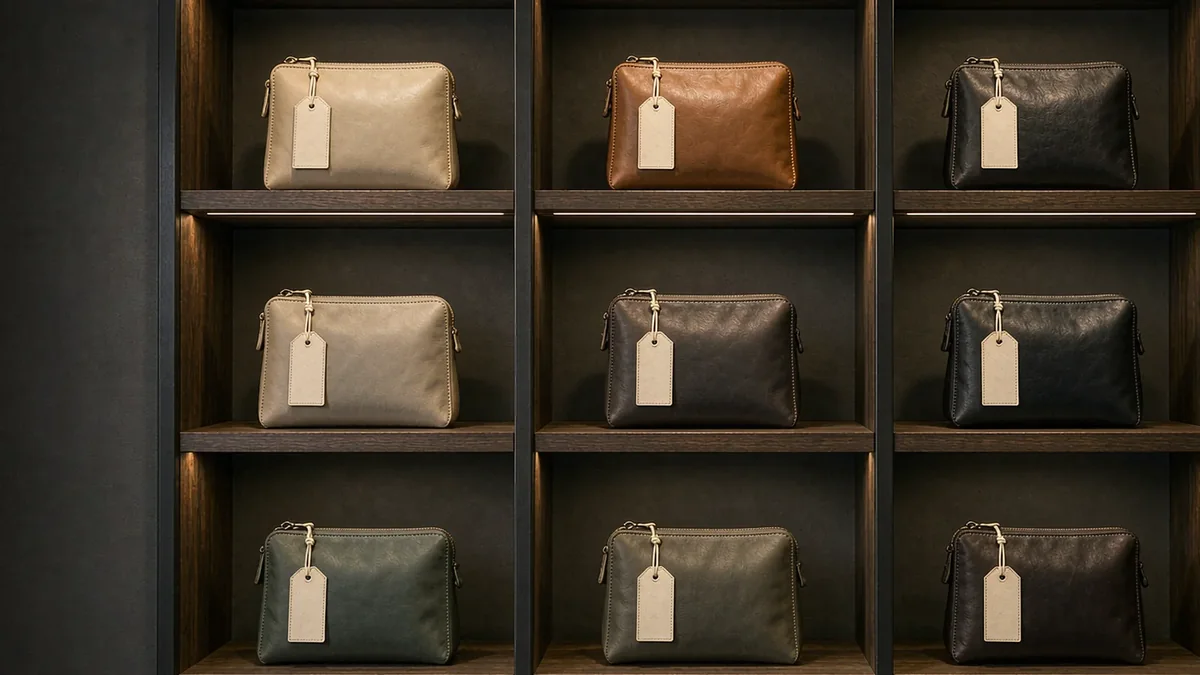 The Luxury Handbag Market: Buyer Behavior ExplainedLuxury bag buyer behavior explained: 4 gates a sample must pass, 900 g carry weight, 500 pc minimum, 6-10 working days of sampling and AQL 2.5 inspect
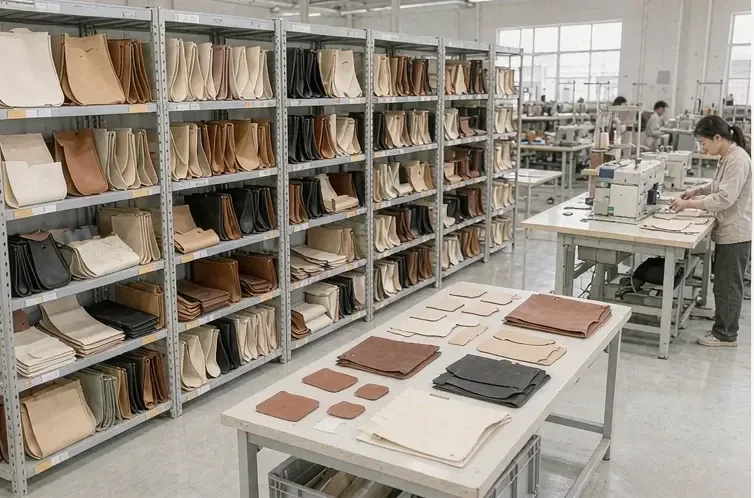 Sourcing Sustainable Luxury Bag MaterialsHow maisons source lower-impact calfskin, lining and hardware in 2026: 5 material routes, the audit evidence for each, and what 500 pc MOQ means.
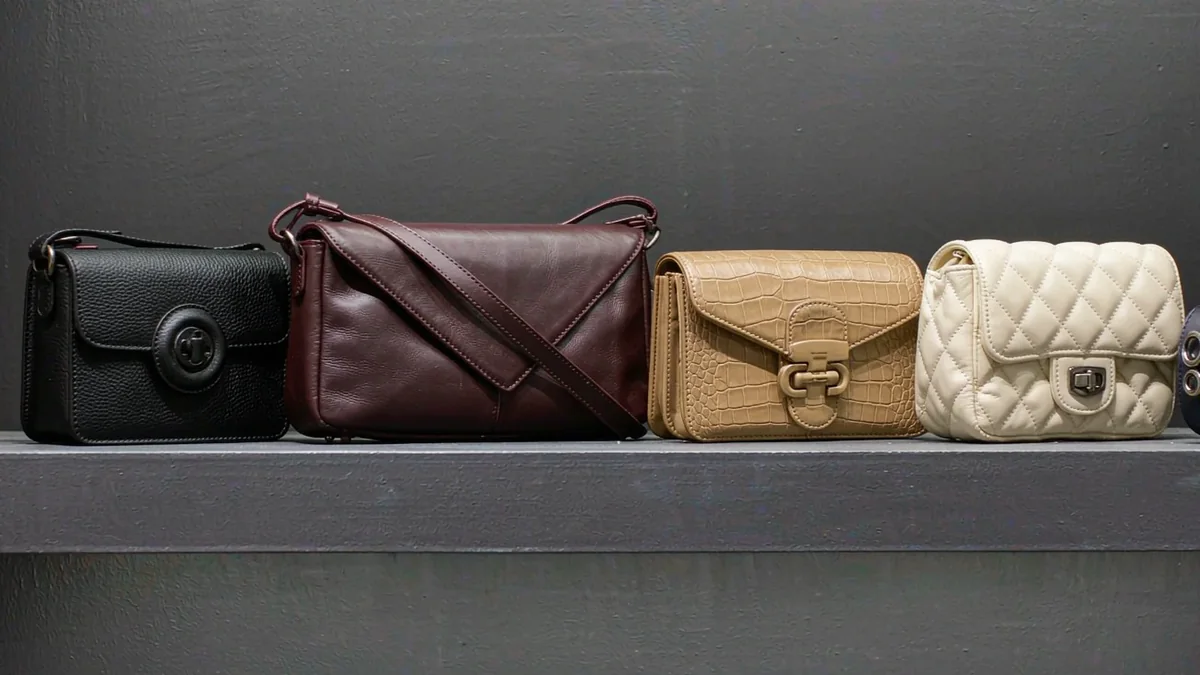 Quiet Luxury Bags: What It Means for BrandsQuiet luxury bags: 6 decisions for brands, identity inside at 40 x 25 mm, ±1.0 mm panels, ΔE 1.5 colour, 0.15-0.2 µm brushed hardware.
- Premium Handbag Interlining and Structuring MaterialsPremium bag interlining and structuring materials: 5 decision points, weights from 30 to 120 g/m², foam densities, board thickness and the fusing wind
 Nickel Free Hardware for Luxury Handbag BrandsNickel free hardware for handbag brands: the 0.2 µg/cm²/week REACH limit, EN 1811 testing, which finishes pass and the cost of alternatives.
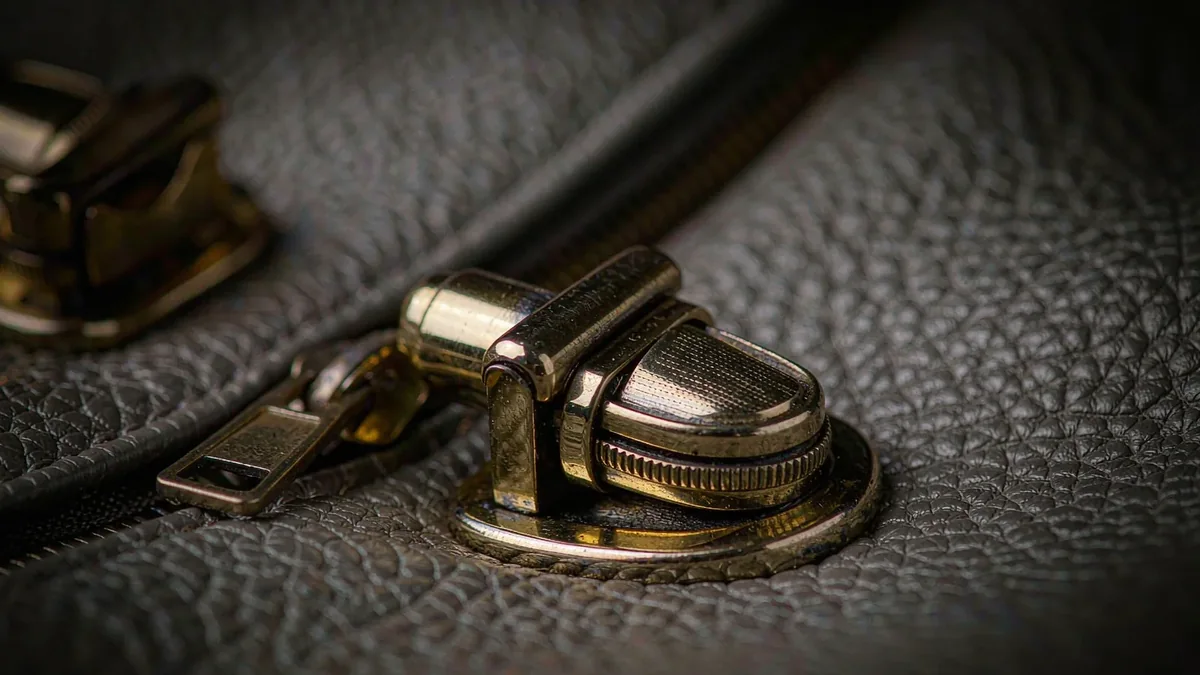
 Magnetic vs Turnlock Hardware on Luxury BagsMagnetic vs turnlock hardware on luxury bags: a 12-line comparison of pull force, engagement torque, piece cost, failure modes and card interference.
 Luxury Handbag Trends for 2026 Collections2026 luxury bag trends: 6 shifts with numbers, 890 g weight target, 480-560 mm crossbody drop, brushed hardware, 3 neutrals plus 1 accent.
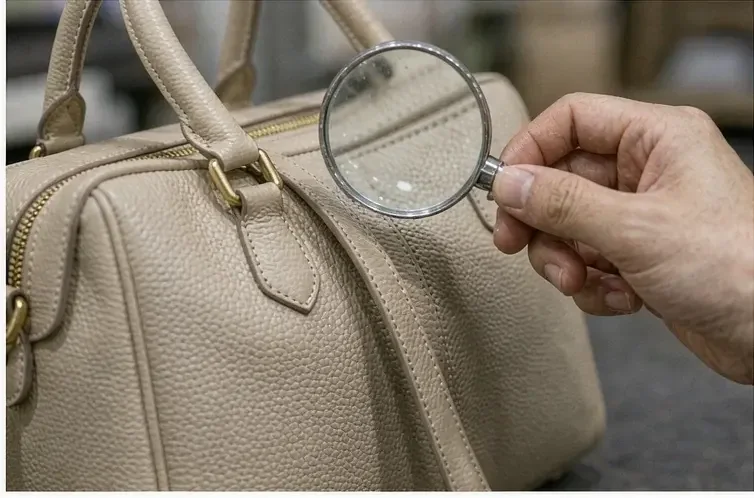 Luxury Handbag Stitch Density ExplainedStitch density explained for luxury handbags: 7, 9 and 11 stitches per inch, the 2.8 mm spacing, thread size and the 4 faults density causes.
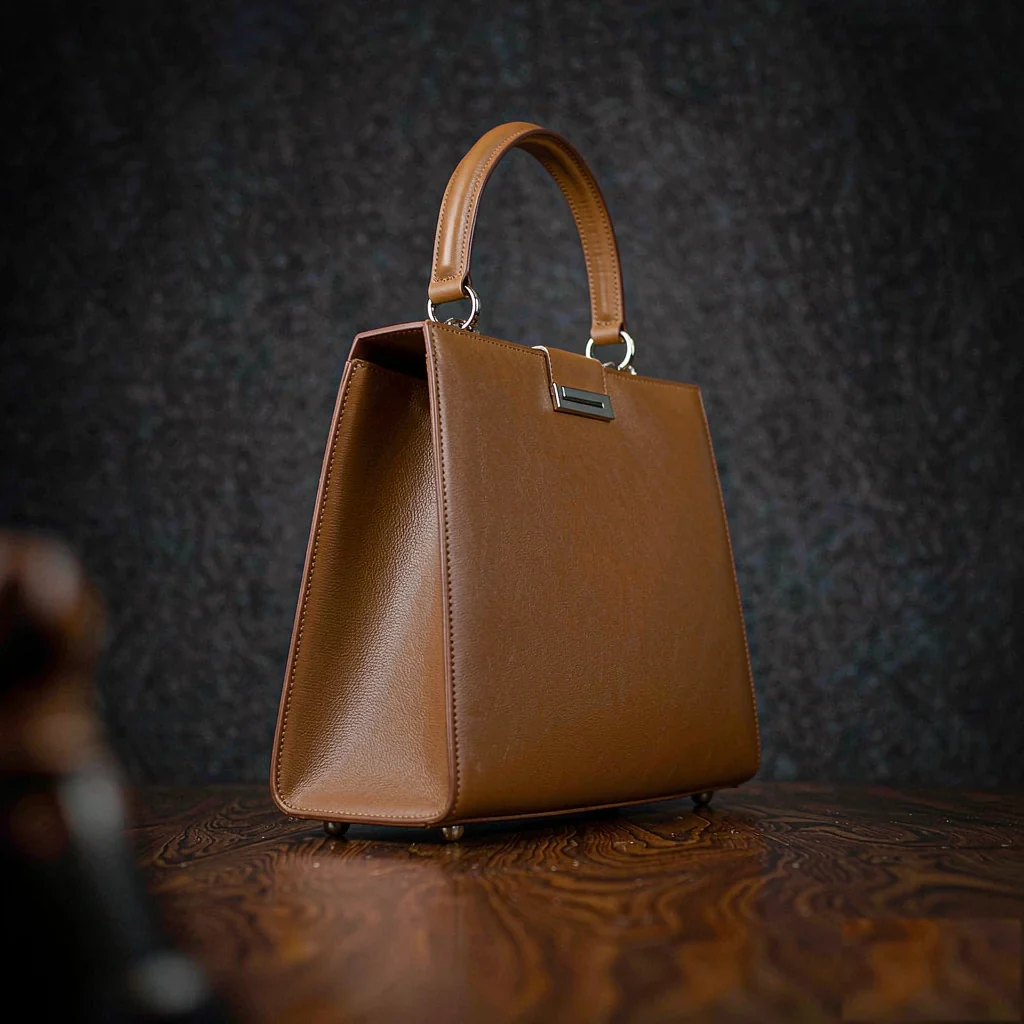 Luxury Handbag Silhouettes: How to Plan a CollectionHow to plan a luxury handbag collection: silhouette families, structure, hardware, sizing, 500 pc MOQ, 6-10 working days of sampling, 35-50 day bulk.
- Luxury Handbag Material Traceability ExplainedTrace calfskin, lining and hardware from lot to finished bag: the 4 documents and 3 lot records a luxury handbag programme should file before bulk.
- Luxury Handbag Material Palette Planning GuidePlan a luxury handbag palette in 6 steps: 3 leather tones, 2 hardware finishes, shade tolerance at ΔE 1.0, and how 500 pc MOQ splits across colourways
 Luxury Handbag Hardware Rust and Wear TestingHow luxury bag hardware rust and wear is tested: 48 h salt spray to ISO 9227, humidity exposure, abrasion cycles and the rating scale used.