Luxury Handbag Manufacturers: How to Evaluate Capability Before You Shortlist
How should a brand evaluate luxury handbag manufacturers before committing a season? The reliable answer is to test evidence rather than claims: production lines you can name, a sampling round you can time, quality documents you can read, material traceability you can verify, and commercial terms committed in writing. This page sets out the checks a designer brand, maison, boutique buyer or premium e-commerce team can run before shortlisting, and the order in which to run them. Every number below follows one locked baseline: MOQ 500 pcs per style and colourway, sampling in 6-10 working days, bulk production in 35-50 days, inspection at AQL 2.5 (ISO 2859-1), and FOB Xiamen as the default incoterm.
What Luxury Handbag Manufacturer Actually Means in a Brief
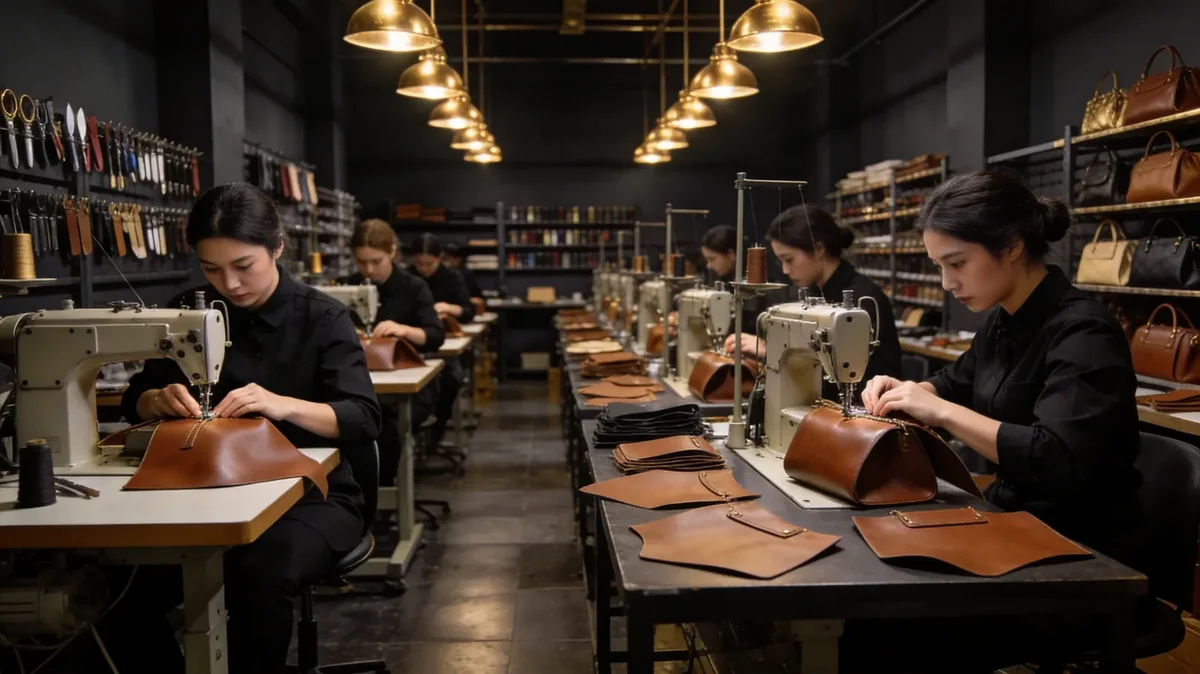
The phrase is used loosely, and that looseness costs buyers time. Three different commercial realities sit behind it. A factory owns and runs its own production lines, employs its own operators, and carries the compliance and capacity risk directly. A combined trading and manufacturing group may own some lines and place others, which is workable but needs disclosure. A sourcing and programme-management company does not present itself as a production house; it plans, briefs, monitors and defends the specification on the buyer's behalf, and works through validated partner facilities. Each can produce good bags. What differs is where the risk sits and who answers when something goes wrong.
Ask the question directly and listen to how it is answered. A facility will describe lines, shifts, operator counts and equipment. A group will describe which stages it controls and which it places. A programme-management partner will describe how it selects, audits and monitors the facilities it uses, and will name them. Vagueness at this first exchange is the single most predictive signal in the whole evaluation, because a later document is far easier to polish than a direct answer about who cuts and sews the bag.
The first question
- Ask who owns the cutting room, who runs the sewing lines, and who signs the final inspection release. Then ask for the same answer in writing. A precise reply naming facilities, lines and responsibilities is worth more than any certificate scan, because it can be checked.
Reading Real Production Capacity
Capacity is not a number on a slide; it is lines multiplied by shifts, adjusted for product complexity and for how much of the month is already committed. A facility with seven lines and roughly 200,000 pcs of monthly output sounds large until you learn that four of those lines are dedicated to one long-running programme. What a buyer needs is not headline capacity but available capacity in the window they care about, expressed against their own product rather than against a simpler one.
Ask for three figures and one date. How many lines run this product type. What monthly output those lines reach at your complexity. What share is already booked in your target window. And when the next open slot begins. A credible answer arrives with conditions attached, because honest capacity planning always does. A number offered without any qualification usually means the question was not really understood.
Why complexity changes the number matters. A soft, unlined tote and a structured, framed bag with turned edges and a lock consume very different amounts of bench time per unit, even on the same line. A facility quoting one monthly figure for every product is either simplifying for your benefit or does not track its own throughput by product family. Ask for the figure split by product type, and ask how seasonal peaks are absorbed. A partner who can explain how it protects an existing programme when a new one lands is describing a planning system, not just a factory floor.
| Question | What a useful answer contains | Warning sign |
|---|---|---|
| How many lines run this product type | A line count, a shift pattern, and the product categories each line normally handles | One total figure with no breakdown by product |
| What output those lines reach | Monthly pieces at your complexity, plus the simpler-product figure for comparison | Output stated only for the easiest product made |
| What is already booked | Percentage committed in your target production window, by month | A flat claim that capacity is always available |
| When the next slot opens | A dated window with the conditions that would hold it | An immediate yes with no reference to the calendar |
Quality Systems and What Certification Actually Proves
Certificates are evidence of a management system, not of a particular bag. BSCI and Sedex address social compliance in the workplace. ISO 9001 addresses documented quality management. ISO 14001 addresses environmental management. GRS addresses recycled content through a chain-of-custody route. LWG addresses tannery environmental performance. Each is useful, and none of them guarantees that the stitch density on your handle matches the approved sample. Use certificates to narrow the field, then use inspection evidence to choose.
The document that actually protects a buyer is the inspection report, and the scheme behind it. AQL 2.5 under ISO 2859-1 gives a lot-by-lot acceptance rule: lot size and inspection level set the sample size, and the acceptance quality limit sets the accept and reject numbers. It is a commercial reference, not a promise of zero defects, so critical items should still carry a zero-acceptance rule agreed in writing. Ask to see a redacted report from a comparable product rather than a certificate scan.
Sampling Capability Is the Fastest Honest Signal
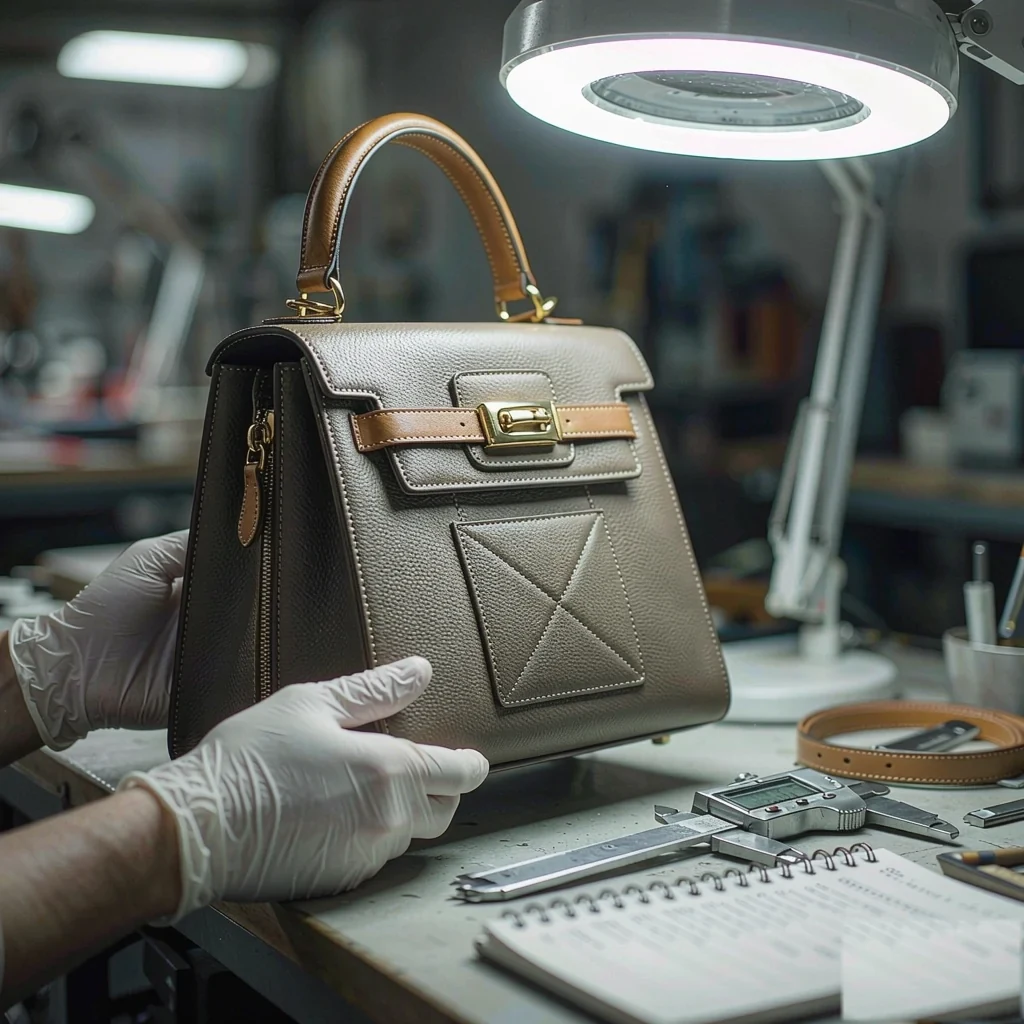
Sampling compresses the entire evaluation into a few weeks. A partner that can turn a brief into a measured, documented prototype quickly has pattern makers, material access, bench skill and a working approval process. One that cannot, does not. Time the round yourself: send a complete brief, note the date it is acknowledged, and note the date a physical sample arrives with measurements attached.
Judge the sample on more than appearance. It should arrive with a measurement sheet, the materials actually used identified by lot where relevant, and a note on what changed from the brief and why. Deviations are normal; undocumented deviations are not. Ask what the second round will correct and whether those corrections are included or chargeable. The answer reveals how the commercial relationship will run once the stakes are higher.
- MOQ
- 500 pcs per style / colourway
- Sampling window
- 6-10 working days (12-15 for complex builds)
- Bulk production
- 35-50 days
- Final inspection
- AQL 2.5 (ISO 2859-1)
- Incoterm
- FOB Xiamen (CIF / DDP available)
Communication, Documentation and Programme Discipline
Most failed programmes do not fail in the sewing room; they fail in the gap between what the buyer meant and what the brief said. Evaluate how a candidate handles that gap in the first two weeks. Do they restate your brief back to you in their own words. Do they flag an ambiguity before cutting rather than after. Do they name one person who owns the programme and can answer without a relay.
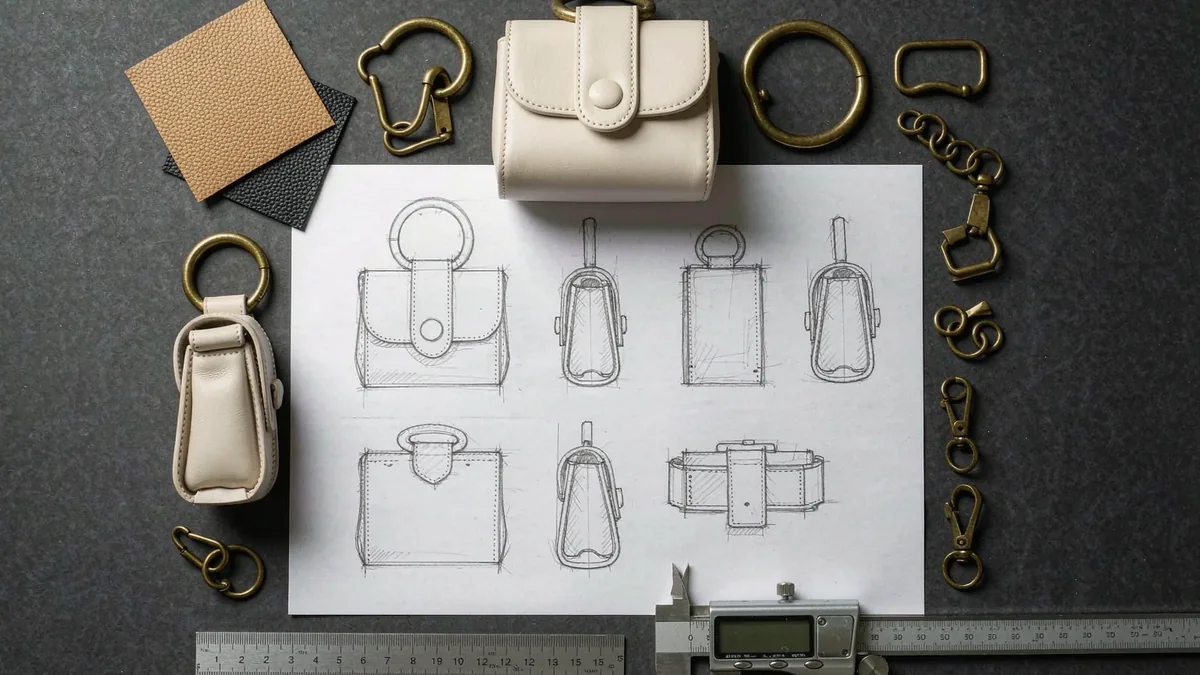
Ask what documents exist at each stage. A disciplined partner can name the technical pack, the material approval record, the pre-production sample sign-off, the in-process check points, the final inspection report and the packing list, and can say who signs each. Ask to see a blank template of the inspection report. A partner who has never had to produce one will struggle to describe it in detail.
Compliance and Testing Evidence for Your Target Market
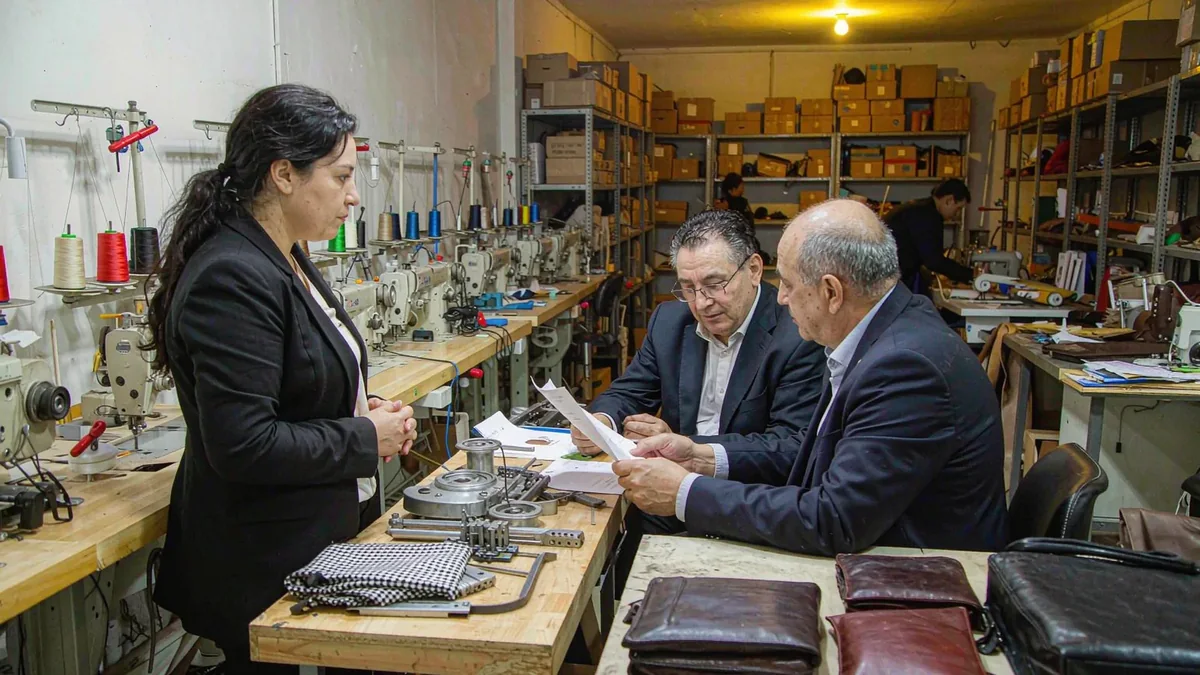
Compliance is destination-specific, and the useful question is always which market and which product. REACH governs chemical substances placed on the European market and carries restrictions that affect coatings, adhesives and finishes. California Proposition 65 requires a warning where a listed substance is present above a threshold, which is why many buyers test rather than assume. CPSIA sets limits for children's products in the United States. Testing should be scoped to the destination, the material and the age group, then repeated when a material or finish changes.
Ask who holds the test reports, how recent they are, and whether they cover the materials in your specification rather than a generic sample. A report for a similar leather from a different tannery is not evidence for yours. Where a claim matters commercially, such as recycled content, ask for the transaction certificate that links the claim to the lot, because a chain-of-custody claim with no document behind it will not survive a retailer review.
Material Sourcing and Traceability
Material is where luxury programmes are won or lost, and it is also where claims are easiest to inflate. Ask where the leather comes from, which tannery, and whether that tannery holds an environmental audit such as LWG. Ask the same of hardware: plating method, base metal, and whether the finish has been tested for abrasion and corrosion. A precise answer names suppliers and processes. An evasive one stays at the level of material categories.
Traceability is a documentation habit, not a slogan. For each style a buyer should be able to identify the hide or fabric lot, the hardware lot, the thread and adhesive references, and the production batch that used them. That record is what allows a complaint to be investigated eighteen months later instead of guessed at. Ask how far back the records go and in what form they are kept.
Approval discipline around materials is where programmes quietly drift. A tannery lot runs out, a substitute is offered, and the change is accepted verbally because the schedule is tight. Six weeks later the shade or the hand feels different and nobody can say when it changed. Insist that any substitution arrives as a written request with a sample, a reason and a comparison against the approved reference, and that it is signed before it enters production.
Commercial Terms: MOQ, Cost Structure and What Moves Price
Minimum order quantity exists because line changeover, pattern setup, material minimums and operator learning all cost money before the first good piece is finished. MOQ 500 pcs per style and colourway is the working baseline here, and it is worth understanding why it is set per colourway rather than per style: a colour change means new material lots, new thread, new setting-up and a separate approval round.
Ask what actually moves the price, and expect a specific list. Material choice and grade, hardware specification, construction complexity, stitch density, finishing operations, packaging, testing scope and order quantity all move it. Ask which two decisions freeze the price, because in most programmes it is material approval and pre-production sample sign-off. After those, changes are chargeable, and knowing where that line sits prevents the most common source of friction.
Red Flags That Surface in the First Two Weeks
Some problems announce themselves early if you know what to listen for. These are the ones worth acting on immediately rather than hoping they resolve on their own.
- Capacity described only as a single headline number, with no breakdown by line, shift or product type.
- Certificates supplied readily, but no inspection report from a comparable product.
- A sampling quote with no stated window, or a window that shortens without explanation once you commit.
- Materials described by category only, with no tannery, plating method or supplier named.
- No single named owner for the programme, or answers that arrive through a relay of different people.
- Reluctance to put commercial terms, tolerances or change rules in writing before the first payment.
- A price that moves without a documented change to the specification behind it.
How to Run a Structured Evaluation
Shortlisting works best as a scored pass rather than an impression. Give every candidate the same brief, the same questions and the same deadline, then score the answers. Weight capability and sampling evidence heaviest, because those two predict downstream experience better than anything a candidate says about itself.
| Check | What you ask for | Weight |
|---|---|---|
| Capability fit | Lines on this product type, monthly output at your complexity, booked share in your window | High |
| Sampling evidence | A timed round with measurements, material identification and documented deviations | High |
| Quality evidence | A redacted inspection report at AQL 2.5 (ISO 2859-1) on a comparable product | High |
| Compliance scope | Test reports matched to your material lot, finish and destination market | Medium |
| Commercial clarity | Written MOQ, price drivers, and the two decisions that freeze the price | Medium |
| Communication | One named owner, a restated brief, and response time observed over two weeks | Medium |
Onboarding: From First Brief to First Bulk Order
A first programme has a predictable shape. The brief and technical pack are reviewed, material and hardware lots are reserved, patterns are drafted, a first sample is cut and assembled, measurements are checked against the specification, corrections are made in a second round, a pre-production sample is approved, materials are released, bulk begins with in-process checks, and the finished lot is inspected before release. Knowing the gates lets a buyer plan backwards from a launch date.
- Gate 1: brief and technical pack reviewed; material and hardware lots reserved.
- Gate 2: pattern drafted, first cut and bench assembly; sample measured against the specification.
- Gate 3: corrections applied in a second sampling round; deviations documented and signed off.
- Gate 4: pre-production sample approved, which is where the price is normally frozen.
- Gate 5: bulk production begins with in-process check points at defined operations.
- Gate 6: final lot inspection at AQL 2.5 (ISO 2859-1), then packing and release.
Building a Relationship That Survives Repeat Seasons
The value of a good manufacturing relationship compounds. A partner who has made your style once holds the patterns, the tooling, the approved material references, the tolerance history and the inspection record. The second season starts faster and runs tighter because the specification no longer has to be discovered. That is why the evaluation should ask not only whether a first order will go well, but whether a fifth one will.
Protect that value by keeping records on your own side as well. Retain the approved sample, the signed specification, the material references and the inspection report for every season. When a style returns, those documents are what allow a repeat to be a repeat rather than a renegotiation. Programmes that treat each season as a fresh negotiation lose the compounding benefit and pay for the same learning twice.
Plan the exit as carefully as the entry. Tooling, patterns and moulds should be documented as yours from the outset, with the terms of release stated in writing, so that changing partner later becomes a logistics problem rather than a legal one. Ask early who owns the patterns and what happens to them if the relationship ends. A partner confident in its own service answers plainly, and the question is standard practice in mature sourcing programmes rather than a signal of distrust.
Test, then trust
Give every candidate the same brief and the same deadline, and score the answers rather than the impressions.
Time the sampling round
A measured sample that arrives on schedule with documented deviations tells you more than any certificate.
Match documents to lots
Test reports must cover your material, your finish and your destination market, not a generic sample.
Keep your own record
Retain the approved sample, signed specification and inspection report so a repeat season starts where the last ended.
Shortlist with evidence, not impressions
Send your product category, target market, material direction, quantity and launch window. Request a capability and sampling assessment.
Frequently Asked Questions
What does a luxury handbag manufacturer do?
A luxury handbag manufacturer converts an approved design into repeatable production: it sources or receives materials, cuts panels, assembles and finishes the bag, inspects the lot, and packs for export. Some own their lines, some place stages with partner facilities, and some act as programme managers on the brand's behalf.
How do I verify a manufacturer's production capacity?
Ask for capacity by line, shift and product type, then ask what share is already booked in your target window and when the next open slot begins. A useful answer arrives with conditions attached. A single headline number with no breakdown usually means the question was not understood.
What MOQ should I expect for luxury handbags?
The working baseline is 500 pcs per style and colourway. It is set per colourway because a colour change brings new material lots, new thread, fresh setting-up and a separate approval round, all of which cost money before the first good piece is finished.
How long does sampling take?
Sampling runs 6-10 working days for standard builds and 12-15 for complex construction. Time the round yourself: note when the brief is acknowledged and when a physical sample arrives with a measurement sheet and the materials used identified by lot.
What is AQL 2.5 and why does it matter?
AQL 2.5 is an acceptance quality limit used with ISO 2859-1 sampling schemes for lot-by-lot inspection by attributes. Lot size and inspection level set the sample size, while the AQL sets accept and reject numbers. It is a commercial reference, not a zero-defect guarantee.
Which certifications should a handbag manufacturer hold?
BSCI and Sedex cover social compliance in the workplace, ISO 9001 covers documented quality management, ISO 14001 covers environmental management, GRS covers recycled content through chain-of-custody, and LWG covers tannery environmental performance. Use certificates to narrow the field, then choose on inspection evidence, because none of them guarantees your bag matches the approved sample.
How do I check material traceability?
Ask which tannery supplied the leather, what plating method and base metal the hardware uses, and whether the finish has been tested for abrasion and corrosion. Then confirm records let you identify the hide or fabric lot, hardware lot and production batch for each style.
What compliance testing applies to the EU and the US?
REACH governs chemical substances placed on the European market. California Proposition 65 requires a warning where a listed substance exceeds a threshold. CPSIA sets limits for children's products in the United States. Testing should be scoped to destination, material and age group.
Why is MOQ set per colourway rather than per style?
Because a colour change is a new setup. It brings new material lots, new thread, fresh machine setting-up and a separate approval round. The economics of a 500-piece run depend on that setup being amortised across one colourway rather than split across several.
What should a sampling round include?
A physical sample, a measurement sheet checked against the specification, the materials actually used identified by lot where relevant, and a written note on what changed from the brief and why. Deviations are normal; undocumented deviations are a warning sign.
How do I compare two shortlisted manufacturers?
Give both candidates the same brief, the same questions and the same deadline, then score the answers against a fixed sheet. Weight capability and sampling evidence heaviest, because those two predict downstream experience better than anything a candidate says about itself. A scored pass also makes the decision defensible internally.
What are the biggest red flags when shortlisting?
Capacity given as one headline number, certificates without any inspection report, a sampling quote with no stated window, materials described only by category, no single named owner, reluctance to put terms in writing, and a price that moves without a documented specification change.
How long does bulk production take?
Bulk production runs 35-50 days from material release to inspection-ready goods, depending on construction complexity and order size. Plan backwards from the launch date through the gates: brief review, sampling, pre-production approval, bulk, and final lot inspection at AQL 2.5.
People Also Ask
How do I find a reliable luxury handbag manufacturer?
Start with capability and sampling evidence rather than certificates. Ask who owns the cutting room and sewing lines, request capacity by line and product type, then run one timed sampling round with a complete brief. Score candidates against identical questions.
is a production partner audit worth doing before the first order?
Yes, for programmes above a single drop. An audit confirms line count, operator conditions and documented processes, and it gives you a baseline to compare against later. For smaller first orders, a timed sampling round and a redacted inspection report achieve much of the same result at lower cost.
Should I use one manufacturer or split across two?
Splitting reduces concentration risk but doubles the specification and approval work, and it usually means paying for the same learning twice. Most brands concentrate until a style proves stable at volume, then add a second source for the proven style only.
What should a technical pack contain?
Scaled drawings with front, side, base and interior views, finished dimensions in millimetres with tolerances, a material and hardware schedule, construction sequence, stitch density, colour references, and the compliance requirements of the destination market.
How is a repeat season different from the first?
A repeat starts with patterns, tooling, approved material references, tolerance history and inspection records already in place, so sampling is shorter and the specification does not have to be rediscovered. Retain your own copies of those documents to keep that advantage.
Sources and further reading
Every figure on this page is either our own programme data or attributed below. Open the originals before you write them into a specification.
- ISO 2859-1 Sampling procedures for inspection by attributesInternational Organization for Standardization Official overview of AQL-indexed sampling schemes and switching rules for lot-by-lot inspection.
- ISO 9001 Quality management systemsInternational Organization for Standardization Reference for what a documented quality management system covers, and its limits as a product guarantee.
- ISO 14001 Environmental management systemsInternational Organization for Standardization Framework used when assessing a facility's environmental management claims.
- amfori BSCI social compliance systemamfori Explains the scope of BSCI auditing in supply chains and what an audit result does and does not cover.
- Sedex and SMETA ethical supply chain auditingSedex Background on SMETA audit scope, commonly requested alongside BSCI in bag sourcing.
- REACH regulation overviewEuropean Chemicals Agency Authoritative source on substance restrictions affecting coatings, adhesives and finishes placed on the EU market.
- CPSIA business guidanceU.S. Consumer Product Safety Commission Official guidance on limits and testing duties for children's products in the United States.
- Proposition 65 in plain languageCalifornia Office of Environmental Health Hazard Assessment Explains warning thresholds and why buyers test rather than assume for the California market.
- Leather Working Group environmental auditLeather Working Group Reference for assessing tannery environmental performance when tracing leather origin.
- Global Recycled StandardTextile Exchange Chain-of-custody requirements behind recycled content claims and transaction certificates.