Designer Handbag Production: From Studio Sketch to a Repeatable Luxury Run
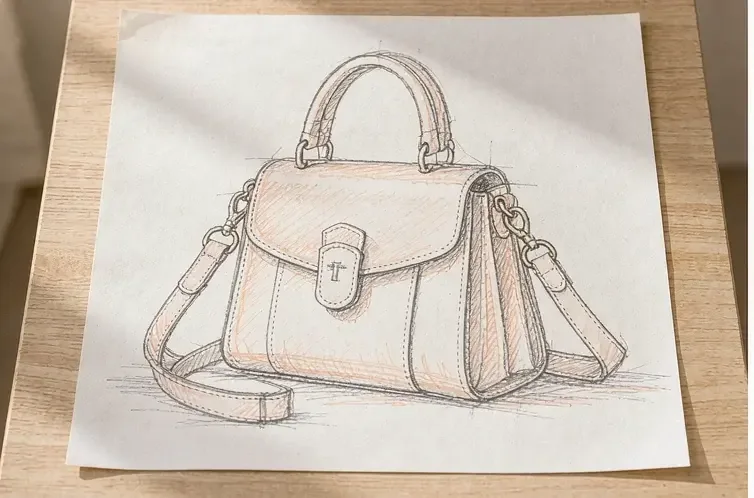
Designer handbag production is the staged conversion of a studio sketch into a repeatable luxury run: tech pack, two sampling rounds in 6-10 working days, material and hardware approval, then 35-50 days of bulk production closed by AQL 2.5 (ISO 2859-1) inspection. The minimum order is 500 pcs per style and colourway, shipped FOB Xiamen. This page is the hub for that sequence: every gate, every tolerance, and the documents a brand team signs off before the first hide is cut.
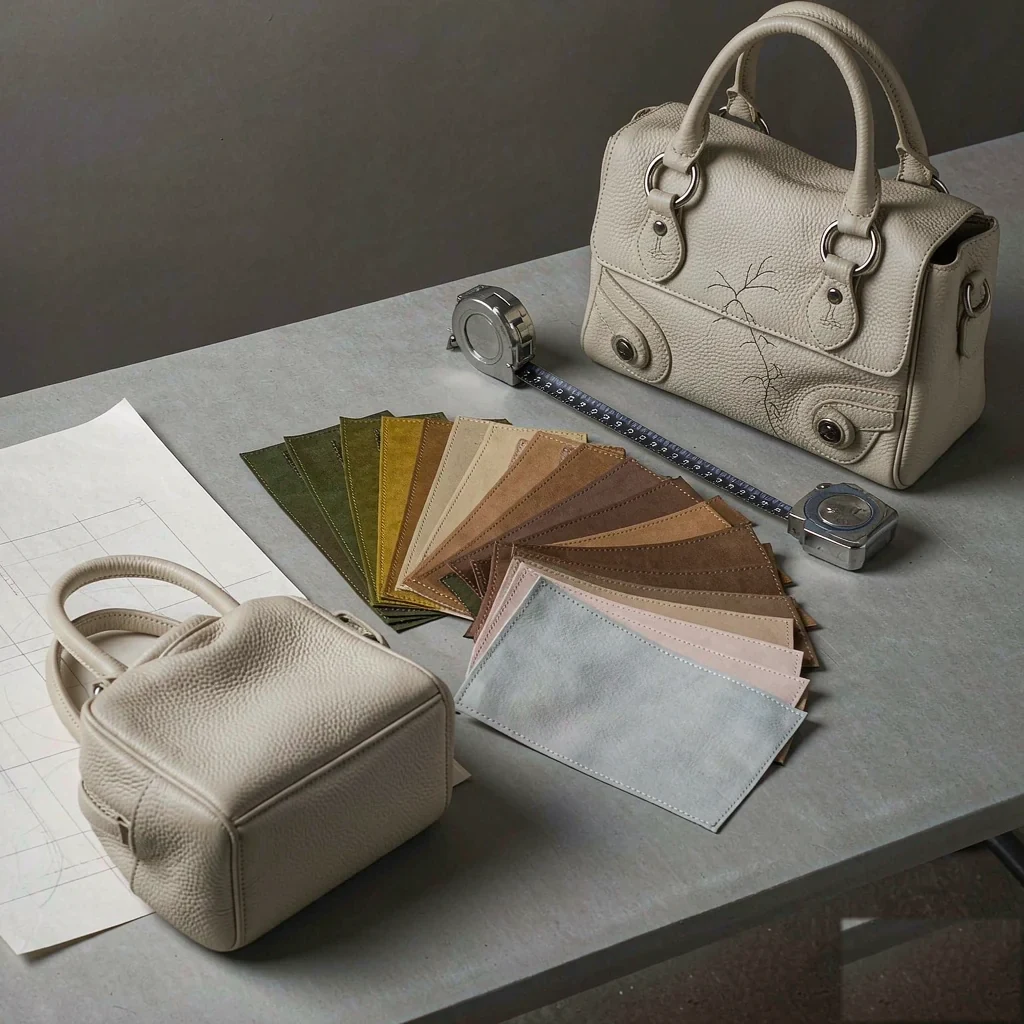
What Designer Handbag Production Actually Covers
Designer handbag production covers every step between an approved studio sketch and a sealed carton: pattern making, material booking, sampling, grading, bulk cutting, bench assembly, hand finishing, inspection, packing and dispatch. The output is not a one-off piece but a repeatable run in which unit 500 must read the same as the approved sample.
That repeatability is the whole discipline. A couture atelier can spend forty hours on a single frame bag; a production programme has to hold the same silhouette, the same edge paint depth and the same hardware alignment across a full colourway, then repeat it next season from the same patterns. Everything on this page exists to protect that consistency.
Which Brands the Programme Fits
The programme is written for teams that sell on design and finish rather than volume. Six profiles come up most often, and each arrives with a different first question.
Emerging designer labels
A first or second collection, usually 2-4 silhouettes and 2-3 colourways, needing pattern help and honest cost guidance before a launch date is published.
Established maisons
An existing house extending into a new category or re-issuing an archive shape, with its own tech packs and a fixed tolerance standard to match.
Boutique retail own-brand
A curated store group building a house line that has to sit credibly beside the luxury brands already on its shelves.
Premium e-commerce lines
Digital-first labels that need fast re-order cycles, clean photography samples and packaging that survives parcel transit.
Fashion graduates
A graduation capsule of one strong silhouette, where the brief is as much about teaching the tech pack as making the bags.
Capsule and limited drops
Small, dated releases where numbering, special packaging and a hard launch date matter more than unit cost.
The Pre-Production Gate: Brief and Tech Pack
No run should start before the brief and the tech pack are signed off. A complete tech pack removes interpretation from the bench: it states dimensions, materials by reference, hardware codes, stitch density, lining, logo treatment, packing and target cost. Brands that skip this step lose two to three weeks to avoidable sample revisions.
- Scaled drawings of the silhouette with front, side, base and interior views.
- Finished dimensions in millimetres plus a tolerance band, typically plus or minus 1 mm on panel edges.
- Material references: leather type, finish, thickness in mm, temper and colour reference.
- Hardware schedule with codes, base metal, plating thickness and finish name.
- Stitch specification: 8-9 stitches per inch with 0.45 mm bonded thread.
- Lining and interlining: fabric reference, weight and interlining thickness such as 0.8 mm.
- Branding: logo method, position, foil colour and depth of strike.
- Packing specification: dust bag, box, tissue, care card and carton marking.
Two of our cluster guides go deeper on this gate: how to prepare a designer handbag tech pack walks the document section by section, and what to include in a designer handbag brief covers the commercial half that sits around it.
Sampling: Two Rounds, 6-10 Working Days
A first prototype is delivered in 6-10 working days from tech pack sign-off; structurally complex builds with frames, exotic panels or custom-cut hardware need 12-15 working days. Two rounds is the normal path: the first proves the pattern, the second proves the finish and the cost.
- Prototype sample
- 6-10 working days from approved tech pack
- Complex build
- 12-15 working days (frame bag, exotic panel, custom hardware)
- Revision round
- 5-8 working days after consolidated comments
- Colour approval
- 2-3 working days under D65 light box
- Pre-production sample
- 3-5 working days, cut from bulk materials
Treat the pre-production sample as the contract. It is cut from bulk material on bulk tooling, so its hand, its stitch line and its hardware tone are what the carton will contain. Approving a prototype instead of a pre-production sample is the single most common source of disappointment at delivery.
Materials and Hardware Lock the Cost
Cost is decided at material booking, not at the bench. A structured top-handle bag in 1.2-1.4 mm calfskin behaves differently in cutting yield and in finishing hours than the same shape in soft lambskin; a brass turn-lock with 0.15-0.3 micron plating costs several times a zamac casting of the same silhouette. Change the material after sampling and you change the price, the lead time and the weight.
Book early, book once, and book with the trimming: zips in #5 gauge, feet, magnets, interlining at 0.8 mm, and the exact lining reference. The full specification logic lives on luxury materials and hardware, which covers bovine grades, exotic skins and CITES paperwork, and plating systems.
Bulk Production: 35-50 Days on the Bench
Bulk runs take 35-50 days from material readiness to carton seal. The spread is driven by construction: a soft hobo with a single lining passes faster than a framed bag with hand-set hardware, and any hand-finished edge work adds days that cannot be compressed without visible damage to quality.
| Stage | Working days | What happens | Document issued |
|---|---|---|---|
| Material booking and incoming check | 5-8 | Hides, linings, interlining and hardware received, shade-banded and released | Incoming material report |
| Cutting | 3-5 | Panels cut to pattern, shade-matched per unit, defects marked out | Cutting record |
| Skiving and preparation | 4-6 | Edges skived, interlining applied, reinforcement set, panels paired | Preparation log |
| Assembly | 12-18 | Linings closed, body assembled, handles and straps set, hardware mounted | Line sheet |
| Finishing | 5-7 | Three edge paint coats with sanding between, final pressing, hardware polish | Finishing checklist |
| Inspection and packing | 4-6 | AQL 2.5 (ISO 2859-1) sampling, then packing to the approved spec | Inspection report, packing list |
Seven production lines run in parallel at our validated partner workshop, with capacity of about 200,000 pcs per month, so a confirmed slot holds its date. The schedule above assumes materials arrive on the booked date; a late trim delivery moves the whole chain to the right.
Finishing Tolerances That Separate Luxury From Ordinary
Luxury is measurable. The standards below are written into the tech pack and checked on the bench, not left to the judgement of whoever happens to be on the line that week.
- Stitch density held at 8-9 stitches per inch, with no skipped or doubled stitches on visible panels.
- Thread at 0.45 mm bonded filament, colour-matched to the leather rather than to the lining.
- Edge paint applied in three coats, sanded between coats, with no ridges at the fold.
- Panel and piping alignment within plus or minus 1 mm across the full silhouette.
- Hardware set square to the panel, with turn-locks closing under light finger pressure only.
- Base and feet flat on a level surface, with no rock when the bag is set down empty.
Inspection Under AQL 2.5 (ISO 2859-1)
Pre-shipment inspection runs to AQL 2.5 under ISO 2859-1, the sampling standard that defines how many units are drawn from a lot and how many defects are acceptable before the lot is rejected. Buyers may appoint a third-party inspector instead of, or in addition to, our own team; the result is documented on a report with photographs before release.
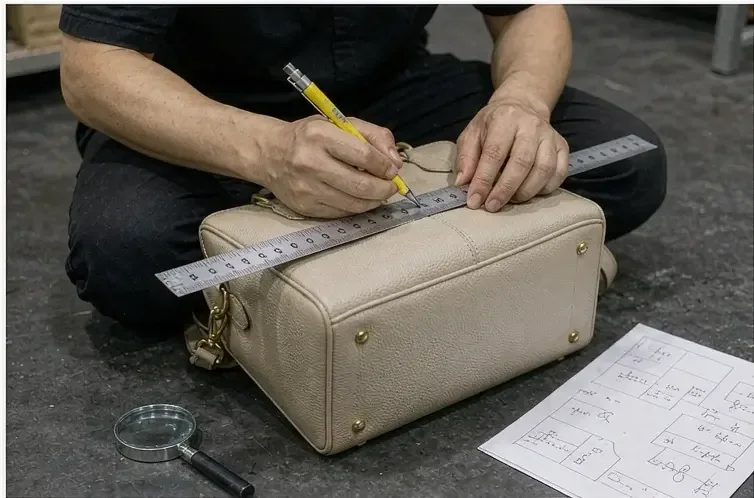
Critical defects are zero-tolerance regardless of the sampling table: broken hardware, open seams, wrong colour and wrong branding. Major defects such as visible shade variation inside one unit are counted against the AQL; minor defects such as a light handling mark on the lining are logged and trended across runs.
MOQ, Lead Time and Commercial Terms
The commercial frame is fixed and published, because a designer brand needs to price a collection before it commits to a season. These are the same figures quoted to every buyer.
- Minimum order
- 500 pcs per style and colourway
- Sampling
- 6-10 working days (complex builds 12-15 working days)
- Bulk production
- 35-50 days from material readiness
- Inspection
- AQL 2.5 (ISO 2859-1); third-party inspection optional
- Trade terms
- FOB Xiamen, with CIF and DDP available on request
- Capacity
- 7 production lines, about 200,000 pcs per month
- Experience
- Export programmes since 2014
- Compliance
- BSCI, Sedex, REACH, Prop 65, CPSIA, GRS, LWG-rated tanneries
What to confirm before you sign
- The pre-production sample, not the prototype, is the reference for bulk acceptance.
- Every colourway counts as its own 500 pcs minimum, so plan the palette before booking.
- Hardware lead time is booked with the material, not after the sample is approved.
- Third-party inspection dates are reserved at least five working days before packing.
- Re-orders re-use the existing patterns, cutting sampling time to a single confirmation round.
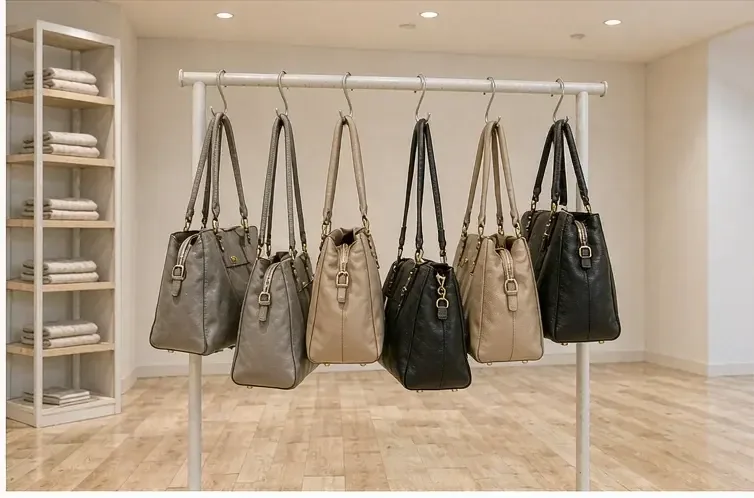
Where Runs Slip: Six Delays to Plan Around
Most late deliveries trace back to five or six predictable causes. Each has a control that costs nothing if it is applied at the start.
- Late hardware: custom castings and plated finishes run longer than leather. Book them with the hides.
- Colour drift: approving a lab dip on screen rather than under D65 light pushes a full re-dip into the schedule.
- Late comments: comments sent in three waves instead of one consolidated list add a revision round each time.
- Exotic paperwork: CITES re-export documents for exotic skins are applied for per shipment, not per style.
- Artwork changes: a logo strike changed after tooling is cut means new tooling and a new approval cycle.
- Freight assumption: assuming FOB space exists in peak season without a booking loses the vessel, not the bag.
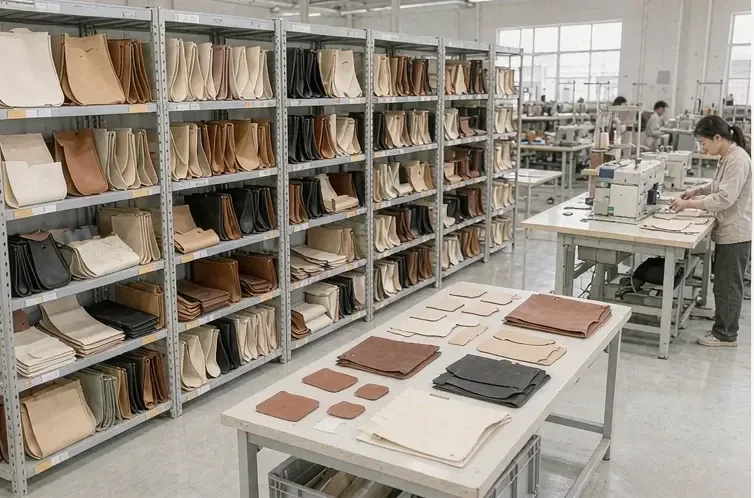
Design Protection and Pattern Ownership
A design is commercial property, and a serious programme treats it that way. Mutual non-disclosure is signed before drawings move, patterns and tooling created for a brand are held for that brand alone, and sample units are never shown, photographed or sold onward. If your own contract template needs to be used instead, send it with the brief.
For brands new to this, designer handbag production NDA and design protection sets out what a workable agreement covers, and how designer brands choose handbag production partners explains how to test that discipline before placing an order.
How to Start a Run
Send a sketch, a reference image or an existing sample with your target quantity, colourway split and launch date. You get back a tech pack review, a sampling timetable and a costed material plan. Nothing is booked until the tech pack and the pre-production sample are approved, so the first stage costs you a document review rather than a commitment.
Start a designer handbag run
Send your sketch, tech pack or reference sample with target quantity and launch date. You receive a sampling timetable and a costed material plan within two working days.
Frequently Asked Questions
What is designer handbag production?
Designer handbag production is the staged conversion of an approved studio sketch into a repeatable luxury run. It covers pattern making, material booking, sampling, bulk cutting, bench assembly, hand finishing, inspection and packing. The test of the process is consistency: the five hundredth unit must read the same as the approved pre-production sample in shape, colour and hand.
How long does designer handbag production take?
Allow 6-10 working days for the first prototype after the tech pack is approved, 12-15 working days for complex builds, then 35-50 days of bulk production from material readiness to carton seal. Freight is additional and depends on the service you book. Re-orders using existing patterns skip most of the sampling stage entirely.
What is the minimum order quantity for a designer run?
The minimum is 500 pcs per style and colourway. Each colourway counts separately, so a three-colour launch of one silhouette is 1,500 units in total. The minimum exists because cutting, tooling, shade banding and line set-up carry fixed costs that do not fall with quantity below that point.
How many sampling rounds does a new design need?
Two rounds is normal. The first prototype proves the pattern and the proportions; the second proves the finish, the hardware tone and the cost. Complex constructions with frames, exotic panels or custom-cut hardware sometimes need a third round, which adds 5-8 working days and should be planned into the calendar at the start.
What should a designer handbag tech pack include?
A usable tech pack states scaled drawings, finished dimensions with tolerance, material references with thickness and temper, a hardware schedule with codes and plating thickness, stitch density, lining and interlining references, branding method and position, packing specification and target cost. Without those, the bench has to guess, and every guess becomes a revision.
Can an emerging label start below 500 pieces?
The published minimum is 500 pcs per style and colourway, and it holds for new labels as well as established houses. A first collection can still be small: one silhouette in one colourway at 500 units is a realistic launch, and re-orders of the same style repeat without a new minimum on the pattern work.
Who owns the patterns and tooling after a run?
Patterns, cutting dies and tooling created for a brand are held for that brand and are not used for anyone else. A mutual non-disclosure agreement is signed before drawings move. Sample units are not shown or sold onward. If your own contract template is preferred, send it with the brief and it will be used instead.
How is quality checked before shipment?
Pre-shipment inspection runs to AQL 2.5 under ISO 2859-1, the sampling standard that sets the number of units drawn and the acceptable defect count. Critical defects such as broken hardware, open seams or wrong branding are zero tolerance. A third-party inspector can be appointed instead of, or alongside, our own team.
What causes the most common delays in designer handbag production?
Late hardware is the leading cause, because plated castings run longer than leather and are often booked too late. The rest are colour drift from screen approvals instead of D65 light box checks, comments sent in waves rather than one consolidated list, exotic skin paperwork applied for too late, artwork changes after tooling, and freight booked after packing.
How much does a designer handbag run cost?
Unit cost is driven by material, hardware, construction hours and finishing, not by a fixed list. As a worked reference, a plated brass turn-lock set at USD 4.80 per unit moves the landed cost of a mid-size bag noticeably, which is why hardware is specified in the tech pack rather than chosen on the bench. A costed material plan is issued before sampling.
Which trade terms apply to designer handbag orders?
Standard terms are FOB Xiamen, with CIF and DDP available on request. Under FOB the buyer books and pays the main carriage, and risk passes at the port of loading. Confirm the term in the tech pack stage, because it changes the packing specification, the documentation set and who is responsible for insurance in transit.
Can exotic leather be used in a designer handbag run?
Yes, with documentation. Exotic skins require CITES paperwork issued per shipment and proof of legal origin from the tannery, and several markets restrict which species may be imported. Expect a longer material booking and a higher unit cost. The full requirements are set out on our luxury materials page.
Should an emerging label plan its first run around one style?
Usually yes. One well-engineered style at MOQ 500 pcs teaches the whole cycle - tech pack, sampling in 6-10 working days, bulk in 35-50 days and inspection to AQL 2.5 - without multiplying development fees across several shapes. Once the platform sells, colourways and variants can be added using decisions already paid for.
People Also Ask
How do I turn a handbag sketch into a production sample?
Send scaled drawings, dimensions and material references as a tech pack. The pattern is drafted, materials are booked, and a prototype is delivered in 6-10 working days for comment.
Why does a designer bag need a pre-production sample?
The pre-production sample is cut from bulk material on bulk tooling, so its hand, stitch and hardware tone match the delivered carton. A prototype cut from substituted material does not.
What is AQL 2.5 in handbag inspection?
AQL 2.5 is an acceptance quality limit under ISO 2859-1. It sets how many units are drawn from a lot and how many minor and major defects are tolerated before the lot fails.
Can I re-order a designer bag without re-sampling?
Yes. Re-orders reuse the approved patterns and tooling, so sampling drops to a single confirmation round of 3-5 working days before bulk is booked.
How early should hardware be booked for a run?
Book hardware with the hides. Plated castings have a longer lead time than leather, and late hardware is the most common cause of a slipped delivery date.
Sources and further reading
Every figure on this page is either our own programme data or attributed below. Open the originals before you write them into a specification.
- ISO 2859-1 Sampling procedures for inspection by attributesInternational Organization for Standardization Defines the AQL 2.5 sampling plan used for pre-shipment inspection of handbag lots.
- Leather Working Group environmental audit protocolLeather Working Group Tannery audit ratings referenced when bovine leather is booked for a luxury run.
- CITES Appendices I, II and IIICITES Species listing that governs which exotic skins may be traded and with which documents.
- REACH legislation and Annex XVII restrictionsEuropean Chemicals Agency Restricted substance list applied to leather, coatings, adhesives and hardware finishes.
- SGS testing, inspection and certification servicesSGS Third-party testing and inspection body used for material verification and pre-shipment checks.