What to Include in a Designer Handbag Brief: Three Brief Formats Compared Line by Line
What should a designer handbag brief contain? Nine items, and the format you choose changes how many sample rounds you need. A mood brief built from images takes 1-2 days to write and lands 40-60% of the intent on the first sample, requiring three to four rounds. A full technical pack takes 6-10 working days, lands 85-95%, and needs one or two. The hybrid — a sketch, a dimensioned reference piece and a material card — is usually the right answer for a first capsule, at 80-90% accuracy in two to four days of work. Below, the three formats are compared criterion by criterion, followed by the nine items and the tolerances that make them usable.

Three Brief Formats, Compared on Six Criteria
A brief is not one document but a choice between three, and the choice is really about where you want to spend your time: preparing it or correcting it later. The table below sets the three against each other on the six criteria that decide the outcome.
| Criterion | Mood brief | Technical pack | Hybrid brief |
|---|---|---|---|
| Time to prepare | 1-2 days | 6-10 working days | 2-4 days |
| Time to receive a quote | 3-5 days with clarifications | 1-2 days | 1-2 days |
| First sample accuracy | 40-60% of intent | 85-95% | 80-90% |
| Rounds to approval | 3-4 rounds | 1-2 rounds | 1-2 rounds |
| Cost accuracy at quotation | ±25-30% | ±5-8% | ±8-12% |
| Best used for | Direction conversations | Freezing a shape | First and second capsules |
The pattern across the rows is consistent: time invested early is returned several times over in reduced sampling. A mood brief is genuinely useful for direction, but it is not a document to quote from, because every missing dimension becomes a question, and every question becomes a round.
Item 1: Geometry With Dimensions and a Tolerance
Every brief should state overall dimensions and how much variation the design accepts. Without a tolerance, a sample that is 1 mm out is either rejected or accepted arbitrarily, and both outcomes waste a round.
- Panel dimensions
- Stated in mm with a working tolerance of ±1.5 mm on cut panels
- Handle drop
- Measured from the apex to the body top; 100 mm is a common shoulder target
- Strap width
- 12 mm for a light body, 18-20 mm where the bag is meant to carry weight
- Base feet
- 8 mm diameter, four per body, set on a reinforced base panel
- Opening width
- Given at the frame or the zip line, not at the widest point of the body
The tolerance is the part designers omit, and it is the part that prevents arguments. Stating ±1.5 mm tells the bench how precise the cutting has to be and gives everyone the same standard to measure against.
Item 2: Material Direction, Named as a Lot
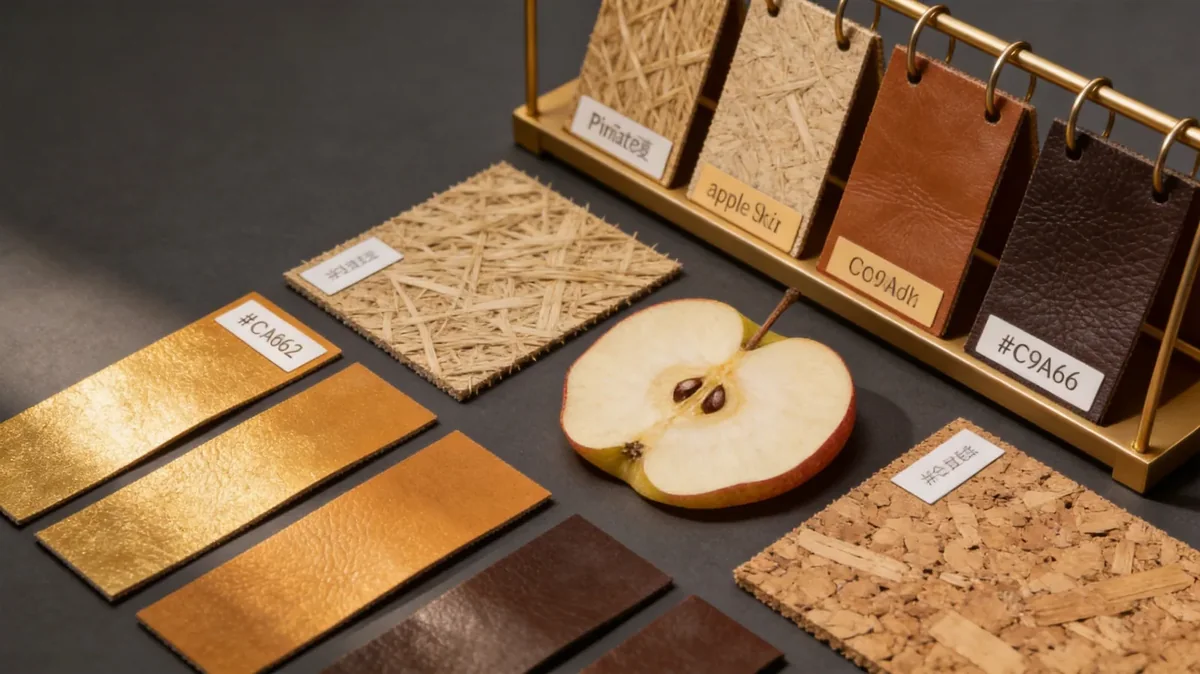
Name the material by type, thickness and finish rather than by colour alone. A note reading 'black leather' is not a specification; a note reading '1.2-1.4 mm full-grain calfskin, semi-aniline finish, black' is, and it can be reserved, costed and tested.
- Body thickness: 1.2-1.4 mm for structured work, 0.8-1.0 mm where the shape is soft.
- Lining: 0.8-1.0 mm, with interlining at 0.8 mm where the body needs to hold a fold.
- Finish and hand: semi-aniline, matte or polished, each behaving differently in cutting and edge work.
- The lot: reserve a named lot, because yield of 55-65% is a property of that lot and not of the drawing.
- Traceability: Leather Working Group audited tanneries evidence the origin increasingly asked for by boutiques.
Naming the lot early is what allows the material window of 15-20 working days to run in parallel with everything else. Leaving it open adds that window to the end of the calendar instead of overlapping it with the start.
Item 3: Hardware, Finish and the Stock or Bespoke Decision
State whether the closure and trim are stock or bespoke, and give the finish. This single line decides more of the calendar than any other item in the brief, because bespoke hardware carries its own tooling schedule.
- Finish: gold tones over brass at 0.15-0.3 µm, with 24 hours of salt spray proving for stock parts.
- Bespoke developments are proved at 48 hours and add 30-40 working days for tooling.
- Zips: #5 metal for a main opening, #3 for interior pockets, both named with tape colour.
- A stock plated trim set at USD 4.80 per bag keeps the trim line predictable across a capsule.
- Feet, magnets and D-rings should be listed individually, since each is a setting operation.
The reason this item belongs in the brief rather than in later correspondence is that it governs two things at once: the cost line and the calendar. A change from stock to bespoke after quotation re-prices and re-dates the capsule together.
Item 4: Construction Notes the Bench Actually Reads
Construction notes convert a drawing into a method. Four of them matter enough to be mandatory: stitch density, edge specification, reinforcement and seam sequence.
- Stitch density: 8-9 per inch on visible seams, which is slower and finer than casual goods.
- Edge specification: raw, turned, or painted in three coats with 8-10 minutes of flash time each.
- Reinforcement: interlining at 0.8 mm under handles, bases and any point carrying load.
- Seam sequence: which panel closes last, because a body cannot always be assembled front to back.
- Thread: 0.45 mm braided polyester is a reasonable default for 8-9 per inch work.
Seam sequence is the note most often missing, and its absence is discovered at the bench rather than on paper, which is precisely the kind of discovery a brief is supposed to prevent.
Item 5: Colourways and Quantity Per Colourway
List every colourway and the quantity attached to each, because the minimum applies per style and colourway combination, not to the capsule as a whole.
- MOQ 500 pcs per style and colourway, so three colourways means three lots of 500.
- Each colourway carries its own material lot and its own reservation window.
- Compliance testing is booked per lot, so a third colourway can add a test line.
- Yield should be confirmed on each lot separately before panels are cut.
Stating this in the brief avoids the common mid-capsule surprise where a third colour is added after quotation and arrives with its own reservation window, its own test booking and its own share of the development cost.
Item 6: Destination Markets and Compliance
Name the markets the goods will be sold in, because compliance is booked per destination and per lot. The standards are determined by the market, not by the material.
- ISO 105 for colour fastness, ISO 3376 for tensile strength, ISO 11644 for finish adhesion.
- REACH Annex XVII governs restricted substances for the European market.
- California Prop 65 and CPSIA apply where goods are distributed in the United States.
- EU Regulation 1007/2011 governs how fibre compositions are described on labelling.
Adding a market later is not free. It means booking tests against the lot after the fact, and where a lot was never reserved for that market, it can mean re-testing on a substitute.
Item 7 to 9: Presentation, Calendar and the Immovable Date
The last three items are logistical and they are the ones that make the first six actionable: presentation requirements, the calendar you are working to, and the date that cannot move.
Presentation
Dust bag, rigid box construction, printed inserts and whether units arrive individually bagged. This line is 3-6% of the landed cost and is settled in the brief.
Calendar
Reservation 15-20 working days, sampling 6-10 or 12-15 for complex builds, bulk 35-50 days, inspection at AQL 2.5 under ISO 2859-1.
The immovable date
The one date the goods must reach the warehouse. Everything else in the brief is negotiable; this single figure is what the calendar is built backwards from.
The trade term belongs here too. FOB Xiamen is the default, with CIF and DDP available, and fixing it at brief stage rather than at handover prevents the re-pricing that follows a late change.
The Nine Items on One Page
Assembled, the nine items fit on a single page, and a brief that fits on one page is a brief that gets read. Use it as a checklist before sending anything.
One-page brief checklist
- 1. Geometry: dimensions in mm with a ±1.5 mm tolerance, handle drop and strap width.
- 2. Material: type, thickness and finish, named as a lot with 1.2-1.4 mm for structured bodies.
- 3. Hardware: stock or bespoke, finish at 0.15-0.3 µm, zip sizes and every separate trim piece.
- 4. Construction: stitch density 8-9 per inch, edge specification, reinforcement and seam sequence.
- 5. Colourways and quantity, at 500 pcs per style and colourway.
- 6. Destination markets and the standards they trigger.
- 7. Presentation: dust bag, box, inserts and packing per carton.
- 8. Calendar: the reservation, sampling and bulk windows you are planning around.
- 9. The immovable date and the trade term, FOB Xiamen by default.
A brief covering all nine can be quoted in 1-2 days. One covering three of them can be acknowledged in the same time and quoted three weeks later, which is the real difference between the formats.
What Happens After the Brief Arrives
A complete brief moves straight into the material window and the pattern work, which can then run in parallel. Incomplete briefs do the same work but in series, because each unknown has to be resolved before the next step can start.
- Material shortlist and reservation against a named lot, typically 15-20 working days.
- Pattern and two toiles in calico to settle proportion, handle drop and closure placement.
- Sampling at 6-10 working days, or 12-15 where the construction is complex.
- Approval and the specification freeze, then bulk at 35-50 days from intake.
- Inspection at AQL 2.5 under ISO 2859-1, then packing and documents over 3-5 days.
Everything above runs through our validated partner factory Quanzhou Yingming Bags, an SGS-validated site with 7 production lines and about 200,000 pcs per month of capacity, holding export experience since 2014. Third-party inspection can be arranged alongside the internal audit.
Send a one-page brief and get a firm answer
Use the nine items above, or send your drawings and a reference piece and we will complete the page with you. You will receive a costed answer and a calendar within two working days. Request a quote.
Frequently Asked Questions
What should be included in a designer handbag brief?
Nine items: geometry with dimensions and tolerances, material named as a lot, hardware with finish, construction notes, colourways and quantity, destination markets, presentation requirements, the calendar, and the immovable delivery date with the trade term. A brief covering all nine can be quoted within two working days.
Which brief format is best for a first capsule?
The hybrid brief, combining a sketch, a dimensioned reference piece and a material card. It takes two to four days to prepare, achieves 80-90% accuracy on the first sample and supports a quotation within one to two working days, which suits a first capsule better than either extreme.
Why is a tolerance needed in a handbag brief?
Without one, a sample varying by a millimetre is accepted or rejected arbitrarily, and either outcome costs a round. Stating a working tolerance of plus or minus 1.5 mm on cut panels gives the bench and the designer the same measurable standard to work to, and removes opinion from an approval conversation.
How is the material direction best specified?
By type, thickness and finish rather than colour alone. A note reading 1.2-1.4 mm full-grain calfskin with a semi-aniline finish can be reserved, costed and tested, whereas a colour alone generates questions and postpones the material window of 15-20 working days. Naming the lot also lets that window overlap the pattern work.
What construction notes does the bench need?
Four essential ones: stitch density at 8-9 per inch, the edge specification, reinforcement under load points with 0.8 mm interlining, and the seam sequence. The sequence is the one most often omitted, and its absence is usually discovered at the bench rather than on paper.
Should hardware be stock or bespoke in a first brief?
Stock, for a first capsule. A stock plated trim set at USD 4.80 per bag holds the line and the calendar, while a bespoke closure adds tooling, a proving step and roughly 30-40 working days before any panel is cut, which few first capsules can absorb.
How many colourways can a brief include?
As many as you can support, remembering that MOQ 500 pcs applies per style and colourway. Three colourways mean three lots of 500, three reservation windows of 15-20 working days and, in most cases, three separate test bookings, since reports are issued per lot and per market.
Which compliance standards does the market determine?
Colour fastness under ISO 105, tensile strength under ISO 3376 and finish adhesion under ISO 11644, along with REACH Annex XVII for Europe and California Prop 65 and CPSIA for the United States. Adding a market later means booking tests after the fact, usually against a lot never reserved for it.
What is the minimum quantity stated in a brief?
Colour fastness under ISO 105, tensile strength under ISO 3376 and finish adhesion under ISO 11644, along with REACH Annex XVII for Europe and California Prop 65 and CPSIA for the United States. Adding a market later means booking tests after the fact, usually against a lot never reserved for it, which costs the window twice.
How long does it take to receive a quotation from a brief?
MOQ 500 pcs per style and colourway. Quantity belongs in the brief because development is a fixed cost divided across the run, so the per-unit share of the pattern, the toiles and the sampling rounds depends directly on the figures stated at the outset. Stating them early also prevents a third colour arriving with its own reservation window.
Which trade term should the brief state?
FOB Xiamen, which is the default, with CIF and DDP available on request. Stating it in the brief rather than at handover avoids the re-pricing that follows a late change, since the term decides who carries freight risk and documentation, and therefore who carries the 4-9% those items represent.
What is the single most damaging omission in a brief?
The immovable date. Every other item can be negotiated or revised, but without a date the calendar has to be built forwards from hope, which is how sampling and bulk windows end up clashing with a launch. Give the arrival date and everything else can be scheduled around it.
People Also Ask
What is a technical pack for a handbag?
A dimensioned document stating geometry with tolerances, material thickness, stitch density, edge specification, hardware finish and seam sequence. It is the format that lets a shape be quoted and built without a round of questions.
Can a brief be written from images alone?
It can, but it functions as direction rather than specification. A mood brief lands 40-60% of intent on the first sample and usually needs three to four rounds to reach approval, which costs more than the days saved writing it.
How precise do handbag dimensions need to be?
To the millimetre, with a stated tolerance of around ±1.5 mm on cut panels. Handle drop should be measured from the apex to the body top, and the opening width given at the frame or zip line rather than the widest point.
Why does a handbag brief need a tolerance?
Because it converts opinion into a measurable standard. With one in place, a sample that falls inside the tolerance is accepted on evidence, and one that falls outside is corrected with a named reason rather than a feeling.
What should a designer send if they have no technical drawings?
A reference piece plus a list of intended changes, a sketch with dimensions marked, and a material card. That combination is the hybrid brief, and it is enough to produce a quotations and a calendar within two working days.
Sources and further reading
Every figure on this page is either our own programme data or attributed below. Open the originals before you write them into a specification.
- ISO — International Organization for StandardizationISO Publisher of ISO 105 for colour fastness, ISO 3376 for tensile strength, ISO 11644 for finish adhesion and ISO 2859-1 for the AQL 2.5 inspection plan.
- Leather Working GroupLeather Working Group Tannery audit protocol, referenced when a lot is named in the brief and needs its origin evidenced for boutique distribution.
- ECHA — European Chemicals AgencyEuropean Chemicals Agency Administrator of REACH Annex XVII, the restricted substance list that determines which compliance lines a destination market triggers.
- OEHHA — California Proposition 65Office of Environmental Health Hazard Assessment The state authority administering Proposition 65, relevant when a brief names the United States among its destination markets.
- U.S. Consumer Product Safety CommissionU.S. Consumer Product Safety Commission The federal body administering CPSIA, which applies to goods distributed in the United States and is booked per lot.