A luxury handbag programme should unite creative intent, disciplined development and dependable delivery in one clearly managed path. Handbag Maison supports designer brands, maisons, boutiques and premium e-commerce teams from the first brief through sampling, material alignment, quality control, packaging and export coordination. The working baseline is 500 pcs per style / colourway, sampling in 6-10 working days, complex sampling in 12-15 working days, bulk in 35-50 days and final inspection to AQL 2.5 (ISO 2859-1).
A French-Luxury Point of View, Made Operational
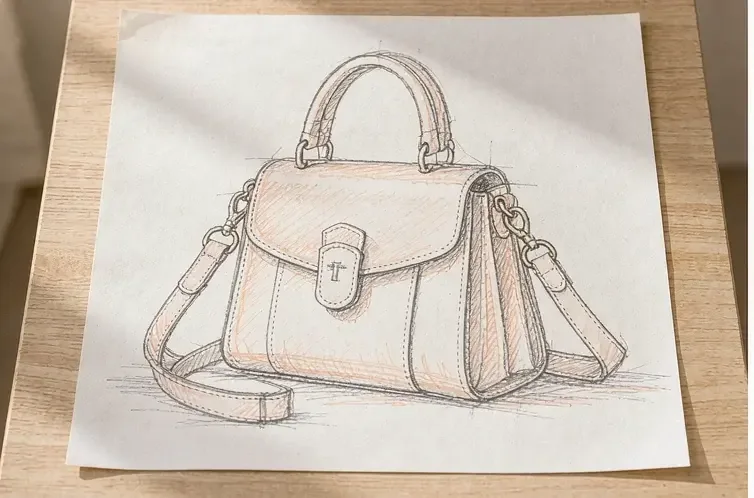
Handbag Maison translates an atelier-minded design language into an export-ready programme with measurable approvals. The emphasis is not surface decoration alone; proportion, line, touch, movement and use must feel coherent. A handle drop must suit the intended carry, a gusset must open without collapsing the silhouette, and hardware must feel substantial without placing unnecessary load on the structure. These decisions are recorded early so that the sample becomes a controlled reference rather than a loose interpretation.
Our role connects creative, technical and commercial conversations. A buyer can begin with sketches, references, a material direction or an existing sample, then build a practical brief around target use, dimensions, construction, finish, testing, packaging and delivery. This programme-management approach gives every stakeholder a shared vocabulary and makes trade-offs visible before commitments are made.
Twelve Service Routes for a Complete Handbag Programme
The service routes below let buyers enter at the point where support is most useful, while keeping every decision connected to the same approved brief. Some teams need broad programme direction; others arrive with a mature design and require sampling, materials, quality or packaging support. Each route can stand alone for discovery, yet the strongest programmes link creative intent, commercial targets and inspection evidence from the beginning.
Maison Programme Overview
Define the complete route from concept and assortment logic to approval and delivery.
Luxury Development Service
Turn a brand brief into a controlled, documented handbag programme.
Premium Production Management
Coordinate approved specifications, line planning, checkpoints and release decisions.
Designer Handbag Development
Protect distinctive proportions, details and brand codes through technical review.
High-End Sourcing
Shortlist materials and programme partners against a defined quality brief.
Luxury Materials
Compare leather, textiles, linings, reinforcements, edge systems and hardware.
Craftsmanship
Understand the construction choices behind refined structure and finish.
Quality Control
Set measurable tolerances, staged checks and final inspection criteria.
Luxury Sampling
Move from first prototype to sealed reference through disciplined comments.
Luxury Packaging
Develop protective, presentation-ready packaging aligned with brand codes.
Editorial Insights
Read practical guides on sourcing decisions, approval discipline and material choices.
Partner Landscape
Evaluate production options through capability, evidence and programme fit.

The Locked Commercial and Production Baseline
A serious brief needs fixed reference points before design refinements can be costed or scheduled. The parameters below are the shared baseline used across this site. They prevent an early conversation from relying on optimistic assumptions and allow buyers to plan launch windows, approval resources and cash flow against a consistent operating model. Final feasibility still depends on material availability, construction, testing scope and confirmed order details.
- MOQ
- 500 pcs per style / colourway
- Sampling
- 6-10 working days; complex styles 12-15 working days
- Bulk
- 35-50 days
- Inspection
- AQL 2.5 (ISO 2859-1)
- Trade term
- FOB Xiamen
- Export experience
- since 2014
- Line capacity
- 7 production lines
- Monthly capacity
- about 200,000 pcs per month
- Validation
- SGS-validated
FOB Xiamen is the working trade basis, with CIF or DDP discussed when the destination and service scope are clear. Sampling starts after the design pack, material direction and key construction questions are resolved. Bulk timing starts from confirmed order, approved sample, approved materials and agreed commercial terms, not from the first enquiry. That distinction matters because a beautiful but unresolved brief cannot move responsibly into line planning.
A Seven-Stage Route from Brief to Export
The programme moves through seven decision gates so that creative changes, commercial approvals and quality evidence remain traceable.
- Brief review: establish customer, use case, silhouette, dimensions, target materials, finish, quantity, market, packaging and delivery window.
- Feasibility alignment: identify construction risks, material lead times, hardware development needs, test expectations and cost drivers before sampling.
- Development setup: confirm the specification pack, colour references, branding artwork, measurement points and the exact questions the first sample must answer.
- Sampling and comments: review the sample against fit-for-purpose criteria, consolidate one numbered comment set and agree which revisions require physical proof.
- Pre-bulk approval: seal the reference sample, bill of materials, colour standard, hardware finish, packaging method, inspection criteria and order details.
- Bulk control: monitor incoming materials, first-line output, critical workmanship points, measurement tolerances, appearance and packing consistency.
- Inspection and export: apply AQL 2.5 (ISO 2859-1), close findings, approve release and coordinate documents for FOB Xiamen or the agreed alternative.
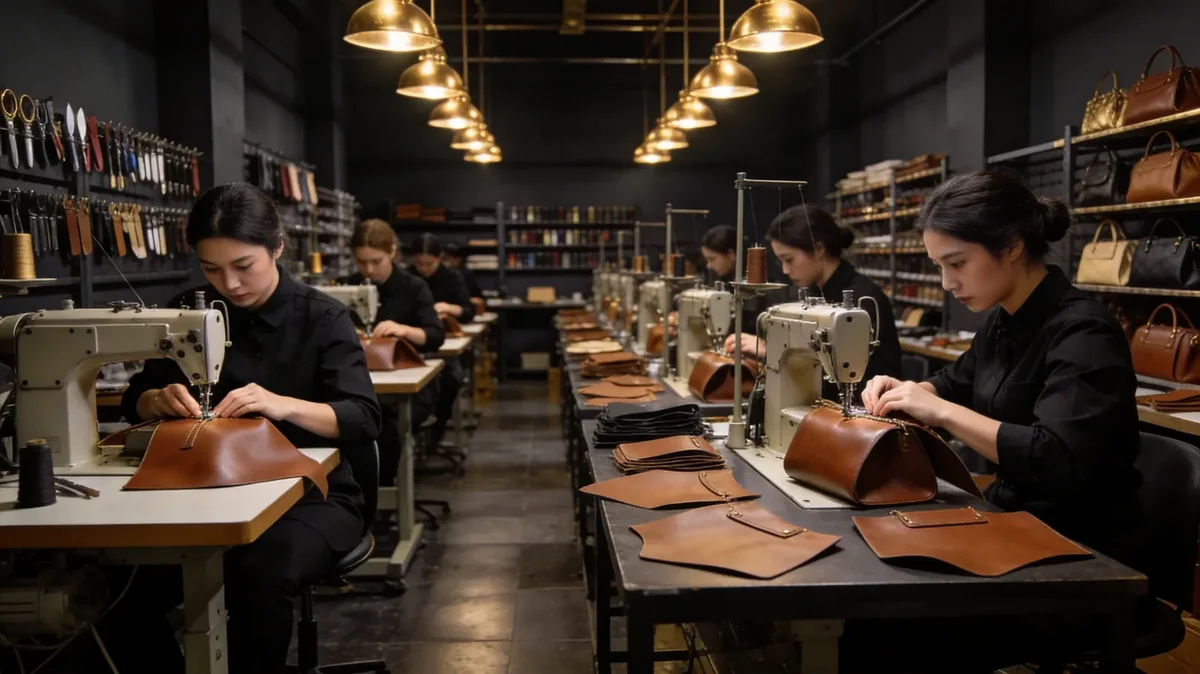
How Changed Requirements Are Handled Once the Clock Starts
Every programme changes. What separates an orderly change from an expensive one is where it enters the calendar, and whether anyone wrote down what it touches.
A change requested before material booking usually costs nothing beyond revised drawings. The same change requested after cutting has started means wasted panels, re-cutting and a new slot in the line schedule. Both outcomes are legitimate; only one of them carries real added cost.
The useful discipline is a written change note: what changed, where it appears on the bag, and what it does to material, tooling, minutes and date. Three sentences is enough. It converts a conversation into a decision both sides can refer back to later.
Some changes should be refused outright. A different leather one week before bulk, a new closure after the plating batch is booked, or a revised footprint after cartons are specified all reset work that has already been paid for. Saying so early is more useful than agreeing and missing the date.
Change during sampling is normal and expected. Two rounds sit inside the 6-10 working day window precisely so that corrections happen while they are still drawings. Change after the golden sample is signed is where cost enters.
The practical rule a buyer can apply is simple: decide everything possible before approval, and treat anything decided afterwards as a new order rather than an adjustment. Programmes that hold to that deliver closer to their original week and their original number.
Each accepted or refused change is logged with its reason and date. That log becomes the reference when a later season revisits the same decision, which is usually faster than reopening the argument from memory.
It is also why the first brief matters more than it appears to. Most of what later arrives as a change request was a question nobody asked in week one.
What a Decision-Ready Buyer Brief Contains
A decision-ready brief is specific enough to reveal risk but open enough to benefit from technical input. At minimum, it should identify the product type, intended customer, dimensions, carrying method, opening, internal organisation, target materials, colourways, hardware tone, logo application, quantity and required delivery point. Reference images help when they are annotated to explain what should be learned from each image rather than copied. A physical reference should be accompanied by notes separating required functions from optional aesthetic cues.
- Dimensioned drawings with front, back, side, base and interior views.
- Material direction for outer, lining, reinforcement, edge finish and thread.
- Hardware list covering metal tone, pullers, closures, feet, rings and protectors.
- Branding artwork with size, position, colour and application method.
- Target market and compliance expectations for the intended destination.
- Order plan by style and colourway, respecting 500 pcs per style / colourway.
- Packaging hierarchy from protective components to presentation and export carton.
- Approval owners, consolidated comment method and required delivery window.
A useful costing note
- Cost should be evaluated against the approved construction and material set, not against a visual outline alone. A change to leather yield, hardware tooling, edge layers, reinforcement or packaging can alter unit economics and timing. If a benchmark is shown, write it as USD 4.80 and state the specification it represents.
Materials Chosen for Character, Performance and Traceability
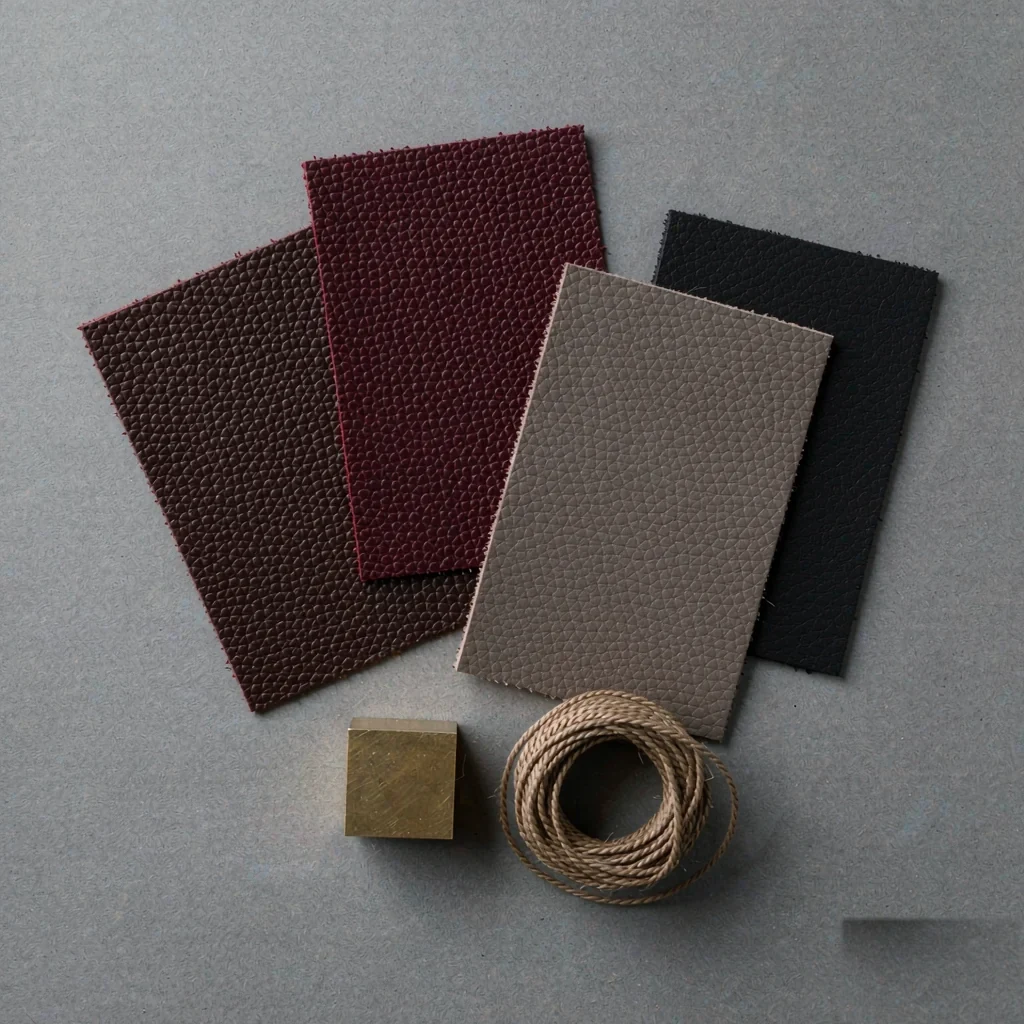
Material selection should balance sensory character with repeatable performance. Calfskin may provide a fine grain and polished hand, while pebbled leather can offer a different visual depth and resistance to visible handling. Linings influence sound, touch, cleanability and structure. Reinforcements control the way panels stand, fold and recover. Hardware affects perceived quality through plating tone, movement, weight and contact noise. Each choice should be reviewed as part of a system rather than as an isolated swatch.
Traceability and chemical expectations belong in the material conversation. Leather Working Group provides an audit framework for leather environmental performance, while REACH Annex XVII sets restrictions relevant to substances placed on the European market. For recycled claims, GRS documentation may be requested for applicable inputs. The correct evidence depends on material, destination and claim; a verbal assurance does not replace scope-specific documents.
Sampling as a Sequence of Decisions
Sampling is successful when it closes named questions in a deliberate order. The first sample may test proportion, opening, capacity, handle geometry and internal arrangement before every finish is exact. A later sample can confirm corrected pattern balance, approved materials, hardware movement and edge colour. The sealed reference should represent the standard that bulk will follow.
Buyer feedback is most effective when it is consolidated, numbered and supported by measurements or marked images. Separate observations from instructions: saying that a flap feels heavy identifies a concern, while a target opening angle or revised reinforcement decision creates an action. One approval owner should resolve conflicting internal comments before they reach the programme team. This discipline reduces circular revisions and helps the 6-10 working days of sampling window remain meaningful for standard styles.
Quality Evidence from Material Check to Final Release
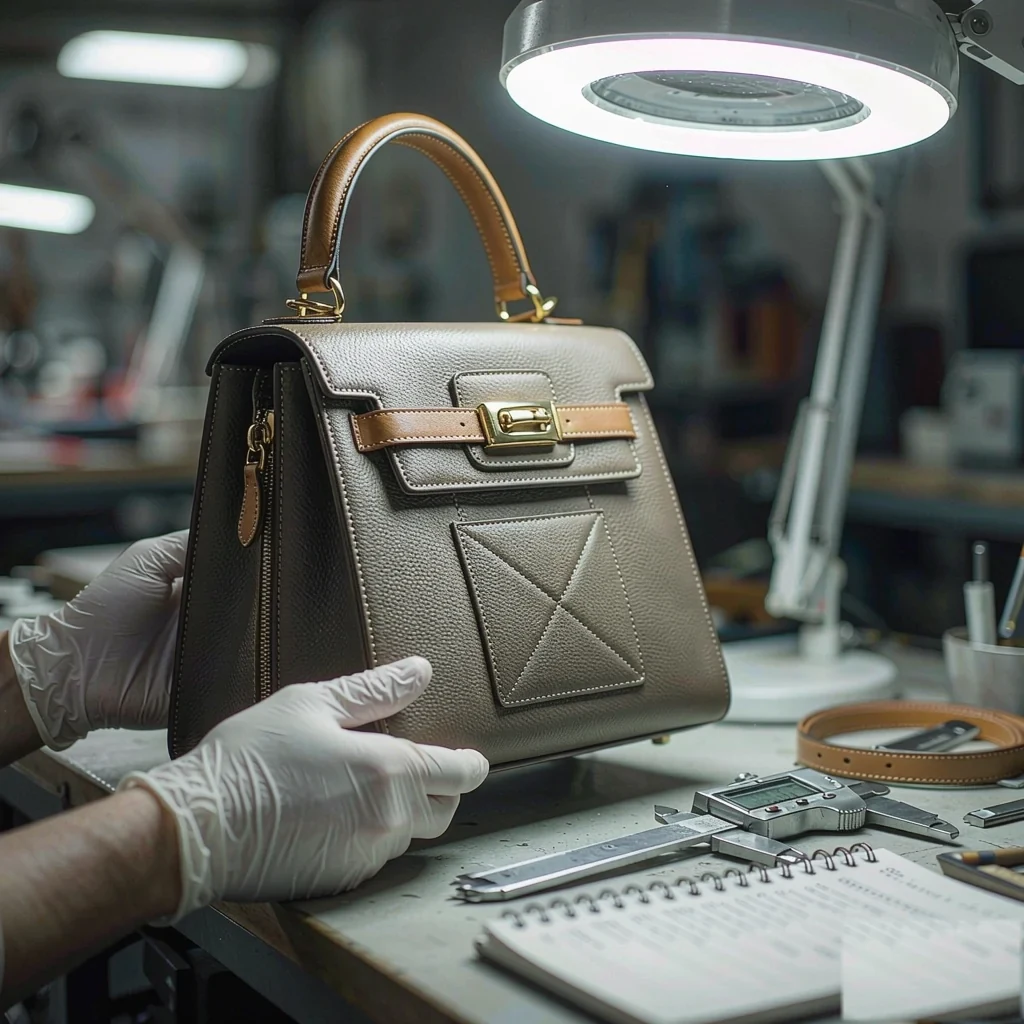
Luxury quality control combines visual judgement with defined evidence at several stages. Incoming checks compare material identity, colour, grain direction, thickness and hardware finish against approvals. Early line review verifies construction sequence, seam position, edge preparation, reinforcement and critical measurements before variation spreads. During output, inspectors monitor appearance, function and workmanship. Final inspection uses AQL 2.5 (ISO 2859-1) as the locked baseline, with third-party inspection available when the buyer requires independent reporting.
| Control point | Primary evidence | Buyer decision |
|---|---|---|
| Materials | Approved swatches, colour standard and document scope | Release, replace or segregate |
| First-line output | Measurements, construction photos and defect review | Continue or correct |
| In-process | Workmanship trend, function and appearance checks | Maintain or contain |
| Final | AQL 2.5 report under ISO 2859-1 | Release or corrective action |
| Packing | Presentation sequence, labels, assortment and carton marks | Approve shipment preparation |
Relevant methods may be agreed for colour fastness under the ISO 105 family, leather tensile properties under ISO 3376 or coating adhesion under ISO 11644. The applicable method, laboratory, sample condition and pass criteria must be defined for the actual material and market. California Proposition 65 and CPSIA considerations may also apply to particular destinations or product details. Compliance is therefore treated as a brief-specific workstream, never as a generic promise.
Reading a Handbag Quotation Line by Line
A single unit price hides more than it reveals. Two programmes can quote the same headline number from completely different material assumptions, which is why comparison has to happen line by line.
Material yield is usually the largest line and the least discussed. It reflects usable area after grading rather than skin price alone, and it moves when panel sizes, matching rules or leather grade change.
Hardware is the second line worth separating. Solid brass, zamac and stainless differ in weight, machinability and plating adhesion, and custom tooling is quoted once rather than per unit.
Operations per unit cover cutting, skiving, assembly, edge work, lining and finishing. A framed bag with turned edges carries more minutes than a soft body, and that difference belongs on its own line instead of disappearing into overhead.
Development, sampling, tooling, packaging and testing follow. None of them are hidden costs; they are simply work that happens once. Listing them separately stops a comparison being decided by whichever quote bundled them differently.
Then read the terms behind the number: MOQ 500 pcs per style / colourway, FOB Xiamen, T/T 30/70, a stated validity window and stated lead times. A quote silent on any of those is not comparable, whatever the headline figure says.
The questions worth asking are narrow. Which hide grade and lot assumption does this yield line use? Is the hardware plated to a stated thickness? Are packing and documentation included, or quoted later?
Once those answers are written down, the higher unit price sometimes turns out to be the lower-risk programme, because it was never hiding anything.
Packaging and Export without Losing the Maison Experience
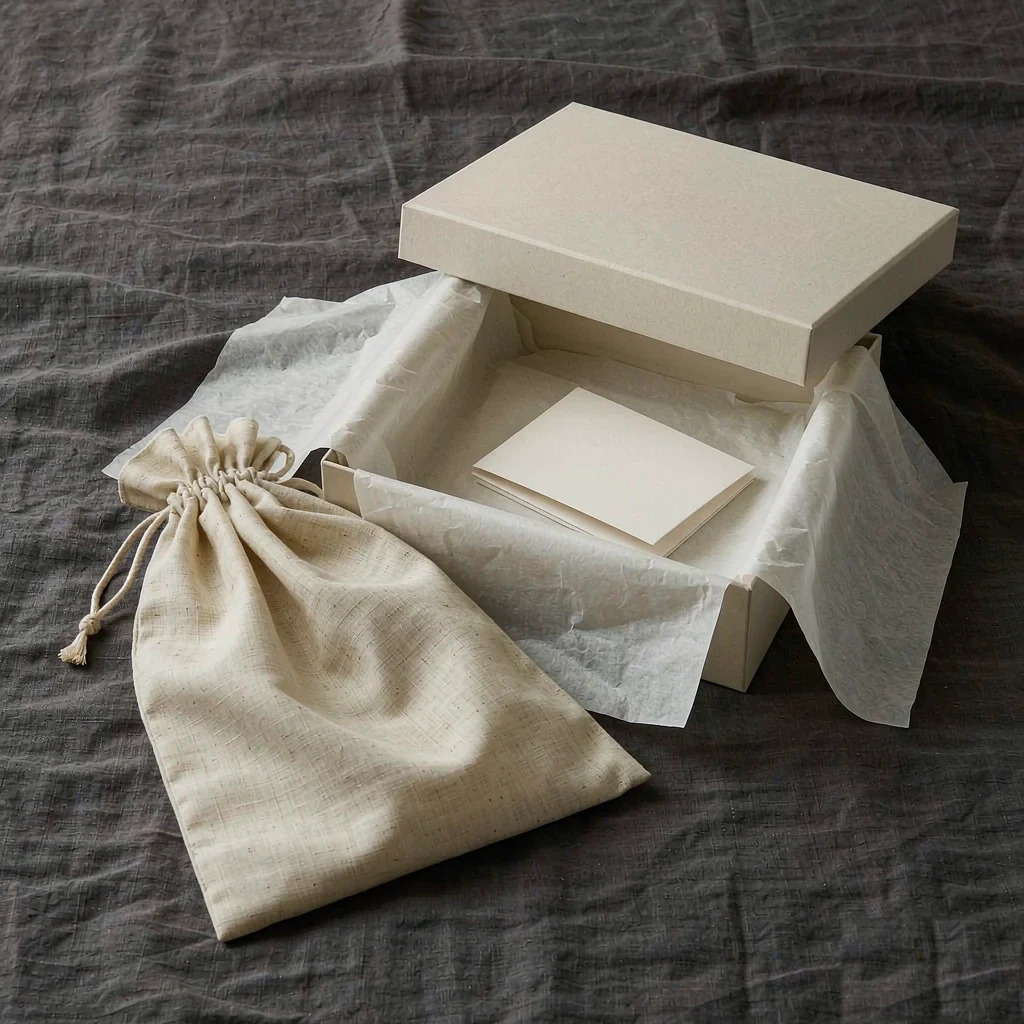
Packaging must protect form, finish and presentation through handling while preserving an intentional opening experience. The pack-out may combine tissue, shaped support, protective sleeves, desiccant where appropriate, presentation elements and an export carton designed for the route. Metal parts need contact protection, handles need controlled positioning, and pale materials may require transfer-risk precautions. Pack testing should reflect the real configuration because an empty box test does not prove protection for a finished handbag.
Export readiness includes accurate assortment, carton marks, packing lists, commercial documents and an agreed handover point. FOB Xiamen defines the standard basis, while CIF or DDP requires destination-specific discussion about freight, insurance and duties. The 35-50 day bulk window should be mapped backward from the requested ship date, leaving time for inspection and corrective action.
Start with the Brief That Matters Most
Share the style count, quantity by colourway, design maturity, target material, destination, required delivery window and the two or three details that cannot be compromised. We will use those facts to identify missing decisions, sampling priorities and a practical next step.
Discuss your luxury handbag programme
Send your brief, drawings, reference images, quantity plan and delivery target through Contact & Quote. We will review programme fit, identify the first decisions and prepare a focused response.
Frequently Asked Questions
What is the minimum order quantity for a luxury handbag programme?
The MOQ is 500 pcs per style / colourway. A style offered in two colourways is planned as two separate 500-piece commitments. Buyers should share the intended assortment early because leather yield, hardware finish, lining, branding and packaging may differ by colourway and affect material planning, approvals and the final commercial proposal.
How long does luxury handbag sampling take?
Standard sampling takes 6-10 working days after the brief, material direction and essential construction decisions are clear. Complex styles take 12-15 working days when they involve moulded components, intricate panel work or newly developed hardware. Transit, buyer review and revision rounds should be added separately when planning a launch calendar.
When does the 35-50 day bulk timeline begin?
The 35-50 day bulk timeline begins after the order is confirmed, the sample and bill of materials are approved, key materials are released and commercial terms are settled. It does not begin with the first enquiry. Material development, repeated revisions, late artwork or changed packaging can move the practical start date.
How is quality controlled during a programme?
Quality is controlled through incoming material checks, first-line review, in-process monitoring, functional and appearance checks, packing verification and final inspection. The locked final baseline is AQL 2.5 under ISO 2859-1, and third-party inspection can be arranged. Tolerances and defect categories should be agreed before bulk begins.
Which materials can be considered for premium handbags?
The programme can consider leather, premium textiles, linings, reinforcements, edge systems and custom-finished hardware according to the design and destination. Selection is based on hand feel, appearance, construction behaviour, durability, traceability and compliance needs. Buyers should describe the intended character and use rather than choosing from appearance alone.
What compliance information should a buyer provide?
Buyers should state destination markets, age grading where relevant, material claims, restricted-substance expectations, labelling needs and any required social or environmental programme. Possible references include REACH, California Proposition 65, CPSIA, GRS, BSCI, Sedex and Leather Working Group evidence. The applicable scope must be confirmed for each design.
Can the programme use custom hardware and branded packaging?
Yes, custom hardware and branded packaging can be developed when artwork, dimensions, finish references, performance expectations and quantities are defined. New metal parts may add drawing, tooling, plating and approval stages. Packaging should be reviewed for presentation and protection, including contact points, handle position, moisture precautions and export-carton configuration.
Which trade term is used for export planning?
FOB Xiamen is the standard trade term. CIF or DDP can be discussed after destination, shipment profile and requested service scope are known. The chosen term changes responsibility for freight, insurance, import handling, duties and final delivery, so buyers should align the term with their logistics capability before order confirmation.
How much does a luxury handbag programme cost per unit?
Unit cost is built from six lines: material yield, hardware, operations per unit, finishing steps, overhead and the development already booked. A calfskin body with solid brass fittings and turned edges sits in a different band from a coated canvas shell with zamac hardware. Quoting each line separately means a change moves only the line it belongs to.
Who is the luxury handbag programme built for?
The programme suits designer labels, maisons, boutique retailers and importers placing repeat orders from MOQ 500 pcs per style / colourway. It assumes someone owns the tech pack decisions and can approve a physical reference. Buyers wanting one sample or a retail-priced stock order are usually better served by a different route entirely.
What should I send to start the conversation?
A useful first pack holds drawings or reference photographs, target quantity per colourway, material and hardware direction, destination market and a target delivery week. None of it has to be final. What matters is that the assumptions can be written down, because every later price change traces back to something in that first note.
How is payment structured across a programme?
The standard structure is T/T 30 percent deposit, with the balance before shipment or against bill of lading copy depending on the account. Sampling and tooling are invoiced separately from bulk. Timing matters commercially: capacity is scheduled once the deposit clears, so a late payment moves the delivery week rather than the schedule only.
Who owns the design, the patterns and the tooling?
The client owns the design, the patterns developed for it and any tooling paid for. The programme holds them against repeat orders and releases the technical file on request. This sits in the order terms rather than being implied, so a second source or a new partner can start from exactly the same numbers instead of reverse-engineering a bag.
How often will I hear from the team during a run?
Expect a written update at every gate: brief accepted, material booked, sample shipped, corrections logged, bulk started, inspection result and carton release. Between gates the reply target is one business day. Silence is treated as a fault to repair rather than as a normal condition of running production remotely across time zones.
Can one order mix several colourways or styles?
MOQ 500 pcs is stated per style / colourway, so three colourways of one shape are three lots unless the total is agreed differently up front. Mixing works when materials are booked together and the line can run a single set-up. The cost effect comes from changeover time, so it is priced before the order is confirmed rather than after.
How long from first contact to delivered goods?
Count four blocks: a quote within one business day of a usable brief, sampling in 6-10 working days (12-15 for complex builds), bulk in 35-50 days after approval and material booking, then freight. Transit depends on destination and mode, which is why FOB Xiamen is quoted by default and shipping is planned as its own line item.
People Also Ask
What should I send for a first handbag project review?
Send dimensioned drawings or annotated references, quantity by style and colourway, target materials, hardware and branding direction, destination market, packaging expectation and required delivery window. Identify the details that are fixed and the areas where technical alternatives are welcome.
Why must colourways meet the MOQ separately?
Each colourway can require separate outer material, lining, thread, edge colour, hardware finish, labels and packing identification. Treating 500 pcs per style / colourway as the baseline supports coherent material planning, line control and appearance consistency.
Can an existing physical sample be used as a reference?
Yes, a physical reference can communicate scale, function and hand feel, but it should include written notes. State which features are required, which are only directional and which must change, so the new programme is based on an intentional brief.
Is third-party inspection available before shipment?
Yes, third-party inspection is optional. The buyer should name the appointed inspection party, reporting format, booking lead time and release authority. Final inspection remains based on the agreed specification and the locked AQL 2.5 (ISO 2859-1) baseline.
How should buyers plan revisions during sampling?
Use one consolidated, numbered comment file with measurements and marked images. Assign one approval owner and distinguish observations from required actions. This keeps each revision purposeful and makes the impact on the 6-10 or 12-15 working day window easier to assess.
Sources and further reading
Every figure on this page is either our own programme data or attributed below. Open the originals before you write them into a specification.
- International standards and conformity resourcesInternational Organization for Standardization Institutional reference for ISO 2859-1, ISO 105, ISO 3376 and ISO 11644.
- Leather supply-chain environmental audit frameworkLeather Working Group Reference for leather environmental performance and traceability discussions.
- REACH legislationEuropean Chemicals Agency Official European reference for REACH and Annex XVII restrictions.
- Proposition 65California OEHHA Official California reference for Proposition 65 requirements.