Luxury Handbag Programme Questions Buyers Ask First
This page answers the questions buyers ask before committing to a luxury handbag programme, organised around MOQ, sampling, bulk, quality control, materials, compliance, logistics and payment. The locked commercial baseline is 500 pcs per style / colourway, sampling in 6-10 working days, complex styles in 12-15 working days, bulk in 35-50 days and final inspection to AQL 2.5 (ISO 2859-1). Shipments are planned on FOB Xiamen unless another trade term is agreed in writing, and export programmes have been coordinated since 2014 through a validated partner arrangement.
MOQ and Order Planning
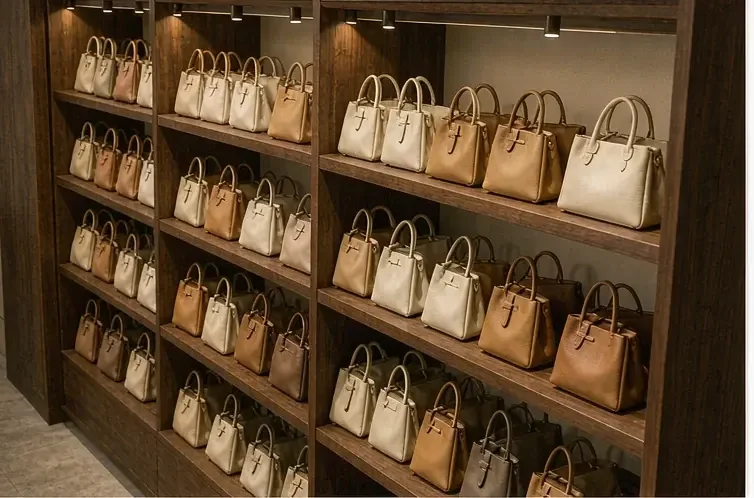
The minimum order quantity is 500 pcs per style / colourway, and that unit of commitment should shape assortment planning from the first sketch. A design offered in three colourways is three separate planning blocks, because each colourway can require its own outer material, lining, thread, edge colour, hardware finish and packing identification. Buyers who share the assortment early receive more reliable guidance on material lead time and scheduling.
Order planning also interacts with launch reality. If a collection needs phased delivery, say so at the enquiry stage rather than after booking, because phased releases affect material purchasing, line planning, packing and document preparation. Where a buyer wants to test demand before committing to the full quantity, the honest answer is to discuss the trade-off openly: smaller runs reduce exposure but usually raise unit cost and complicate material reservations.
Sampling Windows and Revision Discipline
Standard sampling takes 6-10 working days once the specification pack and material direction are confirmed. Complex styles take 12-15 working days when they involve moulded components, intricate panel work or newly developed hardware. These windows cover bench work; courier transit, buyer review and revision rounds sit outside them and must be added when building a launch calendar.
- Agree what the first sample must prove: proportion, opening, capacity, handle geometry and internal arrangement.
- Confirm materials, hardware references, tolerances and measurement points before the sample is built.
- Review the sample against those criteria and record comments in one numbered file with marked images.
- Separate observations from required actions so each comment becomes an executable instruction.
- Approve the sealed reference sample before bulk planning, including construction and presentation details.

Bulk Production and Schedule Control
Bulk runs in 35-50 days, starting from confirmed order, approved sample, released materials and agreed commercial terms. It does not start from the first enquiry. Material development, repeated revisions, late artwork and changed packaging are the most common reasons a practical start date slips, which is why approval discipline during sampling has a direct effect on delivery.
| Question | Locked answer | What can change it |
|---|---|---|
| MOQ | 500 pcs per style / colourway | Assortment split and packing identification |
| Sampling | 6-10 working days | Construction complexity requiring 12-15 days |
| Bulk | 35-50 days | Late approvals, material release and artwork |
| Inspection | AQL 2.5 (ISO 2859-1) | Buyer-nominated third-party reporting |
| Trade term | FOB Xiamen | Destination scope agreed for CIF or DDP |
| Capacity | 7 production lines | Booking position and seasonal demand |

Quality Control and Inspection Evidence
Quality control combines defined evidence with visual judgement at several gates: incoming material comparison, first-line output review, in-process workmanship monitoring, functional and appearance checks, packing verification and final inspection. Final inspection follows AQL 2.5 under ISO 2859-1. Third-party inspection is optional and should be arranged with the appointed party, reporting format, booking lead time and release authority named in advance.
- Materials: identity, colour, grain direction, thickness, hardware finish and document scope.
- First-line output: measurements, construction sequence, seam position, edge preparation and reinforcement.
- In-process: workmanship trend, function, appearance and defect containment.
- Final: sampling plan under AQL 2.5 (ISO 2859-1) with documented findings.
- Packing: presentation sequence, labelling, assortment and carton marks.

Materials and Construction Choices
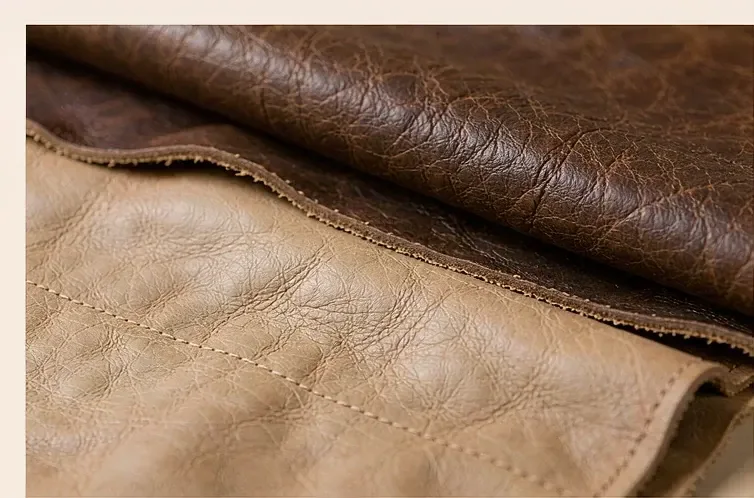
Material selection should be judged as a system rather than as isolated swatches. Calfskin may offer a fine grain and refined hand, while pebbled leather can provide visual depth and a different response to handling. Linings influence sound, touch, cleanability and structure. Reinforcements determine how panels stand, fold and recover. Hardware contributes perceived quality through plating tone, movement, weight and contact noise.
Construction choices carry equal weight. Seam placement affects how a bag holds its shape; reinforcement controls whether a base sags; edge construction influences both appearance and durability; stitch density and thread choice affect tactile quality. When buyers request a specific look, we explain which construction decisions will deliver it and which alternatives would come close at a different cost or risk level.
Reading a benchmark figure
- A figure such as USD 4.80 is meaningful only with its specification attached. Always ask which material set, hardware finish, construction detail, quantity, testing scope and trade term the number assumes, and which parts remain provisional until the sample is approved.
Compliance and Testing Scope
Compliance must be raised with the first enquiry. State destination markets, material claims, restricted-substance expectations, labelling needs and any social or environmental programme requiring evidence. Depending on scope, relevant references may include REACH Annex XVII, California Proposition 65, CPSIA, GRS for applicable recycled inputs, BSCI and Sedex for social programmes, and Leather Working Group evidence for leather environmental performance.
Testing should be specified by method, laboratory, sample condition and pass criteria. Relevant methods may include the ISO 105 family for colour fastness, ISO 3376 for leather tensile properties and ISO 11644 for coating adhesion. A certificate reference without scope, date and applicable material is not evidence, so we ask buyers to confirm exactly what will be accepted before booking tests.
Logistics, Trade Terms and Documentation
FOB Xiamen is the standard trade term. CIF or DDP can be discussed once destination, shipment profile and requested service scope are clear, because the term determines responsibility for freight, insurance, import handling, duties and final delivery. Buyers should choose the term that matches their own logistics capability rather than the one that appears simplest on paper.
Documentation is prepared alongside production. Packing lists, commercial invoices, carton marks, assortment details, applicable certificates and any nominated inspection reports should be identified early, especially when several destinations are involved. Map the 35-50 day window backward from the required ship date, leaving room for inspection, corrective action and document review instead of compressing every activity into the final week.
Payment, Quotation Validity and Changes
Commercial terms should be read as a package: unit price, payment structure, deposit expectation, validity period, trade term, packaging scope, testing responsibility and the assumption about quantity. A quote is valid against the specification it describes; when the specification changes, the figure must be re-confirmed. This is not an inconvenience but a safeguard for both parties.
Prepare One Brief
Combine drawings, dimensions, materials, quantity, destination, packaging and delivery window in a single document.
Name the Fixed Details
Identify the two or three elements that cannot be compromised, so alternatives can be proposed elsewhere.
Set Approval Ownership
Appoint one person to consolidate internal comments before they reach the programme team.
Confirm Evidence Early
Agree inspection criteria, testing scope and document expectations before bulk begins.
Ask the question your brief has not answered yet
If your programme has a specific constraint, send it through Contact & Quote with drawings, quantity plan and delivery target. We will answer against the approved baseline and flag any risk first.
Frequently Asked Questions
What is the minimum order quantity per style?
The minimum order quantity is 500 pcs per style / colourway. Two colourways of the same design are planned as two separate blocks because each may require different outer material, lining, thread, edge colour, hardware finish and packing identification, which affects material reservations and line planning.
Can I order a smaller test quantity first?
A reduced test run can be discussed, but it usually changes unit economics and material reservations. The locked baseline remains 500 pcs per style / colourway. If demand testing is the goal, share the planned follow-up quantity so the programme can be assessed as a whole rather than as an isolated small order.
How long does sampling take from a confirmed brief?
Standard sampling takes 6-10 working days after the specification pack and material direction are confirmed. Complex styles take 12-15 working days when moulded components, intricate panels or newly developed hardware must be proven. Courier transit, buyer review and revision rounds are additional and should be planned separately.
When does the 35-50 day bulk schedule begin?
The 35-50 day bulk schedule begins after the order is confirmed, the sample is sealed, materials are released and commercial terms are agreed. It does not begin at enquiry. Repeated revisions, late artwork, changed packaging or delayed material approvals are the most common reasons for a later practical start.
How is quality verified before shipment?
Quality is verified through incoming material checks, first-line review, in-process monitoring, functional and appearance checks, packing verification and final inspection. Final inspection follows AQL 2.5 under ISO 2859-1. Third-party inspection can be arranged when the buyer names the appointed party, format and release authority.
Which materials can be used for a luxury handbag programme?
Programmes can consider leather, premium textiles, linings, reinforcements, edge systems and custom-finished hardware based on design, destination and the specification you have defined. Selection weighs hand feel, appearance, construction behaviour, durability, traceability and compliance. Buyers should describe intended character and use rather than choosing from appearance alone.
What compliance evidence should be requested?
Request evidence matched to destination and material. Depending on scope this may include REACH Annex XVII, California Proposition 65, CPSIA, GRS for applicable recycled inputs, BSCI or Sedex for social programmes, and Leather Working Group evidence for leather environmental performance. Confirm scope, date and applicable material for each document.
Which trade term applies to my shipment?
FOB Xiamen is the standard trade term. CIF or DDP can be discussed after destination, shipment profile and service scope are clear. The term determines responsibility for freight, insurance, import handling, duties and final delivery, so it should reflect your own logistics capability and customs familiarity.
How is payment usually structured for a programme?
Payment structure is agreed before order confirmation and typically combines a deposit with a balance tied to a defined stage such as inspection release or shipment. The important point is clarity: state the stages, documents and currency in writing so that both sides reference the same milestone rather than an informal expectation.
What happens if I change the design after approval?
Changes after approval are assessed against the sealed sample before acceptance. We identify effects on materials, cost, sampling rounds and the 35-50 day bulk window, then confirm the decision in writing. Late artwork, revised hardware or changed packaging most often affect schedule rather than unit economics alone.
Can several colourways share one 500-piece order?
MOQ 500 pcs applies per style / colourway, so splitting one order across three colours creates three lots unless the total is agreed otherwise before booking. Where the same hide lot and hardware finish cover all colours, cost is mainly affected by changeover and packing identification. Agree the split at quotation time, not at packing time.
Is the sampling charge credited against the bulk order?
Sampling charges cover development time, pattern work and materials consumed on prototypes, so they are normally invoiced separately. Some programmes credit part of the sample fee once bulk reaches a stated quantity. Whichever applies is written into the quotation, because an undocumented verbal credit is a dispute waiting for a season.
What does the development fee actually cover?
The development fee covers pattern making, template cutting, material sourcing, first prototype construction, internal review and the correction notes that follow. It does not cover subsequent bulk materials, tooling for custom hardware, third-party testing or freight. Itemising those separately keeps the first invoice predictable for a new client.
How are export cartons and packing specified?
Carton specification covers board grade, dimensions, units per carton, packing method, labelling and pallet arrangement. It is agreed before bulk so freight can be quoted accurately. Boxed-and-protected packing is standard; retail-ready presentation is quoted separately because it changes both material cost and the packing line time.
How long does bespoke packaging add to the schedule?
Bespoke rigid boxes and printed dust bags run their own minimum quantity, commonly 500 units, and add days that the bag calendar did not include. They are booked alongside bulk rather than after it. Printing plates, foil tooling and approval cycles are the slowest parts, so artwork should be signed off while the first sample is being built.
Can the programme use hardware we nominate ourselves?
Nominated fittings can be used where volumes and lead times suit the line. The hardware still has to arrive, be inspected for plating, function and dimensional accuracy, and clear the same incoming checks. Where a nomination adds freight, duty or delay, those costs appear as their own lines rather than being absorbed silently into unit pricing.
How are dimensional tolerances agreed before production?
Tolerances are set per feature: overall dimensions, symmetry, handle drop, strap length and visible seam alignment each get a stated limit on the specification sheet. The approved golden sample is the physical reference those numbers are read against. Agreement before bulk avoids the common argument about whether a deviation is acceptable.
What happens when freight space is tight in peak season?
Peak-season space is booked earlier in the calendar, and the cartons have to be ready on the date the booking assumes. Where a programme slips, roll-over or alternative modes are discussed with cost and transit shown before deciding. Under FOB Xiamen the freight decision belongs to the buyer, so the choice is theirs rather than ours.
Can a past style be re-ordered after several seasons?
Yes, provided the patterns, tooling and reference samples are intact and the original materials are still obtainable. Re-ordering is faster because specification and tolerances already exist. The two things that change are hide availability and hardware plating batches, both of which are confirmed before a repeat price is issued.
Who signs off a shipment before it leaves?
Release requires the specification, the golden sample, the final AQL 2.5 inspection record and the packing list to agree. Photographic evidence is retained by style code. Shipment proceeds once those four line up, which protects both sides if a claim arrives weeks later at the destination warehouse.
People Also Ask
Should colourways meet the MOQ separately?
Yes. Each colourway may require separate outer material, lining, thread, edge colour, hardware finish and packing identification. Treating 500 pcs per style / colourway as the baseline keeps material planning, line control and appearance consistent across the assortment.
How should buyer comments be organised during sampling?
Use one numbered comment file with measurements and marked images, appoint a single approval owner, and distinguish observations from required actions. This keeps each revision purposeful and makes the impact on the 6-10 or 12-15 working day window easier to assess.
Is third-party inspection worth arranging?
It depends on your governance needs. Independent reporting adds confidence when your team cannot attend. Arrange it by naming the appointed party, reporting format, booking lead time and release authority, while keeping the AQL 2.5 (ISO 2859-1) baseline as the criterion.
Why must compliance be raised at enquiry stage?
Testing and documentation can require additional lead time and may influence material selection. Raising destination, claims and labelling needs early prevents a situation where inspection passes but documentation, substance limits or labelling do not match the market requirement.
What makes a launch date realistic?
Work backward from the required ship date. Add sampling, buyer review, revisions, material release, the 35-50 day bulk window, inspection, possible corrective action and document review. A calendar built only on production days leaves no room for the decisions that actually cause delay.
Sources and further reading
Every figure on this page is either our own programme data or attributed below. Open the originals before you write them into a specification.
- International standards and conformity resourcesInternational Organization for Standardization Institutional reference for ISO 2859-1, ISO 105, ISO 3376 and ISO 11644.
- REACH legislationEuropean Chemicals Agency Official European reference for REACH and Annex XVII restrictions.
- CPSIA business guidanceU.S. Consumer Product Safety Commission Official United States reference for CPSIA requirements.
- Incoterms rules and trade-term guidanceInternational Trade Administration Reference for FOB, CIF and DDP responsibility allocation.