About Handbag Maison: A Sourcing and Programme-Management Company
Who is Handbag Maison? It is the working identity of QUANZHOU JUNYUAN COMMERCIAL AND TRADING CO., LTD, a sourcing and programme-management company that has coordinated luxury handbag export programmes since 2014. We are not a production house; we plan, brief, monitor and defend the specification on behalf of designer brands, maisons, boutiques and premium e-commerce teams. Long-running programmes are executed with our validated partner factory Quanzhou Yingming Bags, an SGS-validated facility operating 7 production lines and about 200,000 pcs per month.
Who We Are
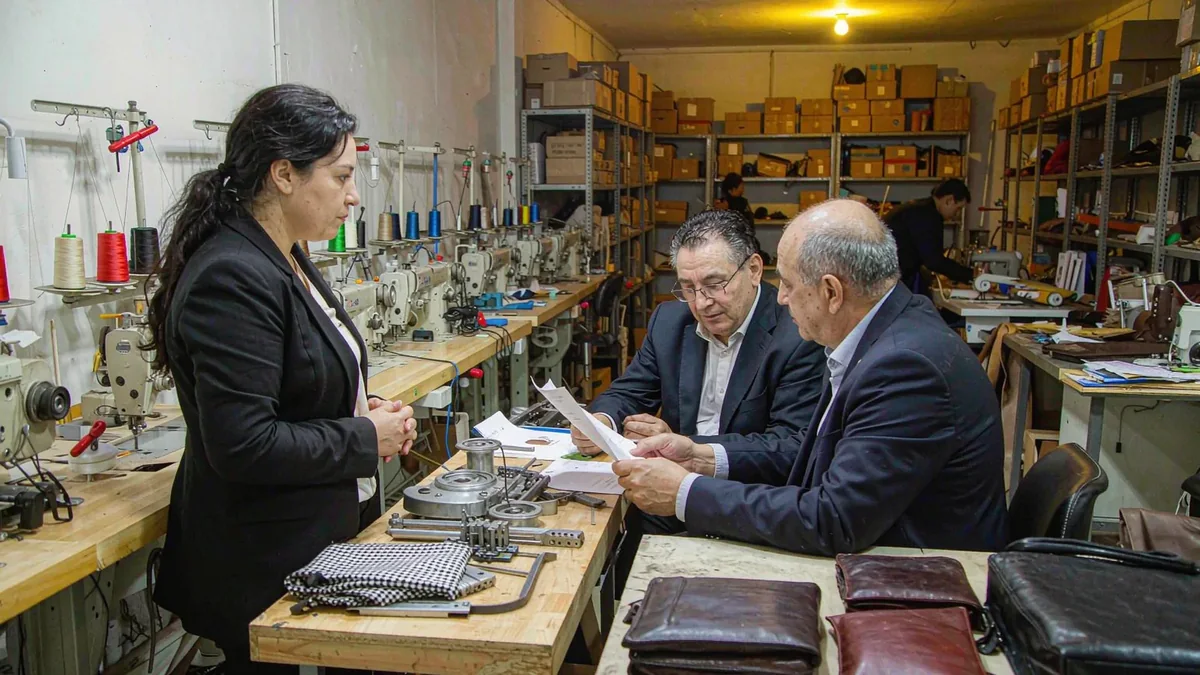
Handbag Maison is the working identity of QUANZHOU JUNYUAN COMMERCIAL AND TRADING CO., LTD, a sourcing and programme-management company dedicated to luxury and premium handbag projects. Our clients are designer brands, maisons, boutique buyers and premium e-commerce teams who need a disciplined route from creative intent to shipped goods. The brief we accept is rarely just a shape; it is a set of expectations about proportion, material character, finish, compliance, timing and presentation.
Our contribution is coordination and accountability. We translate a creative brief into a specification that can be costed, sampled, inspected and repeated. That means writing measurable requirements, confirming what evidence will be accepted, and keeping the record of decisions intact when a design evolves. It also means being candid when a request carries risk, because an early warning costs far less than a correction after bulk begins.
What a Programme-Management Company Actually Does
Clients sometimes assume the value lies only in introduction. In practice, the value lies in governance: deciding what must be true before money and time are committed. We build the specification pack, set approval gates, consolidate buyer comments into actions, compare materials against the intended character, and confirm that inspection criteria match the approved sample rather than a general impression.
- Brief definition: product type, customer, use case, dimensions, function, quantity, market and calendar.
- Feasibility assessment: construction complexity, material and hardware development, testing scope and timing risk.
- Specification writing: measurements, tolerances, material references, construction sequence and acceptance criteria.
- Sampling governance: named questions per round, consolidated comments, one approval owner and controlled revisions.
- Quality planning: incoming checks, first-line review, in-process monitoring, AQL 2.5 (ISO 2859-1) final inspection.
- Export coordination: FOB Xiamen documentation, packing verification and release decisions.
This structure suits teams that care about repeatability. A boutique launching three styles needs different support from a maison extending an established line, yet both benefit from the same discipline: a specification written before sampling, evidence collected during output, and a release decision based on criteria agreed in advance rather than on optimism at the end of the calendar.
How We Work With Quanzhou Yingming Bags
Production for long-running programmes is carried out with our validated partner factory Quanzhou Yingming Bags, an SGS-validated facility. We describe this relationship plainly: the partner operates the lines, while our team manages the brief, the specification, the approvals and the evidence. That separation lets clients receive technical delivery without having to build their own local structure.
The arrangement is deliberate rather than incidental. A validated partner brings established line discipline, material handling and finishing capability; our role is to ensure those capabilities are directed at the approved specification and to verify output against measurable criteria. When a programme needs a specialised process outside that scope, we say so and discuss the shortlisted options with the client before any commitment.

Experience and Capability Without Invention
Capability claims should be specific enough to verify and narrow enough to be honest. We reference only what can be supported: export experience since 2014, 7 production lines, about 200,000 pcs per month, and an SGS-validated partner facility. We do not publish site area or headcount figures, because neither number tells a buyer whether a specific construction will be executed well. What matters is whether the approved sample, materials, tolerances and inspection evidence align.
- Company type
- Sourcing and programme-management company
- Legal name
- QUANZHOU JUNYUAN COMMERCIAL AND TRADING CO., LTD
- Export experience
- since 2014
- Partner facility
- our validated partner factory Quanzhou Yingming Bags
- Validation
- SGS-validated
- Lines
- 7 production lines
- Monthly capacity
- about 200,000 pcs per month
- MOQ
- 500 pcs per style / colourway
- Sampling
- 6-10 working days; complex styles 12-15 working days
- Bulk
- 35-50 days
- Inspection
- AQL 2.5 (ISO 2859-1)
- Trade term
- FOB Xiamen
From 2014 to Today
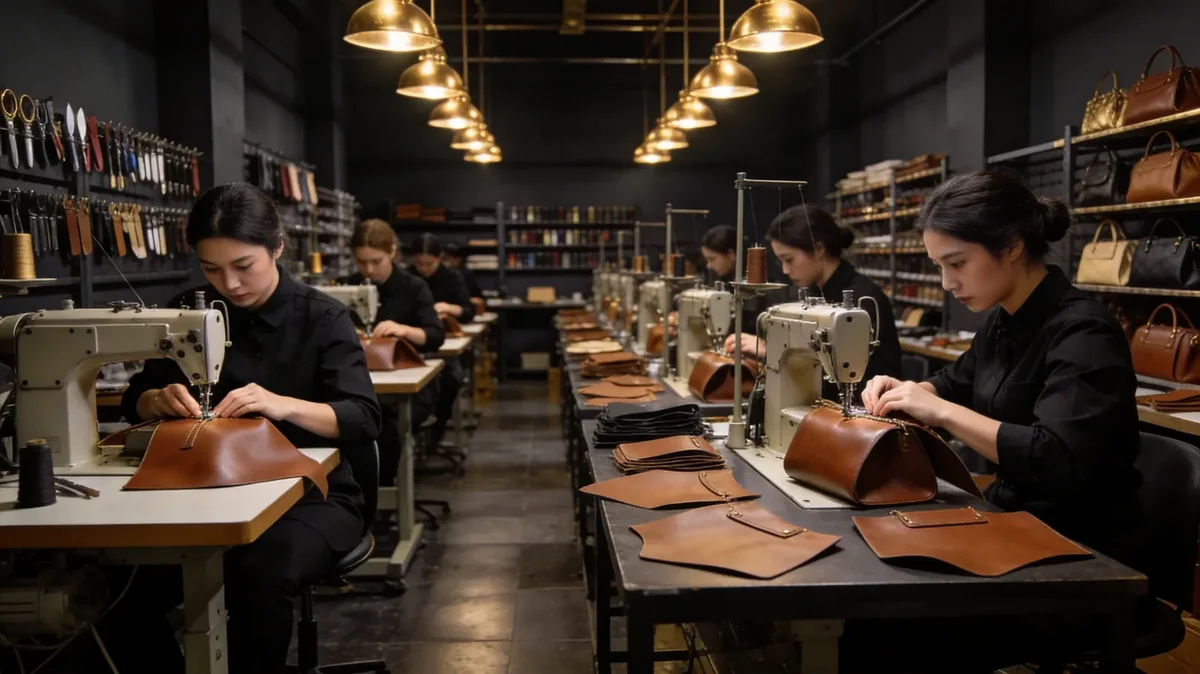
Export work since 2014 has taught a consistent lesson: luxury programmes rarely fail because of one dramatic error; they drift when small decisions are left undocumented. A changed edge colour, a substituted lining, an untested plating tone or an unapproved reinforcement can each appear minor individually and still change how a finished bag looks, moves and wears.
That observation shaped our method. We write decisions down, attach them to samples, and require evidence at defined gates: incoming material, first-line output, in-process workmanship, final inspection and packing. Where a client needs independent confirmation, third-party inspection can be arranged, but the underlying criteria remain the approved specification and the AQL 2.5 (ISO 2859-1) baseline.
Experience also changed how we handle advice. We would rather state that a construction carries risk, that a material needs development time or that a finish will not behave as expected under use than agree to something that will fail later. Clients generally accept an inconvenient truth early and rarely accept a surprise late, so candour is treated as part of the deliverable rather than as an interruption to it.
Standards, Materials and Honest Compliance
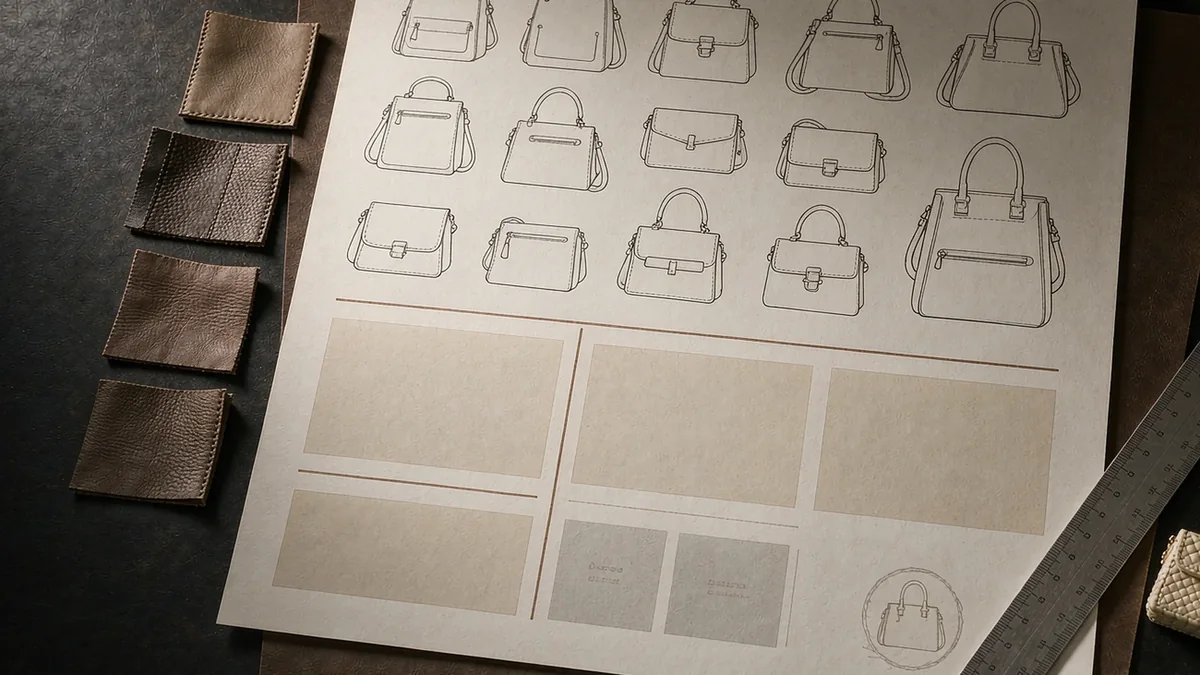
Material and compliance conversations begin with the destination market, not with a generic certificate folder. Leather Working Group provides an audit framework for environmental performance in leather production, while REACH Annex XVII sets restrictions relevant to substances placed on the European market. Where recycled content claims are made, GRS documentation may be requested for applicable inputs and chain-of-custody evidence.
Testing should also be specified precisely. Relevant methods may include the ISO 105 family for colour fastness, ISO 3376 for leather tensile properties and ISO 11644 for coating adhesion. Applicable destination rules such as California Proposition 65 or CPSIA may apply to particular products or components. We confirm the method, laboratory, sample condition and pass criteria for each case rather than implying blanket coverage.

How We Judge Our Own Work
Four measures describe whether a programme was handled well. First, the approved sample and the shipped goods should match within agreed tolerances. Second, the schedule should be explained early when it changes, with the limiting reason identified. Third, comments should be traceable to actions, so no revision is circular. Fourth, packaging and documents should support receiving without additional clarification.
Our working principle
- State the requirement, prove it with evidence, and record the decision. Where a request cannot be supported, explain the reason and propose an alternative that protects the design intent. A benchmark figure such as USD 4.80 is only meaningful when the material set, hardware finish, construction detail and quantity are written beside it.
What We Say No To
Refusing work is part of running a programme honestly. The requests below come up regularly and we decline them, usually with an alternative attached.
We do not quote from a photograph alone. A picture will not tell us panel thickness, construction method or hardware weight, and a number produced from guesswork is a number that will move later.
We do not accept a target price as a specification. Naming a unit figure without drawings, materials and quantity asks for a compromise nobody has defined. Give us the constraints and we will design to them instead.
We do not promise a date before material is booked. Sampling runs 6-10 working days and bulk 35-50 days, and both start from approval and booking rather than from the day the question was asked.
We do not claim certifications we cannot produce. Where a standard applies, the document comes from the named laboratory with the report number printed on it.
We do not quote below the stated minimum and quietly adjust later. MOQ 500 pcs per style / colourway exists because smaller quantities genuinely cost more per unit, not because of policy.
We do not take work we cannot support at the quality level the brand needs. Naming that early costs one conversation; discovering it after sampling costs a season.
We also decline designs that copy a recognisable house silhouette closely enough to create a legal problem for the client, because that risk lands on the brand rather than on us.
Every refusal comes with its reason and, where one exists, the route that would work. The point is not to be difficult; it is to keep the promises that are actually made narrow enough to keep.
Talk to the Team Behind the Programme
If you are assessing whether we suit your next handbag programme, start with the facts: style count, quantity by colourway, design maturity, target material, destination and required delivery window. We will tell you where our method fits, where it needs additional definition and what the first step should be.
Discuss your next programme
Send your brief, drawings, references, quantity plan and delivery target through Contact & Quote. We will review programme fit and outline a practical route.
Frequently Asked Questions
What kind of company is Handbag Maison?
Handbag Maison is the working identity of QUANZHOU JUNYUAN COMMERCIAL AND TRADING CO., LTD, a sourcing and programme-management company. We plan, brief, monitor and defend handbag specifications for designer brands, maisons, boutiques and premium e-commerce teams rather than presenting ourselves as a production house.
Do you own a production facility?
No. We are a sourcing and programme-management company and do not present a facility as our own. Long-running programmes are executed with our validated partner factory Quanzhou Yingming Bags, an SGS-validated facility, while our team manages the brief, approvals and inspection evidence.
How long have you been handling export programmes?
We have coordinated handbag export programmes since 2014. That experience covers brief development, sampling governance, material alignment, inspection planning and export documentation. It also shapes a simple principle: record decisions early, because undocumented changes are the most common cause of avoidable programme drift.
What capacity can buyers plan against?
Planning can reference 7 production lines and about 200,000 pcs per month through the validated partner facility. We do not publish site area or headcount figures. Actual scheduling depends on material availability, construction complexity, testing scope and confirmed order details for each programme.
Which quality standard governs final inspection?
Final inspection follows AQL 2.5 under ISO 2859-1, supported by incoming material checks, first-line review, in-process monitoring and packing verification. Third-party inspection can be arranged when the buyer nominates the appointed party, reporting format and release authority in advance.
Can you support compliance for specific markets?
Yes, when requirements are stated early. Depending on destination and material, relevant references may include REACH Annex XVII, California Proposition 65, CPSIA, GRS for applicable recycled inputs, and Leather Working Group evidence for leather environmental performance. Scope-specific documents are confirmed per programme.
What should a client prepare before the first discussion?
Prepare style count, quantity by colourway, design maturity, target material and hardware direction, destination market, packaging expectation and required delivery window. Identify the two or three details that cannot be compromised, and note where technical alternatives are welcome. A single approval owner should consolidate internal comments before they reach the programme team.
How do you handle changes during a programme?
Changes are assessed against the approved specification before acceptance. We identify the effect on materials, cost, sampling rounds and the 35-50 day bulk window, then confirm the decision in writing. Late artwork, revised hardware or changed packaging most often affect schedule rather than unit economics alone.
Where does the production work actually take place?
Work is released to the named production partner against written specifications the programme issues and inspects to. Drawings, tolerances, bills of material and inspection records are held by the programme rather than living only on the floor, so a repeat order or a change of partner starts from documents rather than from memory.
What happens if a client wants to visit in person?
Visits are arranged against a live order rather than as a showroom tour. A useful day follows one style from tech pack through cutting, bench work and the inspection station, including the reference sample and the defect record. Buyers who cannot travel receive the equivalent evidence as photographs, measurement sheets and reports by style code.
How is confidentiality handled for unreleased designs?
Unreleased work is limited to the people who need it: specifications are issued per style code, samples are logged in and out, and nothing from one programme is shown as reference work to another. Non-disclosure agreements are signed when a client asks. Patterns and tooling paid for by one client are never reused for a different label.
What does a first year usually look like for a new client?
Most first-year engagements run one or two styles: a sampling round to prove the build, a first bulk at MOQ 500 pcs, then a repeat once sell-through is clear. The second year commonly adds colourways or a second silhouette sharing the same platform, which shortens development because the expensive decisions have already been made once.
People Also Ask
Why work with a programme-management company?
A programme-management company converts creative intent into measurable requirements, approval gates and inspection evidence. This reduces interpretation risk between design, buying and production teams, and keeps decisions traceable when a design evolves during development.
What does SGS-validated mean for a partner facility?
It means the partner facility has been assessed through third-party validation rather than self-declared claims. Buyers should still confirm which scope, standard and period the validation covers, because validation does not replace specification-specific inspection or testing.
How is capacity useful when planning a launch?
Capacity of about 200,000 pcs per month across 7 production lines indicates scale, but launch planning depends on your booking position, material lead time and approval speed. Share your required delivery window so feasibility can be assessed against real scheduling.
Why do you avoid publishing area and headcount figures?
Neither figure proves that a specific construction will be executed well. Approved samples, material references, tolerances and inspection evidence are better predictors of outcome, so we publish capability that can be verified against an actual programme.
What makes a benchmark price meaningful?
A benchmark such as USD 4.80 must be paired with the material set, hardware finish, construction detail, quantity and trade term. Without those assumptions, two quotes can appear different while describing the same bag, or identical while describing very different ones.
Sources and further reading
Every figure on this page is either our own programme data or attributed below. Open the originals before you write them into a specification.
- International standards and conformity resourcesInternational Organization for Standardization Institutional reference for ISO 2859-1, ISO 105, ISO 3376 and ISO 11644.
- Leather supply-chain environmental audit frameworkLeather Working Group Reference for leather environmental performance and traceability discussions.
- REACH legislationEuropean Chemicals Agency Official European reference for REACH and Annex XVII restrictions.
- Testing, inspection and certification servicesSGS Reference for third-party validation and inspection concepts.