Luxury Materials for Handbags: Leather Grades, Exotic Skins, Hardware and Compliance
Luxury materials decide how a handbag looks, ages, weighs and clears customs. This hub sets out the specification logic used on our bench: bovine grades and thickness in millimetres, exotic skins with CITES documentation, Leather Working Group rated tanneries, brass and zamac hardware with 0.15-0.3 micron plating, and the REACH, Prop 65 and CPSIA file behind them. Material choice also moves the commercial frame: 500 pcs MOQ per style and colourway, 6-10 working days of sampling and 35-50 day runs, FOB Xiamen.
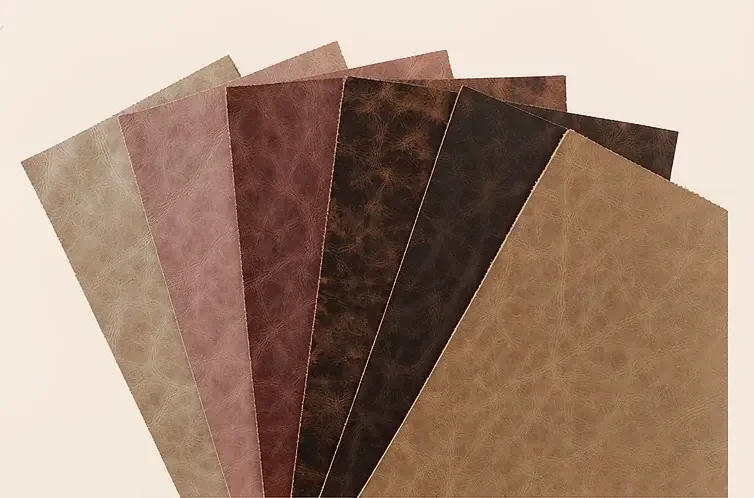
How a Luxury Material Palette Is Decided
A material palette is chosen in one order: silhouette first, then hand, then colour, then compliance. A structured top-handle bag needs a leather with body and a memory; a slouchy hobo needs a skin that falls. Choosing colour first is the most common reason a beautiful skin fails on the bench.
Write the palette as numbers before it goes anywhere near a hide. Thickness in millimetres, temper, finish adhesion class, plating thickness in microns, zip gauge, interlining thickness and a colour tolerance in delta E are all verifiable, and a verifiable specification is the only one a bench can repeat across 500 units and across two seasons.
Bovine Leather: Grades, Cuts and Numbers
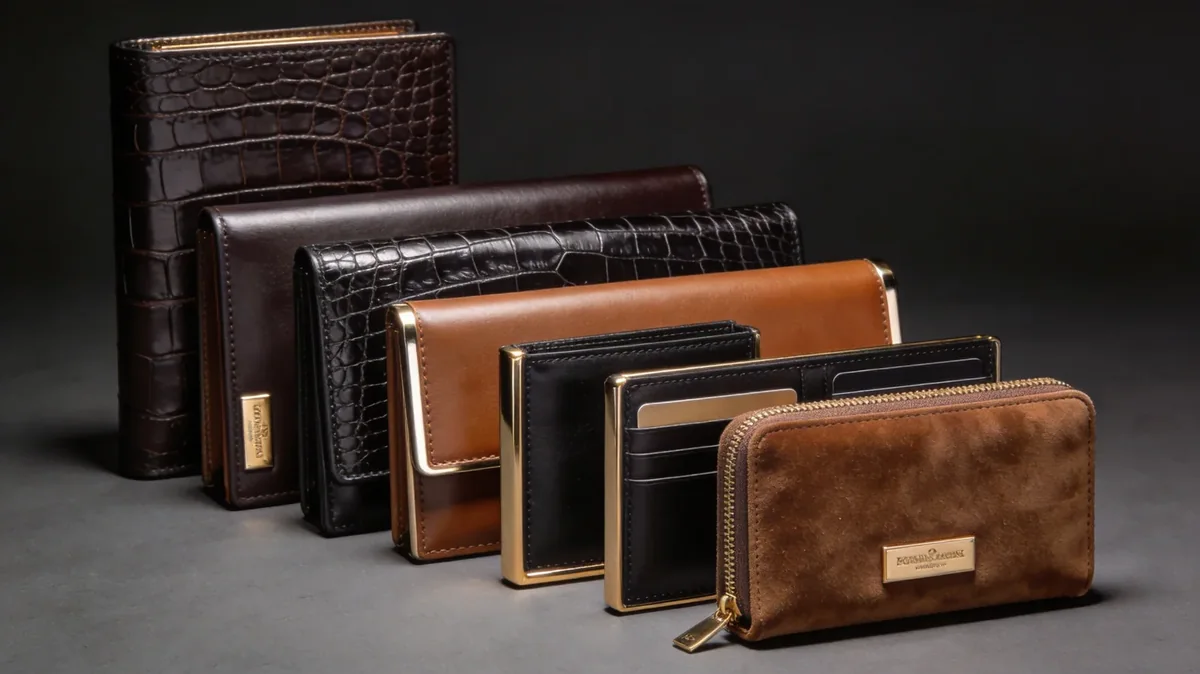
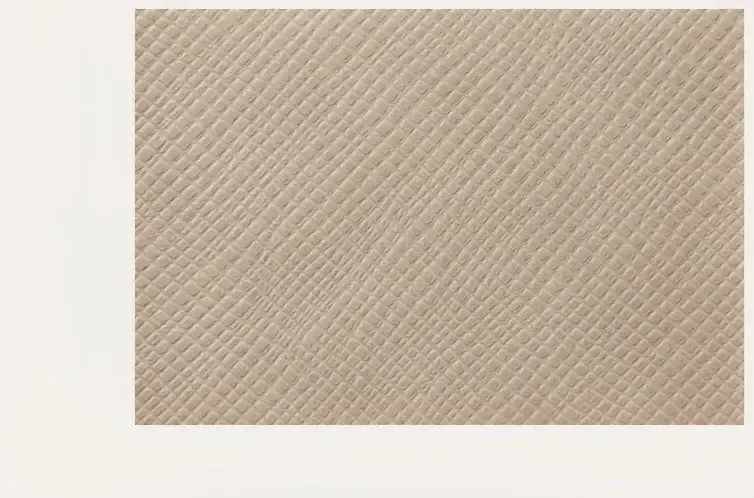
Most luxury bag programmes are built on bovine leather, and the grade names are traded loosely. Specify the cut and the finish rather than the marketing term: full grain keeps the grain surface, top grain is corrected and finished, and split is a different article entirely with different strength.
| Leather | Typical thickness | Character and use |
|---|---|---|
| Full grain calfskin | 1.2-1.4 mm | Tight grain, holds structure; structured top-handle and satchel bodies |
| Top grain calfskin | 1.0-1.2 mm | Corrected surface, very even colour; large panels and repeat programmes |
| Lambskin | 0.8-1.0 mm | Soft, fluid hand; slouchy bodies, linings and evening bags |
| Vegetable tanned cowhide | 1.8-2.2 mm | Firm, darkens with use; handles, straps, bases and trims |
| Suede | 1.0-1.2 mm | Napped surface, absorbs shade; panelling and seasonal capsules |
| Calfskin lining split | 0.6-0.8 mm | Light, smooth; interior linings and pocketing |
Specifying Leather by Number
Four numbers carry most of the specification. Thickness sets the weight and the structure; temper sets how the panel behaves at the fold; finish adhesion sets whether the surface survives abrasion; colour tolerance sets whether two panels on one unit read as the same bag.
- Thickness
- 1.2-1.4 mm for structured bodies; 0.8-1.0 mm for soft skins
- Temper
- Medium firm for structure, soft for fluid silhouettes
- Finish adhesion
- Tested to ISO 11644 (leather coating adhesion)
- Tensile strength
- Tested to ISO 3376 for load-bearing panels and handles
- Colour fastness
- Tested to ISO 105 series for rub, light and perspiration
- Colour tolerance
- Delta E of 1.0 or less between panels on one unit
- Cutting yield
- Recorded per hide, typically 60-70 percent on structured panels
Exotic Skins and CITES Documentation
Exotic skins are workable in a commercial programme, but they are a documentation exercise as much as a material one. Species listed in CITES Appendix II or Appendix III require permits issued per shipment, several markets restrict import entirely, and airline or courier rules can differ from customs rules.
Order CITES paperwork with the hides, not with the bags. A re-export document is issued per shipment and can add two to three weeks if it is applied for after packing.
- Crocodile and alligator: belly and hornback cuts, graded by tile size and symmetry.
- Ostrich: quill pattern, with full quill panels reserved for the most visible faces.
- Python: scaled, backed for stability, restricted in some US states and cities.
- Stingray and shagreen: hard, beaded surface used for panelling and inlay.
- Documentation: CITES permit or re-export document, plus tannery origin record.
Tannery Selection and Leather Working Group Ratings
Hides are booked through tanneries rated by the Leather Working Group, whose audit protocol covers energy, water, effluent and restricted substance control. A rating is not a quality grade, but it tells a buying team that the tannery can hold a compliance file and survive an audit, which is what matters when a retailer asks for traceability.
Book the tannery with the style, not with the season. A re-order matched to the same tannery and the same article reproduces the previous hand and shade far more closely than a substitution made for availability, and it shortens the approval cycle because the compliance file already exists.
Hardware Metals: Brass, Zamac and Stainless
Hardware is where a bag is judged in the hand. Weight, the sound of a turn-lock closing and the way a finish wears at the contact points are felt before they are seen, and they follow directly from the base metal and the plating thickness written into the tech pack.
| Base metal | Plating and finish | Where it is used |
|---|---|---|
| Solid brass | 0.15-0.3 micron gold, palladium or ruthenium; 48 hour salt spray | Turn-locks, feet, frame corners on flagship styles |
| Zamac | Cast, then plated to 0.15-0.3 micron; 24 hour salt spray | Logo plates, magnetic catches, mid-tier programmes |
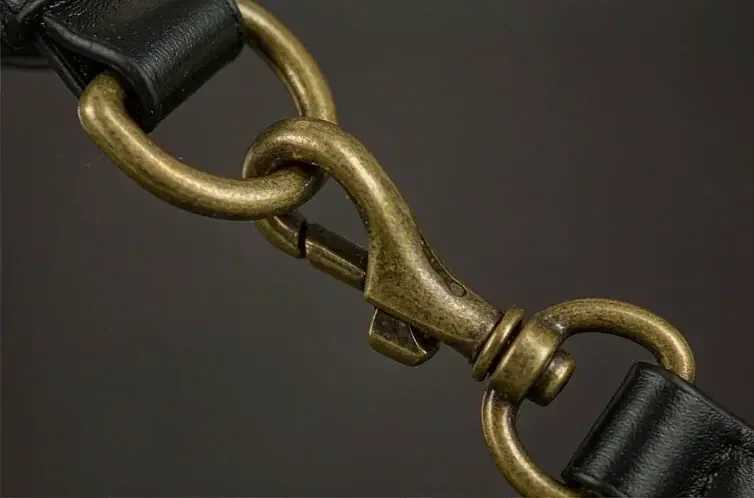
| Stainless steel | Brushed or PVD, no heavy plating needed | Chain straps, rings, dog clips |
| Aluminium | Anodised, very light | Oversized frames where weight matters |
| Brass with PVD | Vapour deposited layer for high wear resistance | High-contact fittings on daily-use bags |
Plating, Finish and Tone Matching
Tone is the hardest thing to hold across a set. Gold, palladium and ruthenium finishes are matched under D65 light against a reference chip, and the tolerance is recorded so the second delivery can be matched to the first. Nickel-free specifications are available for brands selling into markets with nickel release limits.
- Plating thickness
- 0.15-0.3 micron for gold and palladium finishes
- Salt spray test
- 24 hours for zamac, 48 hours for solid brass
- Zip gauge
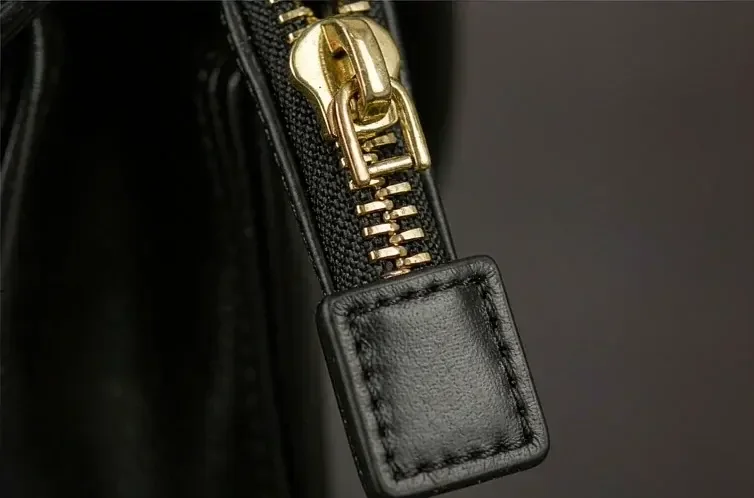
- #5 for main openings, #3 for interior pockets
- Magnet grade
- N42 or equivalent for magnetic closures, set behind a leather guard
- Feet
- Set on reinforced panels so they do not telegraph through the lining
- Tone reference
- Matched under D65 light and recorded as a delta E tolerance
Linings, Interlining, Thread and Closures
The interior is where a bag is judged after three months. Linings, interlining and thread are specified as carefully as the outer skin, because wear appears there first.
Lining
Calfskin split at 0.6-0.8 mm, or a GRS-certified recycled twill for brands making a recycled content claim.
Interlining
Non-woven at 0.8 mm for body panels, lighter grades on gussets so the fold stays soft.
Thread
Bonded filament at 0.45 mm, colour-matched to the leather, sewn at 8-9 stitches per inch.
Closures
Turn-locks, magnetic catches, zips in #5 gauge and frame catches, each with a cycle test at sampling.
Reinforcement
Hidden reinforcement at handle roots and strap anchors, where load concentrates in daily use.
Edge finish
Three coats of edge paint, sanded between coats, or a turned and burnished edge on vegetable tanned trims.
Compliance: REACH, Prop 65, CPSIA and Nickel
Material compliance is a file, not a statement. Each article in the bag carries its own obligations, and a retailer selling under its own name holds the exposure if a restricted substance is found.
| Material group | Requirement | Evidence held |
|---|---|---|
| Leather and finishing | REACH Annex XVII restricted substances | Declaration plus accredited laboratory test report |
| Dyes and pigments | Colour fastness and restricted amines | ISO 105 series report, azo dye declaration |
| Hardware and plating | Nickel release, lead content, Prop 65 listing | Plating specification, salt spray and release test report |
| Linings and interlining | GRS transaction certificate where claimed | Batch certificate matching the booked roll |
| Adhesives and edge paint | Solvent and phthalate limits | Safety data sheet and formulation declaration |
| Packaging | Recycled content and labelling rules such as EU Regulation 1007/2011 | Fibre composition label and tannery declaration |
Testing Standards That Back the Specification
When a specification is challenged, a standard number ends the argument. The tests below are run at material approval and again at pre-production if the article changes.
- ISO 11644 for leather coating adhesion, which predicts whether a finish will lift at the fold.
- ISO 3376 for tensile strength and elongation on load-bearing panels and handles.
- ISO 105 series for colour fastness to rub, light, perspiration and water.
- ISO 2859-1 for the AQL 2.5 inspection plan applied to the finished lot.
- Salt spray testing to 24 hours for zamac and 48 hours for solid brass hardware.
- Cycle testing of closures, typically 500 open and close cycles on a turn-lock.
What Material Choice Does to Cost and Lead Time
Material decisions move three commercial numbers at once: unit cost, minimum quantity and calendar. Exotic skins raise unit cost and add permit time; a custom plating colour adds a finish approval cycle; a substituted lining saves cents and risks a claim.
Commercial effects to price before booking
- Hardware is the fastest way to move unit cost: a plated brass turn-lock at USD 4.80 per set against a zamac alternative.
- Exotic skins add permit time, so add two to three weeks to the material booking, not to the packing week.
- Minimum order stays at 500 pcs per style and colourway, applied per material as well as per colour.
- Sampling stays at 6-10 working days, rising to 12-15 working days for exotic panels or custom-cut hardware.
- Bulk stays at 35-50 days provided the material booking holds its date.
- Terms stay FOB Xiamen, with CIF and DDP available on request.
Traceability and the Document Pack
Every booked article should be traceable to a batch: tannery and hide lot for leather, mill and roll reference for lining, plating batch and test report for hardware. The pack travels with the order and is what a customs enquiry or a retailer audit will ask for first.
Our partner site has run export programmes since 2014 on 7 production lines with capacity of about 200,000 pcs per month, and holds BSCI, Sedex, REACH, Prop 65, CPSIA, GRS and Leather Working Group rated tannery references. Brands wanting the audit side in detail can read how to audit luxury leather handbag partners.
Where to Go Next
If you are still choosing, start with calfskin versus lambskin for luxury handbags and hardware types and grades explained. If the palette is already fixed, the next gate is sampling on designer handbag production, and the commercial frame sits on high-end handbag sourcing.
Specify a material palette
Send your silhouette, target leather and hardware references. You receive a material plan with thickness, plating specification and compliance file within two working days.
Frequently Asked Questions
Which leather is best for a structured luxury handbag?
Full grain calfskin at 1.2-1.4 mm is the usual choice for a structured top-handle or satchel body: it holds shape, takes a clean edge and resists marking at the corners. Where a softer hand is wanted, lambskin at 0.8-1.0 mm gives a fluid drape but needs interlining support to stop the panel collapsing.
How thick should luxury handbag leather be?
Structured bodies are specified at 1.2-1.4 mm, soft or slouchy skins at 0.8-1.0 mm, linings at 0.6-0.8 mm and vegetable tanned trims such as handles and bases at 1.8-2.2 mm. Thickness sets the weight of the finished bag and the way a panel behaves at the fold, so it is written into the tech pack in millimetres.
Can exotic leather be used in a commercial bag programme?
Yes, provided the paperwork is booked with the skins. Species listed in CITES Appendix II or III need a permit or re-export document issued per shipment, and some markets restrict particular species entirely. Expect a longer material booking and a higher unit cost than bovine leather of the same size.
What does CITES documentation cover for exotic skins?
CITES appendices list species by the level of trade control they are under, and the permit or re-export document identifies the specimen, its origin and the shipment it travels with. It is issued per shipment rather than per style, which is why applying for it at packing rather than at booking costs two to three weeks.
What is the difference between brass and zamac hardware?
Solid brass is heavier, takes a finer finish and is tested to 48 hours of salt spray; zamac is a cast alloy that is lighter and lower in cost, tested to 24 hours. Both are plated to 0.15-0.3 micron. A plated brass turn-lock at USD 4.80 per set is a visible cost step above a zamac casting of the same shape.
How thick is plating on luxury handbag hardware?
Gold, palladium and ruthenium finishes are typically specified at 0.15-0.3 micron over the base metal, with wear testing by salt spray to 24 hours for zamac and 48 hours for solid brass. Vapour deposited finishes are used where contact wear is high, such as feet and turn-locks on daily-use bags.
How is leather tested before it is approved?
Leather is tested to ISO 11644 for coating adhesion, ISO 3376 for tensile strength and elongation, and the ISO 105 series for colour fastness to rub, light, perspiration and water. Panels on one unit are also matched to a colour tolerance of delta E 1.0 or less so that a bag reads as a single article.
Which compliance documents should a brand hold for materials?
Hold a REACH Annex XVII declaration with an accredited laboratory test report for leather and finishing, a California Prop 65 declaration for hardware and dyes, CPSIA component test reports, a GRS transaction certificate for any recycled content claim, and the Leather Working Group rating for the tannery that supplied the hides.
What lining and interlining should a luxury bag use?
Linings are usually a calfskin split at 0.6-0.8 mm or a GRS-certified recycled twill where a recycled content claim is made. Interlining sits at 0.8 mm on body panels and lighter on gussets so the fold stays soft. Thread is bonded filament at 0.45 mm, sewn at 8-9 stitches per inch.
How does material choice affect cost and lead time?
Exotic skins raise unit cost and add permit time; a custom plating colour adds a finish approval cycle; a substituted lining saves cents but risks a claim. Hardware moves cost fastest, so it is specified in the tech pack. Sampling stays at 6-10 working days, rising to 12-15 for exotic panels or custom-cut hardware.
What is a Leather Working Group rating?
It is an audit result issued by the Leather Working Group covering a tannery's energy, water, effluent and restricted substance control. It is not a leather quality grade, but it tells a buying team that the tannery can hold a compliance file and survive an audit, which is what a retailer will ask for.
Can hardware be specified nickel free?
Yes. Nickel-free plating systems are available for brands selling into markets with nickel release limits, and the requirement is written into the hardware schedule with the finish and the plating thickness. The release test result is then held in the compliance file alongside the salt spray report.
How much leather does one structured handbag consume?
Consumption depends on panel size, matching requirements and the hide used: a structured medium bag commonly consumes well under one full hide, but usable area after grading is always less than the outline suggests. Nesting is calculated before costing, which is why yield, not skin price alone, decides the material line of a quotation.
What is the difference between full-grain and top-grain in use?
Full-grain keeps the natural grain and develops patina, but it carries more scars and more shade variation between panels. Top-grain is corrected for uniformity, which improves yield and consistency across a run. Neither is automatically better: display bags favour uniformity, while heritage pieces often want the natural surface.
People Also Ask
What leather do luxury handbags use?
Mostly full grain or top grain calfskin at 1.2-1.4 mm for structure, lambskin at 0.8-1.0 mm for soft silhouettes, and vegetable tanned cowhide at 1.8-2.2 mm for handles and bases.
How do I check leather quality before booking?
Specify thickness, temper and finish, then test to ISO 11644 for adhesion, ISO 3376 for tensile strength and ISO 105 for colour fastness before the hides are cut.
Is brass hardware worth the extra cost?
For flagship styles, yes. Solid brass is heavier, holds a finer finish and is tested to 48 hours of salt spray against 24 hours for zamac, which shows at the contact points after a season.
Do exotic skins delay a handbag order?
They can. CITES permits are issued per shipment, so booking paperwork with the hides protects the calendar; applying at packing typically adds two to three weeks.
What zip gauge is used on a luxury handbag?
#5 is standard for main openings, with #3 on interior pockets. The gauge, tape colour and puller finish are all written into the hardware schedule.
Sources and further reading
Every figure on this page is either our own programme data or attributed below. Open the originals before you write them into a specification.
- Leather Working Group audit protocolLeather Working Group Tannery audit ratings used when booking hides for a luxury handbag programme.
- CITES Appendices I, II and IIICITES Species listings behind the permits required for exotic skin handbags.
- ISO standards catalogueInternational Organization for Standardization Source of ISO 11644, ISO 3376, ISO 105 and ISO 2859-1 cited in material specifications.
- REACH Regulation and Annex XVIIEuropean Chemicals Agency Restricted substance list applied to leather, dyes, adhesives and hardware finishes.
- Global Recycled StandardTextile Exchange Standard behind GRS transaction certificates for recycled linings and packaging.