Calfskin vs Lambskin for Luxury Handbags: A Buyer's Comparison
Calfskin vs lambskin for luxury handbags: which should a house specify? Choose calfskin when the silhouette must stand on its own and survive daily handling for years; choose lambskin when the design depends on drape and a hand that reads as clothing rather than architecture. Calfskin is typically cut at 1.2-1.4 mm, lambskin at 0.8-1.0 mm, and that difference shows up in edge build, stitch recovery and how a panel behaves after 35-50 days in transit. This guide works the choice as seven checks, in the order a development team actually needs them.
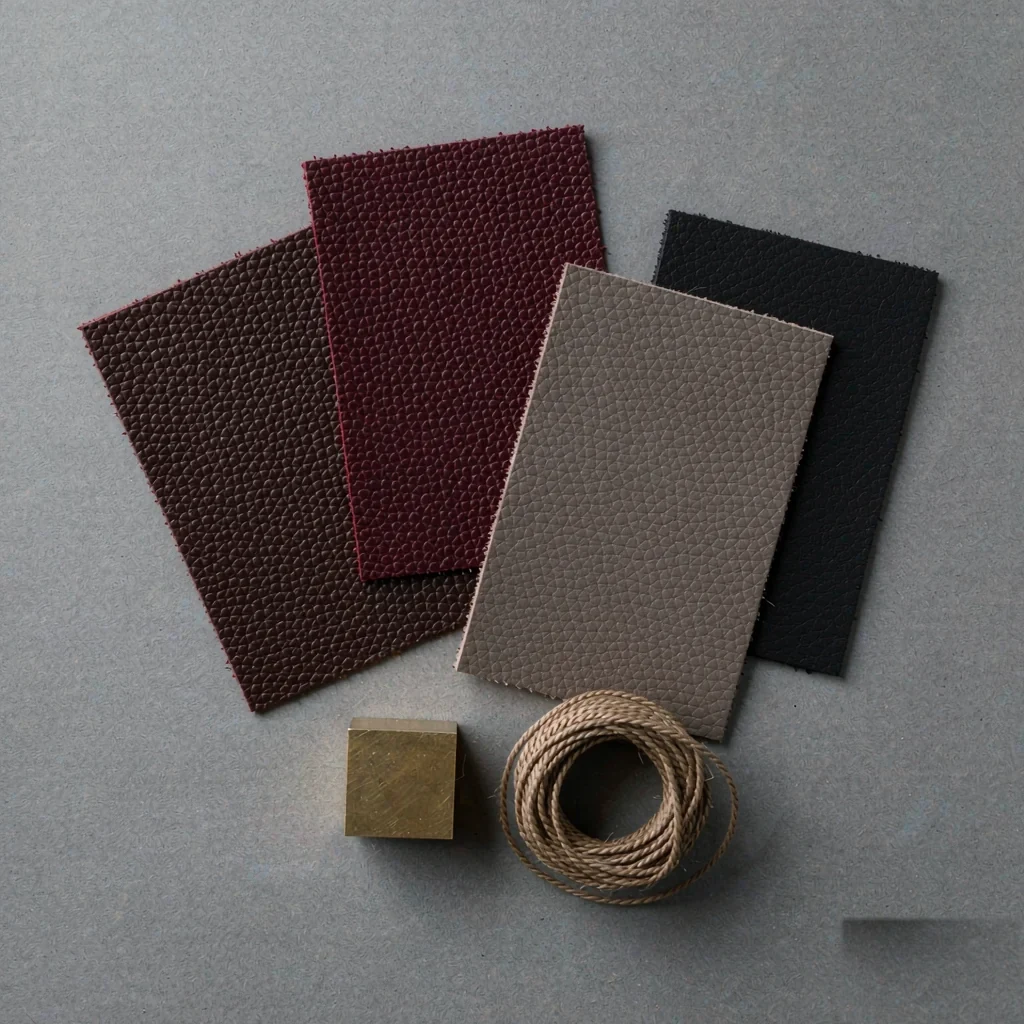
Check One: What the Silhouette Actually Demands
The silhouette decides this before taste does. A structured top-handle body, a frame bag with a rigid gusset, or any shape that has to stand upright on a shelf needs a skin with enough body to resist creep. Calfskin at 1.2-1.4 mm holds a crease line and keeps a corner sharp through months of display. Lambskin at 0.8-1.0 mm collapses beautifully on a soft hobo or a slouched shoulder body, but it will round the same corner inside a season.
Ask which failure costs more in your market: a bag that slumps on the shop floor, or a bag that feels stiff the first time a client lifts it. Houses selling to boutique buyers usually accept a little structure in exchange for a shelf presence that photographs well. Houses selling through appointment and trunk show often go the other way, because the skin is judged in the hand before it is judged in the mirror.
- Structured bodies, frame bags and any design with a self-standing base: calfskin first.
- Soft hobo, slouch and gathered bodies where the pattern does the shaping: lambskin first.
- Convertible shapes with a detachable strap: calfskin at the handle, lambskin acceptable on the flap.
- Small leather goods and card cases: either, but lambskin shows burnishing sooner at the fold.
- Bodies that will carry a heavy trim set: calfskin, because the skin has to carry the load.
Check Two: Substance, Temper and How Each Is Measured
Substance is thickness, temper is how the skin resists bending, and the two are routinely confused in correspondence. A 1.0 mm calfskin can feel firmer than a 1.3 mm lambskin because temper is set in the retanning and finishing stages. Write both numbers on the specification: a substance band with a permitted variation, and a temper described against a sealed reference rather than an adjective such as soft or medium.
- Calfskin substance
- 1.2-1.4 mm, permitted variation +/-0.1 mm
- Lambskin substance
- 0.8-1.0 mm, permitted variation +/-0.08 mm
- Stitch density
- 8-9 stitches per inch on both, thread 0.45 mm braided polyester
- Edge finish
- Three coats of edge paint, sanded between coats
- Interlining
- 0.8 mm non-woven on calfskin panels, 0.4 mm on lambskin
- Tensile reference
- Tested to ISO 3376, result recorded per dye lot
- Finish adhesion
- Tested to ISO 11644, floor of 4 N per 10 mm width
- Rub fastness
- Tested to ISO 11640, minimum 4 on the grey scale for dry rub
A note on the numbers above: they are specification floors we set on a programme, not clauses lifted from the standards themselves. The standards give the method; the house sets the floor. Keeping that distinction explicit is what stops an argument later, when a delivery passes the test method but still feels wrong in the hand.
Check Three: Surface Character, Grain and Finish
Calfskin carries a tight, even grain with pores that read as a fine field; lambskin carries a looser, more open grain and a surface that breaks into soft, irregular folds under the least pressure. On a large panel the difference is obvious at arm's length. On a gusset or a strap it is barely visible, which is why mixed-skin bodies are common and usually successful.
Full-grain calfskin
Grain left intact, minimal correction. Shows the fine pore field and takes a patina slowly and evenly. Best for bodies sold on material honesty.
Corrected calfskin
Surface lightly corrected and embossed for uniformity. Higher cutting yield, less character, more predictable across a large dye lot.
Natural-grain lambskin
Softest hand in the range, with visible fold break. Suited to gathered or draped panels where the fold is part of the design.
Lambskin with a light finish
A thin protective top coat that slows soiling without hardening the hand. Common on light colourways destined for resort deliveries.
Finish level is where most disappointment is created. A buyer approves a swatch cut from a lightly finished skin, then receives bulk finished one stage heavier because the tannery needed the extra coverage to hit a pale colourway. Seal the swatch, keep a retained reference, and make the finish level a line item rather than an implication.
Check Four: Cutting Yield and Panel Behaviour
Lambskin hides are small and irregular, so the usable panel area per hide is lower and the layout has to work around the shape of the skin rather than the pattern. Calfskin gives larger, squarer panels and a more forgiving layout. In practice the same body can consume meaningfully more purchased area in lambskin, and that is a material cost, not a cutting-room inconvenience.
| Factor | Calfskin | Lambskin |
|---|---|---|
| Typical substance | 1.2-1.4 mm | 0.8-1.0 mm |
| Panel size available | Large, squarer panels | Smaller, irregular panels |
| Layout behaviour | Pattern-led, forgiving | Skin-led, tighter nesting |
| Interlining needed | 0.8 mm on most panels | 0.4 mm, or none on draped panels |
| Edge build | Three coats, crisp arris | Three coats, rounder arris |
| Shape retention after transit | Recovers quickly | May need light steaming |
One practical consequence: on lambskin, plan panel breaks where a fold is wanted and avoid placing a seam across a load path. On calfskin, the reverse applies, because the skin will hold a seam line visibly if the panel is slightly off.
Check Five: Wear, Patina and Aftercare
Lambskin develops a soft bloom quickly and marks easily; calfskin develops patina slowly and resists scuffing. Both are desirable, but they suit different customer promises. A house that sells on the idea that a bag should look better in year five should lean calfskin. A house that sells on immediate softness should lean lambskin and accept that the bag will show its life sooner.
- Lambskin scuffs at the base corners within weeks of daily use; a protective foot set is not optional.
- Calfskin darkens slowly at the handle where hand oils collect, which most clients read as character.
- Water spotting behaves differently: lambskin blotches, calfskin dries more evenly if left alone.
- Light colourways in lambskin are the hardest combination in the range and need a written aftercare card.
- Both skins benefit from a dust bag and a stuffed body; lambskin needs the stuffing more.
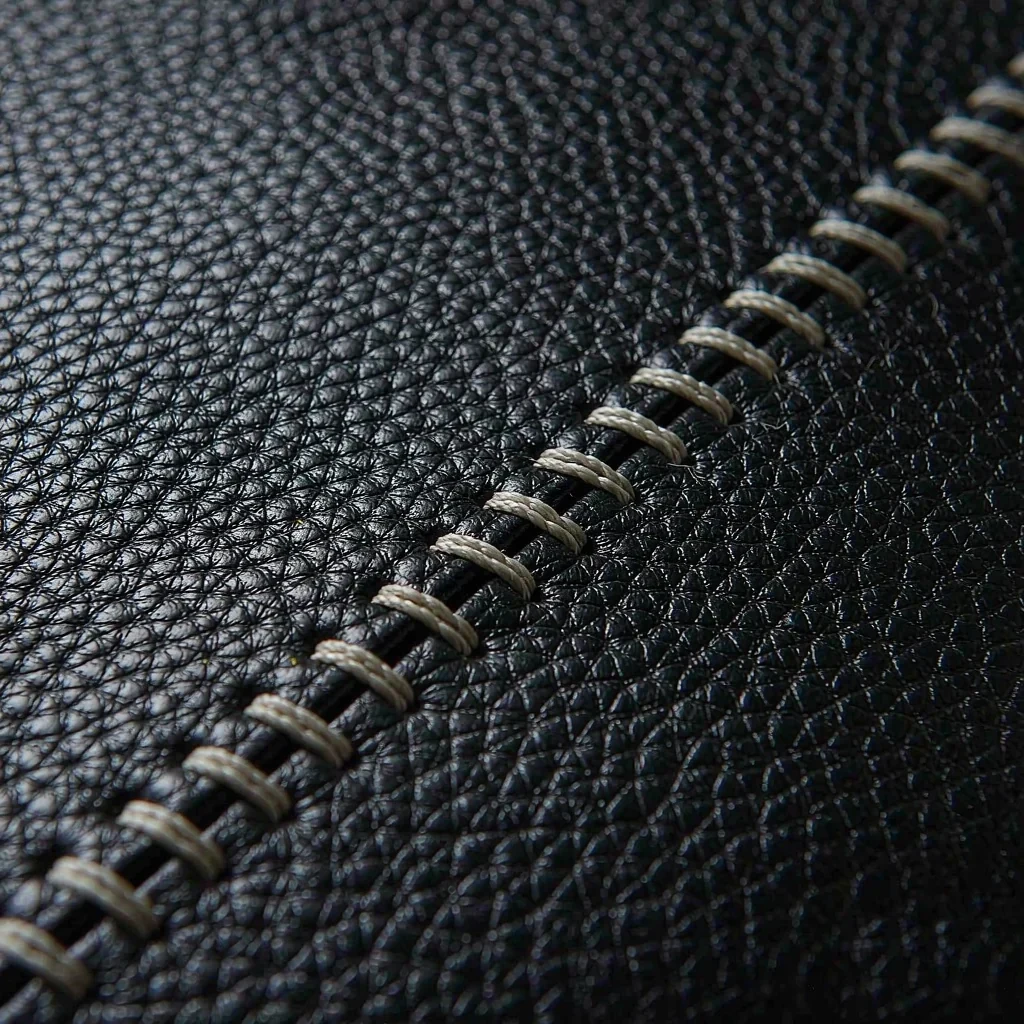
Check Six: Hardware, Edge Paint and Stitch Compatibility
Hardware mass has to be carried by the skin. A heavy brass turn-lock or a cast frame pulls at its fixing points, and on 0.8-1.0 mm lambskin that pull shows as a dimple around the setting unless a reinforcement patch is planned. On calfskin the same trim sits flat with a standard backing. Specify the reinforcement as a drawing note, not as a cutting-room habit, so it survives a change of bench.
Stitch recovery is the second compatibility issue. At 8-9 stitches per inch with 0.45 mm thread, lambskin closes around the thread and hides the line; calfskin holds the thread slightly proud, which is what gives a hand-finished body its visible spine. If the design calls for a saddle stitch that reads as a decoration, lambskin will underplay it and calfskin will show it.
Check Seven: Cost, MOQ and Programme Timing
Programme terms are the same whichever skin is chosen: MOQ 500 pcs per style and colourway, sampling at 6-10 working days and 12-15 for a complex construction, bulk at 35-50 days on FOB Xiamen terms, inspected to AQL 2.5 under ISO 2859-1, at a base reference unit of USD 4.80 before the material is applied. What changes is the material line above that base and the yield behind it.
The work runs across 7 production lines with about 200,000 pcs per month of capacity and export experience since 2014, delivered through our validated partner factory Quanzhou Yingming Bags, which is SGS-validated. Exotic and speciality skins sit outside this comparison and carry their own documentation; domestic calf and lamb do not require CITES paperwork, which is one reason they stay the default for a first collection.
Quick decision rule
- Self-standing, hardware-heavy or frame construction: calfskin at 1.2-1.4 mm.
- Gathered, draped or clothing-like bodies: lambskin at 0.8-1.0 mm.
- Mixed bodies: calfskin on load paths and handle, lambskin on the decorative panel.
- Light colourways: calfskin unless the design cannot carry a firmer hand.
- Any body over 1 kg finished weight: calfskin, with reinforcement patches drawn in.
Where Each Skin Belongs Across a Collection
A balanced collection usually carries one structured calfskin body that anchors the range and photographs as the house signature, one softer lambskin body that gives the line a relaxed register, and one mixed body that uses both. That mix covers the shelf, the appointment and the trunk show without doubling the number of skins a tannery has to hold against the season. It also spreads risk: if a lambskin colourway underperforms, the calfskin body carries the margin.
What the Specification Must Say
Write the skin, the substance band, the temper reference, the finish level, the test methods with their floors, and the colour standard under which the match is judged. Add the reinforcement notes and the edge build. Leave nothing to the bench's memory, because the bench will change between the sample and the third bulk delivery, and the specification is the only thing that travels with the order.
Deciding between calfskin and lambskin for a new body?
Send the silhouette, the target substance and the hardware set. We will return a skin recommendation, a yield estimate and a sampling plan in USD and days. Request a quotation
Frequently Asked Questions
Is calfskin more durable than lambskin for a daily-use handbag?
In practical terms yes. Calfskin at 1.2-1.4 mm resists scuffing and holds a corner, so a daily-carry body keeps its shape for years. Lambskin stays softer but marks at the base corners and along the fold within weeks. Durability here means shape retention more than tearing resistance, since both skins pass the same tensile test floor.
What substance should a structured top-handle bag be specified at?
Start at 1.2-1.4 mm in calfskin with a permitted variation of plus or minus 0.1 mm. Below 1.2 mm a self-standing body begins to creep at the base within a season. Pair it with 0.8 mm non-woven interlining on the main panels and a reinforcement patch behind any cast hardware setting.
Can lambskin be used on a frame bag construction?
It can, but the frame has to be light. Lambskin at 0.8-1.0 mm will not hide the pull of a heavy cast frame around its fixing points, so a dimple appears at each setting. Where a frame is required on a soft skin, specify a slim section and add a reinforcement patch drawn into the specification.
How do the two skins differ in cutting yield?
Calfskin hides give larger and squarer panels, so the layout follows the pattern. Lambskin hides are smaller and irregular, so the layout follows the skin, and the same body consumes more purchased area. That is a material cost line, not a cutting-room detail, and it should be visible on the cost sheet before sampling starts.
Which skin takes a patina better over five years?
Calfskin, if patina means even darkening at the handle and a slow bloom on the panels. Lambskin reaches its soft, broken-in look quickly and then changes less, but it also picks up scuffs that read as damage rather than character. Houses selling a year-five story usually specify calfskin for that reason.
Is the same stitch density correct for both skins?
Yes, 8-9 stitches per inch with 0.45 mm braided polyester is a workable floor on both. The difference is how the line reads: lambskin closes over the thread and underplays the stitch, while calfskin holds it slightly proud and shows a hand-finished spine. Adjust the look through thread colour rather than stitch density.
Do either of these skins require CITES documentation?
No. Domestic calf and lamb are not listed under the CITES appendices, so a programme built on them carries no re-export paperwork. Exotic species are a separate case entirely and require permit documentation before any skin is cut, which is why most first collections stay on calf and lamb.
How should temper be written into a specification?
As a band plus a sealed reference rather than an adjective. Give the substance band with its permitted variation, then describe temper against a retained sample held by both sides. Words such as soft or medium are interpreted differently by every bench and are the most common source of a disputed bulk delivery.
What is the minimum order for a calfskin or lambskin body?
MOQ is 500 pcs per style and colourway. Splitting a colourway across two skins does not halve the number, because each variation carries its own cutting plan and its own material booking. If a launch needs three colourways, plan for 1500 pcs across the style rather than three small runs.
How long does sampling take on each skin?
Sampling runs 6-10 working days for a standard construction and 12-15 working days for a complex one such as a frame or a fully lined structured body. The skin choice rarely changes the sampling clock; the construction does. Bulk then runs 35-50 days on FOB Xiamen terms once the sample and the material are approved.
Is a mixed calfskin and lambskin body harder to make?
It is common and well understood, provided the panel break is drawn deliberately. Put calfskin on load paths and handles and lambskin on decorative or draped panels. The risk is at the seam where the two substances meet, so specify the edge build and the interlining change at that line rather than leaving it to the bench.
Which skin suits a light or pastel colourway better?
Calfskin, because its tighter grain takes a pale finish with less pigment and therefore less risk of a colour shift between dye lots. Lambskin in a pale colourway needs heavier coverage, which both firms the hand and raises the chance of a visible mismatch against the approved swatch.
How is colour consistency checked between the two skins?
By viewing panels side by side under a D65-equivalent light source at a fixed distance, with a tolerance expressed as a delta E figure against the sealed reference. The method is the same for both skins; the difference is that lambskin's surface break changes the perceived depth, so the reference has to be a finished panel rather than a flat swatch.
What inspection standard applies to the finished bodies?
Inspection is set at AQL 2.5 under ISO 2859-1, with the option of a third-party inspection before shipment. Defects are classified as critical, major and minor and counted against the sample size drawn from the lot, so the acceptance number scales with the delivery rather than being a fixed count per carton.
People Also Ask
What is the main difference between calfskin and lambskin?
Substance and temper. Calfskin is cut at 1.2-1.4 mm with a firm temper and a tight grain that holds a shape. Lambskin sits at 0.8-1.0 mm with a soft temper and an open grain that drapes and folds.
Which is better for a structured luxury handbag?
Calfskin. Its firmer temper keeps a self-standing base and a sharp corner through display and daily use, and it carries heavy hardware without showing a pull around the fixing points.
Does lambskin wear out faster than calfskin?
It shows wear sooner rather than failing sooner. Lambskin scuffs at corners and darkens at the handle within weeks; calfskin resists scuffing and builds an even patina over a much longer period.
Can one bag combine calfskin and lambskin?
Yes, and many do. Calfskin goes on handles, load paths and structured panels; lambskin goes on flaps, gussets and draped sections. The seam between them needs a drawn edge build.
How do these skins affect the cost of a handbag?
Through material price and cutting yield. Lambskin costs more per usable panel because smaller irregular hides waste more area, while the labour, hardware base and inspection cost stay broadly the same.
Sources and further reading
Every figure on this page is either our own programme data or attributed below. Open the originals before you write them into a specification.
- ISO — international standardsISO Publisher of ISO 3376 (tensile strength), ISO 11640 (rub fastness) and ISO 11644 (finish adhesion), the leather test methods referenced in skin specifications.
- Leather Working Group — tannery audit protocolLeather Working Group The environmental audit protocol behind the records a tannery can show for the calf and lamb it supplies.
- SATRA — footwear and leather technologySATRA Independent test house and standards body whose leather and hardware test methods are widely cited in handbag specifications.
- CIE — international commission on illuminationCIE Defines the D65 standard illuminant used when a colour match between dyed panels is judged.