Exotic Leather Handbags: What Buyers Should Know Before the First Order
What should a buyer know before ordering exotic leather handbags? Four things decide the outcome: whether the species carries CITES documentation and which appendix it sits in, which part of the skin the panels are cut from, what yield the pattern achieves, and how long the paperwork takes. Get those right and an exotic programme runs 6-10 working days to sample and 35-50 days to bulk like any other.
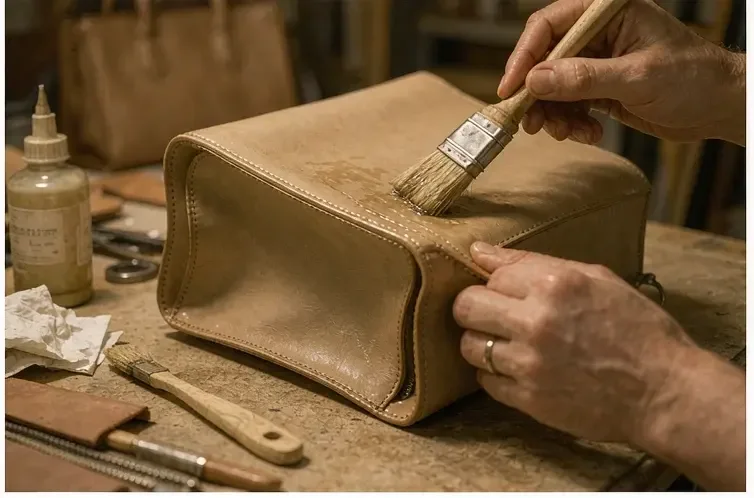
The Case: One Crocodile Panel and a Shipment Held at Customs
A maison ordered 500 pieces of a small structured shoulder bag in crocodile belly, sampled it, approved it and shipped it. The bag was well made, the customer wanted it, and it sat in a bonded warehouse for nineteen days because the re-export documentation did not name the country of origin in the form the destination authority required.
Nineteen days is roughly the length of the bulk run that produced it. Nothing was wrong with the bag. The paperwork had been treated as an administrative afterthought rather than as part of the specification, which is the single most expensive mistake available in this category.
Everything below follows from that case. Exotic leather is not a material choice so much as a documentation choice with a material attached, and a buyer who understands the paper understands most of what matters.
Species: What Changes Between Crocodile, Lizard, Ostrich and Python
Four species carry most of the category, and they behave nothing alike at the bench. Crocodile gives a regular tile pattern with a defined belly centre; lizard gives a small, even scale over a narrower skin; ostrich gives a quill pattern with no scale at all; python gives a large, irregular scale over a long, narrow body.
| Species | Usable width | Typical substance | What it suits | Pattern note |
|---|---|---|---|---|
| Crocodile | 25-35 cm belly panel | 1.2-1.6 mm | Structured bodies, framed evening bags | Tiles must be matched across the closure |
| Lizard | 12-18 cm | 0.8-1.0 mm | Panels, trims, small leather goods | Small scale hides a seam well |
| Ostrich | 40-60 cm | 1.0-1.2 mm | Soft bodies, hobo shapes | Quill field is the whole point |
| Python | 20-30 cm | 0.6-0.8 mm | Panels and overlays | Scale lifts if the finish is wrong |
Usable width is the column that decides the pattern. A body panel cut from a 12-18 cm lizard skin has to be joined, which puts a seam where the eye lands; the same panel from an ostrich skin at 40-60 cm does not. Patterning around width is the first thing a designer learns about this category.
CITES: The Paper Trail That Travels With the Bag
CITES, the Convention on International Trade in Endangered Species of Wild Fauna and Flora, governs the movement of these skins across borders. Species are listed in three appendices, and the appendix a species sits in determines whether trade is permitted at all, and with what documentation. Many of the species used in fine leather goods sit in Appendix II or Appendix III, which permit trade under controlled conditions.
The practical consequence for a buyer is that a finished exotic bag travelling internationally needs documentation that identifies the species, the country of origin and the basis on which the skins were obtained. Re-export documentation is issued by the country the goods leave, which is why a bag assembled in one country and sold in a third needs the paperwork to be arranged before shipment rather than after it.
- Confirm the species and the appendix it is listed in, in writing, before costing.
- Confirm the country of origin of the skins, and that it appears on the documentation.
- Establish whether re-export documentation is needed for the destination market.
- Allow 2-3 weeks for paperwork, separately from the production calendar.
- Keep the documentation with the shipment, and a copy with the commercial file.
The fourth item is the one that was missed in the case above. Paperwork lead time sits alongside production lead time rather than inside it, and 2-3 weeks is the usual figure. It is not a delay if it is planned; it is a very expensive delay if it is discovered.
Cut Selection: Hornback, Belly and Flank on One Skin
One crocodile skin yields several distinct materials. The belly gives the regular, rectangular tiles that most buyers recognise; the hornback gives the ridged scales along the spine; the flank gives smaller, less regular tiles that curve away from the centre line. They are not interchangeable and they do not cost the same.
Belly
The most regular tile pattern and the most expensive section. A body panel cut from belly has to be matched left to right across the closure, which is a specification line rather than a request.
Hornback
Ridged scales along the spine, used where a stronger visual is wanted. The ridges stand proud of the surface, so edge finishing and hardware seating need different preparation.
Flank
Smaller and less regular tiles that curve away from the centre. Used on gussets, straps and panels where regularity matters less, and priced accordingly.
Tail and offcuts
Used for small leather goods, trims and strap facings. A programme that plans for them recovers a meaningful share of the skin cost that would otherwise be waste.
The third card is where most of the value sits for a buyer working to a price. A design that puts belly on the front panel and flank on the gusset looks deliberate and costs materially less than belly throughout, and the difference is invisible unless the two are held side by side.
Yield: Why an Exotic Body Costs More Than Its Leather
Yield is the share of a skin that ends up on a bag rather than on the floor. On a structured exotic body it is typically 55-65%, against 75-85% on a bovine hide, and the gap is the largest single reason an exotic programme costs more than the leather price alone explains.
- Typical skin yield
- 55-65% on a structured exotic body
- Bovine comparison
- 75-85%
- Matching allowance
- One extra skin per 8-12 bodies for tile match
- Waste recovery
- Offcuts to small leather goods and trims
- Skins per 500 pcs
- Set by the pattern, confirmed at costing
- Pattern revision effect
- A 5% yield gain moves the unit cost materially
- Minimum run
- 500 pcs per style and colourway
- Sampling window
- 6-10 working days, 12-15 complex
The sixth row is the one worth acting on. A pattern revised to gain five points of yield on a 500-piece run is often a larger saving than anything a buyer wins in negotiation, and it is available before the first skin is cut rather than after.
Finishing: Glazed, Matte and What the Hand Tells You
Exotic skins are finished in three broad ways, and the finish decides how the bag ages as much as how it looks on day one. A high-gloss glaze gives depth and reflects light; a matte finish reads quieter and shows the scale structure; a semi-aniline finish sits between and is usually the most forgiving in service.
Finish adhesion on a scale surface is measured to ISO 11644, which tests the resistance of a leather finish to dry, wet and perspiration rubbing. On an exotic skin the test matters more than on a smooth calfskin, because the scale edges are where a finish lifts first.
- Glazed: maximum depth of colour, and the least forgiving of abrasion.
- Matte: quieter, shows scale structure, hides a mark better.
- Semi-aniline: the usual compromise for a bag meant to be used.
- Finish adhesion tested to ISO 11644, dry, wet and perspiration.
- Colour fastness to ISO 105, with light fastness rated separately.
Choose the finish against the life the bag will lead. A piece sold through a boutique and carried twice a month wants a different finish from one photographed for a campaign and carried twice a year, and the two are often specified identically out of habit. Where a customer is likely to carry the same piece daily for three or four seasons, a semi-aniline finish with a slightly higher solids content will outlast a high glaze by a wide margin, and the difference in appearance on day one is smaller than most buyers expect.
Compliance Beyond CITES: REACH and Prop 65
CITES governs the movement of the skin; chemical compliance governs the article. A finished exotic bag placed on the European Union market falls under REACH, whose Annex XVII restricts certain substances in articles, and a bag sold in California falls under Prop 65.
Both are shown with test reports per lot rather than with a general statement of compliance, and the report has to describe the article actually shipped. Where a bag combines an exotic panel with metal hardware and a dyed lining, the test is run on the finished article rather than on the skin alone, because the article is what the regulation addresses.
Production Reality: Sampling and Bulk on an Exotic Programme
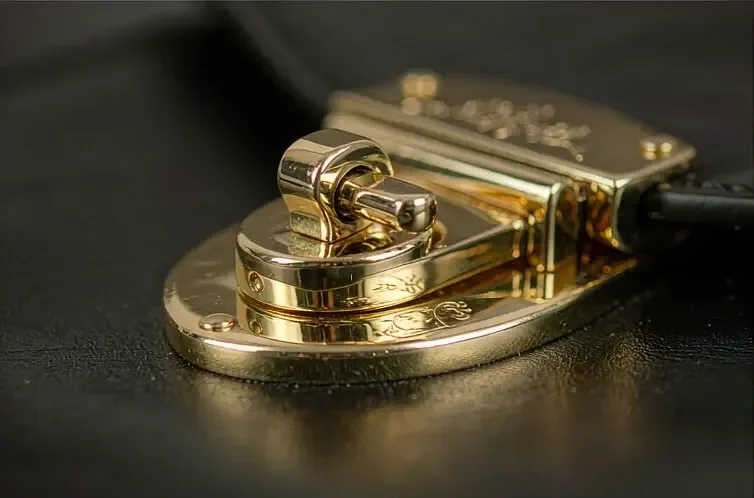
An exotic programme runs to the same calendar as any other when the skins are in hand and the paperwork is started: 6-10 working days to sample, 12-15 for a complex construction, 35-50 days to bulk on FOB Xiamen terms, inspected to AQL 2.5 under ISO 2859-1.
- Species and appendix confirmed, in writing, before costing.
- Skins allocated from a single lot, and held for the run.
- Paperwork started at the same time as the first sample.
- Pattern matched to the tiles, with the match line drawn on the pattern.
- Pre-production piece retained, photographed and signed.
- Bulk cut from the held lot, with offcuts planned in advance.
- Inspection to AQL 2.5 under ISO 2859-1, against the retained piece.
The second item is the one that protects the buyer. Skins are bought as a lot and held for the run, because a second lot bought three weeks later will not match the first in shade or scale, and a 500-piece programme split across two lots is visible on a shelf.
What a Buyer Should Ask Before Ordering Exotic
Eight questions, asked in this order, settle whether an exotic programme will run or stall.
Eight questions before an exotic handbag order
- Which species, and which appendix is it listed in?
- Is the country of origin named on the documentation?
- Is re-export documentation needed, and who arranges it?
- How many weeks does the paperwork need, alongside production?
- Which cut goes where on the body, and is the match line drawn?
- What yield does the pattern achieve, and can it be improved?
- Is the skins lot held for the whole run?
- Are REACH and Prop 65 reports issued per lot, on the finished article?
Our programme works to MOQ 500 pcs per style and colourway, with sampling at 6-10 working days and 12-15 for a complex construction, bulk at 35-50 days on FOB Xiamen terms, inspected to AQL 2.5 under ISO 2859-1, at a base reference unit of USD 4.80 before the exotic material is applied. It runs across 7 production lines with about 200,000 pcs per month of capacity and export experience since 2014, delivered through our validated partner factory Quanzhou Yingming Bags, an SGS-validated site. The material framework sits under luxury materials and responsible sourcing under how exotic leather handbags are sourced responsibly.
Tell us the species and we will tell you the paperwork
Send the species, the silhouette and the destination market. We will return the documentation route, the cut plan and a costed construction, within two working days. Request a quote.
Frequently Asked Questions
What paperwork does an exotic leather handbag need?
Documentation identifying the species, the country of origin and the basis on which the skins were obtained, issued under CITES. Where the goods are re-exported, additional documentation is issued by the country the goods leave. Allow 2-3 weeks, planned alongside production rather than after it.
Which exotic species are used most in fine handbags?
Crocodile, lizard, ostrich and python carry most of the category. Crocodile gives regular belly tiles at 1.2-1.6 mm, lizard a small even scale at 0.8-1.0 mm, ostrich a quill field at 1.0-1.2 mm, and python a large irregular scale at 0.6-0.8 mm.
What is the difference between belly and hornback cuts?
Belly gives the regular rectangular tiles most buyers recognise and is the most expensive section. Hornback gives the ridged scales along the spine, which stand proud of the surface and need different preparation at the edge and under hardware. They are not interchangeable.
Why is exotic leather so much more expensive than calfskin?
Mainly yield. A structured exotic body converts 55-65% of a skin into bag, against 75-85% on a bovine hide, and tile matching consumes further skins. The material price is real but the yield gap is usually the larger part of the difference.
How long does an exotic handbag programme take?
6-10 working days to sample, 12-15 for a complex construction, and 35-50 days to bulk on FOB Xiamen terms. Add 2-3 weeks for paperwork, running alongside rather than after production 35-50 days for sea freight and clearance.
Can panels from two different skin lots be mixed?
Not on the same body. A lot bought three weeks after the first will differ in shade and in scale, and the difference is visible on a shelf. Skins are therefore bought as one lot and held for the whole run of 500 pcs.
How is the finish on an exotic skin tested?
Finish adhesion is tested to ISO 11644, covering dry, wet and perspiration rubbing, and colour fastness to ISO 105, with light fastness rated separately. Scale edges are where a finish lifts first, which is why the test matters more here than on a smooth calfskin.
What chemical compliance applies to an exotic bag?
REACH Annex XVII restricts certain substances in articles placed on the European Union market, and California Prop 65 governs warnings in that state. Both are shown with test reports per lot, and the report must describe the finished article rather than the skin alone.
What minimum applies to an exotic programme?
500 pcs per style and colourway, the same as any other programme. Because skins are bought by the lot, a smaller run does not reduce the material cost proportionately, and it makes tile matching across the run harder rather than easier.
How should a buyer brief an exotic design?
Name the species and the cut for each panel, draw the match line on the pattern, state the finish, and name the destination market so the documentation route can be established before costing. Those four items turn a drawing into a costable specification.
What happens to the offcuts from exotic skins?
Flank, tail and offcuts go to gussets, straps, trims and small leather goods. A programme that plans for them at the pattern stage recovers a meaningful share of skin cost that would otherwise be waste, which is why offcut planning belongs in the design.
Is an exotic bag harder to inspect than a calfskin one?
The standard is the same, AQL 2.5 under ISO 2859-1, but the defect list is longer. Scale lifting, tile mismatch across the closure, finish wear at the scale edge and irregular glaze all need naming, and the retained pre-production piece is the reference.
People Also Ask
Do exotic leather handbags need CITES permits?
Yes, where the species is listed. Documentation identifies the species, the country of origin and the basis on which the skins were obtained, and re-export paperwork may also be required. Allow 2-3 weeks alongside production.
What is the most expensive part of a crocodile skin?
The belly, which gives the regular rectangular tiles. Flank gives smaller, less regular tiles and costs less, so a design using belly on the front panel and flank on the gusset is a deliberate saving rather than a compromise.
Why do exotic bags cost more than the leather price suggests?
Yield. A structured exotic body converts 55-65% of a skin into a bag against 75-85% for bovine, and tile matching across a closure consumes further skins.
Can exotic panels be matched across a closure?
Yes, and it should be specified on the pattern with a drawn match line. Matching usually consumes one extra skin per 8-12 bodies, which is a costing line rather than a request made at the bench.
How do you care for an exotic leather bag?
Keep it away from prolonged heat and direct sun, store it stuffed and in a dust bag, and avoid solvents. Scale lifting is the usual failure, and it begins at the edges where the finish is thinnest.
Sources and further reading
Every figure on this page is either our own programme data or attributed below. Open the originals before you write them into a specification.
- CITES — Convention on International Trade in Endangered SpeciesCITES The treaty governing international trade in listed species, including the appendices and permit requirements.
- ISO — International Organization for StandardizationISO Publisher of ISO 11644 on finish adhesion, ISO 105 on colour fastness and ISO 2859-1 on sampling.
- ECHA — European Chemicals AgencyEuropean Chemicals Agency Administrator of REACH, including the Annex XVII restrictions applying to finished leather articles.
- Office of Environmental Health Hazard AssessmentOEHHA The California agency that administers Proposition 65 and its warning requirements for listed substances.
- International Union of Leather Technologists and Chemists SocietiesIULTCS The body behind the official leather testing methods adopted as ISO standards for physical and fastness testing.