Exotic Leather Handbag MOQ and Cost Explained: Numbers Behind the Quote
What is the MOQ and the real cost of an exotic leather handbag? The minimum is 500 pcs per style and colourway, and on an exotic body material typically carries 55-70% of the unit cost against 40-50% on a calfskin body, because usable yield on a belly or quill panel sits near 30-40% of purchased area. Sampling runs 6-10 working days, bulk 35-50 days, and the documentation runs alongside both on its own calendar. This guide answers the six questions behind every exotic quote.
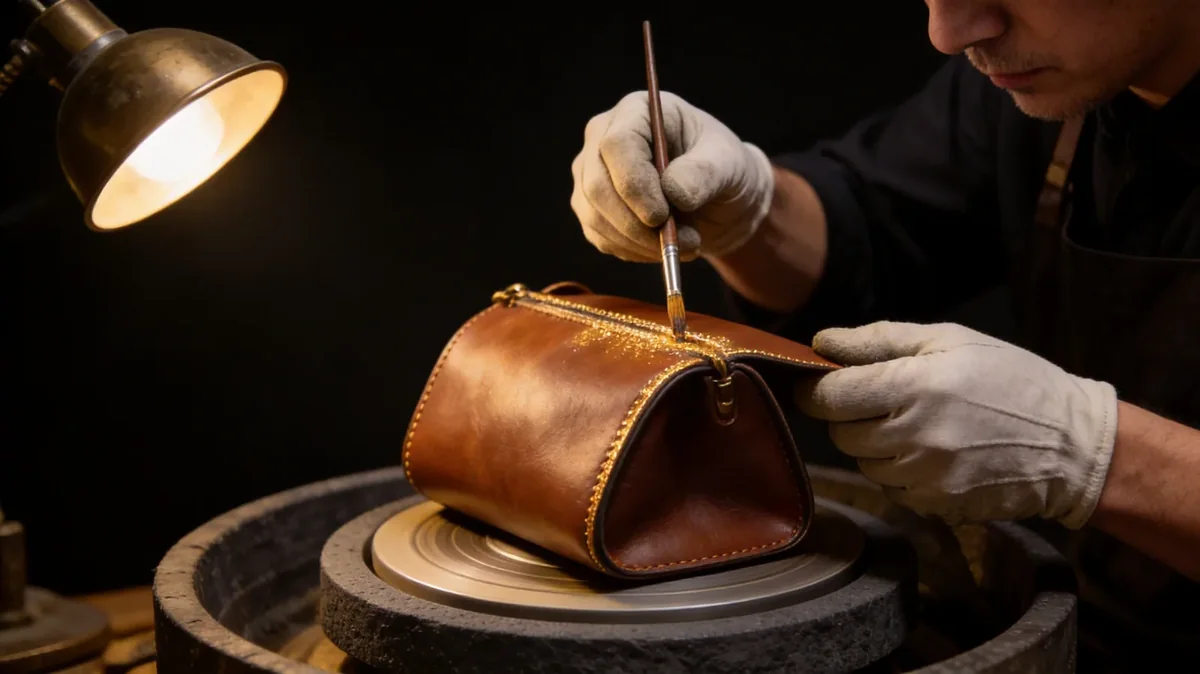
Question One: Is the MOQ Different on an Exotic Programme?
No. The minimum is 500 pcs per style and colourway, exactly as on any other body, and that surprises buyers who expect exotic work to carry a lower minimum because the skin is expensive. It does not, and the reason is practical: an exotic programme needs a complete cutting plan, a complete trim set and a complete inspection regime regardless of quantity, and below that number the fixed work costs more than the material saved.
What does change is how the minimum is planned. Because skins are bought whole rather than by the metre, reducing the quantity below the minimum does not reduce material cost proportionally. A run of 250 exotic bodies can still require nearly the same skin count as 350, once layout and matching are accounted for. Plan the colourway count before booking rather than after.
The second planning difference is how a season is split. A calfskin programme can afford four or five colourways because material is booked by the hide and reordered freely. An exotic programme usually cannot, because each additional colourway books its own skins at a yield of 30-40% and ties up capital in material that may never be cut. Two or three concentrated colourways is the normal shape of a healthy exotic range.
Question Two: What Actually Sets the Unit Cost?
Five lines make up the unit cost, and their proportions are unlike a calfskin body. Material dominates at 55-70%. Cutting and bench labour follows. Trim and hardware is third. Documentation and compliance is fourth. Packing and presentation is last. On a calfskin body the same five lines appear with material typically at 40-50%, which is the whole difference in one sentence.
- Material share, exotic
- Typically 55-70% of unit cost
- Material share, calfskin
- Typically 40-50% of unit cost
- Usable yield, exotic panel
- Around 30-40% of purchased area after layout
- Usable yield, calfskin
- Around 55-65% of purchased area after layout
- MOQ
- 500 pcs per style and colourway
- Sampling
- 6-10 working days, 12-15 for a complex construction
- Bulk
- 35-50 days on FOB Xiamen terms
- Inspection
- AQL 2.5 under ISO 2859-1, third-party inspection optional
The base reference unit, before any material is applied, is USD 4.80. That figure is the constant in every quote and the number that makes comparison possible: everything above it on an exotic body is material, documentation and the bench time that an exotic skin demands. A quote that does not separate those is a quote that cannot be negotiated, because no one can see which line moved.
Question Three: How Much Does Yield Move the Number?
Yield is the variable that surprises first-time buyers. On calfskin, roughly 55-65% of purchased area typically converts into finished panels. On an exotic skin, the figure sits nearer 30-40%, because the usable area is a narrow belly or a rounded quill field inside an irregular outline, and because matching and symmetry consume additional material. Every point of yield is a direct change in unit cost.
| Cost driver | Effect on unit cost | How it is controlled |
|---|---|---|
| Panel layout | The largest single lever available | Design the panel to the skin, not the reverse |
| Pair matching | Adds a measurable premium per body | Decide at design stage whether symmetry is required |
| Colourway count | Each additional colourway books its own skins | Concentrate the exotic into fewer colourways |
| Panel width | A wider front panel consumes more skins | Keep the widest panel inside the natural skin width |
| Reject rate | A cut exotic panel cannot be recovered | Approve material before cutting, not after |
Reserve skins deserve a paragraph of their own, because they are the difference between a recoverable problem and a write-off. Book a small percentage of additional skins against every exotic programme and hold them for re-cuts. The cost is small compared with the material line it protects, and without it a rejection discovered at final inspection cannot be corrected at all, since the dye lot and the skin size will have moved on.
Question Four: What Do Documentation and Compliance Add?
Documentation adds calendar time and administrative cost rather than material cost, and both are real. Each skin arrives with paperwork under CITES, and finished bodies may require re-export documentation when they cross a border again. Individual markets add their own layer: REACH Annex XVII in Europe, California Proposition 65 in the United States, and additional national rules in some destinations.
CITES paperwork
Travels with the skin and usually with the finished body. Confirm the route per origin at sampling, since a permit is the one item no bench can accelerate.
Market rules
REACH for Europe and Proposition 65 for the United States, checked against the destination list before booking rather than before shipping.
Traceability records
Documentation references recorded against each body, which turns a claim into evidence when a client or an authority asks.
Inspection evidence
AQL 2.5 results under ISO 2859-1, with an optional third-party inspection before shipment at the buyer's request.
The discipline that matters most here is timing. Documentation runs on calendar time, not on bench time, and it is the critical path on most exotic programmes. Sampling at 6-10 working days and bulk at 35-50 days are reliable once material is in hand; a permit is not, and no production skill shortens it. Start the paperwork conversation at the same moment as the design conversation.
Question Five: Where Can Cost Be Reduced Without Damaging the Body?
There are four honest reductions and several dishonest ones. Concentrate the exotic into fewer colourways. Design the panel to the natural width of the skin. Use grain leather on the gusset, base and handle, where the exotic is least visible. Choose a stock trim set rather than a custom one. Each reduces cost without the client being able to tell.
- Put exotic on the front panel or flap; use calfskin at 1.2-1.4 mm on the gusset and base.
- Design the widest panel inside the natural width of the belly or quill field.
- Reduce the colourway count rather than the quantity per colourway.
- Take hardware from a stock trim set in the first season, and customise in the second.
- Approve panels before cutting; a rejected uncut panel is the only inexpensive rejection there is.
The reductions to resist are the ones that touch the finish. A thinner top coat, a wider colour tolerance, a tighter fold radius and a skipped reinforcement patch all save money and all show up later, in a boutique rather than in a cost sheet. At this end of the market the returns are handled more often than the price is reduced, and a return costs more than the saving ever did.
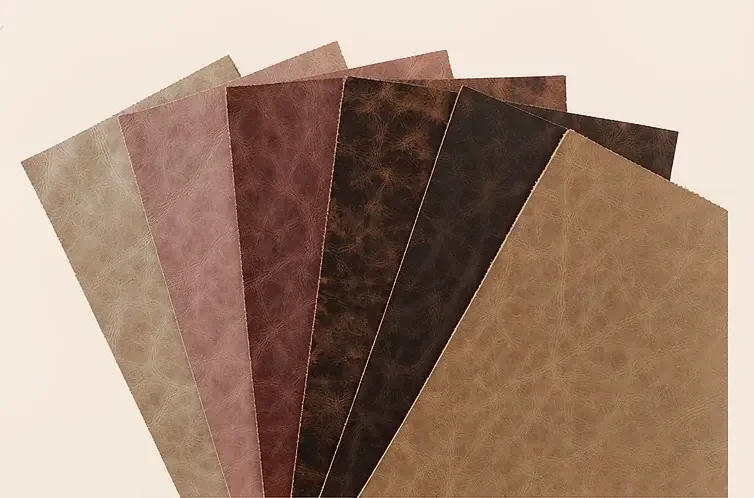
Substance is worth stating precisely because it sits between cost and appearance. Crocodile is commonly finished at 1.0-1.3 mm and ostrich at 0.9-1.1 mm, and specifying the wider end of either band costs material without improving the body. Ask for the band with its permitted variation on the quote, since a house quoting a single figure is quoting whichever end suits the skins it happens to hold.
Question Six: How Should an Exotic Quote Be Read?
Read it line by line and ask what each line assumes. Does the material line state the yield it was calculated on? Does the trim line name a stock set or a custom one? Is documentation quoted separately or hidden? Is the base reference unit of USD 4.80 visible, so the material and bench lines above it can be compared between two quotes? A quote that answers those four questions can be negotiated honestly.
Reading an exotic quote
- Find the yield assumption; it is the largest single number in the quote.
- Separate stock trim from custom trim, and price the custom option only if needed.
- Insist that documentation is quoted as its own line.
- Confirm the substance: 1.0-1.3 mm crocodile, 0.9-1.1 mm ostrich.
- Check that inspection to AQL 2.5 under ISO 2859-1 is included, not optional.
- Ask which skins are held in reserve for a re-cut; without them a rejection becomes a write-off.
- Read the trade term: FOB Xiamen by default, with CIF and DDP available on request.
One further cost belongs on the plan and is often forgotten: presentation. An exotic body is expected to arrive with a rigid box, a dust bag, a care card and the documentation reference, and that package adds roughly USD 4.80 per unit at the level clients expect. It is a small line against an exotic material cost, but it is visible the moment the box is opened, and it is the least costly insurance against a return that any house can buy.
What a Second Season Changes
The second season is where an exotic programme becomes comfortable. The documentation route is already proven, the panel layout is fixed and no longer consumes skins through trial, the yield is known rather than estimated, and the reject rate has a history. Unit cost usually falls through yield rather than through any negotiation. Hold a retained body from season one so that season two can be compared against it rather than against memory.
What the Calendar Looks Like End to End
From approved material in hand, sampling runs 6-10 working days and 12-15 for a complex construction, bulk runs 35-50 days on FOB Xiamen terms, and inspection is AQL 2.5 under ISO 2859-1 with third-party inspection available on request. Documentation runs alongside both from the moment the species and origin are fixed, and it is the one item that should be started before the design is frozen rather than after it is approved. Capacity behind the programme runs across 7 production lines at about 200,000 pcs per month with export experience since 2014, delivered through our validated partner factory Quanzhou Yingming Bags.
Costing an exotic programme?
Send the species, the silhouette and the colourway count. We will return a yield estimate, a line-by-line quote and a documentation timeline. Request a quotation
Frequently Asked Questions
What is the minimum order quantity for an exotic leather handbag?
500 pcs per style and colourway, the same as any other body. The minimum holds because an exotic programme needs a complete cutting plan, trim set and inspection regime regardless of quantity. Reducing below it does not reduce material proportionally, since skins are bought whole rather than by the metre.
Why is exotic leather so much more expensive than calfskin?
Two reasons compound. The skin itself costs more, and usable yield is much lower: around 30-40% of purchased area converts into panels on an exotic skin against roughly 55-65% on calfskin. Material therefore carries 55-70% of unit cost on an exotic body, against 40-50% on a calfskin one.
Does the MOQ apply per colourway or per style?
Per style and colourway. Three colourways of one style means 1500 pcs, because each colourway books its own skins and its own cutting plan. For an exotic programme this matters especially, since concentrating the exotic into fewer colourways is one of the few genuine cost reductions available.
How much does pair matching add to the cost?
A measurable premium per body, because matching consumes additional skins in order to find two bellies of comparable tile count and scale size. It should be quoted as its own line rather than absorbed into the unit price, so the decision to require symmetry can be taken deliberately at design stage.
Can an exotic programme use calfskin on part of the body?
Yes, and it is usually the most effective cost lever available. Exotic appears on the front panel or flap, where it is seen; calfskin at 1.2-1.4 mm takes the gusset, base and handle, where strength matters. Specify the seam between the two, since substance and edge build change across it.
What does CITES documentation add to the cost and the calendar?
Administrative cost and, more importantly, calendar time. Permits run on their own schedule and cannot be accelerated by production skill, which is why documentation is usually the critical path on an exotic programme. Confirm the route per origin at sampling rather than at the shipping window.
Is a third-party inspection worth it on exotic work?
Usually yes, because a rejected exotic panel cannot be re-cut. Inspection is set at AQL 2.5 under ISO 2859-1, and the higher-value addition is a pre-production inspection before cutting rather than a final one after packing. Ask too which skins are held in reserve for a re-cut.
How long does an exotic programme take from approval to shipment?
From approved material in hand, sampling runs 6-10 working days and 12-15 for a complex construction, and bulk runs 35-50 days on FOB Xiamen terms. Documentation runs alongside both from the moment species and origin are fixed, and it is usually the longest single item on the plan.
What is the base reference unit on an exotic quote?
USD 4.80 before material is applied. It is the constant in every quote and it makes comparison possible: everything above it is material, documentation and bench time. A quote that does not show the base separately is one that cannot be negotiated line by line.
Which exotic species gives the best value for a first programme?
Ostrich, if the shape is soft, because the usable field is wider and the layout is more forgiving. Crocodile suits a structured signature body but costs more per unit through yield and pair matching. Both are dense and well understood at the bench, which counts more than the price difference on a first run.
How should a buyer compare two exotic quotes?
Ask each to state its yield assumption, name stock or custom trim, quote documentation separately and show the base reference unit. Then compare the material line and the reserve skin policy. A quote that answers those five points can be compared honestly; one that bundles them cannot.
Does quantity above the MOQ reduce the unit cost much?
Somewhat. Labour, trim and inspection spread over more units, but material does not fall proportionally, because each additional body still consumes the same skin area. Expect a modest improvement rather than a step change, and take the reduction in tooling or trim amortisation rather than expecting the skin to become less scarce.
What happens if an exotic panel is rejected after cutting?
It is a write-off. Unlike calfskin, an exotic panel cannot be re-cut into another body without visible loss of pattern or symmetry. This is why panels are approved before cutting, under a D65-equivalent light source against a sealed reference, and why reserve skins are booked against every programme.
Are there hidden costs in an exotic programme?
Three recur: documentation handling, reserve skins held for a possible re-cut, and the administrative time of recording documentation references against each body. None is large, all are real, and all should appear on the quote as named lines rather than being discovered in an invoice after shipment.
People Also Ask
What is the MOQ for exotic leather handbags?
500 pcs per style and colourway, the same as any other body. It holds because cutting, trim and inspection are fixed work, and because skins are bought whole, so a smaller run does not cut material cost proportionally.
Why are exotic leather bags so expensive?
Material carries 55-70% of unit cost against 40-50% on calfskin, and usable yield is only around 30-40% of purchased area. Skin scarcity, pair matching and documentation add further cost.
Can exotic leather be mixed with calfskin to cut cost?
Yes. Exotic on the front panel or flap where it is seen, calfskin at 1.2-1.4 mm on the gusset, base and handle. It is the most effective cost lever that clients cannot detect.
How long does an exotic leather bag take to produce?
Sampling 6-10 working days and 12-15 for a complex construction, then bulk 35-50 days on FOB Xiamen terms. CITES documentation runs alongside and is usually the critical path.
What should an exotic quote include?
A yield assumption, stock or custom trim named, documentation as its own line, the base reference unit of USD 4.80, and a reserve skin policy for re-cuts.
Sources and further reading
Every figure on this page is either our own programme data or attributed below. Open the originals before you write them into a specification.
- CITES — Convention on International Trade in Endangered SpeciesCITES The convention behind the permits and re-export certificates that set the documentation calendar on an exotic programme.
- ICC — Incoterms rulesInternational Chamber of Commerce Publisher of the Incoterms rules that define FOB Xiamen and the alternative CIF and DDP terms available on request.
- ISO — international standardsISO Publisher of ISO 2859-1, the sampling standard behind the AQL 2.5 inspection applied to exotic panels and finished bodies.
- REACH legislationECHA The European regulation whose Annex XVII governs the conformity statements required alongside CITES documentation.