Luxury Handbag Sampling and Development: A Complete Guide
What does luxury handbag sampling and development involve? It converts a design idea into an approved physical reference through brief review, tech pack preparation, material planning, pattern development, prototype construction, evaluation, revision, and sign-off. Sampling runs 6-10 working days, while complex styles run 12-15 working days. Each round should produce documented corrections rather than informal opinion, because the approved sample becomes the reference for bulk production, inspection, and release.
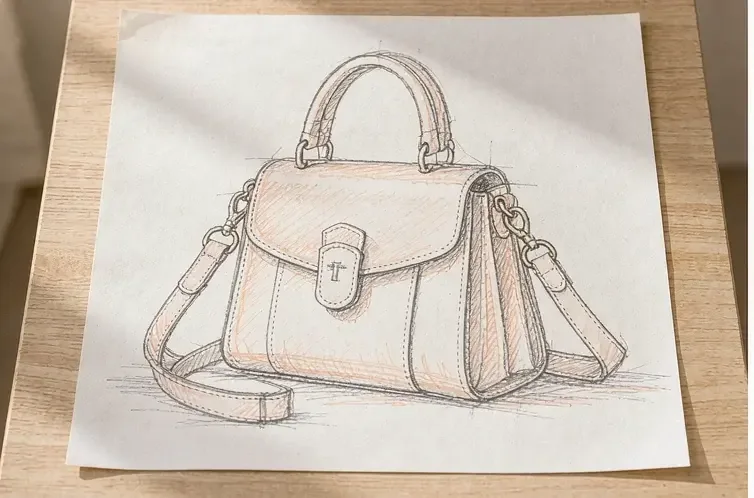
Sampling Is Where Design Becomes Buildable
Luxury sampling is the stage where a design proves it can be built, repeated, and approved under real material behaviour and realistic tolerances.
A sketch can be beautiful and still fail as an object: a curve may not turn cleanly, a handle may not support load, or a lining may fight the exterior. Development exposes those conflicts early, when correction is within reach and before material is committed at scale. The output is not merely one bag; it is a golden sample plus a specification that explains how the bag is made, measured, and judged. That pairing protects later stages, because inspection needs a physical reference and the line needs written tolerances rather than intention. For a practical overview of the sequence, read what to expect from sampling.
Development definition
- Luxury handbag sampling and development is the documented route from brief to approved sample: tech pack, material plan, pattern, prototype, evaluation, correction, confirmation, and sign-off, supported by measurements, photographs, and one accountable approval path.
The Brief: Turning Creative Intent Into Decisions
A strong brief states the silhouette intent, target feel, dimensions, materials, hardware direction, use case, and the details that must not drift.
Designers communicate best through references: photographs, marked-up samples, proportions, and statements about how the handbag should behave when empty and filled. The team needs to know whether a body should hold shape or collapse softly, whether edges should be crisp or subtle, and which hardware action defines the experience. Quantity, target market, calendar, and intended retail presentation also shape development choices. Designers entering a first programme often benefit from the structure offered in how a maison develops a new collection.
The Tech Pack That Actually Supports Sampling
A useful tech pack includes dimensioned views, material references, construction notes, stitch and edge rules, hardware details, lining layout, branding placement, and packing requirements.
Flat drawings alone leave too much open. The pack should give a front, back, side, and base view with dimensions; a section or construction note for critical joins; a bill of materials with finishes and thickness targets; and a clear hardware schedule. Ambiguity in seam allowance, edge profile, reinforcement, or closure alignment is the most common cause of extra sample rounds. The tech pack guide and the review of errors that delay sampling both expand this checklist.
- Sampling cycle
- 6-10 working days for a developed brief
- Complex sampling cycle
- 12-15 working days for complex styles
- Bulk production window
- 35-50 days after approval and material readiness
- Programme minimum
- MOQ 500 pcs per style / colourway
- Trade reference
- FOB Xiamen, with other terms discussed per project
- Final inspection reference
- AQL 2.5 (ISO 2859-1), third-party inspection optional
Material Planning Before the First Cut
Material planning secures the leather, lining, reinforcement, hardware, and thread needed for a representative sample rather than a temporary substitute.
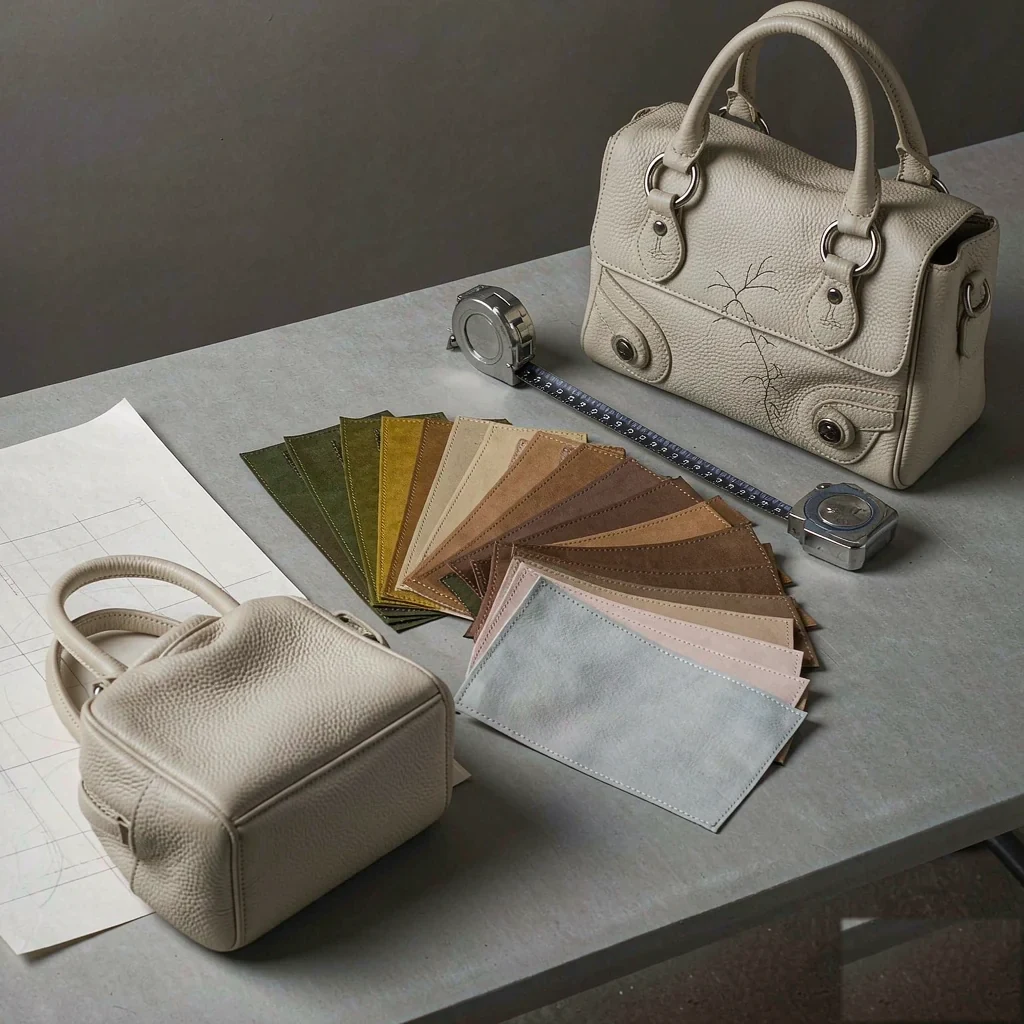
A sample built from an available substitute can mislead the designer about drape, thickness, colour, and edge behaviour, because every material changes how a pattern responds to folding and tension. Where the intended leather is not yet on hand, the team should record exactly which material was used and why. Exotic skins add documentation and yield planning, including CITES Appendix II or III checks where applicable, because scale layout and legal paperwork both influence the development calendar. Hardware may need custom development, which alters both calendar and cost, and colour matching should be planned early so plating tone can be judged beside the chosen leather. A structured material swatch approach keeps decisions visible and reduces late disagreement.
Pattern Development, Prototype Construction, and Review
Pattern development translates the design into geometry, while prototype construction tests whether that geometry survives real leather, reinforcement, and assembly sequence.
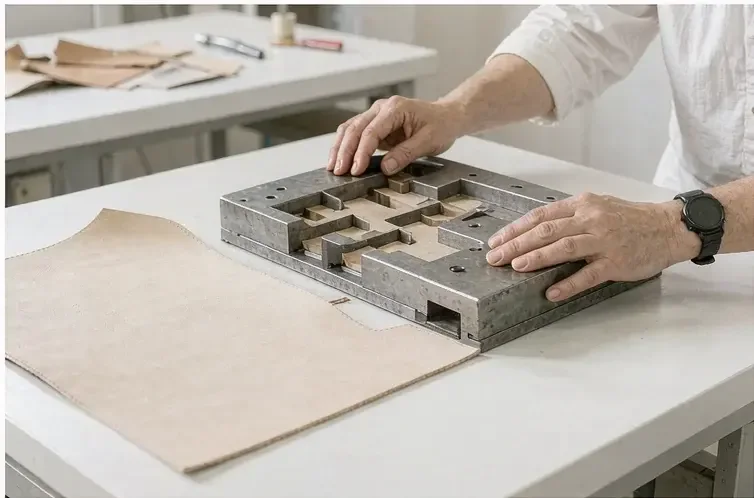
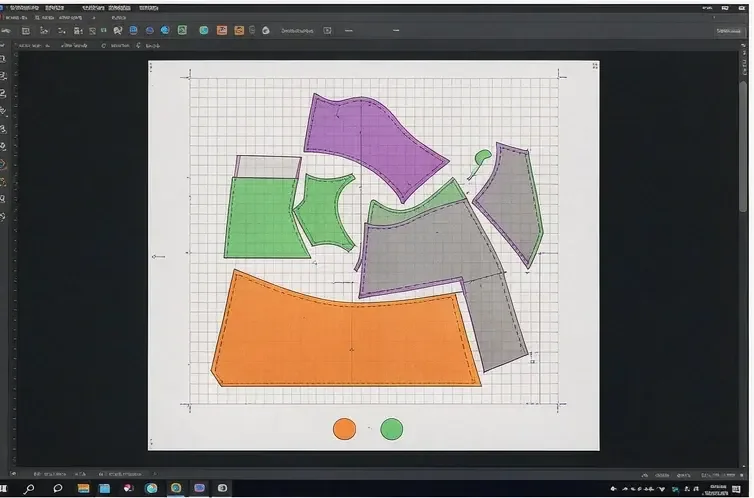
Pattern engineers prepare paper patterns, mark notches and centre lines, and test the assembly order. Skiving transitions, reinforcement placement, seam margins, and edge profiles are adjusted while the prototype is built. The first sample should be evaluated as a whole object: silhouette, balance, opening behaviour, load path, symmetry, interior resolution, and tactile quality. Findings are recorded with photographs, locations, severity, required correction, and an approval decision for the next round, as described in how an atelier iterates on samples.
How Many Sample Rounds Does a Luxury Bag Need?
Most luxury programmes reach approval in two to three documented rounds: one for construction and proportion, one for refinement, and sometimes one confirmation piece.
The number of rounds is driven by clarity rather than difficulty alone. A complete brief, stable materials, and consolidated feedback usually shorten the route. Changing the silhouette after approval, discovering late hardware problems, or approving different details across emails usually lengthens it. Fit samples, confirmation samples, and production samples serve different purposes: the first tests buildability, the confirmation fixes the reference, and the production piece proves the approved construction can be repeated on the line. See how many rounds are typical and the comparison of fit and production samples.
| Sample type | Main question | Typical output |
|---|---|---|
| Development prototype | Can the design be built and does the form work? | Construction notes, proportion corrections, material feedback |
| Fit or refinement sample | Are details, edges, hardware, and lining resolved? | Refined measurements, corrected detail list, updated specification |
| Confirmation sample | Is this the agreed reference for bulk? | Golden sample, signed approval, frozen specification |
| Production sample | Can the approved construction be repeated reliably? | Line verification, pre-production check, release decision |
Revision Discipline: One Path, One Record
Revision discipline means every correction is photographed, located, measured where relevant, prioritised, and approved through one accountable path.
Parallel instructions from several stakeholders are a common source of delay. A single consolidated list should identify old value, new value, location, reason, and whether the change affects the specification, the pattern, the hardware, or only workmanship. Photographs with scale references and consistent angles make corrections unambiguous. Teams should also separate must-fix items from preference items, because a preference change can be scheduled without blocking structural correction. Guidance on communicating revisions details a practical format.
Development Cost, Fees, and Transparent Planning
Development cost should be planned openly: pattern work, prototype labour, custom hardware or moulds, material consumption, testing, courier, and revision rounds.
Brands benefit from asking what each fee covers and what happens if a revision is required. Custom hardware, exotic materials, and unusual constructions usually extend both cost and calendar. Sampling should not be treated as a separate commercial mystery from bulk; the two are connected through material readiness and specification stability. For planning structure, review prototyping cost explained and the development cost planning guide. A nominal administrative or documentation line on a development invoice may be quoted at USD 4.80 as a reference figure where the programme requires it.
Durability and Compliance Checks During Development
Durability and compliance checks during sampling confirm that the approved design will survive handling, transport, and destination-market expectations.
Functional testing can include repeated closure cycles, load behaviour on handles and straps, edge flexing, abrasion observation, and hardware movement. Material evidence can draw on ISO 11644 for finish adhesion on suitable coated leather, ISO 3376 for tensile strength and extension, and relevant ISO 105 methods for colour fastness. Market requirements should be considered early: REACH Annex XVII, California Prop 65, and CPSIA obligations vary by destination. Durability testing guidance explains how to plan these checks before approval.
Approval, Sign-Off, and Handover to Bulk
Approval should freeze the specification, confirm the golden sample, record tolerances, and define how the approved construction transfers to the line.
Sign-off is more than liking the sample. The brand should confirm measurements, colour standard, edge reference, hardware action, lining arrangement, branding position, packing, and inspection criteria. The development team then prepares patterns, operation standards, and material plans consistent with the approval. Bulk production runs 35-50 days after approval and material readiness, with final lot inspection at AQL 2.5 (ISO 2859-1). Connect this stage to the luxury quality control hub so the release criteria match what was approved. The sign-off guide details the documentation.
What Sampling Cannot Fix
Sampling solves buildability. It does not solve a weak brief, an unrealistic cost target, or a calendar that was already impossible before the first cut.
A structural problem shows up early. If a panel cannot be turned without bulk, or a closure pulls the frame out of shape, a round or two will find it. That is exactly what the 6-10 working day window is for.
Brief problems do not improve in sampling. When a dimension is undecided, when leather direction conflicts with the silhouette, or when the target price demands a material that cannot hold the shape, more rounds simply carry the same contradiction into the next week.
Cost targets behave similarly. Sampling finds the cost of what was specified; it rarely invents a way to hit a number that never matched the material list. The correction is a specification change, not another prototype.
Calendar compression behaves worst of all. A 35-50 day bulk window cannot absorb a late leather decision, and no amount of sampling speed recovers a material booking that has not been made.
The practical value of knowing this is deciding early where flexibility actually lies. Dimensions can move before the first cut. Costs can move while material is still open. Dates can move until capacity is taken.
After those points, sampling can only report what is already true, which is why the most useful thing a buyer brings to the first round is a decision rather than a question.
Where a programme genuinely needs a trade-off studied, say so at the brief. Two options built side by side answer in one round what four sequential rounds usually do not.
Planning Sampling Inside a Commercial Calendar
Sampling fits a commercial calendar when development rounds, material lead time, approval, bulk production, inspection, and shipping are planned as one connected schedule.
A realistic plan accounts for sampling in 6-10 working days, complex sampling in 12-15 working days, bulk in 35-50 days, MOQ 500 pcs per style / colourway, and FOB Xiamen. Collections should prioritise hero pieces first so the most visible styles receive the deepest development attention. QUANZHOU JUNYUAN BAGS coordinates export programmes with experience since 2014, 7 production lines, and about 200,000 pcs per month. For schedules built around showroom or trunk-show deadlines, review sampling for show preparation.
Programme teams should also decide how many styles enter development at once. Parallel sampling speeds a collection but divides attention and increases revision traffic. Sequencing hero pieces, then supporting shapes, usually produces clearer feedback and fewer repeated errors. Where a launch date is fixed, the calendar should reserve time for one additional confirmation round rather than assuming the first approval will hold. Courier time, customs documentation, and material arrival should be included in the plan, since development rarely fails inside the workshop alone; it often fails in the spaces between decisions, approvals, and deliveries.
Prepare the record
Supply dimensioned drawings, a bill of materials, hardware references, colour standards, and target measurements before the first cut.
Review as an object
Evaluate silhouette, balance, load path, edges, hardware action, interior, and packing rather than isolated details alone.
Freeze before scaling
Confirm the golden sample, tolerances, and inspection criteria, then release bulk with a documented handover.
Plan your sampling route before the season starts
Share your sketches, tech pack, material direction, target calendar, and expected quantity. Request a sampling and development review to map sample rounds, approval criteria, and the route to bulk.
Frequently Asked Questions
How long does luxury handbag sampling take?
Luxury handbag sampling takes 6-10 working days for a developed brief with available materials. Complex styles take 12-15 working days. Custom hardware, exotic leather, or repeated structural changes can extend the cycle, so programmes should reserve time for one additional confirmation round when a launch date is fixed.
What should a luxury handbag tech pack include?
A luxury handbag tech pack should include dimensioned front, back, side, and base views, a bill of materials, construction notes, stitch and edge rules, hardware schedule, lining layout, branding placement, and packing requirements. Clear tolerances reduce ambiguity and shorten the number of sample rounds needed for approval.
How many sample rounds are normal for a luxury bag?
Most luxury programmes need two to three documented rounds: one for construction and proportion, one for refinement, and sometimes one confirmation piece. The number depends on brief clarity, material stability, hardware readiness, and whether feedback is consolidated into a single revision list rather than arriving in separate messages.
What is a golden sample in luxury handbag development?
A golden sample is the approved physical reference that embodies agreed dimensions, materials, construction, colour, edge quality, hardware action, lining, and presentation. It works alongside the signed specification. Inspectors and the production team compare later pieces with both records to prevent informal revision or memory from becoming the standard.
How should sample revisions be communicated?
Sample revisions should be consolidated into one list with photographs, locations, old values, new values, reason for change, and priority. A single accountable approver prevents conflicting instructions. Separating must-fix structural items from preference changes keeps essential correction moving while optional refinements are scheduled sensibly.
Should sampling use the actual production material?
Sampling should use the intended production material whenever possible, because substitutes can distort drape, thickness, colour, and edge behaviour. When a substitute is unavoidable, the record must state exactly which material was used and why, so the designer can interpret the sample accurately before approval.
What tests support a luxury handbag sample?
Useful checks include repeated closure cycles, handle and strap load behaviour, edge flexing, hardware movement, and observation of abrasion. Material evidence can reference ISO 11644 for finish adhesion, ISO 3376 for tensile behaviour, and relevant ISO 105 methods for colour fastness, with limits agreed before testing.
How does sampling connect to bulk production?
Sampling connects to bulk through the frozen specification, golden sample, measurements, tolerances, and inspection criteria. After approval, patterns, operation standards, and material plans are prepared for repeatability. Bulk production runs 35-50 days, and final lots are reviewed at AQL 2.5 (ISO 2859-1) before release.
What commercial parameters should a sampling plan include?
A sampling plan should state development fees, custom hardware or mould charges, material consumption, testing, courier, revision scope, MOQ 500 pcs per style / colourway, bulk timing of 35-50 days, and the trade term. FOB Xiamen is the reference, with other terms discussed where the project requires.
How can brands avoid delays during sampling?
Brands avoid delays by supplying complete drawings, stable material references, realistic tolerances, and consolidated feedback. Prioritising hero styles, confirming hardware early, and agreeing approval ownership also help. Reserving calendar space for one additional confirmation round protects launch dates when an unexpected issue appears.
How many units should a first sample round produce?
One is enough to judge shape, construction and material behaviour. Three helps when colour, plating or lining alternatives must be compared side by side under the same light. More than that rarely adds information at the first gate and mostly adds cost, so the count should follow the decision the round needs to support.
Who pays freight and duty on sample shipments?
Sample freight is usually billed to the receiver's courier account, so duty and import formalities sit with the client. Where samples are sent collect, the paperwork still has to name a value and a purpose. Deciding this at the start avoids a parcel sitting in a depot while a sampling window runs out.
People Also Ask
What is the first step in luxury handbag sampling?
The first step is a structured brief review that converts sketches and references into dimensioned drawings, a bill of materials, and construction notes. This defines what will be built, measured, and approved before any leather is cut.
Why is a confirmation sample important?
A confirmation sample freezes the agreed reference before bulk release. It verifies that corrections from earlier rounds have been applied and gives inspectors and the production team one physical standard to compare against throughout the programme.
Can digital prototyping replace physical luxury bag samples?
Digital prototyping helps visualise proportion, colour, and construction logic, but it cannot fully replace physical samples. Leather behaviour, edge finishing, hardware action, and tactile balance still require real material evaluation before a responsible approval decision.
How does MOQ affect sampling decisions?
MOQ 500 pcs per style / colourway affects material purchasing, hardware tooling, and whether custom development is justified. Sampling decisions should reflect that scale, because a construction that works once must also remain stable across the full approved quantity.
What should happen immediately after sample approval?
After approval, the specification is frozen, measurements and tolerances are recorded, patterns and operation standards are prepared, and material plans are confirmed. Bulk production then proceeds within 35-50 days, with inspection criteria aligned to the approved sample.
Sources and further reading
Every figure on this page is either our own programme data or attributed below. Open the originals before you write them into a specification.
- ISO 2859-1 Sampling procedures for inspection by attributesInternational Organization for Standardization Official reference for AQL-indexed acceptance sampling used at final inspection after bulk release.
- ISO 11644:2022 Leather — Test for adhesion of finishInternational Organization for Standardization Official standard page for measuring finish adhesion on suitable coated leather during material evaluation.
- CITES Appendices I, II and IIICITES Secretariat Official appendix reference used when planning exotic skin documentation for sampling and shipment.
- Softlines and Accessories: Bags, Footwear and Leather ProductsSGS Institutional overview of independent testing services relevant to bags, leather goods, and accessories.