Luxury Handbag Sample Approval Sign Off Explained: Five Gates, Three Sealed References and What the Signature Commits
What does luxury handbag sample approval sign off actually involve? Five gates, in order: the piece matches the drawing, the material is the approved batch, the hardware matches the finish chip, every provisional element is resolved, and the tolerances are met. At sign-off three sealed references are created, one held by each side and one held back, plus a written specification sheet recording the numbers the run will be measured against.
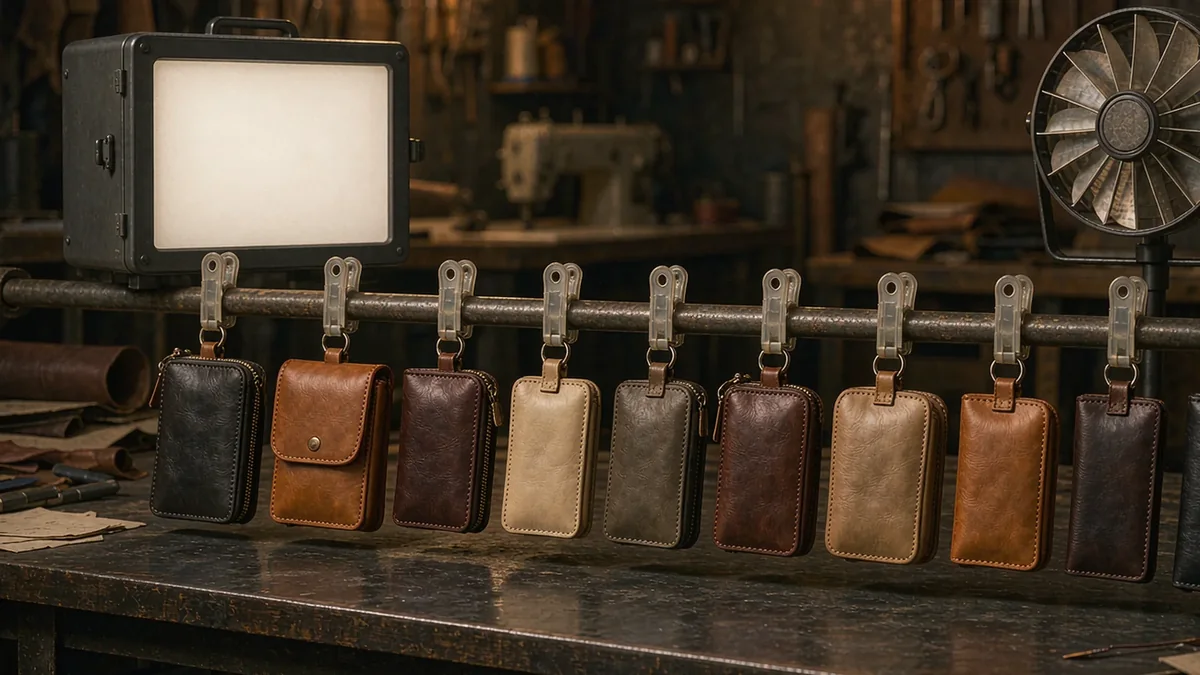
The Sign-Off Decision Order
Sign-off is a sequence of five gates rather than a single moment of judgement, and running them in order is what makes the decision defensible later.
- Does the piece match the drawing, measured line by line rather than judged by eye?
- Is the material the approved batch, checked against the swatch card rather than against memory?
- Does the hardware match the finish chip, and is it the specified fitting rather than a substitute?
- Has every provisional element been resolved, or is one still standing on the list?
- Are the tolerances met, at ±1 mm on body dimensions and ±3 mm on strap length?
A gate failed stops the process. A gate failed and waived verbally is the origin of most disputes at bulk, because the waiver is remembered differently by whoever gave it and whoever received it. The order also matters commercially: a dimensional check run before the material identity is confirmed can approve a piece cut from the wrong hide, and a hardware check run before the provisional list is read can approve a fitting that will never appear in the run.
Gate One: Does the Piece Match the Drawing?
The first gate is dimensional and it is settled with a rule rather than with an opinion, because it is the only gate that both sides can check identically.
- Handle drop
- Tape from the crown of the handle to the top of the body, piece empty, against the drawing
- Body width
- Steel rule across the base at the widest point
- Gusset depth
- Rule at the centre of the gusset, piece empty and unloaded
- Strap length
- Laid flat and unloaded, measured end to end against 1050 mm nominal
- Stitch pitch
- Counted over 25 mm and multiplied by 25.4, on a straight run
The comparison is written on the measurements sheet that travels with the parcel, line by line, and it is signed as part of sign-off rather than reviewed informally. A variance inside tolerance is recorded as accepted; one outside is either corrected or formally waived in writing.
Gate Two: Is It the Approved Material?
The second gate is about identity rather than appearance, and it is settled against the swatch card's batch number rather than against a recollection of the hide.
| Check | Against what | Failure consequence |
|---|---|---|
| Leather batch | The batch number on the approved swatch card | Bulk cannot be matched to the approval |
| Thickness | 1.2-1.4 mm for a structured piece | The silhouette will not hold as approved |
| Lining and interlining | Their own references, interlining at 0.8 mm | Fold behaviour differs from the approved piece |
| Exotic skin grade | The grade recorded at selection | The grade may not supply the full quantity |
| Retained cutting | The tagged cutting held with the reference | No physical comparison available later |
Where a piece has been made in a stand-in hide because the programme hide had not arrived, the gate cannot be passed. The correct action is to hold the approval and re-review on arrival rather than to approve the substitute and hope the real hide matches.
Gate Three: Does the Hardware Match the Chip?
The third gate separates the specified fitting from a substitute, which is the distinction most often blurred at approval.
- Compare the fitting against the finish chip number recorded at approval, under the same light.
- Confirm the catalogue or drawing reference rather than the appearance alone.
- Confirm the plating thickness at 0.15-0.3 microns and the salt spray result at 24 to 48 hours.
- Cycle the closure ten times and record whether it binds, and at which cycle.
- Where the fitting is provisional, approve the drawing instead and record that the gate is deferred.
The last item is the protective one. A gate deferred is a gate recorded; a gate passed on a substitute is a gate that will be reopened when the real fitting arrives, usually after bulk has begun.
Gate Four: Are Provisionals Resolved?
Every element declared provisional on the parcel must be resolved or explicitly deferred before sign-off, and resolution means a physical part rather than a promise.
Resolved
The specified component is present in the piece, or has been approved from its drawing with a committed delivery date.
Deferred in writing
The element is named, the reason recorded, the expected date stated and the approver has signed against it.
Not resolvable
The element cannot be supplied as specified. This stops sign-off; it does not become a verbal waiver.
Silently dropped
The commonest failure. A provisional nobody mentions at approval becomes a fault discovered at bulk.
The fourth card describes the outcome most worth preventing, and the prevention is mechanical: read the provisional list aloud at approval, and put a line through each item as it is resolved.
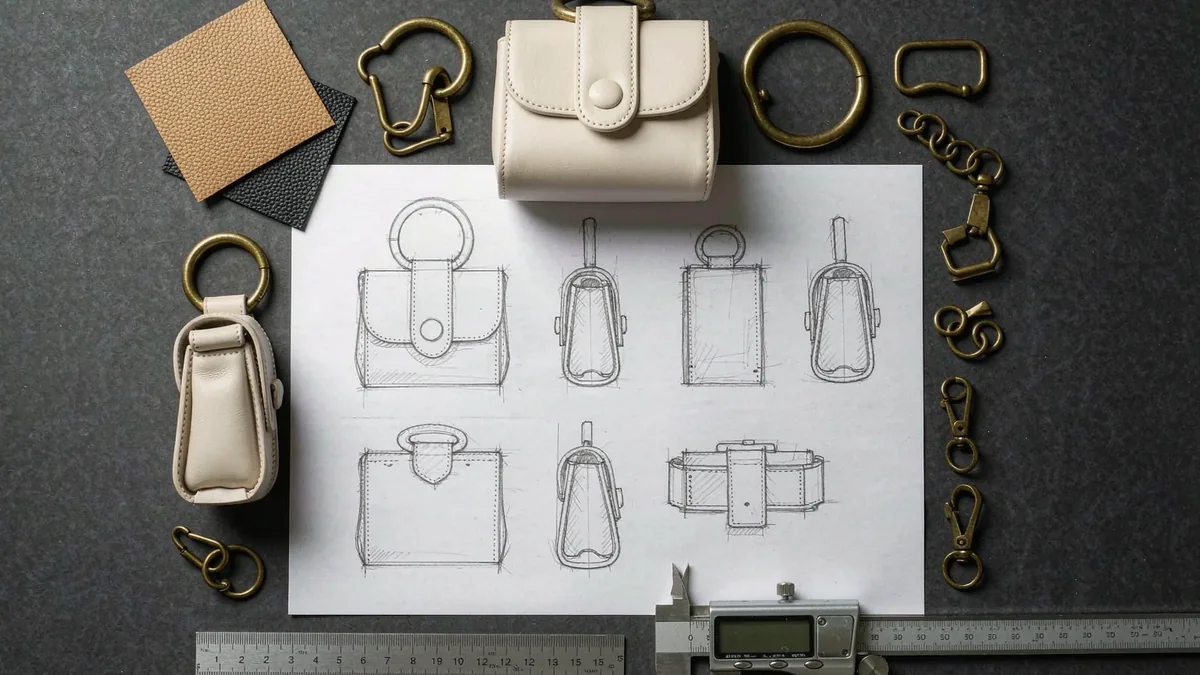
Gate Five: Are the Tolerances Met?
The fifth gate is the one that converts a good piece into an enforceable standard, and it is the gate most often treated as a formality.
| Dimension | Tolerance at sign-off | Recorded where |
|---|---|---|
| Handle drop | ±1 mm | Measurements sheet, line one |
| Body width | ±1 mm | Measurements sheet, line two |
| Gusset depth | ±1 mm | Measurements sheet, line three |
| Strap length | ±3 mm | Measurements sheet, line four |
| Stitch pitch | 8-9 per inch | Measurements sheet, line five |
Tolerances also have a commercial function that is easy to forget. They define the point at which a bulk delivery is wrong, and they are the reason a sign-off signed against a sheet rather than against a photograph is a sign-off that protects the buyer.
When a Gate Cannot Be Closed
Three of the five gates regularly cannot be closed on the day the parcel arrives, and each has a correct response that does not involve waiving it.
| Stuck gate | Why it happens | The correct response |
|---|---|---|
| Material gate | The programme hide has not arrived and the piece was made in a stand-in | Hold the approval, re-review on arrival, and seal the reference only against the real hide |
| Hardware gate | An engineered fitting has a longer lead time than the sample window | Approve the drawing and the finish chip in writing, and defer the gate with a committed date |
| Tolerance gate | A dimension sits between the drawing figure and what the material will allow | Amend the drawing to the achievable figure and record it, rather than accepting it silently |
The third row is the one most often handled badly. A dimension that the material will not allow is not a fault in the work and it is not a fault in the drawing either; it is a drawing that needs amending to a figure both sides can hold. Amending it takes a minute and produces an enforceable standard, while accepting it silently produces a variance that will be rediscovered at inspection, by which point it is a claim rather than a note.
There is one further case worth naming: the gate that cannot be closed because nobody on the buyer's side has authority to close it. This is more common than it sounds in houses where design, buying and production all have an interest in the piece, and it is worth settling who signs before the parcel arrives rather than during the review window. A gate that waits on an internal decision costs 6-10 working days every time it happens.
Who Signs, and What the Signature Commits
One person signs on each side, and their signature commits three specific things rather than a general approval.
What a sign-off signature commits
- That the piece, as made, is the standard the run will be measured against.
- That the recorded tolerances are the tolerances bulk will be held to.
- That the material batch and hardware chip recorded are the ones approved.
- That any variance outside tolerance has been accepted in writing, and is listed.
- That no further change is requested without a new revision code and a new round.
The fifth commitment is the one that ends arguments. After sign-off, a change is a new round rather than a correction, and both sides know it because both signed the same sentence.
What Is Created at Sign-Off
Sign-off produces four physical or written artefacts, and a sign-off that produces only an email has produced nothing enforceable.
- Three sealed references in the approved specification, one held by each side and one held back.
- A written specification sheet recording every number the piece was approved against.
- A signed measurements sheet, with every variance either corrected or accepted in writing.
- A retained cutting of the approved hide, tagged with the batch and kept with the reference.
The retained cutting is the least glamorous and the most useful. Six months later, a disputed delivery is resolved by putting the cutting, the reference and the delivered piece under D65 light together, which takes about ninety seconds and settles what a week of correspondence will not.
What Sign-Off Does Not Cover
Being clear about the limits of sign-off prevents the two disappointments that follow it most often.
- It does not guarantee bulk will be identical; it defines the standard bulk is measured against.
- It does not replace inspection: bulk is still inspected at AQL 2.5 under ISO 2859-1 at handover.
- It does not cover packing, unless packing was specified as bulk packing and checked at sign-off.
- It does not transfer design changes made afterwards, which require a new revision code.
- It does not cover a second colourway, which needs its own hide submission and its own reference.
The third item catches people regularly. A sample presented in presentation packing rather than in bulk packing has not been tested for the thing that damages most deliveries, and sign-off given on that basis has approved a piece and not a parcel. The fourth item deserves a note as well: a change requested after sign-off is not a correction to be absorbed, it is a new round with a new revision code, and treating it as the former is how a bulk order ends up matching neither the sample nor the drawing.
The fifth item is worth particular attention at the seasonal level. A second colourway is a separate exercise with its own hide submission and its own sealed reference in that hide, and no sign-off given on the first colourway extends to it. Houses that treat colourways as a single approval are the ones that discover, at the second delivery, that the approval covered something narrower than they assumed.
Photographs flatter and memory edits. What bulk is measured against is a sealed piece and a written sheet of numbers, and both are created on the day of approval rather than afterwards, when they can no longer be made.
After Sign-Off: Into Bulk
Once the gates are passed and the references are sealed, the programme runs on fixed terms: MOQ 500 pcs per style and colourway, bulk in 35-50 days, inspection at AQL 2.5 under ISO 2859-1 with third-party inspection available, and handover on FOB Xiamen terms. Export experience on this programme runs since 2014 across 7 production lines with about 200,000 pcs per month of capacity, delivered through our validated partner factory Quanzhou Yingming Bags.
Feedback before sign-off is returned inside 48 hours and written as measurements, and sign-off itself is recorded once, in writing, with a date. Those three habits are the difference between a programme that runs to plan and one that spends its bulk window arguing about what was agreed.
Ask for the sign-off pack with your sample
Send the drawings, the material direction and the quantity, and we will return a sampling plan with the five gates and the sign-off documents specified. Request a quote.
Frequently Asked Questions
What is sample approval sign-off?
The point at which a sample becomes the standard the run is measured against. It is passed through five gates in order and produces three sealed references, a written specification sheet and a signed measurements sheet.
What are the five gates of sign-off?
The piece matches the drawing, the material is the approved batch, the hardware matches the finish chip, every provisional element is resolved, and the tolerances are met at ±1 mm on body dimensions.
Why must the gates be run in order?
Because each settles something the next assumes. A dimensional check against a substitute hide, or a hardware check against a provisional fitting, produces an approval that cannot be enforced when the real parts arrive.
What happens if a gate fails?
The process stops and the piece goes back. A gate failed and waived verbally is the origin of most disputes at bulk, because the waiver is remembered differently by the person who gave it and the person who received it.
How is the material gate checked?
Against the batch number on the approved swatch card, not against memory. Thickness at 1.2-1.4 mm, interlining at 0.8 mm, the lining reference and, for a skin, the grade recorded at selection.
What if the sample was made in a stand-in hide?
The gate cannot be passed. Hold the approval and re-review when the programme hide arrives, rather than approving a substitute and hoping the real hide matches it.
How are provisional elements handled at sign-off?
They must be resolved or explicitly deferred in writing, with the element named, the reason recorded, the expected date stated and the approver signing against it. A provisional nobody mentions becomes a fault at bulk.
What tolerances apply at sign-off?
One millimetre on handle drop, body width and gusset depth, three millimetres on strap length, and stitch pitch at 8-9 per inch. All five are recorded on the signed measurements sheet.
Who should sign?
One named person on each side, with authority to commit. Their signature commits five things, including that no further change will be requested without a new revision code and a new round.
What is created at sign-off?
Three sealed references in the approved specification, one held by each side and one held back, a written specification sheet, a signed measurements sheet and a retained cutting of the approved hide.
Why keep a retained cutting?
Because it resolves disputes quickly. Putting the cutting, the sealed reference and a delivered piece under D65 light together takes about ninety seconds and settles what a week of correspondence will not.
Does sign-off replace bulk inspection?
No. Bulk is still inspected at AQL 2.5 under ISO 2859-1 at handover, with third-party inspection available. Sign-off defines the standard; inspection verifies the output against it.
Does sign-off cover packing?
Only if packing was specified as bulk packing and checked at sign-off. A sample presented in presentation packing has been approved as a piece and not as a parcel.
What are the terms after sign-off?
MOQ 500 pcs per style and colourway, bulk in 35-50 days, inspection at AQL 2.5 under ISO 2859-1, and handover on FOB Xiamen terms, with third-party inspection available.
People Also Ask
What does approving a handbag sample mean?
It means the piece becomes the measured standard for the run, with recorded tolerances, a confirmed material batch and a hardware chip reference.
How many sealed references should be kept?
Three in the approved specification: one held by each side and one held back, each signed across the seal and dated.
Can I approve a sample with a provisional part?
Only by approving the drawing and deferring the gate in writing. Approving the substitute as if it were the real part reopens the question at bulk.
What tolerance should I accept on a sample?
One millimetre on body dimensions and three millimetres on strap length, all recorded on the signed measurements sheet.
What is the most common sign-off mistake?
Waiving a failed gate verbally. It is remembered differently by both sides and resurfaces as a dispute at bulk delivery.
Sources and further reading
Every figure on this page is either our own programme data or attributed below. Open the originals before you write them into a specification.
- ISO — International Organization for StandardizationISO Publisher of ISO 2859-1, the inspection procedure applied at handover against the signed-off standard.
- SATRASATRA Technology Centre Independent testing organisation for leather and hardware, covering the salt spray and flex testing behind approval gates.
- Leather Working GroupLeather Working Group Tannery audit protocol behind the batch identification checked at the material gate of sign-off.
- American Association of Textile Chemists and ColoristsAATCC Test methods and lighting guidance for colour assessment of approved material and hardware.
- Sourcing JournalSourcing Journal Reporting on approval practice, sampling discipline and development calendars in the accessories trade.