How to Speed Up Luxury Handbag Sampling Without Risk: Six Safe Compressions, Four Shortcuts to Refuse
How do you speed up luxury handbag sampling without adding risk? Six compressions are safe: pre-book hardware against drawings before the sample is cut, approve the shell at day three rather than day eight, book material in parallel with pattern work, return one consolidated round of feedback, approve digitally within 24 hours, and run the second colourway alongside the first. Together they take two to four days out of a 6-10 working day window without touching the pre-production reference.
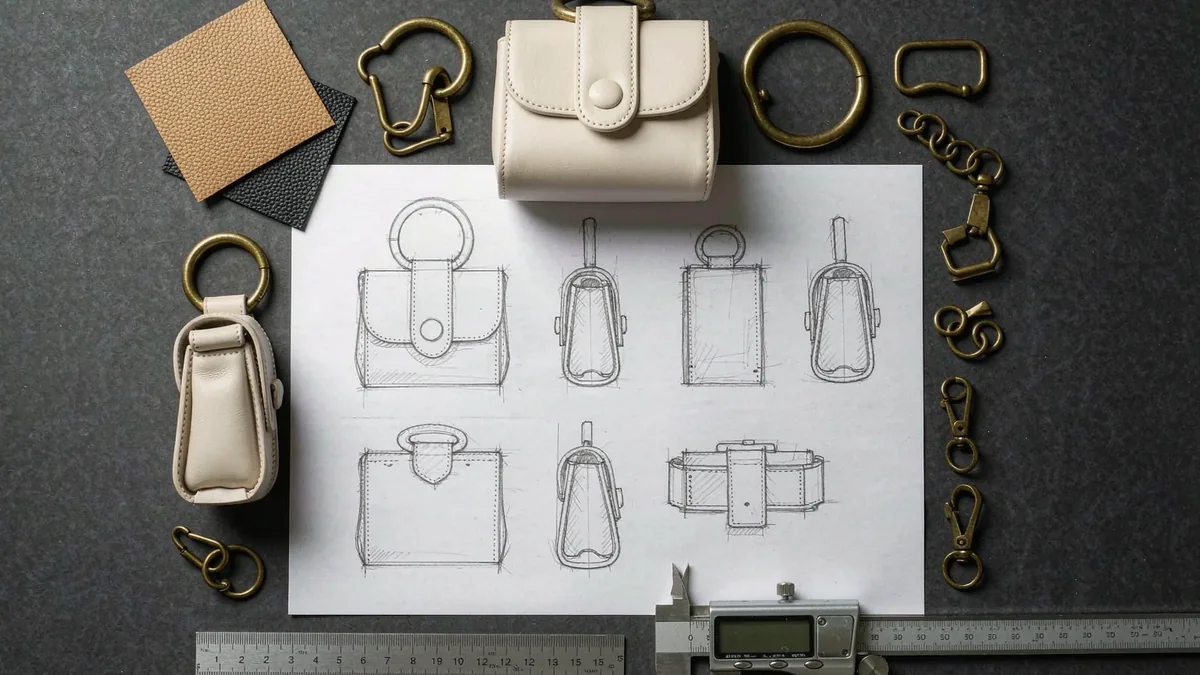
Nine Weeks to a Trade Show
A designer label had nine weeks between a confirmed show slot and the day the collection had to be on a stand, and two new silhouettes that had never left paper.
The arithmetic was uncomfortable from the start. Bulk runs 35-50 days, sampling 6-10 working days, and the two do not overlap because bulk cannot begin before the pre-production reference is sealed. Nine weeks allowed one round of corrections and no more, and a second round would have missed the show.
What got them there was not working faster but deciding earlier. Hardware was ordered against drawings in the first week rather than after sample approval, the shell was reviewed from photographs on day three instead of in the hand on day eight, and feedback came back as one consolidated list rather than three separate emails. Four days were found without a single shortcut, and the pre-production reference was sealed with a week in hand.
Where the Days Actually Sit
Compressing a calendar starts by knowing which activities hold the days and which merely appear to, because most of the savings available sit outside the bench.
| Activity | Days held | Compressible | Safe saving |
|---|---|---|---|
| Pattern development | 1-2 | Barely | None worth taking; a rushed pattern costs more later |
| Material preparation | 1-3 | Yes, by booking early | Up to 3 days by ordering hide in parallel with pattern work |
| Hardware availability | 0 or 15-25 | Only by pre-booking | Up to 25 days if ordered against drawings at the outset |
| Bench work and finishing | 3-5 | Slightly | A day, by reviewing the shell before final finishing |
| Brand review and feedback | 2-15 | Entirely within the brand's control | Several days, by returning one consolidated round within 5 working days |
| Transit of the sample parcel | 2-5 | Yes | 2-3 days by approving from photography first and the piece afterwards |
That table is the whole argument. Founders ask for a faster sample when what they need is an earlier decision, and the two are not the same thing at all.
Six Compressions That Add No Risk
Six changes shorten the window without weakening anything that protects the bulk order, and all six are decisions rather than shortcuts.
- Order hardware against drawings in week one rather than after approval, since tooling for a custom fitting runs 15-25 days.
- Book the programme hide in parallel with pattern work, so material arrives as the bench is ready rather than after it.
- Review the shell from photographs at day three or four, while the structure can still be changed on the bench.
- Return one consolidated round of feedback, split into must-change and nice-to-change, within five working days.
- Approve digitally first and confirm on the piece afterwards, which removes the transit leg from the critical path.
- Run the second colourway alongside the first, since the pattern and hardware are already settled by then.
The third is the one that surprises people, because reviewing an unfinished shell feels premature. It is not: proportion and structure are visible at that stage, and they are the two things that are expensive to change later.
Four Shortcuts That Add Risk Rather Than Remove It
Four compressions are regularly proposed and should be refused, because each removes a control rather than a delay.
Skipping the pre-production reference
The most tempting of the four and the most damaging. Without a sealed piece made on bulk tooling from bulk material, there is no physical definition of what the run has to match, and every shade dispute becomes a matter of opinion.
Approving from a render
A rendering settles proportion and little else. Handle, drape, grain behaviour at a fold and the weight of hardware in the hand are not represented, and approving them on screen simply moves the discovery into bulk.
Cutting bulk material before approval
It saves the material lead time and converts any late change into waste. Hides cut before the specification is fixed cannot be uncut, and the saving is usually smaller than the exposure.
Compressing the bench itself
Asking for finishing in two days rather than four produces a piece finished quickly rather than a piece finished early. The result is a sample that misrepresents what bulk will look like.
The common thread is that all four remove evidence rather than time. A shortened calendar is recoverable; a missing reference is not, because it cannot be reconstructed after the fact. Ask which of the two is being offered before agreeing to any compression proposed under date pressure.
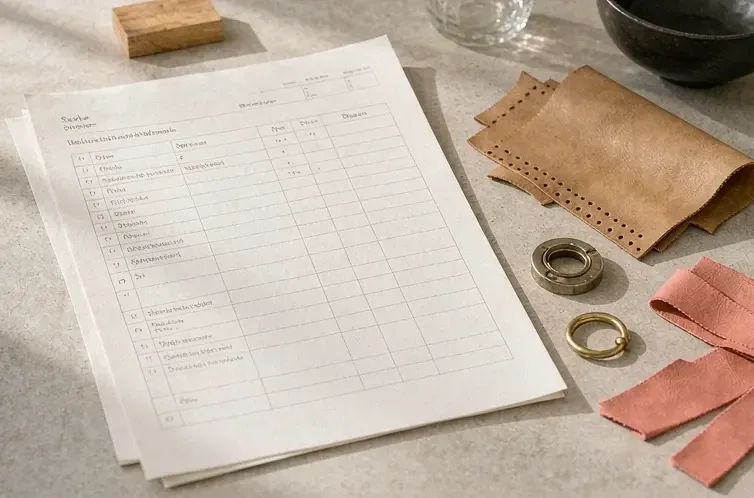
The Pre-Booking Rule: Hardware Leads Everything
Hardware governs the calendar more than any other single element, because a stock fitting is available immediately while a custom one carries a tooling step that cannot be compressed.
- Stock fitting
- Available within the sample window, no tooling step
- Custom pull or lock
- Tooling commonly 15-25 days, then finishing
- Engineered closure
- Longer still, and the reason to order at sketch stage
- Plating specification
- 0.15-0.3 microns, which is what carries 24-48 hours of salt spray
- Pre-booking rule
- Order against drawings at the outset, not against an approved sample
- Fallback if the fitting is late
- Sample in the nearest stock fitting, and declare it provisional in writing
Ordering against drawings carries one obvious objection: if the sample changes the design, the tooling was made for the wrong fitting. In practice the elements that change during sampling are dimensional, and tooling is made to the drawings rather than to the silhouette, so the exposure is far smaller than the delay it removes. Where the risk genuinely cannot be carried, the fallback is to sample in the nearest stock fitting and declare it provisional in writing.
One Round of Feedback, Not Three
The brand's own review period is usually the longest compressible block in the whole calendar, and it is entirely within the brand's control.
Six rules that keep review to one round
- Collect comments from everyone who has an opinion before sending anything, rather than forwarding them as they arrive.
- Split the list into must-change and nice-to-change, and say which is which on each line.
- Write dimensional changes as numbers: raise the handle 8 mm, not make the handle higher.
- Mark the drawing wherever the change is dimensional, instead of describing the change in prose.
- Return the whole list within five working days of the parcel arriving.
- Approve digitally within 24 hours of the revised piece being photographed, then confirm on the piece.
The first rule is the one that finds the most days. Three stakeholders sending comments separately over nine days produces nine days of review and a contradictory list; one consolidated list produces one round.
The Compressed Calendar, Day by Day
Put together, the six compressions turn a standard window into a compressed one without touching the bench or the reference.
| Day | Standard route | Compressed route | What is saved |
|---|---|---|---|
| 0 | Tech pack received | Tech pack and hardware order placed together | 15-25 days of tooling run in parallel |
| 1-2 | Pattern, then material ordered | Pattern and material ordered in parallel | Up to 3 days |
| 3-4 | Bench work, no review | Shell photographs reviewed on day three | Structure corrected before finishing |
| 5-7 | Piece finished, then sent | Piece finished and photographed the same day | 2-3 days of transit off the critical path |
| 8-10 | Piece arrives, review begins | Review already complete; reference sealed | 2-4 days in total |
On a complex construction the same pattern applies to the 12-15 day window, with the savings usually larger because there is more material preparation and more hardware to pre-book.
The Cost of a Compressed Route in Attention
A compressed calendar is not free. It buys days with attention, and the buyer should know in advance where that attention has to be spent rather than discovering it halfway through.
Three moments demand a decision within 24 hours under the compressed route, and each one that slips costs more than under a standard calendar because there is less slack behind it. The hardware drawings have to be confirmed in week one, since tooling starts from them. The shell photographs at day three have to be answered the same day, because the bench is waiting on the answer before finishing. The revised piece has to be approved within 24 hours of being photographed, because there is no transit leg left to absorb a delay.
None of those is unreasonable, and all three are simply earlier versions of decisions that would have been made anyway. What makes a compressed route fail is not the volume of decisions but an approval process that needs three people in three time zones to agree, which is worth solving before the calendar is shortened rather than during it.
Running Two Silhouettes in One Window
Two styles developed in the same window share a calendar only if they share decisions, and the usual mistake is treating them as two independent projects that happen to run at once.
What can be shared is the material order, the hardware order and the review slot. What cannot be shared is the pattern work, and pretending otherwise is how two samples arrive late instead of one arriving on time. A single consolidated hide order covering both styles removes one preparation cycle; a single review meeting covering both removes one round of internal collection.
| Element | Shared across styles | Separate per style | Why |
|---|---|---|---|
| Hide order | Yes, where the same tannery and finish serve both | Where finishes differ | One preparation cycle rather than two |
| Hardware order | Yes, where a common family of fittings is used | Where a custom closure differs | Tooling runs once for the shared elements |
| Pattern development | No | Always | Each silhouette has its own geometry and its own corrections |
| Review meeting | Yes | No | One meeting produces one consolidated list per style |
| Sealed references | No | Always, three per style and colourway | Each style needs its own physical definition of bulk |
Two styles run this way usually finish within the window of one style run conventionally, because the long-lead items are ordered once and reviewed once.
What Never Gets Compressed
Three things stay fixed whatever the calendar pressure, because each is the reason the programme is safe rather than merely fast.
- The pre-production reference, made on bulk tooling from bulk material and sealed on approval.
- The three sealed pieces per style and colourway, one held by each party and one held back.
- The written specification sheet recording every number the piece was approved against.
The rest of the programme runs from there: MOQ 500 pcs per style and colourway, bulk in 35-50 days, inspection at AQL 2.5 under ISO 2859-1, and handover on FOB Xiamen terms. Export experience on this programme runs since 2014 across 7 production lines with about 200,000 pcs per month of capacity, delivered through our validated partner factory Quanzhou Yingming Bags.
The economics are worth one line. Bench work on a finished piece sits around USD 4.80 in parts and labour, so a day saved on a 500-piece run is worth far less than a reference skipped, and the two are never a fair exchange.
Every safe saving on this page is an earlier decision: order hardware sooner, review the shell sooner, consolidate feedback sooner. Every unsafe one removes a piece of evidence. When a calendar is tight, ask which of the two you are being offered.
Get a compressed sampling calendar
Send the drawings, the target date and the quantity and we will return a day-by-day sampling plan with the hardware pre-booking dates marked. Request a quote.
Frequently Asked Questions
How can sampling be speeded up without adding risk?
By deciding earlier rather than working faster: pre-book hardware against drawings, order material in parallel with pattern work, review the shell at day three, and return one consolidated feedback round within five working days.
How many days can safely be saved?
Two to four days on a standard 6-10 working day window, and more on a complex construction. The largest saving is not on the bench at all: pre-booking hardware removes 15 to 25 days of tooling from the critical path.
Why does hardware govern the sampling calendar?
Because a stock fitting is available immediately while a custom one carries a tooling step of 15 to 25 days that cannot be compressed. Ordering against drawings at the outset runs that step in parallel with everything else.
Is reviewing the shell at day three premature?
No. Proportion and structure are visible at that stage and are the two most expensive things to change later. Reviewing an unfinished shell feels early and prevents the most common cause of a second round.
Can I approve a sample from a render?
Only for proportion. Handle, drape, grain behaviour at a fold and the weight of hardware in the hand are not represented on screen, so approving them there simply moves the discovery into bulk, where it costs far more.
Should bulk material be cut before approval to save time?
No. It converts any late change into waste, since hides cut before the specification is fixed cannot be uncut. The saving is usually smaller than the exposure, and it is the shortcut most often regretted.
Why not simply ask for faster finishing?
Because it produces a piece finished quickly rather than finished early. A rushed finish misrepresents what bulk will look like, which defeats the purpose of the sample entirely.
How quickly should feedback be returned?
Within five working days, as one consolidated list rather than several emails. Three stakeholders commenting separately over nine days produces nine days of review and a contradictory list of changes.
What is the pre-booking rule?
Order hardware against drawings at the outset rather than after sample approval. The elements that change during sampling are usually dimensional, so tooling made to the drawings survives most late revisions.
Can a second colourway be developed at the same time?
Yes, and it should be. Once the pattern and hardware are settled, a second colourway needs a hide approval and one sealed reference rather than a fresh development round.
What must never be compressed?
The pre-production reference, the three sealed pieces per style and colourway, and the written specification sheet. Each is the reason the programme is safe, and none can be reconstructed later.
Does a compressed sample change the bulk lead time?
No. Bulk still runs 35 to 50 days from approval of the reference, and inspection at AQL 2.5 under ISO 2859-1 still applies. Compression changes only the development window ahead of it.
People Also Ask
What is the fastest safe handbag sampling route?
Pre-book hardware against drawings, order material in parallel with pattern work, review the shell at day three, consolidate feedback into one round, and approve digitally first. That saves two to four days.
Which sampling shortcut should I refuse?
Skipping the pre-production reference. It is the physical definition of what bulk must match, and without it every shade dispute becomes a matter of opinion rather than a comparison.
How long does custom hardware take?
Tooling commonly runs 15 to 25 days before finishing, which is longer than the entire sampling window. Ordering at sketch stage is the only way to keep it off the critical path.
Can I review a sample before it is finished?
Yes, and it helps. Shell photographs at day three show proportion and structure while both can still be changed on the bench, which is exactly when you want to see them.
Does speeding up sampling increase defects?
Not if the compressions are decisions rather than shortcuts. Shortening the bench or cutting material early does increase risk; ordering hardware sooner and consolidating feedback do not.
Sources and further reading
Every figure on this page is either our own programme data or attributed below. Open the originals before you write them into a specification.
- ISO — International Organization for StandardizationISO Publisher of ISO 2859-1 for inspection and the material and hardware test standards referenced in a sampling specification.
- SATRASATRA Technology Centre Independent testing organisation for leather and accessories, covering hardware corrosion and flex testing of sample pieces.
- Leather Working GroupLeather Working Group Tannery audit protocol behind hide identification and the batch records used when material is booked in parallel with pattern work.
- OEKO-TEXOEKO-TEX Testing and certification system for textile and leather articles against restricted substance lists.
- Sourcing JournalSourcing Journal Reporting on development calendars, material lead times and sampling practice across the accessories trade.