Luxury Handbag Prototyping Cost Explained
The cost of a luxury bag prototype is rarely the number on an invoice. It is the sum of bench hours, material committed to a pattern that may change, hardware tooling that may be re-cut, and the weeks of development time that sit between an idea and a signed reference. Understanding where that cost is created is what allows a brand to control it, because most of it is generated by decisions made before the first piece is cut. This guide answers the questions we are asked most often: what a prototype costs in real terms, why the first sample is always the most expensive, what hardware and material contribute, what each correction adds at around USD 4.80 per panel, and which economies are false ones.
What does a prototype actually cost?
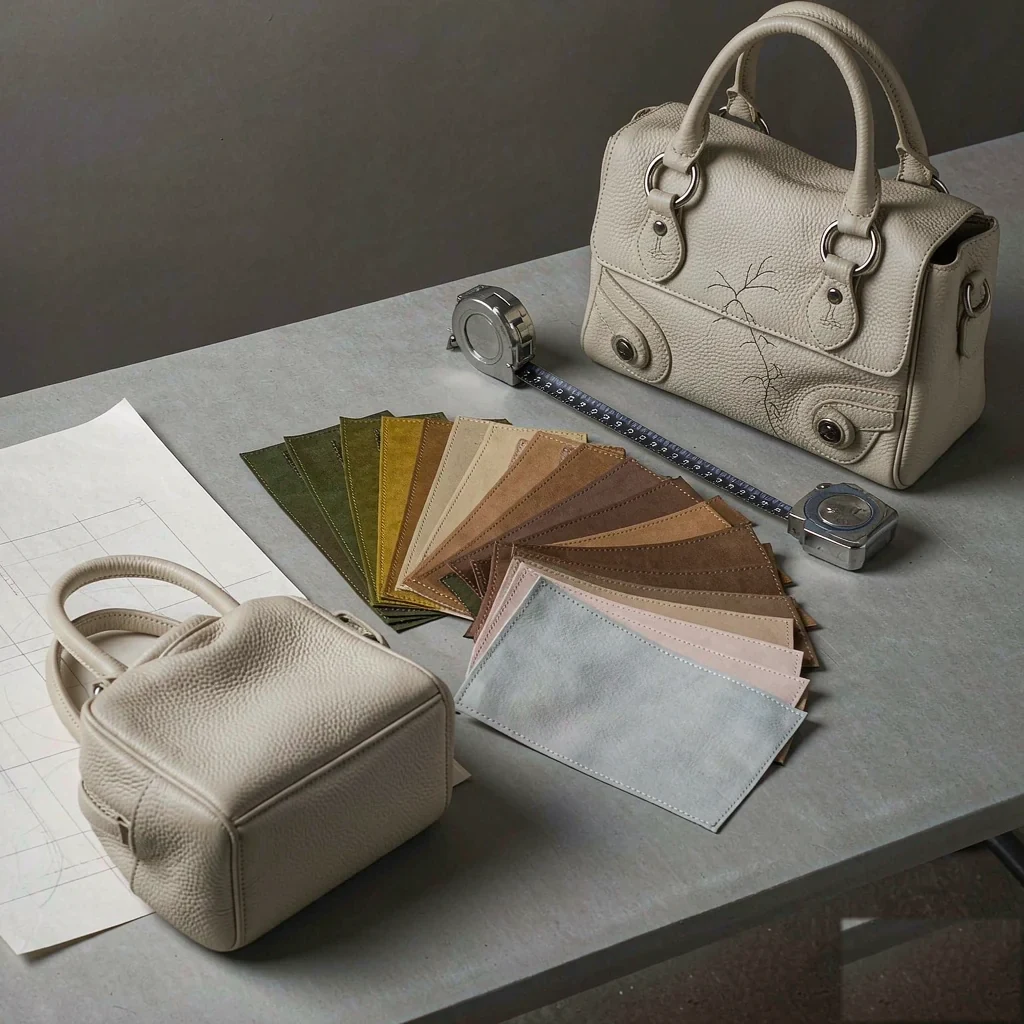
A prototype consumes four things: bench time, material, bought-in components, and calendar time. Bench time is the most visible and the least decisive. Material is where exotic programmes become expensive, because a hide committed to a pattern that changes is a hide that cannot be recovered. Bought-in components carry tooling costs that are independent of how many pieces you eventually make. Calendar time is the cost that hurts most, because development weeks sit directly in front of a bulk window.
The useful way to think about it is not as a price but as a set of decisions. Every decision deferred from the pack into the sampling phase costs more in the sampling phase than it would have cost in the pack, and that gap is the real measure of development expense.
Where is the cost really incurred?
Mostly before the bench touches anything. A pack without substance, tolerance or construction sequence generates a sample that has to be rebuilt, and rebuilding costs the full bench sequence a second time plus a fresh cut of material. A pack with those fields complete produces a first sample that may still need correction, but the correction is local rather than structural, and local corrections are an order of magnitude cheaper.
- Incomplete specification: the cost is a full rebuild rather than a correction.
- Material committed too early: the cost is the hide, which is not recoverable once cut.
- Hardware ordered too late: the cost is calendar time, which no expediting recovers.
- Dispersed approval: the cost is a round that resolves nothing.
- Changes of intent between rounds: the cost is a fresh start presented as a note.
Why is the first sample always the most expensive?
Because it answers structural questions that cannot be answered any other way. There is no simulation that tells you whether a handle drop is comfortable when the bag is loaded, or whether a plate rocks on leather that has not been skived evenly. The first sample buys that information, and it is the most expensive piece in the programme precisely because it is buying knowledge rather than producing a bag. Every subsequent round is cheaper because it is confirming rather than discovering.
What does hardware contribute?
Hardware contributes cost in a way that surprises brands: mostly through tooling and lead time rather than through unit price. A bespoke closure requires tooling, and that tooling exists whether you make one sample or five hundred bags. A re-tooling after a failed engagement test doubles it. Where a brand can work from an existing component, even a modified one, the development cost falls substantially and the schedule compresses, because nothing has to be cut from scratch.
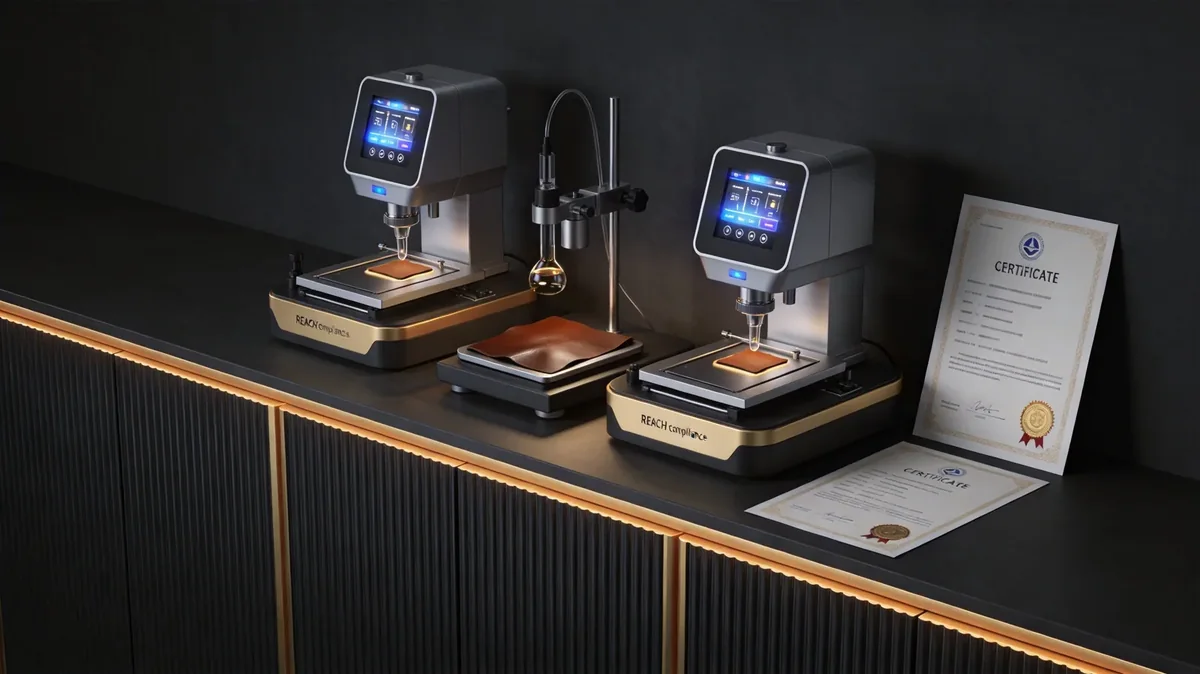
The second contribution is testing. Every bespoke component should be put through plating thickness measurement, 24 hours of neutral salt spray, 5,000 cycles on a rigged frame and a 25 kg static pull on load-bearing anchors. That regime costs a small fraction of the value of the finished programme and prevents the most expensive kind of development cost, which is discovering a hardware failure after bulk has shipped.
What does material contribute?
Material contributes through yield and through irreversibility. Leather is cut, and a cut panel cannot be un-cut. On calfskin the exposure is modest; on an exotic skin it is significant, because the pattern has to be placed against the scale and a mis-placed piece cannot be recovered. That is why we cut exotic prototypes from a scaled paper pattern placed on the skin first, and photograph the placement before the knife runs.
| Cost driver | What creates it | How it is controlled | Recoverable? |
|---|---|---|---|
| Bench time | Full build sequence, repeated per round | Complete pack, one approver per round | No, but reducible |
| Material | Hide committed to an unproven pattern | Stand-in material in round one, placement photographed first | No for exotic, partly for calfskin |
| Hardware tooling | Bespoke closure, re-tooled after failure | Approve a provisional specification before round one | No |
| Component testing | Plating, salt spray, cycling, pull tests | Run once per batch at intake | No, and not worth avoiding |
| Corrections | Each re-cut and re-finished panel | Tolerances and construction notes in the pack | No |
| Calendar time | Rounds sequenced against a bulk window | Order hardware early, freeze the brief | No |
What does each correction add?
Re-cutting and re-finishing one panel once a round has been built costs around USD 4.80 in bench time, before the material and the re-assembly are counted. That figure is the unit of development waste. A round that generates six corrections costs six times it plus the material, and a round that generates a structural correction costs the full sequence again. This is the arithmetic that makes the pack the least costly place to be precise.
It also explains why dispersed approval is expensive. Three stakeholders giving three sets of notes does not triple the correction count; it multiplies it, because the notes conflict and the bench either builds to the wrong one or waits. One consolidated list per round keeps the correction count at the number of real problems rather than at the number of opinions.
Do digital tools change the cost?
They change part of it. Digital pattern work reduces the cost of iteration, because a pattern can be adjusted and re-graded without cutting material, and a three-dimensional mock-up resolves proportion questions that would otherwise consume a physical round. It also lets a brand see a colourway against the same silhouette before any leather is committed, which removes a category of change that is expensive once a hide has been cut. What they do not resolve is hand: the way a specific leather folds at a corner, the resistance of a closure, the weight of the piece when it is loaded. Those questions still require a physical build, and always will.
The practical effect is that digital tools reduce the number of physical rounds on well-understood constructions and do very little on novel ones. Where a construction has no precedent, the physical discovery has to happen, and no amount of screen work removes it.
False economy: skipping tests
Omitting plating measurement or salt spray to save on a sample. The saving is small and the exposure runs across the whole bulk order.
False economy: stand-in hardware
Sampling with an approximate closure. Seating and engagement are then discovered in a later round, after the tooling window has closed.
False economy: verbal approval
Approving a round by conversation rather than against a written reference. The dispute resurfaces in bulk, where it costs far more to settle.
True economy: provisional hardware
Approving a provisional hardware specification before round one so the real component arrives for round two. It removes a whole round from the schedule.
What is worth paying for?
Four things, in our experience, always repay themselves. A complete pack with tolerances, which converts corrections from structural to local. Intake testing on every bought-in component, which costs little per batch and prevents the most expensive class of failure. A pre-production piece built on the line with production tooling, which proves repeatability before bulk commits. And a signed, stored reference sample, which settles every later argument in minutes rather than weeks.
- Write tolerances into the pack rather than dimensions alone.
- Use stand-in material in round one and commit the final hide only when the pattern is proven.
- Approve a provisional hardware specification before round one so tooling runs in parallel.
- Test every bought-in component at intake, once per batch.
- Consolidate all stakeholder notes into one list, signed by one approver, before the next round begins.
- Build a pre-production piece on the line with production tooling before bulk is released.
One further driver deserves naming because it is invisible on any invoice: the opportunity cost of a bench occupied by a style that is not ready. A sampling bench working on an incomplete pack is not available for a brand whose pack is complete, and the delay that creates is borne by someone else's season. Completing the pack is therefore not only cheaper for the brand in question, it is the courteous thing to do with a shared resource.
One re-cut and re-finished panel costs around USD 4.80 in bench time. Count the corrections a round generates and you have the real cost of an incomplete specification.
How should a brand plan the development phase?
By planning in rounds rather than in money. Decide how many rounds the style needs based on construction novelty and material behaviour, put dates against each one, and identify which decisions have to be made before each round starts. That plan is more useful than any figure, because the thing that actually threatens a season is not the spend, it is a round that was not scheduled and a decision that was not made in time.
What does the development phase protect?
There is also a commercial dimension that is easy to overlook. Development is where a brand discovers whether a design is buildable at all, and discovering that late is far more damaging than spending an extra round. A silhouette that cannot hold its shape without a reinforcement that changes the hand, or a closure that cannot be engaged once the leather is at full substance, are both answers that belong in development rather than in bulk.
Brands that accept this treat the sampling phase as a conversation rather than as a hurdle, and they ask the bench what it would change before approving rather than after. That single habit removes more development cost than any negotiation, because it converts corrections into adjustments made while a panel is still un-cut.
It protects the bulk order, which is where the real money sits. A 500-piece programme carries far more value than the sampling that precedes it, and every fault that development removes is a fault that does not appear five hundred times. Seen that way, the question is never whether development is expensive; it is whether it is expensive relative to the alternative, which is discovering the same fault in bulk.
- Correction cost per panel
- Around USD 4.80 in bench time, before material and re-assembly
- Working days per round, standard
- 6 to 10
- Working days per round, complex
- 12 to 15
- Standard rounds, proven construction
- 2
- Complex or exotic construction
- 3 to 4 rounds
- Hardware regime
- Plating 0.5 microns minimum, 24 hours salt spray, 5,000 cycles, 25 kg pull
- Colour confirmation
- Delta E 1.0 against the signed panel under D65
- Stitch density
- 8 stitches per inch on visible calfskin topstitching
- Pre-production piece
- Built on the line with production tooling before bulk release
- Minimum order quantity
- 500 pieces per style per colourway
- Bulk lead time
- 35 to 50 days from approved sample
- Shipment terms
- FOB Xiamen
- Programme history
- Export work since 2014 across 7 production lines, about 200,000 pieces per month
- Standing AQL
- 2.5 for major defects, zero tolerance for critical findings
Prototype cost in one paragraph
- Prototype cost is created mostly before the bench starts. Bench time, material, hardware tooling, component testing and calendar time each contribute, and the largest single driver is an incomplete specification that turns a correction into a rebuild. Re-cutting and re-finishing one panel costs around USD 4.80 in bench time, which is the unit of development waste. The economies worth taking are a complete pack with tolerances, provisional hardware approval before round one, stand-in material in the first round and intake testing on every bought-in component. The economies worth refusing are skipping tests, sampling with approximate hardware, and approving verbally.
Plan the development, not just the sample
Send us your pack and we will return a round plan with dates, the decisions each round needs, and the component tests we will run. Request a sampling consultation and quotation at /contact-quote/.
Frequently Asked Questions
What are the main cost drivers in bag prototyping?
Bench time, material committed to an unproven pattern, hardware tooling, component testing and calendar time. Of those, an incomplete specification is the largest, because it turns a correction into a full rebuild.
Why is the first sample the most expensive?
It answers structural questions nothing else can: whether the bag stands, whether the handle drop works loaded, whether a plate seats flatly. It buys knowledge, and later rounds are cheaper because they confirm rather than discover.
How much does one correction cost?
Re-cutting and re-finishing one panel once a round has been built costs around USD 4.80 in bench time, before material and re-assembly. A structural correction costs the full build sequence again.
Does hardware cost more than material in development?
On bespoke programmes it often does, because tooling exists whether you make one sample or five hundred bags and re-tooling after a failed engagement test doubles it. Lead time adds cost no expediting can recover.
Can digital tools reduce prototyping cost?
Partly. Digital pattern work and three-dimensional mock-ups reduce iteration on well-understood constructions, but they cannot resolve hand, closure resistance or loaded weight, which still require a physical build.
Is it worth skipping component tests to save on a sample?
No. Plating measurement, 24 hours of salt spray, 5,000 cycles and a 25 kg pull cost a small fraction of the programme and prevent discovering a hardware failure after bulk has shipped.
How should I handle exotic material in sampling?
Place the scaled paper pattern on the skin and photograph the placement before cutting. A mis-placed exotic panel cannot be recovered, and that irreversibility is what makes exotic development expensive.
Should round one use the final leather?
Usually not. A stand-in close to specification protects the hide while the pattern is unproven. Commit the final material in round two, once the structural questions are closed.
How does approval discipline affect cost?
Substantially. Three stakeholders giving conflicting notes multiplies the correction count rather than tripling it, because the bench either builds to the wrong note or waits. One consolidated list keeps corrections at the number of real problems.
What is a pre-production piece and is it worth it?
A final build on the production line with production tooling and jigs, made by the people who will run the order. It proves repeatability before bulk commits and is one of the four development spends that always repay themselves.
How should a brand plan the development phase?
In rounds rather than in money. Estimate the count from construction novelty and material behaviour, put dates against each round, and identify the decisions required before each one starts.
What does development actually protect?
The bulk order. A 500-piece programme carries far more value than the sampling preceding it, and every fault removed in development is one that does not appear five hundred times.
People Also Ask
Why is bag prototyping expensive?
Because the first sample buys information that cannot be obtained any other way, and because material, tooling and calendar time are committed before the design is proven. Incomplete specifications make it far more expensive.
How can I reduce prototype cost?
Complete the pack with tolerances, use stand-in material in round one, approve provisional hardware early, test components at intake, and consolidate approval into one signed list per round.
Is a cheaper prototype worse?
Not necessarily, but skipping component tests, sampling with approximate hardware, or approving verbally all produce an inexpensive sample and an expensive bulk order.
What is tooling cost in bag hardware?
The cost of cutting the tool that forms a bespoke closure. It is incurred once regardless of volume, and incurred again if the engagement fails testing and the component has to be re-tooled.
Should I plan spend per round or per project?
Per round, with dates and named decisions. A round that was not scheduled is the thing that threatens a season, more than the spend itself.
Sources and further reading
Every figure on this page is either our own programme data or attributed below. Open the originals before you write them into a specification.
- ISO 9001:2015 Quality management systemsInternational Organization for Standardization Framework for design and development planning, including the review gates that keep development cost visible.
- ISO 2859-1:1999 Sampling procedures for inspection by attributesInternational Organization for Standardization Referenced for the inspection of the pre-production piece against which bulk is later released.
- REACH Annex XVII restrictions, including nickel releaseEuropean Chemicals Agency Basis for the component compliance testing that should never be skipped to reduce development spend.
- Reporting on development cost and sourcing in luxury supply chainsSourcing Journal Industry reporting on where development spend is recovered and where it is wasted in luxury programmes.