Digital Prototyping vs Physical Luxury Bag Samples
Digital prototyping and physical sampling answer different questions, and treating them as alternatives is the mistake that costs programmes time. A rendered mock-up resolves proportion, silhouette and colourway in two to three working days with no material consumed. A physical sample resolves hand, weight, closure resistance and the way a specific leather folds at a corner, which no screen can simulate. The correct question is not which to use but which question each one answers, and in what order. This guide compares the two on time, material, iteration cost and fidelity, sets out where digital is decisively better and where it cannot substitute, and shows the sequence that compresses a development calendar without lowering the standard.
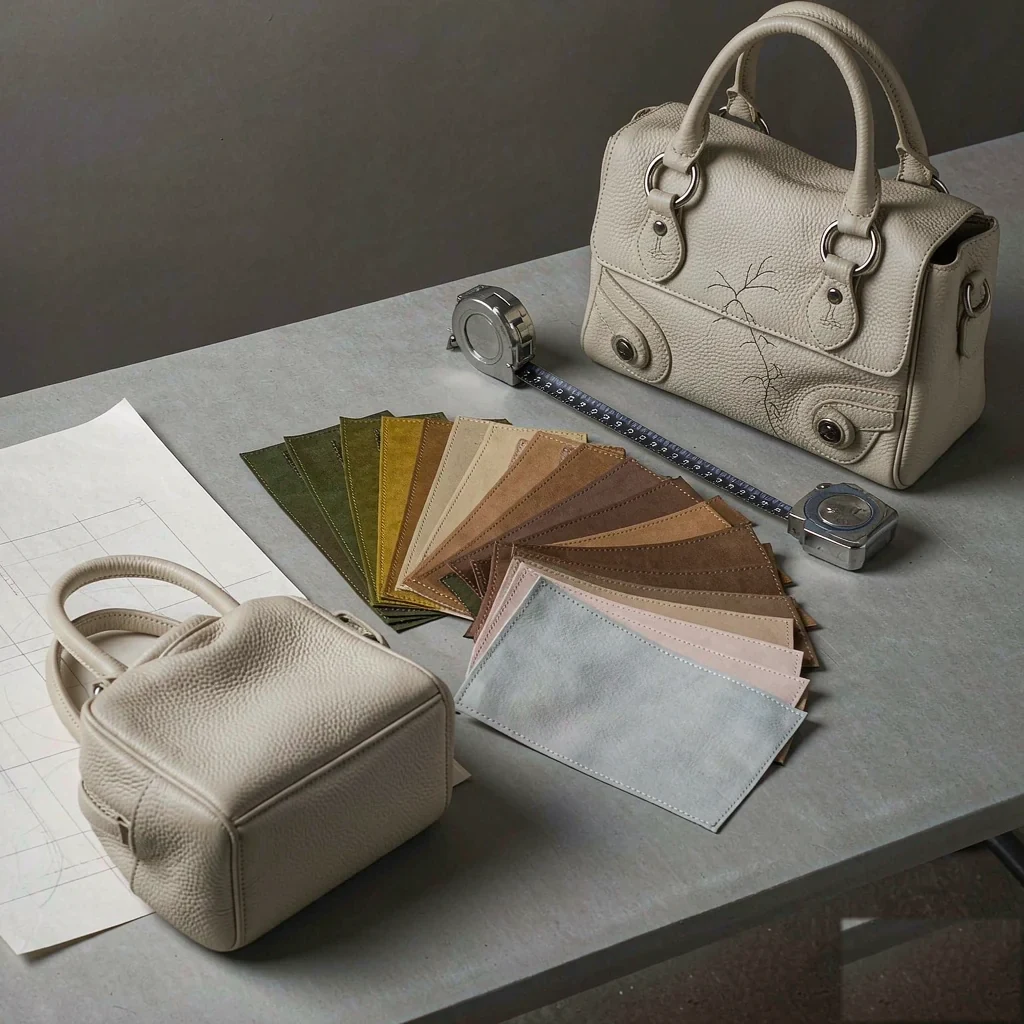
What each method actually answers
A digital mock-up answers questions of appearance. Is the proportion right, does the handle drop look balanced, does this colourway work against that hardware finish, does the flap cover the closure cleanly? These are visual questions, and a screen answers them well, quickly and at no material cost. A physical sample answers questions of behaviour. Does the bag stand when it is loaded, does the closure resist correctly, does the handle sit comfortably in a hand, does the leather fold at the corner or fight?
Confusion arises because both produce something that looks like a bag. One is a picture of a bag; the other is a bag. The distinction matters most when a brand approves from a screen and then discovers in physical form that something fundamental was never tested. It also matters commercially: an approval given on a render is an approval of an image, and the sample that follows it will be judged against expectations the image created rather than against a specification.
The numbers: time, material and iteration cost
A digital mock-up runs two to three working days for a first view and under a day for each subsequent iteration, because the change is made in the model rather than in material. A physical sample runs 6 to 10 working days on a standard build and 12 to 15 on a complex one, and each iteration repeats that cycle. Material consumed is nil for digital and real for physical, which matters most on exotic skins where a mis-cut panel is not recoverable.
The iteration figures are the decisive comparison. Changing a handle drop on screen costs hours; changing it physically means a new pattern, a new cut and a new build, and re-cutting and re-finishing one panel costs around USD 4.80 in bench time before the material is counted. On a style that needs four proportion iterations, that difference is most of a development calendar.
| Attribute | Digital mock-up | Physical sample | Note |
|---|---|---|---|
| First view | 2 to 3 working days | 6 to 10 working days | Complex constructions run 12 to 15 physically |
| Iteration | Under one working day | 6 to 10 working days | The iteration gap, not the first view, is what compresses calendars |
| Material consumed | None | Full cut per round | Decisive on exotic skins, where a mis-cut is not recoverable |
| Correction cost | Model edit | Around USD 4.80 per re-cut panel | Before material and re-assembly |
| Proportion accuracy | High | Exact | Digital resolves proportion; physical confirms it |
| Hand and weight | Not simulated | Exact | The clearest limit of digital work |
| Closure resistance | Not simulated | Exact | Requires a physical mechanism |
| Colour fidelity | Approximate, needs calibration | Exact against a signed panel | Delta E 1.0 is measured physically, not on screen |
Where digital is decisively better
Four applications repay themselves immediately. Proportion iteration, because a handle drop or a flap length can be changed and compared in hours rather than weeks. Colourway exploration, because a silhouette can be shown in six shades before any leather is committed. Range planning, because a family of styles can be viewed together to check that they read as a collection. And stakeholder alignment, because a screen image travels to a committee far faster than a physical piece does.
- Proportion iteration: hours per change rather than a full build cycle.
- Colourway exploration: six shades on one silhouette before material is called off.
- Range planning: a family of styles viewed together for collection coherence.
- Stakeholder alignment: one image that everyone can react to before a piece exists.
- Archive and revision: every iteration retained as a dated file rather than a remembered conversation.
Where physical is irreplaceable
Three attributes cannot be simulated at useful fidelity: hand, weight and mechanism. Hand is how the leather feels under a palm and how the body responds when it is picked up, and it depends on substance, temper, interlining and the way the panels were closed. Weight is a function of every component plus the hardware, and it is the attribute clients notice first when they lift a bag. Mechanism is the resistance of a closure, the sound it makes, and whether it can be operated with one hand.
To these must be added a fourth: how a specific hide behaves. Two panels from the same dye lot can fold differently, and a corner that turns beautifully in one piece will fight in another. No material simulation currently predicts that at the fidelity a luxury programme requires, which is why the physical build remains the final word.
Hand
How the leather feels and how the body responds when lifted. Depends on substance, temper, interlining and closing sequence; not usefully simulated.
Weight
The sum of every component plus the hardware, and the first attribute a client notices. Measured physically, and often the reason a proportion decision changes.
Mechanism
Closure resistance, the sound it makes, and one-handed operation. Requires a physical closure set into physical leather.
Panel behaviour
How a specific hide folds at a corner. Two panels from one dye lot can behave differently, and only the physical build reveals it.
Colour and material: the hardest digital problem
Screens are emissive and leather is reflective, which is the root of the difficulty. A colour that looks correct on a calibrated monitor can read differently against a physical hide because the surface reflects light rather than emitting it, and because grain, sheen and depth change the way the eye reads the same pigment. This is why a digital colourway is a direction rather than an approval, and why the final colour is measured physically.
Our standing position is that digital colour narrows the field and physical measurement closes it. Explore six shades on screen, commit to two physically, and measure the chosen one against a signed reference panel under D65 to a Delta E limit of 1.0. Trying to skip the physical step is how programmes end up arguing about colour at final inspection rather than at approval.
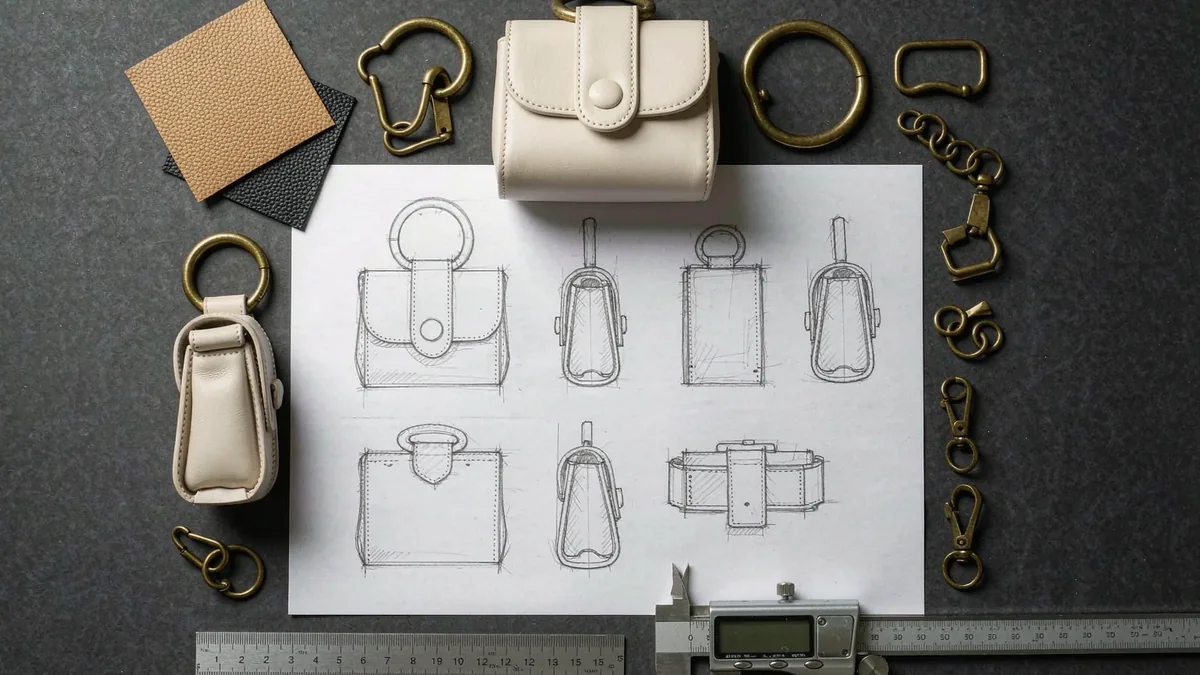
Hardware and mechanism remain physical
A rendered closure looks correct regardless of whether it can be made. Engagement, spring force, plating shade and seating are all physical properties, and each has to be tested on a real component set into real leather. That is why we order provisional hardware before the first physical round, so the real component is available for the build rather than arriving after the pattern has been approved around a stand-in.
What digital work costs to set up
The set-up cost of a digital workflow sits on the brand's side rather than on the bench. A useful model needs accurate base measurements, a material reference for each surface, and someone who can maintain the file as the design changes. The first model of a style takes longest; subsequent styles in a family are faster, because the base block, the hardware components and the material references can be reused rather than built again.
The recurring cost is maintenance. A model that is not updated when the pack changes becomes misleading rather than merely old, because a stakeholder will approve from it in good faith. We ask that any revision to the pack is mirrored in the model within the same working day, and that the file carries the same revision number as the document it represents.
Failure modes in a digital workflow
Three failure modes recur. The first is approving from an uncalibrated screen, which produces a colour decision nobody can reproduce later. The second is modelling a closure that has not been tooled, which produces an engagement that looks correct and cannot be built in metal. The third is showing a model to a stakeholder who understands it as a proposal rather than as a simulation, and who then treats the physical sample as a regression when it differs.
All three are avoided by the same discipline: label the model clearly as a simulation, state what it does and does not resolve, and keep the physical piece as the only approval artefact. Where a stakeholder cannot see the piece in person, we send measured photographs under a named illuminant rather than renders, because a photograph of a real panel is evidence and a render is an illustration.
How the two are combined in practice
The sequence that compresses calendars without lowering the standard is digital first, physical second, digital again for record. Explore proportion and colourway on screen until the range is narrowed to the decisions that matter. Build one physical piece against that narrowed field, using the intended hardware, interlining and reinforcement so the behaviour questions are answered properly. Then retain the final model as the digital record of what was approved.
- Model the silhouette and iterate proportion until the range is narrowed to one direction.
- Explore colourways on screen and commit to no more than two for physical evaluation.
- Order provisional hardware before the first physical build so tooling runs in parallel.
- Build one physical piece with the intended hardware, interlining and reinforcement.
- Measure colour physically against a signed panel under D65, to a Delta E limit of 1.0.
- Test the closure: plating thickness, 24 hours salt spray, 5,000 cycles and a 25 kg pull.
- Correct, re-build, and retain the approved model as the dated digital record of the style.
Approving from a screen. A rendered bag resolves appearance questions only; hand, weight and mechanism remain untested until a piece exists.
What this means for the number of rounds
Digital work removes rounds that would have been spent on proportion and colourway, which are the two categories that generate most iterations. It does not remove rounds spent on behaviour: stand, hand, closure and panel folding still require physical builds, and on a novel construction they may require more than one. In practice the effect is strongest on proven constructions, where the behaviour is already understood and only the appearance is new.
On a novel construction the saving is smaller and should not be oversold. Where nobody has built this geometry before, the physical discovery has to happen, and a screen model will not tell you whether a corner turns. Brands that expect digital work to remove a physical round on a novel build are usually the ones disappointed by the calendar. The honest framing is that digital work buys certainty about appearance earlier, which frees the physical rounds to be spent entirely on behaviour rather than split between the two.
- Digital first view
- 2 to 3 working days
- Digital iteration
- Under 1 working day
- Physical round, standard
- 6 to 10 working days
- Physical round, complex
- 12 to 15 working days
- Material consumed, digital
- None
- Correction cost, physical
- Around USD 4.80 per re-cut and re-finished panel
- Colour confirmation
- Digital narrows, physical measures: Delta E 1.0 under D65
- Hardware regime
- 0.5 microns plating minimum, 24 hours salt spray, 5,000 cycles, 25 kg pull
- Stitch density
- 8 stitches per inch on visible calfskin topstitching
- Minimum order quantity
- 500 pieces per style per colourway
- Bulk lead time
- 35 to 50 days from approved sample
- Shipment terms
- FOB Xiamen
- Programme history
- Export work since 2014 across 7 production lines, about 200,000 pieces per month
The comparison in one paragraph
- Digital prototyping resolves appearance: proportion, colourway and range coherence, in two to three working days for a first view and under one day per iteration, with no material consumed. Physical sampling resolves behaviour: hand, weight, closure resistance and how a specific hide folds, in 6 to 10 working days per round and 12 to 15 for complex builds. Digital narrows the field and physical closes it, including colour, which is measured against a signed panel to Delta E 1.0 under D65 rather than approved on screen. The saving is largest on proven constructions; on novel geometry the physical discovery still has to happen.
Use both, in the right order
Send us your drawings and we will model proportion and colourway first, then build the physical piece that answers the questions a screen cannot. Request a sampling consultation and quotation at /contact-quote/.
Frequently Asked Questions
Can digital prototyping replace physical samples?
No. It replaces the rounds spent on proportion and colourway, which are most of them, but hand, weight, closure resistance and how a specific hide folds still require a physical build.
How long does a digital mock-up take compared with a physical sample?
Two to three working days for a first digital view versus 6 to 10 for a physical round, and under a day per digital iteration versus a full build cycle physically.
Why can colour not be approved on screen?
Screens emit light and leather reflects it, so the same pigment reads differently against a physical hide with grain and sheen. Digital colour narrows the field; the light booth closes it at Delta E 1.0 under D65.
Is digital work worth it on exotic skins?
Especially there. Digital iteration consumes no material, and a mis-cut exotic panel is not recoverable, so resolving proportion and placement on screen first has real value.
What attributes can never be simulated?
Hand, weight, mechanism resistance and how a specific hide folds at a corner. Each depends on physical properties that no current simulation predicts at luxury fidelity.
Does digital work reduce the number of sampling rounds?
It reduces rounds spent on appearance. Rounds spent on behaviour remain, and on a novel construction there may be more of them, because the physical discovery still has to happen.
How should hardware be handled in a digital workflow?
Order provisional hardware before the first physical build, so tooling runs in parallel with pattern work. A rendered closure looks correct whether or not it can be made.
What does a physical correction cost?
Re-cutting and re-finishing one panel costs around USD 4.80 in bench time, before material and re-assembly. Digital corrections cost a model edit and no material.
Should a brand approve a design from a render?
No. Approve proportion and direction from a render, and approve the bag from a physical piece. A render resolves appearance only and leaves behaviour untested.
What is the best sequence for the two methods?
Digital first to narrow proportion and colourway, physical second with the intended hardware and interlining, then retain the approved model as a dated digital record of the style.
Does digital sampling help with range planning?
Yes. A family of styles can be viewed together to check that they read as a collection, which is the one application where a screen is genuinely superior to a bench.
How is the digital record used after approval?
It is retained as a dated file showing exactly what was approved, alongside the signed physical sample. Together they settle any later question about intent or revision.
People Also Ask
What is digital prototyping in bag design?
Modelling a bag in three dimensions to resolve proportion, colourway and range coherence before any material is cut. It consumes no material and iterates in hours.
Why do I still need a physical sample?
Because hand, weight, closure resistance and panel folding cannot be simulated. Only a physical build answers whether the bag behaves as intended when it is picked up.
How accurate is a digital bag mock-up?
High on proportion and silhouette, approximate on colour, and not meaningful on hand or weight. It is a direction tool rather than an approval tool.
Can 3D sampling speed up development?
Yes, substantially on proven constructions where behaviour is already understood. On novel geometry the saving is smaller, because physical discovery still has to happen.
What is the best order for digital and physical sampling?
Digital first to narrow the field, physical second to close it, then retain the approved model as the dated record alongside the signed sample.
Sources and further reading
Every figure on this page is either our own programme data or attributed below. Open the originals before you write them into a specification.
- ISO 9001:2015 Quality management systemsInternational Organization for Standardization Framework for design and development planning, including the verification gates that distinguish digital review from physical approval.
- CIE colour difference metrics and standard illuminantsInternational Commission on Illumination Source of the D65 reference and Delta E limit that explain why colour is measured physically rather than approved on screen.
- ISO 2859-1:1999 Sampling procedures for inspection by attributesInternational Organization for Standardization Referenced for the inspection of the physical reference piece against which bulk production is compared.
- Reporting on digital design adoption in luxury supply chainsSourcing Journal Industry reporting on where digital development tools shorten calendars and where physical sampling remains necessary.