How Many Sample Rounds a Luxury Bag Needs
Most luxury bag programmes need two sampling rounds, and the ones that need five are rarely paying for better quality — they are paying for an incomplete specification. The count is a function of how much is unknown at the start. A structured calfskin bag on a proven construction resolves in two: the first establishes pattern and proportion, the second confirms material, colour and finishing against a signed reference. Exotic skins, complex hardware and new constructions justify three or four. Each round runs 6 to 10 working days, or 12 to 15 for complex builds. This guide maps rounds against construction type and material, shows what each round is actually for, and sets out how to reduce the count without lowering the standard.
Why the number of rounds is a decision, not a fate
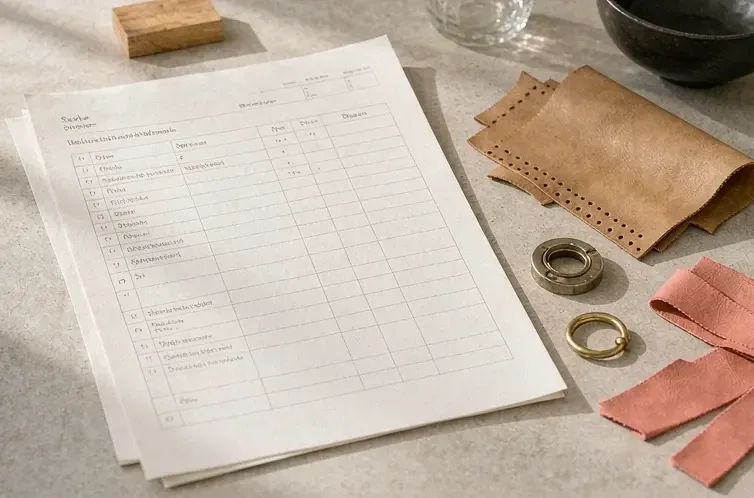
Teams treat sampling rounds as something that happens to them. In practice the count is predictable from two questions: how novel is the construction, and how complete is the pack? A novel construction on an incomplete pack will run four or five rounds, and each one is spent discovering information that should have been written down at the start. A proven construction on a complete pack resolves in two, because there is nothing left to discover.
The second variable is decision discipline. A round that produces three contradictory notes from three stakeholders does not resolve anything; it generates the next round. Programmes where one person signs off per round converge far faster than programmes where approval is a committee, regardless of how complex the bag is. The third variable is timing: a sampling window squeezed against a delivery date forces approvals that should have been refusals, and those approvals resurface as bulk tolerance arguments months later, when they are far more expensive to settle.
What actually happens in round one
Round one is a structural question. The pattern is cut, the bag is built, and the questions are about proportion, balance, stand, handle drop and whether the silhouette reads as intended when it is held rather than drawn. Material in round one is usually a stand-in close to the intended specification, because committing the final hide to an unproven pattern wastes expensive leather.
- Does the bag stand correctly, or does it slump at the base?
- Is the handle drop comfortable when the bag is loaded rather than empty?
- Do the panels close without fighting each other at the corners?
- Does the hardware seat flatly, or does the plate rock on unskived leather?
- Is the internal volume usable, and do the pockets sit where a hand expects them?
What round two is for
Round two is the confirmation round, and it is where the final material, the final colour and the final finishing are used. This is the round that becomes the approved reference if it passes. Colour is measured against the signed panel under D65, stitch density is checked at 8 stitches per inch on visible calfskin, edge build is compared to the reference chip, and hardware is cycled and pull-tested.
The discipline that makes round two work is that it should only be answering questions raised in round one. If round two raises new structural questions, something went wrong in the pattern correction, and a third round is already likely. We record every correction from round one and confirm each one on the round two piece before anything else is assessed.
When a third round is justified
Three situations genuinely justify a third round. The first is a material that behaves unexpectedly: an exotic skin whose scale pattern changes the way a panel folds, or a vegetable-tanned leather whose temper shifts during finishing. The second is hardware that has to be re-tooled because the engagement is wrong, which cannot be assessed until the replacement arrives. The third is a client-side design change, which is legitimate but should be acknowledged as a fresh start rather than counted as a sampling failure.
| Construction | Typical rounds | Working days per round | What drives the count |
|---|---|---|---|
| Soft tote, canvas or plain calfskin | 2 | 6 to 10 | Proportion and material confirmation only |
| Structured calfskin top-handle | 2 | 6 to 10 | Corner resolution and hardware seating |
| Frame bag or minaudière | 3 | 12 to 15 | Frame tolerance and closure engagement |
| Exotic skin body | 3 to 4 | 12 to 15 | Scale placement, cutting yield and panel behaviour |
| Bag with re-tooled hardware | 3 | 12 to 15 | Hardware lead time dominates the round |
| New construction, no precedent | 3 to 4 | 12 to 15 | Pattern discovery is unavoidable |
Rounds needed by material
Material drives the count more than silhouette does. A plain calfskin behaves predictably and can be committed to round two with confidence. An exotic skin cannot: the pattern has to be placed against the scale, the yield has to be calculated, and a panel that looked right in calfskin may fold badly in caiman. Vegetable-tanned leather introduces its own variable, because it darkens through finishing and the approved colour is a moving target until the process is fixed.
Calfskin, pigmented
Two rounds. Predictable behaviour, stable colour, and a proven cutting yield mean the pattern can be committed early without wasting material.
Calfskin, vegetable-tanned
Two to three. Colour develops through finishing, so the approved shade has to be captured after the process is fixed rather than before.
Exotic skin
Three to four. Scale placement, panel behaviour and yield all have to be resolved, and each one is a separate discovery.
Coated or technical cloth
Two. Behaviour is predictable, but seam creep and coating behaviour at the fold need confirming in the second round.
Where extra rounds come from
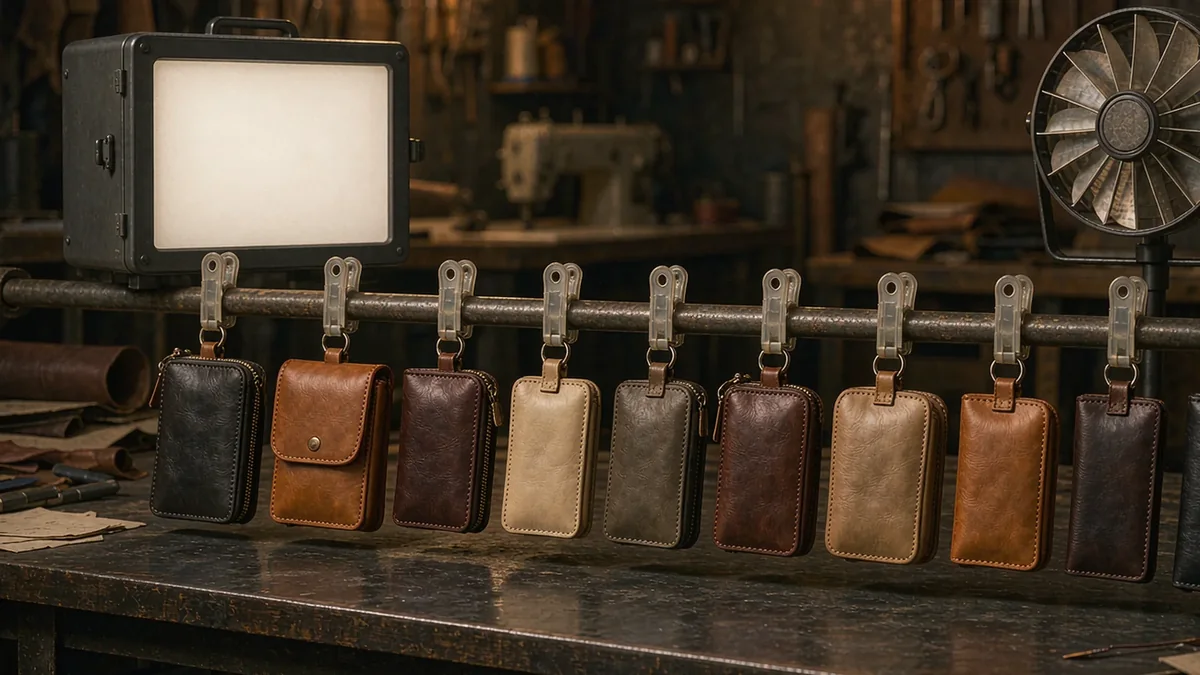
Four causes account for most programmes that run past three rounds. The first is an incomplete pack, where substance, tolerance or construction sequence was never written. The second is dispersed approval, where three stakeholders give three sets of notes and no single person resolves the conflict. The third is a change of intent mid-process, where the brief moves between rounds. The fourth is a material substitution nobody agreed to.
- Write the pack completely before round one: substance, tolerance, construction sequence, stitch density and edge build.
- Name one approver per round, and require that person to consolidate every other stakeholder's notes into one list.
- Freeze the brief between rounds; treat any change of intent as a new round with a new date rather than as a note.
- Confirm the material in writing before round two cuts, including the dye lot reference and the tannery batch.
- Photograph and measure the round one piece before sending it, so the corrections are evidence rather than memory.
What a pre-production piece adds
The final build before bulk is not another design round. A pre-production piece is made on the production line, with production tooling, production jigs and the final material, by the people who will make the order rather than by the sampling bench. Its purpose is to prove that the line can repeat the approved sample, and it frequently reveals things a sampling round cannot: a jig that needs adjusting, a station sequence that slows the build, or a component that behaves differently at speed.
We treat it as a gate rather than a round, and it is inspected at the same level as any production lot. If it passes, it is signed, photographed and held as the reference for bulk. If it fails, the line is corrected rather than the design, and that distinction is worth keeping clear, because a pre-production failure is information about the line rather than about the bag.
Sampling a repeat versus a new style
A repeat order of a style with a signed reference in the file needs far less development than a new one. Where the construction, the material and the hardware are unchanged, a repeat can often be confirmed with a single piece rather than a full round, because the questions have already been answered and the reference already exists. What still needs confirming is material: a new dye lot, a new tannery batch, or a new plating bath all reintroduce the variables that round two was designed to close.
A colourway extension sits between the two. The construction is proven, so the structural questions are already closed, but the new shade has to be measured against its own signed panel and the hardware finish has to be matched to it. In practice a colourway extension costs one round rather than two, provided the new shade is reserved against a single dye lot before cutting starts.
How hardware lead time shapes the schedule
On any programme with bespoke or re-tooled hardware, the schedule is set by the hardware rather than by the bench. Sampling a closure can be completed in days; tooling a new one takes weeks, and no amount of urgency at the bench compresses that. The practical consequence is that hardware should be ordered before the first sampling round, using a provisional specification, so that the real component arrives in time for round two.
Where that sequencing is missed, programmes end up sampling with a stand-in closure and discovering the engagement problem in round three, after the tooling window has closed. We flag it early and ask brands to approve a provisional hardware specification at the same moment they approve the pack, precisely to avoid that outcome.
The cost of an extra round
An extra round costs two things: working days and material. Six to ten working days on a standard build, twelve to fifteen on a complex one, and that delay sits directly in front of the bulk window, because bulk cannot start until a sample is signed. Material cost is smaller but real, particularly on exotic skins where a single mis-cut panel is not recoverable.
Correcting one panel once a round has been built costs around USD 4.80 in bench time before the re-cut and the re-assembly are counted. Multiply that across the corrections in a round and the argument for a complete pack becomes arithmetic rather than opinion.
The one you do not need. Every hour spent completing the pack before round one removes more delay than a week of expedited sampling afterwards.
How to reduce the count without losing quality
Three changes reliably cut a round without lowering the standard. Put the final hardware into round one rather than a stand-in, so seating and engagement are assessed from the start. Use the intended interlining and reinforcement in round one, because they determine stand and hand more than the outer material does. And approve colour against a signed panel early, so that round two is confirming rather than discovering.
When to stop and approve
Approve when every correction from the previous round has been confirmed closed and no new structural question has appeared. Do not approve because the season is late or because the piece is close enough; close enough in sampling becomes a tolerance argument in bulk, and a tolerance argument in bulk is far more expensive than one more round. Where a deadline genuinely cannot move, the honest answer is to approve the sample and re-specify the questioned detail in writing for bulk, rather than to leave it unspoken and hope the production run resolves it by itself. Once approved, the sample is signed, stored away from light, and becomes the reference that inspection compares against.
- Standard rounds, proven construction
- 2 rounds
- Complex or exotic construction
- 3 to 4 rounds
- Working days per round, standard
- 6 to 10
- Working days per round, complex
- 12 to 15
- Round one purpose
- Pattern, proportion, stand, hardware seating
- Round two purpose
- Material, colour, stitch density, edge build, hardware testing
- Stitch density confirmed
- 8 stitches per inch on visible calfskin
- Colour confirmation
- Delta E 1.0 against the signed panel under D65
- Correction cost per panel
- Around USD 4.80 in bench time
- Approval discipline
- One named approver per round, all notes consolidated into one list
- Minimum order quantity
- 500 pieces per style per colourway
- Bulk lead time
- 35 to 50 days from approved sample
- Shipment terms
- FOB Xiamen
- Programme history
- Export work since 2014 across 7 production lines
The count in one paragraph
- Two rounds is normal for a structured calfskin bag on a proven construction: the first resolves pattern, proportion, stand and hardware seating; the second confirms material, colour, stitch density, edge build and hardware endurance, and becomes the signed reference if it passes. Exotic skins, frame bags, re-tooled hardware and new constructions justify three or four. Each round runs 6 to 10 working days, or 12 to 15 for complex builds. The count is driven by how complete the pack is and by whether one person is accountable for approval, not by how demanding the brand is.
Plan the rounds before round one
Send us your pack and we will tell you how many rounds the style actually needs, with the dates and the decision each round is designed to close. Request a sampling consultation and quotation at /contact-quote/.
Frequently Asked Questions
How many sample rounds does a luxury handbag normally need?
Two for a structured calfskin bag on a proven construction. The first resolves pattern and proportion, the second confirms material, colour and finishing and becomes the signed reference if it passes.
When is a third round genuinely necessary?
When a material behaves unexpectedly, when hardware has to be re-tooled because the engagement is wrong, or when the brief changes. Those are real; a third round caused by an incomplete pack is not.
How long does each sampling round take?
Six to ten working days for a standard build and twelve to fifteen for a complex one. Hardware lead time, particularly on re-tooled components, frequently dominates the round rather than the bench work.
Should round one use the final leather?
Usually not. Committing an expensive hide to an unproven pattern wastes material. Round one uses a stand-in close to specification, and round two uses the final material against a signed colour reference.
How do I reduce the number of rounds?
Complete the pack first, put the intended hardware and interlining into round one rather than stand-ins, confirm colour against a signed panel early, and name one approver who consolidates every stakeholder's notes.
What causes most extra sampling rounds?
Incomplete specifications, dispersed approval where three stakeholders give conflicting notes, changes of intent between rounds, and material substitutions nobody agreed to in writing.
Do exotic skins always add a round?
Usually. Pattern pieces must be placed against the scale before cutting, yield has to be calculated, and a panel that folds correctly in calfskin may behave differently in caiman or python.
What does an extra round cost?
Six to fifteen working days in front of the bulk window, plus material. Correcting one panel once a round has been built costs around USD 4.80 in bench time before re-cutting and re-assembly.
When should I stop sampling and approve?
When every correction from the previous round is confirmed closed and no new structural question has appeared. Approving because the season is late converts a sampling issue into a bulk tolerance argument.
What happens to the approved sample?
It is signed, dated, photographed and stored away from light. It becomes the reference that final inspection compares every drawn piece against for the life of the style.
Can two styles share a sampling round?
Only where they share a construction. Two colourways of one style can be sampled together; two constructions cannot, because the structural questions each one raises are different.
Who should sign off each round?
One named person who consolidates every stakeholder's notes into a single list. Committee approval is the most reliable way to generate a round that resolves nothing.
People Also Ask
What is a sampling round in bag development?
One complete build-and-review cycle: the bag is cut and assembled to the current specification, assessed against it, and either approved or returned with a consolidated list of corrections.
Why does sampling take so many rounds?
Usually because the pack was incomplete or approval was dispersed. Complexity adds rounds legitimately, but an unresolved specification adds more of them.
What is a pre-production sample?
The final round built on the production line with production tooling and the final material. It is the piece that confirms the line can repeat the approved sample before bulk begins.
Can I skip straight to bulk after one round?
Only for a repeat of a proven style where the reference already exists. For a new construction, skipping the confirmation round moves discovery into bulk, where it is far more expensive.
How many rounds before a bag is production ready?
Two for proven constructions, three to four for complex or exotic builds, plus a pre-production piece built on the line with production tooling before bulk is released.
Sources and further reading
Every figure on this page is either our own programme data or attributed below. Open the originals before you write them into a specification.
- ISO 9001:2015 Quality management systemsInternational Organization for Standardization Framework for design and development control, including the review and approval gates between sampling rounds.
- ISO 2859-1:1999 Sampling procedures for inspection by attributesInternational Organization for Standardization Referenced for the inspection of the approved sample against which bulk production is later compared.
- CIE colour difference metrics and standard illuminantsInternational Commission on Illumination Source of the D65 reference and Delta E limits used when colour is confirmed in the final sampling round.
- Reporting on design, development and sourcing in luxury supply chainsSourcing Journal Industry reporting on how specification completeness determines development cycle length in luxury programmes.