Luxury Handbag Tech Pack: What It Must Include
A tech pack is the document that decides whether your first sample looks like the bag in your head. Most sampling delays trace back to a pack that was complete on silhouette and silent on everything else: no substance specified, no stitch density, no tolerance, no hardware finish, no edge build. The bench fills those gaps with its own assumptions, and the sample comes back wrong in ways that feel like mistakes but are actually omissions. A working luxury bag pack runs twelve to eighteen pages and answers every question a pattern cutter, a clicker and a finisher will ask. This guide lists the twelve sections it must contain, the numbers to put in each, and the omissions that cause the most rework.
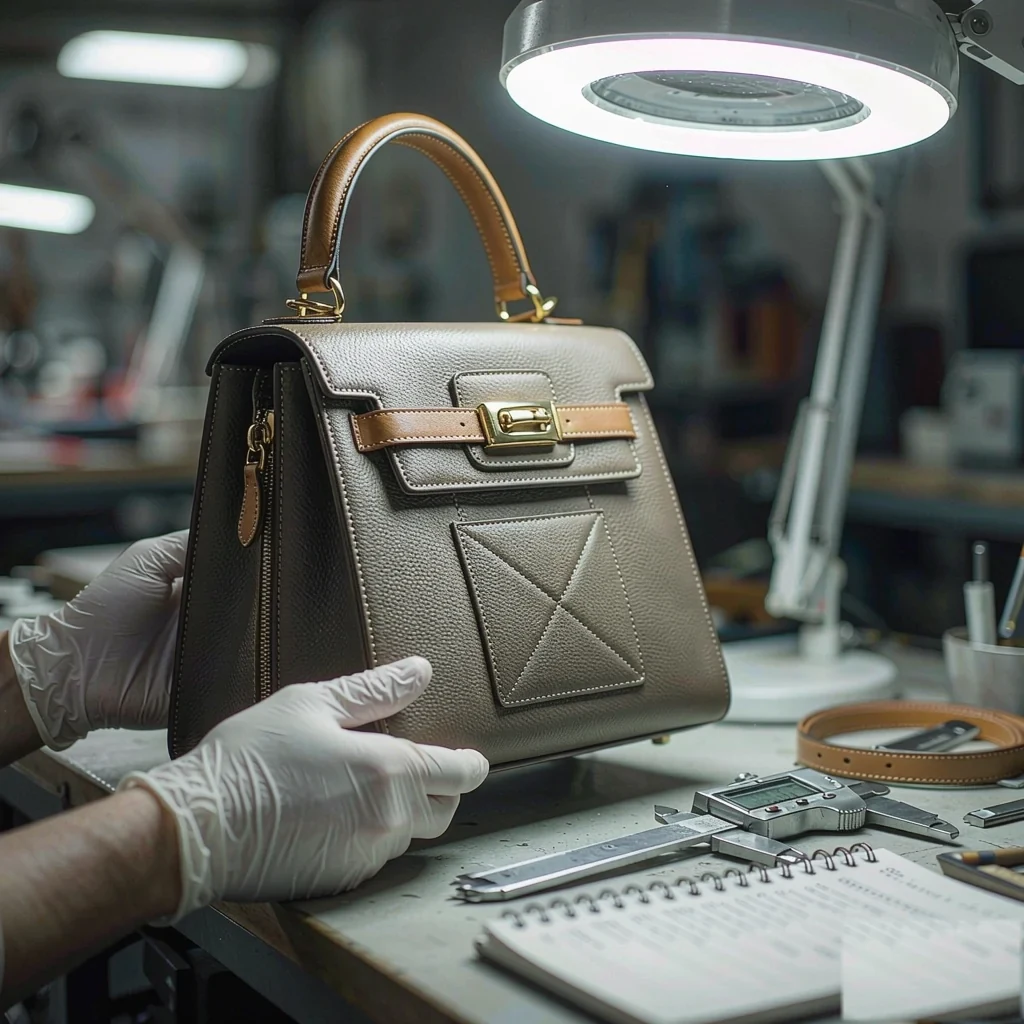
What a tech pack is actually for
The pack has one job: to let someone who has never met you build your bag correctly on the first attempt. That is a demanding standard, and it is why packs that look beautiful on screen produce poor samples. Renders communicate silhouette and mood; they do not communicate substance, skive depth, stitch density, or how much tension a closure should have. The people who need those numbers are the ones holding the knife, and the pack exists for them.
It is also a commercial document. Every ambiguity in it becomes a question, every question becomes a delay, and every delay inside a sampling window pushes a season. Brands that treat the pack as a formality spend more on sampling rounds than brands that treat it as the specification.
Section one: the identity block
Everything on the pack needs to be traceable to a single style at a single moment. The identity block carries the style name or code, the season, the colourway, the revision number and the date, plus the name of the person who approved it. Revision control matters more than anything else here. A pack that has been edited five times without a version number will be built from the wrong revision, and nobody will know until the sample arrives.
Section two: views and measurements
Three orthographic views — front, side and base — with the dimensions that matter marked rather than every dimension that exists. On a structured bag the critical figures are body width, height, depth, handle drop, strap drop at its middle setting, and the position of any hardware relative to a fixed datum. Mark tolerances on each: we work to ±1 mm on structured bodies, ±1.5 mm on soft constructions, and ±2 mm on any dimension taken across a filled bag.
| Dimension | Typical tolerance, structured | Typical tolerance, soft | Note |
|---|---|---|---|
| Body width and height | ±1 mm | ±1.5 mm | Measured flat on the seam line, not across the fill |
| Base depth | ±1 mm | ±2 mm | Measured at the centre of the base, gusset compressed |
| Handle drop | ±1 mm | ±1.5 mm | Measured from the top edge of the body to the underside of the handle |
| Strap drop | ±2 mm | ±3 mm | Measured at the middle hole or buckle setting |
| Hardware position | ±0.5 mm | ±1 mm | Measured from a stated datum, never from another component |
| Panel alignment | ±0.5 mm | ±1 mm | Flap to body, pocket to panel |
Section three: the bill of materials
The BOM lists every component, not just the visible ones. A structured bag typically runs forty to sixty BOM lines once interlinings, reinforcements, adhesives, threads, edge paint, feet, magnets, rivets and linings are counted. Each line needs a name, a specification, a quantity per bag, and a note on where it is sourced or whether it is a client-supplied item.
- Outer material: species, tannage, finish, substance in millimetres, temper, and the dye lot reference.
- Lining: fibre, weave, weight, and any coating or backing specification.
- Interlining and reinforcement: type, weight, and the panels each one is bonded to.
- Thread: fibre, ticket number, and colour reference for every stitch position on the bag.
- Edge finish: paint type, number of coats, and the target build and sheen.
- Hardware: alloy, plating and thickness, finish, and the reference clasp if one exists.
- Adhesives: type and application area, particularly where a bond replaces a stitch.
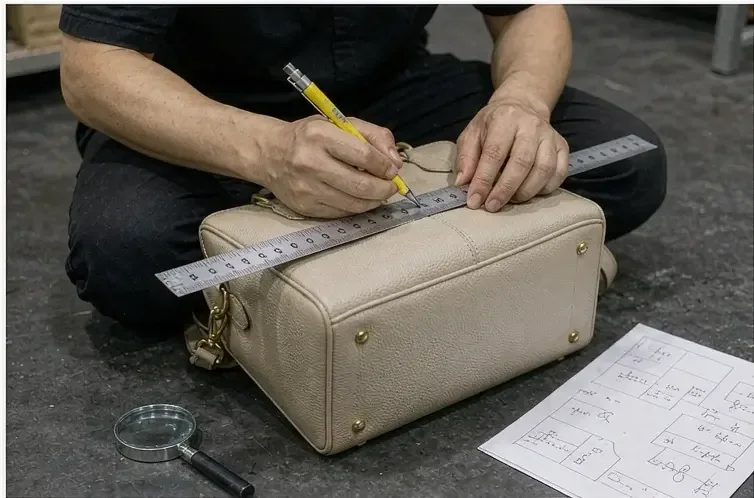
Section four: construction notes
This is the section most often missing, and the one the bench needs most. It states how the bag goes together: which seams are closed and which are butted, where skiving happens and to what depth, what the seam allowance is, which panels are bonded before stitching, and in what order the assembly runs. Where the construction sequence affects the finished shape, it has to be written, because two routes to the same silhouette produce different hand and different durability.
Section five: stitch specification
Stitch density is a signature. On structured calfskin we work to 8 stitches per inch on visible topstitching, 9 to 10 on lining work, and we state the thread ticket number and the needle size for each. The pack should also state where stitching is single or double, where it runs parallel and at what distance from the edge, and whether the stitch line is sunk or raised. A sample returned with the right silhouette and the wrong stitch line reads as a different, less expensive bag.
Section six: hardware and trim specification
Hardware needs the same rigour as leather. State the alloy, the plating and its thickness in microns, the finish — polished, brushed, antique — and the mechanical expectation: cycle endurance, pull load, and the magnetic separation force if a magnet is used. Attach a reference clasp where one exists. Where a brand has a house standard, reference it by document number rather than describing it again.
Substance omitted
The pack says calfskin but not the thickness. The bench picks, the hand is wrong, and the whole first round is rebuilt. Always state substance in millimetres.
Tolerance omitted
Dimensions are given with no tolerance. Every measurement becomes a negotiation, and the sample is either rejected unfairly or accepted wrongly.
Construction omitted
No sequence, no skive depth, no seam allowance. Two routes reach the same silhouette with different durability and hand.
Hardware under-specified
Finish described as gold with no thickness or alloy. Plating fails in the field and the brand has no reference to argue from.
Section seven: colour, finish and edge build
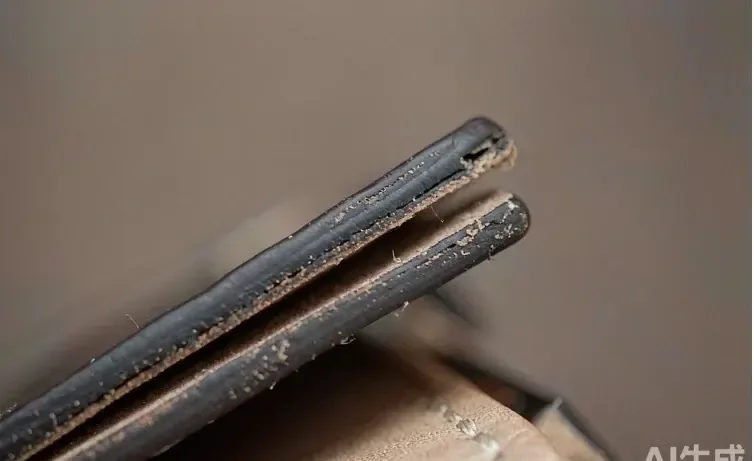
Colour must be specified as a reference and a number, not a name. Name the illuminant, give the Delta E limit against the signed reference — 1.0 or better on body panels, 0.8 between adjacent panels on one bag — and state whether a patina is expected or not. Edge build needs its own line: the number of coats, the target build, whether the edge is painted or turned, and the sheen against a reference chip.
Section eight: branding, labelling and compliance
State where the brand mark sits, by what method — blind deboss, foil, heat stamp, or a metal plate — and at what depth or pressure. Then state the compliance requirements by market: fibre composition labelling, country of origin marking, care labelling, and any substance restriction the destination imposes. Hardware in prolonged skin contact must sit within REACH Annex XVII limits for nickel release, and children's items carry their own regime. Put these in the pack rather than discovering them at shipment.
Section nine: packing and presentation
The pack should state how the finished piece is presented: dust bag fibre and closure, tissue or paper fill, carton specification, pieces per carton, and any hangtag or care card. This section is frequently left out and then argued about at the end, when a change costs more than it would have at the start because the packing materials are already bought.
The checklist: everything the pack must contain
- Identity block with style code, season, colourway, revision number, date and approver.
- Three orthographic views with the dimensions that matter marked, not every dimension that exists.
- A tolerance against every marked dimension, with different figures for structured and soft work.
- A complete bill of materials covering every component including interlinings, adhesives and threads.
- Material specifications with substance in millimetres, temper, finish and dye lot reference.
- Construction notes: seam types, skive depths, seam allowances, bonding and assembly sequence.
- Stitch specification: density, thread ticket, needle size, and edge distance for every stitch line.
- Hardware specification with alloy, plating thickness, finish, cycle and load expectations.
- Colour specified as a signed reference plus a Delta E limit and a named illuminant.
- Edge build: coats, target build, method and sheen against a reference chip.
- Branding position, method and depth, plus labelling and compliance requirements by market.
- Packing and presentation specification, closing with the approved sample reference for comparison.
Who should write the pack
There is a real argument for letting the bench complete part of it. A designer who specifies a seam allowance that cannot be sewn on the available machine has written a number that will be ignored, and a pattern cutter who is handed a pack with blank construction fields will fill them correctly more often than a designer guessing at the bench's capability. The practical arrangement is a designer-owned pack with a bench-reviewed construction section, both signed before cutting.
What should never happen is a pack completed silently. If the bench changes a figure, the change is recorded on the pack with a note explaining why, and the designer approves it in writing. Silent corrections are how a first sample comes back right for the wrong reasons, and how a bulk order later comes back wrong for the same ones.
Gaps that cause the most rework
In our experience four omissions account for most of the extra sampling rounds a programme absorbs. The first is substance, because leather thickness changes the hand, the weight and the way a panel folds. The second is tolerance, because without it every measurement is arguable. The third is construction sequence, because it determines durability in ways a drawing cannot show. The fourth is edge build, because the edge is the first thing a client touches and the last thing anyone specifies.
Correcting any of these after the first sample is built costs more than writing them at the start. Re-cutting and re-finishing one panel once a specification gap surfaces costs around USD 4.80 in bench time, and that is per piece on a sample, before the pattern correction and the second round are counted.
Construction notes. A pack with beautiful drawings and no seam sequence leaves the bench to invent the build, and the invention will not match the bag you designed.
- Pack length
- 12 to 18 pages for a structured luxury bag
- BOM lines
- 40 to 60 including interlinings, adhesives, threads and hardware
- Dimension tolerance, structured
- ±1 mm; hardware position ±0.5 mm
- Dimension tolerance, soft
- ±1.5 mm on body, ±3 mm on strap drop
- Stitch density
- 8 stitches per inch on visible calfskin topstitching, 9 to 10 on lining
- Body substance
- 1.2 to 1.4 mm on structured calfskin, stated per panel
- Colour reference
- Signed panel plus Delta E 1.0 body, 0.8 adjacent, under D65
- Hardware plating
- Minimum 0.5 microns gold over a barrier layer, measured
- Closure endurance
- 5,000 cycles on a rigged frame; 25 kg static pull on anchors
- Correction cost reference
- Around USD 4.80 in bench time to re-cut and re-finish one panel
- Minimum order quantity
- 500 pieces per style per colourway
- Sampling lead time
- 6 to 10 working days, 12 to 15 for complex constructions
- Bulk lead time
- 35 to 50 days from approved sample
- Shipment terms
- FOB Xiamen
The pack in one paragraph
- A luxury bag tech pack must let someone who has never met you build the bag correctly first time. That means an identity block with revision control, three orthographic views with tolerances on every marked dimension, a complete bill of materials running forty to sixty lines, construction notes with seam types and skive depths, a stitch specification with density and thread, a hardware specification with alloy and plating thickness, colour given as a signed reference plus a Delta E limit, an edge build, branding and compliance by market, and a packing specification. Four omissions cause most rework: substance, tolerance, construction sequence and edge build.
Send us the pack, not the drawing
Share your drawings and we will return a completed tech pack with tolerances, a bill of materials and construction notes, ready for the first sample. Request a sampling consultation and quotation at /contact-quote/.
Frequently Asked Questions
How long should a luxury handbag tech pack be?
Twelve to eighteen pages for a structured bag. The length comes from the bill of materials and the construction notes rather than from drawings, which usually occupy three or four pages of that total.
Do I need to specify tolerances on every dimension?
Only on the dimensions that matter, but every one of those needs a figure. We work to ±1 mm on structured bodies, ±1.5 mm on soft constructions and ±0.5 mm on hardware position measured from a stated datum.
What is the most commonly missing section?
Construction notes. Packs usually carry excellent drawings and no seam sequence, skive depth or seam allowance, which leaves the bench to invent the build and produces a bag that differs from the one designed.
How detailed should the bill of materials be?
Forty to sixty lines for a structured bag, covering interlinings, reinforcements, adhesives, threads, edge paint, feet, magnets and rivets as well as the visible materials. Each line needs a specification and a quantity per bag.
Should I specify leather thickness?
Yes, in millimetres, per panel. Substance changes the hand, the weight and the way a panel folds, and leaving it to the bench is the most frequent cause of a first sample that feels wrong.
How do I specify colour without arguments later?
Sign a reference panel at approval, name the illuminant, and set a Delta E limit: 1.0 or better on body panels and 0.8 between adjacent panels on one bag, measured under D65.
What stitch density should I ask for?
Eight stitches per inch on visible calfskin topstitching and nine to ten on lining work, with the thread ticket number and needle size stated for each position. State the edge distance too.
How much hardware detail is enough?
Alloy, plating and its thickness in microns, finish, cycle endurance, pull load and magnetic separation force where relevant. Attach a reference clasp if the house has one that has passed the full regime.
Do I need an edge specification?
Yes. State the number of coats, the target build, whether the edge is painted or turned, and the sheen against a reference chip. The edge is the first thing a client touches and the last thing most packs specify.
Should compliance requirements go in the pack?
Yes, by destination market: fibre composition, country of origin, care labelling and any substance restriction. Hardware in prolonged skin contact must sit within REACH Annex XVII limits for nickel release.
What does it cost to fix a specification gap later?
Re-cutting and re-finishing one panel once a gap surfaces costs around USD 4.80 in bench time, per piece on a sample, before the pattern correction and the second sampling round are counted.
How should revisions be handled?
With a version number and a date on every page, plus a note describing what changed. An unversioned pack that has been edited several times will be built from the wrong revision and nobody will know until the sample arrives.
People Also Ask
What is a tech pack in bag design?
The specification document that lets a bench build a bag without asking questions. It covers views and tolerances, a full bill of materials, construction notes, stitch and hardware specifications, colour references and packing.
Why does my first sample not match my drawing?
Usually because the pack specified silhouette but not substance, tolerance, construction sequence or edge build. The bench filled the gaps with assumptions and the sample reflects those rather than your intent.
What is a bill of materials for a handbag?
The line-by-line list of every component in the bag, including interlinings, adhesives, threads and hardware, each with a specification and a quantity per bag. A structured bag typically runs forty to sixty lines.
How do I write a stitch specification?
State density in stitches per inch, thread ticket number, needle size, edge distance, and whether the line is single or double, sunk or raised. Density is a signature of the house and should never be left open.
Do I need a tech pack for a simple bag?
Yes, though it can be shorter. Even a simple tote needs substance, tolerance, seam allowance and edge build; without those the sample will differ from batch to batch even when it looks right once.
Sources and further reading
Every figure on this page is either our own programme data or attributed below. Open the originals before you write them into a specification.
- ISO 9001:2015 Quality management systemsInternational Organization for Standardization Framework for document control, revision management and the specification discipline described in this guide.
- ISO 2859-1:1999 Sampling procedures for inspection by attributesInternational Organization for Standardization Referenced for the inspection of the first piece built from the pack against its stated tolerances.
- CIE colour difference metrics and standard illuminantsInternational Commission on Illumination Source of the D65 reference and the Delta E limits used when colour is specified in a pack.
- REACH Annex XVII restrictions, including nickel releaseEuropean Chemicals Agency Basis for the compliance line every pack should carry for hardware in prolonged skin contact.
- Reporting on design, development and sourcing in luxury supply chainsSourcing Journal Industry reporting on how specification depth in the pack determines the number of sampling rounds a programme needs.