Luxury Handbag Sampling: What to Expect Across Three Samples, 6-10 Working Days and the Handover into Bulk
What should you expect from luxury handbag sampling? Three samples over 6-10 working days, or 12-15 for a complex construction: a first prototype to settle the silhouette, a revised piece to settle the specification, and a sealed pre-production reference that defines bulk. Seven numbers should be fixed before the first sample is cut — leather at 1.2-1.4 mm, stitch pitch at 8-9 per inch, thread at 0.45 mm, three edge coats, plating at 0.15-0.3 microns, interlining at 0.8 mm and a #5 zip.
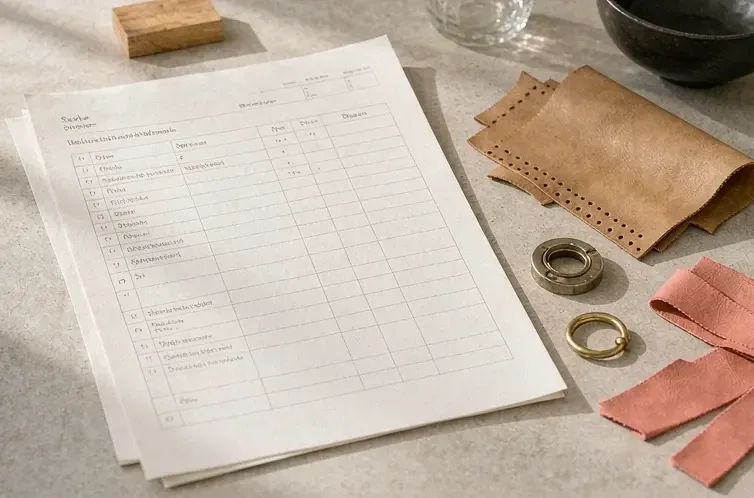
Where the 6-10 Working Days Go
Sampling is 6-10 working days from a complete tech pack, and the time goes mostly to material preparation and to the second half of the bench work rather than to cutting. A day-by-day view of where it goes is the fastest way to see which parts a buyer can influence and which are simply the nature of the work.
| Days | What happens | What you receive |
|---|---|---|
| 1-2 | Pattern development and first cutting of the shell in a trial material | Nothing to see yet, and that is normal |
| 3-4 | Shell assembled on the bench, hardware fitted, first silhouette review | Photographs of the shell, and a question or two about structure |
| 5-7 | Piece finished in the specified material, edge work, stitching and hardware set | The first prototype, photographed from six angles |
| 8-10 | Internal review, corrections, packing of the parcel | The prototype in your hands, with a written list of what is provisional |
| 12-15 | Additional range used on complex constructions: framed openings, exotic skins, engineered hardware | A second revision before the pre-production reference is made |
The first two days produce nothing visible, which is the part founders find hardest. Material preparation and pattern work are front-loaded, and a sample that appears on day three is usually a sample made from stock material rather than from yours.
The Three Samples and What Each Is For
Three samples serve three different purposes, and conflating them is the reason many programmes run four or five rounds instead of two.
- First prototype
- Settles the silhouette, the proportion and the structure. Made to be argued with.
- Revised piece
- Settles the specification: material, hardware, stitch, edge and interior layout.
- Pre-production reference
- Defines bulk. Made on the bulk tooling, from the bulk material, and sealed on approval.
- Salesman samples, where needed
- Two or three additional pieces in the approved specification, for showroom and press use
- Retained references
- Three sealed pieces per style and colourway, one held by each side and one held back
The pre-production reference is the one that carries authority, and it is worth insisting that it is made on the bulk tooling from the bulk material. A reference made by the best hand on the bench, from the best hide in the store, defines a standard that bulk cannot hold.
Seven Numbers to Fix Before the First Cut
Seven numbers should be on the tech pack before the first sample is cut, because each one is costly to change afterwards and straightforward to agree in advance.
- Leather thickness at 1.2-1.4 mm for a structured bag, thinner where the silhouette is soft.
- Stitch pitch at 8-9 stitches per inch, which reads as fine without weakening the seam.
- Thread at 0.45 mm, matched to the pitch and to the needle, so the hole is not oversized.
- Edge finish in three thin coats rather than one thick one, which survives a cold fold.
- Plating at 0.15-0.3 microns on hardware, which is what carries 24 to 48 hours of salt spray.
- Interlining at 0.8 mm where the panel needs body without stiffness at the fold.
- A #5 zip as the default for the main opening, with the pull and tape specified separately.
None of these is exotic and all of them are defaults rather than choices to agonise over. What matters is that they are written down, because a sample approved against an unwritten specification approves nothing at all.
What Arrives in the Parcel
A sample parcel should contain five things, and a parcel missing the fourth is a parcel that will generate a second round unnecessarily.
- The piece itself, packed as bulk would be packed rather than gift-wrapped.
- Photographs from six angles, taken under the same light used for the reference images.
- A written list of what is provisional: any component substituted for the sample only.
- A materials card with the leather, lining, interlining and hardware actually used.
- A measurements sheet comparing the piece against the tech pack dimensions, line by line.
The measurements sheet is the item most often absent and the one that prevents the most arguments. A discrepancy found on paper at sample stage costs an email; the same discrepancy found at bulk costs a season, and it is usually the same discrepancy, because dimensional errors do not correct themselves in a larger run.
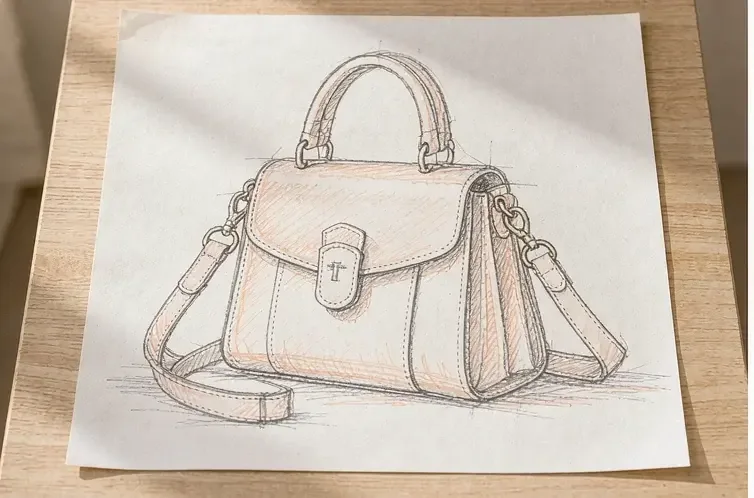
Reading the First Sample Properly
The first sample is read in a fixed order, because reading it by impression produces feedback that cannot be actioned.
- Silhouette first, at arm's length and then in a mirror: proportion reads differently on the body than on a table.
- Structure second: does it hold its shape empty, and does it collapse gracefully when set down.
- Material third: shade, grain, handle and how the panel behaves at a fold.
- Hardware fourth: every closure cycled at least ten times, not merely looked at.
- Interior fifth: layout, pocket depth, and whether the lining is visible at the opening.
- Stitching and edge last, under raking light, at about 30 cm.
Working in that order keeps the large questions ahead of the small ones. A piece rejected for shade before its proportion has been judged will come back with the right colour and the same shape, and the round will have been spent on the least important thing first. Judge the silhouette while you are still willing to change it.
What a Sample Round Costs, and Why
A sample costs several times the bench cost of a single piece, because the pattern, the tooling preparation and the material minimums are carried by one unit rather than spread across a run.
For scale, the bench cost of one finished piece in a normal run sits around USD 4.80 in parts and labour. A first sample carries the pattern work, the material minimums for one hide and one hardware set, and the bench time of a single skilled hand, which is why it is priced as a multiple rather than as a unit.
The useful way to read that is not as a fee but as an insurance premium on the bulk order. Every fault found at sample stage is one that does not recur 500 times, and the arithmetic of that is not close. A pattern correction made on one piece is a correction; the same correction made after bulk has started is a write-off.
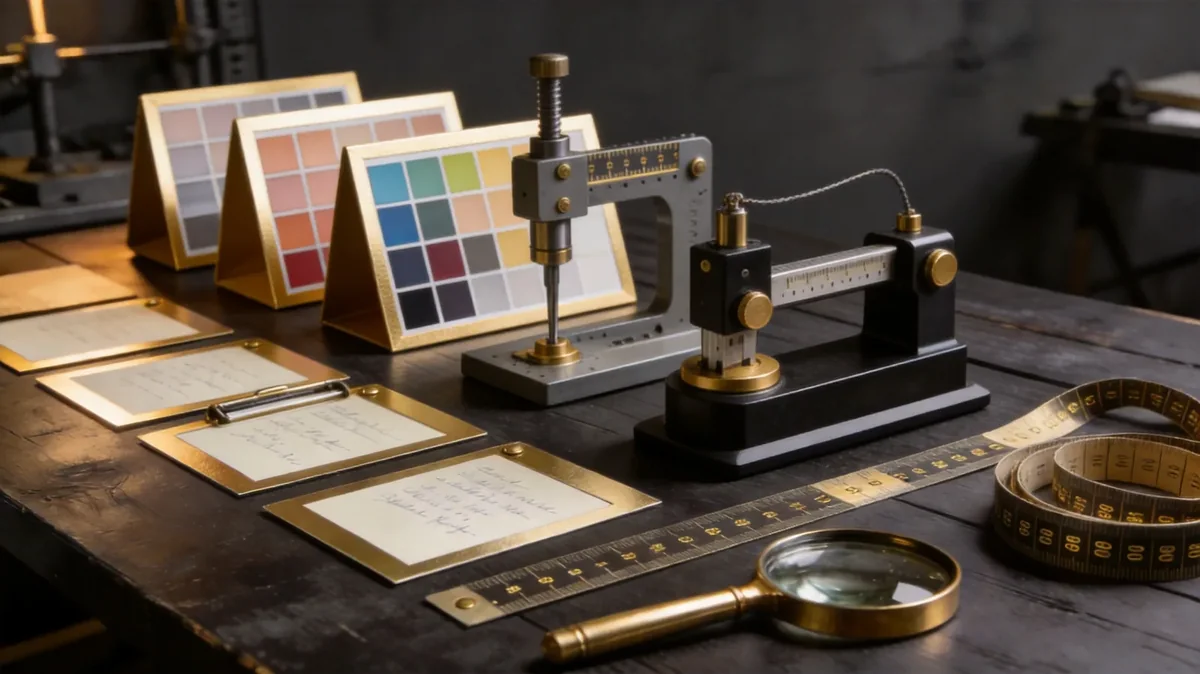
What Is Provisional, and Why Saying So Saves a Round
A provisional component is one used in the sample because the specified one has a lead time longer than the sample window, and declaring it is what stops the second round being spent on a substitution nobody mentioned.
Two categories are common. Hardware is the first: a custom pull or an engineered lock will not exist in ten days, so the sample carries the closest stock fitting and the drawings carry the real one. Material is the second: a hide ordered specifically for the programme arrives after the sample is cut, so the first piece is made in the nearest available shade from the same tannery.
| Element | When it is specified | What the sample carries | Risk if undeclared |
|---|---|---|---|
| Stock hardware | On the tech pack at the outset | The specified fitting | None, and it is the fastest route to a short window |
| Custom hardware | Drawings at the outset, tooling after approval | The nearest stock fitting in the right finish | A second round spent approving a piece whose closure is not the real one |
| Programme hide | Ordered at approval, delivered before bulk | The nearest shade from the same tannery | Approval given to a colour that bulk cannot be cut from |
| Exotic skin | Graded and tagged before cutting | A graded skin of the same grade | A piece approved in a skin that cannot supply the run |
The rule for the buyer is short: read the provisional list before approving anything, and where an element is provisional, approve the drawing rather than the sample. That single habit removes the commonest cause of a third round.
Feedback That Keeps the Calendar
Feedback returned within five working days is what keeps a programme on its calendar, and feedback written as measurements rather than impressions is what keeps it to two rounds.
Six rules for sample feedback
- Return comments within five working days; a sample held for three weeks pushes bulk by the same amount.
- Write changes as measurements: raise the handle by 8 mm, not make the handle higher.
- Separate must-change from nice-to-change, and say which list each comment is on.
- Mark the drawing rather than describing it in prose, wherever the change is dimensional.
- Confirm the material and hardware in writing at the same time, since both have lead times.
- Approve in writing once, and date it: verbal approval produces two different memories.
The second rule does most of the work. Make the handle higher produces a second sample that is higher and still wrong; raise the handle by 8 mm produces one that is right.
A Second Colourway Does Not Need a Second Development
A second colourway of an approved style is a much shorter exercise than the first, because the pattern, the structure and the hardware are already settled and only the material changes.
What still needs doing is a hide approval and a sealed reference in the new colour, and neither should be skipped. Shade is the single most disputed attribute in this trade, and approving a second colourway from a photograph rather than from a sealed piece in that hide is the most reliable way to generate a dispute at bulk.
The practical sequence is a hide submission first, then one piece in the new material, then a sealed reference. It is a fraction of the original effort and it protects the same thing: the definition of what bulk has to match.
From Approved Sample to Bulk
Approval converts a sample into a specification, and the conversion has three physical outputs rather than one.
- One sealed pre-production reference, signed across the seal, held for the life of the style.
- Two further sealed references, one for each party, kept in the same condition and logged.
- A written specification sheet recording every number the sample was approved against.
The rest of the programme starts from there: MOQ 500 pcs per style and colourway, bulk in 35-50 days, inspection at AQL 2.5 under ISO 2859-1, and handover on FOB Xiamen terms. Export experience on this programme runs since 2014 across 7 production lines with about 200,000 pcs per month of capacity, delivered through our validated partner factory Quanzhou Yingming Bags.
Photographs flatter and memory edits. What bulk is measured against is a sealed piece and a written sheet of numbers, and both are created on the day of approval rather than at any point afterwards, when they can no longer be made.
Start with a complete tech pack
Send the drawings, the material direction and the quantity and we will return a sampling plan with dates, the seven fixed numbers and the sample parcel specification. Request a quote.
Frequently Asked Questions
How long does luxury handbag sampling take?
Six to ten working days from a complete tech pack for a standard construction, and 12 to 15 for a complex one with a framed opening, an exotic skin or engineered hardware. The first two days produce nothing visible, which is normal.
How many samples should I expect?
Three: a first prototype to settle the silhouette, a revised piece to settle the specification, and a sealed pre-production reference that defines bulk. Salesman samples, usually two or three, are added where showroom or press pieces are needed.
What is a pre-production reference?
A piece made on the bulk tooling from the bulk material, sealed on approval and held for the life of the style. It is what bulk is measured against, and it should never be made by the best hand from the best hide.
Which numbers should be fixed before the first sample?
Leather at 1.2 to 1.4 mm, stitch pitch at 8 to 9 per inch, thread at 0.45 mm, three thin edge coats, plating at 0.15 to 0.3 microns, interlining at 0.8 mm and a #5 zip on the main opening.
Why is stitch pitch specified at 8-9 per inch?
It reads as fine without weakening the seam. Coarser looks hand-made in the wrong way and finer perforates the leather, so the pitch and the thread at 0.45 mm have to be matched to the needle as a set.
Why three thin edge coats rather than one thick one?
Because a single thick coat looks perfect at handover and cracks at the first cold fold. Three thin coats flex with the leather across the temperature range, which is why edges are checked after conditioning cold and warm.
What should arrive with the sample?
Five things: the piece packed as bulk would pack it, photographs from six angles, a written list of anything provisional, a materials card with what was actually used, and a measurements sheet against the tech pack.
How should I read a first sample?
In a fixed order: silhouette at arm's length and in a mirror, structure empty and set down, material and fold behaviour, hardware cycled at least ten times, interior layout, then stitching and edge under raking light.
How quickly should I return feedback?
Within five working days. A sample held for three weeks moves bulk by three weeks, and the delay compounds because material and hardware lead times restart after approval rather than running in parallel with it.
How should feedback be written?
As measurements rather than impressions, and split into must-change and nice-to-change. Raise the handle by 8 mm produces the right result; make the handle higher produces a second sample that is still wrong.
Why does a sample cost several times a unit?
Because pattern work, tooling preparation and material minimums are carried by one piece rather than spread across a run. Against a bench cost of around USD 4.80 per finished piece in a normal run, the sample is priced as a multiple.
What happens once the sample is approved?
Three physical outputs: a sealed pre-production reference, two further sealed references held by each party, and a written specification sheet recording every number the piece was approved against. Bulk then runs in 35 to 50 days.
People Also Ask
What happens during handbag sampling?
Pattern development, shell assembly, finishing in the specified material, and internal review across 6-10 working days. The output is a prototype, a revised piece and a sealed pre-production reference that defines bulk.
How many sample rounds are normal?
Two rounds plus the pre-production reference for most styles. A third round is common where the silhouette changed rather than the specification, or where the material was still being chosen during the first round.
What should a tech pack fix before sampling?
Seven numbers: leather thickness, stitch pitch, thread gauge, edge coats, plating thickness, interlining weight and zip size. Written down, they make approval meaningful; unwritten, the sample approves nothing.
Why is the sealed reference so important?
It is the physical definition of the approved specification. No written description resolves a dispute about shade, grain or finish, and a sealed piece held by each side settles the question in about ninety seconds.
What delays sampling most often?
Late feedback. A sample held for three weeks moves bulk by three weeks, because material and hardware lead times restart at approval rather than running alongside the review period.
Sources and further reading
Every figure on this page is either our own programme data or attributed below. Open the originals before you write them into a specification.
- ISO — International Organization for StandardizationISO Publisher of ISO 2859-1 for inspection and thematerial and hardware test standards referenced in sampling specifications.
- Leather Working GroupLeather Working Group Tannery audit protocol behind the hide identification and batch records used at sample and bulk stage.
- SATRASATRA Technology Centre Independent testing organisation for leather and accessories, covering flex, rub and hardware testing of sample pieces.
- OEKO-TEXOEKO-TEX Testing and certification system for textile and leather articles against restricted substance lists.
- Sourcing JournalSourcing Journal Reporting on sampling practice, development calendars and material lead times across the accessories trade.