How a Luxury Atelier Iterates on Bag Samples: Four Kinds of Iteration, One Log and the Point at Which to Stop
How does an atelier iterate on a bag sample? It runs four kinds of iteration in a fixed order — silhouette, structure, specification, then finish — recording each in a log with the drawing version, the measurement and the reason. A round takes 6-10 working days, or 12-15 for a framed opening, an exotic skin or engineered hardware, and iteration should stop the moment the specification is written rather than the moment the piece looks right.
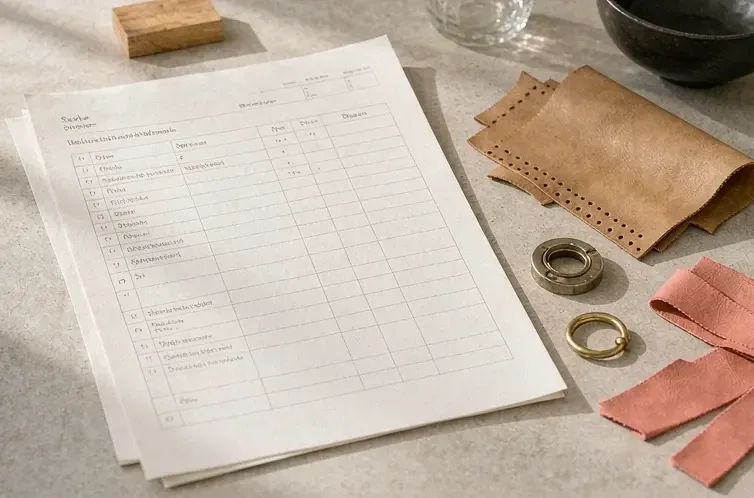
A Milan Label, Four Iterations, One Pattern
A Milan label arrived with a soft satchel in vegetable-tanned leather, a hand-sketch and a strong opinion about the way the flap should fall. Four iterations later the piece was approved, and what is instructive is that the pattern changed only twice. The other two iterations were about structure and finish, which are the two things a drawing cannot hold.
The first iteration settled the silhouette: the flap was shortened by 12 mm and the body narrowed to 268 mm. The second settled structure, where interlining at 1.0 mm was replaced with 0.8 mm because the flap would not fall as drawn against a stiff panel. The third settled the specification, moving the handle drop from 145 mm to 155 mm and re-seating the turn-lock strike by 1 mm. The fourth was finishing only.
None of that was visible to the buyer as four separate events, and that is part of the point. What the label saw was one piece arriving, one note going back, and a second piece arriving that was right. The iteration happened in between, and its value depended entirely on whether it was recorded.
What Iteration Means on the Bench
Iteration is not the same as repetition. A repetition makes the same piece again and hopes for a different result; an iteration changes one named variable and records what happened to everything else.
- The variable
- One named change: a dimension, a material weight, an operation or a sequence
- The reason
- One line stating what the change is expected to achieve
- The version
- Drawing version, pattern version and piece number, all three recorded
- The measurement
- The figure before and the figure after, taken the same way both times
- The side effects
- What else moved, because something almost always does
- The verdict
- Keep, revert or try again, written at the time rather than later
The fifth field is the one that separates a competent bench from a good one. Moving a handle drop by 10 mm changes where the load falls, which changes how the panel behaves at the fold. Noticing that, and writing it down, is what stops a later round discovering it as a fresh problem.
The Four Kinds of Iteration
Four kinds of iteration exist, and they are run in order because each one settles something the next one depends on.
Silhouette
Proportion, flap length, body width and where the eye settles. Least costly to change and most expensive to leave unsettled, because everything downstream is built on it.
Structure
Interlining weight, base board and how the panel behaves at a fold. A flap that will not fall as drawn is a structure problem, not a cutting one.
Specification
Leather at 1.2-1.4 mm, stitch at 8-9 per inch in 0.45 mm thread, three edge coats, plating at 0.15-0.3 microns, interlining at 0.8 mm and a #5 zip.
Finish
Edge work, raking-light appearance, hardware seating and packing. Last, and the only kind that should be running in the final round.
Programmes that run these out of order pay for it. Finish work done before the structure is settled is finish work that gets unpicked, and specification changes made while the silhouette is still moving produce a piece that is correct in detail and wrong in proportion. The distinction matters commercially as well as technically: a silhouette change costs a pencil line on the pattern card, a structure change costs a panel and part of a day, and a specification change made late costs the round and every material ordered against it.
It is also worth saying what iteration is not. It is not an opportunity to revisit the design, and a buyer who uses a second round to reopen a settled silhouette will find the specification still unsettled at the third. The right place for a design question is before the first cut, where it costs nothing, and the discipline of the log is partly there to make that visible: an entry recording a change already reverted is a clear signal that the question belonged earlier.

How One Round Is Actually Run
A round is six to ten working days, and it is run as a sequence rather than as a single block of effort. The sequence matters because it determines what can still be changed inexpensively.
- Days 1-2: pattern adjustment and first cutting of the shell in a trial material. Nothing visible yet.
- Days 3-4: shell assembled on the bench and reviewed against the drawing, with the silhouette questions resolved first.
- Days 5-7: the piece is finished in the specified material, with edge work, stitching and hardware set.
- Days 8-10: internal review against the log, corrections, and packing as bulk would pack it.
- Days 12-15: the additional range used where the piece carries a frame, an exotic skin or engineered hardware.
Day three is the hinge. The shell exists by then and the silhouette can be judged on the body rather than on paper, which means a proportion error is still inexpensive to correct. After day five the piece is committed to its material, and the same error costs the round.
For the buyer, the practical consequence is a simple rule: if you want to argue about shape, ask for the day-three photographs. Most programmes do not, and the first time the silhouette is seen on a body is when the finished piece arrives, which is the most expensive possible moment to discover that a flap is 12 mm too long.
What the Bench Learns That a Drawing Cannot Hold
Three things are learned on the bench and cannot be written into a tech pack in advance, which is the reason iteration exists at all rather than being a failure of planning.
| What is learned | Why it cannot be drawn | How it is recorded |
|---|---|---|
| How the hide behaves at a fold | Two hides of the same specification fold differently, and the difference only appears under a hand | As a note on the batch, with the interlining weight that worked |
| Where the load actually falls | A drawing shows a handle root, not the direction a loaded bag pulls against it | As a dimension change, plus the effect on the panel noted |
| How an operation sequences | Order of work changes the result, and it is discovered by trying rather than by planning | As a sequence note on the pattern card for the style |
The third row is the quietest and the most valuable. A sequence note written for one style is usually true of the next one, and over a season those notes become the difference between a house that samples in two rounds and one that samples in three.
Why Iteration Slows Down Rather Than Speeds Up
The counter-intuitive thing about iteration is that later rounds are slower per unit of progress than earlier ones, and planning for the opposite is what puts programmes behind.
- Round one changes large things quickly: proportion, structure, silhouette. Progress per day is high.
- Round two changes medium things: dimensions, hardware seating, interlining weight. Progress per day is moderate.
- Round three changes small things that are hard to judge: shade, edge appearance under raking light, hardware finish. Progress per day is low.
- A fourth round usually indicates that the specification was never written, not that the piece is difficult.
That shape has a planning consequence: the bulk date should not be assumed to move linearly with the number of rounds. Three rounds cost more than half again as much calendar time as two, because the third round is the slow one.
The Point at Which Iteration Should Stop
Iteration should stop the moment the specification is written, not the moment the piece looks right, and the difference between those two moments is where seasons are lost.
Four signals that iteration is finished
- Every one of the seven numbers is written and measured: leather, stitch, thread, edge, plating, interlining, zip.
- The last round produced no Must items, only accepted variances recorded in writing.
- A piece exists that was made on the bulk tooling from the bulk material.
- The buyer can describe the approved standard without holding the piece.
The fourth signal is the test we actually use. If a buyer has to hold the piece to explain what was approved, the specification is still in the object rather than on paper, and the next round will reopen whatever is in the object.
Recording What the Iteration Taught
A log is only useful if it survives the style, and two habits make that happen.
- Keep the log with the pattern card rather than in correspondence, so the next person who makes the style finds it.
- Write the side effects as well as the change, since the side effects are what will recur.
- Note the batch of the hide used, because a change attributed to the pattern may have been the hide.
- Photograph each version at 5000 K and about 30 cm, numbered to match the log entry.
- Mark the final version as the sealed pattern, and do not revise it without a new style number.
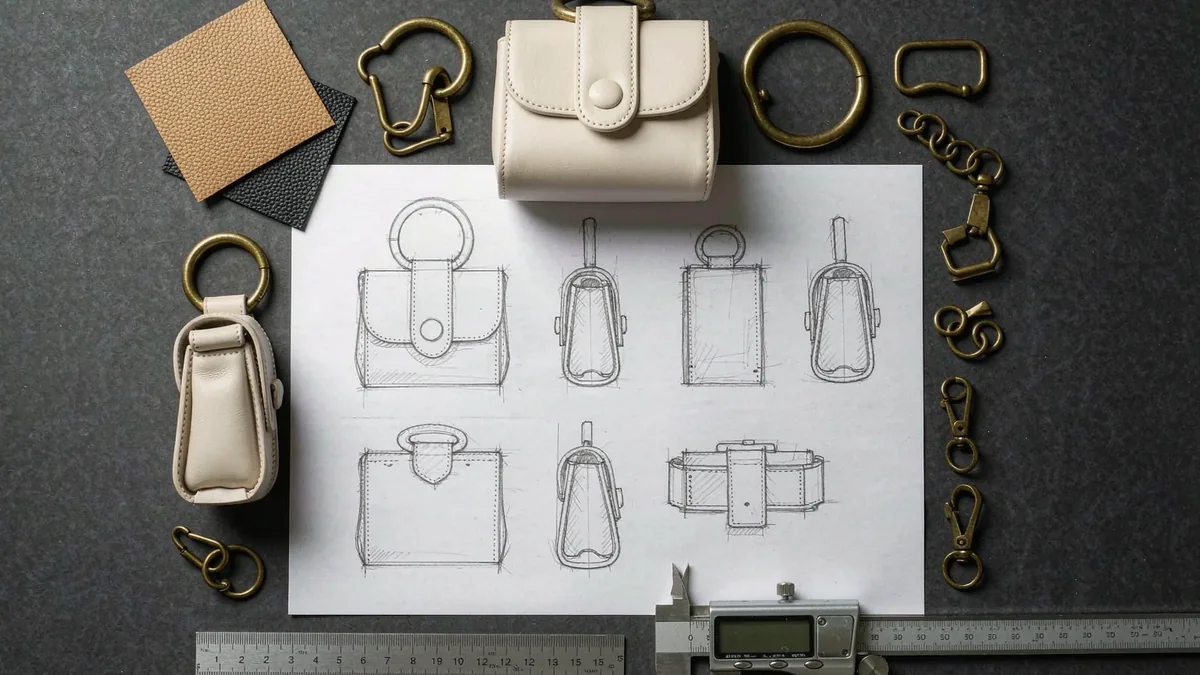
The third habit is the one most often skipped. A change that seemed to be about the pattern and was actually about the hide will be repeated next season as a pattern change, and the piece will be wrong again in the same direction. The fourth habit is what makes the log usable as evidence rather than as history: a photograph numbered to match the entry can be compared with the sealed reference months later, under the same 5000 K light, by someone who was not in the room.
The Buyer's Role Between Rounds
Iteration is faster when the buyer does three specific things, and slower in proportion to how many of them are missing.
- Return one consolidated note inside 48 hours, with a revision code and a priority on every line.
- Write changes as measurements: raise the handle by 10 mm, not make the handle higher.
- Separate must-change from nice-to-change, and say which list each comment sits on.
- Approve the material and the hardware in writing at the same time as the piece, since both carry lead times.
- Accept and record the variances you are willing to live with rather than leaving them silent.
The last one is the least intuitive and the most protective. Silence on a variance reads as approval, and an unrecorded approval is a claim waiting for a bulk delivery to trigger it.
A piece that looks right is not the same as a specification that is known. If you have to hold the sample to explain what was approved, iteration is not finished.
From Iteration Into Bulk
Once the iteration is closed, the programme runs on fixed terms: MOQ 500 pcs per style and colourway, bulk in 35-50 days, inspection at AQL 2.5 under ISO 2859-1 with third-party inspection available, and handover on FOB Xiamen terms. Export experience on this programme runs since 2014 across 7 production lines with about 200,000 pcs per month of capacity, delivered through our validated partner factory Quanzhou Yingming Bags.
See the iteration log for your style
Send the drawings, the material direction and the quantity, and we will return a sampling plan with the iteration log format we use. Request a quote.
Frequently Asked Questions
What does iteration mean in luxury bag sampling?
Changing one named variable and recording what happened to everything else, rather than making the same piece again and hoping for a different result. Each iteration is logged with the reason, the version and the measurement.
What are the four kinds of iteration?
Silhouette, structure, specification and finish, run in that order. Structure iteration covers interlining weight and fold behaviour; finish covers edge work, hardware seating and packing, and it should be the only kind running in the final round.
Why should iteration run in a fixed order?
Because each kind settles something the next depends on. Finish work done before structure is settled gets unpicked, and specification changes made while the silhouette is still moving produce a piece right in detail and wrong in proportion.
What is an iteration log?
A six-field record kept with the pattern card: the variable changed, the reason, the drawing and pattern version, the measurement before and after, the side effects observed, and the verdict of keep, revert or try again.
Why record side effects as well as the change?
Because something almost always moves. Raising a handle drop by 10 mm changes where the load falls, which changes how the panel behaves at the fold, and noticing that early stops a later round discovering it as a fresh problem.
How long does one iteration round take?
Six to ten working days for a standard construction, or 12-15 where the piece carries a framed opening, an exotic skin or engineered hardware. The first two days produce nothing visible, which is pattern work and cutting.
What happens on day three of a round?
The shell is assembled and the silhouette can be judged on the body rather than on paper. It is the hinge of the round, because a proportion error can still be corrected with a pencil before the piece is committed to its material on day five.
Should a buyer ask for photographs during the round?
Yes, at day three, if the silhouette is still in question. Most programmes do not, and the first time the shape is seen on a body is when the finished piece arrives, which is the most expensive moment to find a proportion error.
Why are later rounds slower?
Because they deal with smaller things that are harder to judge: shade, edge appearance under raking light, hardware finish. Three rounds therefore cost more than half again the calendar time of two.
When should iteration stop?
When the specification is written rather than when the piece looks right. The test is whether the buyer can describe the approved standard without holding the sample; if they cannot, the standard is still in the object.
What four signals show iteration is finished?
All seven numbers written and measured, a round producing no Must items, a piece made on the bulk tooling from the bulk material, and a buyer able to state the approved standard from paper.
Why note the hide batch in the log?
Because a change attributed to the pattern may have been the hide. Two hides of the same specification fold differently, and without the batch note the same correction will be repeated next season in the wrong direction.
What is the buyer's role between rounds?
Three things above all: return one consolidated note inside 48 hours, write changes as measurements rather than adjectives, and record the variances you accept rather than leaving them silent.
What are the commercial terms once iteration closes?
MOQ 500 pcs per style and colourway, bulk in 35-50 days, inspection at AQL 2.5 under ISO 2859-1 with third-party inspection available, and handover on FOB Xiamen terms.
People Also Ask
What is sample iteration in handbag development?
Changing one named variable per round and recording the result and its side effects, working through silhouette, structure, specification and finish in order.
Why can't a tech pack prevent iteration?
Three things cannot be drawn: how a hide folds, where a loaded bag actually pulls, and which operation sequence gives the best result.
How many iterations does a bag need?
Two plus a pre-production reference for most styles. A fourth usually means the specification was never written rather than that the piece is difficult.
What should be in an iteration log?
The variable, the reason, the version numbers, the before and after measurement, the side effects, and a verdict of keep, revert or try again.
How do I know when a sample is finished?
When you can describe the approved standard without holding the piece. If you need the object to explain it, the standard is still in the object.
Sources and further reading
Every figure on this page is either our own programme data or attributed below. Open the originals before you write them into a specification.
- ISO — International Organization for StandardizationISO Publisher of ISO 2859-1 for inspection and of the leather test methods referenced in iteration records.
- Leather Working GroupLeather Working Group Tannery audit protocol behind the hide batch identification recorded in iteration logs.
- SATRASATRA Technology Centre Independent testing organisation for leather and accessories, covering flex, fold and hardware evaluation.
- OEKO-TEXOEKO-TEX Testing and certification system for leather, lining and interlining against restricted substance lists.
- Sourcing JournalSourcing Journal Reporting on sampling practice, development calendars and iteration across the accessories trade.