Luxury Handbag Development Cost Planning Guide: Three Planning Models, Four Cost Buckets and Where the Spend Actually Goes
How should you plan development spend for a luxury handbag programme? Split it into four buckets — pattern and tooling, materials, bench time, and logistics — and choose one of three planning models: per round, per style, or per programme. Against a bench reference of USD 4.80 per finished piece in a normal run, a single development round carries the pattern work, one hide minimum and one hardware set, which is why it is priced as a multiple rather than as a unit.
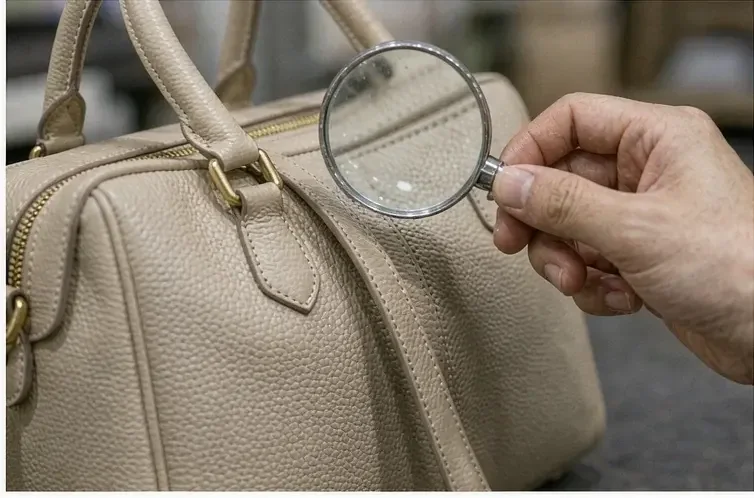
Three Ways to Plan Development Spend
There are three workable ways to plan development spend, and they differ in what they protect. Choosing one deliberately is more useful than choosing one by accident, because each model creates a different behaviour on both sides of the relationship.
| Model | How it works | What it protects | Where it fails |
|---|---|---|---|
| Per round | Each sample round is quoted and approved separately | Cash flow, and the freedom to stop after any round | Encourages short rounds and thin feedback, because each round feels like a new purchase |
| Per style | One figure covers the pattern work and a stated number of rounds for one style | The specification, because the incentive is to settle it rather than to ration it | Needs a clear definition of what counts as a change of style rather than a revision |
| Per programme | One figure covers a season: several styles, shared hardware development and shared material buying | The calendar, because material and tooling can be bought across the whole drop | Requires a settled range plan before the first cut, which many houses do not have |
Our own bias is towards the per style model for a first programme and the per programme model from the second season onward. The per round model looks lowest on paper and usually costs the most, because it quietly rewards shallow feedback, and shallow feedback is what generates the additional round.
A house running eight styles a year will feel the difference immediately. Under the per round model, each style is argued about separately and the totals arrive late and in pieces; under the per style model the figure is known before the first cut, which makes the range plan a real document rather than an aspiration. The per programme model goes further and lets material be bought across the whole drop, which is where the saving actually lives.
The Four Cost Buckets
Every development figure, under any of the three models, resolves into four buckets. Naming them is what makes a quote comparable between two houses.
- Pattern and tooling
- Pattern development, grading where needed, and any cutting die or hardware tool made for the style
- Materials
- The hide or skin minimum, the lining, interlining at 0.8 mm, thread at 0.45 mm and the hardware set
- Bench time
- The hours of the hand who makes the piece, which is several times the hours of the same piece in a run
- Logistics and overhead
- Packing as bulk would pack it, the parcel, the photographs and the measurements sheet
The third bucket is the one buyers underestimate most. A piece made once, by one hand, stopping to think at every step, takes several times the bench time of the same piece made as number sixty in a run of 500. That is not inefficiency; it is what discovering the specification costs.
Where the Money Goes, Line by Line
A line-by-line view is more useful than a single figure, because it shows which lines a buyer can influence and which are simply the cost of the exercise.
| Line | What drives it | Can you influence it? |
|---|---|---|
| Pattern development | Complexity of the construction; a framed opening costs more than a zip closure | Yes, by settling the construction before the first cut |
| Hide or skin minimum | One hide minimum regardless of how little is used; more for an exotic skin | Partly, by choosing a hide that is also used elsewhere in the range |
| Hardware set | Stock fitting is quick; an engineered fitting carries tooling and 24 to 48 hours of salt spray testing | Yes, strongly, and it is the largest single lever |
| Bench time | The number of operations, and whether the piece is made once or three times | Partly, through the quality of the feedback rather than through the design |
| Edge and finishing work | Three thin coats rather than one thick one adds operations | No, if you want the edge to survive a cold fold |
| Sealed references | Three pieces per style and colourway, held for the life of the style | No, and trying to reduce it is a false economy |
For scale against the finished article: the bench cost of one piece in a normal run sits around USD 4.80 in parts and labour. Development is priced as a multiple of that rather than as one unit, because a single piece is carrying costs that a run would spread across hundreds.
Tooling, Patterns and What Is Amortised
Tooling is the line most often misunderstood, because it is the one that behaves differently depending on whether the style reaches bulk.
- A cutting die made for a style is amortised across the run and is normally recovered once the style passes 500 pcs.
- A hardware tool for an engineered lock or pull carries its own lead time and is recovered only across the programmes that use it.
- A pattern is not tooling in the same sense: it is the record of the specification, and it belongs to the style for its life.
- Grading a pattern into further sizes is a separate line and is usually worth doing only for a style with a proven run.
The practical consequence is that an engineered fitting should be committed to only when a style is close to approval. Commissioning the tool during the first round is the commonest way to pay twice, once for the tool and once for its revision.
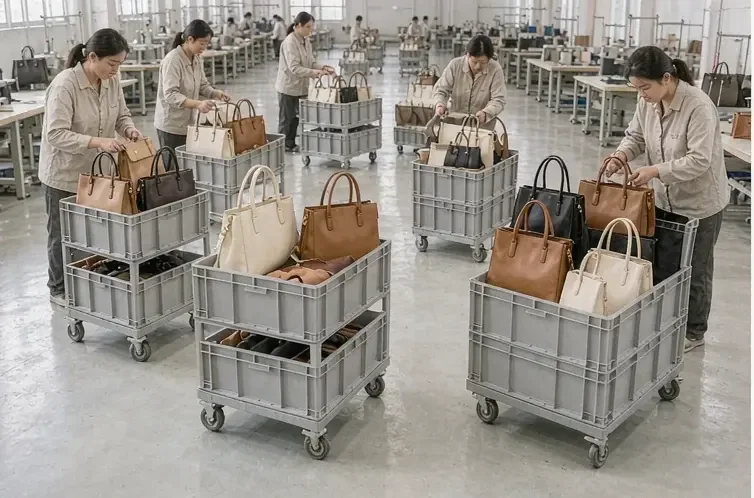
Material Minimums and the Hide Arithmetic
Materials are bought in minimums, and a single sample does not escape them. One hide is one hide whether the style uses a tenth of it or all of it.
One hide, one style
The sample pays the whole minimum. The arithmetic improves sharply if two styles in the drop share the hide.
Lining and interlining
Usually available in shorter lengths, so these are the least punishing lines. Interlining at 0.8 mm is a stock item on most programmes.
Hardware sets
Bought by the fitting, not by the piece. A stock turn-lock costs one set; an engineered one costs the tool first.
Exotic skins
Graded and tagged individually, and the grade that supplies one piece may not supply 500. Buy the grade question before the piece.
Sharing material across a drop is the quietest saving available in development. Two styles cut from one hide, using one hardware family and one thread at 0.45 mm, cost meaningfully less to develop than two unrelated styles, and they also read as a collection rather than as two products.
The Cost of an Extra Round
An extra round costs more than its own price, and the difference is what makes thin feedback expensive.
Against that, the cost of better feedback is roughly an hour of someone's attention: measure the piece against the drawing, mark the drawing, assign a priority to every line. The ratio is the reason we push the format of the note so hard, and it is also the reason we would rather quote per style than per round. A house that knows its figure in advance tends to spend the extra hour.
Crediting Development Spend Against Bulk
A common and sensible arrangement is that part of the development figure is credited against the first bulk order, and the terms of that credit matter more than its size.
Five terms to settle before the credit is agreed
- Which portion is creditable: usually the bench and material lines, not the tooling.
- Whether the credit applies to the first order only or across the season.
- What happens if the style never reaches bulk: normally the full figure stands.
- Whether a second colourway carries a fresh development figure or a reduced one.
- How the credit is shown: as a line on the bulk invoice rather than as a reduction on the sample.
The second colourway line is worth particular attention. A second colourway of an approved style does not need the pattern work repeated, so a fresh full figure is rarely justified; what it does need is a hide submission and a sealed reference in that hide.
A Twelve-Month Shape for Development Spend
Development spend is seasonal in shape, and planning it as a flat monthly figure is what causes the crunch before a drop.
- Months one to three: range definition, material direction and hardware development. Spend is low and mostly in samples of components.
- Months four to six: sampling of the core styles. This is the peak, and it should be planned as such.
- Months seven and eight: sealing, then bulk in 35-50 days. Development spend falls away; material spend peaks.
- Months nine and ten: the second drop is defined while the first is in bulk, which is where shared materials pay.
- Months eleven and twelve: review of what sold, grading of proven patterns, and planning of the next season.
The overlap in months nine and ten is the single most useful thing in the calendar. Defining the second drop while the first is in bulk lets both share a hide order and a hardware family, and it is the point at which the per programme planning model starts to pay for itself.
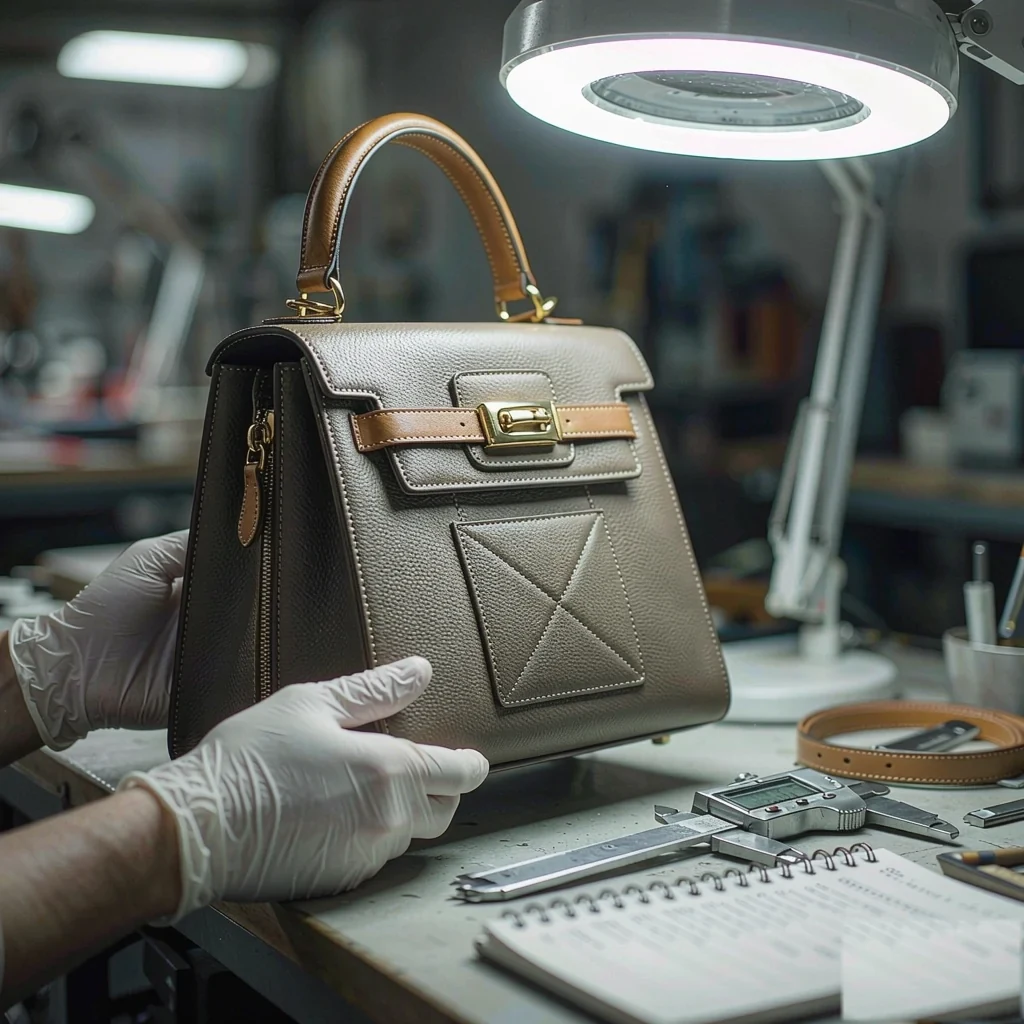
What to Fix Before You Spend Anything
Four decisions taken before the first cut remove most of the variance in a development figure, and all four are free.
- Decide stock or engineered hardware, because it is the largest single lever in the whole exercise.
- Decide whether the hide is shared with another style in the drop.
- Write the seven numbers: leather 1.2-1.4 mm, stitch 8-9 per inch, thread 0.45 mm, three edge coats, plating 0.15-0.3 microns, interlining 0.8 mm, #5 zip.
- Decide how many rounds the plan allows, and who has authority to approve one more.
Every fault found on one piece is a fault that does not recur 500 times. Read against a bench cost near USD 4.80 per finished piece, the arithmetic of finding a fault early is not close.
Commercial Terms That Follow the Plan
Once the plan is settled and the sample is approved, the programme runs on fixed terms: MOQ 500 pcs per style and colourway, bulk in 35-50 days, inspection at AQL 2.5 under ISO 2859-1 with third-party inspection available, and handover on FOB Xiamen terms. Export experience on this programme runs since 2014 across 7 production lines with about 200,000 pcs per month of capacity, delivered through our validated partner factory Quanzhou Yingming Bags.
Get a development plan with the buckets separated
Send the range plan, the material direction and the target quantity, and we will return a development plan split by bucket with dates for each round. Request a quote.
Frequently Asked Questions
How much does luxury handbag development cost?
It is quoted as a multiple of the bench cost of one finished piece, which sits around USD 4.80 in a normal run, because a single piece carries the pattern work, one hide minimum and one hardware set rather than sharing them across a run.
What are the four development cost buckets?
Pattern and tooling, materials, bench time, and logistics and overhead. Naming all four is what makes a quote from one house comparable with a quote from another rather than a single opaque figure.
Which planning model is usually best?
Per style for a first programme, because it rewards settling the specification rather than rationing rounds, and per programme from the second season, once a range plan exists and materials can be shared across a drop.
Why does the per round model often cost more?
Because each round feels like a new purchase, which quietly rewards shallow feedback. Shallow feedback produces an impression rather than a measurement, and an impression produces another round.
Is tooling cost recoverable?
A cutting die is amortised across the run and normally recovered once a style passes 500 pcs. A hardware tool for an engineered fitting carries its own lead time and is recovered only across the programmes that use it.
When should an engineered fitting be commissioned?
When the style is close to approval. Commissioning the tool during the first round is the commonest way to pay twice, once for the tool and once for its revision.
Why does one hide minimum apply to a single sample?
Because hides are bought whole. The arithmetic improves sharply if two styles in the drop share the hide, which is also the quietest available saving in development.
How much bench time does a sample take?
Several times the bench time of the same piece in a run, because it is made once by one hand that stops to think at each step. That is not inefficiency; it is the cost of discovering the specification.
What does an extra sample round really cost?
The round fee, 6-10 working days, and the restart of material and hardware lead times at approval rather than their running alongside the review. Bulk then moves back by the same amount.
Should development spend be credited against bulk?
Often yes, usually the bench and material lines but not the tooling. The terms matter more than the size: whether it applies to the first order only, and what happens if the style never reaches bulk.
Does a second colourway need a fresh development figure?
Rarely a full one, since the pattern work is not repeated. What it needs is a hide submission and a sealed reference in that hide, which is a fraction of the original effort.
How should development spend be shaped across a year?
It peaks in the sampling months ahead of a drop and falls away as bulk material spend peaks. Defining the second drop while the first is in bulk lets both share a hide order and a hardware family.
Which four decisions reduce development variance most?
Stock or engineered hardware, whether the hide is shared with another style, the seven written numbers including stitch at 8-9 per inch, and how many rounds the plan allows with who may approve one more.
What are the commercial terms once the sample is approved?
MOQ 500 pcs per style and colourway, bulk in 35-50 days, inspection at AQL 2.5 under ISO 2859-1, and handover on FOB Xiamen terms, with third-party inspection available.
People Also Ask
What does handbag development cost include?
Pattern and tooling, materials at their minimums, bench time for a piece made once, and packing, photographs and the measurements sheet.
Why is a sample more expensive than a production piece?
Because pattern work, tooling preparation and material minimums are carried by one piece instead of being spread across a run of 500.
Can development costs be credited against my order?
Frequently, usually for the bench and material lines. Settle first whether it applies to the first order only and what happens if the style never reaches bulk.
How do I reduce development spend without cutting quality?
Use stock hardware, share one hide across two styles, write the seven numbers before cutting, and return feedback inside 48 hours.
When is the peak of the development calendar?
The sampling months before a drop. Bulk material spend peaks afterwards, and planning development as a flat monthly figure is what causes the annual crunch.
Sources and further reading
Every figure on this page is either our own programme data or attributed below. Open the originals before you write them into a specification.
- ISO — International Organization for StandardizationISO Publisher of ISO 2859-1, the inspection procedure referenced at bulk handover on development programmes.
- Leather Working GroupLeather Working Group Tannery audit protocol behind hide traceability and the batch records used in material purchasing.
- SATRASATRA Technology Centre Independent testing organisation for leather and hardware, covering the salt spray and flex testing behind hardware decisions.
- Sourcing JournalSourcing Journal Reporting on development calendars, sampling economics and material pricing across the accessories trade.
- OEKO-TEXOEKO-TEX Testing and certification system covering restricted substance compliance for leather, lining and interlining.