How a Luxury Handbag Maison Develops a New Collection: Seven Stages From Brief to Handover
How does a luxury handbag maison develop a new collection? It moves through seven gated stages: concept and technical pack, material shortlist and lot reservation, pattern and toile, sampling, approval and spec freeze, bulk, then audit and handover. Sampling takes 6-10 working days for a standard build and 12-15 for a complex one, and bulk takes 35-50 days after the approval sample is signed. Our programme runs at MOQ 500 pcs per style and colourway on FOB Xiamen terms, audited to AQL 2.5 under ISO 2859-1.
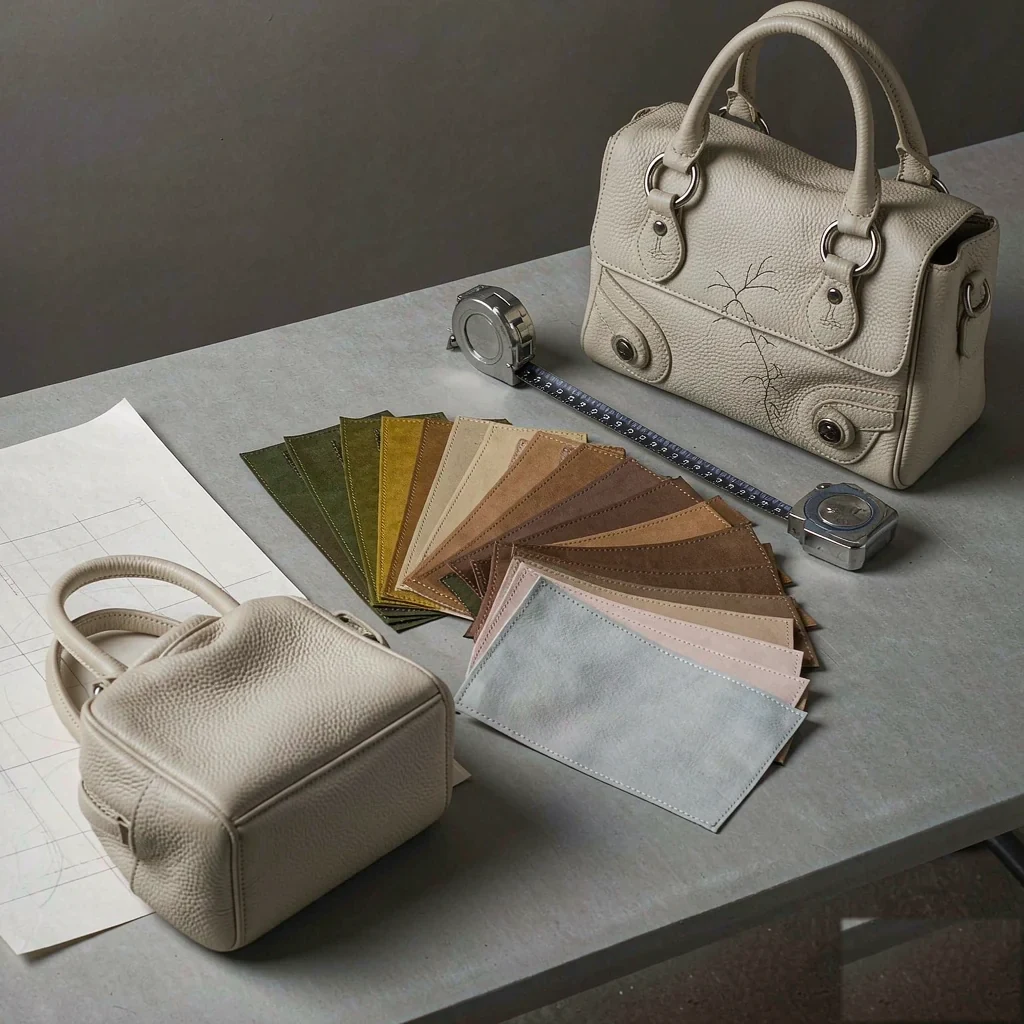
The Brief on the Table: A Copenhagen Label and Four Styles
Last spring a Copenhagen ready-to-wear label came to us with four bag styles, a twelve-week window before a trade show, and no technical pack at all. The founder had sketches, a mood board built from archive photographs, and a firm opinion about hardware. What she did not have was a pattern, a spec sheet or a hide reservation — the three things that decide whether a capsule ships.
The programme that followed is worth writing down because nothing about it was unusual. Four styles became a seven-stage sequence, every stage had a gate, and the gates are the same ones any designer brand walks through whether the capsule is four styles or fourteen.
This article follows that sequence and then pulls the rules out of it. For the wider framing behind the model, the handbag maison programme page sets out the scope and the documents attached to each gate.
Stage 1 — Concept and Technical Pack
Stage one turns a sketch into a technical pack: panel dimensions, seam allowances, hardware positions, lining layout and target leather thickness, all agreed in writing before any hide is cut.
This is the stage that first-time founders underestimate. A sketch communicates intent; a technical pack communicates geometry. The distance between the two is where a collection either holds its shape or quietly changes character between the drawing and thebench sample.
- Panel dimensions with tolerances, not just overall bag measurements.
- Seam and turn allowances, stated per seam type rather than globally.
- Hardware positions with centre-to-centre distances and plate thickness.
- Lining layout, pocket count and the weight of any reinforcement.
- Target leather thickness and finish, named by tannery grade where possible.
- Destination market, which sets the compliance scope before costing starts.
On the Copenhagen capsule this stage took four working days, mostly spent on the flap geometry of one style. That was time well spent: the same pattern later carried two colourways without revision.
Stage 2 — Material Shortlist and Lot Reservation
Stage two produces a physical swatch card and a reserved hide lot, because a collection priced on a generic leather description is a collection priced twice.
Three strategies cover most first capsules, and the choice between them is a positioning decision rather than a cost one.
One hero leather
A single full-grain calfskin carried across four styles. Simplest hide reservation, strongest visual coherence, and the least costly way to reach MOQ 500 across a capsule.
Two leathers, one hardware family
A structured leather for bodies and a softer nappa for gussets and linings. Adds a second lot to hold, but buys real contrast on the shelf.
Hero plus accent
A core calfskin plus an accent on handles or a framed evening bag. Highest visual return, longest lead time, and the option that needs CITES documents if the accent is exotic.
Leather Working Group (LWG) audited tanneries were specified on this programme, and the audit reference was filed in the technical pack rather than used as a selling line. Where a brand wants exotic skins, CITES permit documents have to be planned at this stage, not at packing.
Stage 3 — Pattern and Toile
Stage three is the calico toile: a shell cut in plain cotton to prove the geometry before any leather is committed, revised on the bench until the silhouette reads correctly in three dimensions.
Skipping the toile is the most common false economy in collection development. Leather is unforgiving of a geometry error, and a shell that looks right flat can collapse once it is loaded. On this capsule two of the four styles needed a second toile, and both corrections were flap-depth problems that would have been expensive to find in calfskin.
Grading is settled here too. A style released in two sizes needs a graded pattern set, and the grading rules have to be written before the first leather cut, because a grade applied after the fact changes panel yield and therefore the hide requirement for the whole run.
Stage 4 — Sampling: What Happens Inside the 6-10 Day Window
Sampling is where the collection becomes measurable: 6-10 working days for a standard build and 12-15 for a complex one, at the end of which the bench hands over a sample that has been measured against the spec sheet rather than admired.
- Interlining weight
- 240 gsm non-woven, 0.8 mm, on front panel and flap
- Interior zip
- #5 metal zip, 4.5 mm tape, 8 teeth per 5 cm
- Skiving at turned edges
- 0.6 mm, checked with a dial gauge at first-off
- Hardware corrosion test
- 48 h neutral salt spray, no base metal at 24 h
- Colour fastness to light
- ISO 105-B02 xenon arc, grade 4 minimum
- Lining seam allowance
- 8 mm, pressed open on all interior panels
These are the numbers that decide whether the sample is signed or sent back. A 0.6 mm skive at a turned edge is the difference between an edge that folds cleanly and one that shows a hard ridge under the paint. A 240 gsm interlining is what lets a 0.8 mm flap hold its line after a month on a shoulder.
The sample is photographed, measured and logged against the pack. Corrections are written as a numbered list, because a verbal correction list is the fastest way to lose a week.
Stage 5 — Approval, Cost Lock and Spec Freeze
Stage five freezes the spec sheet: the approval sample is signed, the material lot is confirmed, and the unit cost is locked against that lot rather than against a generic description.
The freeze matters more than the signature. A cost quoted against calfskin in general is not a cost, it is an intention. Once the lot is named, the price can be held, and the compliance reports can be issued against the material that will actually ship.
Bulk intake starts the day after the freeze. Anything changed after that point re-opens the cutting plan, and in most cases the test reports as well, because a REACH report is valid for the lot it was tested against.
Stage 6 — Bulk: The 35-50 Day Run
Bulk runs 35-50 days from intake to handover, and it is less mysterious than founders expect: material intake, cutting, skiving, assembly, finishing, audit, packing.
- Days 1-5: material intake, hide inspection, cutting plan nested for yield.
- Days 6-15: cutting, skiving, splitting and reinforcement applied to panels.
- Days 16-30: bench assembly, zip setting, hardware fitting and lining closure.
- Days 31-40: finishing — edge paint, creasing, hand-burnishing, final pressing.
- Days 41-48: AQL 2.5 inspection under ISO 2859-1, corrections, re-audit.
- Days 49-50: packing, carton marking, document set, FOB Xiamen handover.
On this programme the run landed on day 44. The two styles with the heavier interlining needed an extra pressing pass, which is the kind of detail that never shows on a calendar and always shows on a bench.
Sequencing inside the run matters as well. On a four-style capsule the bench works style by style rather than batch by batch, so the first style is finished, audited and corrected while the last is still being cut. That ordering is what lets a correction found on style one reach styles three and four before they reach the same operation.
Stage 7 — Audit, Packing and Handover
The final gate is the AQL 2.5 inspection drawn under ISO 2859-1, followed by packing to the agreed specification and the document set that travels with the shipment.
Packing is a specification, not an afterthought. Dust bags, boxes, tissue and carton count belong in the technical pack, because carton count drives freight cost and box dimensions are usually locked long before the bags are finished.
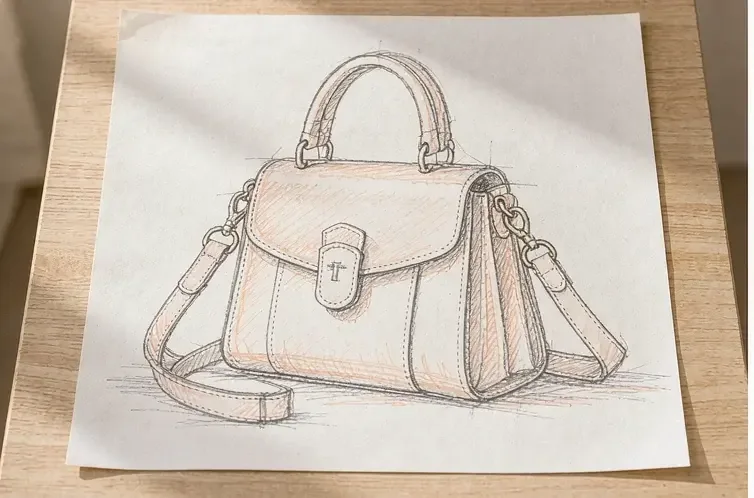
The programme ran across 7 production lines with about 200,000 pcs per month of capacity, has held export experience since 2014, and was executed through our validated partner factory Quanzhou Yingming Bags, an SGS-validated site. Third-party inspection is available in addition to the internal audit.
The Collection Calendar in One Table
| Stage | Working days | Output | Gate |
|---|---|---|---|
| Concept and technical pack | 3-5 | Dimensioned pack and hardware plan | Pack signed by the brand |
| Material shortlist and reservation | 2-4 | Swatch card, hide lot held | Lot reserved |
| Pattern and toile | 2-3 | Calico shell, panel corrections | Silhouette approved |
| Sampling | 6-10 standard, 12-15 complex | Two samples, measured and logged | Approval sample signed |
| Cost lock and spec freeze | 1-2 | Frozen spec sheet | Spec frozen |
| Bulk | 35-50 | Finished units and AQL 2.5 report | Audit passed |
| Packing and handover | 3-5 | Cartons and document set | FOB Xiamen |
The Rules That Came Out of That Programme
Four rules came out of the Copenhagen capsule, and all four are transferable: freeze geometry before leather, name the lot before costing, write corrections as a numbered list, and treat packing as part of the design.
Rules worth stealing
- Freeze geometry before you commit leather, even if the toile takes an extra two days.
- Name the hide lot before you accept a cost, and hold that lot in writing.
- Write sampling corrections as a numbered list, and close each number before the next round.
- Specify packing at concept stage, because carton count is a freight decision.
- Keep one hardware family across the capsule to protect the plating run and the MOQ.
- Book the compliance test window when the lot is named, not when the goods are ready.
Where Collection Calendars Slip: Five Failure Points
Five failure points account for most slipped collection calendars: a late hardware decision, a re-selected hide, unwritten corrections, a compliance window booked too late, and a packing specification agreed after production starts.
- Late hardware: lock geometry and plating thickness drive panel allowances, so a swap means a new pattern.
- Re-selected hide: forces a new cutting plan and a new test report against the replacement lot.
- Unwritten corrections: verbal feedback re-opens points that were already closed in the previous round.
- Compliance booked late: REACH, Prop 65 and CPSIA reports have their own laboratory timetable.
- Packing agreed late: box and dust bag lead times sit outside the 35-50 day bulk window.
None of these are capacity problems. All five are calendar problems caused by decisions taken one stage later than they should have been, and all five are visible in advance to anyone reading the gate list.
What to Send Before the Kick-off Call
A kick-off call is useful in proportion to what arrives before it: sketches or reference images, target dimensions, the leather and hardware direction, quantity per colourway, destination market, and the date the collection has to be on a shelf.
With those six things the first call produces a calendar and a material shortlist instead of a second round of questions. The luxury sampling page goes deeper on what happens between the first sample and the approval signature.
Plan your next collection
Send your sketches, target dimensions and launch date. You will receive a seven-stage calendar, a material shortlist and a costed quote within two working days. Request a quote.
Frequently Asked Questions
How long does it take a maison to develop a handbag collection?
From signed technical pack to FOB handover, a four-style capsule typically runs 50-70 working days. That is 3-5 days on the pack, 2-4 on materials, 2-3 on pattern and toile, 6-10 on sampling, 1-2 on the freeze, 35-50 on bulk, and 3-5 on packing and documents.
What is a technical pack and do I need one?
A technical pack is the dimensioned drawing set: panel dimensions, seam and turn allowances, hardware positions, lining layout and target leather thickness. You need one because a sketch communicates intent while the pack communicates geometry, and geometry is what the bench cuts to.
What is a toile and why build one in calico?
A toile is a shell cut in plain cotton to prove the geometry before leather is committed. It catches flap-depth and gusset problems while they are still inexpensive to fix. Two of four styles usually need a second toile, and that is normal.
How many sampling rounds are included?
Two rounds sit inside the standard 6-10 working day window: a first sample and a corrected second. Further rounds are possible and are costed separately, which is why written, numbered corrections matter so much to the calendar.
When is the unit price finally locked?
At the spec freeze, when the approval sample is signed and the hide lot is named. A cost quoted before the lot is named is an intention rather than a price, because the leather line carries the largest share of the total.
Can I change the leather after the sample is approved?
Yes, but it restarts part of the clock. A replacement lot needs a new cutting plan for yield, a new compliance report tested against that lot, and usually a revised confirmation sample before bulk intake.
What does MOQ 500 per colourway mean for a four-style capsule?
It means 500 pieces per style and per colourway. Four styles in one colourway is 2,000 pieces; the same four styles in two colourways is 4,000. Most first capsules launch one colourway and add colour on the second season.
How is quality checked before the collection ships?
An AQL 2.5 inspection is drawn under ISO 2859-1, with the sample size and the accept and reject numbers agreed before bulk starts. Corrections are made and the lot re-audited. Third-party inspection can be added alongside the internal audit.
Who handles CITES documents for exotic skins?
The programme prepares them, but the calendar belongs to the permit authority. Permit documents travel with every shipment of listed skins and must match the commercial invoice, so an exotic capsule should start earlier than a calfskin one.
Can hardware be developed specifically for a collection?
Yes. Custom locks, feet and rings can be developed, but they add tooling cost and extend sampling, because the lock must be proven on the bench before panels are cut. Launching on a proven mechanism is the safer first season.
How early should packaging be specified?
At concept stage. Box and dust bag lead times sit outside the 35-50 day bulk window, and carton count drives freight cost, so a packaging decision made after production starts tends to become an expensive rush.
What are the trade terms for a collection handover?
FOB Xiamen is the default, with CIF and DDP available on request. The term determines who carries freight risk and who handles customs documentation, so it is best fixed at quotation stage rather than once goods are ready.
People Also Ask
What are the stages of developing a handbag collection?
Seven gated stages: technical pack, material shortlist and lot reservation, pattern and toile, sampling, approval and spec freeze, bulk, then audit and handover. Each stage ends in a gate that has to be signed before the next begins.
Why does sampling take 6-10 working days?
Because the bench cuts, skives, assembles, finishes and measures a first sample, then logs corrections and builds a second. Complex constructions need 12-15 days for hardware tooling and lock fitting.
What causes a handbag collection launch to slip?
Late hardware decisions, a hide re-selected after approval, unwritten corrections, compliance testing booked too late, and packaging agreed after production starts. All five are calendar problems rather than capacity ones.
Should a first capsule use one leather or several?
One hero leather across the capsule is the simplest hide reservation and the least costly route to MOQ 500 per colourway. A second leather adds shelf contrast but a second lot to hold, and an exotic accent needs CITES documents.
When should compliance testing be booked?
When the hide lot is named, not when the goods are ready. REACH, Prop 65 and CPSIA reports are issued against a specific lot and a laboratory timetable that sits outside the production window.
Sources and further reading
Every figure on this page is either our own programme data or attributed below. Open the originals before you write them into a specification.
- ISO — International Organization for StandardizationISO Publisher of ISO 2859-1 for AQL sampling inspection and ISO 105 colour fastness test methods used on collection approvals.
- Leather Working GroupLeather Working Group Tannery environmental audit protocol referenced when a collection specifies audited leather at the shortlist stage.
- CITES — Convention on International Trade in Endangered SpeciesCITES Appendix listings determine the permit documents required for exotic skins used as a capsule accent.
- Sourcing JournalSourcing Journal Trade coverage of apparel and accessories sourcing calendars, lead times and material cost movements.
- FashionUnitedFashionUnited Industry data and reporting on the European fashion market, used here for launch season and trade show timing context.