What Is a Handbag Maison and Why Brands Choose One: The Programme Explained
What is a handbag maison? It is a design-led bag house that keeps development, sampling, material sourcing and bulk production under one technical file instead of splitting the work across several vendors. Brands choose a maison because one accountable team shortens every decision loop: sampling runs 6-10 working days, complex builds 12-15, bulk 35-50 days after approval. Our programme works to MOQ 500 pcs per style and colourway, AQL 2.5 inspection per ISO 2859-1 and FOB Xiamen terms, and it is executed through our validated partner factory Quanzhou Yingming Bags, an SGS-validated site with export experience since 2014.
What a Handbag Maison Is, in One Sentence
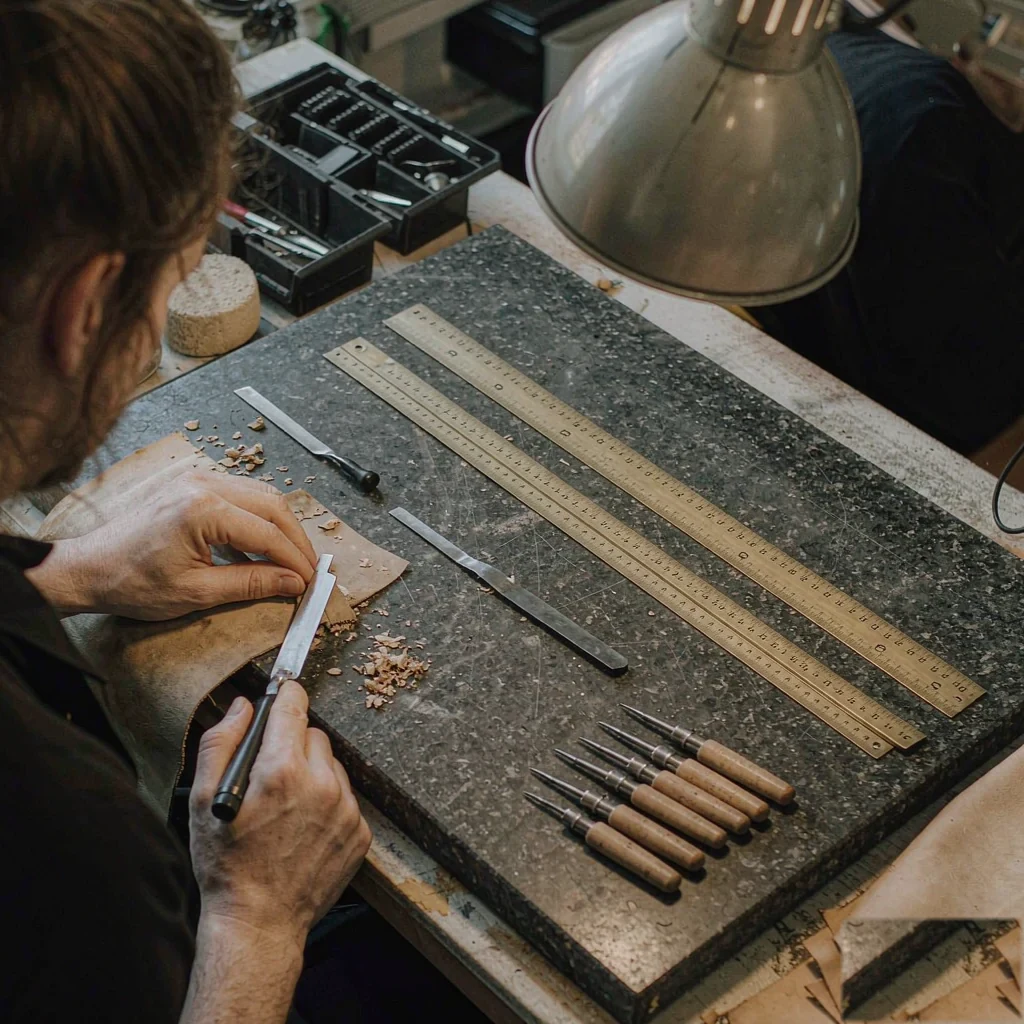
A handbag maison is a programme partner that owns the technical file for your bag — pattern, leather selection, hardware, tolerances and hand-finishing — and carries it from first sketch to packed carton without handing the work to a third party.
The word is borrowed from couture, where a maison keeps the design studio, the atelier and the finishing bench under one roof. Applied to handbags it describes a working model rather than a marketing badge. One team holds your patterns, your graded sizes, your approved leather lot and your finishing standard, and that team is answerable when a seam comes back wrong.
The practical difference is accountability. On a split programme the studio draws, one house cuts, another assembles and a third packs, so when the gusset creases or the edge paint cracks every party has a plausible reason to point elsewhere. A maison programme closes that gap.
Brands also choose a maison for the material conversation. A designer working in full-grain calf needs someone who can explain why 1.2 mm holds a structured flap while 1.0 mm collapses after a season, and who can quote the stitch density the bench will actually run.
If you want the short route into how these programmes are structured, the handbag maison programme page sets out the scope, the stages and the documents you should expect at each gate.
The Cost Architecture of a Maison Programme
On a structured calfskin programme the leather and lining typically carry 38-52% of the FOB price, hardware 12-22%, bench labour 14-20%, and packaging and compliance together 5-10%; sampling and tooling, amortised across the run, add another 3-7%.
| Cost line | Typical share of FOB price | What moves it |
|---|---|---|
| Leather and lining | 38-52% | Hide grade, cut yield, tannery and lot size |
| Hardware | 12-22% | Base metal, plating thickness, tooling |
| Bench labour | 14-20% | Stitch density, hand-finishing, turn-edge work |
| Interlining and reinforcement | 5-9% | Weight, skiving, number of reinforced panels |
| Sampling and tooling | 3-7% amortised | Number of rounds, new dies and moulds |
| Compliance and testing | 2-4% | REACH, Prop 65 and CPSIA scope |
| Packaging | 3-6% | Dust bag, box structure, tissue and print |
Two things surprise first-time buyers: how little of the price sits in assembly, and how far one hardware decision moves the total. Moving a turn-lock from zinc alloy to solid brass with 0.20 µm palladium plating can add USD 1.40 to USD 2.60 to a bag positioned in the USD 400 to USD 600 band, before any change to the leather.
That is why a maison quotes in lines rather than in one number. Lines let you trade one variable against another: a heavier interlining against a lighter lining, or a simpler edge finish against a better hide.
Six Variables That Move the Unit Price
Six variables account for most of the spread between two quotes for the same-looking bag: hide grade and cut yield, hardware base metal and plating, stitch density, interlining weight, the number of sampling rounds, and the finishing operations applied after assembly.
- Hide grade and cut yield: a full-grain calfskin hide yields 55-70% on a structured panel layout, and that yield is priced straight into the bag.
- Hardware base metal and plating: brass costs more than zinc alloy before plating begins, and palladium or gold finishing adds again on top.
- Stitch density: 9 stitches per inch costs more in labour and thread than 7, and it changes the way the seam ages over a season.
- Interlining and reinforcement: 0.8 mm non-woven interlining stabilises a flap, while thinner grades save money and lose shape.
- Sampling rounds: a first sample at 6-10 working days is one cost line, and a fourth round is four of them.
- Post-assembly finishing: edge paint, creasing, hand-burnishing and final pressing each add bench minutes that are billed per unit.
Notice that four of the six are decisions made before the pattern is cut. Price is mostly locked in the specification, not negotiated at the end of the process.
The Time Plan: 6-10 Days to Sample, 35-50 to Bulk
A maison programme runs to a predictable calendar: sampling takes 6-10 working days for a standard build and 12-15 for a complex one, then bulk takes 35-50 days after the approval sample is signed and the material lot is confirmed.
- Days 0-2: technical pack reviewed, leather and hardware lots reserved, pattern drafted on the bench.
- Days 3-6: first cut, skiving, bench assembly, first sample measured against the spec sheet.
- Days 7-10: corrections logged, second sample built where the first needs revision.
- Days 11-15, complex builds only: hardware tooling and turn-lock fitting proven on the bench.
- Approval gate: sample signed, spec sheet frozen, cost reconfirmed against the final material lot.
- Bulk, day 1 to day 50: material intake, cutting, assembly, finishing, AQL 2.5 audit, packing, FOB Xiamen handover.
The two things that most often push a programme past 50 days are a late hardware decision and a leather lot re-selected after approval. Both are avoidable if the spec sheet is frozen before bulk intake starts.
Materials: Where the Money Actually Sits
Leather is the biggest line and the one with the longest consequence: the hide you approve is the hide the collection ships in, so the selection step deserves the same rigour as the design step that precedes it.
Full-grain calf, 1.2-1.4 mm
The default for a structured body. Holds a flap shape, takes edge paint cleanly and develops an even patina across two to three seasons of wear.
Vegetable-tanned shoulder, 1.6-1.8 mm
Chosen for frame bags and handles where the edge is left raw and burnished. It firms up with use rather than softening into a slouch.
Suede and nappa linings, 0.6-0.8 mm
Lining weight is a comfort and drape decision. Below 0.6 mm the lining bags out at the corners within a few months.
CITES-listed exotics
Crocodile and python require permit documents with every shipment. Plan the paperwork before the design, never after it is approved.
Hardware: brass, palladium, gold
Solid brass with 0.20 µm palladium is the common mid-luxury spec. Gold finishing carries a higher unit cost and a longer plating window.
Tannery provenance matters as much as the grade. Our programme sources from Leather Working Group (LWG) audited tanneries where the brand asks for it, and the audit reference is filed inside the technical file rather than quoted as a slogan on a quotation.
For a deeper treatment of hides, finishes and hardware grades, the luxury materials page carries the full reference.
The Parameters a Maison Controls and a Line Does Not
A maison programme writes the finishing parameters into the spec sheet and measures them at intake rather than at the end: leather thickness after splitting, stitch density, edge-paint coats, plating thickness and dimensional tolerance are all stated before cutting begins.
- Body leather thickness
- 1.2-1.4 mm full-grain calf, measured after splitting
- Stitch density
- 9 stitches per inch, 0.45 mm bonded nylon 69 thread
- Edge paint
- 4 coats, 8 min flash-off at 60 °C between coats
- Hardware plating
- 0.20 µm palladium over solid brass, 24 h neutral salt spray
- Turn allowance
- 3.0 mm on every turned edge
- Dimensional tolerance
- ±1.0 mm on panels up to 300 mm, ±1.5 mm beyond
These numbers are not decoration. A stitch density of 9 per inch on a 1.2 mm calf panel resists creep under a loaded handle, while the same seam at 7 per inch opens visually after a single season. Four edge-paint coats with an 8 minute flash-off cure through rather than skinning over, which is why a finished edge does not lift at the fold.
The bench checks these at three points: material intake, first-off assembly, and the final audit before packing. Anything outside the stated band goes back to be rebuilt rather than being argued about.
Compliance, Traceability and the Paper Trail
A luxury programme carries a document set that a commodity order does not: REACH Annex XVII conformance for the European market, California Prop 65 assessment where the construction requires it, CPSIA documentation for children's items, EU Regulation 1007/2011 material naming, and CITES permits for any listed species.
- REACH Annex XVII: restricted substances in leather, coatings and metal components, with the report tied to the material lot rather than to the style.
- California Prop 65: warning assessment for the destination state, reviewed again whenever the hardware plating changes.
- CPSIA: required when a bag is marketed for children, covering lead and phthalate scope on coatings and trims.
- CITES Appendix II and III: permit documents travel with every shipment of listed skins and must match the commercial invoice.
- LWG tannery reference: recorded in the technical file whenever the brand specifies audited leather.
- ISO 2859-1: the sampling standard behind the AQL 2.5 inspection carried out before packing and handover.
A REACH or Prop 65 report is only valid for the material lot it was tested against. If the house re-selects a hide after approval, the report has to be re-issued, and that is a calendar risk rather than a paperwork one.
MOQ 500: What the Threshold Buys You
Our programme works to MOQ 500 pcs per style and colourway. That is the point at which a hide lot can be reserved, a hardware run can be plated to one shade, and the bench can hold a stable set of hands on the same construction long enough for the second hundred units to come out better than the first.
Below that threshold the arithmetic turns against the brand. A plating bath carries a minimum charge regardless of batch size, a hide is bought whole, and a pattern cut for three weeks and then shelved loses the muscle memory on the bench. If a launch needs 120 pieces across four colourways, launch one colourway at 500 and read the market first.
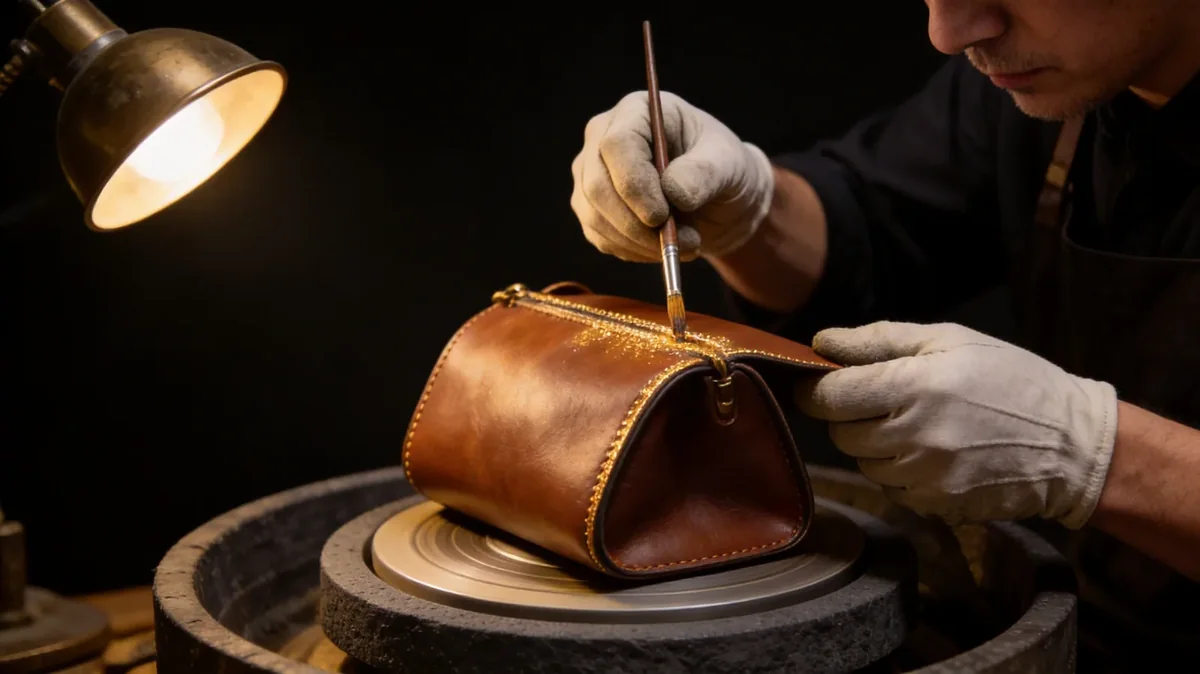
Capacity is rarely the constraint. The programme runs 7 production lines at about 200,000 pcs per month, has held export experience since 2014, and is executed through our validated partner factory Quanzhou Yingming Bags, an SGS-validated site. Third-party inspection is available alongside the internal AQL 2.5 audit.
How to Read a Maison Quote Line by Line
Ask for the quote split into material, hardware, labour, finishing, compliance and packaging, and ask which of those lines are fixed and which move with quantity. A quote that arrives as a single number per bag cannot be negotiated honestly by either side.
- Material: is the price tied to a named hide grade, or to the word calf in general?
- Hardware: is the base metal named, and is the plating thickness stated in microns?
- Labour: is the stitch density the bench will actually run written on the sheet?
- Finishing: how many edge-paint coats, and is hand-burnishing included or extra?
- Compliance: are the test reports included in the unit price or billed separately?
- Packaging: dust bag, box and tissue counted per unit or per carton?
- Terms: FOB Xiamen is our default, with CIF and DDP available on request.
Four questions to ask before you sign a quote
- Which material lot is this price tied to, and how long is that lot held for you?
- What is the plating thickness in microns, and what salt-spray duration was tested?
- How many sampling rounds are included before extra rounds start being billed?
- Is the AQL 2.5 inspection internal only, or is a third-party audit available?
When a Maison Programme Is the Wrong Answer
A maison programme is the wrong answer when the design is already frozen to commodity tolerances, when the volume is a one-off test of a few dozen units, or when the buying decision is made purely on unit price.
- The design is fully specified to a commodity standard and nobody wants to revisit it.
- The order is a market test of 50 to 150 pieces per style.
- The brief is price-led and the finish standard is treated as negotiable.
- The timeline is shorter than 35-50 days from approval and cannot move.
- There is no appetite for a technical file, graded patterns and a frozen spec sheet.
In those cases a standard programme is the right tool, and the honest side-by-side comparison is set out in handbag maison versus standard production.
Starting: What to Send in the First Email
The fastest programmes start with a complete first email: sketches or reference images, target dimensions, the leather and hardware you have in mind, target quantity per colourway, destination market and launch date. With those six things on the table, a costed quote and a sampling calendar can be returned inside two working days.
Start a maison programme
Send your sketches, target dimensions and launch date. You will receive a line-by-line costed quote, a sampling calendar and a material shortlist within two working days. Request a quote.
Frequently Asked Questions
What is a handbag maison?
A handbag maison is a design-led bag house that keeps development, sampling, material sourcing and bulk production under a single technical file instead of splitting them across several vendors. One team owns the pattern, the material lot, the hardware spec and the finishing standard, and that team is answerable for the result when the bag comes off the bench.
How is a handbag maison different from a standard bag line?
The difference is where the technical file lives. A standard line builds to a drawing someone else owns, while a maison writes the spec sheet, states the tolerances, measures them at intake and holds the pattern library. That adds rigour and a little time, and it removes the blame gap when something comes back wrong.
What is the minimum order for a maison programme?
Our programme works to MOQ 500 pcs per style and colourway. That threshold lets a hide lot be reserved, a hardware run be plated to a single shade, and the bench stay on one construction long enough to improve across the run. Below it, plating minimums and whole-hide buying push the unit price up sharply.
How long does sampling take for a luxury handbag?
Sampling runs 6-10 working days for a standard build and 12-15 for a complex one. Days 0-2 cover the technical pack and pattern, days 3-6 the first cut and assembly, and days 7-10 corrections. Complex builds need extra days for hardware tooling and lock fitting.
How long does bulk production take after sample approval?
Bulk takes 35-50 days after the approval sample is signed and the material lot is confirmed. The window covers material intake, cutting, skiving, assembly, finishing, the AQL 2.5 audit and packing, ending at FOB Xiamen handover. Late hardware decisions and re-selected hides are the two things that most often push past 50.
Which leathers can a maison programme source?
Full-grain calf is the default for structured bodies, vegetable-tanned shoulder for frame bags and handles, and suede or nappa for linings. Exotics such as crocodile and python are possible, but they require CITES permit documents with every shipment, so the paperwork has to be planned before the design is approved.
Does a maison programme handle exotic skins and CITES documents?
Yes, listed species can be specified, and the permit documents travel with every shipment and must match the commercial invoice. The practical caution is calendar rather than cost: permit processing has its own timetable, so an exotic programme should be started earlier than an equivalent calfskin one.
What does AQL 2.5 inspection mean for my order?
AQL 2.5 sets the acceptable number of minor and major defects in a random sample drawn under ISO 2859-1. In practice it means the inspection protocol, the sample size and the accept and reject numbers are agreed before bulk starts, not after the cartons are sealed. Third-party inspection is available on request.
What are the standard trade terms?
FOB Xiamen is the default, with CIF and DDP available where a brand prefers them. Because the term changes who carries freight risk and who handles customs documentation, it is worth fixing the term at quotation stage rather than renegotiating it once the goods are ready to ship.
Can I use my own hardware design?
Yes. Custom locks, feet and rings can be developed, but they carry tooling cost and a longer sampling window, since the lock has to be proven on the bench before the panel is cut. A good compromise is to launch on a proven mechanism and develop custom hardware for the second season.
How much does a luxury handbag programme cost per unit?
It depends on the specification rather than the silhouette. Leather and lining carry 38-52% of FOB cost, hardware 12-22%, bench labour 14-20%, and packaging and compliance together 5-10%. A structured calfskin bag with solid brass hardware typically lands well above a comparable bag built on zinc alloy.
What file formats should I send for a quote?
Sketches with dimensions, or a technical pack with panel measurements, are enough to start. Photographs of a reference bag help the bench read intent, but they do not replace dimensions. Add your target quantity per colourway, destination market and launch date and a costed quote follows quickly.
Does a maison programme cover packaging?
Yes. Dust bags, boxes, tissue and printed inserts can be specified and costed as their own line, usually 3-6% of FOB cost. It is worth agreeing packaging at the same time as the bag, because box dimensions drive carton count and therefore freight.
Who owns the patterns and tooling?
Patterns and graded sizes developed for a brand belong to that programme and are held in its technical file. Tooling paid for by the brand is the brand's. It is worth stating this in writing at the start, since it determines what happens if the programme later moves to another house.
People Also Ask
What does maison mean for handbags?
It describes a working model borrowed from couture: the studio, the atelier and the finishing bench operate under one roof and one file, so design intent survives into bulk rather than being reinterpreted by each party.
Why do designer brands prefer a maison over separate vendors?
Because accountability sits with one team. When a seam creeps or an edge lifts, there is no gap between the drawing, the cutting and the assembly for responsibility to disappear into.
Is MOQ 500 per style or per colourway?
Per style and per colourway. Each colourway needs its own hide lot and its own plating run, so splitting 500 pieces across four colours changes the economics of the whole order.
How early should hardware be specified?
Before the pattern is cut. Hardware thickness and lock geometry drive panel allowances, so a late decision usually means a revised pattern and a second sampling round rather than a simple swap.
What is the most common cause of a missed launch date?
A material lot re-selected after sample approval. It forces a new test report, a new cutting plan and sometimes a revised price, which is a calendar problem rather than a paperwork one.
Sources and further reading
Every figure on this page is either our own programme data or attributed below. Open the originals before you write them into a specification.
- Leather Working GroupLeather Working Group Environmental audit protocol for leather tanneries; referenced when a brand specifies audited hides for a luxury programme.
- CITES — Convention on International Trade in Endangered SpeciesCITES Appendix listings govern the permit documents required for exotic skins such as crocodile and python.
- ISO — International Organization for StandardizationISO Publisher of ISO 2859-1, the sampling procedure behind AQL 2.5 inspection, and of the leather test series.
- ECHA — REACHEuropean Chemicals Agency REACH Annex XVII restrictions apply to substances in leather, coatings and metal components sold into the European market.
- CPSCU.S. Consumer Product Safety Commission Administrator of CPSIA requirements, including lead and phthalate scope for products marketed to children.