Handbag Maison vs Standard Production: Which Fits Your Brand — Eight Decision Gates for Design-Led Houses
Handbag maison vs standard production — which fits your brand? Choose a maison programme when the value of the bag sits in its specification: it runs from 500 pcs per style and colourway, samples in 6-10 working days, ships bulk in 35-50 days, inspects at AQL 2.5 under ISO 2859-1 and quotes FOB Xiamen. Standard volume production fits when the proposition is price and repeatability at scale. This guide walks eight decision gates with a checklist under each, so you can score both models against your own brief.
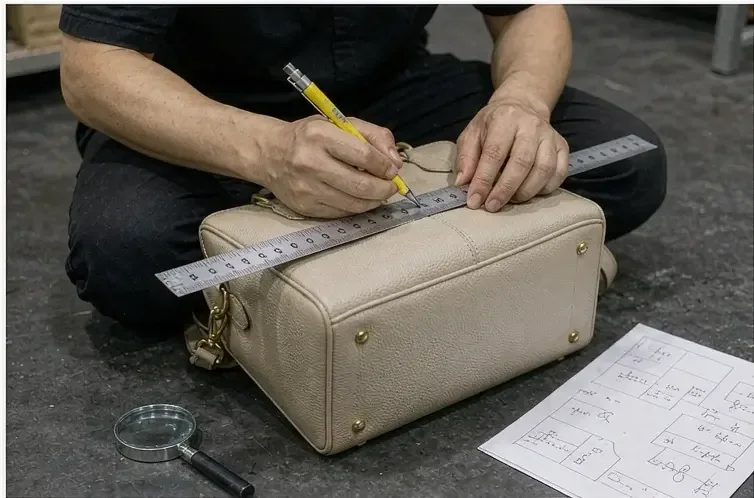
Gate 1 — Where the Value Actually Sits in Your Bag
The first gate is not cost, it is where the value sits. If a customer can tell why your bag costs what it does by looking at it — the way a gusset turns, the weight of a turn-lock, the evenness of an edge — then the specification is the product, and it has to be defended by someone who reads it. A maison programme is arranged around that defence: one technical file, one pattern maker, one bench, and a correction loop measured in days rather than weeks. Volume production is arranged around throughput, which is correct when the design is settled, the quantity is large and the differentiator lives in branding rather than construction. The test is simple: remove your logo and ask what is left.
If the answer is a lot — a signature closure, a hand-set edge, a hide you had to go and find — the maison model will protect it. If the answer is not much, paying for that protection is money spent on something your customer will never see. The full programme structure behind the first answer is set out on the Handbag Maison Programme pillar page.
Gate 2 — Silhouette Complexity and the Pattern File
Complexity is the honest dividing line, because it changes everything downstream: how many patterns have to be cut, how many sample rounds a silhouette needs before it is right, and how tight the tolerance can realistically be held. A flat envelope needs one pattern and four panels. A structured top-handle body with a gusset needs three patterns and eleven. That difference is not administrative — it is the difference between a bag that can be corrected in one round and one that takes three, and it is why complexity, not quantity, drives the calendar.
| Silhouette | Pattern work | Sample rounds | Working tolerance | Sampling window |
|---|---|---|---|---|
| Flat envelope, turned edge | 1 pattern, 4 panels | 1-2 rounds | ±1.5 mm on panels | 6-8 working days |
| Soft hobo, bonded body | 2 patterns, 6 panels | 1-2 rounds | ±2.0 mm on panels | 6-8 working days |
| Structured top handle, gusseted | 3 patterns, 11 panels | 2-3 rounds | ±1.5 mm, ±3 mm stuffed | 8-10 working days |
| Frame bag with metal shell | 5 patterns plus frame jig | 3 rounds | ±1.0 mm on frame fit | 12-15 working days |
Read that table as a decision aid rather than a catalogue. If your line sits in the top two rows, standard production will handle it competently and you should be comparing on price and delivery. If it sits in the bottom two, you are buying pattern-making judgement, and that is the specific thing a maison programme is arranged to supply.
Gate 3 — Hide, Lining and Reinforcement Choices
Material decisions are where the two models diverge most sharply. A volume programme buys hide to a price and a shade band, then works with whatever the lot gives it. A maison programme buys to a tannery, a substance and a hand, and will reject a lot that meets the written specification but not the intended feel. For a structured shape the working default is 1.2-1.4 mm full-grain calfskin; a softer body takes 0.9-1.1 mm with a 0.8 mm interlining under the panel that carries the mouth of the bag.
The reinforcement is the part most often left out of a brief and most often missed in a finished bag. A 1.0 mm foam laminate behind a soft panel is the difference between a body that holds its silhouette in month three and one that collapses by the end of the first season. Ask which laminate is specified, at what weight, and on which panel — a house that cannot answer that question on the first call is telling you something.
Gate 4 — Hardware: House Fitting or Custom Cast
Hardware is the second honest dividing line, because it is the only component on a bag that cannot be copied without a fresh tooling spend. A house fitting keeps cost down and the schedule short. A custom-cast clasp turns the closure into a signature, and it is the strongest practical defence against a design being reproduced — copying it requires a new mould, a new tooling charge and weeks of work on someone else's part.
- Closure options
- House fitting, or custom-cast clasp and turn-lock
- Plating thickness
- 0.15-0.3 µm over a nickel-free undercoat
- Salt spray resistance
- 24 hours standard, 48 hours for humid markets
- Custom tooling charge
- USD 450-900 per mould, one-off and reusable
- Tooling lead time
- 8-12 days before sampling can begin
- Zipper specification
- #5 metal chain for a structured flap, lighter for a soft body
- Magnet pull on a flap closure
- 1.2 kg minimum, tested on the finished unit
Note the timing consequence rather than the cost one. Tooling has to exist before the first prototype is built, which means the hardware decision cannot wait until the sample is approved. Houses that decide late lose 8-12 days they had not budgeted and usually discover the problem a week before a launch date.
Gate 5 — Tolerance, Stitch Density and the Edge Finish
This is the gate that separates a spec sheet from a specification. Tolerance on a cut panel is a number; tolerance on a finished, stuffed bag is a different and larger number, and the relationship between them is what a pattern maker actually manages. Below are the working figures used on a structured calfskin body. Each one is measurable at the bench, and each one is the kind of detail a volume programme will write down but rarely hold.
- Stitch density 8-9 stitches per inch on visible seams, 6-7 on load-bearing joins where the thread has to sit deeper.
- Thread Tex 40 bonded nylon, matched to the hide rather than to the lining, and colour-fast to ISO 105.
- Skiving width 8 mm on a turned edge, giving a 2.5 mm turnover that lies flat without a ridge under the finger.
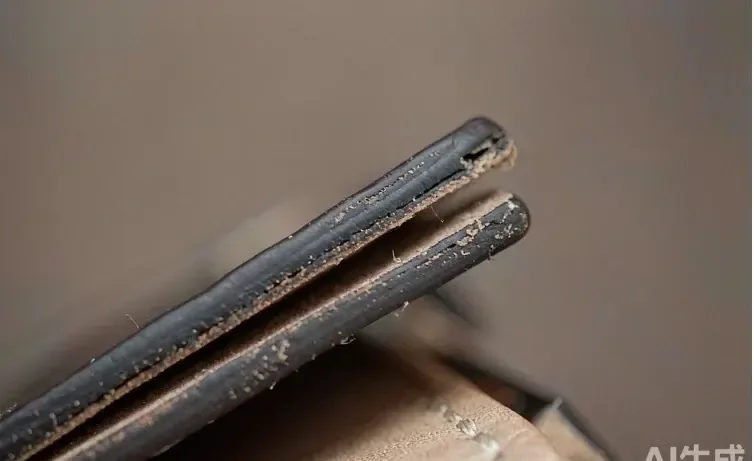
- Edge paint in three coats, each roughly 0.12 mm wet film, sanded between coats and cured at bench temperature.
- Reinforcement: 0.8 mm interlining under a soft panel, 1.0 mm foam laminate where a body needs structure.
- Handle load test: 15 kg through 2,000 lift cycles on a structured top-handle frame, recorded per production lot.
Ask for the stitch count to be read on the finished unit rather than quoted from the file. It takes a minute, it is the single fastest way to tell whether a specification is being held or merely written, and no competent house will object to it.
Gate 6 — Quantity, Colourways and the 500-Piece Rule
Quantity is where the two models look most similar and behave most differently. The minimum is 500 pcs per style and per colourway, quoted FOB Xiamen, and it is not a negotiating position: it is the point at which a cutting order, a hide purchase and a line set-up stop losing money. Below it, the same fixed costs are divided across fewer units and the per-bag figure rises steeply. The useful distinction is that standard production wants quantity per style, while a maison programme accepts quantity per colourway.
That distinction matters for a first season. Three silhouettes in two colourways is six production units of 500 pieces, about 3,000 bags, which is enough to test three price points and two colour stories inside a single sampling and bulk window. Adding a fourth colourway costs more than adding a fourth silhouette, because colour carries its own dye lot, its own shade approval and its own minimum.
Gate 7 — Compliance, Testing and the Documentation Pack
Compliance is the gate most often discovered too late. Restricted-substance declarations have to be collected before dyeing and plating begin, not after the goods are packed, because the remedy for a failed screen at that stage is a re-run rather than a form. The markets differ, and the pack that satisfies one will not satisfy another.
European Union
REACH Annex XVII declarations cover chromium VI in leather, azo dyes, nickel release from plated hardware and phthalates in coatings. Collect them from the tannery and the plating house, not from the assembly bench.
California
Prop 65 warnings apply where a listed substance is present above a safe-harbour level. Lead in plated hardware and in PVC coatings is the usual reason a handbag line needs a warning label.
United States, wider
CPSIA sets lead and phthalate limits and requires a tracking label on the product. Children's product rules do not normally apply to handbags, but a small leather goods line sized for minors can pull them in.
Fibre and leather naming
EU Regulation 1007/2011 governs how fibre composition is stated on the label. Leather description is separately policed in several member states, so the wording should be checked per market.
Tannery provenance
Leather Working Group audit status is the practical way to evidence a hide chain. Ask for the audit reference and the tannery name, and confirm both before the cutting order is released.
Independent laboratory screening is worth commissioning on the first drop of any style and then periodically rather than per lot. What matters more than the certificate is the chain behind it: a declaration is only as good as the tannery lot it was issued against, and lots change.
Gate 8 — Launch Timing and the Re-order Window
Work backwards from the date you need goods on a rail. Sampling is 6-10 working days, or 12-15 where a frame or a custom clasp is involved. A correction round is 5-7 days. Bulk is 35-50 days from the approved sample. Packaging, export documentation and loading sit on top of that. A first drop therefore wants roughly three months from the opening conversation, and the houses that miss a window rarely fail on quality — they fail because the hardware decision was taken three weeks too late.
Scoring the two models in one pass
- Take the maison route when the silhouette needs three or more patterns, the closure is custom-cast, the hide is named to a tannery, and the quantity is 500 pcs per colourway rather than 5,000 per style. Take standard production when the design is settled, the differentiator is branding and the volume is large enough that attention per unit is not the point. Either way: sample in 6-10 working days, inspect at AQL 2.5, quote FOB Xiamen.
Ask to see the last bag a house corrected, and ask what was wrong with it. A maison programme can answer in detail because the correction is the work. A volume programme usually cannot, because the correction was absorbed rather than recorded.
Score your brief against both models
Send the silhouettes, the hide intent, the hardware decision and the quantity per colourway, and our team will tell you honestly which of the two models fits — then return a sampling schedule and a costed first order through our quotation desk.
Frequently Asked Questions
What is the difference between a handbag maison and standard production?
A maison programme is arranged around a specification: one technical file, one pattern maker and a correction loop measured in days. Standard production is arranged around throughput, which suits a settled design at large volume. The practical difference shows up in pattern count, tolerance held, and how a correction is recorded.
When does a maison programme make more sense than volume production?
When the value of the bag sits in construction rather than branding — a signature closure, a hand-set edge, a hide named to a tannery. It also suits silhouettes needing three or more patterns, where pattern-making judgement rather than unit price determines whether the first sample is right.
What is the minimum order for a maison programme?
The minimum is 500 pcs per style and per colourway, quoted FOB Xiamen. It is the point at which a cutting order, a hide purchase and a line set-up stop losing money. Below it the same fixed costs are spread across fewer units, so the per-bag figure rises sharply rather than quality falling.
How long does sampling take under each model?
A maison programme samples in 6-10 working days, or 12-15 where a frame or a custom-cast clasp is involved, with a correction round of 5-7 days. Volume programmes often quote slower because the line has to be freed. The meaningful comparison is rounds to approval, not days to first sample.
Does a maison programme cost more per bag?
Yes, typically. The premium buys attention per unit, tighter tolerance and a recorded correction loop. Against that, a maison programme accepts 500 pcs per colourway where volume production wants quantity per style, so the cash committed to a first season is often lower even at a higher unit figure.
How is quality verified differently between the two models?
Both inspect at AQL 2.5 under ISO 2859-1 at general inspection level II, with defects split critical, major and minor. The difference is what precedes it: a maison programme holds inline checks on stitch density and edge coats at the bench, so defects are caught before the final sample is drawn.
Can a brand move from standard production to a maison programme mid-season?
Yes, but plan for one full sampling cycle. The pattern file has to be rebuilt against the new house's tolerances, which costs 6-10 working days, and any custom hardware has to be re-tooled. Most houses make the move between seasons rather than during one.
What tolerance is realistic on a structured calfskin bag?
The working figures are ±1.5 mm on a cut panel and ±3 mm on a finished stuffed bag for a gusseted body. A frame bag with a metal shell can be held to ±1.0 mm on frame fit because the metal defines the shape. Wider tolerance on a soft body is normal rather than a defect.
How should a brand choose between a house fitting and a custom closure?
Choose a custom-cast clasp only if the closure is part of the brand signature, because it adds USD 450-900 in tooling and 8-12 days. It is also the strongest defence against copying, since reproduction needs a new mould. House fittings suit a signature that lives in the silhouette or the hide.
What compliance documents does a handbag programme need?
REACH Annex XVII declarations for the European Union, Prop 65 assessment for California, CPSIA tracking labels and limits for the United States, and EU Regulation 1007/2011 for fibre naming. Collect them before dyeing and plating, from the tannery and the plating house rather than the assembly bench.
How many sample rounds should a first drop expect?
A flat envelope takes one to two rounds, a structured gusseted body two to three, and a frame bag three. Plan for the higher end on a first season, because the first round usually resolves silhouette and the second resolves finish rather than shape.
What happens on a re-order under a maison programme?
A re-order against a sealed reference runs 28-35 days rather than the 35-50 day first window, because the patterns, tooling and material approvals are already on file. That is the practical reason to seal a golden sample on the first drop rather than the second.
Is a maison programme suitable for a brand launching its first bag?
It suits a first launch better than volume production does, because a new house needs the correction loop more than it needs unit price. Three silhouettes in two colourways, about 3,000 bags, fits one sampling and one bulk window and fills a rail.
How is colour controlled across colourways?
Against a physical swatch in a D65 light booth, with shade deviation held at ΔE ≤ 1.0 using ISO 105 colour-fastness methods. Screen approval is unreliable for leather because the surface reflects differently than a display renders it. Approve a named alternative finish at the same time.
People Also Ask
What does a handbag maison do?
A handbag maison holds one technical file per style, cuts and corrects the pattern, builds and revises prototypes, sources hide and hardware to a named specification, runs the bulk programme and inspects it. The defining feature is that correction is recorded rather than absorbed.
Is a maison programme worth the premium for a small brand?
Usually yes for a first season, because the cost of a wrong first sample is higher than the unit premium. The 500 pcs per colourway minimum also keeps committed cash lower than a volume programme demanding quantity per style.
How long does a handbag take to develop?
Sampling 6-10 working days, a correction round of 5-7 days, then bulk in 35-50 days. Custom hardware adds 8-12 days for tooling. Work backwards roughly three months from the date goods need to be on a rail.
What does AQL 2.5 mean for handbags?
AQL 2.5 under ISO 2859-1 sets the acceptable defect level in a drawn sample at general inspection level II. On a 3,000-piece lot the sample is 125 units, accepted at 7 major defects and rejected at 8, with critical defects rejected outright.
How do I know if my design is too complex for volume production?
Count the patterns. One or two patterns with a house fitting is volume work. Three or more patterns, a gusset, or a custom-cast closure means the design needs pattern-making judgement, which is what a maison programme supplies.
Sources and further reading
Every figure on this page is either our own programme data or attributed below. Open the originals before you write them into a specification.
- ISO — International StandardsInternational Organization for Standardization Publisher of ISO 2859-1 sampling procedures and ISO 105 colour-fastness methods referenced in tolerance and shade control.
- Understanding REACHEuropean Chemicals Agency Annex XVII restrictions on chromium VI, azo dyes, nickel release and phthalates in leather and plated hardware.
- Proposition 65Office of Environmental Health Hazard Assessment California safe-harbour levels and warning requirements that determine whether a hardware set needs a label.
- Leather Working GroupLeather Working Group Tannery audit protocol used to evidence hide provenance and to keep a named lot available across seasons.