7 Signs Your Brand Needs a Handbag Maison Partner: A Diagnostic for Design-Led Houses
Seven signs tell you a brand has outgrown its current arrangement: samples come back wrong with no recorded reason, the specification exists but nobody enforces it, the hide is named but not held, hardware decisions slip, colour is approved on a screen, a 500 pcs order is treated like 50, and season two costs the same as season one. Three or more of those and a maison programme will return more than it costs. Each sign below is set out as a side-by-side comparison of what is happening now against what changes under a structured programme.
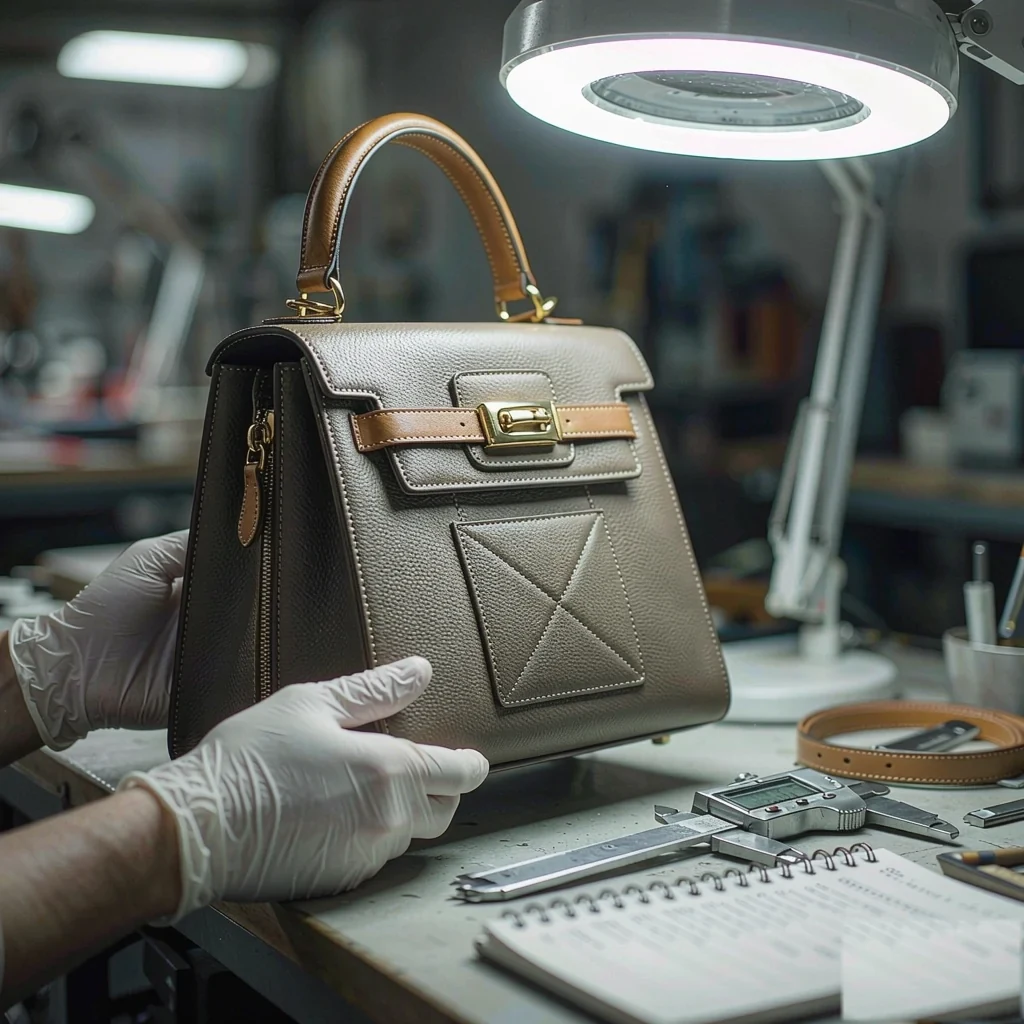
Sign 1 — Samples Come Back Wrong and Nobody Can Say Why
This is the clearest signal, and it is rarely about competence. A sample comes back with a gusset that sits 4 mm proud of the body, and the explanation is that the pattern was adjusted. Adjusted from what, by whom, and against which reference — three questions that go unanswered when the correction was absorbed rather than recorded. The cost is not the sample; it is that the same correction will be made again on the next style because the reason was never written down.
| What happens now | What changes under a maison programme | What it saves |
|---|---|---|
| Correction made at the bench, reason not recorded | Every correction logged against the pattern revision number | The same mistake does not recur on the next style |
| Second sample differs from the first in unexplained ways | Golden sample sealed per style and colourway, held on both sides | Approval is measured against a physical unit, not a memory |
| Sampling window quoted but not linked to pattern count | 6-10 working days, 12-15 for frame work, stated per pattern count | The calendar is predictable enough to plan a launch around |
| One round of questions before every sample | Technical file completed first, questions answered in the file | Roughly one week per style across a season |
Sign 2 — The Specification Exists but Nobody Enforces It
Most houses reaching this point already have a technical file. The problem is that it is a document rather than a measurement. Stitch density is written as 8-9 stitches per inch and never read on a finished unit; edge paint is specified as three coats and nobody counts them. A maison programme treats the file as a set of readings taken at the bench at defined points in the run, which is the difference between a specification and a description of intent. The full set of gates behind that approach is described in Handbag Maison vs Standard Production.
Sign 3 — Your Hide Is Named but Not Held
Naming a hide is easy; holding it across seasons is the work. A tannery produces in lots, and a lot of 300-500 hides will not repeat exactly — the hand changes slightly, the finish takes dye a shade differently, and the substance moves within its band. A house that names a hide without booking the lot discovers this in season two, when the bag that sold well comes back marginally different and the customer notices before anyone else does.
The mechanism is straightforward: book the lot against the season, hold a retained swatch from it, and approve a named alternative finish at the same time in case the first is discontinued. Leather Working Group audit status at the tannery is the practical way to evidence the chain, and it should be asked for by name rather than assumed.
Sign 4 — Hardware Decisions Keep Slipping
Hardware slips because it is the only component with a tooling charge and a lead time attached, and because it feels like a detail until it is not. A custom-cast clasp has to exist before the first prototype is built, which means the decision cannot wait for sample approval. Once it slips, everything behind it slips: tooling, sampling, bulk and the launch date.
- Custom tooling charge
- USD 450-900 per mould, one-off and reusable on later drops
- Tooling lead time
- 8-12 days before sampling can begin
- Plating thickness
- 0.15-0.3 µm over a nickel-free undercoat
- Salt spray resistance
- 24 hours standard, 48 hours for humid markets
- Zipper specification
- #5 metal chain for a structured flap, lighter chain for a soft body
- Zip pull swing test
- 5,000 cycles on the finished unit, recorded per lot
- Magnet pull on a flap
- 1.2 kg minimum, tested after the bag is stuffed
Sign 5 — Colour Is Being Approved on a Screen
Leather reflects light differently than a display renders it, and the error is worst in exactly the colours a luxury line depends on — deep cognac, oxblood, ink. Approving shade from a photograph or a screen produces a first drop that is close enough to pass in a studio and wrong enough to be noticed in a shop. The remedy is physical and modest in cost: a D65 light booth, a retained swatch, and a stated tolerance.

The working figure is ΔE ≤ 1.0 measured under D65 against the approved swatch, with colour-fastness verified to ISO 105. Finish adhesion is checked separately to ISO 11644 and tensile strength to ISO 3376, which together catch the two failure modes that show up after a season of use rather than on the first inspection.
Sign 6 — You Order 500 Pieces and Are Treated Like 50
At 500 pcs per style and colourway you are inside the working minimum and entitled to the full programme: a technical file, a named pattern maker, inline bench checks and a final inspection drawn to AQL 2.5 under ISO 2859-1. Houses that treat a 500-piece order as a favour are usually structured for volume and simply do not have the arrangement to serve it. The signs are easy to read at the first meeting.
No named pattern maker
If nobody can be named who owns the pattern file, nobody owns the correction. This is the single most reliable early indicator that a programme is arranged for throughput rather than specification.
Questions before a file exists
A house arranged for specification asks for dimensions, tolerances and a reference image before it asks for quantity. The reverse order tells you what the arrangement optimises for.
Inspection described without a standard
Quality is nice is not a specification. AQL 2.5 at general inspection level II, defects split critical, major and minor, is the working answer, and it should be stated unprompted.
No retained sample procedure
Ask what happens to the approved unit. If there is no golden sample sealed and held on both sides, the re-order has no reference and season two becomes a re-sampling exercise.
Restricted substances raised late
If REACH Annex XVII, Prop 65 or CPSIA come up after the first quote rather than before it, expect the declarations to be collected after packing, which is the expensive way round.
Sign 7 — Season Two Costs the Same as Season One
Development is a one-off cost that should not be paid twice. If the second season of a style costs what the first did, the pattern file, the tooling and the material approvals were never captured — they were re-created. A maison programme is arranged so that the second drop of a style is measurably cheaper and faster than the first, and that difference is the clearest financial evidence that the arrangement is working.
What season two should look like
- Re-order at 28-35 days against a sealed reference rather than 35-50 days for a first run. Sampling reduced to a confirmation round of 3-5 days. Tooling already paid and reused at no charge. Material approvals on file, so only a new dye lot needs a fresh shade reading. Inspection still at AQL 2.5 under ISO 2859-1, quoted FOB Xiamen.
Scoring the Seven Signs
Score each sign as present or absent. Two or fewer and the current arrangement is probably serving the line adequately; the gain from changing is real but modest. Three to four and the change will pay for itself inside one season, mostly through rounds to approval rather than through unit price. Five or more and the current arrangement is costing a launch window, which is the most expensive way to lose money in this category.
| Signs present | What it usually means | Realistic next step |
|---|---|---|
| 0-2 | The arrangement broadly fits the line | Tighten the technical file and re-check in a season |
| 3-4 | Specification is being written but not held | Move one style across and compare rounds to approval |
| 5-7 | The line is losing launch windows | Move the full capsule before the next season opens |
Ask for the correction log from the last three styles a house developed. If it exists, the specification is being held. If it does not, no amount of assurance on the call will change that.
Test one style against the programme
Move a single silhouette across and compare it on rounds to approval, days to delivery and per-unit figure. Send the brief you have and our team will return a plan and a costed first order through our quotation desk.
Frequently Asked Questions
What are the clearest signs a brand has outgrown its current arrangement?
The seven are: unexplained sample corrections, an unenforced specification, a named hide whose lot is not booked, slipping hardware decisions, colour approved on a screen, a 500 pcs order treated as a favour, and a second season costing the same as the first. Three or more usually means the change pays back inside one season.
How many signs should be present before making a change?
Two or fewer suggests the current arrangement broadly fits and the gain from moving is modest. Three to four means the change will pay for itself inside a season, mostly through fewer sample rounds. Five or more means the line is losing launch windows, which is the most expensive failure mode in this category.
What is the minimum order when moving a style across?
The minimum is 500 pcs per style and per colourway, quoted FOB Xiamen. It is the point at which a cutting order, a hide purchase and a line set-up stop losing money. Testing one silhouette below 500 pieces can be done as a sampling exercise, but the per-unit figure rises steeply.
How long does it take to move a style to a new programme?
Allow 6-10 working days for sampling, 12-15 where a frame or a custom-cast clasp is involved, plus a correction round of 5-7 days, then 35-50 days for bulk. Moving between seasons is easier than moving during one, because the pattern file has to be rebuilt against new tolerances.
Why do sample corrections keep recurring between styles?
Because the reason for the correction was never written down. When a pattern is adjusted at the bench without a revision record, the same adjustment has to be rediscovered on the next style. A logged correction against a revision number is what stops the cycle.
What is a golden sample and why does it matter?
A golden sample is the approved physical unit, sealed and held on both sides, one per style and colourway. It is the reference against which bulk and every later re-order are measured. Without it, a re-order has no reference and the second season becomes a re-sampling exercise that has already been paid for once.
How much does custom hardware add to a programme?
A custom-cast clasp or turn-lock adds USD 450-900 per mould as a one-off, plus 8-12 days of tooling lead time before sampling can begin. The mould is reused on later drops of the same style. It is also the strongest practical defence against a design being copied.
How should colour be approved across a dye lot?
In a D65 light booth against a physical retained swatch, with shade deviation held at ΔE ≤ 1.0 and colour-fastness verified to ISO 105. Screen approval is unreliable for leather because the surface reflects light differently than a display renders it. Approve a named alternative finish at the same time.
What testing catches failures that appear after a season of use?
Finish adhesion tested to ISO 11644 and tensile strength to ISO 3376 catch the two common late failure modes, alongside Martindale abrasion at around 20,000 cycles. These are pre-production tests on the material set, not inspection tests on the finished lot, and should be booked before dyeing.
How is a 500-piece order inspected?
Final inspection is drawn to AQL 2.5 under ISO 2859-1 at general inspection level II, with defects classified critical, major and minor. On a 500-piece lot the sample is 50 units, accepted at 3 major defects and rejected at 4. Critical defects are rejected outright regardless of count.
What should a re-order cost compared with a first drop?
Less, and meaningfully. A re-order against a sealed reference runs 28-35 days rather than 35-50, sampling drops to a confirmation round of 3-5 days, and tooling is already paid. If a second season costs the same as the first, the development work was re-created rather than reused.
How do you know a house is arranged for specification rather than volume?
Ask who owns the pattern file and ask to see the correction log from the last three styles. A house arranged for specification can name the pattern maker and produce the log. A house arranged for throughput asks for quantity before it asks for dimensions.
What should be in the technical file before the first call?
Target dimensions with tolerances, a reference image per silhouette, the hide type and substance, the hardware intent, quantity per style and colourway, a target landed cost band rather than a single figure, the destination market setting the compliance pack, and the launch date worked backwards.
Which compliance declarations are needed and when?
REACH Annex XVII for the European Union, Prop 65 for California, CPSIA for the United States and EU Regulation 1007/2011 for fibre naming. Collect them from the tannery and plating house before dyeing and plating begin, because the remedy for a failed screen after packing is a re-run.
People Also Ask
How do I know if my bag line has outgrown its production partner?
Count the seven signs: unexplained sample corrections, an unenforced spec file, an unbooked hide lot, slipping hardware, screen-based colour approval, 500 pcs treated as a favour, and a second season costing the same as the first. Three or more means move.
What is a golden sample in handbag production?
The approved physical unit, sealed and held on both sides, one per style and colourway. Bulk and every re-order are measured against it, which is why a re-order runs 28-35 days instead of the full 35-50 day window.
Why does the second season of a bag cost the same as the first?
Because the pattern file, tooling and material approvals were never captured, so they were recreated. A programme arranged properly reuses all three, which is what makes a re-order faster and cheaper than a first run.
How is leather colour approved properly?
Against a retained physical swatch in a D65 light booth, held at ΔE ≤ 1.0, with fastness checked to ISO 105. Screens misrepresent leather because the surface reflects light differently than a display renders it.
What is the smallest order a maison programme will take?
500 pcs per style and per colourway, quoted FOB Xiamen. It reflects fixed cutting, hide purchase and set-up costs. Testing a silhouette below that figure is possible as a sampling exercise at a higher per-unit cost.
Sources and further reading
Every figure on this page is either our own programme data or attributed below. Open the originals before you write them into a specification.
- ISO — International StandardsInternational Organization for Standardization Publisher of ISO 2859-1 sampling procedures, ISO 105 colour fastness, ISO 11644 finish adhesion and ISO 3376 tensile strength.
- Leather Working GroupLeather Working Group Tannery audit protocol used to evidence a hide chain and to keep a named lot available across seasons.
- Proposition 65Office of Environmental Health Hazard Assessment California safe-harbour levels determining whether a plated hardware set carries a warning.
- CPSC — Business EducationU.S. Consumer Product Safety Commission CPSIA lead limits, phthalate restrictions and tracking label requirements for goods placed on the United States market.