Luxury Handbag Sampling for Trunk Show Prep: The 21-Day Checklist
A trunk show sample is built for handling, not for photography. It will be picked up, opened, closed, set down and carried by people who have no stake in keeping it pristine, often several hundred times across a weekend. That changes what the sample has to prove: durability under repeated handling, consistency across colourways, and a finish that survives a venue. This checklist covers the 21 days before a show, the three-piece set we build per colourway, and the checks that stop a piece failing on the table.
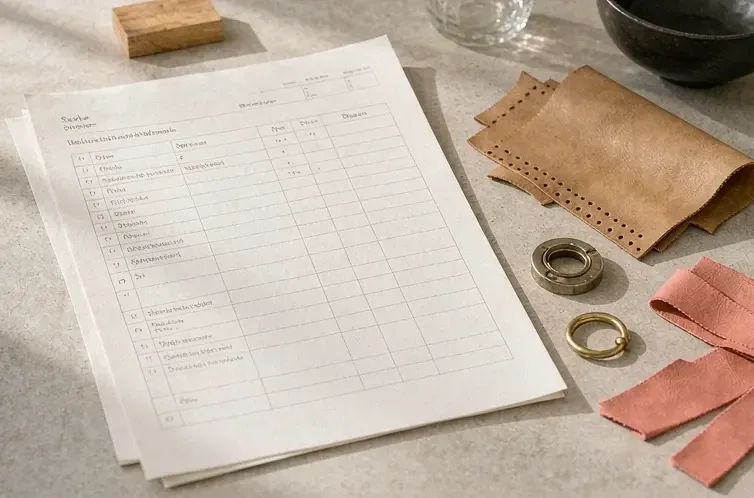
Most sampling programmes are built to answer one question: does this piece match the drawing? A trunk show programme has to answer a second and harder one: will this piece still look like itself after a weekend of being handled by strangers? The two questions need the same bench skills but a different checklist, and the difference shows up in what gets tested before packing.
Why Trunk Show Samples Differ From Sales Samples
A sales sample travels in a carton, gets opened by a buyer who understands what it is, and spends most of its life on a shelf. A trunk show sample is handled continuously. Straps are pulled, zips are run, feet are set down on hard surfaces, and the piece is carried by the handle rather than supported from underneath. Anything that was only ever proven at rest has a way of announcing itself on day one of the show.
That is why the two sample types diverge in specification rather than in quality. A show piece takes a slightly heavier interlining at stress points, a reinforcement plate under the handle attachment, and a zip that has been cycled rather than simply fitted. It is built from the same pattern and the same leather as the piece that will ship, but it is assembled with the expectation of a weekend of handling.
The 21-Day Countdown to the Show
Work backwards from the show date and the schedule mostly builds itself. Three gates matter: the date the tech pack is frozen, the date the round-one sample is on the bench, and the date the corrected set is packed. Everything else is padding around those three. With sampling at 6-10 working days for standard constructions and 12-15 for complex ones, a 21-day window gives room for one full revision and one contingency round.
| Gate | Timing | What is decided | What cannot change after this point |
|---|---|---|---|
| T-21 | Tech pack frozen | Leather substance, stitch density, edge coats, hardware finish | Pattern geometry and panel layout |
| T-18 | Hide selection and grading | Panel layout and cutting yield | Leather lot and colour continuity |
| T-14 | Round-one sample on the bench | Construction sequence and stress reinforcement | Interlining weights and hardware setting method |
| T-10 | Correction notes consolidated | All revisions raised in one round | Number of sampling rounds |
| T-6 | Corrected set assembled | Final edge finish and hardware check | Finish specification |
| T-3 | Packing and carton marking | Set composition and carton count | Shipment contents |
| T-0 | Show floor | Table layout and handling notes | Nothing; the set is fixed |
Building the Show Set: Three Pieces Per Colourway
One piece per colourway is not enough for a show table. Buyers want to see the piece in the hand, and once it is in the hand it is not on the table. Three pieces per colourway solves the practical problem and creates a second benefit: it proves consistency, because three pieces from the same run that match each other are a stronger argument than one perfect piece.
The hero piece
The full-scale bag in the primary colourway, finished exactly as bulk will be finished. This is the piece that gets photographed and written about.
The alternate colour
The same silhouette in the second colourway, built in the same run so the comparison is between colours rather than between batches.
The travel scale
A reduced-scale or lighter-construction version where the line includes one, giving the table a second price and size point to talk to.
The handling spare
A fourth piece held back at the bench, unshipped, so a failure on the floor can be replaced without a return shipment.
Durability Checks Before a Piece Leaves the Bench
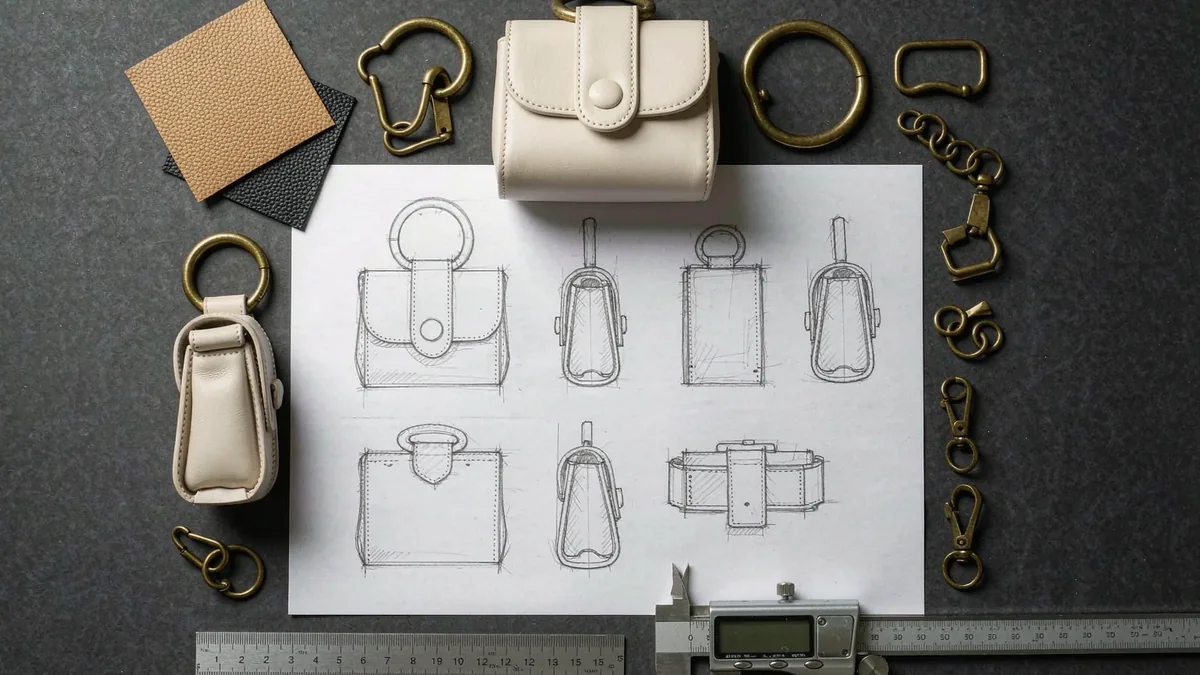
Four checks separate a show-ready piece from a showroom piece. None of them is expensive and each takes minutes, but together they remove the failure modes that are embarrassing in public: a zip that jams on the table, a handle that creeps under load, an edge that marks a linen cloth, or a foot stud that loosens against a hard surface.
- Zip cycling
- 500 open and close cycles on a #5 zip before packing
- Handle load check
- 2 kg held for 60 seconds, drop measured before and after
- Handle drop tolerance
- Plus or minus 5 mm, measured under load not at rest
- Foot stud torque
- Set and re-checked after 24 hours at room temperature
- Hardware plating
- 0.15-0.3 µm, palladium or light gold
- Salt spray reference
- 24 h for light gold, 48 h for palladium
- Edge finish
- Three coats, cured 24 h before the piece is handled
- Leather substance
- 1.2-1.4 mm full-grain calfskin on structured body panels
The Trunk Show Sampling Checklist
Work through these twelve items in order. The first four are specification, the middle five are construction, and the last three are logistics and floor handling.
- Freeze the tech pack at T-21. Leather substance in millimetres, stitch density at 8-9 per inch, edge coat count, hardware finish and closure size all named.
- Grade the pattern and confirm panel layout against the hides actually held, not against a generic hide size.
- Select hides for the whole set from one lot so the three pieces in a colourway read as the same colour under venue lighting.
- Decide the set composition: three pieces per colourway plus one handling spare held at the bench.
- Add reinforcement at the handle attachment and under the foot studs. Show pieces are carried and set down, not shelved.
- Cycle every zip 500 times and record the result. A zip that has been cycled will not jam on the table.
- Cure edge paint for a full 24 hours before the piece is handled. Three coats is standard; five adds hand time without adding durability.
- Measure handle drop under a 2 kg load and record it to plus or minus 5 mm. Measurements taken at rest do not predict behaviour in the hand.
- Photograph the set together under the same light so colourway consistency is documented before it can be disputed.
- Pack six pieces per double-wall carton with tissue and a dust bag on each piece, and mark cartons by colourway rather than by style code.
- Ship on the same commercial terms as bulk. Handover is FOB Xiamen in our programmes, with CIF and DDP available where a venue requires delivery.
- Write a one-page handling note for the floor: how to lift the piece, what to set it on, and which contact to call if something fails.
Colourway Strategy for a Show Table
The temptation is to show everything. A table with nine colours and four silhouettes reads as a catalogue and makes decision-making harder, not easier. Two silhouettes in three colourways each gives a table enough range to answer questions about scale and colour without diluting either. Where a line has a clear hero, the hero carries three colourways and the second silhouette carries one.
Colour continuity matters more than colour count. Three pieces in one colourway built from three different leather lots will read as three colours on a table, under venue lighting, to a buyer standing two metres away. Building the whole set from one lot removes the problem at source, and it is a scheduling decision rather than a technical one: the lot has to be reserved before cutting begins.
Packing, Shipping and Venue Handling
Packing for a show is packing for two journeys, not one. The carton travels to the venue and then, in most cases, back again, which means the packing has to survive being opened and repacked by someone who did not pack it. Double-wall cartons, six pieces per carton, each piece in its own dust bag with tissue, is the arrangement that comes back in the condition it left.
- Mark cartons by colourway and by piece number, so the floor can find the spare without opening every box.
- Ship the handling spare in the same consignment, clearly marked, rather than holding it for a second shipment.
- Include a packing list inside the carton as well as outside it; outer labels are the first thing to be damaged in transit.
- Use the same commercial terms as bulk so export documentation matches, FOB Xiamen in our programmes.
- Confirm venue delivery windows in writing. A carton delivered after the show opens has failed regardless of its condition.
- Allow for customs clearance time where the venue is in a different market from the shipping origin.
What to Measure on the Show Floor
The show is a testing opportunity that no bench can reproduce, because the handlers have no instructions and no loyalty to the piece. Two people with a notebook can collect more useful data in a weekend than a month of internal handling tests, provided they know what to record.
- Which piece is picked up first, and which is picked up most often.
- How the piece is lifted: by the handle, by the strap, or from underneath.
- Where fingers go when the closure is opened, and whether that spot shows wear by day two.
- Whether the piece is set down on its feet or on its side.
- Which colourway draws the first question about price.
- Any zip hesitation, hardware rattle or edge marking observed across the weekend.
From Show Orders to Bulk Release
Show orders arrive as a list of colourways and quantities that rarely matches a neat production plan. The useful move is to convert the list into styles and colourways before releasing anything, because the minimum applies per style and colourway: 500 pcs. A colourway that drew four orders on the floor either gets built to 500 or gets carried into the next season as a made-to-order line, and that decision is cheaper made before cutting than after.
The sequence from approval to delivery is fixed: sampling at 6-10 working days, 12-15 for complex constructions, bulk at 35-50 days, inspection at AQL 2.5 under ISO 2859-1, and handover on FOB Xiamen terms. A show in week one therefore puts delivery in week eight at the earliest, which is a figure worth stating on the order form rather than leaving to be discovered.
A zip that jams on the show table is not a sampling problem, it is a credibility problem in front of the buyers who matter. Cycling every zip 500 times before packing costs a few minutes per piece. Reworking one closure on a returned piece costs around USD 4.80 in parts and bench time, and the confidence cost is higher.
Timing Risks and How to Absorb Them
Three risks account for most trunk show sampling failures. The first is a tech pack that is still moving at T-14, which removes the contingency round. The second is a colourway added after cutting has begun, which means a second leather lot and a colour continuity problem on the table. The third is a venue delivery window discovered at T-3, which turns a controlled shipment into an express one.
All three are absorbed the same way: by putting a date on the decision rather than a hope. A tech pack frozen at T-21 with a named owner for each line, colourways confirmed before hide selection, and a delivery window confirmed in writing before packing, turns the 21-day countdown from an aspiration into a schedule. Where a programme genuinely cannot freeze at T-21, the honest response is to move the show or reduce the set, not to compress the sampling.
Take this to the bench
- Freeze the tech pack at T-21, build three pieces per colourway plus one handling spare from a single leather lot, cycle every zip 500 times, measure handle drop under a 2 kg load, and pack six pieces per double-wall carton. Sampling runs 6-10 working days, bulk 35-50 days, inspection at AQL 2.5 under ISO 2859-1.
Plan a trunk show sampling set
Send the show date and the colourway list and we will build the countdown around it. Work runs through our validated partner factory Quanzhou Yingming Bags, an SGS-validated site operating since 2014 with 7 production lines and capacity of about 200,000 pcs per month. Request a quote
Frequently Asked Questions
How far ahead of a trunk show should sampling start?
Twenty-one days is the working minimum for a standard construction with one revision round built in. Sampling takes 6-10 working days and complex constructions take 12-15, so a programme that starts later than T-21 has no contingency if the round-one piece needs a second pass.
How many pieces should be built for a trunk show?
Three pieces per colourway plus one handling spare held at the bench. Three pieces let the table survive a buyer holding one while another looks, and the spare means a failure on the floor can be replaced without shipping anything back.
Why build the whole show set from one leather lot?
Because colour continuity under venue lighting is the first thing a buyer notices. Three pieces in one colourway cut from three different lots will read as three different colours on a table, and that is a scheduling failure rather than a technical one.
Should show samples be finished differently from bulk pieces?
Finished the same, assembled with more reinforcement. The leather, stitch density, edge coat count and hardware are identical to bulk. What changes is the interlining at stress points and the reinforcement plate behind the handle attachment, because show pieces are carried rather than shelved.
What is the handle drop tolerance on a show piece?
Plus or minus 5 mm, measured under a 2 kg load rather than at rest. A handle measured at rest tells you how it was built; a handle measured under load tells you how it will behave in a buyer's hand, which is what the show is for.
How many times should a zip be cycled before a show?
Five hundred open and close cycles on a #5 zip is our bench standard for show pieces. A zip that survives 500 cycles on the bench will not jam on the table, and recording the result gives a reference if a piece is questioned later.
How should trunk show samples be packed?
Six pieces per double-wall carton, each piece in its own dust bag with tissue, cartons marked by colourway and piece number. The carton travels to the venue and back, so it has to survive being repacked by someone who did not pack it the first time.
What commercial terms do show samples travel on?
The same terms as the bulk order. In our programmes handover is FOB Xiamen, with CIF and DDP available where a venue requires delivered terms. Matching the paperwork avoids a valuation mismatch between the sample and the pieces that follow it.
What is the minimum order quantity after a show?
500 pcs per style and colourway. A colourway that drew four orders on the floor either gets built to that minimum or is carried into the next season as a made-to-order line, and deciding which before cutting is materially cheaper than deciding after.
How long from show approval to delivery?
Bulk runs 35-50 days from release, with inspection at AQL 2.5 under ISO 2859-1 and handover on FOB Xiamen terms. A show in week one therefore puts delivery in week eight at the earliest, which is worth stating on the order form rather than leaving to be discovered.
What should be recorded on the show floor?
Which piece is picked up first and most often, how it is lifted, where fingers go at the closure, whether it is set on its feet or its side, which colourway draws the first price question, and any zip hesitation or edge marking seen across the weekend.
What is the most common trunk show sampling failure?
A zip that jams on the table. It is the most visible failure because it happens in front of buyers, and it is also the most preventable, since cycling a zip 500 times before packing takes minutes. Reworking one closure on a returned piece costs around USD 4.80 in parts and bench time.
People Also Ask
What is a trunk show sample?
A piece built to be handled rather than photographed. It is assembled from the production pattern and the production materials, with additional reinforcement at the handle attachment and foot studs, then cycled and cured so it survives a weekend of continuous handling.
How do I prepare samples for a trunk show?
Freeze the tech pack at T-21, grade the pattern, select one leather lot for the whole set, build three pieces per colourway plus a handling spare, cycle every zip, cure the edge, then pack six pieces per double-wall carton.
Why do show samples need extra reinforcement?
Because they are carried by the handle and set down on hard surfaces hundreds of times in a weekend. A reinforcement plate behind the handle attachment and heavier interlining at stress points prevent the creeping and loosening that sales samples never experience.
Can a colourway be added after cutting has begun?
It can, but it introduces a second leather lot and therefore a colour continuity problem on the table. Confirming colourways before hide selection is the cheaper path, and it is the reason the countdown puts colourway confirmation ahead of cutting.
How many colourways should a show table carry?
Two silhouettes in three colourways each, or one hero silhouette in three colourways plus a second silhouette in one. Nine colours and four silhouettes reads as a catalogue and makes the buyer's decision harder rather than easier.
Sources and further reading
Every figure on this page is either our own programme data or attributed below. Open the originals before you write them into a specification.
- ISO standards catalogueInternational Organization for Standardization Reference for ISO 2859-1 sampling procedures and the leather test methods used on show pieces.
- Incoterms 2020 rulesInternational Chamber of Commerce Defines FOB, CIF and DDP terms for sample shipments to show venues.
- Leather Working Group audit protocolLeather Working Group Tannery audit reference used when selecting the single lot a show set is cut from.
- Convention on International Trade in Endangered SpeciesCITES Secretariat Permit requirements for show samples where exotic skins are specified.
- IATA Cargo programmeInternational Air Transport Association Air freight handling and documentation reference for time-critical show shipments.