Luxury Handbag Material Traceability Explained: Lots, Audit References and the File a Maison Can Defend
Material traceability for a luxury handbag is the documented chain that links every component in a finished bag back to the lot it came from: the tannery lot behind the calfskin, the dye recipe behind the lining, the plating bath behind the turn-lock. It is not a claim a maison prints on a card. It is a file of lot numbers, test reports and audit references that can be opened in an afternoon and handed to a retailer, a customs officer or a client without a scramble. This guide sets out what that file contains, how it is assembled during sampling, and the four documents that separate a defensible claim from an optimistic one.
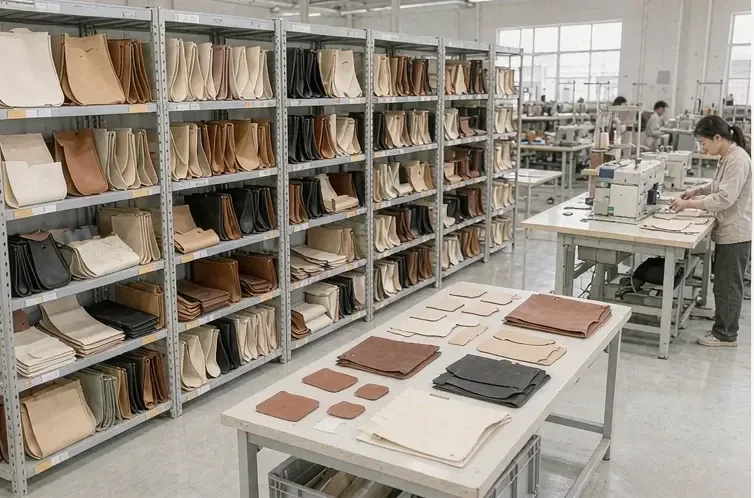
What Material Traceability Means for a Handbag Programme
Traceability answers one practical question: if a single bag fails, how quickly can you name its siblings? A programme with a lot map answers in an hour, because every hide, every spool of thread and every bag of hardware arrived with a reference that was written into the cutting record before the panels were released. A programme without one has to guess, and the guess is either too narrow, which leaves faulty stock on a shelf, or absurdly wide, which scraps a month of sound work.
The second reason to build the file is commercial rather than corrective. Retail partners and marketplaces increasingly ask for proof rather than assurance, and the questions tend to arrive late: after the lookbook, often after the first delivery has landed. A house that can produce a tannery audit reference, a chemical test report tied to a specific lot and a permit matched to a commercial invoice line answers in one email. A house that cannot loses the listing while it looks for the paperwork.
The Four Documents Behind a Defensible Traceability Claim
Four documents carry almost all the weight. They are unglamorous, they are produced by whoever owns the material rather than by the brand, and they are almost never available retroactively. Asking for them at quotation stage costs a week. Asking for them after a shipment has landed costs a season, and sometimes costs the account.
- Tannery lot record
- Lot reference, hide count, substance in millimetres, finish name, date received, retained panel ID
- Chemical test report
- REACH and California Prop 65 results, tied to the lot tested, with the laboratory and the report date named
- Tannery audit reference
- Leather Working Group audit status and expiry for the site that produced the lot, not a general membership claim
- Component declaration
- Bill of materials listing every trim: thread, adhesive, interlining, lining, hardware, each with its source
- Retained reference panel
- One sealed panel per lot, held 24 months, used to settle any later dispute about hand, colour or substance
- Plating bath log
- Bath ID, date, alloy, thickness reading in micrometres, and the salt spray panel result for that bath
- CITES permit (exotic only)
- Permit or re-export certificate number reconciled against the commercial invoice line and the skin tag
Read the second column rather than the first. A document that names a lot is worth more than a document that names a company, because the lot is the unit that fails. One hide can go wrong inside a tannery that has held its audit status for years, and one bath can produce a thin finish in a plating line with an otherwise perfect record.
Tannery Lot Control: Where the Chain Actually Starts
Leather is the only material in a handbag that arrives with variation bred into it. Two panels cut from adjacent hides in the same lot will match closely. Two panels cut from hides three lots apart will not, whatever the specification says. That is why the lot, and not the tannery, is the unit of traceability. A programme that buys on reputation and ignores lot discipline will still produce mismatched bags, and will not be able to say which ones.
- One lot per style where the run allows it, and one lot per colourway where it does not.
- Lot references recorded at goods-in, before hides are released to cutting, never reconstructed afterwards from memory.
- Cutting sequence tied to lot: panels from one hide stay together through skiving, stitching and assembly.
- Substance measured on arrival and recorded, because a 1.2-1.4 mm specification is a range and the range matters to the pattern.
- Retained panels sealed and stored for 24 months, one per lot, for later comparison under the same light.
- Re-selection treated as a new lot: a second selection invalidates the first test report and the first retained panel.
The last point is the one that catches programmes out. A hide re-selected after a failed test is a different material. The chemical report attached to the first lot does not travel with it, and the file has to be rebuilt from the tannery lot record forward.
Reading a Tannery Audit Reference Instead of a Slogan
Audit language is where traceability claims decay. A wordmark on a website says a tannery belongs to a programme. An audit reference says it was assessed, at a named site, on a named date, with a status that expires. The difference is one line of text, and it decides whether the claim survives a retailer questionnaire.
| What you are given | What it actually proves | What to file instead |
|---|---|---|
| A programme wordmark on a vendor page | Membership only, with no site, date or scope attached | The audit reference with site name, audit date, status and expiry, filed per lot |
| A test report addressed to the tannery | The result for the lot the tannery chose to submit | A report that names your lot reference and the date your material was drawn |
| A written assurance on headed paper | The opinion of the writer, which no third party can check | A laboratory report with the method, the limit and the result |
| A country-of-origin statement | Where the last operation happened, not where the hide was raised | Origin recorded at goods-in with the lot and kept consistent with the commercial invoice |
| A sustainability paragraph in a brochure | Marketing copy that no auditor stands behind | The audit status plus the chemical report, both tied to the lot in question |
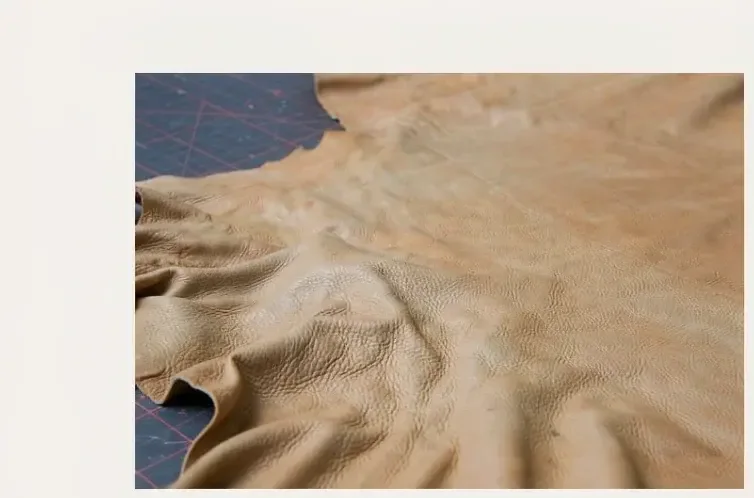
Hardware, Plating Baths and the Chemical File
Metal components carry their own chain, and it is shorter than most houses expect. The unit is the plating bath, not the vendor, and the evidence is a thickness reading in micrometres plus a corrosion panel result. Where a closure is load-bearing, the file also wants the substrate named and the cycle test result attached, because a finish fault and a structural fault have entirely different consequences.
- Bath ID recorded for each plating run, with the date and the alloy, so a finish drift can be traced to one bath.
- Thickness read by XRF and recorded in micrometres, typically 0.15-0.3 µm of gold tone over a nickel barrier.
- Corrosion proved by neutral salt spray to ISO 9227, 24 hours as standard and 48 hours for antique finishes.
- Nickel release answered under REACH Annex XVII entry 27 for components in prolonged contact with skin.
- Lead in substrate and coating answered under CPSIA wherever the line sells into the United States.
- Cycle test result attached to closures: 5,000 open-close cycles is the floor most houses write into a pack.
None of these are expensive, and all of them are inexpensive to file now and impossible to reconstruct later. A bath log written at the time costs a line in a record. A bath log reconstructed eight weeks after a shipment has landed cannot honestly be written at all.
Exotic Skins: Permits Matched to the Commercial Invoice
Exotic material changes the nature of the file. CITES-listed species travel with a permit or a re-export certificate, and the number on that document has to reconcile with the commercial invoice line and with the tag on the skin. A mismatch is not a paperwork quibble. It stops a shipment at a border, and it can stop it again at a retailer's own audit months later.
Before an exotic shipment moves, check that three numbers agree: the permit or re-export certificate number, the tag on the skin, and the commercial invoice line. If any one of them disagrees with the other two, the shipment is not ready, whatever the bag looks like on the bench.
Programmes that handle exotic skins well do one thing differently from the rest. They write the permit number into the cutting record at the same moment the skins are released, so the number follows the panels through the bench rather than sitting in a folder with the shipping documents.
Lining, Thread and Adhesive: the Hidden Bill of Materials
The visible materials get the attention and the hidden ones generate the questions. Lining, thread, adhesive, interlining and edge paint are all in contact with the hand and all answered under the same chemical regime as the outer leather. A house with a complete file on its calfskin and nothing at all on its adhesive has a file with a hole in it.
Lining
Named by fibre and by finish, with the dye recipe held at the mill and a test report tied to the colourway. A pale lining carries more risk than the outer leather, because it shows wear and contact first.
Thread
Bonded nylon 69 at 0.45 mm is the usual partner to a 9 stitches-per-inch seam. The declaration wants the fibre, the finish and the colour fastness result.
Adhesive
Water-based where the construction allows it. Solvent content, open time and activation temperature belong in the file, because all three change with the season on the bench.
Interlining
Woven or non-woven reinforcement behind a panel. Structure that looks tired after one season usually traces back to an interlining that was never specified, only substituted.
Edge paint
Four coats with an 8 minute flash-off at 60 °C between coats. The paint is a chemical product and asks for the same declaration as the leather beside it.
Hardware
Named by substrate and finish, with the bath log and the thickness reading attached. Decorative plates and load-bearing closures carry different evidence.
What Happens When a Lot Is Re-Selected
Re-selection is the moment a traceability file either proves itself or quietly becomes fiction. A lot fails a test, or the hand is wrong, or the yield is poor, and the material is swapped. From that moment, everything attached to the old lot stops describing the bag that is about to be made.
- Close the old lot: mark the record superseded, keep it, and never delete it.
- Open a new lot reference and write it into the cutting record before any panel is released.
- Re-run the chemical test on the new lot, because a report never travels between lots.
- Re-file the audit reference if the replacement material comes from a different tannery.
- Re-cut and re-seal a retained reference panel for the new lot under the same light.
- Re-issue the component declaration so the bill of materials names the material actually used.
Six steps, none of them difficult. The programme that skips them ends up with a bag whose paperwork describes a different bag, which is precisely the failure a retailer finds, and the one that costs the relationship rather than the shipment.
Traceability Inside the Sampling Window
Sampling for a new style runs 6-10 working days, extending to 12-15 where a frame, a moulded handle or a new tool is involved. That window is where the file is built, not after it. The sample is the last point at which a lot can be changed without consequence, and it is the least costly point at which to ask for the documents.
Ask for the tannery lot record, the chemical report and the component declaration at the same time as the sample, and hold approval until they arrive. A sample approved without its paperwork is a decision that has to be taken twice, the second time under pressure.
Inspection Records, AQL 2.5 and the Lot Map
Inspection is where the lot map earns its keep. A draw taken to AQL 2.5 under ISO 2859-1 tells you how many pieces to examine and how many faults stop the shipment. The lot map tells you which other bags those faults might also be sitting in. One without the other is half an answer.
On a 500 pc lot at general inspection level II the sample is 50 pieces with three majors allowed. If a fault appears in that draw, the lot reference on the record tells you whether the same material went into the other 450 pieces, and the retained panel tells you whether the material was always like that or changed on the day.
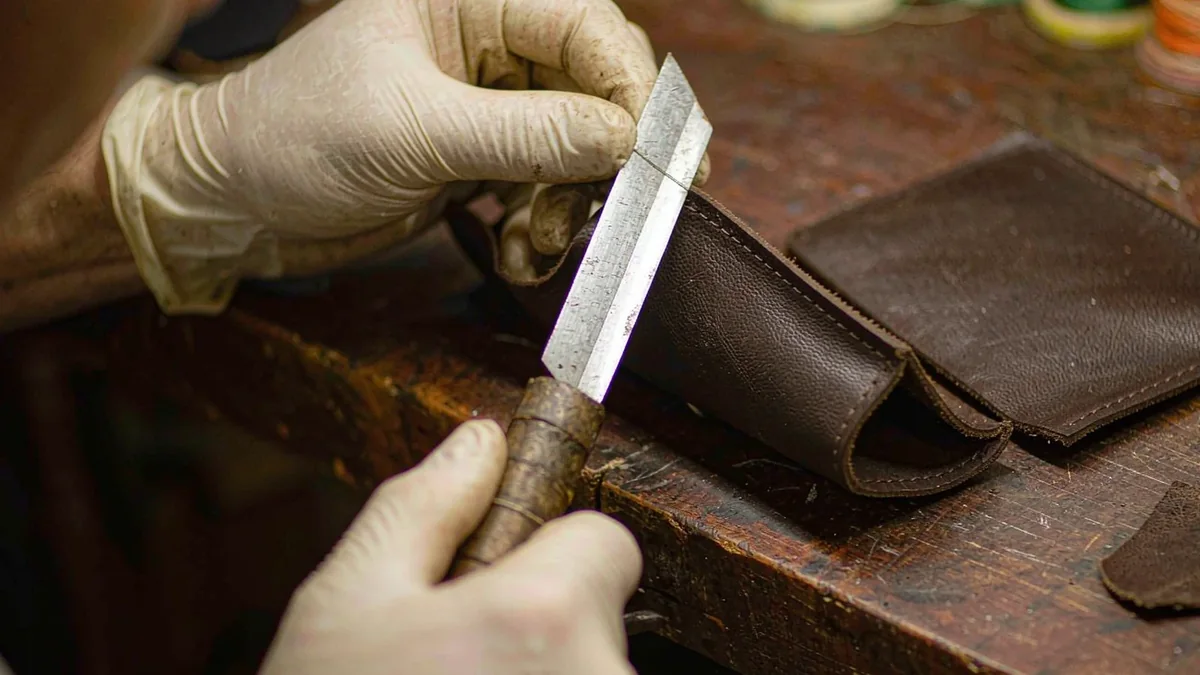
Programme Economics: MOQ, Lead Time and What Documentation Costs
The commercial frame is fixed and worth stating plainly. MOQ 500 pcs per style and per colourway. Bulk production at 35-50 days. FOB Xiamen as the standard term, with alternatives available where a programme needs them. The programme runs across 7 production lines with about 200,000 pcs per month of capacity and has held export experience since 2014, carried out through our validated partner factory Quanzhou Yingming Bags, an SGS-validated site.
What documentation actually costs
- Tannery lot record and retained panel: no charge, one line in the goods-in record.
- Chemical test per lot: a laboratory fee, booked into sampling rather than discovered after bulk.
- Finish sample cards: billed at USD 4.80 and credited against the first bulk order.
- Re-selection after bulk: the full cost of the run plus the launch window, which no fee covers.
Five Traceability Failures and the Fix for Each
The same five failures appear in almost every programme that has never written its traceability file down. Each has a fix that costs less than the failure.
- The report names a company rather than a lot. Fix: require the lot reference on every test report and reject any report without it.
- The file is assembled after bulk. Fix: make document delivery a condition of sample approval, not of final payment.
- Re-selection is treated as a substitution rather than a new lot. Fix: the six-step re-selection routine above, applied every time.
- Only the leather has a file. Fix: issue a component declaration covering every trim, including thread and adhesive.
- The retained panel was never sealed. Fix: one sealed panel per lot, stored 24 months, before the hides are released.
Have your material file reviewed before sampling
Send the tannery, the finishing route and the markets you sell into. You will receive a document-by-document gap list showing which records exist, which need to be requested, and which must be re-run, within two working days. Request a quote.
Frequently Asked Questions
What does material traceability mean for a luxury handbag?
It means every component in a finished bag can be traced back to the lot it came from through a written file: the tannery lot behind the leather, the dye recipe behind the lining, the plating bath behind the hardware, each with a test report or audit reference attached.
Which documents does a traceability file need?
Four carry most of the weight: the tannery lot record with hide count and substance, a chemical test report tied to that lot, a tannery audit reference with status and expiry, and a component declaration covering every trim from thread to adhesive.
Why is the lot the unit of traceability rather than the tannery?
Because the lot is the unit that fails. Two panels from adjacent hides in one lot match closely; panels from hides three lots apart do not. One hide can go wrong inside a tannery that has held its audit status for years.
How long should retained reference panels be kept?
Twenty-four months is the period most programmes write down. One sealed panel per lot is cut at goods-in and stored under controlled light, so a later dispute about hand, colour or substance is settled against the material rather than against a photograph.
Does a test report still apply after a lot is re-selected?
No. A re-selected hide is a different material. The chemical report attached to the first lot does not travel with it, and the file has to be rebuilt from the tannery lot record forward, including a fresh retained panel.
What chemical regimes apply to luxury handbag materials?
REACH in the European Union, including Annex XVII entry 27 on nickel release from metal in prolonged contact with skin, California Proposition 65 for listed substances, and CPSIA limits on lead in substrates and coatings for lines sold in the United States.
How is hardware traceability recorded?
By plating bath rather than by vendor. The file carries a bath ID with date and alloy, an XRF thickness reading in micrometres, a neutral salt spray result to ISO 9227, and a cycle test result for any closure that opens and closes.
What extra documentation do exotic skins require?
A CITES permit or re-export certificate whose number reconciles with the commercial invoice line and with the tag on the skin. Programmes that handle this well write the permit number into the cutting record when the skins are released.
When should the traceability file be built?
During sampling. Sampling for a new style runs 6-10 working days and 12-15 where a frame, a moulded handle or a new tool is involved, and the sample is the last point at which a lot can be changed without consequence.
How does traceability interact with inspection at AQL 2.5?
The inspection draw tells you how many faults stop a shipment; the lot map tells you which other bags share the material. On a 500 pc lot at level II the sample is 50 pieces with three majors allowed under ISO 2859-1.
How much does documentation cost a programme?
Lot records and retained panels cost one line in the goods-in record. Chemical testing carries a laboratory fee per lot, booked into sampling. Finish sample cards are billed at USD 4.80 and credited against the first bulk order.
What is the commonest traceability failure?
A test report that names a company instead of a lot. It reads like evidence, passes a first glance, and fails the moment a retailer asks which material the report refers to. Requiring a lot reference on every report removes it.
People Also Ask
What is material traceability in luxury goods?
A documented chain from finished article back to the lot each component came from, held as a file of lot records, laboratory reports and audit references rather than as a statement of intent on a card or a website.
How do you trace leather back to a tannery?
Through the lot tag attached at the tannery, recorded at goods-in with hide count and substance, carried into the cutting record, and paired with a test report and an audit reference that both name the same lot.
What is a Leather Working Group audit reference?
The record of an assessment carried out at a named tannery site on a named date, with a status that expires. It is evidence; a programme wordmark without a site, date and status is not.
Does traceability cover lining and thread?
Yes. Lining, thread, adhesive, interlining and edge paint sit in contact with the hand and are answered under the same chemical regime as the outer leather, so a component declaration names the source of each.
How long does a traceable handbag programme take?
Sampling runs 6-10 working days and 12-15 for complex styles, with bulk at 35-50 days on FOB Xiamen terms. Requesting the documents during sampling adds nothing to the calendar; requesting them after bulk adds a season.
Sources and further reading
Every figure on this page is either our own programme data or attributed below. Open the originals before you write them into a specification.
- ISO — International Organization for StandardizationISO Publisher of ISO 2859-1 sampling procedures and ISO 9227 neutral salt spray testing, the two standards attached to inspection and plating records in a traceability file.
- European Chemicals AgencyECHA Administrator of REACH, including Annex XVII entry 27 on nickel release from articles in prolonged contact with skin, which is answered per lot.
- California Office of Environmental Health Hazard AssessmentOEHHA The authority behind California Proposition 65, which governs warning requirements for listed substances in leather, lining and metal components.
- CITES — Convention on International Trade in Endangered SpeciesCITES The permit and re-export certificate framework that governs exotic skins, whose numbers must reconcile with the commercial invoice.
- Leather Working GroupLeather Working Group Tannery audit protocol whose reference, with site, date and expiry, replaces a wordmark in a traceability file.