How to Source Premium Handbag Zippers and Hardware: One Order, Three Parts, Four Checks
How do you source premium zippers and hardware for a handbag line? Specify three parts separately: the chain by gauge, the tape by width and fibre, and the slider by pull force and finish. A main closure takes a #5 metal chain on 12-15 mm tape with a slider pull of 40-60 N, cycled 1,000 times before release. Allow 20-35 days for a non-stock tape colour, and check four things per lot.
The Order Where the Zipper Arrived Wrong
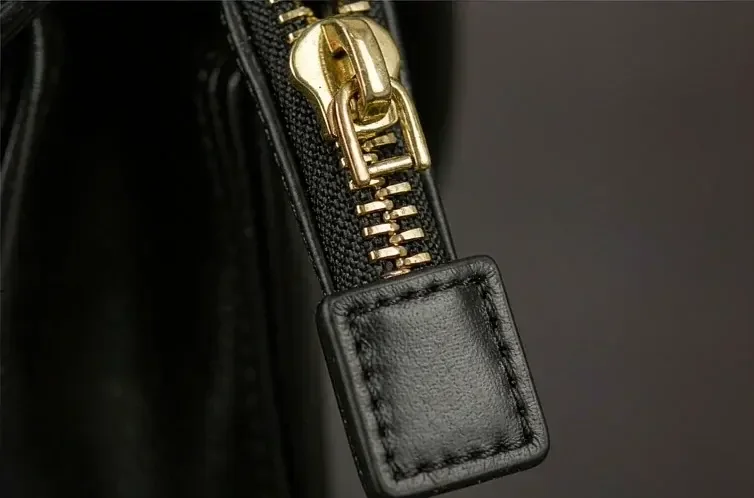
A buyer specifies a metal zipper for a main closure by sending a photograph of the one on an existing piece. The sample comes back with the right teeth and the wrong tape, in a brass shade two steps warmer than the closure beside it, and a slider that sticks a third of the way along.
Three things were never specified. The tape width and colour were left to the bench, the plating shade was described as gold rather than measured, and the slider pull force was not given a figure. None of the three is visible in a photograph, and all three are visible on the finished body.
The rework cost three weeks and a second sampling round. The specification that replaced the photograph was nine lines long and it has been used on every style since, which is the usual ending to this story.
What made the story avoidable is that all three gaps were known before the order was placed. The tape width had been discussed and never written down, the plating shade had been approved on a component from a different bath, and nobody had asked what pull force the last body used.
What a Zipper Specification Contains
A zipper is three parts sold as one: the chain, the tape and the slider. Each is specified separately, and treating them as a single line item is why the wrong one arrives.
- Chain gauge
- #3 for an interior pocket, #5 for a main closure, #8 for a travel body
- Chain material
- Metal teeth in brass or zamac, or a coil in polyester
- Tape width
- 12-15 mm, wider on a travel body where the load is higher
- Tape material
- Polyester or cotton, matched to the lining or deliberately contrasted
- Slider pull force
- 40-60 N, light enough to run, heavy enough not to self-open
- Slider finish
- Plated to match the closure, with the microns stated
- Stops
- Metal top and bottom stops, not stitched, on a luxury body
- Length tolerance
- ±2 mm on a cut length, measured closed on the chain
- Cycle life
- 500 cycles for an interior pocket, 1,000 for a main closure
The eighth line is the one that causes silent rework at the bench. A cut length that arrives long has to be shortened, and shortening a metal chain by hand leaves a stop that is not the stop the specification asked for.
Gauges: #3, #5 and #8, and Where Each Belongs
Gauge is the width of the closed chain in roughly millimetres, and it is chosen by duty rather than by look. An oversized gauge on a small interior pocket adds bulk where there is no room for it; an undersized one on a travel body will not survive the load.
| Gauge | Where it belongs | Tape | What it carries |
|---|---|---|---|
| #3 | Interior pockets, small bodies, an evening piece | 12 mm | Light duty; a card case or a slip pocket |
| #5 | Main closure on a medium tote or top-handle | 15 mm | The everyday load of a handbag body |
| #8 | Travel bodies, weekend and luggage forms | 18-20 mm | Higher load and repeated full-length opening |
| Coil | Curved seams and where a metal chain would kink | 12-15 mm | Moderate duty on a shaped closure |
The last row is the exception worth knowing. A closure that runs around a curve takes a coil more happily than a metal chain, and forcing a metal chain through a tight radius produces a slider that catches at the same place every time.
Tape, Slider and Pull: Three Parts Specified Separately
The tape is the part most often left out of a specification and the part most often wrong on arrival. It has a width, a fibre and a colour, and the colour is ordered with the chain rather than matched afterwards.
- Tape width 12-15 mm, stated rather than inferred from the gauge.
- Tape fibre: polyester for stability, cotton where the hand matters more.
- Tape colour matched to the lining, or contrasted deliberately as a design line.
- Slider pull force 40-60 N, measured rather than judged by feel.
- Pull style: a cast pull, a turned pull or a leather tab, specified with its fixing.
The fourth item is worth measuring because it is the difference between a closure that runs and one that fights. Too light and it self-opens under load; too heavy and a customer has to brace the body to open it.
Finish and Plating: Matching the Zipper to the Rest
Zipper plating is specified in microns like any other hardware, and it is matched by measurement rather than by name. A closure in heavy gold at 0.5-1.0 µm beside a zipper in a 0.15-0.3 µm flash will diverge within a season, because the two wear at different rates.
Ask for the slider and the teeth to be plated in the same bath as the rest of the hardware where the volume allows. Bath-to-bath variation in a warm gold shade is visible on the body and impossible to correct afterwards.
Lead Time and Minimums: The Two Constraints Nobody Writes Down
Two constraints govern zipper sourcing more than price does. A stock chain in a stock colour is available quickly; a non-stock tape colour or a bespoke pull carries 20-35 days and its own minimum, usually counted per colour rather than per style.
| Item | Typical lead time | Typical minimum | What it gates |
|---|---|---|---|
| Stock chain, stock tape | Days, against availability | Per pack quantity | Almost nothing |
| Non-stock tape colour | 20-35 days | Per colour, often 500-1,000 units | Whether the interior can be matched |
| Bespoke pull or slider | Longer, with tooling | Per tooling run | Whether the signature look is possible |
| Plated to match | Added to the above | Against the bath | Whether the shade matches the closure |
| Sampling first | 6-10 working days, or 12-15 complex | One unit | Whether the style is approved |
The second row is the one that surprises buyers. A tape colour is a dyed development with its own minimum, and it is ordered alongside the lining rather than after the body has been approved.
A tape colour carries its own minimum and 20-35 days. Order it when the lining is ordered, not when the first sample is approved, or the matched interior becomes the reason a launch moves.
Four Checks Before a Zipper Lot Is Released
Four checks on a zipper lot catch almost everything that goes wrong in service, and all four are run on a sample from the delivery rather than on a datasheet.
- Cycle the chain 500 times, or 1,000 on a main closure, and confirm the slider still tracks true.
- Measure the slider pull force and hold it to 40-60 N across five samples from the lot.
- Check the tape colour against the lining under three light sources, for metamerism.
- Salt spray the plated slider to ISO 9227 for 24 hours, or 48 on a premium grade.
The third check is the one that prevents the commonest return. A tape that matches the lining under a bench lamp and not under retail lighting is a metameric pair, and the customer standing in a shop sees the second result.
Hardware Beyond the Zipper: One List, One Specification
A body carries more hardware than the closure, and every item needs the same four lines: base metal, plating build, finish and test. One list per style, with those four against each line, is the whole discipline.
Write that list before the leather is booked rather than after. The hardware list drives two dates that nothing else can recover: a non-stock tape colour at 20-35 days and any bespoke tooling, both of which sit ahead of the first sample.
Closures and clasps
Brass at 8.4 g/cm³, 0.5-1.0 µm over a 3-5 µm barrier, cycled 1,000 times. The component the hand touches most, and the one worth specifying to the premium band.
Feet
Set at the four corners of the base at 4-5 mm, plated to 0.5-1.0 µm and pull tested in position. Feet take abrasion no decorative deposit survives indefinitely.
D-rings and strap ends
Mid band: zamac or brass at 0.3-0.5 µm, tolerance ±0.1 mm, pull tested at 150-250 N. Load-bearing, so the fixing matters more than the finish.
Nameplates and logos
Mid band, with the fixing method stated and edges finished. This is where plating is thinnest in practice and where wear shows first if the band is set too low.
Where Sourcing Goes Wrong
Four failure patterns account for most hardware problems reported after delivery, and all four are specification failures rather than component failures.
- Specified by photograph: no gauge, no tape width, no pull force.
- Plating described by name rather than by microns, so shades diverge across components.
- Tape and lining ordered separately, producing a mismatch nobody approved.
- Minimums discovered after the quantity was agreed, forcing a stock colour nobody wanted.
The second of these is the most persistent, because a finish name feels like a specification. It is not: light gold describes a family, and two houses plating to that description will deliver shades that differ by more than the eye tolerates on the same body.
The Zipper and Hardware Line on the Spec Sheet
Nine lines cover a zipper and eight cover each other component. Written once per style, they convert hardware from a photograph into something enforceable at intake.
Nine lines for a zipper, eight for every other component
- Gauge, and where in the body the chain sits.
- Chain material: metal teeth or coil, and the base metal.
- Tape width in millimetres and the fibre it is made from.
- Tape colour, referenced to the lining, checked under three lights.
- Slider pull force in newtons, held to 40-60 N across the lot.
- Plating thickness in microns on both the teeth and the slider.
- Stop type, metal rather than stitched, at both ends.
- Length tolerance, ±2 mm, measured on the closed chain.
- Cycle life: 500 for an interior pocket, 1,000 for a main closure.
Our programme works to MOQ 500 pcs per style and colourway, with sampling at 6-10 working days and 12-15 for a complex construction, bulk at 35-50 days on FOB Xiamen terms, inspected to AQL 2.5 under ISO 2859-1. It runs across 7 production lines with about 200,000 pcs per month of capacity and export experience since 2014, delivered through our validated partner factory Quanzhou Yingming Bags, an SGS-validated site. The framework sits under luxury materials and the bench detail under craftsmanship.
Send the hardware list and we will source it
Tell us the silhouette, the closure you need and the tape colour you want. We will return the gauge, the pull force, the plating build and a sourcing calendar, within two working days. Request a quote.
Frequently Asked Questions
What zipper gauge should a handbag main closure use?
A #5 metal chain on 15 mm tape, cycled 1,000 times before release. #3 suits an interior pocket or a small body at 12 mm, and #8 suits a travel body at 18-20 mm where the load and the opening are both larger. Write the figure into the specification, since an unrecorded figure cannot be enforced at intake.
Why does my zipper slider stick partway along?
Usually a pull force problem or a chain forced through too tight a radius. Measure the pull at 40-60 N across five samples, and use a coil rather than a metal chain where the closure runs around a curve, since a metal chain catches at the same place every time.
How is a zipper tape colour specified?
By width, fibre and colour reference against the lining, checked under three light sources. A tape is a dyed development with its own minimum of 500-1,000 units and 20-35 days, so it is ordered with the lining rather than after approval. Confirm it at sampling, which runs 6-10 working days, or 12-15 for a complex construction.
Should zipper teeth and slider be plated together?
Yes, and ideally in the same bath as the rest of the hardware. Bath-to-bath variation in a warm gold shade is visible on the finished body and cannot be corrected afterwards, which is why plating shade is measured rather than named. Check it per lot at intake, inspected to AQL 2.5 under ISO 2859-1.
What is a reasonable slider pull force?
Between 40 and 60 N. Lighter and the slider self-opens under load; heavier and a customer has to brace the body to open it. Measure it rather than judging by feel, since feel varies between people and between days on the bench. Our programme works to MOQ 500 pcs per style and colourway, with bulk at 35-50 days.
How long does a non-stock zipper tape take?
Around 20-35 days, with a minimum counted per colour rather than per style, often 500-1,000 units. That is why the tape is ordered alongside the lining: waiting until the sample is approved puts the matched interior on the critical path. Keep the result with the retained sample so a re-order can be checked against it.
How is a zipper lot tested before bulk?
Cycle the chain 500 times, or 1,000 on a main closure; measure pull force on five samples; check tape against lining under three light sources; and salt spray the plated slider to ISO 9227 for 24 hours, or 48 on a premium grade. Agree the detail before the order is placed and hold it across the life of the style.
What does metal versus coil mean for a zipper?
Metal teeth in brass or zamac give the weight and sound associated with fine hardware; a polyester coil is lighter and runs better around a curve. Coil suits a shaped closure; metal suits a straight main closure at #5 or #8. Write the figure into the specification, since an unrecorded figure cannot be enforced at intake.
Why does the zipper not match the closure in colour?
Because the two were plated to different thicknesses or in different baths. Specify microns rather than a finish name: a closure at 0.5-1.0 µm beside a zipper at 0.15-0.3 µm diverges within a season as the thinner layer wears. Confirm it at sampling, which runs 6-10 working days, or 12-15 for a complex construction.
What stops should a luxury zipper use?
Metal top and bottom stops rather than stitched ones. A stitched stop is a thread holding a chain, and it is the first thing to fail on a body that is opened several times a day. Metal stops also let the length be set accurately to ±2 mm.
How much does hardware contribute to unit cost?
Around 12-20% of FOB cost on a closure-led design, with the zipper a small share of that and the closure and feet the larger ones. A bespoke pull carries tooling cost as well, which is why it is booked before the first sample. Check it per lot at intake, inspected to AQL 2.5 under ISO 2859-1.
Can hardware be sourced after the leather is booked?
It can, but the schedule works better the other way round. A non-stock tape at 20-35 days and bespoke tooling both sit ahead of sampling, so hardware is confirmed early and the leather is booked against the same calendar. Our programme works to MOQ 500 pcs per style and colourway, with bulk at 35-50 days.
People Also Ask
What is the best zipper for a luxury handbag?
A #5 metal chain on 15 mm tape with metal stops and a plated slider, cycled 1,000 times. The gauge follows the duty: #3 inside, #5 on the main closure, #8 on a travel body.
Why does my zipper tape not match my lining?
They were ordered separately and matched by eye. Tape is dyed to order, so the colour is referenced to the lining at the time of ordering and checked under three light sources before the lot is released.
How do I stop a zipper self-opening?
Raise the slider pull force towards 60 N and specify an auto-lock slider where the design allows. A slider that is too light opens under the load of a full body, which is why pull force is measured rather than felt.
Is a metal zipper better than a coil?
Not universally. Metal carries the weight and sound of fine hardware and suits a straight closure; a coil runs better around a curve and kinks less. Choose by the path the closure takes rather than by the look alone.
When should hardware be ordered?
Ahead of sampling, along with the lining. Non-stock tape carries 20-35 days and bespoke tooling longer, and both gate the sampling date rather than following it.
Sources and further reading
Every figure on this page is either our own programme data or attributed below. Open the originals before you write them into a specification.
- YKK CorporationYKK Zipper reference on gauges, tape widths, slider types and the cycle testing of sliding fasteners.
- ISO — International Organization for StandardizationISO Publisher of ISO 9227 on salt spray testing and ISO 2859-1 on the sampling plans used at intake.
- Institute of Materials, Minerals and MiningIOM3 Reference data on brass and zamac alloys, densities and the plating systems used on metal components.
- ECHA — European Chemicals AgencyEuropean Chemicals Agency Administrator of REACH, including the Annex XVII restrictions on nickel release and lead in metal components.
- Office of Environmental Health Hazard AssessmentOEHHA The California agency that administers Proposition 65 and its warning requirements for listed substances.