Structured vs Soft Luxury Bag Silhouettes: A Comparison Checklist
Which should a collection carry: a structured piece holding its stance or a soft piece that moves with the wearer? The honest answer sits in five measurable differences. Structured work adds 0.8-1.2 mm of internal reinforcement and 15-25 percent more weight, must stand upright within 5 degrees when empty, costs 25-35 percent more bench time, and ships two to three pieces per carton. Soft work uses 0.9-1.2 mm hide without reinforcement, nests flat and recovers within twenty-four hours after unpacking.
What the Two Actually Mean
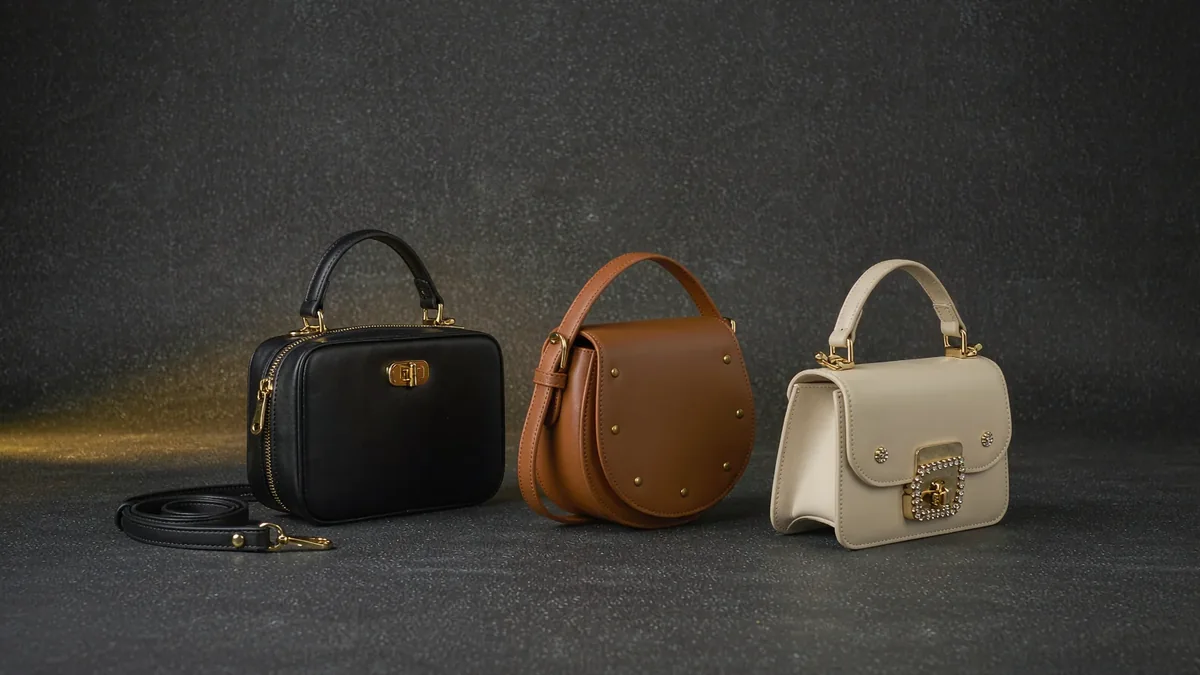
A structured silhouette is engineered to hold a shape whether or not anything is inside it. That requires internal reinforcement — a base board, interlining through the panels, often a slim frame at the mouth — working together so the hide describes a form rather than creating one. A soft silhouette relies on the hide itself, and its shape is whatever the contents and gravity decide.
Neither is superior, and the mistake most often made is choosing one for how it photographs rather than for what the piece will be asked to do. A piece carried to an office every day with a laptop inside has different requirements from one carried to dinner. Everything below follows from that single question being answered honestly first.
Difference One: Internal Architecture
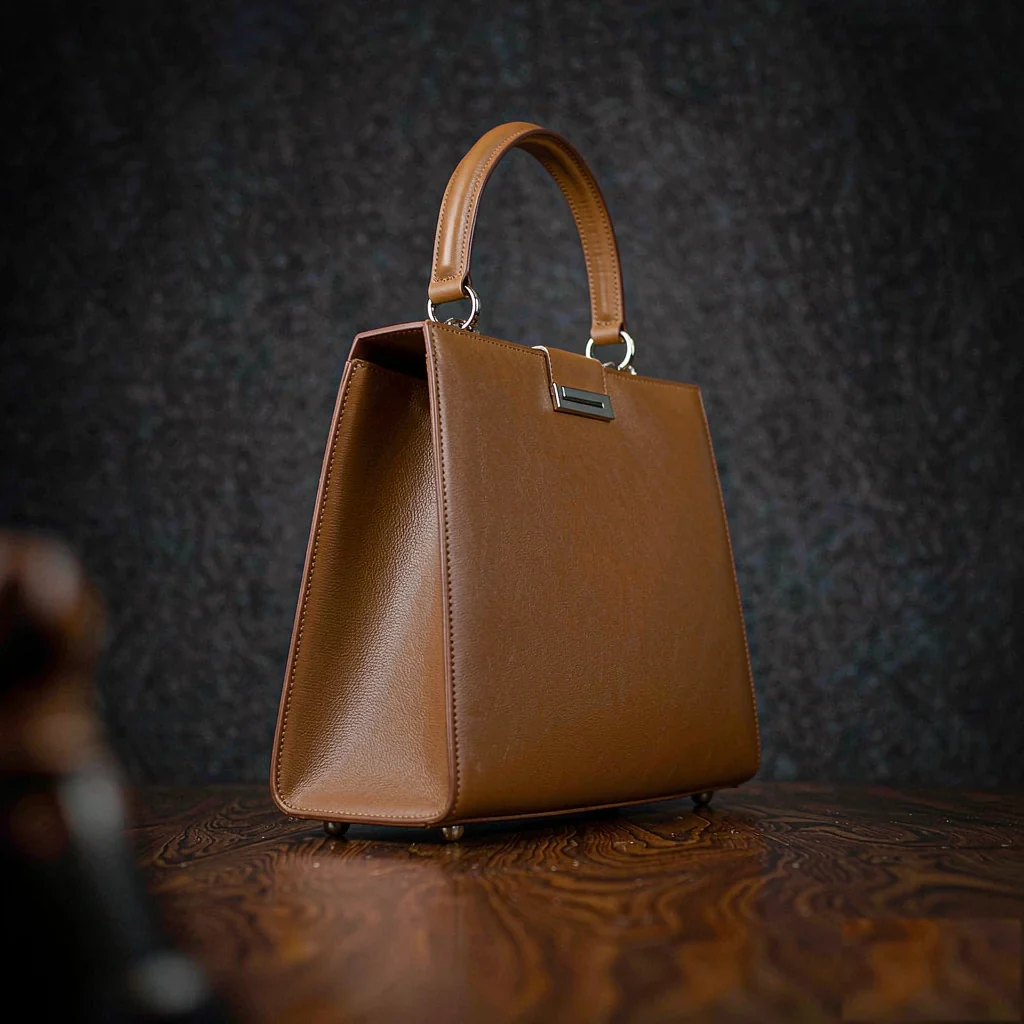
Structured work carries layers the customer never sees. A base insert around 0.8-1.2 mm thick keeps the floor flat and stops corners rounding. Interlining bonded through the panels, typically 180-260 gsm, prevents the face from rippling. And a top frame, where included, holds the mouth open so the piece can be packed without being held.
Soft work carries almost none of that, and this is what makes it genuinely difficult rather than simply simpler. With no reinforcement to hide behind, hide selection has to be near perfect, seam allowances have to be consistent without anything to clamp them, and any weakness in temper shows immediately. A relaxed piece is less forgiving to build than a structured one, not more.
Difference Two: Weight Consequence
Reinforcement adds mass, and the difference is larger than teams expect: typically 15-25 percent more than an equivalent soft piece in the same hide. On a large body that can mean several hundred grammes, which matters because the piece is carried rather than merely admired, and the customer notices weight long before they notice construction.
The correction available is selective reinforcement. Put structure at the base and the top edge where it does most work, and leave side panels comparatively relaxed. That hybrid keeps the stance while removing perhaps half the added weight, and it is the specification worth asking for when a piece looks right but feels heavy in the hand.
- Reinforcement thickness
- 0.8-1.2 mm at the base on structured work
- Interlining weight
- 180-260 gsm bonded through face panels
- Hide thickness, soft work
- 0.9-1.2 mm, temper selected rather than compensated
- Weight difference
- Structured typically 15-25 percent heavier
- Standing test
- Empty structured piece upright within 5 degrees
- Bench time
- Structured around 25-35 percent longer
- Transit nesting
- Soft pieces pack two to three per equivalent carton
Difference Three: Behaviour Over a Season
Structured pieces hold their stance for years and then fail visibly, usually at an edge where interlining has begun to lift or a base board has softened after repeated wetting. Soft pieces change gradually and continuously, developing slouch and patina together. Neither is a defect, but the customer's expectation has to be set to match whichever has been specified.
One behaviour deserves a written specification either way: recovery. A soft piece compressed for transit must return to shape within about twenty-four hours of unpacking, tested before bulk rather than assumed. Anything slower reads as damaged on arrival, even where nothing is actually wrong, and returns of that kind are notoriously hard to argue.
Difference Four: Cost and Bench Time
Structured work costs more, and most of the difference is bench time rather than material. Setting a base insert, bonding interlining without ripples, building edges over thicker assemblies and aligning a frame all take minutes that accumulate fast across a panel set. The usual figure is 25-35 percent more labour than an equivalent soft piece at the same quality level.
| Line | Structured | Soft |
|---|---|---|
| Internal layers | Base insert, interlining, often a frame | Hide alone, occasionally a base patch |
| Hide requirement | Can absorb more variation | Needs consistent temper throughout |
| Bench time | 25-35 percent longer | Shorter, but less tolerant of error |
| Component count | Higher; more parts to assemble | Lower; fewer joints to go wrong |
| Tooling | Higher where frames are involved | Minimal beyond standard patterns |
| Transit packing | Needs internal support | Nests and recovers on unpacking |
Difference Five: Shipping and Storage
This is the difference that most often surprises, because it is invisible until the first pallet is costed. A structured piece occupies its full volume whether empty or packed, and it cannot be compressed without risk. A soft piece nests, typically two or three per carton of equivalent size, and can be gently compressed for transit provided recovery has been proved.
Storage follows the same arithmetic. Structured pieces need shelf height and cannot be stacked above about three levels without risk to the base, whereas soft pieces tolerate considerably more provided nothing heavy sits on them for months at a time. Soft pieces stack more freely but should not be stacked wet or heavy, since prolonged compression is what eventually removes their ability to recover at all.
The Selection Checklist
Run these twelve questions before choosing, and answer them about how the piece will be used rather than about how it should look. Record the answers alongside the sample photographs, because three months later nobody remembers which question drove the decision. Most of the expensive mistakes in this decision come from answering the second question instead of the first, and they usually surface at the freight quote rather than at the sampling bench.
- Will it carry weight daily, or light contents occasionally?
- Does it need to stand upright on a desk, a table or a shop floor?
- Is the silhouette part of the message, or incidental to it?
- How heavy can the finished piece realistically be?
- Does the collection need it to photograph sharp from every angle?
- Is it shipped direct to customers or distributed to boutiques?
- How much internal complexity can the supply cost carry?
- Does the customer expect a patina, or an unchanged appearance?
- What happens to it after one full season of daily use?
- Can it be backed with internal support during transit?
- Are its hides consistent enough to be left unreinforced?
- Does the price point allow 25-35 percent more labour?
Where Each Choice Works Best
Structured suits anything that has to protect its contents, stand on its own or read as precision: work pieces, small boxy shapes, anything with architectural detail at the corners. Soft suits anything meant to move, fold or relax against the body: weekend pieces, larger holdalls, styles where the appeal is partly tactile rather than visual.
The hybrid suits more programmes than either extreme, and probably deserves more use than it gets. It also recovers more gracefully from transit compression than a fully engineered piece, since only part of the structure is resisting the return. Reinforcement applied at the base and top edge, with relaxed sides, gives the stance of structured work at roughly half the weight penalty, and it photographs considerably better than a fully engineered piece under warm light.
Most expensive choices in this decision come from deciding on photography first and discovering the weight or the freight cost afterwards.
Testing Each Option Before Bulk
Three tests separate opinion from evidence, and all three take minutes. The standing test: set the structured sample empty on a level surface and measure its lean, which should be within 5 degrees. The load test: fill at the intended working weight for a week and check for permanent sag at the handles and the base.
The third is the recovery test, and it applies to the soft option: compress the piece to roughly two thirds of its packed volume for twenty-four hours, release it, and measure return within a further day. Run all three on the third sample, built in production tooling, rather than on the first, since early samples are usually built more carefully than any subsequent piece will be. Together, these three catch nearly every fault that would otherwise be discovered by a customer rather than by a checklist.
Reading These Differences On a Sample
Samples should be compared the same day, side by side, and handled rather than merely looked at. Pick each one up loaded to its intended weight, carry it across a room, set it down, and only then judge it. Both routes look their best standing still on a bench, which is precisely the condition in which neither will ever be assessed by a customer.
Then compare three things specifically. Access, since a structured mouth that holds itself open changes how a piece is used every day. Balance, since added reinforcement moves the centre of mass downward in a way the hands notice before the eye does. And sound, because a structured assembly is quieter empty and carries less movement noise from hardware.
How Each Route Ages in a Customer's Hands
Aging is the part of the decision most often left out of the brief and most often regretted. A structured piece is meant to look much the same in year three as in week one, and any softening reads as decline. A soft piece is expected to develop, and a customer who buys one generally wants evidence of that within a season.
That expectation should be set at the point of sale, not discovered afterwards. A soft hide with an open finish will darken at the handles and along any point of contact within weeks, which is the feature rather than the fault. The same behaviour on a structured piece would be reported as wear, because nothing in its presentation prepared the customer for it.
The practical consequence for specification is finishing rather than construction. A pigmented, protected finish suits structured work because it resists change. A natural or lightly corrected finish suits soft work because it allows it. Choosing the finish against the route prevents most of the complaints that arrive in month nine.
Costing the Whole Route Rather Than the Unit
Unit price alone misleads, because the two routes diverge more in freight and storage than they do in materials. A structured style occupying full volume for the entire journey can cost noticeably more landed than a soft one of similar build cost, purely because fewer pieces fit per carton and per pallet.
Add storage and the gap widens further. Structured pieces need shelf volume and limited stacking; soft pieces tolerate both but need protection from prolonged compression. Comparing the two on unit cost alone regularly produces the wrong answer, which is why a landed comparison should be requested before the route is settled rather than after the first shipment arrives.
Programme Figures for Both Routes
Our programme runs through our validated partner factory Quanzhou Yingming Bags, an SGS-validated site with 7 production lines and roughly 200,000 pcs per month of capacity, holding export experience since 2014. Sampling takes 6-10 working days, or 12-15 where a base frame or custom insert is developed; bulk occupies 35-50 days; and minimums sit at 500 pcs per style and colourway leaving FOB Xiamen.
Both routes are inspected identically, a sample drawn at AQL 2.5 under ISO 2859-1 and read against a retained reference rather than against memory. Hide options sit on luxury materials, the construction detail behind each route on craftsmanship, and the development sequence on luxury sampling.
Choose the route with evidence rather than photographs
Send your intended use, working weight, target landed cost and how the piece will be shipped, since freight settles as much of this decision as construction does. You will receive a build comparison naming reinforcement, weight, labour and freight impact for each option. Request a quote.
Frequently Asked Questions
What makes a silhouette structured?
Internal reinforcement rather than hide alone. A base insert around 0.8-1.2 mm, interlining bonded through the panels at 180-260 gsm, and often a slim frame at the mouth, all working so the hide describes a form rather than creating one.
Is soft construction simpler to build?
No, and this surprises most teams. With no reinforcement to hide behind, every variation in temper shows immediately and seam allowances must be uniform without anything clamping them, which makes relaxed work less forgiving rather than more.
How much heavier is a structured piece?
Typically 15-25 percent more than a soft equivalent in the same hide. On a large body that can be several hundred grammes, which matters because the piece is carried rather than merely looked at.
Can a structured piece be lightened?
Yes, through selective reinforcement. Keeping structure at the base and top edge while relaxing the sides removes roughly half the added weight and often improves how the piece reads under warm light.
How much longer does structured work take?
Around 25-35 percent more bench time. Setting inserts, bonding interlining without ripple, building edges over thicker assemblies and aligning a frame each take minutes that accumulate quickly across a panel set.
Should a structured piece stand on its own?
Yes. An empty structured sample set on a level surface should stand within about 5 degrees of vertical. Anything beyond that usually means insufficient base support rather than a problem with the hide.
How long should a soft piece take to recover?
About twenty-four hours after unpacking, proved before bulk rather than assumed. Slower recovery reads as damage on arrival even when nothing is actually wrong, and returns of that kind are very hard to argue.
How do the two compare in transit?
Soft pieces nest, typically two or three per equivalent carton, and tolerate gentle compression. Structured pieces occupy full volume whether empty or packed and cannot be compressed without risk to their edges.
Which suits daily use better?
Structured, for weight-bearing daily use, because it protects contents and holds access. Soft suits weekend and larger pieces where the appeal is tactile and the contents are light rather than structural, and where some movement in use is counted as character rather than as decline.
Which suits a smaller collection?
Usually structured, because it is more tolerant of hide variation and therefore easier to repeat across small runs. Soft work demands hides of very consistent temper, which is harder to source at low volume.
Is the hybrid option worth considering?
Very often. Reinforcement at the base and top edge with relaxed sides gives most of the stance at about half the weight penalty, and it photographs better than a fully engineered piece.
What are the programme minimums for each route?
500 pcs per style and colourway for both. Sampling takes 6-10 working days, rising to 12-15 where a base frame or custom insert has to be developed, with bulk occupying 35-50 days.
People Also Ask
Do structured pieces last longer?
They hold their shape longer and then fail visibly at an edge or a softened base. Soft pieces change gradually with use. Neither is wrong, but the customer's expectation should match whichever was specified.
Can soft pieces be stacked in storage?
Yes, more freely than structured ones, though not while damp or under heavy load. Prolonged compression is what eventually removes their ability to recover at all.
Does reinforcement hide poor hides?
Partly, which is why structured work suits smaller programmes. It absorbs variation in temper and thickness that would be obvious on a relaxed piece with nothing behind the face.
Is a frame always necessary on structured work?
No. A frame at the mouth is only needed where the top edge would otherwise collapse. Many pieces achieve adequate stance from interlining and a base insert alone.
Which option photographs better?
Structured, usually, because it holds edges under studio light. Hybrids photograph best of all in warm boutique conditions, since relaxed sides avoid the hard flash reflections an engineered face produces.
Sources and further reading
Every figure on this page is either our own programme data or attributed below. Open the originals before you write them into a specification.
- ISO - International Organization for StandardizationISO Publisher of ISO 2859-1 for attribute sampling and the ISO 105 series covering colour fastness of leather and trim.
- ASTM International standardsASTM International Publisher of test methods covering seam strength, abrasion resistance and dimensional stability of assemblies.
- Leather Working GroupLeather Working Group Environmental auditing programme for tanneries, referenced when assessing hide provenance and temper consistency.
- SGS - Inspection and verificationSGS Third-party validation and goods-in inspection body referenced for site validation and pre-shipment checks.