Top Handle Bags: A Luxury Silhouette Guide for Buyers and Brand Teams
What defines a top handle bag in fine construction, and what does it cost to build well? Four numbers decide it: a handle drop between 90 and 110 mm, handle leather at 1.4-1.8 mm against body leather at 1.2-1.4 mm, stitch density between 8 and 9 stitches per inch, and edge paint built to 0.3-0.5 mm in three or four coats. Everything else about the silhouette, including proportion, stance and closure, follows from those four being held together.

What Makes a Top Handle a Top Handle
A top handle piece carries its weight from one or two handles fixed to the upper body, held in the hand or over the forearm rather than against the shoulder. That single fact drives the whole build: the handles take the full load of the contents, so every gramme of leather, every stitch and every fixing in the attachment is doing structural work rather than decorative work.
By contrast, a shoulder piece distributes load along a strap anchored into the gusset, which spreads stress far more generously. The result is that a top handle needs heavier leather at the handle, denser stitch at the attachment and usually a reinforcement layer inside the body panel, all of which cost time rather than material.
Handle Drop: The Number That Decides Comfort
Handle drop is measured from the top edge of the body to the highest point of the handle underside, and it governs whether a piece is carried in the hand, over the forearm, or both. Between 90 and 110 mm suits hand and forearm carrying for most people. Below 80 mm the piece can only be held in the fingers, and above 130 mm it begins to swing unpleasantly when walking.
Grip length matters alongside it. The working length a hand actually wraps should sit between 100 and 120 mm, and it should be flat rather than rolled where the fingers close, since a rolled grip concentrates pressure across the middle three fingers and becomes uncomfortable quickly with any real weight inside.
Leather Thickness by Component
Thickness is chosen per component rather than per hide. Body panels run 1.2-1.4 mm, which holds shape without adding the mass that makes a piece feel heavy while empty. Handles run 1.4-1.8 mm, sometimes doubled, because they carry the load. Base and gusset edges take intermediate values, and anything sitting in a fold is skived down before it turns.
- Handle drop
- 90-110 mm for hand and forearm carry
- Grip length
- 100-120 mm, flat rather than rolled where fingers close
- Body leather
- 1.2-1.4 mm depending on structure required
- Handle leather
- 1.4-1.8 mm, doubled where the load is high
- Stitch density
- 8-9 stitches per inch, thread matched to hide thickness
- Edge paint build
- 0.3-0.5 mm in three to four coats
- Attachment test
- Loaded to 15 kg for twenty-four hours, no movement
Skiving is where cost hides. Any panel that folds, wraps or meets another edge has to be thinned locally so the joint does not bulk, and thinning is bench work rather than machine work. A silhouette drawn with fewer folds therefore costs meaningfully less to build at equal quality, which is why the simplest shapes are usually the most quietly convincing when finished well.
Structure: What Holds the Shape
A structured top handle relies on reinforcement rather than on leather alone. A typical build carries a bonded interlining through the panels, a board or dense insert at the base, and sometimes a slim frame at the top edge to keep the mouth from collapsing. Without those layers, even heavy leather slumps within a season as it takes up movement.
The trade is weight. Every layer that improves the stance adds grammes, and at some point a piece that looks superb on a shelf becomes tiring to carry. The balance worth aiming at is reinforcement at the base and at the top edge only, leaving the side panels more relaxed so the piece moves slightly rather than resisting everything it meets.
Stitch Density and Thread Choice
Between 8 and 9 stitches per inch is the working range for a fine top handle. Below about 7 the seam looks open and begins to gape under load; above 10 the perforations crowd together and progressively weaken the leather along the stitch line, which is a genuine structural risk rather than an aesthetic preference.
Thread has to be matched to the hide rather than chosen for colour alone. A heavy thread in light leather pulls through under load; a fine thread in thick leather sits below the surface and abrades inside the hole. Size thread by the leather it passes through, and specify bonded nylon or polyester rather than cotton wherever the seam will meet moisture.
Edge Finishing: The Detail That Dates a Piece
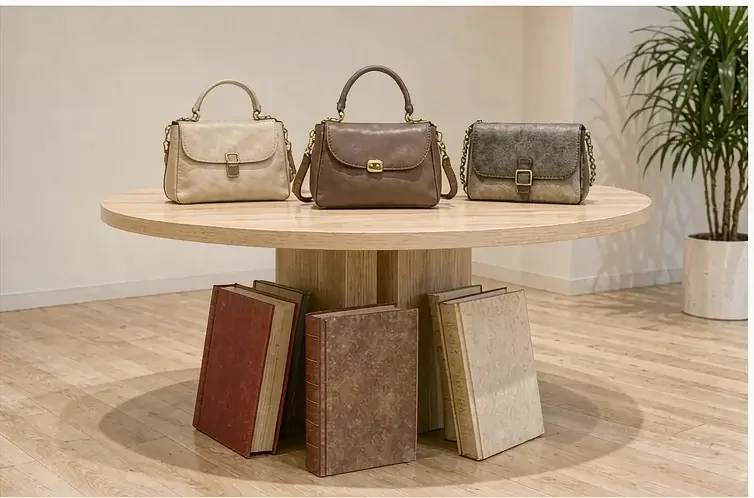
Edges are read before anything else because they sit at eye level on a handled piece carried in front of the body. A well-finished edge is built in three or four coats to reach 0.3-0.5 mm, sanded between coats, and finished smooth enough that no seam is visible from a normal conversation distance. Anything thinner wears through; anything thicker looks applied.
Cost follows coats, and coats follow time rather than material. Three coats is the honest minimum for a piece in this category, requiring four separate passes including the final dressing. Specify the number rather than asking for a clean edge, since an instruction nobody can measure is an instruction nobody will follow consistently across a five hundred unit run.
Hardware Loadings on a Handled Silhouette
Hardware on a top handle carries more risk than on any other silhouette, because feet, frames and closures all work against the same handles taking the load. Specify plating rather than describing colour: 0.15-0.3 micrometres of noble metal over a prepared base is the range that survives a season of daily handling at this level of the market.
| Component | Typical specification | Failure it prevents |
|---|---|---|
| Handle attachment | 15 kg static test for twenty-four hours | Fixings pulling through the panel |
| Base feet | Four feet, about 8 mm diameter | Base leather abrading on hard floors |
| Top frame | Slim internal frame at the mouth | Collapse along the upper edge |
| Closure | Turn-lock or catch, backed by a patch | Lid sitting proud after a season |
| Plating | 0.15-0.3 micrometres noble metal | Wear through to the base metal |
| Handle core | 20 mm webbing inside the handle | Handles stretching under load |
What a Top Handle Costs to Build
Cost divides into material, labour and tooling, and on this silhouette labour dominates. Material is roughly a third of unit cost at fine specification. Labour accounts for more than half, concentrated in skiving, edge finishing and setting handles. Tooling sits at the margin for standard shapes and rises sharply where a custom frame or closure is required.
Three things move cost most: the number of folds, the metres of finished edge, and whether the closure needs a bespoke tool. A shape drawn with clean panels and a stock closure can be built many minutes faster per unit than one carrying a compound curve and a customised turn-lock, and time is the line that dominates everything else here.
Proportion: Getting the Body Right
Proportion is easier to specify than taste suggests. Height to width near 0.8 suits a classic vertical proportion; around 0.7 reads wider and more contemporary; anything below 0.6 begins to look like a box unless the piece is deliberately small. Depth should sit around 0.3 of the width for everyday pieces and below 0.25 for anything meant to read slim against the body.
Handle placement follows proportion. Handles set at roughly a quarter of the width in from each end sit comfortably and distribute load evenly; placed closer together they crowd the mouth and restrict access; placed at the extreme edges they pull the upper panel outward over time and visibly widen the piece.
Materials That Suit This Silhouette
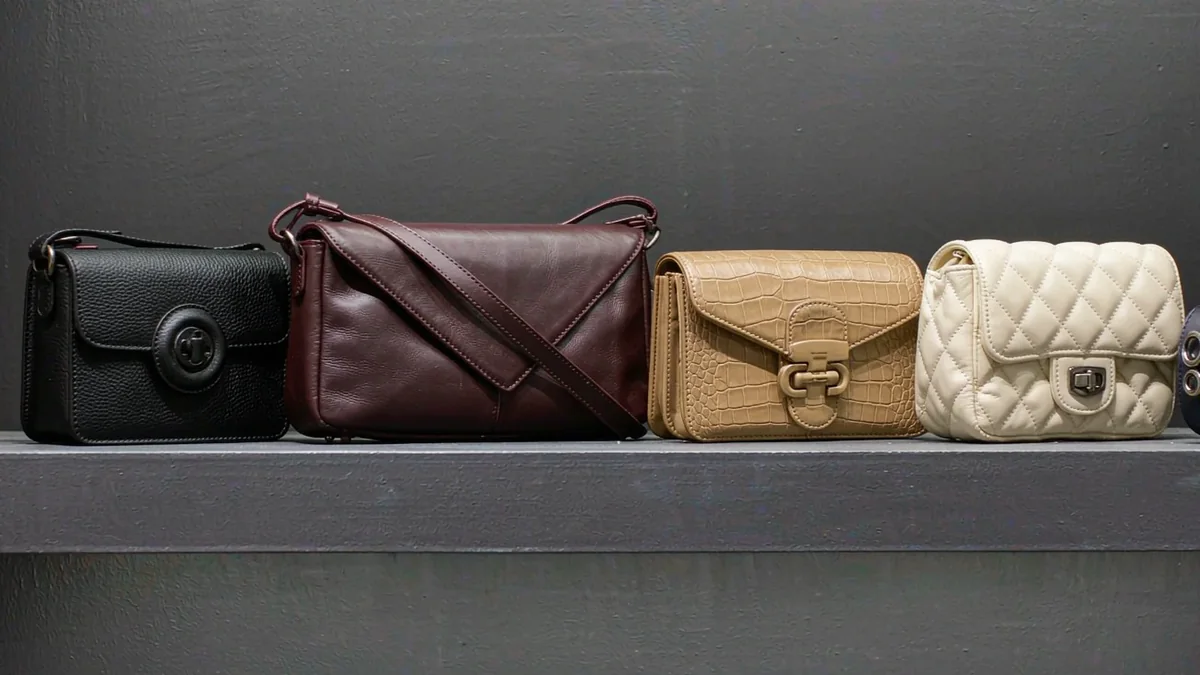
Vegetable-tanned and semi-aniline hides suit structured top handles best, because they hold a pressed form and develop rather than merely wear. Softer milled leathers suit the relaxed version of the same silhouette but need internal structure to compensate, otherwise the piece loses its stance within weeks and looks tired rather than properly broken in.
Exotic materials change the specification entirely, because the constraints are documentary as much as physical. Any listed species requires permits matching its appendix status before shipment, and the material yields differently, usually requiring lower stitch density and a gentler edge treatment than bovine hides will tolerate.
How the Piece Behaves Once It Is Being Used
A top handle tells its quality story over months rather than on the first day. Three behaviours separate a well built example from a mediocre one. The handles settle slightly and evenly rather than splaying outward. The upper panel holds its line instead of bowing between the roots. And the edge retains a smooth surface rather than developing the fine cracks that appear when too few coats were applied.
Each of those behaviours can be predicted before bulk by loading a sample and leaving it. Hang the piece with around 4 kg inside for seven days, then measure across the upper panel and along the handle roots. Movement beyond about 2 mm at the roots means the reinforcement specification needs raising, and it is far better to discover that on one piece than across five hundred.
Storage matters too, since a returned piece is often a stored piece. Any carton carrying this silhouette should hold the handles clear of the lid lining, because several weeks of pressure from stiff handles leaves an impression that reads as damage however well the outer looks. Two millimetres of extra collar height removes almost all of it.
On a top handle, skiving, edge finishing and handle setting account for more than half the unit cost. Drawing fewer folds lowers cost far more than choosing a lighter hide.
Sampling and Approval Sequence
A top handle is developed in three stages. The first sample proves proportion and stance, usually in a substitute hide. The second proves material and colour on the actual hide, with the handle attachment loaded and tested rather than merely fitted. The third is a salesman built in production tooling, from which the approved reference is retained.
- First sample: proportion, stance and mouth shape, checked empty and loaded.
- Second sample: production leather and colour, with edge build and stitch density agreed.
- Third sample: built in production tooling and retained as the signed reference.
- Attachment load test: 15 kg static for twenty-four hours before bulk release.
- Colour: held to delta E 2.0 against the signed reference across the run.
- Inspection: sample drawn at AQL 2.5 under ISO 2859-1 at goods-in.
Programme Figures and Cost Terms
Our programme runs through our validated partner factory Quanzhou Yingming Bags, an SGS-validated site with 7 production lines and roughly 200,000 pcs per month of capacity, holding export experience since 2014. Sampling takes 6-10 working days, or 12-15 on a complex structured build with a bespoke closure; bulk occupies 35-50 days; and minimums sit at 500 pcs per style and colourway leaving FOB Xiamen.
A structured top handle at this specification sits within the fine range of most programmes and is inspected like every other style we build, a sample drawn at AQL 2.5 under ISO 2859-1 and read against the retained reference. Material options are set out on luxury materials, the hand work behind the edge and stitch on craftsmanship, and the sampling sequence on luxury sampling.
Have the silhouette specified before the hide is cut
Send your target proportion, volume per colourway and the handle drop you need. You will receive a build specification naming leather thickness, stitch density, edge build and load test. Request a quote.
Frequently Asked Questions
What handle drop suits everyday use?
Between 90 and 110 mm for most people, allowing both hand and forearm carrying. Below 80 mm restricts carrying to the fingers, and above about 130 mm the piece swings uncomfortably when walking at any real pace.
How thick should the leather be on a top handle?
Body panels around 1.2-1.4 mm and handles 1.4-1.8 mm, sometimes doubled. Handles carry the whole load of the contents, so they are specified heavier than the panels they attach to rather than simply matching them.
Why does stitch density matter so much?
Because it is structural. Below about 7 stitches per inch the seam gapes under load, and above about 10 the perforations crowd the leather and progressively weaken it along the stitch line, which eventually tears rather than simply opens.
How many coats of edge paint are needed?
Three to four, reaching 0.3-0.5 mm, sanded between coats. Specify the number rather than asking for a clean edge, since nobody can measure an adjective and consistency across five hundred units depends on one.
What stops handles pulling away from the body?
A 20 mm webbing core inside the handle, a reinforcement layer bonded into the upper panel, and a 15 kg static load test held for twenty-four hours before bulk release. Together these prevent gradual movement rather than sudden failure.
Should a top handle be structured or relaxed?
Structured for pieces expected to hold a stance on a shelf, relaxed where the piece should move with the wearer. Relaxed versions still need base and top-edge reinforcement, or they lose their shape within weeks.
What proportion reads best for everyday pieces?
Height to width near 0.8, with depth around 0.3 of width. Below about 0.6 height to width the piece begins to read as a box, unless it is deliberately small and carried for occasion rather than daily.
Where should handles sit on the upper panel?
Roughly a quarter of the width in from each end. Further apart and they pull the panel outward over time; closer together and they crowd the mouth and make the piece awkward to open and pack.
How is hardware plating specified?
By thickness rather than colour: 0.15-0.3 micrometres of noble metal over a prepared base. That range survives a season of daily handling, whereas a plating described only by colour usually wears through at the contact points first.
Which leathers suit a structured version?
Vegetable-tanned and semi-aniline hides, because they hold a pressed form and develop with use. Softer milled leathers suit a relaxed version but need internal structure to compensate for their tendency to slump.
How long does development take for this silhouette?
Sampling takes 6-10 working days, rising to 12-15 on a complex structured build with a bespoke closure. Bulk occupies 35-50 days, and three sample stages are usual before the reference is signed off.
How is a top handle inspected at goods-in?
By drawing a sample at AQL 2.5 under ISO 2859-1 and reading it against the retained reference. The checks that matter most are handle symmetry, edge build thickness, stitch density and colour agreement at delta E 2.0.
People Also Ask
Is a single handle different to build from a pair?
Yes. A single handle concentrates the whole load into one attachment, so it needs twice the reinforcement at the root and a wider panel to spread it, which is why single-handle proportions read differently.
Why do top handles cost more than shoulder pieces?
Because the handles take all the load. That demands heavier leather, denser stitch, a webbing core and a load test, and most of that cost arrives as bench time rather than as material.
Can the shape be Softened without losing quality?
It can, by relaxing the side panels while keeping base and top-edge reinforcement. What cannot be done is removing reinforcement entirely, since the piece then relies on the hide alone and slumps.
How much weight should the handles carry?
More than the piece will realistically ever hold. The 15 kg static test is deliberately well above daily use, so that ordinary loading never approaches the point where movement begins.
Do exotics change the build specification?
Yes, substantially. Listed species need permits before shipment, and the material accepts lower stitch density and gentler edge work than bovine hide, so the whole build softens.
Sources and further reading
Every figure on this page is either our own programme data or attributed below. Open the originals before you write them into a specification.
- ISO - International Organization for StandardizationISO Publisher of ISO 2859-1 for attribute sampling and the ISO 105 series covering colour fastness of leather and trim.
- Convention on International Trade in Endangered SpeciesCITES Governs the permits required before any listed exotic species can cross a border in finished goods.
- Leather Working GroupLeather Working Group Environmental auditing programme for tanneries, referenced when assessing hide provenance and tanning practice.
- ASTM International standardsASTM International Publisher of test methods covering plating thickness, seam strength and abrasion resistance of finished trims.