How Quilted Construction Defines Luxury Handbags: Build Sequence and Tolerances
What does quilting actually change about a fine handbag? It adds loft between two layers of hide and fixes them together along a planned grid, which turns a flat panel into something structural. The four numbers that decide whether the result looks considered or accidental are the repeat, 25-40 mm for a diamond; the loft, 3-5 mm; the stitch density, 6-8 per inch on a quilted face; and the repeat match, within 1 mm across every seam it crosses.
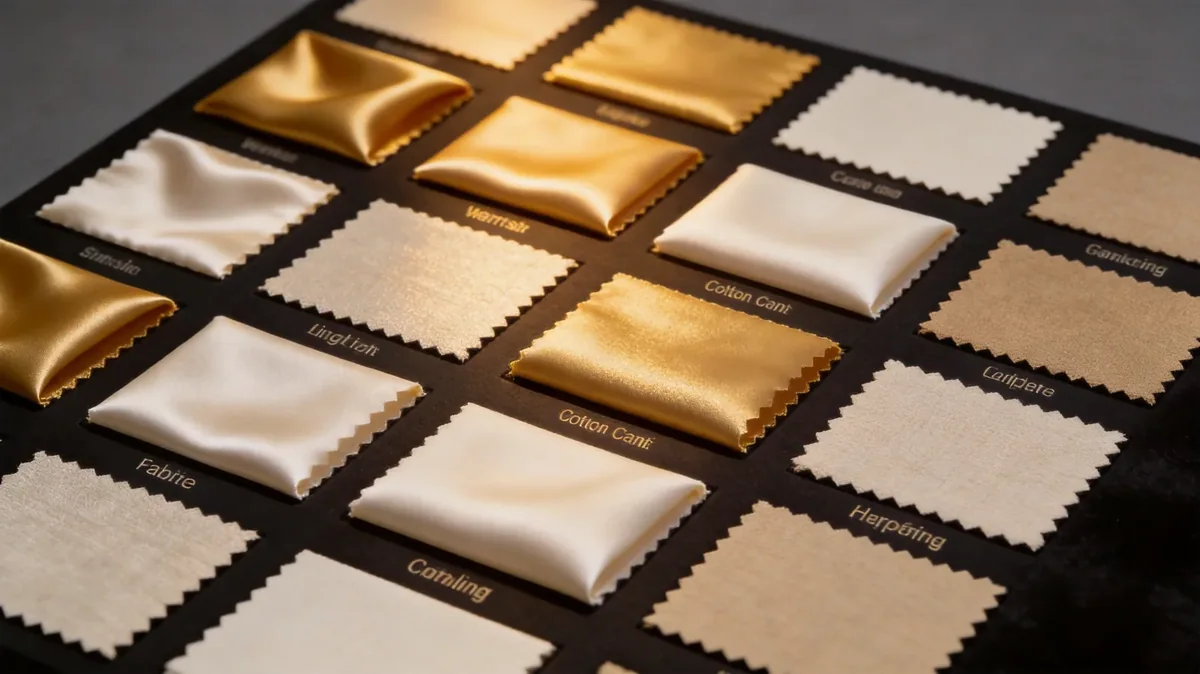
The Case: A Quilt That Would Not Line Up
A house asked for a 30 mm diamond quilt carried across a curved flap and onto the body panel below it, matching at the seam where the two meet. The samples returned with good loft and clean stitching, and the diamonds missed each other across the join by anything up to 4 mm. Nobody had specified a matching tolerance, and nobody had calculated whether 30 mm divides into the panel width.
The correction took two rounds and cost better than the tooling. The fix was arithmetic rather than craft: the panel width has to carry a whole number of repeats, or the last partial diamond at the edge announces itself immediately. Set the repeat to suit the panel rather than the drawing, and require match across every seam carrying the same grid.
What Quilting Does Structurally
Quilting joins a face layer, a loft layer and a backing layer into a single composite, and that composite behaves differently from any of its parts. It resists bending, it insulates the hand from the contents, and it holds a pressed form better than flat leather of the same weight. Done poorly, it also introduces new failure modes that flat panels never have.
Three behaviours matter. Loft recovery, because compressed padding that does not return leaves visible flats. Migration, because wadding that shifts inside the panel bunches at the corners over time. And telegraphing, where every stitch sits slightly below the surrounding surface and reads through poorly prepared leather as a permanent dimple.
Choosing the Repeat
Repeat size sets how the piece reads at distance. Around 25 mm suits small pieces and fine detail; 30-40 mm suits a body panel; anything above about 50 mm stops reading as quilting and starts reading as panelling. Choose a repeat that divides cleanly into the panel width, then check it again against the height before anything is cut.
Shape follows the same arithmetic. diamonds require an even number across the width so the grid is symmetric about the centre line; channel quilting is more forgiving, needing only consistent spacing between lines. Vertical channels visually lengthen a piece and horizontal ones widen it, which is the simplest way available to alter apparent proportion without changing a single dimension. Diagonal channels do neither and are best reserved for relaxed pieces where some visual movement is welcome.
- Repeat size
- 25-40 mm for a diamond; above 50 mm reads as panelling
- Loft
- 3-5 mm compressed height, recovering within twenty-four hours
- Stitch density
- 6-8 stitches per inch on a quilted face
- Repeat match
- Within 1 mm across any seam carrying the grid
- Hide consumption
- Roughly 12-18 percent above a flat equivalent panel
- Compression recovery
- 90 percent of original loft within twenty-four hours
- Seam allowance added
- Allow 6 mm beyond the last diamond apex
Choosing the Loft Layer
Loft is the layer teams specify least carefully and remember most often. A bonded wadding around 80-120 gsm suits panels and gives gentle doming. Sheet foam of 3-5 mm gives a firmer, more architectural result and holds a crisper edge at the seam. Both can be correct; what matters is that choice is made against how the panel will finally be handled.
Recovery is the property worth testing. Compress a sample to half its thickness for twenty-four hours and measure how much returns within a further twenty-four. Full return is the target; anything below about 90 percent will show as permanent flats where the piece has rested against a chair back or sat under a strap.
Stitch Density on a Quilted Face
Six to eight stitches per inch is the working range here, lower than on an unlined edge, because the thread is passing through three layers rather than two and every perforation is carrying more. Above about nine, the perforations crowd and begin to weaken the face leather along each line; below five, the stitch reads mechanical and the grid loses definition.
Thread choice changes again under padding. A slightly heavier thread is required so it sits proud rather than sinking into the loft, and it has to be bonded rather than spun, since thread buried inside padding is impossible to replace once it has worn through at a high point.
Building a Quilted Panel: The Sequence
Sequence determines whether the grid survives contact with a machine.
- Mark the grid on the face leather with a template rather than by measurement on each piece.
- Lay the loft to the backing first, tacking rather than fully bonding at this stage.
- Bring the face over the loft, aligning edges, and tack from the centre outward.
- Stitch the first line along the centre of the panel, working outward to the edges.
- Trim to net, allowing 6 mm beyond the last apex so nothing pulls into the edge.
- Press lightly from the reverse before closing, never from the face.
The order matters for one reason above all: working outward from the centre allows the panel to ease rather than bunch. Stitching from an edge inward pushes surplus material ahead of the needle, and the surplus has nowhere to go except into a permanent crease at the far edge of the panel.
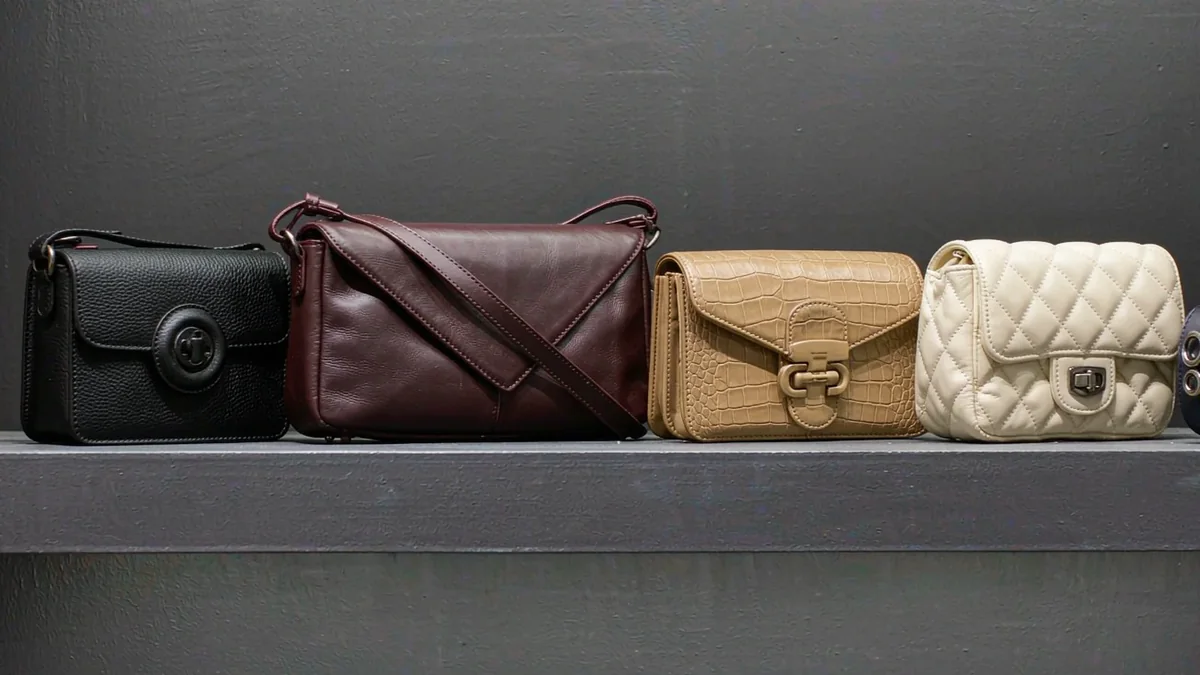
Matching Across Seams and Openings
Where a grid crosses a seam, the match requirement belongs on the drawing as a number rather than as a hope. Within 1 mm is achievable with a template and careful setting; beyond about 2 mm the eye finds the misalignment immediately, particularly on a piece carried where the seam sits at eye level.
Three practical steps protect it. Allow additional seam so the grid can be shifted by a partial repeat at setting. Locate each panel from a datum rather than from an edge, since edges vary. And agree which feature is sacrificial, because on a curved and flat panel meeting, one of them has to give. That agreement belongs in writing before templates are cut, since it cannot be resolved at the machine without cost to somebody.
What Quilting Costs
| Cost line | Effect | Note |
|---|---|---|
| Hide consumption | 12-18 percent above flat panel | Allowance plus unavoidable loss in matching |
| Templates and tooling | Paid once per repeat and panel | Reused across a whole collection |
| Machining time | Roughly double that of flat panels | Each line is set and run individually |
| Loft material | Small relative to hide | Foam costs more than wadding |
| Reject rate | Dominated by alignment faults | Templates and a datum remove most of it |
| Sampling rounds | Usually one more than flat work | Grid and match need proving together |
Hide consumption is the line teams underestimate most, and it is the one that arrives latest in the conversation, usually when the hides have already been ordered. A quilted panel needs more material than its flat dimension suggests, partly for the surplus worked outward during sewing and partly because a badly matched repeat is not recoverable. Planning around 12-18 percent above the flat equivalent avoids the awkward conversation later about why an order needs more hides. It also protects the schedule, because reordering hides mid-run is one of the few delays that cannot be recovered by working faster afterwards.
Where Quilted Panels Fail
Four faults account for most rejects, and all four are specification faults rather than skill faults. Each has a check that catches it on the first article rather than after fifty pieces have been built.
- Grid drift across a panel: set from a template and check at every fifth row.
- Loft migration to the corners: tack rather than bond until the lines are in.
- Flattening after compression: prove 90 percent recovery before release.
- Telegraphing through thin hides: raise hide substance or lower loft by a millimetre.
Reading Quilt Quality at Arm's Length
Judging a quilted panel is done at distance before it is done in the hand. Three metres away, the grid should read regular with no change in diamond size across the face; anything else means the template was bypassed. At arm's length, each apex should meet cleanly rather than carrying a small pucker, which points to tension rather than to marking.
Then run a hand across the face sideways to the stitch direction. The loft should feel even, without ridges along each line and without soft patches between them. Ridges mean the loft was compressed too firmly at setting; soft patches mean it migrated before the lines were in, and neither is improved by anything done afterwards.
Finally, set the piece down and look along it rather than at it. This grazing view is the one a boutique customer takes when something is on a shelf at eye level, and it is the view that reveals every irregularity the frontal view politely hides. Agreeing this as the approval view removes most disputes about whether a sample is acceptable.
Templates, Datums and Repeatable Results
Repeat problems almost never start at the machine; they start with how each panel is located. A panel positioned from its own cut edge inherits every variation in that cut, and across fifty panels the accumulated variation is what turns into visible drift down a row of diamonds. Locating from a fixed datum instead removes the accumulation entirely.
Templates carry the correction. A hard template punched for the repeat removes measurement from the process, so every panel is marked identically rather than approximately, and it survives a whole collection at negligible cost. Where a style is expected to run again, retain the template rather than the paper pattern, because the pattern will not reproduce the same grid a year later.
Agree the datum at sampling rather than at bulk. A single line marked on the face leather under the seam allowance is enough, provided every subsequent operation works from it. That one habit is the difference between a run where the twentieth panel matches the first and a run where the difference is quietly assumed to be acceptable.
How Quilting Changes the Later Stages
A quilted panel arrives at closing thicker, stiffer and less forgiving than a flat one, and every downstream step has to allow for it. Seam allowances want an extra millimetre or two because the composite resists turning. Edge paint has more surface to cover at the fold, and needs a further coat to avoid showing the loft beneath. And closures sited against a quilted face need backing, since the soft surface will not hold a fixing on its own.
Packing changes too, and this is where damage is usually introduced. A quilted piece should never be compressed flat for transit, because loft recovery is good but not instant, and a carton that squeezes the panel for three weeks will produce an arrival that nobody approves. Give grid faces clearance rather than contact, and let the dust cover rather than the carton take any incidental pressure.
A repeat that does not divide into the panel width cannot be matched by craft alone. Set repeat and panel dimensions together, then specify the tolerance.
Programme Figures and Development
Our programme runs through our validated partner factory Quanzhou Yingming Bags, an SGS-validated site with 7 production lines and roughly 200,000 pcs per month of capacity, holding export experience since 2014. Sampling takes 6-10 working days, or 12-15 where templates have to be cut for a new repeat; bulk occupies 35-50 days; and minimums sit at 500 pcs per style and colourway leaving FOB Xiamen.
Every lot is inspected on the standard plan, a sample drawn at AQL 2.5 under ISO 2859-1 and read against a retained reference rather than a description. The hides suited to this work are set out on luxury materials, the bench work behind it on craftsmanship, and the development sequence on luxury sampling.
Set the repeat against the panel before costing
Send your panel dimensions, target repeat, loft preference and the number of colourways per style, together with any seam you need the grid to cross. You will receive a quilt specification naming repeat, loft, stitch density, match tolerance and hide allowance. Request a quote.
Frequently Asked Questions
What does quilting actually add to a panel?
Loft and structure. It joins a face layer, a padding layer and a backing into one composite that resists bending, insulates the hand from the contents and holds a pressed form better than flat leather of the same weight.
What repeat size should be used?
25-40 mm for a diamond on most panels. Below about 25 mm reads busy on a large piece, and above roughly 50 mm stops reading as quilting at all and begins to read as panelling.
Why did the diamonds fail to match across a seam?
Because the repeat did not divide into the panel width. Matching is arithmetic first: unless the panel carries a whole number of repeats, the partial diamond at the edge gives the misalignment away.
How much loft is correct?
Three to five millimetres of compressed height, chosen for how the panel will finally be handled. Bonded wadding gives gentle doming, while sheet foam gives a firmer and more architectural result.
How much loft recovery is acceptable?
Ninety percent or better within twenty-four hours of release. Compress a sample to half thickness, hold it, then measure return; anything short of that target leaves permanent flats where the piece rests.
What stitch density suits a quilted face?
Six to eight stitches per inch. The thread passes through three layers, so above about nine the perforations crowd and weaken the face, and below about five the grid loses definition.
Why stitch from the centre outward?
Because it lets the panel ease rather than bunch. Working from an edge inward pushes surplus material ahead of the needle, and that surplus settles into a permanent crease at the far edge.
How is wadding stopped from migrating?
By tacking rather than bonding it in place until the stitch lines are in. Bonding early locks the layers before the lines have distributed them, which is when bunching at the corners begins.
How much more hide does quilting need?
Around 12-18 percent above an equivalent flat panel, covering both the surplus worked outward during sewing and the loss that comes with matching a grid across pieces.
How long does a quilted style take to develop?
Sampling takes 6-10 working days, rising to 12-15 where templates need cutting for a new repeat. Grid and match usually need one additional round compared with flat work.
What causes dimples along every stitch line?
Telegraphing, where the stitch sits below the surface and reads through insufficiently firm leather. Raise the hide substance or reduce loft by around a millimetre to remove it.
How are quilted lots inspected?
By drawing a sample at AQL 2.5 under ISO 2859-1 and reading it against a retained reference. The checks that matter are repeat consistency, match at every seam, loft uniformity and compression recovery.
People Also Ask
Is channel quilting less demanding than diamond?
Yes. Channels need only consistent spacing between lines, while diamonds must be symmetric about the centre line and match on the diagonal as well as straight across.
Can quilting be applied to a curved panel?
It can, with a paper pattern proved flat first and then eased onto the curve. Expect one additional sampling round, and allow more tolerance for movement than on a flat face.
Does quilting make a piece heavier?
Noticeably. Three layers always weigh more than one, though the increase is modest compared with the loft and structure gained, which is why it remains popular on mid-size pieces despite the additional weight involved.
Should the backing be visible inside the piece?
Usually not. A lining is set over the backing so the interior reads cleanly, which also protects the stitch line from abrasion by whatever the customer carries.
Can an existing flat style be quilted without redevelopment?
Rarely, and not advised. Panels need resizing for hide allowance and the repeat has to be set against the new dimensions, so plan a full round of sampling rather than a quick revision.
Sources and further reading
Every figure on this page is either our own programme data or attributed below. Open the originals before you write them into a specification.
- ISO - International Organization for StandardizationISO Publisher of ISO 2859-1 for attribute sampling and the ISO 105 series covering colour fastness of leather and thread.
- ASTM International standardsASTM International Publisher of test methods covering seam strength, abrasion resistance and compression behaviour of padded assemblies.
- Leather Working GroupLeather Working Group Environmental auditing programme for tanneries, referenced when assessing hide provenance and finish suitability.
- SGS - Inspection and verificationSGS Third-party validation and goods-in inspection body referenced for site validation and pre-shipment checks.