The Luxury Handbag Market: Buyer Behavior Explained for Brands
Buyer behaviour in the luxury handbag market reduces to four gates a sample has to pass and a handful of numbers that decide whether an enquiry becomes an order. Buyers read silhouette at about 1.5 metres, hardware at about 300 millimetres, the interior at arm's length, and they cycle a closure roughly 200 times before committing. They judge a medium body against a 900 g carry target, plan assortments on a 60 core to 40 seasonal split, and expect a first run to clear 500 pieces per style and colourway. This page sets each of those against what a production team can actually control, from a 6-10 working days of sampling window to inspection at AQL 2.5 under ISO 2859-1, and shows where our validated partner factory Quanzhou Yingming Bags, an SGS-validated site with 7 production lines and roughly 200,000 pcs per month of capacity, holding export experience since 2014, plans capacity around them.
What Buyers Decide Before They Enquire
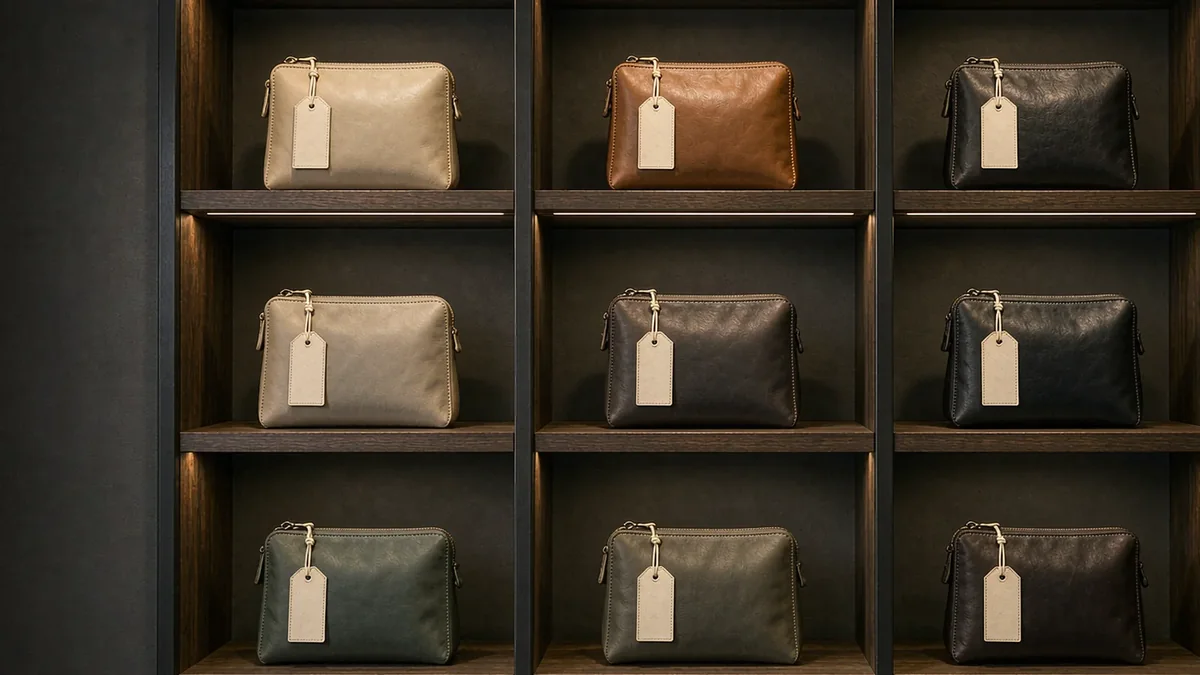
Most of the decision is made before a buyer makes contact. By the time an enquiry arrives, the category, the size band, the price band and roughly the colour story are already settled; what is being tested is whether a house can execute. The first exchange is therefore not a negotiation but an audit, and the three questions underneath it are whether the piece will photograph well, whether the hardware will still look right after a season, and whether the second delivery will match the first.
Three consequences follow. A portfolio that shows finishes, edges and interiors beats one that shows styled shots, because the buyer is looking for evidence of control rather than atmosphere. A spec sheet carrying numbers beats one carrying adjectives, for exactly the same reason. And a house that states its tolerances without being asked moves faster than one that waits to be pressed, since having to ask is itself read as a signal that the numbers were not ready.
The practical move is to answer the four gates before they are raised. Put the figures in the first reply: planned tolerance, stitch density, plating thickness, sampling window and minimum. We have watched the same enquiry produce a quote in two days and stall for three weeks, and the difference was never price. It was whether the buyer had to ask.
The Four Gates a Sample Has to Pass
Every evaluation we have watched reduces to four gates, and they arrive in a fixed order because they follow how a person examines an object: far, near, inside, then in use. Each gate has a distance or a count, and each has a dominant failure mode. Writing them into the development brief means the sample is judged against criteria you selected rather than against criteria the buyer happens to reach for on the day.
They also differ sharply in what it costs to fix them late. Silhouette and proportion are decided at the pattern and cost little to correct at the sample stage. Hardware finish is decided at specification and costs more, because correcting it means a new set of fittings. Closure feel is decided at sourcing and costs most of all once the body is built, since it can mean a different closure entirely.
| Gate | Read at | What is judged | Dominant failure |
|---|---|---|---|
| Silhouette | About 1.5 m | Outline and proportion | Reads smaller in person than it does in the photograph |
| Hardware | About 300 mm | Finish, weight, alignment | Two fittings in visibly different brass |
| Interior | Arm's length | Lining, order, odour | Lining colour fights the shell |
| Closure | About 200 cycles | Smoothness, sound, wear | Magnet loses pull or the zip drags at the corner |
Gate One: Silhouette Read at 1.5 Metres
The first judgement happens at about 1.5 metres, before anything is touched. What survives at that distance is outline and proportion, and what kills a piece at that distance is a shape that photographs larger than it is. Buyers routinely hold the piece up beside the image on a phone, and any mismatch is read as a fault in the piece rather than as a trick of the lens.
Hold the base-to-height ratio between 0.6 and 0.7 on a signature body and most of that risk disappears, because the proportion survives both the photograph and the hand. Below about 0.6 a piece reads tall and tips when set down; above 0.7 it reads wide and loses presence on the arm. Both are read as a design error even when nothing else about the piece is wrong.
Give the buyer a dimensioned sheet showing the same three views used in the photography, so the comparison is made against their own reference rather than against memory. Names do very little at this gate. Numbers do all of the work, and the two that matter most are the ratio and the width at the base, both recorded in millimetres and both repeated on the sheet that goes to the line.
Gate Two: Hardware Read at 300 Millimetres
The second gate is close, around 300 millimetres, and it is where most first samples lose. Buyers turn the piece, look along the edge of a fitting, check that a lock and a foot are the same brass, and weigh the hardware in the hand. A fitting that is light for its size is read as a cost decision even when it is not; a mismatched finish is read as carelessness and is rarely forgotten.
Specify plating at 0.15-0.3 µm on decorative fittings and above 0.3 µm on anything carrying load, and verify it with 24 hour salt spray exposure. Match every part in the set to a single finish reference and keep that reference with the tech pack, because a set assembled from two batches will not match, and the difference is plainly visible at this distance.
The gate is passed by consistency rather than by expense. A modest fitting finished evenly across the set beats a costly one finished unevenly, and the buyer will choose the even one every time. Where spending does earn its place is a custom die for the anchor fitting, since that protects the shape from being echoed. The reasoning behind that decision is set out on our craftsmanship page.
Gate Three: Interior Read at Arm's Length
The interior is the gate buyers believe they skip and do not. They open the piece, look at how it is finished inside, run a hand along the lining seam, and notice whether the lining colour supports the shell or fights it. Odour is judged at this gate as well, and a solvent note that survived packing will be remembered long after the shape itself has faded from memory.
Two numbers carry this gate. Keep the lining seam allowance consistent with the body so the interior does not read as a separate, faster piece of work, and specify adhesive with a documented open time and a cure window before packing. Then let the piece rest and vent before it goes into a bag. The wait costs a day. The smell costs the reorder.
Gate Four: Closure Cycled About 200 Times
The last gate is use. A buyer will open and close a piece perhaps 200 times across an evaluation, usually without counting, and what they are testing is whether the closure feels the same on the last cycle as on the first. Magnets lose pull, zips develop a drag, turn-locks begin to bind. All three appear within the first few hundred cycles and not one of them appears in a photograph.
Cycle the closure before the sample ships, around 200 times, and record whether the pull has changed. On a magnetic closure, measure the pull after cycling and again after 24 hours at rest. On a zip, specify tape and slider as a matched set and confirm the pull travels without catching at the corners, since the corner is where a good zip becomes an irritating one.
Check the sound as well. Buyers rarely articulate it, but a closure that clicks, scrapes or thuds differently from the reference is noticed, and the notice is registered as a quality judgement rather than an acoustic one. Specifying the closure as a matched, cycled set, with the result written down, is the only reliable way to control it across two deliveries.
What the Numbers Say About Assortment
Behaviour shows up in assortments as clearly as in samples. A first buy from a new label typically concentrates: two colourways on a core style, one on a seasonal style, and a deliberate split between the two. We plan capacity around a 60 core to 40 seasonal split, because the core half is the part that repeats and the seasonal half is not, and the two behave very differently once they reach the bench.
Specify the repeat half more tightly. Core pieces are the ones reordered, which means a drift in them is visible across two deliveries and the buyer will see it side by side. A drift in a seasonal piece disappears with the season. Hold ±1.5 mm on matched panels and 8-9 SPI on body seams for anything intended to repeat, and let the seasonal half run looser only where the design genuinely requires it.
- Carry weight target
- Under 900 g for a medium top-handle body
- Strap drop
- 220-260 mm on a shoulder piece, recorded in millimetres
- Panel tolerance
- ±1.5 mm on matched panels, ±2 mm on gusset depth
- Stitch density
- 8-9 SPI on body seams across every colourway
- Plating thickness
- 0.15-0.3 µm decorative, above 0.3 µm load-bearing, 24 hour salt spray
- Closure cycling
- About 200 cycles before a sample ships, pull recorded after rest
- Assortment split
- 60 core to 40 seasonal on a first buy
- Colourways
- Two on a core style, one on a seasonal style
- Minimum quantity
- 500 pcs per style and colourway
- Sampling window
- 6-10 working days, 12-15 for complex builds
- Bulk window
- 35-50 days from approval of the confirmed sample
- Inspection
- AQL 2.5 under ISO 2859-1, defect classes defined
- Shipment terms
- FOB Xiamen
- Cost anchor
- USD 4.80 trim and hardware allowance before material
The Cost Anchor Behind Every Behaviour
Every behaviour above carries a cost, and buyers know it even when they do not raise it. The useful way to hold that conversation is with one planning anchor rather than a full breakdown. We use USD 4.80 as the reference allowance for trim and hardware on a mid-specification piece, before material, and discuss every upgrade as a delta against it.
That framing changes the conversation. Instead of asking whether a fitting is expensive, the buyer asks how far the upgrade moves the anchor, and the answer is usually small enough to decide in minutes. Tightening a tolerance from ±2 mm to ±1.5 mm adds bench time but not material, so the delta stays inside the anchor on a 500 piece run. Moving to a custom die does not, and should be presented as a separate decision with its own justification.
It also keeps the material conversation honest. Material is the largest single line on most pieces and is better discussed separately, against the materials reference rather than folded into a trim allowance where it cannot be seen. Buyers who understand where the money goes make faster decisions, and they complain considerably less afterwards.
Timing: What Buyer Patience Looks Like
Patience is not unlimited and it is not evenly distributed. It is generous during sampling and short during bulk, and a house that treats both alike will lose orders it deserved to win. Sampling is where a buyer expects conversation, revision and a second attempt. Bulk is where any slippage is read as a broken promise, whatever the cause and however good the explanation.
State the windows up front: 6-10 working days for a standard sample, 12-15 working days for a complex build involving custom hardware or an unusual closure, and 35-50 days for bulk from approval. Quote them together, in writing, and say what resets them. A revision to the pattern resets sampling. A change of material resets both. The sequencing behind those windows is written up on our sampling page.
Turning Behaviour Into a Specification
The point of reading behaviour is to convert it into lines on a spec sheet, because the sheet is the only part of the conversation that survives into production. Each gate becomes a number: the 1.5 metre read becomes a ratio and a dimensioned sheet; the 300 millimetre read becomes a plating range and a finish reference; the interior read becomes an adhesive and a rest period; the closure gate becomes a cycle count.
Then order the numbers by consequence, because a sheet that lists everything equally tells the line nothing. The figures that cause a return are carry weight, closure feel and lining finish. The figures that cause a complaint are hardware consistency and edge finish. The figures that cause nothing at all until there is a reorder are dimensional drift between runs. Ordered that way, the sheet becomes an instruction rather than a record.
Proportion
State the base-to-height ratio, 0.6-0.7 on a signature body, and attach a dimensioned sheet in the same three views used for the photography.
Hardware
State plating at 0.15-0.3 µm, verified by 24 hour salt spray exposure, with one finish reference covering every part in the set.
Closure
State that the closure has been cycled about 200 times, with the pull recorded after cycling and again after 24 hours at rest.
Tolerance
State ±1.5 mm on matched panels and 8-9 SPI on body seams, and say clearly which of the two the line must stop on.
What to Send With a First Enquiry
Enquiries carrying information are answered faster, and the extra work is usually an afternoon. Five things make the difference, and none of them requires a finished tech pack.
- A dimensioned drawing, or a clear sketch with the three views you intend to photograph.
- Target carry weight and strap drop in millimetres, for example under 900 g with a 220-260 mm drop.
- Material direction and any restricted-substance requirement applying to your market.
- Quantity per colourway, and whether the style is intended to repeat next season.
- The delivery window and the port, so capacity can be checked before anything is promised.
Then add one sentence on what matters most. A buyer who says closure feel is the thing will be taken down a different development path from one who says silhouette is the thing, and both are right. Saying which is which at the start saves a sampling round, and a sampling round is the most expensive saving available at this stage of a programme.
Proportion, plating, cycle count and tolerance in the first reply. A buyer who has to ask for the numbers has usually already started looking at the next house on the list.
How Capacity Is Planned Around This
None of the above means much if the line cannot hold it. Capacity is planned against the same figures: 500 pieces per style and colourway as the working minimum, 6-10 working days for sampling, 35-50 days for bulk, and attribute inspection at AQL 2.5 under ISO 2859-1 before anything ships. Those four are what make a promise deliverable rather than merely aspirational.
Our validated partner factory Quanzhou Yingming Bags, an SGS-validated site with 7 production lines and roughly 200,000 pcs per month of capacity, holding export experience since 2014, works to those figures, with shipment on FOB Xiamen terms. The reason for stating them plainly is simple: behaviour is read against expectations, and expectations are set by what a house says it can do rather than by what it later explains.
Where Buyer Behaviour Is Heading
Three shifts are visible in what buyers ask for, and all three are specification shifts rather than style shifts. The first is weight: more buyers now set a carry target and check it against a reference, which pushes lining and hardware decisions earlier in development. The second is serviceability: buyers ask whether a strap or a cord can be replaced without unpicking the body, which changes how those parts are attached.
The third is evidence. Buyers increasingly ask what was measured rather than what was claimed, and a house that can produce a cycle count, a salt spray result and an inspection record holds an advantage that no photograph can match. For the wider picture of where these shifts sit across the season, see our luxury trends page.
Turn buyer behaviour into a specification
Send the shape, the carry target and what you want the closure to feel like. You will receive a written specification covering proportion, hardware, closure cycles and tolerance, with the sampling and bulk windows stated up front. Request a quote.
Frequently Asked Questions
How do luxury handbag buyers evaluate a first sample?
In four gates, and usually in this order: silhouette at about 1.5 metres, hardware at about 300 millimetres, interior at arm's length, and the closure cycled roughly 200 times. Each gate maps to one line on the spec sheet, so a sample judged on your numbers is far easier to pass than one judged on whatever the buyer happens to notice.
What carry weight should a medium handbag body target?
Under 900 g for a medium top-handle with a strap drop of 220-260 mm. Buyers increasingly weigh a piece and compare it with their own reference, so stating the target in the first reply avoids a correction later. Weight is decided by lining, reinforcement and hardware rather than by the shell alone.
Why do buyers cycle a closure about 200 times?
Because that is roughly what an evaluation involves, and it is where wear appears first. Magnets lose pull, zips develop a drag and turn-locks begin to bind, all within a few hundred cycles and none visible in a photograph. Cycling the closure before the sample ships is the least expensive control available.
How many colourways should a first buy carry?
Two on a core style and one on a seasonal style, against a working minimum of 500 pieces per style and colourway. Fewer colourways keep the shape legible and concentrate the run; more fragment both the identity of the piece and the bench that has to build it.
What does a 60 core to 40 seasonal split actually mean?
It means six of every ten pieces are planned to repeat next season and four are not. The repeating half is specified more tightly, at ±1.5 mm on matched panels and 8-9 SPI on body seams, because a drift there is visible across two deliveries. The seasonal half may run looser where the design needs it.
How long should sampling take on a new style?
Six to ten working days for a standard build, and twelve to fifteen for a complex one involving custom hardware or an unusual closure. The window resets if the pattern is revised and resets again if the material changes, which is why both should be settled before sampling begins.
How long does a bulk run take after approval?
Thirty-five to fifty days from approval of the confirmed sample, assuming material is available and the specification is frozen. Changes after approval are the usual cause of slippage, and buyer patience at this stage is short, so any change should be costed in days before it is accepted.
What is a reasonable minimum order quantity?
Five hundred pieces per style and colourway. The figure is set by what a bench needs in order to hold consistency: below it, setup time per piece rises, colour matching across hides becomes harder, and the risk of visible drift between the first and last pieces climbs sharply.
How is consistency checked before shipment?
By attribute sampling at AQL 2.5 under ISO 2859-1, with defects classified and defined accept and reject counts for the lot size. Alongside that, closures are cycled, hardware is checked against the retained finish reference, and dimensions are measured against the approved sample rather than the drawing.
Should hardware be a custom die or a catalogue part?
A custom die, if the piece is intended to repeat. It costs more at the start and removes the possibility of a near-identical fitting appearing on a comparable piece. A catalogue part is acceptable for a seasonal style that will not return, where the recognition value is lower.
What causes most first-sample rejections?
Hardware inconsistency, lining odour and closure feel, broadly in that order. All three are specification problems rather than design problems, and all three are caught by controls that cost little: one finish reference for the whole set, a documented cure window before packing, and a cycle count before shipping.
What should a first enquiry include?
A three-view sketch with dimensions, the target carry weight and strap drop, the material direction and any restricted-substance requirement, the quantity per colourway, whether the style will repeat, and the delivery window and port. One sentence on what matters most saves a sampling round.
People Also Ask
How do luxury handbag buyers choose a bag?
In four gates, at fixed distances: silhouette at about 1.5 metres, hardware at about 300 millimetres, interior at arm's length, then a closure cycled roughly 200 times. Carry weight against a 900 g target and a 220-260 mm strap drop usually settle the choice before price is discussed.
What do buyers check first on a handbag sample?
The silhouette, read standing back at about 1.5 metres, because proportion is the least costly thing to correct at the pattern and the most expensive to correct later. Hardware consistency, lining odour and closure feel follow, and those three account for most first-sample rejections.
How many pieces is a typical first luxury bag order?
Around 500 pieces per style and colourway is the practical minimum, usually split into two colourways on a core style and one on a seasonal style. A first buy is then planned on a 60 core to 40 seasonal split, so six of every ten pieces are built to repeat.
How long does luxury handbag sampling take?
Allow six to ten working days on a standard build, or twelve to fifteen where custom hardware or an unusual closure is involved. The clock restarts if the pattern is revised and restarts again if the material changes; bulk then runs 35-50 days from approval of the confirmed sample.
Why does closure feel matter to handbag buyers?
Because it is the first thing an evaluation tests and the last thing a built body can be changed to suit. Around 200 cycles is enough for a magnet to lose pull, a zip to develop drag or a turn-lock to bind, and none of that shows in a photograph.
Sources and further reading
Every figure on this page is either our own programme data or attributed below. Open the originals before you write them into a specification.
- ISO - International Organization for StandardizationISO Publisher of ISO 2859-1 for attribute sampling procedures and the ISO 105 series covering colour fastness of leather and trim.
- ASTM International standardsASTM International Publisher of test methods covering seam strength, abrasion resistance and dimensional stability of assembled leather goods.
- Leather Working GroupLeather Working Group Industry body setting environmental and traceability audit protocols for leather tanneries and the supply chains behind them.
- SGS - Testing, Inspection and CertificationSGS Third-party verification body covering site audits, restricted-substance testing and pre-shipment inspection protocols.