How Resale Value Shapes Luxury Handbag Design: A Maker's Case
Resale value is decided at the specification stage, not at the boutique. A piece that still looks right after three years of use is priced by four things: the mouth, the corners, the hardware finish and the handles. Design for those four and the second owner pays for the first one. This page follows a piece that came back to market after three years and held just over 60% of its retail price, then sets the numbers behind each of the four wear points: a 6-8 mm binding at the mouth, an 8-12 mm corner radius, plating at 0.15-0.3 µm verified by 24 hour salt spray, and handle growth held under 4 mm after 24 hours at 4 kg. Our validated partner factory Quanzhou Yingming Bags, an SGS-validated site with 7 production lines and roughly 200,000 pcs per month of capacity, holding export experience since 2014, builds to those figures, with sampling in 6-10 working days and bulk in 35-50 days.
A Piece That Came Back Three Years Later
A medium top-handle in vegetable-tanned calfskin was photographed for a resale listing three years after it left us. The seller had used it perhaps four days a week, carried it by the handle rather than the strap, and never had it repaired. The listing carried eight photographs, and every one of them was of a wear point rather than of the shape: the mouth, the four base corners, the lock and the handle roots.
We looked at it the way a buyer would. The mouth had rounded rather than collapsed, because the binding was cut at 7 mm and the reinforcement behind it had been carried into the gusset rather than stopped at the corner. The corners had scuffed to a lighter tone without breaking the grain, which is what an 8-12 mm radius buys you: the wear lands on a curve and reads as patina instead of damage. The lock had dulled slightly and had not flaked.
The handle roots were the only place where the piece showed its age, and the reason was instructive. The strap had been specified as a single layer at 3.0 mm, and after three years it had grown by just under 4 mm against the reference mark. Nothing had failed. But growth at the root is the first thing a resale photograph shows, because it changes the way the piece hangs, and it is the one thing on this piece we would specify differently today.
What Resale Actually Prices In
Resale does not price in the design intent. It prices in four observable things, in this order: whether the mouth still holds its line, whether the corners have broken, whether the hardware still reads as finished metal, and whether the handles have grown. Everything else on the listing is decoration. A buyer scrolling photographs is making those four judgements in about ten seconds.
That order matters for a programme, because it tells a house where to spend. Spend on the four wear points and the piece photographs well after three years. Spend on detailing that only shows in person and the money does not come back. This is the argument for moving spend from visible ornament to invisible reinforcement, which is not a popular decision at the sketch stage and is a very popular one three years later.
It also tells a house where to be honest. Some constructions photograph beautifully when new and badly after a year: a soft body with minimal reinforcement, a mouth held by adhesive alone, a light plating on a fitting that is touched every time the piece is opened. None of those are wrong choices for a seasonal piece. All of them are wrong choices for a piece meant to hold value.
Wear Point One: The Mouth and the Binding
The mouth is where a piece is judged first and fails first. It is handled every time the bag is opened, it carries the load of the contents against the top edge, and it is the line the eye follows in a photograph taken from above. A mouth that has collapsed reads as a worn bag at any price. A mouth that has merely rounded reads as a bag with a history.
Two numbers decide which happens. Binding width at 6-8 mm gives the edge enough material to absorb handling without thinning visibly, and it gives the stitch line somewhere to sit that is not on the fold. Reinforcement behind it, carried into the gusset rather than stopped at the corner, is what stops the mouth from dropping between the handles. Write both into the pack, because neither is visible in a finished photograph and both are easy to omit.
Then specify how the mouth behaves when the piece is empty. An empty body that holds its opening is photographed far more often than one that folds flat, and a gentle memory at the top edge will hold. That is a reinforcement decision, not a stiffener decision: stiffener added at the mouth to hold shape tends to crack along the fold within two seasons, which is a far worse outcome than a soft mouth that simply relaxes.
Wear Point Two: Corners and the Base
Corners take the abrasion of every surface a bag is set down on, and the base takes the rest. The failure is not gradual; a corner either scuffs along a curve or it breaks at a point, and once the grain has broken no amount of conditioning brings it back. This is the single most common reason a three-year-old piece is listed as fair condition rather than good.
Specify a corner radius of 8-12 mm on a structured body and hold it across every size in the family. Below about 8 mm the wear concentrates and cuts; above about 12 mm the piece starts to read soft and loses the architecture that made it worth buying. On the base, use a continuous piece rather than a joined one, and put the feet where the load actually lands rather than where they look symmetrical.
Abrasion is measurable rather than a matter of opinion. Martindale-type testing under the ISO 12947 series gives a cycle count a spec sheet can quote, and 500 cycles at the corner with no grain break is a reasonable internal bar for a piece intended to hold value. Ask for the number. A house that has tested corners will tell you the cycle count without being pressed.
Wear Point Three: Hardware That Keeps Its Finish
Hardware is touched on every use and photographed at close range, and it is where the gap between a new piece and a three-year-old piece is most obvious. Plating that is too thin wears through at the points of contact: the edge of a turn-lock, the underside of a foot, the curve of a handle ring. Once the base metal shows, the piece reads as tired regardless of the leather.
Specify 0.15-0.3 µm on decorative fittings and above 0.3 µm on anything carrying load, and verify it with 24 hour salt spray exposure rather than by eye. Then match every part in the set to one finish reference, because a lock and a foot that age at different rates look worse than a set that ages evenly. Even ageing is read as patina; uneven ageing is read as a defect.
The finish reference has to be retained. It is not enough to approve a sample; the reference against which it was approved has to sit with the tech pack so a second run can be compared against the same object. This is the discipline described on our craftsmanship page, and it is what separates a piece that holds value from one whose second delivery quietly differs from its first.
Wear Point Four: Handles That Do Not Grow
Handles and straps are loaded in tension every time the piece is carried, and leather under sustained tension creeps. The growth is small, typically a few millimetres, but it changes the way the piece hangs and it is visible at the root where the strap meets the body. It was the single flaw on the piece we opened with, and it is the most common structural complaint on three-year-old bags.
Set a number and test it. Hang 4 kg from the handle for 24 hours and measure the drop against a reference mark: under 4 mm of growth is a defensible bar for a piece intended to hold value. Specify the strap as a laminated or lined construction rather than a single layer at 3.0 mm, carry the reinforcement past the root into the body panel, and state the temper as a measured bend value rather than as a word.
Then make it replaceable. A strap that can be swapped without unpicking the body turns the most likely long-term failure into a service visit instead of a write-off, and it is one of the few design decisions that a resale listing will actually mention. Buyers read replaceability as evidence that the piece was designed to last, and they pay for it.
- Mouth binding
- 6-8 mm, with reinforcement carried into the gusset
- Corner radius
- 8-12 mm on a structured body, held across every size
- Corner abrasion
- 500 cycles Martindale-type under ISO 12947, no grain break
- Plating thickness
- 0.15-0.3 µm decorative, above 0.3 µm load-bearing
- Finish verification
- 24 hour salt spray, one retained finish reference per set
- Handle growth
- Under 4 mm after 24 hours at 4 kg against a reference mark
- Strap construction
- Laminated or lined, not a single layer at 3.0 mm
- Handle drop
- 220-260 mm on a shoulder piece, recorded in millimetres
- Feet
- Four, placed at the load points rather than for symmetry
- Identity mark
- Blind deboss at 0.3-0.5 mm depth, 12 mm from the interior seam
- Serviceability
- Strap and cord replaceable without unpicking the body
- Parts window
- Matching parts held for three years from last delivery
Designing for a Second Owner
Designing for resale means designing for a person who will not have the box, the card or the dust bag, and who will judge the piece from photographs taken on a phone. That person needs three things from the object itself: it has to be identifiable, it has to be datable, and it has to be repairable. None of those three require ornament, and all three are specification decisions.
Identifiable means a cue that survives at small scale and in poor light, which is why a custom fitting carries more resale value than a distinctive stitch pattern. Datable means an identity mark inside the piece that can be read without specialist knowledge: a blind deboss at 0.3-0.5 mm depth, set about 12 mm from the interior seam so it does not sit on a fold. Repairable means the parts most likely to fail come off without destroying the body.
Colour counts here too. Neutral tones hold value better than seasonal ones across three years, not because they are safer but because the second owner is buying a piece rather than a season. That argues for a core colourway specified to the tighter standard described above, and for seasonal colourways treated as a separate decision with their own expectations.
Identity That Survives Without the Box
A resale listing is a document, and it is built from what the object can still say about itself. A blind deboss reads in a photograph. A serial or date code that has rubbed away does not. A hardware mark on the reverse of a fitting reads; a printed card in a drawer does not. The rule is simple: anything that establishes identity should be on the piece, in metal or in leather, and placed where hands do not reach.
Placement is more important than size. Interior marks belong 12 mm off a seam and away from a fold, because a fold is where debossing fills in over time. Hardware marks belong on a reverse face where nothing rubs. Both should be recorded on the spec sheet as a position in millimetres rather than as a description, since descriptions are what drift between the first run and the third.
Serviceability as a Design Requirement
Serviceability is usually treated as an afterthought and should be treated as a specification line, because it is the least costly insurance available on a piece intended to last. Write three things into the pack: which parts can be replaced, how long the replacement takes, and how long matching parts will be held. A strap that comes off in under half an hour without unpicking the body is a service visit. A strap that requires the body to be opened is a write-off.
Then hold the parts. Matching fittings and matching leather from the same dye lot are what make a repair invisible, and neither can be sourced three years later if they were not set aside at the time. We plan on holding matching parts for three years from the last delivery, which is long enough to cover the point in a piece's life when a repair is most likely to be worth doing.
| Wear point | What a resale photograph shows | Specification that controls it | Test or reference |
|---|---|---|---|
| Mouth | Collapsed or still holding its line | 6-8 mm binding, reinforcement into the gusset | Empty-body stance recorded in a photograph |
| Corners | Scuffed along a curve or broken at a point | 8-12 mm radius, continuous base panel | 500 cycles Martindale-type, ISO 12947 |
| Hardware | Base metal showing at contact points | 0.15-0.3 µm decorative, above 0.3 µm load-bearing | 24 hour salt spray against a retained reference |
| Handles | Growth at the root, change in how it hangs | Laminated strap, reinforcement past the root | Under 4 mm growth after 24 hours at 4 kg |
The Numbers to Write Into the Brief
A brief that mentions resale in prose does nothing. A brief that carries numbers changes what reaches the bench. The twelve figures above are the ones worth writing down, and the four that matter most are the binding width, the corner radius, the plating range and the handle growth limit. Everything else can be adjusted later without much consequence; those four cannot.
Write them with tolerances, because a number without a tolerance is not a specification. Binding at 6-8 mm rather than 7 mm. Corner radius at 8-12 mm rather than a radius. Plating at 0.15-0.3 µm rather than a thickness. Growth under 4 mm rather than minimal growth. The band is what makes the figure testable, and a testable figure is the only kind that survives a second run.
How Resale Thinking Changes a Sampling Round
Sampling is where resale is won, because it is the only stage at which a construction can be changed without cost. A standard sample takes 6-10 working days and a complex one 12-15, and the round should be spent on the four wear points rather than on styling. Ask for the mouth to be photographed empty, for the corners to be abraded, for the hardware to be cycled and for the handle to be loaded and measured.
Four checks, one round. Photograph the empty body from above and confirm the mouth holds its line. Abrade a corner to 500 cycles and confirm the grain has not broken. Cycle the closure about 200 times and confirm the pull has not changed. Hang 4 kg from the handle for 24 hours and confirm the growth is under 4 mm. None of those four add more than a day to the round, and each removes a category of complaint three years later.
The sequencing and what resets it is set out on our sampling page. In short: a pattern revision resets the window, and a material change resets it as well. Deciding the four wear points before sampling starts is worth more than any amount of revision afterwards, because wear behaviour cannot be added to a body that has already been built.
What Material Choice Does to Resale
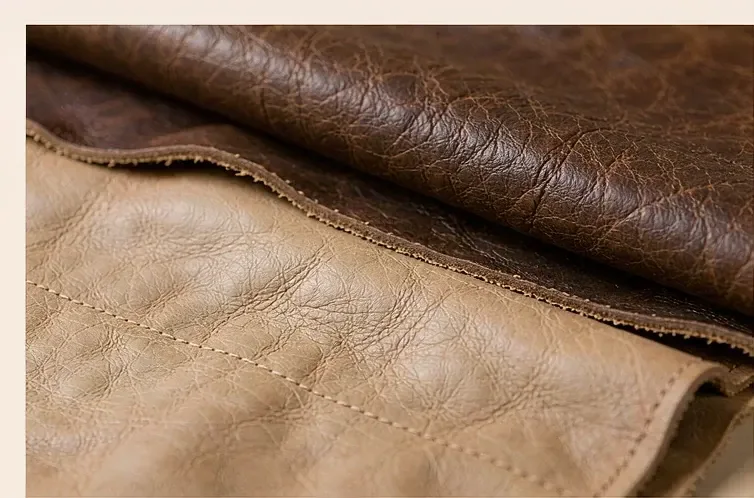
Material is the largest single line on most pieces and the largest single driver of how a piece ages. A full-grain calfskin with a light finish will scuff, mark and then even out, which is what makes it photograph well after three years. A corrected grain with a heavy finish will look untouched for a season and then crack at the fold, which is what makes it photograph badly. The second is often chosen because it looks better on a shelf.
Choose against the three-year photograph rather than the first-day one, and state the choice on the pack as a temper and finish reference rather than as a name. The comparison between finishes, and why some of them hold value while others do not, is covered in more depth on our materials page. For resale purposes the rule is narrow: light finish, full grain, documented temper.
What We Hold on the Line
Resale thinking has to survive contact with a production schedule, which means it has to be expressed as things a bench checks rather than as intentions. On our side that means four checks before shipment, alongside attribute inspection at AQL 2.5 under ISO 2859-1: corner radius measured, plating checked against the retained reference, closure cycled, and handle drop measured against the approved sample.
Our validated partner factory Quanzhou Yingming Bags, an SGS-validated site with 7 production lines and roughly 200,000 pcs per month of capacity, holding export experience since 2014, runs to those checks on a minimum of 500 pieces per style and colourway, with bulk in 35-50 days from approval and shipment on FOB Xiamen terms. Resale is not a marketing claim; it is what the four checks produce.
Where Resale Pressure Is Heading
Two pressures are building. The first is transparency: buyers increasingly expect a piece to carry enough identity to be verified without paperwork, which pushes marks into metal and leather rather than onto cards. The second is repair: the expectation that a piece can be serviced is becoming part of the purchase decision rather than a nice-to-have, and it is being asked about at the point of sale.
Both are specification pressures, and both cost little to meet if they are met at the design stage and expensive if they are retrofitted. For the wider market picture behind them, see our luxury trends page. The short version is that a piece designed to be identified, serviced and photographed well after three years is now the baseline expectation rather than the exception.
Mouth binding 6-8 mm, corner radius 8-12 mm, plating 0.15-0.3 µm, handle growth under 4 mm at 4 kg for 24 hours. Write them into the brief with bands, and resale takes care of itself.
Design a piece that photographs well in three years
Send the shape, the material direction and how the piece will be carried. You will receive a written specification covering the mouth, corners, hardware and handles, with the four wear checks stated and sampling and bulk windows quoted. Request a quote.
Frequently Asked Questions
How does resale value change handbag design?
It moves spending from ornament to the four wear points a resale photograph shows: the mouth, the corners, the hardware and the handles. Each has a number behind it, and each is far less expensive to specify at the design stage than to correct once the body has been built.
What is the right binding width at the mouth of a bag?
Six to eight millimetres, with reinforcement carried into the gusset rather than stopped at the corner. That width gives the edge enough material to absorb handling, keeps the stitch line off the fold, and stops the mouth from dropping between the handles over time.
Why does corner radius matter for resale?
Because a corner either scuffs along a curve or breaks at a point, and a broken grain cannot be recovered. An 8-12 mm radius lets wear land on the curve and read as patina. Below about 8 mm the wear concentrates; above about 12 mm the piece starts to lose its structure.
How is corner abrasion tested?
By a Martindale-type abrader run under the ISO 12947 series, with the result quoted as a cycle count. Five hundred cycles at the corner with no grain break is a reasonable internal bar for a piece intended to hold value, and the figure belongs on the spec sheet.
What plating thickness should hardware carry?
Between 0.15 and 0.3 µm on decorative fittings and above 0.3 µm on anything carrying load, verified by 24 hour salt spray exposure. Every part in a set should be matched to one retained finish reference, so the set ages evenly rather than part by part.
How much should a handle stretch over time?
Under 4 mm of growth after 24 hours under a 4 kg load, measured against a reference mark. That is achieved with a laminated or lined strap rather than a single layer at 3.0 mm, and with reinforcement carried past the root into the body panel.
Should handles and straps be replaceable?
Yes, and it should be stated on the pack as a requirement rather than left to chance. A strap that can be swapped without unpicking the body turns the most likely long-term failure into a service visit, and buyers read replaceability as evidence that the piece was designed to last.
Where should an identity mark be placed inside a bag?
About 12 mm from an interior seam and away from any fold, at a blind deboss depth of 0.3-0.5 mm. Folds fill in over time, so a mark placed on one becomes unreadable within a few seasons, which is exactly when a resale listing needs it.
Does material choice affect resale value?
More than any other single decision. A full-grain calfskin with a light finish scuffs, marks and then evens out, which photographs well after three years. A corrected grain under a heavy finish looks untouched for a season and then cracks at the fold.
How long does sampling take when designing for resale?
Six to ten working days for a standard build and twelve to fifteen for a complex one. The round should be spent on the four wear checks rather than on styling, since wear behaviour cannot be added to a body that has already been constructed.
What are the four checks worth adding to a sampling round?
Photograph the empty body to confirm the mouth holds its line; abrade a corner to 500 cycles; cycle the closure about 200 times and record the pull; hang 4 kg from the handle for 24 hours and measure growth. None adds more than a day.
How long should matching parts be held for repairs?
Three years from the last delivery is a defensible window. Matching fittings and leather from the same dye lot are what make a repair invisible, and neither can be sourced later if they were not set aside when the run was made.
People Also Ask
What makes a luxury handbag hold its resale value?
Four wear points decide it: a 6-8 mm mouth binding with reinforcement carried into the gusset, an 8-12 mm corner radius that lets abrasion land on a curve, plating at 0.15-0.3 µm verified by 24 hour salt spray, and handles that grow under 4 mm after 24 hours at 4 kg.
How do you design a handbag to last?
Spend at the four places a resale photograph shows rather than on ornament. Specify the binding width, the corner radius, the plating range and a handle growth limit as bands, make straps and cords replaceable without unpicking the body, and choose a full-grain leather with a light finish that scuffs and then evens out.
Which parts of a handbag wear out first?
The mouth and its binding, the corners, the hardware finish and the handles, roughly in that order. The mouth collapses between the handles, corners break at a point if the radius is too small, plating wears through at the closure, and handles stretch under load. All four are settled at specification.
Does hardware quality affect resale value?
Strongly. Plating at 0.15-0.3 µm on decorative fittings and above 0.3 µm where load is carried, verified by a 24 hour salt spray, keeps a closure looking new while a thin coating dulls within a season. Every part in a set should match one retained finish reference so it ages evenly.
Can a worn leather handbag be repaired?
Often, if it was built to be serviced. Replaceable straps and cords plus matching parts held for three years from the last delivery make most repairs invisible. Corners are the harder case: once grain has broken at a point, restoration hides the damage rather than reversing it, which is why radius matters.
Sources and further reading
Every figure on this page is either our own programme data or attributed below. Open the originals before you write them into a specification.
- ISO - International Organization for StandardizationISO Publisher of ISO 2859-1 for attribute sampling and the ISO 12947 series covering abrasion resistance of textile and coated surfaces.
- ASTM International standardsASTM International Publisher of test methods covering flex resistance, finish adhesion and dimensional change of leather and assembled goods.
- Leather Working GroupLeather Working Group Industry body setting environmental and traceability audit protocols for tanneries, relevant to how a finish is produced and documented.
- SGS - Testing, Inspection and CertificationSGS Third-party verification body covering abrasion testing, plating verification and pre-shipment inspection protocols.