Luxury Handbag Trends for 2026 Collections: A Builder's Matrix
Six trends will shape 2026 collections, and each one is a specification change rather than a styling note: bodies come down in weight toward 890 g on a medium piece, soft structure replaces hard architecture, brushed hardware displaces polished, sizes move outward in both directions, identity moves inside the piece, and replaceable parts become a written requirement. This page sets all six side by side in a comparison matrix, with the numbers attached: a 480-560 mm crossbody drop, 0.15-0.3 µm brushed plating, three neutrals plus one accent, and a strap that comes off without unpicking the body. Our validated partner factory Quanzhou Yingming Bags, an SGS-validated site with 7 production lines and roughly 200,000 pcs per month of capacity, holding export experience since 2014, builds to those figures at 500 pieces per style and colourway, with sampling in 6-10 working days and bulk in 35-50 days.
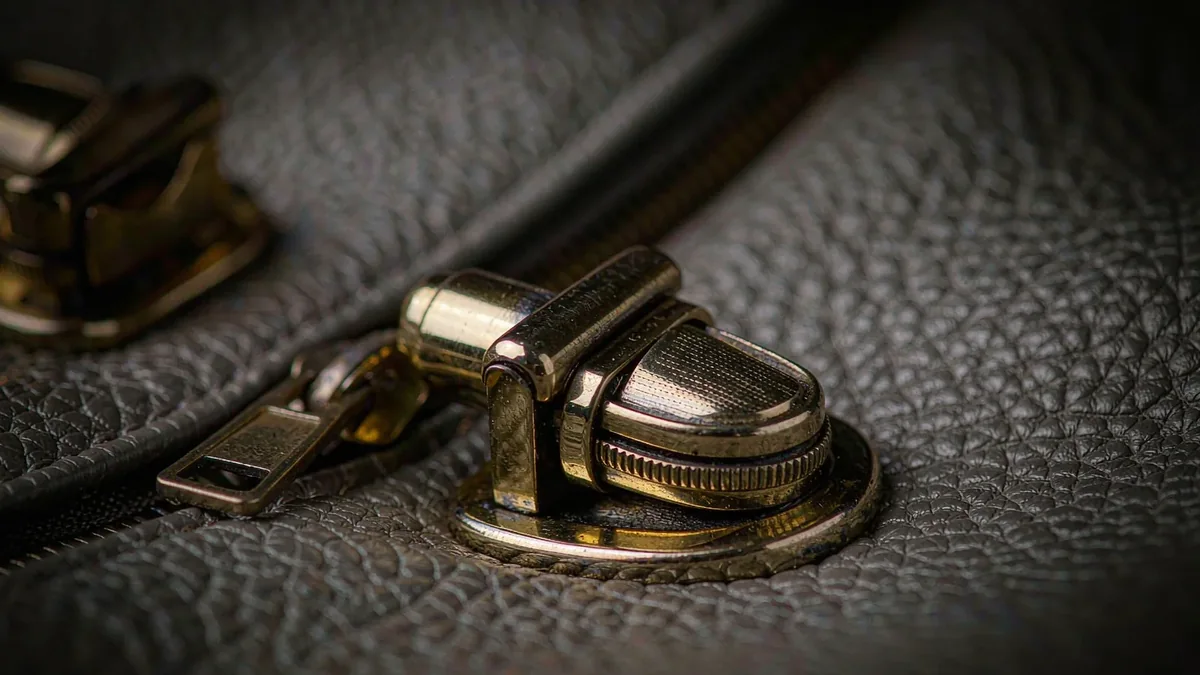
Six Trends Worth Building For
Most trend reports describe what was photographed. A collection has to be built from what can be specified, which is a shorter list. Six shifts will matter for 2026, and each of them changes a line on a pack rather than a page in a lookbook: weight, structure, hardware finish, size range, placement of identity, and serviceability.
Taken together they point the same way. Buyers want a piece that is lighter, softer to the eye, quieter in its markings, either notably smaller or notably larger than the middle, and repairable when it fails. That is a coherent brief, and it is a brief a young house can actually meet, because none of the six requires scale.
The useful way to read them is as a set of choices with consequences attached. Each trend below is written with the specification that delivers it, the trade it forces, and the number to put on the pack. Where a trend conflicts with another, that is stated as well, because the conflicts are where a collection is decided.
Trend One: Weight Comes Down
The clearest shift is weight, and it is the one buyers check without being asked. A medium top-handle that weighed 1,050 g two seasons ago is expected to sit near 890 g now, a reduction of roughly 15%, and the reduction has to come from somewhere other than the leather. In practice it comes from lining, reinforcement and hardware.
Three moves deliver it. Lining drops from a heavy woven to a lighter one at comparable abrasion performance. Reinforcement is placed where load actually lands rather than carried uniformly, which is a pattern decision rather than a material one. And hardware is specified by weight, with the set budgeted in grams rather than chosen by eye.
The trade is structure. A body at 890 g will not hold a hard architecture the way a body at 1,050 g does, which is why the weight trend and the structure trend arrive together. Trying to hold both a heavy shape and a light body produces a piece that is stiffened rather than constructed, and stiffeners crack at the fold inside two seasons.
Trend Two: Soft Structure Over Hard Architecture
Hard architecture is giving way to a body that has presence when carried and relaxes when set down. That is not a slouch; it is a controlled collapse, and it is specified rather than left to chance. The two numbers behind it are the base-to-height ratio, held between 0.6 and 0.7, and the temper of the leather, stated as a measured bend value rather than as a word.
Soft structure changes the sampling round. A soft body has to be photographed empty and loaded, since what matters is how it behaves rather than how it stands. Ask for both: an empty shot to check the mouth holds its line and a loaded shot at 3 kg to check the drop and the stance. Two photographs, one round.
It also moves the reinforcement decision. A soft body carries its load through the handle roots and the base rather than through the panels, so reinforcement belongs at those three points and nowhere else. Uniform reinforcement is what makes a soft piece read as stiff, and it is the most common way a house misses this trend while believing it has followed it.
Trend Three: Brushed Hardware Over Polished
Polished fittings are losing ground to brushed and satin finishes, for a reason that is practical rather than aesthetic: a brushed surface hides handling marks and a polished one collects them. On a piece carried daily, the difference is visible within a season, and buyers have worked out which one photographs better after twelve months.
Specify it properly. Plating at 0.15-0.3 µm on decorative fittings and above 0.3 µm on anything carrying load, verified by 24 hour salt spray exposure, with the brushed direction stated as a grain orientation rather than left to the finisher. A brushed lock and a brushed foot with the grain running in different directions look like two different metals.
Then match the set and retain the reference. Every part in a set comes from one finish reference, and that reference sits with the tech pack so a second run can be compared against it. This is the discipline behind the finish work described on our craftsmanship page, and it is what separates a set that ages evenly from one that ages part by part.
Trend Four: Sizes Move Outward, Not Inward
The middle is thinning and the ends are filling. A miniature under 200 mm in width and a large piece between 380 and 420 mm are both gaining ground on the mid-size body at 260-320 mm, which is no longer the automatic choice. For a collection, that changes what a size family looks like.
The rule is to hold the proportion across the family rather than to scale the pattern uniformly. A miniature that carries the same base-to-height ratio as the mid reads as the same shape; one that carries a different ratio reads as a different bag that happens to share a name. Preserving a ratio while scaling is harder than scaling, and it is where most families quietly break.
Each end has its own specification problem. The miniature fails at the closure, because a small fitting has less material to hold pull, so closures on small bodies should be cycled about 200 times and the pull recorded. The large piece fails at the base, because load increases with volume, so the base needs a continuous panel and feet placed at load points rather than for symmetry.
Trend Five: Identity Moves Inside the Piece
Visible marking is retreating. What replaces it is not absence of identity but relocation: a blind deboss inside the body, a mark on the reverse face of a fitting, a lining detail that only the owner sees. The driver is resale as much as taste, since a piece that can identify itself without paperwork is easier to sell second-hand.
Place interior marks about 12 mm from a seam and away from any fold, at a blind deboss depth of 0.3-0.5 mm, because folds fill in over time and a filled mark is worse than no mark. Hardware marks belong on a reverse face where nothing rubs. Both should be recorded as a position in millimetres rather than as a description.
This trend conflicts with recognition, and the conflict should be resolved deliberately. A quiet piece still needs one cue that survives at close range, and the cue that works is a custom fitting rather than a logo. Commission the die, keep it under your control, and let the interior carry the name. That is how a quiet piece stays identifiable.
Trend Six: Replaceable Parts Become a Requirement
Serviceability has moved from a service promise to a specification line. Buyers ask, at the point of sale, whether a strap or a cord can be replaced, and the question is now being asked often enough that it belongs in the brief. The requirement is short: which parts come off, how long it takes, and how long matching parts are held.
Write it as three lines on the pack. Straps and cords come off without unpicking the body. Replacement takes under half an hour on the bench. Matching fittings and hide from the same dye lot are held for five years from the last delivery. All three cost little to design in and are effectively impossible to add later.
There is a design dividend as well. A piece whose strap can be replaced does not have to be built so the strap never fails, which means less reinforcement exactly where weight is most felt. Serviceability and the weight trend want the same thing, which is unusual in this category and worth exploiting while it lasts.
- Weight target
- About 890 g on a medium top-handle, roughly 15% below a 1,050 g baseline
- Weight reduction source
- Lining, targeted reinforcement and hardware specified in grams
- Base-to-height ratio
- 0.6-0.7, held across every size in the family
- Temper
- Stated as a measured bend value, not described in words
- Hardware finish
- Brushed or satin, 0.15-0.3 µm decorative, above 0.3 µm load-bearing
- Brush direction
- Grain orientation stated on the pack, matched across the set
- Crossbody drop
- 480-560 mm, recorded in millimetres
- Size bands
- Miniature under 200 mm, mid 260-320 mm, large 380-420 mm
- Colour plan
- Three neutrals plus one accent per season
- Interior mark
- Blind deboss at 0.3-0.5 mm depth, 12 mm from the seam, off any fold
- Closure cycling
- About 200 cycles, pull recorded after 24 hours at rest
- Serviceability
- Strap and cord off in under 30 minutes, parts held five years
- Minimum run
- 500 pcs per style and colourway
- Cost anchor
- USD 4.80 trim and hardware allowance before material
The Comparison Matrix
Set against a 2024 baseline, the six shifts look like this. Each row carries the specification that delivers the trend, the trade it forces and the number to write down. Where two rows pull against each other, that is noted in the trade column.
| Trend | 2024 baseline | 2026 target | Trade it forces |
|---|---|---|---|
| Weight | 1,050 g medium body | About 890 g, minus 15% | Hard architecture becomes harder to hold |
| Structure | Reinforced panels, stiffened mouth | Soft structure, reinforcement at handle roots and base | Requires temper specified as a measured value |
| Hardware | Polished fittings | Brushed or satin, grain direction stated | Brush direction must be matched across the set |
| Size | Mid body at 260-320 mm dominates | Miniature under 200 mm and large at 380-420 mm | Proportion must be held while scaling |
| Identity | Visible external marking | Blind deboss inside, mark on reverse of fitting | Recognition has to be carried by a custom fitting |
| Serviceability | Repair offered as a service | Replaceable parts written into the brief | Needs parts held from the original dye lot |
Read the trade column rather than the target column. A collection that adopts all six targets and ignores all six trades produces a light body with a stiff mouth, a brushed set with mismatched grain, and a miniature whose closure fails inside a season. The targets are easy. The trades are the work.
What Each Trend Costs
Two of the six cost nothing: weight reduction through targeted reinforcement, and interior placement of identity. Two cost bench time: soft structure, because it has to be sampled empty and loaded, and serviceability, because parts have to be attached differently. Two cost money up front: brushed hardware and custom fittings.
Hold the conversation against one planning anchor rather than a full breakdown. We use USD 4.80 as the reference allowance for trim and hardware on a mid-specification piece, before material, and discuss every upgrade as a delta against it. Moving to brushed plating at 0.15-0.3 µm usually sits inside the anchor. Commissioning a custom die does not, and should be quoted as its own decision.
The trend that costs most to ignore is serviceability, because the cost lands years later and lands on the customer rather than on the house. Straps and cords are the parts most likely to fail, and a piece that cannot be serviced turns a small failure into a write-off. That is a reputation cost rather than a unit cost, and it is the one to weigh last.
What to Lock Before Sampling
Sampling is 6-10 working days for a standard build and 12-15 for a complex one, and a round spent on trends rather than on styling is a round that produces a buildable piece. Four things should be settled before the round starts, because all four reset the window if they move.
- The weight target in grams, with lining and hardware specified by weight rather than by description.
- The temper as a measured bend value, so soft structure is repeatable rather than a matter of opinion.
- The hardware finish and brush direction, with one retained finish reference for the whole set.
- The size family with the base-to-height ratio held across every size in it.
Then add the two checks that catch trend failures: photograph the body empty and loaded at 3 kg, and cycle the closure about 200 times with the pull recorded. Both add under a day to the round and both remove a category of complaint that otherwise arrives a season later. Sequencing and reset rules are set out on our sampling page.
Which Materials Carry These Trends
Soft structure and reduced weight both push toward a full-grain leather with a light finish and a temper specified in numbers. A corrected grain under a heavy finish will hold a shape for a season and then crack at the fold, which is the wrong side of both trends. Vegetable-tanned calfskin scuffs, marks and evens out, which is what a soft body should do.
Lining is where the weight comes from, and the choice is a light woven at comparable abrasion performance rather than a lighter leather, since leather lining is the single heaviest non-structural component on most bodies. For the range of finishes and how each behaves under a reduced-weight brief, see our materials page.
How We Are Building For 2026
Trends only matter if a bench can hold them, which is again a question of controls. Four checks before shipment, alongside attribute inspection at AQL 2.5 under ISO 2859-1: weight measured against the target, temper checked against the retained swatch, hardware matched against the retained finish reference, and closures cycled about 200 times.
Our validated partner factory Quanzhou Yingming Bags, an SGS-validated site with 7 production lines and roughly 200,000 pcs per month of capacity, holding export experience since 2014, runs to those checks at 500 pieces per style and colourway, with bulk in 35-50 days from approval and shipment on FOB Xiamen terms. The six trends above are already on our pack templates.
What to Ignore
Two things in circulation are worth ignoring. The first is colour forecasts presented as trends: colour is a seasonal decision for a house, not a structural one, and chasing a forecast produces a range nobody recognises in two years. Three neutrals plus one accent remains the plan worth defending.
The second is any shift that cannot be written as a number. If a trend cannot be expressed as a weight, a ratio, a thickness, a drop or a cycle count, it cannot be specified, and what cannot be specified will not survive a second run. For the wider market picture behind the six that do survive, see our luxury trends page.
890 g, 0.6-0.7 ratio, 0.15-0.3 µm brushed, 480-560 mm crossbody drop, 0.3-0.5 mm deboss depth, 200 closure cycles. Write them on the pack or they will not survive the season.
Build a 2026 collection that can be specified
Send the shapes, the weight target and the hardware direction. You will receive a written specification covering weight, structure, finish, size range and serviceability, with sampling and bulk windows quoted. Request a quote.
Frequently Asked Questions
What are the main luxury handbag trends for 2026?
Six, and each is a specification change rather than a styling note: reduced weight, soft structure, brushed hardware, sizes moving outward, identity placed inside the piece, and replaceable parts written into the brief. Anything that cannot be written as a number is not a buildable trend.
How much weight should a 2026 handbag lose?
Around 15%, which takes a medium top-handle from roughly 1,050 g to about 890 g. The reduction should come from lining, targeted reinforcement and hardware specified in grams, rather than from thinner leather, which shifts the failure elsewhere.
What does soft structure mean in specification terms?
A body that has presence when carried and relaxes when set down, delivered by a base-to-height ratio held between 0.6 and 0.7 and a temper stated as a measured bend value. Reinforcement sits at the handle roots and the base rather than uniformly across the panels.
Why is brushed hardware replacing polished?
Because a brushed surface hides handling marks and a polished one collects them, and the difference is visible within a season on a piece carried daily. Specify plating at 0.15-0.3 µm and state the brush direction so the whole set matches.
Which sizes are growing for 2026?
The ends rather than the middle: a miniature under 200 mm in width and a large piece between 380 and 420 mm, against a mid body at 260-320 mm. Hold the base-to-height ratio across the family so the sizes read as one shape.
How should a brand mark a quiet bag?
Inside, with a blind deboss at 0.3-0.5 mm depth placed about 12 mm from a seam and away from any fold, since folds fill in over time. Recognition is then carried by a custom fitting rather than by visible marking.
Should straps be replaceable on 2026 styles?
Yes, and it should be written into the brief rather than offered later. Straps and cords should come off without unpicking the body in under half an hour, with matching fittings and hide held for five years from the last delivery.
How many colours should a 2026 collection carry?
Three neutrals plus one accent per season. Colour forecasts are a seasonal decision rather than a structural one, and chasing them produces a range that nobody recognises two years later.
What should be settled before sampling starts?
Four things: the weight target in grams, the temper as a measured value, the hardware finish and brush direction, and the size family with the ratio held across it. A change to any of those resets the sampling window.
How long does sampling take for a 2026 build?
Six to ten working days for a standard build and twelve to fifteen for a complex one. Add under a day for the two checks that catch trend failures: empty and loaded photography at 3 kg, and closure cycling at about 200 cycles.
What does it cost to follow these trends?
Two cost nothing, two cost bench time and two cost money up front. Brushed plating usually sits inside a trim and hardware allowance of USD 4.80; a custom die does not and should be quoted as its own decision spread across seasons.
Which 2026 trend is most expensive to ignore?
Serviceability, because the cost lands years later and lands on the customer. Straps and cords are the parts most likely to fail, and a piece that cannot be serviced turns a small failure into a write-off and a reputation problem.
People Also Ask
What handbag styles will be popular in 2026?
Softly structured pieces at around 890 g, brushed rather than polished hardware, sizes growing at both ends of the range, identity placed inside the piece, and straps that come off without unpicking the body. Those shifts point one way: fewer statements on the outside, more engineering underneath.
Are luxury bags getting lighter?
Yes, by roughly 15%, which takes a medium top-handle from about 1,050 g to around 890 g. The reduction is taken from lining, targeted reinforcement and hardware specified in grams rather than from thinner leather, because thinning the shell only moves the failure somewhere less visible.
Is brushed hardware better than polished?
For daily use, generally yes. A brushed surface scatters light and hides the fine scratches that a polished one collects within a season, and it plates at the same 0.15-0.3 µm. The condition is that brush direction is stated on the pack and matched across the whole set.
What size handbag is trending now?
Both ends are growing while the middle holds. A miniature sits under 200 mm in width, a large piece runs 380-420 mm, and the mid body stays at 260-320 mm. Holding the base-to-height ratio at 0.6-0.7 across the family is what makes three sizes read as one shape.
Why are luxury brands removing logos?
Because a visible mark dates a piece and invites comparison, while an unmarked one is judged on stance and material. Identity moves to a blind deboss at 0.3-0.5 mm, about 12 mm from a seam, and recognition is carried by one custom fitting that cannot be copied from a photograph.
Sources and further reading
Every figure on this page is either our own programme data or attributed below. Open the originals before you write them into a specification.
- ISO - International Organization for StandardizationISO Publisher of ISO 2859-1 for attribute sampling and the ISO 105 series covering colour fastness of leather and lining.
- ASTM International standardsASTM International Publisher of test methods covering abrasion resistance, seam strength and dimensional change in assembled leather goods.
- Leather Working GroupLeather Working Group Industry body setting environmental and traceability audit protocols for tanneries supplying full-grain and light-finish leathers.
- International Union of Leather Technologists and Chemists SocietiesIULTCS Body publishing international leather test methods covering temper, flex resistance and finish adhesion.