Quiet Luxury Bags: What It Means for Brands and Makers
Quiet luxury is not the absence of design; it is a set of six decisions about where identity goes, what carries recognition, how tight the tolerance is, how quiet the hardware is, what colour plan survives and how the piece announces itself. Each decision has a number: an interior patch at 40 x 25 mm rather than external marking, one custom fitting as the sole recognition cue, panels held at ±1.0 mm instead of ±1.5 mm, colour matched within ΔE 1.5 of a retained swatch under D65 light, and brushed plating at 0.15-0.2 µm. This page works through all six as a decision tree. Our validated partner factory Quanzhou Yingming Bags, an SGS-validated site with 7 production lines and roughly 200,000 pcs per month of capacity, holding export experience since 2014, builds to those figures at 500 pieces per style and colourway.
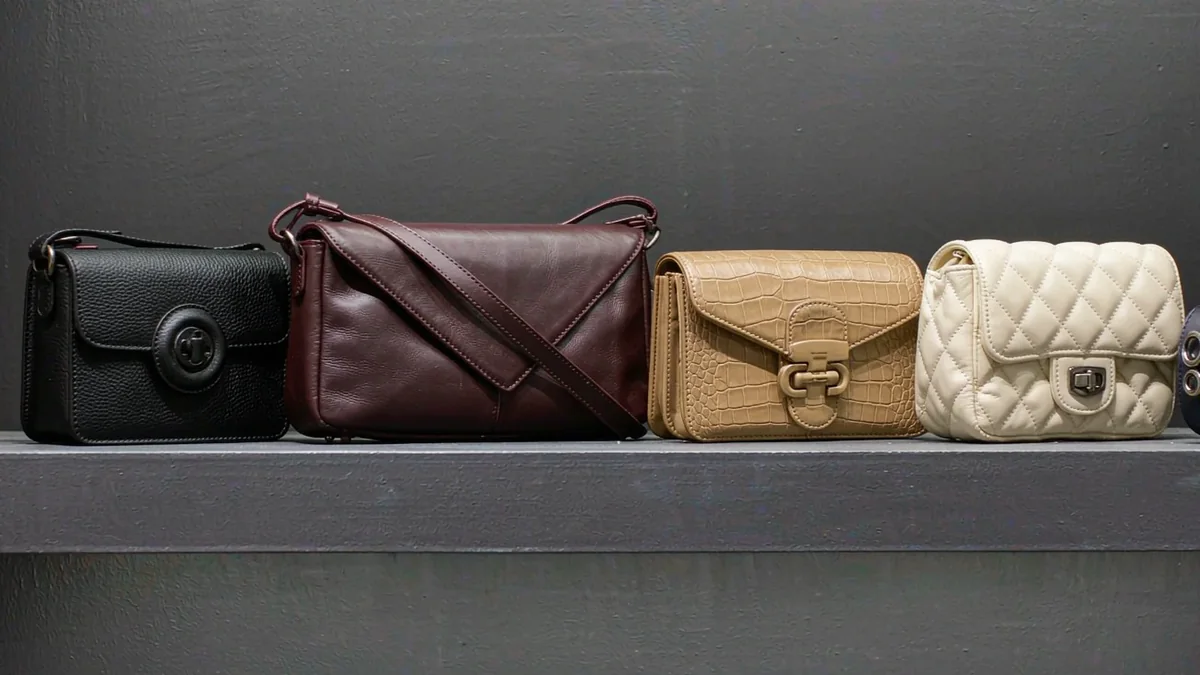
What Quiet Luxury Actually Asks of a Maker
The popular reading is that quiet luxury means less: less marking, less ornament, less hardware. That reading is wrong in a way that costs money, because a piece with the marking removed and nothing put in its place is not quiet, it is anonymous. What the market is buying is not absence. It is confidence expressed through control.
Control is expensive to fake. A quiet piece has nowhere to hide, because there is no ornament to draw the eye away from an uneven edge, a drifting seam or a panel that is 2 mm out. Remove the marking and every tolerance on the piece becomes more visible rather than less. That is the actual demand quiet luxury places on a maker.
So the brief is not to design less. It is to specify more tightly and to move identity somewhere that only the owner and a resale listing will look. Six decisions follow from that, and each one can be written as a figure. Worked through in order, they produce a piece that reads as quiet and still sells as itself.
Decision One: Where Does Identity Go?
The first decision is where the name lives. External marking is what quiet luxury removes, and removing it without a replacement leaves a piece that cannot be identified in three years, which is a resale problem as much as a brand one. The answer is to move identity inside and make it durable rather than decorative.
Specify an interior patch at 40 x 25 mm, set about 12 mm from a seam and away from any fold, with a blind deboss at 0.3-0.5 mm depth. Folds fill in over time, so a mark placed on one becomes unreadable within a few seasons, which is exactly when a resale listing needs it. Put a second mark on the reverse face of the anchor fitting, where nothing rubs.
Then decide what the interior mark says. A name alone is weak evidence three years later; a name with a season or year reference is considerably stronger, and it costs nothing to add. Record the position in millimetres on the pack rather than as a description, because descriptions are what drift between the first run and the fourth.
Decision Two: What Carries Recognition?
If identity moves inside, recognition has to be carried by something visible, and on a quiet piece the burden falls on one thing rather than on several. Choose one cue and commit to it for at least three seasons. Houses that fail at quiet luxury usually fail here, by removing the marking and then trying to make three different details do the work.
The cue that works is a custom fitting. It survives at close range, it cannot be copied from a photograph, and it is the part of the piece a customer touches every time. Commission the die, plate it at 0.15-0.2 µm in a brushed finish, and keep the die under your control rather than leaving it with the house.
The cue that does not work is proportion alone. A distinctive shape is copied from a photograph in an afternoon, and quiet shapes are the easiest of all to echo because there is so little else to reproduce. Proportion should support the cue rather than carry it, which is why the ratio is held at 0.6-0.7 and the fitting is commissioned separately.
Decision Three: How Tight Is the Tolerance?
A quiet piece needs tighter tolerances than a marked one, because there is nothing to distract from a discrepancy. Where a marked piece can carry ±1.5 mm on matched panels, a quiet one should be held at ±1.0 mm, and gusset depth at ±1.5 mm rather than ±2 mm. The tighter band is what makes the absence of ornament read as intent.
Two other figures tighten with it. Stitch density moves to 9-10 SPI, which reads finer at arm's length without perforating the leather the way 11 SPI and above can on a soft grain. And alignment of grain direction moves to within 3 degrees across adjacent panels, rather than the 5 degrees acceptable on a busier piece.
Then hold them. The failure mode for quiet pieces is not a bad first run; it is a second run that is 1 mm looser, which is invisible in a photograph and obvious when two pieces sit side by side. Approve every run against the retained object, and name the person who has to approve any change to the numbers.
Decision Four: How Quiet Is the Hardware?
Hardware is where quiet pieces most often overshoot. Brushed and satin finishes are correct, but they can be taken too far: a fitting so subdued that it disappears leaves the piece looking unfinished rather than restrained. The useful band is brushed plating at 0.15-0.2 µm decorative and above 0.3 µm on anything carrying load, verified by 24 hour salt spray exposure.
Keep the count low. One anchor fitting, matched feet and nothing else is usually the right answer on a quiet piece. Every additional fitting is a second finish to match, a second reference to retain and a second opportunity for the set to age unevenly, and uneven ageing is read as a defect rather than as patina.
State the brush direction as a grain orientation rather than leaving it to the finisher, and match it across the whole set. A lock and a foot brushed in different directions read as two different metals at close range, which is precisely the distance at which a quiet piece is examined. This is the discipline described on our craftsmanship page.
Decision Five: What Colour Plan Survives?
Quiet luxury runs on neutrals, and neutrals are the hardest colours to hold, because there is nothing to hide a shift. A bone that runs half a shade warm in one delivery and cool in the next is noticed on a quiet piece and forgiven on a patterned one. Specify neutrals against a retained swatch and measure rather than eyeball.
The figure worth setting is a colour difference within ΔE 1.5 of the retained swatch under D65 lighting, checked at goods-in before cutting. That is tighter than most houses specify, and it is what stops the most common complaint in the category: two pieces of the same colourway that do not match when placed together.
Plan four neutrals rather than three, because a quiet range needs enough depth to build an assortment without a seasonal tone. Bone, taupe, ink and black cover most of what a quiet collection needs, and all four repeat across seasons, which is the point. The range of finishes that hold those tones is covered on our materials page.
Decision Six: Does the Piece Still Announce Itself?
The last decision is the one most houses skip: whether a quiet piece is legible as luxury from across a room. Without marking, legibility has to come from material behaviour and from stance. Both are specification decisions rather than design ones, and both are measurable.
Material behaviour means a full-grain leather with a light finish, stated as a temper in measured bend values rather than as a word. Light finishes scuff, mark and then even out, which is what reads as quality at a distance. Heavy corrected finishes look uniform and read as flat, which is the opposite of the effect a quiet piece needs.
Stance means the piece holds a recognizable attitude when set down and when carried. Write it as behaviour: base-to-height ratio at 0.6-0.7, empty body holding its mouth open, and no more than 4 mm of handle growth after 24 hours at 4 kg. Those three are what make an unmarked piece still look like something worth paying for.
- External marking
- None; identity carried inside and on the reverse of the fitting
- Interior patch
- 40 x 25 mm, 12 mm from a seam, off any fold
- Deboss depth
- 0.3-0.5 mm blind deboss, second mark on the reverse face of the fitting
- Recognition cue
- One custom fitting, committed to for at least three seasons
- Panel tolerance
- ±1.0 mm on matched panels, ±1.5 mm on gusset depth
- Stitch density
- 9-10 SPI on body seams
- Grain alignment
- Within 3 degrees across adjacent panels
- Hardware finish
- Brushed at 0.15-0.2 µm decorative, above 0.3 µm load-bearing
- Salt spray
- 24 hour exposure, one retained finish reference per set
- Colour control
- Within ΔE 1.5 of the retained swatch under D65 light
- Neutral range
- Four repeating neutrals, checked at goods-in before cutting
- Weight target
- Under 850 g on a medium quiet body
- Stance
- Ratio 0.6-0.7, mouth holds when empty, under 4 mm handle growth at 4 kg
- Cost anchor
- USD 4.80 trim and hardware allowance before material
The Decision Tree
Worked through in order, the six decisions form a tree. Each branch ends in a number, and each number is a line on the pack. Follow it in sequence, because the later decisions depend on the earlier ones: identity placement determines what has to carry recognition, and recognition determines how tight the tolerance needs to be.
- Remove external marking, then place identity inside at 40 x 25 mm and on the reverse of the fitting.
- Choose one recognition cue and commit to it for three seasons; a custom fitting is the cue that survives.
- Tighten the numbers: ±1.0 mm panels, ±1.5 mm gussets, 9-10 SPI, grain within 3 degrees.
- Quiet the hardware to brushed at 0.15-0.2 µm, keep the fitting count low, state the brush direction.
- Set four repeating neutrals and hold them within ΔE 1.5 of a retained swatch under D65 light.
- Confirm the piece still reads as luxury at a distance: ratio, stance and handle growth under 4 mm.
Branches that get skipped are the ones that fail. The most common is the second: a house removes the marking, decides the shape will carry recognition, and then discovers that the shape was copied within a season. The second most common is the fifth, where a neutral range drifts by half a shade and the assortment stops assembling.
| Decision | Marked piece | Quiet piece | Why the change |
|---|---|---|---|
| Identity | External marking | Interior patch at 40 x 25 mm, 0.3-0.5 mm deboss | Resale needs identity that survives without paperwork |
| Recognition | Name plus detailing | One custom fitting, three-season commitment | Only a custom die resists being echoed from a photograph |
| Tolerance | ±1.5 mm panels, ±2 mm gussets | ±1.0 mm panels, ±1.5 mm gussets | Nothing distracts from a discrepancy on an unmarked piece |
| Hardware | Polished, multiple fittings | Brushed 0.15-0.2 µm, low fitting count | Fewer finishes to match, and even ageing reads as patina |
| Colour | Seasonal tones | Four neutrals within ΔE 1.5 | Neutrals repeat, and any shift shows on a quiet piece |
| Legibility | Carried by the name | Carried by material behaviour and stance | An unmarked piece has to announce itself some other way |
What Quiet Costs
Quiet costs bench time and inspection, not material. Tightening panels from ±1.5 mm to ±1.0 mm and moving density from 8-9 to 9-10 SPI both add time at the bench, and both are within reach of a trim and hardware allowance of USD 4.80 on a 500 piece run. Commissioning the custom die is the step that sits outside it.
The larger cost is rejection. A quiet piece inspected at the same standard as a marked one will pass pieces that should not pass, because the standard was written for something with ornament on it. Set the defect classes again for quiet work: on an unmarked body, visible misalignment is a critical defect rather than a major one.
There is also a yield cost on neutrals. Holding colour within ΔE 1.5 means more hide is rejected at goods-in, and the rejection is concentrated in the palest tones, which is where variation shows most. Plan the buy knowing that, and buy the pale neutrals with more allowance than the dark ones.
What Quiet Is Not
Three readings are wrong and all three are common. The first is that quiet means plain: a piece with no marking and no idea is simply unremarkable, and it will be priced accordingly. The second is that quiet means minimal hardware: a piece with no fittings at all reads as unfinished rather than restrained.
The third is the one that costs most, which is that quiet means easier. It is the opposite. Every tolerance tightens, colour control becomes measurable rather than judgemental, and the inspection standard has to be rewritten because the old one assumed ornament was doing some of the work.
Houses that understand this build quiet pieces well and charge properly for them. Houses that read quiet as a way to spend less produce pieces that look unfinished within a season, and then conclude that the trend has passed. It has not passed. It was never cheaper in the first place.
How We Build Quiet Pieces
Our validated partner factory Quanzhou Yingming Bags, an SGS-validated site with 7 production lines and roughly 200,000 pcs per month of capacity, holding export experience since 2014, works to the six decisions above on a minimum of 500 pieces per style and colourway, with sampling in 6-10 working days, 12-15 for complex builds, bulk in 35-50 days from approval, and shipment on FOB Xiamen terms.
Before shipment, five checks run alongside attribute inspection at AQL 2.5 under ISO 2859-1: panels measured against ±1.0 mm, colour measured against the retained swatch under D65, hardware matched against the retained finish reference, closures cycled about 200 times, and the interior mark checked for position and legibility. Quiet is five checks rather than a mood.
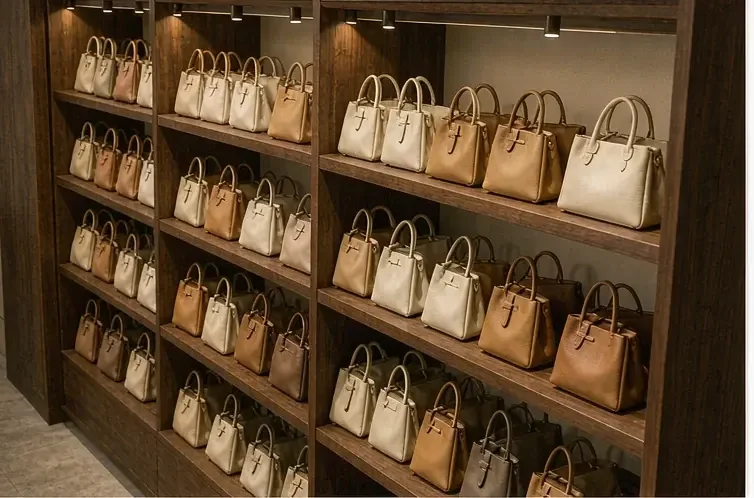
Where Quiet Is Heading
Two directions are visible. The first is that quiet is becoming the default for core ranges rather than a separate trend, which means the tolerances above will start being applied to pieces that are not advertised as quiet. That is a specification shift across a whole catalogue rather than within one capsule.
The second is that verification is moving onto the piece itself. A resale market that cannot rely on paperwork pushes identity into leather and metal, and the houses that placed their marks well are already benefiting. For the wider picture of how this sits alongside the other shifts in the category, see our luxury trends page.
Interior patch 40 x 25 mm, one custom fitting, ±1.0 mm panels, 9-10 SPI, brushed at 0.15-0.2 µm, colour within ΔE 1.5. Remove the marking and every tolerance gets more visible.
Build a quiet piece that still sells as itself
Send the shape, the neutral range and the fitting you want to own. You will receive a written specification covering identity placement, tolerance, hardware and colour control, with sampling and bulk windows quoted. Request a quote.
Frequently Asked Questions
What does quiet luxury mean for handbag brands?
It means control rather than absence. Removing external marking makes every tolerance more visible, so panels tighten to ±1.0 mm, density moves to 9-10 SPI, grain alignment to within 3 degrees, and colour is held within ΔE 1.5 of a retained swatch.
Where should a quiet bag carry its brand identity?
Inside, on a 40 x 25 mm patch set about 12 mm from a seam and clear of any fold, blind debossed at 0.3-0.5 mm. Add a second mark on the reverse face of the anchor fitting, where nothing rubs, so the piece stays identifiable for resale.
How does a quiet bag get recognised without a logo?
Through one committed cue rather than several, and the cue that survives is a custom fitting. It cannot be copied from a photograph and it is touched on every use. Proportion alone is weaker, since a shape is drawn from an image in an afternoon.
Why do quiet pieces need tighter tolerances?
Because there is no ornament to draw the eye away from a discrepancy. A marked piece can carry ±1.5 mm on matched panels; an unmarked one should be held at ±1.0 mm, with gussets at ±1.5 mm and grain alignment within 3 degrees.
What hardware finish suits a quiet bag?
Brushed or satin at 0.15-0.2 µm on decorative fittings and above 0.3 µm on anything carrying load, verified by 24 hour salt spray. Keep the fitting count low and state the brush direction, so the whole set ages evenly rather than part by part.
How is colour consistency held on neutral leather?
Against a retained swatch, measured rather than judged, within ΔE 1.5 under D65 lighting and checked at goods-in before cutting. Neutrals hide nothing, so a half-shade shift between deliveries is noticed as soon as two pieces sit together.
How many colours should a quiet collection carry?
Four repeating neutrals, typically bone, taupe, ink and black. Four is enough to build an assortment without a seasonal tone, and all four repeat across seasons, which is the point of a quiet range rather than a seasonal one.
Does quiet luxury cost less to produce?
No, it costs more. Tighter tolerances and higher density add bench time, pale neutrals reduce yield at goods-in, and the inspection standard has to be rewritten. Commissioning a custom die sits outside a USD 4.80 trim and hardware allowance.
What weight should a quiet bag target?
Under 850 g on a medium body. Quiet pieces carry less hardware and lighter lining, so they can come in below a standard medium build, and the reduction should come from those two places rather than from thinner leather.
How should defects be classified on quiet work?
More strictly than on marked work. Visible misalignment on an unmarked body is a critical defect rather than a major one, because there is no ornament to distract from it. Rewrite the classes before inspection rather than during it.
What makes a quiet bag still look expensive?
Material behaviour and stance. A full-grain leather with a light finish scuffs and evens out, which reads as quality at a distance, and a body that holds its mouth open when empty and grows under 4 mm at 4 kg looks deliberate rather than limp.
How long do sampling and bulk take on a quiet build?
Six to ten working days for a standard sample and twelve to fifteen for a complex one, then 35-50 days for bulk from approval. Colour matching against the retained swatch and the tighter tolerance checks belong inside the sampling round.
People Also Ask
What is quiet luxury in handbags?
It is control rather than absence. With external marking removed, every tolerance becomes visible, so panels tighten to ±1.0 mm, stitch density moves to 9-10 SPI, grain aligns within 3 degrees, and colour is held within ΔE 1.5 of a retained swatch under D65 light.
Why are luxury brands removing logos?
Because a logo does the work that stance, material and finish should be doing, and it is the first thing a copy can reproduce. Removing it puts recognition into one custom fitting held for at least three seasons, which is harder to imitate and is touched on every use.
How do you make a bag look expensive without a logo?
Through material behaviour and stance. A full-grain leather with a light finish scuffs and evens out rather than cracking, a body holds its mouth open when empty, handles grow under 4 mm at 4 kg, and hardware is brushed, matched to one reference and kept to a low count.
What colours are quiet luxury?
Usually four repeating neutrals: bone, taupe, ink and black. They are matched within ΔE 1.5 of a retained swatch under D65 light and checked at goods-in before cutting, because neutrals hide nothing and a half-shade shift shows the moment two pieces sit together.
Is quiet luxury more expensive to produce?
Yes, it costs more. Tighter tolerances and a higher stitch count add bench time, pale neutrals reduce usable yield at goods-in, and the defect classes have to be rewritten so visible misalignment counts as critical. A custom die also sits outside a USD 4.80 trim and hardware allowance.
Sources and further reading
Every figure on this page is either our own programme data or attributed below. Open the originals before you write them into a specification.
- ISO - International Organization for StandardizationISO Publisher of ISO 2859-1 for attribute sampling and the ISO 105 series covering colour fastness used in swatch matching.
- ASTM International standardsASTM International Publisher of test methods covering colour measurement, dimensional tolerance and abrasion resistance of finished leather goods.
- International Commission on IlluminationCIE Body defining standard illuminants and colour difference metrics, including the D65 reference used for colour matching.
- SGS - Testing, Inspection and CertificationSGS Third-party verification body covering colour measurement, plating verification and pre-shipment inspection protocols.