Luxury Handbag Packaging MOQ Explained: Where 500 Comes From and What It Covers
Why is the packaging minimum 500 pieces? Three numbers explain it: a board mill or converter lot, a print or tooling set-up, and a fabric roll. Below about 500 pieces per style and colourway the fixed costs stop being spread and start being paid per piece, which is why a 200-piece packaging order can cost more per unit than a 600-piece one. This article sets out each element's minimum, shows where 500 comes from, and explains what sharing a run does to the figure.
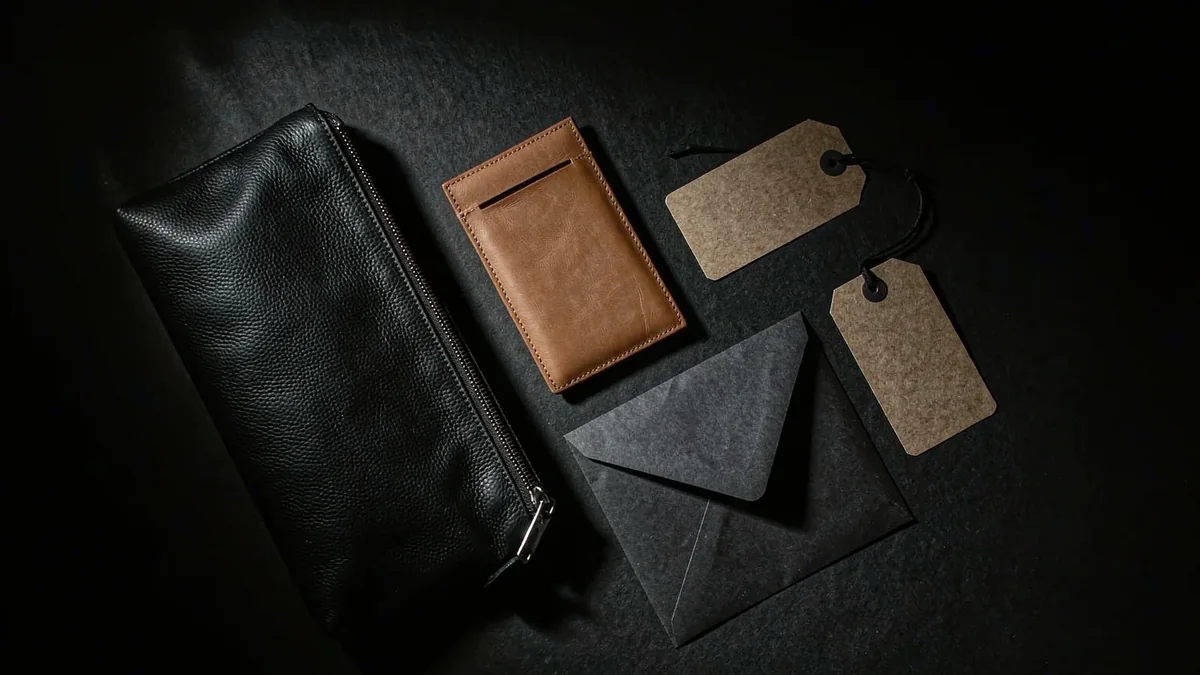
Minimums are not an arbitrary number imposed on a programme; they are the point at which a fixed cost becomes small enough to ignore. Every packaging element has one: a mill has a lot, a printer has a set-up, a fabric house has a roll, a die has to be cut. Add those up and the floor lands at about 500 pieces per style and colourway for the same reason the bag programme lands there, because the underlying arithmetic is the same.
The Numbers Behind a Packaging Minimum
Three fixed costs sit underneath every packaging order. The first is material: board, wrap, tissue and fabric are each made or converted in lots, and a lot below the standard size is either priced at a premium or not quoted at all. The second is process: a print run has a set-up, a screen or a plate, and a deboss or foil has a die. The third is approval: every new element needs a first article, and that cost is identical whether the run is 200 pieces or 2,000.
- Material: made or converted in lots, priced at a premium below the standard size.
- Process: a print set-up, a screen, a plate or a die, each fixed per run.
- Approval: a first article, which costs the same at 200 pieces as at 2,000.
- Colour: each colourway is a separate set-up, which is why colourway multiplies the floor.
- Documentation: certificate codes and declarations are collected per run, not per piece.
Why 500 Is the Working Floor
Five hundred pieces per style and colourway is the point at which the three fixed costs above fall below roughly 10% of unit cost. At 200 pieces they can carry 25% to 40%, which is why a small packaging order routinely costs more per unit than a larger one, and why the surprise is usually felt at quotation rather than at specification. The floor is not a preference; it is the arithmetic of set-up against spread.
| Element | Typical minimum | What sets it | Effect below the floor |
|---|---|---|---|
| Rigid board box | 500 pcs per size | Converter lot and die set-up | Set-up carries 25% to 40% of unit cost |
| Box wrap | 500 to 1,000 sheets | Mill or converter lot | Lot premium, or the next available lot |
| Dust bag | 500 pcs per size | Fabric roll and screen | Roll surplus written off |
| Tissue | One ream or carton | Stock item, short lead time | Usually no minimum issue |
| Printed matter | 500 to 1,000 pcs | Press set-up and plate | Set-up dominates the unit figure |
| Deboss or foil die | One per mark, any run | Tooling cost | Amortised over fewer pieces |
| Outer shipper | 300 to 500 cartons | Carton converter lot | Priced as a non-standard lot |
| Certified grades | Fewer lots available | Mill production schedule | Substitution or a later lot |
How Tooling Sets the Floor
Tooling is the cleanest example of the arithmetic, because it is a single number divided by the run. A deboss die and a foil die together can carry 3% to 9% of set cost at 500 pieces and a fraction of one per cent at 3,000. Nothing about the die changes between those two runs; only the divisor does. That is why a programme planning several seasons should cut tooling that will survive them, meaning a mark that will not change and a die not sized to a single silhouette.
- Working floor
- 500 pcs per style and colourway
- Fixed cost share at 500
- Below roughly 10% of unit cost
- Fixed cost share at 200
- 25% to 40% of unit cost
- Deboss and foil tooling at 500
- 3% to 9% of set cost
- Same tooling at 3,000
- A fraction of one per cent
- Board wrap lot
- 500 to 1,000 sheets
- Carton lot
- 300 to 500 cartons
- Colourways
- Each is a separate print set-up
- Sampling window
- 6-10 working days, 12-15 complex
What a Print Minimum Looks Like
A print minimum is a set-up, not a quantity of material. The press has to be made ready, the ink has to be mixed and matched, and the first sheets are waste, and all three cost the same whether the run is 300 or 3,000. That is why the unit figure for printed matter falls steeply between those two points and then flattens: once the set-up has been absorbed, what remains is material and press time.
The practical consequence is about colourways. Each colourway is usually a separate set-up, which means three colourways at 500 pieces each is not the same order as 1,500 pieces in one colourway, and it will not be priced as though it were. Where a programme can accept a single-colour mark across all colourways, with the colourway carried by the material rather than by the ink, the set-up is incurred once.
Fabric and Cord: The Roll Minimum
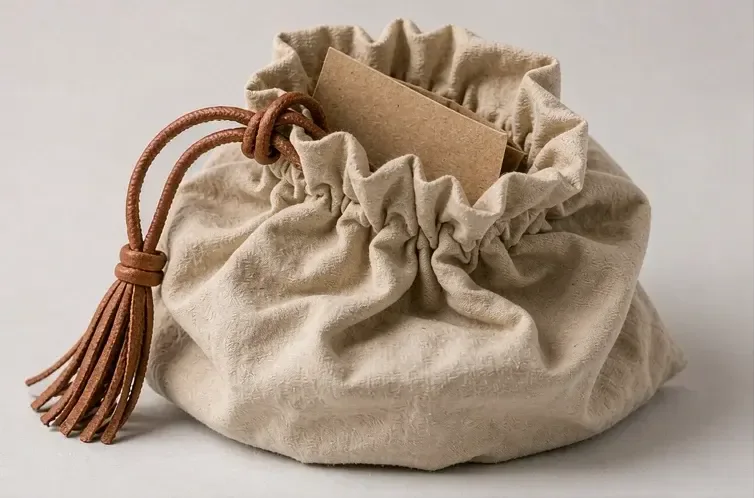
Dust bag fabric is bought by the roll, and a roll makes more bags than a 500-piece order needs. The surplus is the issue rather than the minimum: it has to be stored, it takes up space, and it is usually written off if the next run changes fabric. Cord is bought on a spool with the same characteristic. Both are reasons to standardise the fabric and the cord across a family rather than vary them by silhouette.
Where a programme genuinely needs a short run of an unusual fabric, the honest choice is often a heavy non-woven instead of cotton, because non-woven is available in smaller quantities without the same surplus problem. The alternative, accepting a surplus of cotton and hoping the next season uses it, tends to end with a programme designing around leftover material rather than around the piece.
What Happens Below the Floor
Three things, and none of them is a price concession. The unit figure rises, because the fixed costs are spread over fewer pieces. The lead time may lengthen rather than shorten, because a non-standard lot is often quoted against the next available production slot. And the approval burden stays identical, so a 200-piece order consumes the same first-article effort as a 2,000-piece one while producing a fortieth of the output.
Sharing a Run Across Colourways
The most effective way to live with a minimum is to share it. Where a programme is running three colourways of the same silhouette, one box size, one dust bag size and one card set across all three removes two thirds of the set-ups and two thirds of the first articles, and lets the material be bought as a single lot. The colourway is then carried by the ink, the ribbon or the fabric, which are the elements with the smallest minimums.
One box, three colourways
A single board size and wrap across the family, with the colourway carried by ink or ribbon rather than by a separate board run.
One dust bag size
Sized to the largest piece in the group. Removes a fabric lot, a screen and an approval cycle per season.
One card set
Printed once, in one colour, across the collection. The card is the element with the highest set-up and the lowest visibility.
What it does
Turns three 500-piece orders into one 1,500-piece buy, which moves the material onto a standard lot and the set-up onto a single charge.
Reading a Minimum Honestly
Two questions separate a real minimum from a negotiating position. The first is what the price is at double the quantity, which tells you where the lot sizes actually fall: a genuine lot boundary produces a step, whereas a soft position produces a smooth curve. The second is whether the minimum is per style, per colourway or per order, because those three are frequently conflated in a quotation and they produce very different numbers.
A third question is worth asking about any element quoted with no minimum at all. Tissue and stock cartons are sometimes offered this way, which is usually true and occasionally means the material is being bought in from a distributor rather than converted to order. Neither is a problem in itself, but the second carries less control over grammage and over documentation, and that matters where a destination market requires a declaration.
Per style, per colourway or per order are three different numbers. Conflating them is the most common source of a packaging quotation that looks competitive and then doubles when the colourway count is added.
What a Minimum Does to the Calendar
Minimums are usually discussed as a cost question and they are equally a scheduling one. A run that sits below a material lot is often made alongside another order rather than on its own, which means its start date depends on someone else's schedule. That is not a problem when the date is known at the outset and a serious one when it emerges three weeks before a launch, which is why the lot question belongs at specification stage alongside the quantity.
The second scheduling effect is on re-orders. A second run of the same set is straightforward while the tooling and the artwork are intact, and it becomes a new approval the moment either has changed. Programmes that treat the first run as self-contained frequently discover, at the point of re-ordering, that a small artwork adjustment has converted a repeat into a first article with its own lead time.
The practical safeguard is to record, at the end of each run, what would need to be true for the next one to be a repeat: the same board grade and mill lot reference, the same die and plate, the same artwork revision number and the same certificate code. That is four lines of housekeeping, and it is the difference between a re-order that takes days to confirm and one that takes weeks to re-approve. Where a programme expects to repeat a set more than twice, the same record also tells you when it is worth cutting a second die or holding a fabric lot against the next season, which are decisions best made with the previous run's numbers in front of you.
Minimums Set Against the Reference Unit
Set against a reference unit cost of USD 4.80, a complete set adds 40% to 90%, and the minimum is what decides where in that band a particular run lands. A 500-piece run sits toward the upper end because the fixed costs are spread thinly; a 3,000-piece run sits toward the lower end because they have been absorbed. The difference is not a better price negotiated harder, it is the same arithmetic applied to a larger divisor.
Programme Figures and the Floor
Work runs at 500 pcs per style and colourway, on the same clock as the packaging: sampling 6-10 working days and 12-15 for complex constructions, bulk 35-50 days, inspection at AQL 2.5 under ISO 2859-1, handover on FOB Xiamen terms with CIF or DDP available. Work runs through our validated partner factory Quanzhou Yingming Bags, an SGS-validated site operating since 2014 with 7 production lines and capacity of about 200,000 pcs per month. See luxury handbag packaging for the layer specification these minimums apply to.
Take this to the bench
- Treat 500 per style and colourway as the point where fixed costs fall below about 10% of unit cost. Share a run across colourways, standardise box and dust bag sizes, and always ask whether a minimum is per style, per colourway or per order.
Check the minimums for your set
Send the silhouette, the colourway count and the quantity, and we will show what the minimum is per element and where sharing a run saves. Request a quote
Frequently Asked Questions
What is the minimum order for luxury handbag packaging?
About 500 pieces per style and colourway, set by three fixed costs: a material lot, a print or tooling set-up, and a first-article approval. Below that the fixed costs stop being spread and start being paid per piece, which raises the unit figure.
Why does packaging cost more per unit at 200 pieces?
Because the same set-up, material lot premium and approval effort are spread over fewer pieces. At 500 pieces the fixed costs fall below roughly 10% of unit cost; at 200 they can carry 25% to 40%, which is most of the difference in the quotation.
Does a smaller packaging order arrive sooner?
Not necessarily. A non-standard lot is often quoted against the next available production slot, so a short run can take longer than a standard one. The approval burden is also identical, so the effort is the same for a fortieth of the output.
How does tooling affect the packaging minimum?
A deboss die and a foil die carry 3% to 9% of set cost at 500 pieces and a fraction of one per cent at 3,000. Nothing about the die changes, only the divisor, which is why tooling should be cut for marks the house expects to keep.
Is the minimum per style, per colourway or per order?
Usually per style and colourway, and the three are frequently conflated in a quotation. Each colourway is typically a separate print set-up, so three colourways at 500 each is a different order from 1,500 in one colourway.
How can a programme reduce the effect of a minimum?
Share the run. One box size, one dust bag size and one card set across all colourways removes two thirds of the set-ups and lets material be bought as a single lot, with the colourway carried by ink, ribbon or fabric instead.
What is the fabric minimum on a dust bag?
Fabric is bought by the roll, and a roll makes more bags than a 500-piece order needs. The surplus is the real issue: it has to be stored and is often written off if the next run changes fabric, so standardising fabric across a family is the cleaner answer.
Why is tissue sometimes quoted with no minimum?
Because it is a stock item with a short lead time. Occasionally it means the material is bought in from a distributor rather than converted to order, which carries less control over grammage and over documentation for regulated markets.
Does a certified board have a higher minimum?
Not formally, but certified grades are produced in fewer lots, so a short order may be quoted against the next available lot or an alternative grade. Confirm availability at the point of order and name an accepted substitute in the specification.
What is the minimum on an outer shipper?
Typically 300 to 500 cartons, because a carton converter works in lots. Below that the carton is priced as a non-standard lot. Right-sizing the carton often reduces the number needed per set, which helps twice.
How does quantity affect where a set lands on cost?
Set against a reference unit cost of USD 4.80, a complete set adds 40% to 90%. A 500-piece run sits toward the upper end and a 3,000-piece run toward the lower, because the same fixed costs are absorbed over a larger divisor.
What two questions reveal a real minimum?
What is the price at double the quantity, since a genuine lot boundary produces a step rather than a smooth curve, and whether the minimum is per style, per colourway or per order, which are three very different numbers.
People Also Ask
What does packaging MOQ mean?
The smallest quantity an element can be made at without the fixed costs dominating the unit figure. It is set by a material lot, a print set-up and a first-article approval rather than by preference.
Why is 500 the common packaging minimum?
It is the point at which material lot, set-up and approval fall below roughly 10% of unit cost. At 200 pieces the same three carry 25% to 40%, which is why small orders cost more per piece.
Can I order packaging for one colourway only?
Yes, and it is the most efficient way to buy. Each colourway is normally a separate print set-up, so buying one colourway avoids a second set-up and lets the material be purchased as a single lot.
Do dust bags have their own minimum?
Yes, usually 500 per size, set by the fabric roll and the screen. Standardising one size across a family removes a roll, a screen and an approval cycle in one decision.
Does a bigger run always cost less?
Per unit, yes, up to the point where material lots flatten. The step changes happen at lot boundaries rather than at round numbers, which is why asking for the price at double the quantity is so informative.
Sources and further reading
Every figure on this page is either our own programme data or attributed below. Open the originals before you write them into a specification.
- Technical Association of the Pulp and Paper IndustryTAPPI Test methods that underpin specifying board by result when a lot changes.
- ISO standards catalogueInternational Organization for Standardization Reference for ISO 2859-1 sampling procedures applied to packaging at goods-in.
- FSC certification and chain of custodyForest Stewardship Council Chain of custody reference where certified grades affect lot availability.
- ASTM standards for packaging and transit testingASTM International Referenced for compression and drop practice when a carton lot is substituted.
- REACH legislationEuropean Chemicals Agency Substance restrictions requiring declarations when a material lot or converter changes.