Luxury Handbag Packaging and Brand Presentation: A Five-Layer Specification Guide
Presentation is the first thirty seconds of ownership, and it is the only part of a handbag programme the client handles before the bag itself. It is also the part most often specified last, which is why it is the part that most often disappoints. This guide breaks a presentation set into five layers, gives the specification numbers for each, and shows how presentation spend relates to a reference unit cost of USD 4.80 rather than being treated as an afterthought added at the packing bench.
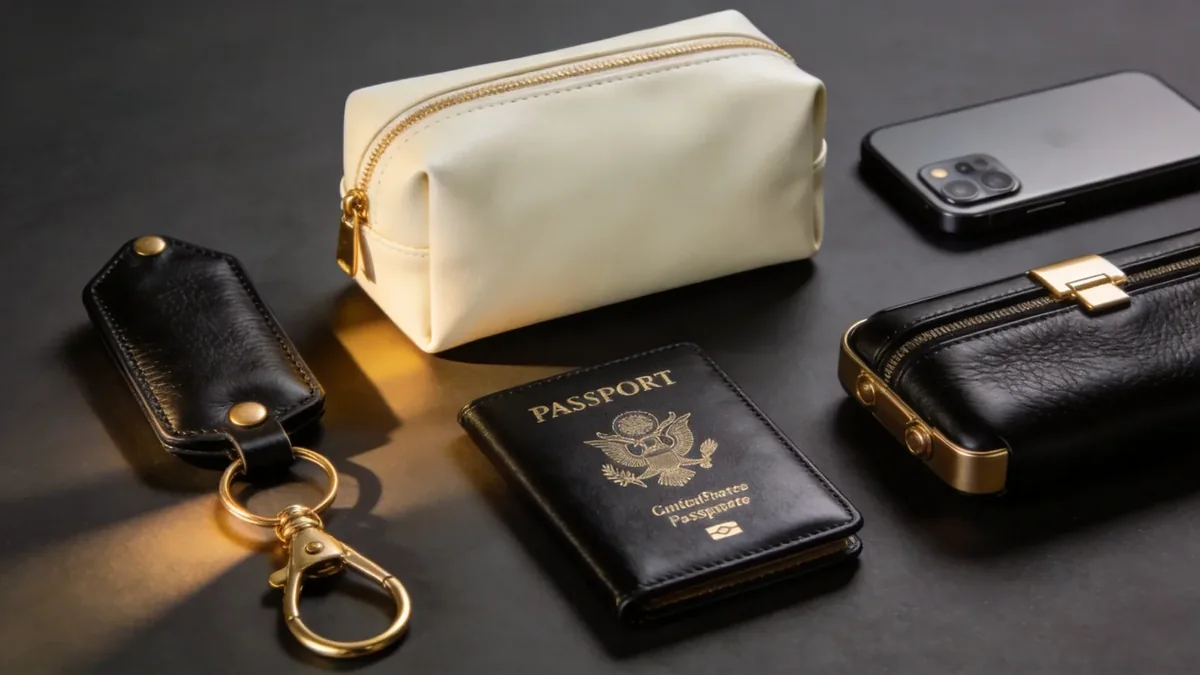
A presentation set is a sequence, not a box. The client opens an outer shipper, lifts a rigid box, unties or lifts a lid, parts tissue, and lifts a dust bag before the bag is in their hands. Five contacts, each with its own material, weight and printed mark. Specifying them independently is how sets end up inconsistent: heavy board with thin tissue, a foil mark on the box and a screen mark on the dust bag, a ribbon in one colour and a care card in another.
The Five Layers of a Luxury Bag Presentation
Each layer does a different job. The outer shipper protects. The rigid box presents. The tissue protects the surface and slows the reveal. The dust bag protects in storage and carries the mark into the wardrobe. The printed matter carries the care story and, where the line includes one, the authenticity record. Confusing those jobs is the source of most presentation failures.
- Outer shipper: survives the journey. Corrugate, drop-tested, printed once on the outside.
- Rigid box: presents the piece. Greyboard, wrapped, with a closure that opens cleanly.
- Tissue: protects the surface and paces the reveal. Weight and acidity specified, not assumed.
- Dust bag: protects in storage and carries the mark into daily use.
- Printed matter: carries the care story, the material declaration and the authenticity record.
What Presentation Actually Costs
Presentation is usually quoted as a single line, which makes it impossible to manage. Broken into layers, the pattern is consistent: the rigid box carries the largest share of set cost, the dust bag the second, printed matter the third, tissue the smallest, and the outer shipper is priced almost entirely by volume and board grade.
| Layer | Share of set cost | What drives the number | Where it can be reduced |
|---|---|---|---|
| Rigid box | 40% to 52% | Board weight, wrap material, closure type | Reduce board from 1,200 gsm to 900 gsm on lighter pieces |
| Dust bag | 18% to 26% | Fabric weight, drawcord, print method | Move from a two-colour print to a single-colour print |
| Printed matter | 9% to 15% | Card weight, colour count, finish | Consolidate the care card and the authenticity record |
| Tissue | 4% to 7% | Sheets per piece, gsm, printed or plain | Reduce sheets per piece from four to two |
| Outer shipper | 8% to 14% | Board grade, carton size, print coverage | Right-size the carton to the packed set |
Set against a reference unit cost of USD 4.80, a full five-layer set typically adds between 40% and 90% of that figure, with the wide range explained almost entirely by the box. Two decisions move the number more than any other: board weight and print method on the rigid box. A programme that is overspending on presentation is nearly always overspending in one of those two places.
Layer 1: The Inner Wrap
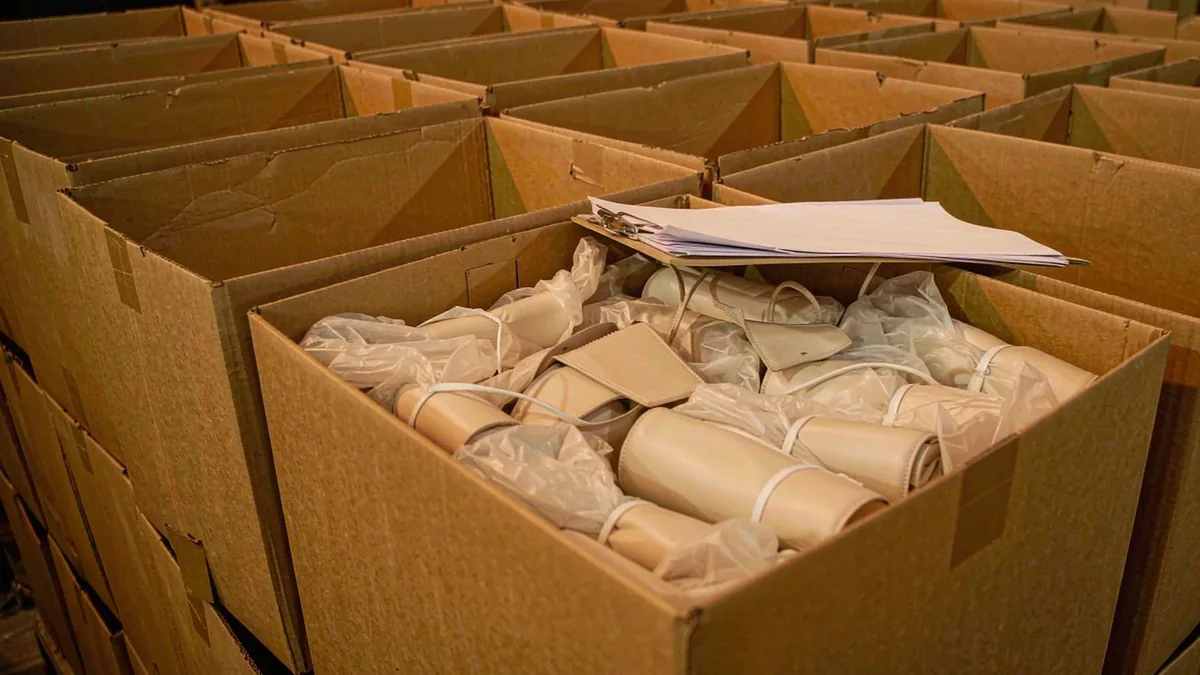
Tissue is the layer clients touch first and the layer most often bought on price alone. Two specifications matter: weight, measured in grams per square metre, and acidity. Acid-free tissue at 30 gsm handles well, holds a fold and does not react with finished leather over long storage. Lighter tissue at 17 gsm creases in transit and reads as transit packing rather than as presentation.
- Tissue weight
- 30 gsm acid-free, 17 gsm only for interleaving
- Sheets per piece
- 2 sheets standard, 4 for pieces with hardware that can mark
- Acidity
- Acid-free, pH neutral, to protect finished leather in storage
- Print method on tissue
- Single-colour flexo; two-colour only where the mark demands it
- Ink rub resistance
- Checked against the wrap before the set is approved
- Fold and crease behaviour
- Assessed after 48 h under a 1 kg stack load
- Recycled content
- Available on request, with FSC chain of custody where required
- Storage before packing
- Flat, away from direct light, to avoid a set crease
Layer 2: The Dust Bag
The dust bag is the only part of the set that stays with the piece. Boxes are recycled, tissue is discarded and shippers are thrown away; the dust bag goes into the wardrobe and comes out every time the bag is stored or travelled. That makes it the highest-value surface in the set per unit of spend, and the most common place to under-specify.
Two decisions govern how a dust bag performs: fabric weight and closure. A lightweight non-woven bag tears at the drawcord within a season; a cotton or a heavier non-woven at an appropriate weight lasts. The closure should open and close one-handed, because that is how it will be used in a wardrobe, and it should not shed. Drawcord channel construction is where most failures begin.
Layer 3: The Rigid Box
Board weight is the single largest cost driver in the set and the specification most often set by eye. Greyboard at 1,200 gsm gives a box that holds its corner through packing, shipping and shelf life; board at 800 gsm shows corner crush on heavier pieces and, worse, shows it after the client has already formed an impression. The right test is a corner crush check and a stack check, both run on a packed box rather than an empty one.
Board weight
1,200 gsm greyboard for structured pieces, 900 gsm for lighter constructions, 800 gsm only for small-format boxes.
Wrap material
Coated art paper, uncoated textured stock, or a cloth wrap. The wrap determines how the box takes a foil mark.
Closure
Lift-off lid, hinged lid, magnetic closure or ribbon tie. Choose by how the piece is lifted out, not by appearance.
Internal fit
The piece should sit with 5 to 10 mm clearance on each side, held by the tissue rather than by friction.
Layer 4: The Print and the Mark
Print method determines how the mark reads at arm's length and how it behaves under handling. Blind deboss gives depth without colour and is the most restrained option; hot foil gives a metallic edge that catches light; screen print gives saturated colour on fabric; litho gives full-colour imagery on paper wraps. Each has a different minimum, a different tool requirement and a different behaviour on the material it is applied to.
- Blind deboss: no colour, depth typically 0.3 to 0.5 mm, needs a brass or magnesium die.
- Hot foil: metallic or pigment, applied at controlled temperature and dwell, needs a foil die.
- Screen print: best on dust bag fabric, one colour per pass, cost rises with colour count.
- Litho on wrap: full colour on the box wrap, best for imagery, worst for a restrained mark.
- Emboss with foil: depth plus colour, the most expensive combination and the slowest to approve.
Layer 5: The Outer Shipper
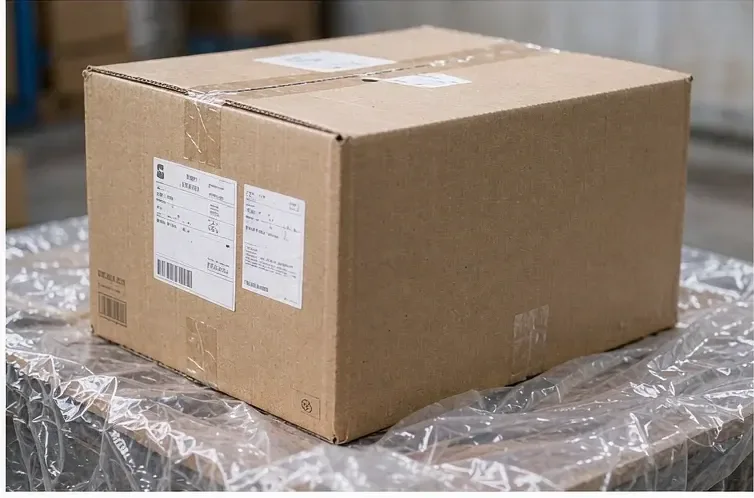
The shipper is judged on one criterion only: the condition of the box inside it when it arrives. That makes it a testing problem rather than a design problem. A right-sized carton with adequate board grade and internal void fill outperforms an oversized carton with decorative print every time, because the oversized carton allows the inner box to move.
Volume is the other lever. A carton sized to the packed set rather than to a nominal standard reduces both material and freight, and freight is charged on volume as often as on weight. Where a programme ships direct to a client, the shipper is the first thing they see and a plain one is usually the better choice; where it ships to a retail partner, the shipper carries the handling marks and labelling that partner requires.
Specification Table for a Presentation Set
The table below is a starting specification for a structured top-handle programme. It is written to be edited rather than adopted: each line has a reason, and the reason is what should be questioned when the line changes.
| Element | Specification | Reason | Test before approval |
|---|---|---|---|
| Board weight | 1,200 gsm greyboard | Holds the corner through packing and shelf life | Corner crush and 24 h stack test on a packed box |
| Box clearance | 5 to 10 mm per side | Prevents the piece riding against the wall | Drop test at 800 mm on one corner |
| Tissue | 30 gsm acid-free, 2 sheets | Protects the finish and paces the reveal | 48 h contact test against the leather finish |
| Dust bag fabric | Cotton or heavy non-woven, single-colour print | Survives repeated opening in the wardrobe | 50-cycle drawcord pull test |
| Box mark | Blind deboss at 0.3 to 0.5 mm depth | Reads at arm's length without colour | Proof on the production wrap, not on a substitute |
| Care card | One card, two panels, uncoated stock | Carries the care story in one place | Rub test on the printed surface |
| Outer shipper | Right-sized, double-wall where the route requires it | Stops the inner box moving in transit | Drop and vibration test on the packed carton |
| Void fill | Paper-based, not plastic, where the market requires it | Meets retailer material requirements | Confirm against the destination market rules |
Where Presentation Spend Pays Back
Three places. First, damage in transit, because a right-sized shipper with proper void fill returns fewer pieces than any amount of extra board in the box. Second, perceived value at the point of opening, which is driven overwhelmingly by the box and the tissue rather than by printed matter. Third, retention of the mark, because the dust bag stays with the piece and is seen every time it is stored.
Where presentation spend does not pay back is in print complexity for its own sake. A third colour on the care card, an emboss-and-foil combination on the box, or a four-colour image on the wrap all add cost and lead time while adding very little to how the opening feels. The diminishing return starts earlier than most programmes expect, usually at the second colour.
Ask whether the client will remember the layer. They will remember the weight of the box, the sound the lid makes, and the feel of the tissue. They will not remember the third colour on the care card. Spend follows memory, and correcting one rejected set at the packing bench costs around USD 4.80 before the rework is counted.
Building the Set Into the Programme Timeline
Presentation is where programmes lose time, because it is specified after the bag and therefore has to run faster than it comfortably can. The fix is to start the set at the same time as the tech pack rather than at the same time as bulk packing. Printed elements need artwork approval, tooling for deboss and foil needs to be cut, and board and wrap materials need to be on hand before packing can begin.
The sequence we work to: presentation specification released alongside the tech pack, artwork approved during sampling, tooling cut during the bulk window, materials received before packing starts. Bag sampling runs 6-10 working days and 12-15 for complex constructions, bulk runs 35-50 days, inspection sits at AQL 2.5 under ISO 2859-1, and handover is on FOB Xiamen terms. Presentation runs on the same clock, not a shorter one.
Take this to the bench
- Specify five layers, not one box. Put the money in board weight and in the dust bag, keep print to one or two colours, right-size the shipper, and start the presentation specification at the same time as the tech pack so it does not have to run faster than it can.
Specify a presentation set
Send the silhouette and the colourway list and we will build the five-layer specification around it. Work runs through our validated partner factory Quanzhou Yingming Bags, an SGS-validated site operating since 2014 with 7 production lines and capacity of about 200,000 pcs per month. Request a quote
Frequently Asked Questions
What are the five layers of a luxury bag presentation set?
Outer shipper, rigid box, tissue, dust bag and printed matter. The shipper protects, the box presents, the tissue protects the surface and paces the reveal, the dust bag protects in storage and carries the mark, and the printed matter carries the care story and the authenticity record.
How much does a luxury presentation set cost?
Set against a reference unit cost of USD 4.80, a full five-layer set adds between 40% and 90% of that figure. The rigid box carries the largest share, typically 40% to 52% of set cost, with board weight and print method explaining most of the range.
What board weight should a luxury bag box use?
Greyboard at 1,200 gsm for structured pieces, 900 gsm for lighter constructions, and 800 gsm only for small-format boxes. The right check is a corner crush test and a 24-hour stack test run on a packed box rather than an empty one.
What tissue weight is right for a handbag presentation?
Acid-free tissue at 30 gsm is the working standard. It handles well, holds a fold and does not react with finished leather over long storage. Lighter tissue at 17 gsm creases in transit and reads as transit packing rather than presentation.
Why does the dust bag matter more than the care card?
Because it is the only part of the set the client keeps. Boxes are recycled, tissue is discarded and shippers are thrown away, but the dust bag goes into the wardrobe and is seen every time the piece is stored or travelled.
Which print method gives the most restrained mark on a box?
Blind deboss. It gives depth without colour, typically 0.3 to 0.5 mm, and reads at arm's length without catching light. Hot foil gives a metallic edge, screen print suits fabric, and litho suits imagery rather than a restrained mark.
How much clearance should a bag have inside its box?
Five to ten millimetres per side. The piece should be held by the tissue rather than by friction against the box wall. Too little clearance and the piece rides against the wall in transit; too much and it moves, which is worse.
When should packaging be specified in a handbag programme?
At the same time as the tech pack. Presentation specified after the bag has to run faster than it comfortably can, because printed elements need artwork approval, deboss and foil tooling has to be cut, and board and wrap materials must be on hand before packing begins.
Does a printed outer shipper improve the unboxing?
Rarely. For direct-to-client shipping a plain shipper is usually better, because the shipper is judged on the condition of the box inside it. For retail partners it carries the handling marks and labelling that partner requires, which is a functional rather than a decorative job.
Where does presentation spend stop paying back?
In print complexity for its own sake. A third colour on the care card, an emboss-and-foil combination, or a four-colour image on the wrap each add cost and lead time while adding very little to how the opening feels. The diminishing return usually begins at the second colour.
Should the dust bag carry a printed mark at all?
Yes, because it is the highest-value print surface per unit of spend in the set. One colour is almost always enough. What matters more than the colour count is the drawcord channel construction, which is where most dust bag failures begin.
How is presentation inspected before it ships?
Layer by layer, with a test that closes each line: corner crush and stack on the box, a contact test against the leather finish for the tissue, a drawcord pull cycle on the dust bag, and a rub test on any printed surface. Inspection sits at AQL 2.5 under ISO 2859-1.
People Also Ask
What is a luxury presentation set?
The complete sequence a client opens before reaching the bag: outer shipper, rigid box, tissue, dust bag and printed matter. Specified as five layers rather than as one box, because each layer does a different job and each has its own specification numbers.
How do I choose a box board weight?
Match it to the piece. 1,200 gsm greyboard for structured pieces, 900 gsm for lighter constructions, 800 gsm for small formats only. Confirm with a corner crush test and a 24-hour stack test on a packed box, not an empty one.
What is acid-free tissue and why specify it?
Tissue made to a neutral pH so it does not react with a finished leather surface during long storage. At 30 gsm it also handles well and holds a fold, whereas 17 gsm tissue creases in transit and reads as packing rather than presentation.
Does packaging affect how a bag is perceived?
Yes, and the effect comes from the box and the tissue far more than from printed matter. Clients remember the weight of the box, the sound the lid makes and the feel of the tissue, and rarely remember a third colour on a card.
How do I keep presentation cost under control?
Put the money in board weight and in the dust bag, hold print to one or two colours, right-size the shipper to the packed set, and reduce the sheet count on the tissue. Two decisions move the number most: board weight and box print method.
Sources and further reading
Every figure on this page is either our own programme data or attributed below. Open the originals before you write them into a specification.
- FSC certification and chain of custodyForest Stewardship Council Chain of custody reference for board, paper and tissue used in presentation sets.
- ISO standards catalogueInternational Organization for Standardization Reference for ISO 2859-1 inspection levels and paper and board test methods.
- REACH legislationEuropean Chemicals Agency Substance restrictions applicable to inks, coatings and adhesives used on packaging.
- Proposition 65California Office of Environmental Health Hazard Assessment Warning requirements relevant to printed packaging entering the California market.
- Leather Working Group audit protocolLeather Working Group Environmental reference used when the care card declares the leather's provenance.