Luxury Handbag Material Palette Planning Guide: Six Steps from Anchor Tone to Approved Shade Band
A luxury handbag palette is planned, not chosen. It is a set of decisions taken in a fixed order: anchor tones first, metal family second, shade tolerance third, dye lots fourth, and only then the colourways a collection will actually run. This guide sets out those six steps in the order they work, with the numbers attached: shade tolerance at ΔE 1.0 under D65 light, MOQ 500 pcs per colourway, and the sampling window in which every shade has to be approved.

Why a Palette Is Planned Before a Material Is Bought
Most palette problems are ordering problems. A house picks a metal finish first and then spends a season looking for a leather that agrees with it, or approves a shade on a swatch and discovers at bulk that the dye lot runs warm. Both are avoidable, and both are avoided by taking the decisions in the order below rather than in the order they arrive in a mood board.
The second reason to plan rather than choose is arithmetic. Every tone a collection carries is another dye lot to approve, another set of retained references to store, and another 500 pcs committed. A palette of three tones behaves completely differently from a palette of eight, and the difference shows up in the calendar long before it shows up in the cost sheet.
The Six Steps of Palette Planning
Six steps, in this order. Each one constrains the next, which is precisely why the sequence matters: a decision taken out of order has to be revisited, and a revisited decision costs a sampling round.
- Fix the anchor tones: the two or three leather tones the collection cannot exist without.
- Choose the metal family: one alloy and one finish family, so every component agrees under the same light.
- Set the shade tolerance in numbers: ΔE 1.0 against an approved master, read under D65 light.
- Book the dye lots: one lot per colourway, recorded at goods-in before any hide is released to cutting.
- Approve the trims to the same master: lining, thread, edge paint and zip tape, each under the same light.
- Seal the reference set: one retained panel per lot, held 24 months, for every later comparison.
Steps three and six are the ones most often skipped, and they are the two that decide whether a dispute six months later is settled in an afternoon or argued for a season.
Step One in Detail: Fix the Anchor Tones
An anchor tone is a leather shade the collection cannot be recoloured without losing its identity: the house black, the signature tan, the oxblood that carries the season. Anchor tones are chosen first because everything else is matched to them, and because they are the tones that have to repeat accurately across seasons.
- Name each anchor tone against a recognised reference, so the shade can be discussed without a sample in the room.
- Decide the finish at the same time: a matte pull-up reads two tones darker than the same dye on a gloss finish.
- Approve on the leather that will be used, never on paper: a dye behaves differently on a chrome-free hide than on a conventional one.
- Approve at the substance the panels will be cut at, because a skived edge darkens against a full substance face.
- Limit the anchor tones to three. A fourth is a collection decision, not a palette decision, and it carries its own dye lot.
- Record the patina direction: a tone intended to deepen with wear is approved lighter than the target shade.
The last line is the one that separates houses from each other. A bag designed to darken is approved at the lighter end of the band deliberately; a bag designed to hold its colour is approved at the target and specified for fastness instead.
Step Two in Detail: Choose the Metal Family
Metal is chosen second because it is the least flexible element in the palette. A finish family is a plating line with a fixed bath, and moving between families mid-collection means two bath logs, two thickness readings and two corrosion panels for what looks like one bag.
| Leather tone | Metal that agrees with it | Metal that fights it | Why |
|---|---|---|---|
| Black, oxblood, deep navy | Palladium or light gold at 0.15-0.3 µm | Antique brass | A warm antique finish reads muddy against a saturated dark tone and loses definition at the edges. |
| Tan, cognac, caramel | Light gold or antique brass | Palladium | A cool metal against a warm hide makes the leather look grey under shop lighting. |
| Bone, ivory, pale grey | Pale gold at 0.2-0.4 µm | Black nickel | A dark metal on a pale hide exaggerates every mark and reads as a fault at the contact points. |
| Forest, olive, deep teal | Brushed palladium or gunmetal | Bright gold | Bright gold against a cool green pulls yellow and flattens the depth of the tone. |
| Metallic and laminated hides | One family only, matched at sampling | Any second family | A laminated hide already carries a metal reading; a second family creates a three-way mismatch. |
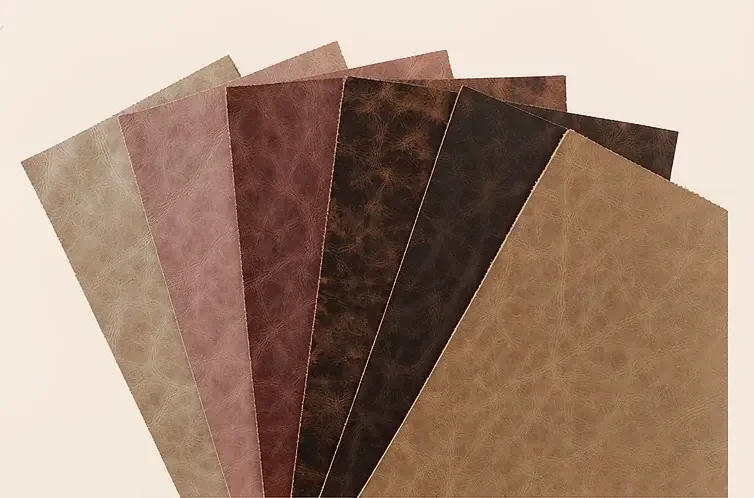
Shade Tolerance: the Number That Settles Disputes
Shade tolerance is the single number that converts an argument into a measurement. Without it, two people stand under different lights and disagree about whether a panel is acceptable. With it, the panel is read against a sealed master and the answer is arithmetic.
- Shade tolerance
- ΔE 1.0 against an approved master, read under D65 light
- Lighting standard
- D65 for approval, with a TL84 and an incandescent check for metamerism
- Metamerism check
- Read under three lights; a pair that matches at D65 and separates at TL84 is rejected
- Master reference
- One sealed panel per tone, held 24 months, stored away from direct light
- Rubbing fastness
- Dry and wet rubbing tested on the finished leather, recorded alongside the shade
- Light fastness
- Declared for pale tones, which fade first and are the usual subject of a later complaint
- Lot-to-lot band
- Successive lots of the same tone held within the same ΔE 1.0 band as the master
Metamerism deserves a note because it is the failure a swatch card cannot reveal. Two materials that match under daylight and separate under shop lighting are a returned bag waiting to happen, and the three-light check is the only way to find it before bulk.
One further note on masters: the master is a panel, not a photograph and not a swatch card. A photograph cannot be read at ΔE 1.0 and a swatch card is cut at the wrong substance. The master is cut from the first approved lot, sealed, and stored away from direct light, because a master that has faded is worse than no master at all.
Dye Lots and Colourway Runs
A dye lot is the unit of colour, exactly as a tannery lot is the unit of traceability. Every colourway in a collection is a separate lot, and every lot is a separate approval with its own retained panel and its own chemical report.
- One lot per colourway, recorded at goods-in before any hide is released to cutting.
- MOQ 500 pcs applies to each colourway, so a three-tone collection commits 1,500 pcs before a single bag is cut.
- Pale tones are booked first: the light end of a dye range has the fewest alternative lots to fall back on.
- A re-selected lot is a new approval: the old retained panel and the old report do not travel with it.
- Cut sequence follows the lot so panels from one dye lot stay together through skiving, stitching and assembly.
- Trims are approved to the same master: lining, thread, edge paint and zip tape, each read under the same light.
Three anchor tones, two metal finishes, one shade band. That is the palette that survives a season without a re-approval. Every tone beyond the third adds a dye lot, a retained panel, a chemical report and a 500 pc commitment, and the fourth tone is almost always the one that runs late.
Testing a Palette Before It Ships
Four tests close out a palette, and none of them is about whether the colour is beautiful. They ask whether the colour will still be there, in the same place, after the bag has been used and shipped.
Shade against master
Read at ΔE 1.0 under D65 light, on the finished panel at the substance it will be cut at, not on a swatch card held beside it.
Metamerism
Read under D65, TL84 and incandescent. A pair that separates between lights is rejected, because the customer sees the shop light rather than the daylight.
Rubbing fastness
Dry and wet rubbing on the finished leather and on the lining. A pale lining that crocks onto a pale outer is the commonest fastness complaint.
Transfer at contact points
Metal against leather at the closure, the feet and the strap ends, checked for marking after a cycle test on the assembled bag.
The fourth test is the one houses add last and wish they had added first. A metal finish that marks a pale hide after five hundred openings is a palette failure, not a hardware failure, and it is found only by cycling the assembled bag.
What a Palette Costs: MOQ, Sampling and Bulk
MOQ 500 pcs per style and per colourway. Sampling for a new style runs 6-10 working days, extending to 12-15 where a frame, a moulded handle or a new tool is involved. Bulk production at 35-50 days. FOB Xiamen as the standard term, with alternatives available where a programme needs them.
The programme runs across 7 production lines with about 200,000 pcs per month of capacity and has held export experience since 2014, carried out through our validated partner factory Quanzhou Yingming Bags, an SGS-validated site. Finish sample cards showing up to three plating options on the intended leather are billed at USD 4.80 and credited against the first bulk order, which is the least expensive way to settle a metal tone before it is committed.
Palette planning in six numbers
- Three anchor tones: the most a palette carries without a re-approval round.
- Two metal finishes: one alloy, one bath, one corrosion panel.
- ΔE 1.0: the shade tolerance read against a sealed master under D65 light.
- Three lights: D65, TL84 and incandescent, for the metamerism check.
- 500 pcs: the commitment attached to each colourway, not to the style.
- 24 months: how long every retained panel is held for later comparison.
Common Palette Failures
Five failures account for most palette rework. Each has a cause that is visible in advance and a fix that costs a line in a specification rather than a sampling round.
- Approving on a swatch rather than a panel: the shade is read at the wrong substance and the wrong finish.
- Approving under one light: metamerism is invisible until the bag reaches a shop floor.
- Choosing metal before leather: the hide is then hunted to match a bath rather than the reverse.
- Running four tones: the fourth carries its own lot, its own report and its own 500 pc commitment, and runs late.
- No retained master: a dispute six months later is argued rather than measured.
Have your palette reviewed before the dye lots are booked
Send your anchor tones, the metal family you are considering and the quantity per colourway. You will receive a step-by-step plan with the shade tolerance, the approval sequence and the effect on your calendar, within two working days. Request a quote.
Frequently Asked Questions
What order should a handbag palette be planned in?
Anchor tones first, metal family second, shade tolerance third, dye lots fourth, trims fifth, and retained references last. Each step constrains the next, so a decision taken out of order has to be revisited and costs a sampling round.
How many tones should a luxury handbag collection carry?
Three anchor tones and two metal finishes is the palette that survives a season without a re-approval. A fourth tone adds a dye lot, a retained panel, a chemical report and a 500 pc commitment, and is usually the tone that runs late.
What shade tolerance should be specified?
ΔE 1.0 against an approved master, read under D65 light on a panel cut at the substance the bag will use. Successive lots of the same tone are held inside the same band as the master, which is what makes a repeat order possible.
Why must metal be chosen before leather?
Because a finish family is a plating line with a fixed bath. Choosing metal first means the hide is hunted to match a bath rather than the reverse, and moving between families mid-collection means two bath logs and two corrosion panels for one bag.
What is metamerism and why does it matter?
It is the effect where two materials match under one light and separate under another. A leather and a trim that agree at D65 but separate under shop lighting become a returned bag, so the check is run under three lights.
How does MOQ apply across colourways?
MOQ 500 pcs applies per style and per colourway, so a three-tone collection commits 1,500 pcs before cutting begins. This is the reason the number of tones is a commercial decision rather than only a design one.
What is a retained reference panel for?
It is a sealed panel from each lot, held for 24 months away from direct light, used to settle any later dispute about hand, colour or substance. Without it a disagreement six months later is argued rather than measured.
How long does palette sampling take?
Sampling for a new style runs 6-10 working days and 12-15 where a frame, a moulded handle or a new tool is involved. Pale tones should be approved first because the light end of a dye range has the fewest fallback lots.
Should lining and thread be approved to the same master?
Yes. Lining, thread, edge paint and zip tape are all read against the same master under the same light. A lining approved separately is the commonest cause of a bag that reads right in daylight and wrong on the shop floor.
What does a metal finish do to a pale leather?
A dark metal against a pale hide exaggerates every mark at the contact points, which is why black nickel is avoided on bone and ivory. Pale gold at 0.2-0.4 µm is the usual pairing, cycled on the assembled bag to check for transfer.
How is transfer at contact points tested?
By cycling the assembled bag: the closure, the feet and the strap ends are worked against the leather and inspected for marking. A finish that marks a pale hide after five hundred openings is a palette failure rather than a hardware one.
What are finish sample cards and what do they cost?
Cards showing up to three plating options on the leather the bag will use, so the metal tone is settled before commitment. They are billed at USD 4.80 and credited against the first bulk order.
People Also Ask
How do you build a colour palette for a handbag collection?
Start with two or three anchor tones on the leather that will actually be used, choose one metal family, set a shade tolerance of ΔE 1.0 under D65 light, then book one dye lot per colourway and seal a retained panel from each.
What is ΔE in leather shade matching?
A numerical expression of the difference between two colours. A tolerance of ΔE 1.0 against a sealed master converts a shade argument into a measurement, and it is read under D65 light on a panel at production substance.
Why do handbag colours look different in shops?
Metamerism. Materials that match under daylight can separate under shop lighting, which is why a palette is checked under three light sources and why a trim approved in daylight alone can fail on the floor.
How many colourways should a first collection run?
Three. Each colourway carries its own dye lot, its own chemical report and its own 500 pc commitment, so the fourth tone is the one that usually runs late and the one that most often gets cancelled.
Should hardware match the leather exactly?
No, it should agree with it under the same light. Warm hides take light gold or antique brass, saturated darks take palladium, and pale hides take pale gold; a metal that fights the tone makes the leather look grey or muddy.
Sources and further reading
Every figure on this page is either our own programme data or attributed below. Open the originals before you write them into a specification.
- ISO — International Organization for StandardizationISO Publisher of the colour and lighting standards behind D65 viewing conditions, and of ISO 2859-1 for the AQL 2.5 inspection draw.
- Leather Working GroupLeather Working Group Tannery audit protocol behind the hides a palette is built on, whose reference is filed per lot alongside the shade approval.
- European Chemicals AgencyECHA Administrator of REACH, including the dye and finish restrictions answered by a chemical report per dye lot.
- California Office of Environmental Health Hazard AssessmentOEHHA The authority behind California Proposition 65, which governs warning requirements for listed substances in dyes, finishes and plated metal.
- CPSCU.S. Consumer Product Safety Commission Administrator of CPSIA limits on lead in substrates and coatings, relevant to hardware and trims on lines sold in the United States.