How Silhouette Drives Luxury Bag Pricing
Silhouette drives the price of a luxury handbag through six cost drivers, in a fixed order of magnitude: frame construction, leather grade and area, hardware, edge and stitching operations, lining and interior architecture, and compliance testing. A soft body with zamak hardware and a corrected grain leather starts at USD 4.80 per unit; a blocked frame with cast brass hardware and full-grain calfskin sits several steps higher. This guide gives the ranking first, then shows what each line actually buys.
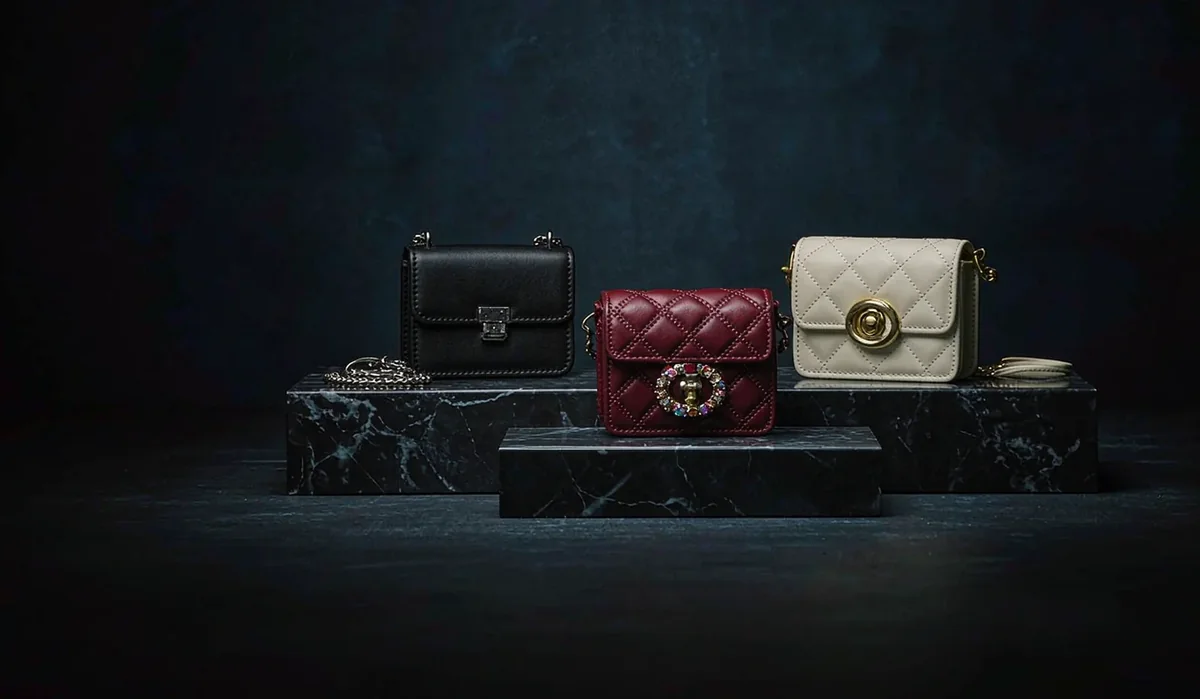
The Pricing Decision Order
Price follows operations, and operations follow the drawing. A brand that understands which parts of a silhouette generate cost can change a design knowing exactly what the change is worth, instead of discovering it when the quote arrives and then negotiating blind against a single total. The order below is the one we use when a brand asks us to bring a drawing down to a target figure, and it is the order in which a saving does the least visible damage to the finished piece.
- Frame construction: the largest single driver, because it decides how many operations the build needs.
- Leather grade and area: the largest material line, and the one a customer feels immediately.
- Hardware: base metal, plating thickness and whether the casting is custom or stock.
- Edge and stitching operations: coat count, stitch density and any hand-work specified.
- Lining and interior architecture: pocket count, zip number and whether the lining is hand-set.
- Compliance and testing: salt spray, cycle tests, chemical screening and the pre-shipment audit.
The one-line answer
- If a drawing has to come down in price, simplify the frame first and never the leather. A blocked frame is four operations; a concealed base plate is one. The customer feels the leather in the hand and only sees the frame, so the frame is where the saving belongs.
Driver 1: Frame Construction
The frame is the largest single cost driver in the build, and it is also the least visible to the customer once the bag is finished, which is precisely why it is the right place to save money and the wrong place to spend it without thinking. A soft body is cut, skived, closed and edge-finished in 3 coats. A semi-structured body adds a concealed base plate and a reinforcement tape at every stress point, which is one extra operation. A blocked frame adds lamination, a heated form, a cooling cycle and an extra inspection gate, which is four.
Soft body
Four core operations, no form, no tooling, and the shortest sampling round at 6-10 working days.
Concealed base plate
One extra operation, holds volume without rigidity, and the most efficient step up available.
Blocked frame
Four extra operations plus a form and a template, the standard for a bag that stands empty.
Moulded shell
Two extra operations with a pre-formed shell, best where the same geometry repeats across a line.
Driver 2: Leather Grade and Area
Leather is the largest material line and the one a customer judges the brand on, which is why it is the last thing to reduce rather than the first. Full-grain calfskin at 1.2-1.4 mm is the standard for a structured piece, grained calf at 1.4-1.6 mm for a bag carried daily, and lambskin at 0.8-1.0 mm where drape is the point. Area follows the silhouette: a 26 cm body uses materially more hide than an 18 cm one.
- Full-grain calfskin at 1.2-1.4 mm: the standard for a structured piece, and the patina line.
- Grained calf at 1.4-1.6 mm: hides abrasion on a bag carried every day.
- Lambskin at 0.8-1.0 mm: chosen for drape, and needs reinforcement to hold a frame.
- Area: a 26 cm body uses materially more hide than an 18 cm body of the same shape.
Driver 3: Hardware
Hardware is the second largest driver and the most variable, because the spread between a stock zamak fitting and a custom brass casting is wide. Cast brass costs multiples of stamped zamak, plating thickness moves the figure again, and a custom casting carries a tooling cost that is amortised across the run. Specifying one hardware family across a line is the simplest way to reduce the number of setups.
- Stock zamak
- The entry option, plated to 0.15-0.3 micrometres
- Cast brass
- Multiples of stamped zamak, used for load-bearing components
- Custom casting
- Adds tooling, amortised across the run at 500 pcs minimum
- Plating
- 0.15-0.3 micrometres, verified by X-ray fluorescence
- Testing
- 24 h salt spray as standard, 48 h for resort assortments
Driver 4: Edge and Stitching Operations
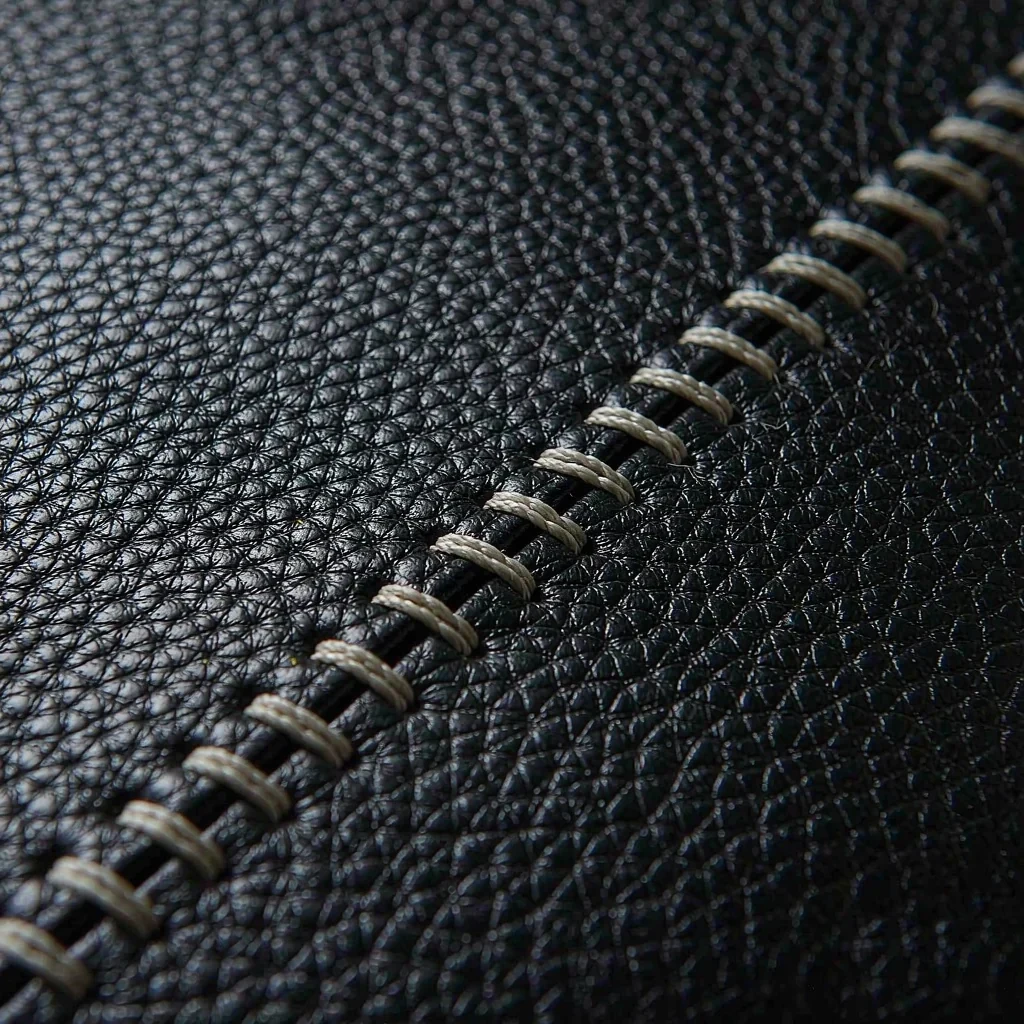
Edge and stitch specifications are priced by the pass. A three-coat edge is three applications, two sanding operations and one burnish, where a single coat is one pass with no sanding. Stitch density is priced by time rather than by thread: 8-9 stitches per inch is the working band, and anything tighter takes longer per centimetre of seam. Hand-work, such as a hand-set lining or a corded trapunto channel, is priced by the hour.
- Edge: 3 coats means three passes, two sanding operations and one burnish.
- Stitch density: 8-9 stitches per inch, priced by time per centimetre of seam.
- Hand-set lining: priced by the hour, and the clearest signal of a prestige build.
- Corded trapunto: the heaviest in labour and the lightest in material of the quilt patterns.
Driver 5: Lining and Interior Architecture
The interior is priced by component count. A standard set of one zip pocket, two slip pockets and one card slot carries a number 5 zip and four bartacks. Adding pockets adds zips, tapes and bartacks, and moving from a 120 gsm jacquard to a 0.8-1.0 mm split suede changes both the material line and the labour. A hand-set lining is the single most expensive interior specification.
Driver 6: Compliance, Testing and Audit
Compliance is a smaller line than most brands expect, and it is not optional. Chemical screening follows REACH as a baseline, with California Proposition 65 checked for nickel and lead before hardware is approved for that market. Physical testing covers a 5,000-cycle closure test, a 24 h salt-spray test and the AQL 2.5 (ISO 2859-1) pre-shipment audit, each of which is a recorded operation on every first article.
- Chemical baseline: REACH restricted substances, checked on leather, thread and finishes.
- Market screening: California Proposition 65 for nickel and lead on hardware.
- Physical testing: 5,000 closure cycles, 24 h salt spray, and a 25 kg anchor pull test.
- Audit: AQL 2.5 (ISO 2859-1) on a sample pulled from the cartons before release.
Where the Drivers Interact
The six drivers are not independent, and the interactions are where a quote surprises a brand. Specifying a blocked frame raises the leather requirement, because a blocked panel needs 1.2-1.4 mm full-grain calfskin rather than a thinner corrected grain. Choosing a larger closure raises the plating line, because more surface area is plated to the same 0.15-0.3 micrometres. And a hand-set lining raises both the material line and the operations count at once.
- A blocked frame pulls the leather grade up to 1.2-1.4 mm full-grain calfskin.
- A larger closure increases the plated surface area at the same thickness.
- A hand-set lining raises the material line and the operations count together.
- A 48 h salt-spray requirement raises the plating thickness to the top of the band.
- A custom casting adds tooling, which is why the second run costs less per unit than the first.
Cost Ranking Table
The table ranks the six drivers by the size of their effect on the unit figure, and shows what a brand saves by moving one step down on each. Read it as a negotiation reference rather than as a price list.
| Rank | Driver | What one step down saves | What it costs you |
|---|---|---|---|
| 1 | Frame construction | Four operations, a form and a template | The bag will not stand empty |
| 2 | Leather grade and area | The largest material line | The customer feels it immediately |
| 3 | Hardware | The spread between zamak and cast brass | Load-bearing strength and finish depth |
| 4 | Edge and stitching operations | Two passes and one sanding operation | Edge life and the hand-made read |
| 5 | Lining and interior | A zip, a tape and four bartacks per pocket | Interior quality on every opening |
| 6 | Compliance and testing | A small line, and not one to cut | Market access and repeat consistency |
Reading a Quote: What Each Line Means
A quote has four parts: material, operations, hardware and testing. Material is the leather, the lining and the wadding, priced by area and grade. Operations is the labour, priced by the number of passes a build requires. Hardware is priced per component plus any tooling. Testing is a fixed cost per first article plus a per-carton audit. A brand that reads a quote this way can see where its money is going, and can change the drawing knowing exactly which line moves. The common mistake is to look only at the total and then ask for a reduction, which usually lands on the leather because it is the largest visible number, and which costs the brand the one line its customer can actually feel in the hand.
| Quote line | What it contains | How to reduce it |
|---|---|---|
| Material | Leather, lining and wadding by area and grade | Reduce the area before the grade |
| Operations | Every pass: cut, skive, close, edge, line, finish | Simplify the frame, keep the edge |
| Hardware | Components plus any custom tooling | Use one family across the line |
| Testing | First-article tests plus the per-carton audit | Do not cut; it protects the reorder |
Sampling, MOQ and the Calendar
A soft or semi-structured first article takes 6-10 working days from a confirmed tech pack, and a piece with a blocked frame, a custom cast closure or a mixed-media panel takes 12-15 working days. Minimum order quantity is 500 pcs per style / colourway, which is what amortises the frame tooling and the hardware setup. Bulk production runs 35-50 days from an approved sample, FOB Xiamen.
Our validated partner factory Quanzhou Yingming Bags has quoted and built programmes on this structure since 2014, running 7 production lines with a monthly output of about 200,000 pcs. Specified programmes begin at USD 4.80 per unit. Every shipment is audited at AQL 2.5 (ISO 2859-1) against the approved first article, so the quote a brand accepts is the specification it receives.
Request a costed silhouette review
Send us a drawing and a target figure and we will return a ranked cost breakdown and a specification that meets it. Start your programme
Frequently Asked Questions
What drives the cost of a luxury handbag the most?
Frame construction, because it decides how many operations the build needs. A blocked and laminated frame adds four operations, a form and an inspection gate; a concealed base plate adds one. Leather is the largest material line, and hardware is the most variable.
How much does a specified handbag programme cost per unit?
Specified programmes begin at USD 4.80 per unit for a soft body with zamak hardware and a corrected grain leather. The figure rises with the frame, the hardware specification and the leather grade, and a blocked frame with cast brass hardware sits several steps higher.
Where should I save money on a bag design?
On the frame, not on the leather. A customer feels the leather in the hand and only sees the frame, so simplifying a blocked frame down to a concealed base plate saves four operations with far less visible effect than downgrading the hide.
Why does a structured bag cost more than a soft one?
Because it needs more operations: lamination, a heated form, a cooling cycle, an acrylic template and an extra inspection gate. The material difference is small, at 0.8 mm of reinforcement board, and the labour difference is what moves the price.
How much does hardware add to the unit cost?
A wide spread. A stock zamak fitting is the entry option; cast brass costs multiples of it; and a custom casting adds tooling that is amortised across the run at the 500 pcs minimum. Plating thickness moves the figure again within the 0.15-0.3 micrometre band.
Does a three-coat edge cost three times as much?
No, because the material is minor and the labour is the cost. Three coats mean three applications, two sanding operations and one burnish, so the edge line rises in passes rather than in multiples. It remains the clearest visible signal of how a bag was made.
What is included in the testing line of a quote?
A 5,000-cycle closure test, a 24 h neutral salt-spray test on hardware, a 25 kg anchor pull test, chemical screening against REACH, California Proposition 65 screening where required, and the AQL 2.5 (ISO 2859-1) pre-shipment audit.
How does the size of a bag affect its price?
Through leather area and hardware scale. A 26 cm body uses materially more hide than an 18 cm body of the same shape, and it takes larger hardware. Labour does not scale down with size, which is why a mini saves less than most brands expect.
Why is the minimum order quantity 500 pieces?
Because a frame form, a set of templates and any hardware tooling have to be amortised across the run. Below that quantity the setup cost per unit rises sharply, which is why the 500 pcs per style / colourway threshold holds for a first capsule and a reorder alike.
How long does it take to get a costed quote?
One working day from a drawing and a target figure. We return a ranked cost breakdown showing the six drivers, the operations count behind each, and the specification changes that would bring the piece to the target number.
Does a custom hardware casting change the minimum order?
No, the 500 pcs per style / colourway threshold still applies, but the tooling cost is added to the first run and amortised across it. On a repeat order the tooling is already made, so the unit figure drops on the second run.
Is a hand-set lining worth the extra cost?
Yes on a prestige piece, because it lets the lining float inside the shell so it never telegraphs a seam or pulls the silhouette out of shape. It is priced by the hour and it is the clearest single signal of a hand-finished build.
How do I keep a reorder at the same price?
Freeze the specification as a tolerance sheet and keep the approved first article as the physical standard. The reorder is then built to the same operations count and audited at AQL 2.5 (ISO 2859-1) against that sample, so the figure holds.
What is the least costly change that improves a bag?
Fixing the tolerances. Specifying stitch density, edge coats, plating thickness and body dimensions as numbers costs nothing at the drawing stage and changes how the piece reads more than most material upgrades do.
People Also Ask
Why are structured handbags more expensive?
Because of operations rather than material. A blocked frame adds lamination, a heated form, a cooling cycle, a template and an inspection gate, while the material difference is only 0.8 mm of reinforcement board.
How is the price of a handbag calculated?
From four lines: material by area and grade, operations by the number of passes, hardware per component plus tooling, and testing per first article plus a per-carton audit at AQL 2.5 (ISO 2859-1).
What is a good entry price for a luxury bag programme?
Specified programmes begin at USD 4.80 per unit for a soft body with zamak hardware and a corrected grain leather. The figure rises with the frame, the hardware and the leather grade, so the frame is where a brand controls it.
Does bag size change the production cost much?
Materially yes, in labour no. A larger body uses more hide and larger hardware, but the operations count is the same, which is why a mini saves less than most brands expect and why the mini carries the stronger margin.
Should I cut the compliance testing to save money?
No. Compliance is a small line and it protects market access, repeat consistency and the reorder. Cutting a 24 h salt-spray test or a cycle test to save a small amount risks a failure that costs far more than the test.
Sources and further reading
Every figure on this page is either our own programme data or attributed below. Open the originals before you write them into a specification.
- REACH restricted substances guidanceEuropean Chemicals Agency Used as the chemical baseline for leather, thread, adhesive and finish screening.
- Proposition 65 listed substancesCalifornia Office of Environmental Health Hazard Assessment Checked for nickel and lead before hardware is approved for the California market.
- ISO 2859-1 sampling procedures for inspection by attributesInternational Organization for Standardization The sampling standard behind the AQL 2.5 audit included in every quotation.
- Sourcing Journal supply chain reportingSourcing Journal Used to track how material and freight costs move across a sourcing season.
Six drivers set the price of a silhouette, and the frame is the one worth negotiating. Simplify the frame, keep the leather grade, hold the edge at 3 coats and the stitch density at 8-9 stitches per inch, and the piece lands on its target figure without the customer noticing what changed.
Send us a drawing and a target figure and we will return a ranked cost breakdown and a specification that meets it within one working day. Request a costed silhouette review