Mini vs Medium Luxury Bag Silhouettes
Mini and medium are not the same bag at two scales, and treating them as such is the most common sourcing mistake in the category. A mini body of 16-20 cm carries a different gusset, a different drop, smaller hardware and a lighter frame than a medium body of 24-28 cm, and each of those changes is a specification decision rather than a scaling one. This guide compares the two sizes on eight specifications, then shows which size belongs in which assortment.
What Counts as Mini and What Counts as Medium
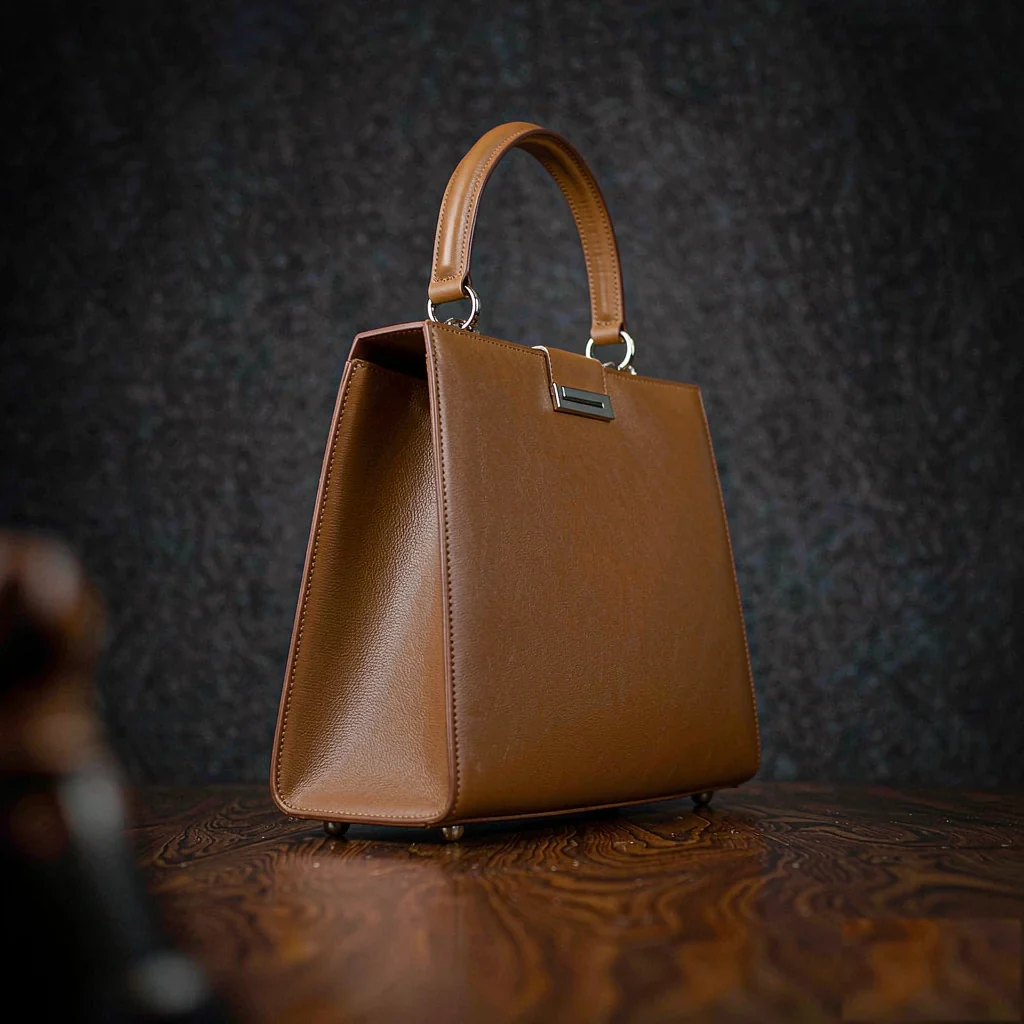
In our specification language a mini body sits at 16-20 cm of height with a gusset of 5-6 cm, and a medium body sits at 24-28 cm with a gusset of 8-10 cm. Below 16 cm the piece is a micro or an evening object, and above 28 cm it is a city or business bag. Those four bands are what we quote against, and each one carries its own hardware scale, frame thickness and carrying specification.
The distinction matters commercially as well as technically. A mini is usually bought as a second or third bag, often in a colour the customer would not choose in a larger size, which makes it the strongest gross-margin line in a collection. A medium is bought as the primary bag and carries the volume. Both belong in an assortment, and they should be specified separately rather than as one drawing at two scales.
The one-line answer
- A mini is not a scaled-down medium. Mini runs a 16-20 cm body with a 5-6 cm gusset, a 9-10 cm handle drop and 18 mm hardware; medium runs a 24-28 cm body with an 8-10 cm gusset, a 10-11 cm drop and 25 mm hardware. Specify them as two drawings with two tolerance sheets.
Side-by-Side: The Eight Specifications
The table below is the comparison we send with a size query. Every line differs between the two sizes, and every line is measurable on a finished sample, so a brand can decide which size to sample first on evidence rather than on a sketch.
| Specification | Mini silhouette | Medium silhouette | Why it differs |
|---|---|---|---|
| Body height | 16-20 cm | 24-28 cm | Sets the visual register and the carrying occasion |
| Gusset depth | 5-6 cm | 8-10 cm | Capacity, and the weight of the profile |
| Handle drop | 9-10 cm | 10-11 cm | A smaller body needs a shorter drop to read correctly |
| Hardware scale | 18 mm closure | 25 mm closure | Hardware must scale or it dominates the panel |
| Frame board | 0.6 mm | 0.8 mm | A mini panel needs less rigidity to hold geometry |
| Stitch density | 8-9 SPI | 8-9 SPI | The one specification that does not change |
| Carrying width | 10-12 mm handle | 12-15 mm handle | A narrower handle keeps a small body in proportion |
| Entry cost | From USD 4.80 | Above the entry band | Leather area and hardware scale drive the difference |
Proportion and Presence
Proportion behaves differently at small sizes. A mini can carry a ratio at the top of the accepted band, around 0.85-0.9, and still read as charming rather than tall, because a small body exaggerates nothing. A medium at the same ratio reads as narrow and severe. Conversely a mini below 0.7 reads as a tray far sooner than a medium does, which is why the mini band is narrower in practice than it looks on paper.
- Mini: a ratio of 0.80-0.90 reads as charming; below 0.72 it reads as a tray.
- Medium: a ratio of 0.75-0.85 reads as balanced; above 0.90 it reads as severe.
- The mini band is narrower in practice than the medium band, despite being smaller.
- Height-to-width is read first, so get the ratio right before refining the profile.
Capacity and What Actually Fits
Capacity is the honest test of a mini, and it should be stated on the product page rather than left to the customer to discover. A mini with a 5-6 cm gusset carries a phone, a card case and a lipstick, and nothing else. A mini with a 6 cm gusset and a soft body will accept a small sunglasses case if the body is unlined at the gusset. A medium with an 8-10 cm gusset carries a phone, a small leather goods case, sunglasses and a document sleeve.
Mini at 5 cm
A phone, a card case and a lipstick. Nothing else, and the product page should say so plainly.
Mini at 6 cm
The same plus a slim sunglasses case, if the gusset is left unlined so the leather can give.
Medium at 8 cm
A phone, a small leather goods case, sunglasses and a slim document sleeve.
Medium at 10 cm
The same plus a water bottle, which is what turns a day bag into a city bag.
Hardware Scale: The Most Common Mistake
The most common mistake in a mini programme is carrying the medium hardware across unchanged. A 25 mm turn-lock on an 18 cm body occupies a fifth of the panel and reads as a fitting rather than as a closure. The mini needs its own hardware: an 18 mm closure, a 10-12 mm handle, a number 3 zip rather than a number 5, and feet scaled to the base rather than borrowed from the larger piece.
- Mini closure
- 18 mm cast brass or zamak, plated to 0.15-0.3 micrometres
- Medium closure
- 25 mm cast brass, plated to 0.15-0.3 micrometres
- Mini handle
- 10-12 mm wide, with a 2 mm core rather than 3 mm
- Medium handle
- 12-15 mm wide, with a 3 mm core
- Zip
- Number 3 on a mini, number 5 on a medium
Handle and Strap: Scaling the Carrying Elements
Carrying elements scale, but not linearly. A mini handle drop of 9-10 cm clears the hand on a small body, while a medium needs 10-11 cm because the body itself is deeper and the hand has to clear more leather. A mini shoulder strap runs at 22-26 cm rather than 25-30 cm for the same reason. Strap width follows the same logic: 10-12 mm on a mini crossbody and 12-15 mm on a medium.
- Mini handle drop 9-10 cm, because a small body needs less clearance.
- Medium handle drop 10-11 cm, because the deeper body needs more.
- Mini shoulder strap 22-26 cm, medium 25-30 cm.
- Mini crossbody strap 10-12 mm wide, medium 12-15 mm wide.
Construction: Why Mini Is Not Simply Smaller
Construction changes with size in three places. The frame board drops from 0.8 mm to 0.6 mm, because a small panel needs less rigidity to hold geometry and a thick board would make the piece feel like a box. The corner radius tightens from 14 mm to 10 mm, which only works because the leather is being asked to turn less. And the base plate can often be omitted entirely, because a small filled body dishes far less.
- Frame board: 0.6 mm on a mini against 0.8 mm on a medium.
- Corner radius: 10 mm on a mini against 14 mm on a medium.
- Base plate: often omitted on a mini, because a small filled body dishes less.
- Stitch density: unchanged at 8-9 stitches per inch in both sizes.
Cost and Margin by Size
A mini costs less in material and about the same in labour, which is why it carries the strongest margin in a collection. Leather area falls sharply with the smaller body and hardware scale falls with it, but the operations do not: a mini still needs a cut, a skive, a close, an edge finish in 3 coats and a full audit at AQL 2.5 (ISO 2859-1). Specified programmes begin at USD 4.80 per unit, and the mini sits at the entry end of that range while the medium sits above it.
| Cost line | Mini | Medium | Note |
|---|---|---|---|
| Leather area | Lower | Higher | The largest single difference between the two sizes |
| Hardware scale | 18 mm | 25 mm | Smaller castings cost less per unit |
| Operations | Same count | Same count | Labour does not scale down with the body |
| Frame board | 0.6 mm | 0.8 mm | A mini needs less rigidity to hold geometry |
| Typical margin | Highest in the line | Volume driver | Mini is usually bought as a second or third bag |
Which Size Belongs in Which Assortment
Both sizes belong in a working assortment, and the split depends on the channel. A boutique assortment leans towards the medium, because a customer standing in front of a shelf wants to see the primary bag and judge the brand on it. An e-commerce assortment leans towards the mini, because a smaller bag photographs as a single object and ships as a gift. A resort assortment leans towards the mini again, because capacity matters less than colour and proportion on holiday.
| Assortment | Recommended split | Reason | Specification note |
|---|---|---|---|
| Boutique | One medium to one mini | The customer wants to see the primary bag | Medium on a blocked frame, mini on a base plate |
| E-commerce | Two mini to one medium | A small bag photographs and ships as an object | Mini hardware scaled to 18 mm |
| Resort | Mini only, or mini-led | Capacity matters less than colour and proportion | 48 h salt spray on all hardware |
| Business and city | Medium only | The customer carries a document sleeve | Gusset at 10 cm, reinforced base |
Sampling and MOQ Across Two Sizes
Each size is its own programme. A mini first article takes 6-10 working days from a confirmed tech pack and a medium with a blocked frame takes 12-15 working days. Minimum order quantity is 500 pcs per style / colourway, so a mini and a medium in the same colourway are two qualifying runs. Bulk production runs 35-50 days from an approved sample and every shipment is offered FOB Xiamen.
Our validated partner factory Quanzhou Yingming Bags has run two-size programmes since 2014 on 7 production lines with a monthly output of about 200,000 pcs. Every shipment is audited at AQL 2.5 (ISO 2859-1) against the approved first article, and because the two sizes share a hardware family and a stitch density, one tolerance architecture covers both.
Request a size comparison
Send us a drawing and we will cost it at both sizes, with a hardware scale recommendation and a tolerance sheet for each. Start your size programme
Frequently Asked Questions
What size is considered a mini handbag?
A body height of 16-20 cm with a gusset of 5-6 cm. Below 16 cm the piece is a micro or an evening object rather than a mini. The mini carries a 9-10 cm handle drop, 18 mm hardware and a 0.6 mm frame board, all of which differ from the medium specification.
What size is a medium handbag?
A body height of 24-28 cm with a gusset of 8-10 cm. It carries a 10-11 cm handle drop, 25 mm hardware and a 0.8 mm frame board. Above 28 cm the piece becomes a city or business bag and needs a reinforced base and feet.
Is a mini bag just a smaller version of a medium bag?
No. The gusset, the drop, the hardware scale, the frame board and the corner radius all change, and the operations do not scale down. A mini still needs a cut, a skive, a close, an edge finish and an audit, which is why it costs less in material and about the same in labour.
What hardware size should a mini bag use?
An 18 mm closure against 25 mm on a medium, a 10-12 mm handle against 12-15 mm, and a number 3 zip against a number 5. Carrying medium hardware across unchanged is the most common mistake in a mini programme, because the closure then reads as a fitting.
What fits inside a mini luxury bag?
A phone, a card case and a lipstick at a 5 cm gusset. At 6 cm with an unlined gusset it will also accept a slim sunglasses case, because the leather can give. The product page should state this plainly rather than leaving the customer to discover it.
How much does a mini bag cost to produce?
Less in material and about the same in labour. Leather area and hardware scale both fall, but the operations do not. Specified programmes begin at USD 4.80 per unit, with the mini at the entry end of that range and the medium above it.
Which size has the better margin?
The mini, because material falls faster than labour and because a mini is usually bought as a second or third bag, often in a colour the customer would not choose in a larger size. The medium carries the volume, so the two work together in an assortment.
Should a mini bag have a frame?
Usually a lighter one. A 0.6 mm board is enough to hold geometry on a small panel, and a 0.8 mm board would make the piece feel like a box. A base plate can often be omitted entirely, because a small filled body dishes far less than a large one.
What corner radius works on a mini bag?
Ten millimetres, against 14 mm on a medium. The tighter radius only works because the leather is being asked to turn less on a smaller body. Below about 10 mm at 1.3 mm full-grain calfskin the outer layer compresses into a visible wrinkle.
What handle drop suits a mini bag?
Nine to ten centimetres, against 10-11 cm on a medium. A smaller body needs less clearance for the hand, and a drop borrowed from the larger piece makes the mini swing rather than sit. A mini shoulder strap runs at 22-26 cm rather than 25-30 cm.
How long does it take to sample both sizes?
A mini first article takes 6-10 working days and a medium with a blocked frame takes 12-15 working days, both from a confirmed tech pack. Sampled in parallel, both first articles arrive inside three weeks, and bulk runs 35-50 days from approval.
What is the minimum order quantity for two sizes?
Five hundred pieces per style and colourway, so a mini and a medium in one colourway are two qualifying runs. The threshold covers the frame tooling, the hardware setup and the pattern planning for each size separately.
Do the two sizes share a tolerance sheet?
Partly. Stitch density, plating thickness, edge coats and the AQL 2.5 audit level are shared, because they do not change with size. Body dimensions, gusset depth, drop, hardware scale and frame board thickness each need their own line for each size.
Which size should a new brand launch first?
A medium, because it is the primary bag and the one a customer judges the brand on. Add the mini in the second season, scaled properly with its own hardware, and the two together then carry the assortment and the margin.
People Also Ask
What is the difference between a mini and a medium bag?
Eight specifications: body height, gusset depth, handle drop, hardware scale, frame board thickness, corner radius, carrying width and capacity. Only stitch density, plating thickness and the audit level stay the same across the two sizes.
Are mini bags still in style?
Yes, and they have been for several seasons, because a mini works as a second or third purchase and photographs well. What changes is the proportion and the hardware scale rather than the size itself, so the mini keeps returning.
How small is too small for a handbag?
Below 16 cm of body height the piece stops being a bag and becomes an evening object or a micro piece. At that scale the gusset drops below 5 cm and the hardware has to be scaled below 18 mm to stay in proportion.
Do mini bags cost less to make?
In material, yes; in labour, no. Leather area and hardware scale fall sharply, but a mini still needs the same cut, skive, close, edge finish and audit as a medium, which is why the saving is smaller than most brands expect.
Should I offer one bag in two sizes?
Yes, but specify them separately. Scale the hardware to 18 mm, drop the frame board to 0.6 mm, shorten the drop to 9-10 cm and tighten the corner radius to 10 mm, and the mini will read as designed rather than as shrunk.
Sources and further reading
Every figure on this page is either our own programme data or attributed below. Open the originals before you write them into a specification.
- Business of Fashion industry reportingBusiness of Fashion Used to track how mini and medium proportions move between seasons.
- WWD accessories and handbag coverageWWD Referenced for how mini silhouettes are merchandised alongside medium sizes.
- ISO 2859-1 sampling procedures for inspection by attributesInternational Organization for Standardization The sampling standard behind the AQL 2.5 audit applied to both sizes.
- Leather Working Group audit protocolsLeather Working Group Referenced for traceability on the calfskin shared across both sizes.
A mini is a specification, not a scale. Give it its own gusset, drop, hardware scale and frame board and it reads as designed; shrink a medium and it reads as a smaller version of something else, which a customer notices without being able to say why.
Send us a drawing and we will cost it at both sizes, with a hardware scale recommendation and a tolerance sheet for each, within one working day. Request a size comparison