Premium Handbag Interlining and Structuring Materials: Five Decisions, the Numbers Behind Each and a Working Glossary
Interlining is the reason a bag stands up, holds a corner and returns to its shape after being set down, and it is almost never discussed in a design meeting. Five decisions govern it: how much structure the silhouette needs, which family of material supplies it, what weight and hand it has, how it is attached, and what it must survive in service. Each decision branches, and the branch taken determines the stack, the fusing window and the eventual behaviour of the bag. This piece walks the five decisions in order, gives the figures that belong to each, and closes with a glossary of the materials themselves with their numbers, because most disputes about structure are disputes about vocabulary rather than about engineering.
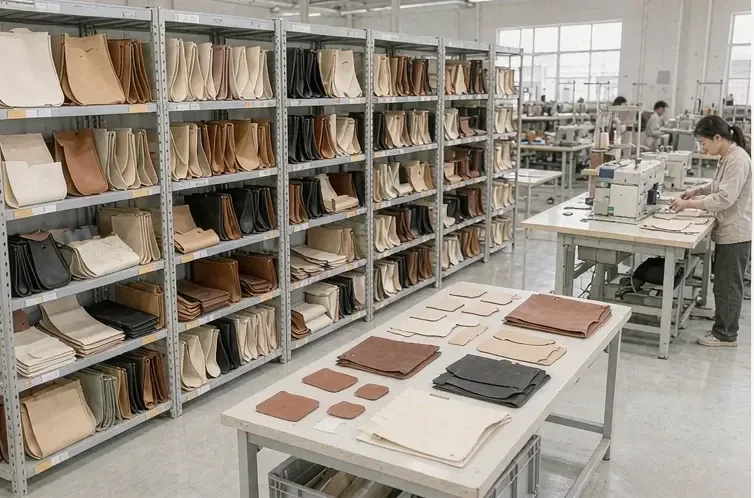
What Interlining Does in a Bag
Interlining has four jobs. It adds body to a panel that would otherwise collapse, it stabilises a leather or fabric that stretches, it reinforces the points where hardware loads the panel, and it controls how the bag recovers after it is compressed.
None of those jobs is visible in a finished bag, which is exactly why interlining is so often left to the last minute. The panel either holds or it does not, and by the time that is known the outer material has already been cut.
The hidden cost is that interlining changes the stack. Every layer added behind a panel changes the length of a prong, the depth of a hole and the way a seam turns, so it has to be decided before hardware is specified rather than after.
Decision One: How Much Structure Does the Silhouette Need?
This is the branch that determines everything downstream, and it is answered by what the bag has to do when it is empty.
- Fully structured: the bag stands unaided and holds a sharp corner. Needs a board or a heavy fused build.
- Semi-structured: the base and gussets hold, the front panel has some give. Needs a medium non-woven plus a board in the base only.
- Soft with a reinforced base: the body slouches but the floor holds. Needs light interlining plus a 1.0 mm board cut to the base.
- Fully soft: the bag folds and packs flat. Needs stabilising interlining only, to stop the leather growing, with no board at all.
- Structured locally: soft overall, rigid where hardware sits. Needs a patch of board behind each fitting rather than a full panel.
The last branch is the most cost-effective and the least used. A bag that only needs to resist load at four feet and one lock does not need a rigid panel throughout; it needs four patches and one plate.
Decision Two: Which Interlining Family?
Four families cover the work, and they are not substitutes for each other: they differ in what they resist and in how they feel.
| Family | What it resists | Typical weight or thickness | Hand it produces |
|---|---|---|---|
| Non-woven, fusible | Stretch and growth in the outer material | 30 to 80 g per square metre, 0.25-0.60 mm thick | Crisp at the heavy end, almost invisible at 30 g |
| Woven, fusible | Distortion in both directions, on a fabric outer | 60 to 120 g per square metre | Firmer and more tailored, with a visible weave memory |
| Foam or spacer sheet | Compression; gives loft and a soft edge | 1.0 to 3.0 mm at 25-60 kg per cubic metre | Padded, rounded, and it softens a corner deliberately |
| Cellulose board | Bending; gives a true plane | 0.6, 1.0 and 1.5 mm | Rigid, and it will take a crease only where scored |
| Fusible fleece or wadding | Nothing structural; gives body without a plane | 80 to 200 g per square metre | Soft loft, used under a leather that must stay supple |
Mixing two families is normal and often correct: a 45 g non-woven across the panel to stop growth, plus a 1.0 mm board in the base to stop sagging.
Decision Three: Weight and Hand
Weight is chosen against the outer material rather than against the silhouette, because a heavy interlining on a light leather produces a panel that fights itself.
- Light leather, 0.8-1.0 mm
- 30-45 g non-woven: enough to stop growth without stiffening the hand
- Medium leather, 1.2-1.4 mm
- 45-60 g non-woven, or 45 g plus a local board patch
- Heavy leather, 1.6-2.0 mm
- 60-80 g non-woven, because a lighter one will not register at all
- Fabric or coated outer
- 60-120 g woven fusible, which resists distortion in both directions
- Foam for a padded panel
- 1.5-2.0 mm at 25-40 kg per cubic metre; heavier foam reads as upholstery
- Board for a true plane
- 1.0 mm for a base, 1.5 mm for a front panel that must not bow
The rule of thumb that survives most cases: the interlining should be the smallest weight that stops the outer material growing. Anything heavier is structure being bought by weight rather than by design, and it shows as a bag that feels stiff and hollow.
Decision Four: How Is It Attached?
Attachment is where most interlining faults originate, and the fusing window is the part most often left to whoever is operating the press.
- Temperature at the adhesive line of 120-140 °C, measured on the panel rather than read from the press dial.
- Dwell of 8-12 seconds under a pressure of 2.5-3.5 bar, which is what actually transfers the adhesive.
- Adhesive coating weight of 12-20 g per square metre on the interlining itself.
- Peel strength of 8 N per 50 mm or better after fusing, tested on a strip from the run rather than on a lab coupon.
- Shrinkage of 1.5 percent or less after pressing, or the panel will pull away from the pattern.
Delamination is almost always a temperature problem rather than an adhesive one. Too cool and the resin never flows; too hot and it strikes through to the face of the leather, which is a fault that cannot be corrected afterwards.
Decision Five: What Must It Survive?
Interlining is selected against the conditions of the market as well as against the bag, and three conditions cause most failures.
- Humid climate
- A cellulose board softens above about 85 percent relative humidity; use a synthetic board instead
- Heat in transit
- Storage above 60 °C can soften a fusible resin and the panel bubbles; this is a packing and routing question
- Dry cleaning or spot cleaning
- Some resins are solvent soluble; state the cleaning method on the care label and match the resin to it
- Compression in a carton
- Foam of 25 kg per cubic metre recovers; lighter grades take a permanent set
- Repeated flexing
- A board creases permanently once flexed past its score line, so score it rather than folding it
The transit condition is the one that surprises people. A bag that leaves the bench perfect can arrive with a bubbled panel because a container sat in the sun, and that is a routing decision rather than a materials one.
The Glossary: Materials and Their Numbers
Most disagreement about structure is disagreement about vocabulary. These are the terms as they are used on a specification, with a figure attached to each.
Interlining
Any material fused or sewn behind the outer to change its behaviour. Specified by weight in grams per square metre and by whether it is fusible.
Non-woven
Fibres bonded into a sheet rather than woven. 30-80 g per square metre, 0.25-0.60 mm thick, and the default choice for stabilising a leather panel.
Woven fusible
A woven cloth carrying adhesive, 60-120 g per square metre. Resists distortion in both directions and is used where a fabric outer would otherwise twist.
Foam sheet
A closed-cell sheet of 1.0-3.0 mm at 25-60 kg per cubic metre. Adds loft and softens an edge; below about 25 kg it takes a permanent set under compression.
Cellulose board
A regenerated fibre board in 0.6, 1.0 and 1.5 mm. Gives a true plane and is the material behind a structured front panel or a rigid base.
Wadding or fleece
A lofted sheet of 80-200 g per square metre, sewn rather than fused. Gives body without a plane, used where the leather must stay supple.
Reading a Construction Stack
A stack is written from the outside in, and the total is what determines every hardware dimension on the bag.
| Layer | Typical figure | What it governs |
|---|---|---|
| Outer leather | 1.2-1.4 mm on a structured calf panel | The visible surface and the primary strength |
| Non-woven interlining | 45 g per square metre, about 0.35 mm | Whether the panel grows over a season |
| Foam, where padding is wanted | 1.5-2.0 mm at 25-40 kg per cubic metre | The softness of the edge and the loft |
| Cellulose board, where a plane is wanted | 1.0 mm for a base, 1.5 mm for a front | Whether the bag stands and whether the panel bows |
| Lining | A suede-finish or woven lining at its own stated weight | The interior hand and the finish of the seam |
| Total at a hardware point | Around 2.4-3.0 mm on a structured panel | Prong length, hole depth and washer size |
This is the single most common source of a fitting that spins in its hole. The drawing was dimensioned on the leather, and the interlining was added afterwards.
Common Faults and Their Material Causes
Five faults trace back to interlining, and each has a material cause rather than a workmanship one.
- Panel bubbles after a few weeks: resin strike-through from too high a fusing temperature, or a resin too heavy for the leather.
- Bag sags at the base: board too light for the load, commonly 0.6 mm where 1.0 mm was needed, or the board cut short of the gusset.
- Corner loses its point: foam below 25 kg per cubic metre, which does not recover from compression.
- Panel grows over a season: interlining too light, or fused at too low a temperature to transfer the adhesive.
- Seam puckers along the edge: interlining shrinkage above the 1.5 percent allowance after pressing.
Note that three of the five are attachment faults rather than selection faults. The material was right and the fusing window was not.
How to Specify Interlining in One Line
One line per panel, five fields, and the stack total stated wherever hardware passes through it.
The interlining line
- Name the family: non-woven, woven, foam, board or wadding, and say whether it is fused or sewn.
- Give the weight or thickness: 30-80 g per square metre, or 1.0-3.0 mm, or 0.6-1.5 mm for a board.
- State the fusing window: 120-140 °C, 8-12 seconds, 2.5-3.5 bar, with the peel strength of 8 N per 50 mm.
- State the shrinkage allowance of 1.5 percent and the cleaning method the resin must survive.
- Give the total stack thickness at every hardware point, so prong length can be dimensioned from it.
Reworking a panel for structure after assembly is not possible without dismantling the bag, which is why this line belongs in the first draft of the specification rather than the last.
Our programme runs export experience since 2014 across 7 production lines with about 200,000 pcs per month of capacity, delivered through our validated partner factory Quanzhou Yingming Bags, an SGS-validated site, with inspection at AQL 2.5 (ISO 2859-1) and handover on FOB Xiamen terms.
Have the stack specified before the hardware is dimensioned
Send the silhouette, the leather family and how the bag should behave when it is set down. We will return the interlining build, the stack total and a piece price at 500 pcs. Request a quote.
Frequently Asked Questions
What does interlining do in a handbag?
Four things: it adds body to a panel that would otherwise collapse, it stops the outer material stretching or growing, it reinforces the points where hardware loads the panel, and it controls how the bag recovers after being compressed.
What weight of interlining should I use on leather?
Match it to the leather. Around 30-45 g per square metre on a light hide of 0.8-1.0 mm, 45-60 g on a medium hide of 1.2-1.4 mm, and 60-80 g on a heavy hide. The rule is the smallest weight that stops the outer growing.
What is the difference between non-woven and woven interlining?
A non-woven is fibres bonded into a sheet and resists stretch in all directions, at 30-80 g per square metre. A woven fusible is a cloth carrying adhesive at 60-120 g and resists distortion in both grain directions, which is what a fabric outer needs.
What thickness of board should a bag base use?
1.0 mm is the standard for a base that must not sag, and 1.5 mm for a front panel that must not bow. A board of 0.6 mm is used for local reinforcement behind a fitting, where only a small area has to resist load.
What temperature should interlining be fused at?
Between 120 and 140 °C at the adhesive line, for 8-12 seconds under 2.5-3.5 bar, measured on the panel rather than read from the press dial. Too cool and the resin never transfers; too hot and it strikes through to the leather face.
Why does my bag panel bubble after a few weeks?
Delamination, usually from a fusing temperature that was too high and drove resin through to the face, or from a resin too heavy for the leather. It is a process fault rather than a material one and it cannot be corrected afterwards.
How much does interlining shrink when fused?
Allow up to 1.5 percent. Beyond that the panel pulls away from the pattern and seams pucker along the edge. Specify the allowance and check it on a trial panel rather than assuming the published figure for the material.
What foam density should a padded bag panel use?
Between 25 and 40 kg per cubic metre at 1.5-2.0 mm thick. Below about 25 kg the foam takes a permanent set under compression and a corner loses its point; above 40 kg it begins to read as upholstery rather than as leather goods.
Does interlining change the hardware dimensions?
Yes, and this is the most common cause of a fitting that spins in its hole. A structured panel stack of leather, interlining, foam and board totals around 2.4-3.0 mm, and every prong length must be dimensioned from that total.
What is a cellulose board used for in a bag?
Creating a true plane: a base that does not sag, a front panel that does not bow, and a rigid patch behind hardware. It comes in 0.6, 1.0 and 1.5 mm and must be scored rather than folded, because it creases permanently once flexed.
Can interlining survive a humid climate?
A cellulose board softens above about 85 percent relative humidity, so a synthetic board is used for markets with a wet season. The fusible resin itself is unaffected, which is why the board is the element to substitute rather than the whole build.
How do I stop a bag sagging at the base?
Use a 1.0 mm board rather than 0.6 mm, and run it into the gusset rather than cutting it short. Most sagging bases are a board that was too light, or one that stopped a few millimetres short of where the load actually transfers.
People Also Ask
What is interlining in bag construction?
Any material placed behind the outer to change how it behaves: a non-woven to stop stretch, a foam to add loft, a board to create a plane. It is specified by weight in grams per square metre or by thickness in millimetres.
How do I make a handbag stand up on its own?
A 1.0 mm cellulose board in the base, run into the gusset, plus 45-60 g per square metre of non-woven on the panels to stop growth. Local patches of board behind the feet complete it without stiffening the whole bag.
What causes a leather panel to wrinkle after fusing?
Usually shrinkage above the 1.5 percent allowance, or a resin heavier than the leather can carry. Check the trial panel before the run: the fault appears in the first fused piece, not in the hundredth.
Should interlining be fused or sewn?
Fused for anything that must stabilise the outer: non-wovens, wovens and foams carry adhesive. Sewn for lofted wadding of 80-200 g per square metre, where fusing would flatten the very loft the material was chosen for.
Does interlining affect how a bag ages?
Yes, and mostly for the better. A correctly specified non-woven stops a leather panel growing over a season, which is the difference between a bag that holds its silhouette in year three and one that has slumped.
Sources and further reading
Every figure on this page is either our own programme data or attributed below. Open the originals before you write them into a specification.
- ISO — International Organization for StandardizationISO Publisher of ISO 2859-1 sampling and of the textile testing standards used for shrinkage and peel strength on fused panels.
- ASTM InternationalASTM International Publisher of test methods for peel strength, thickness and compression recovery, referenced when an interlining line is written.
- OEKO-TEXOEKO-TEX The certification body for textile and interlining materials tested for harmful substances, relevant to components inside a bag.
- ECHA — REACHEuropean Chemicals Agency Administrator of REACH restrictions applying to adhesives and resins used in fusible interlinings sold into the EU.
- Sourcing JournalSourcing Journal Trade reporting on materials, construction and quality across the leather goods industry.