How to Specify a Luxury Handbag Dust Bag: Six Decisions in Order
How do you specify a luxury handbag dust bag? Six decisions, in this order: size, fabric weight, closure, seam and hem, print method, and the test that closes the line. The sizing rule is width at bag width plus 40 millimetres and height at bag height plus 60 millimetres; the fabric reference is cotton at 140 grams per square metre; and the closure that survives is a 12 millimetre channel with a 3 millimetre cord. This article walks the six decisions and gives the numbers behind each.
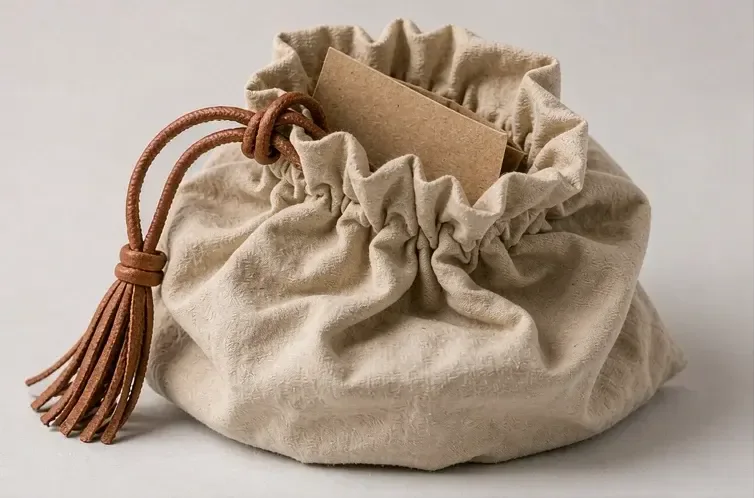
A dust bag is the only part of a presentation set that the client keeps. The box is recycled, the tissue is discarded and the shipper is thrown away, but the dust bag goes into the wardrobe and comes out every time the piece is stored or travelled, which is several hundred times over the life of the bag. That frequency is what makes it the most valuable surface in the set per unit of spend, and the most common place for a programme to under-specify.
Decision One: Size, and the Rule Behind It
Size comes first because everything else follows it. The working rule is width at bag width plus 40 millimetres and height at bag height plus 60 millimetres. The 40 millimetres allows the piece to enter without being forced at the sides; the 60 millimetres gives enough depth at the mouth for the fabric to gather when the cord is drawn, and for the handles to sit inside rather than protruding. Bags specified to the bag's own dimensions look right flat and fight the client every time they are used.
Measure the bag as it will be packed, not as it stands empty. A soft hobo packed with tissue is wider across the base than one standing on a shelf, and a structured top-handle with its handles upright is taller than one photographed from the front. Where a line runs several silhouettes, the efficient answer is two dust bag sizes across the family rather than one per silhouette, chosen so that each piece fits the smaller of the two with ease.
Decision Two: Fabric Weight
Cotton at 140 grams per square metre is the reference. It breathes, which matters because a bag stored for months needs to exchange air; it holds a screen-printed mark; and it survives years of opening. A heavy non-woven in the 80 to 100 gsm range is a sound lower-cost alternative where the programme can accept a slightly less tactile hand. Below 40 gsm, whatever the fibre, the mouth collapses and the bag reads as transit packing rather than as part of the piece.
One failure is specific enough to be worth naming. A brushed synthetic is softer in the hand than cotton and lower in unit cost, and the brushed surface is exactly what deposits lint on a dark calfskin flap. For a programme running black, navy or deep chocolate colourways, the lint test is not optional: rub the fabric against the production finish and look at the leather rather than at the cloth.
| Fabric | Weight | Behaviour in use | Best for |
|---|---|---|---|
| Cotton | 140 gsm | Breathes, holds print, survives years | The reference for premium lines |
| Heavy non-woven | 80 to 100 gsm | Durable, slightly less tactile | Where unit cost is under pressure |
| Light non-woven | 40 gsm or below | Mouth collapses | Not suitable for a kept layer |
| Brushed synthetic | Varies | Soft but sheds on dark leather | Only with a lint test passed |
| Recycled-content cotton | 130 to 150 gsm | As cotton, with a claim to evidence | Where a claim is required |
Decision Three: Closure
The closure is opened one-handed, in a wardrobe, usually while the other hand is holding the bag, and that single fact should decide it. A drawcord channel at 12 millimetres with a 3 millimetre cord opens and closes cleanly and keeps doing so. A channel at 8 millimetres with a 2 millimetre cord jams after a season because the fabric bunches inside a channel too narrow for it. The channel, not the cord, is the specification that fails.
- Width
- Bag width plus 40 mm
- Height
- Bag height plus 60 mm
- Fabric
- Cotton at 140 gsm, or heavy non-woven at 80 to 100 gsm
- Drawcord channel
- 12 mm, turned and stitched
- Cord diameter
- 3 mm, with a stop that will not pull through
- Hem
- 10 mm, double-turned
- Stitch density
- 8 to 9 stitches per inch on structural seams
- Single-colour screen print, one position
- Pull test
- 50 open and close cycles, no bunching at the channel
Two further details belong on the drawing. The cord needs a stop at the end, whether a knot, a toggle or a stitched bar, because a cord that pulls through the channel is a bag that cannot be closed again. And the channel should be turned and stitched rather than simply folded, because a folded channel is where the bunching starts. Both are small specifications and both are the difference between a dust bag that lasts and one that is replaced.
Decision Four: Seams, Hems and the Stitch
A dust bag carries no load, so its seams are specified for durability under repeated handling rather than for strength. A double-turned hem at 10 millimetres stops the raw edge fraying at the mouth, which is the part that is handled most. Stitch density on structural seams sits at 8 to 9 stitches per inch: tighter than that perforates a light cotton and weaker than that opens at the mouth after a season.
Decision Five: Print, and Where the Mark Sits
One colour, screen printed, in one position. The position is the more interesting decision: the mark should be upright when the bag hangs by its handles, because that is how it is stored and how it is seen. Marks centred on the flat panel of a dust bag are often upside down the moment the bag is picked up by the cord, and the correction is a drawing note rather than a reprint.
A second colour is the least valuable addition available anywhere in the set. It adds a pass, a screen and an approval cycle to a surface the client sees in a dim wardrobe, and it is the change least likely to be noticed. Where a programme wants more presence, a larger single-colour mark reads better at arm's length than a second colour does, and it costs less.
Decision Six: The Test That Closes the Line
Specification without a test is a preference. The test that closes a dust bag line is a 50-cycle pull: open and close the bag fifty times and look at the channel for bunching, at the hem for fraying and at the print for cracking. It takes a few minutes, it is run on three bags from the bulk delivery rather than on the approval sample alone, and it catches the two failures that actually occur, which are channel bunching and hem fraying.
Where the programme runs dark colourways, add the lint test to the same three bags: rub the fabric against the production finish and inspect the leather. Where the line includes a claim about recycled content in the fabric, confirm the certificate code against the delivery note at this point rather than at listing, because the code is tied to the specific run and cannot be produced retroactively.
How a Dust Bag Sizes Across a Family
Running one size per silhouette is the expensive answer and the one most programmes start with. Two sizes across a family of five or six silhouettes is usually achievable: a smaller size for evening bags and small leather goods, and a larger one for top-handles, shoulder bags and hobos, chosen so the largest piece in each group fits with ease. The saving is in fabric, in screens and in the number of lines on the packaging specification.
Small size
For evening bags and small leather goods. Sized to the largest piece in that group plus the 40 and 60 mm allowances.
Large size
For top-handles, shoulder bags and hobos. One size covers the group if it is set to the largest silhouette.
Where it fails
When a family is sized to the average rather than to the largest, the biggest piece forces the cord and the channel bunches.
Where it saves
Fewer fabric lots, fewer screens, fewer lines on the specification, and one fewer approval cycle per season.
What the Drawing Has to Show
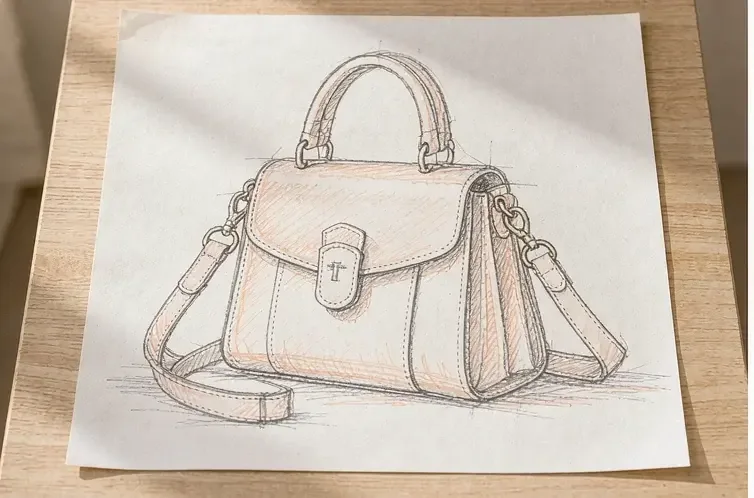
A dust bag drawing needs five dimensions and two notes. The five dimensions are the flat width, the flat height, the channel depth from the top edge, the hem turn and the position of the mark measured from two edges. The two notes are the stitch density and the cord stop. Anything less and the fabric cutter is making decisions the programme has not made, which is how a size that was correct on paper arrives 10 millimetres short at the mouth.
The note most often missing is the tolerance. Fabric moves, and a dust bag with no stated tolerance drifts by 5 to 10 millimetres across a run without anyone being at fault. Stating plus or minus 5 millimetres on width and height is enough, and it converts a subjective argument about whether a bag is the right size into a measurable one. Where a piece fits with only the specified ease, that tolerance matters more than the nominal dimension.
One further drawing note saves a round of sampling: state whether the dimensions are flat or finished. A bag quoted at 400 by 500 millimetres flat is a different bag from one quoted at those dimensions finished, and the difference is the hem and the seam allowance. Most disputes about dust bag sizing turn out to be this single ambiguity rather than any disagreement about the piece it has to hold.
What a Dust Bag Costs in the Set
The dust bag typically carries 18% to 26% of set cost, which makes it the second largest line after the box and, per unit of client contact, the best value in the set. Set against a reference unit cost of USD 4.80, moving from cotton at 140 gsm to a heavy non-woven saves a modest share of that line, and moving below 40 gsm saves more while turning a kept layer into a disposable one. The second of those is not a saving.
A family dust bag sized to the average silhouette means the largest piece forces the cord, and a forced cord bunches the channel within a season. Set the size to the largest piece in each group and let the smaller ones sit loose.
Fitting the Dust Bag Into the Programme Clock
Fabric, cord and screen all need to be on hand before pack-out, which puts the dust bag on the same timeline as the rest of the set. Sampling takes 6-10 working days and 12-15 for complex constructions, bulk production runs 35-50 days, inspection sits at AQL 2.5 under ISO 2859-1, and handover is on FOB Xiamen terms. Work runs at 500 pcs per style and colourway through our validated partner factory Quanzhou Yingming Bags, an SGS-validated site operating since 2014 with 7 production lines and capacity of about 200,000 pcs per month. See luxury handbag packaging for how the dust bag sits inside the wider set specification.
Take this to the bench
- Size at bag width plus 40 mm and height plus 60 mm, cotton at 140 gsm, a 12 mm turned channel with a 3 mm cord and a stop, one colour placed upright, and a 50-cycle pull test on three bags from the bulk delivery.
Specify your dust bag
Send the silhouette dimensions and the colourway list, and we will set the size, fabric and closure around them. Request a quote
Frequently Asked Questions
How do you size a dust bag for a handbag?
Width at bag width plus 40 millimetres and height at bag height plus 60 millimetres. The 40 mm lets the piece enter without being forced; the 60 mm gives depth at the mouth for the fabric to gather and for the handles to sit inside rather than protruding.
Should a dust bag be measured on the bag standing or packed?
Packed. A soft hobo filled with tissue is wider across the base than one standing on a shelf, and a structured top-handle with its handles upright is taller than one photographed from the front. Sizing to the unpacked dimension is a common cause of a bag that fights the client.
What fabric weight suits a luxury dust bag?
Cotton at 140 grams per square metre is the reference: it breathes, holds a screen-printed mark and survives years of opening. A heavy non-woven at 80 to 100 gsm is a sound alternative. Below 40 gsm the mouth collapses and the bag reads as transit packing.
Why does a brushed synthetic dust bag cause problems?
Because the brushed surface deposits lint on a dark calfskin finish. It is softer in the hand and lower in unit cost than cotton, which is why it is chosen, but for black, navy or deep chocolate colourways the lint test is not optional: rub the fabric against the production finish and inspect the leather.
What drawcord channel width works best?
Twelve millimetres, turned and stitched, with a 3 millimetre cord. A channel at 8 mm with a 2 mm cord jams after a season because the fabric bunches inside too narrow a channel. The channel is the specification that fails, not the cord.
Does the drawcord need a stop?
Yes. A knot, a toggle or a stitched bar, because a cord that pulls through the channel leaves a bag that cannot be closed again. It is a small drawing note and it is one of the two details that separate a dust bag that lasts from one that is replaced.
How many colours should a dust bag print use?
One. A second colour adds a pass, a screen and an approval cycle to a surface the client sees in a dim wardrobe, and it is the change least likely to be noticed. A larger single-colour mark reads better at arm's length and costs less.
Where should the mark sit on a dust bag?
So it is upright when the bag hangs by its handles, because that is how it is stored and how it is seen. Marks centred on the flat panel are often upside down the moment the bag is lifted by the cord, and correcting it is a drawing note rather than a reprint.
What stitch density suits a dust bag?
Eight to nine stitches per inch on structural seams. Tighter than that perforates a light cotton; looser than that opens at the mouth after a season. Pair it with a double-turned hem at 10 mm, which stops the raw edge fraying where the bag is handled most.
How is a dust bag tested before release?
A 50-cycle pull test: open and close the bag fifty times and inspect the channel for bunching, the hem for fraying and the print for cracking. Run it on three bags from the bulk delivery rather than on the approval sample alone, and add a lint test on dark colourways.
How many dust bag sizes does a collection need?
Usually two: one for evening bags and small leather goods, one for top-handles, shoulder bags and hobos. Size each to the largest piece in its group rather than to the average, and the family is covered with fewer fabric lots and fewer screens.
How much does a dust bag cost in the set?
Typically 18% to 26% of set cost, the second largest line after the box and the best value per unit of client contact. Moving below 40 gsm saves more but turns a kept layer into a disposable one, which is not a saving worth making.
People Also Ask
What size dust bag do I need for a handbag?
Bag width plus 40 mm and bag height plus 60 mm, measured as the piece will be packed. That gives clearance at the sides and enough depth at the mouth for the fabric to gather when the cord is drawn.
What is the best fabric for a dust bag?
Cotton at 140 gsm. It breathes, holds a screen-printed mark and lasts years. A heavy non-woven at 80 to 100 gsm is the lower-cost alternative; a brushed synthetic should be lint-tested against dark leather first.
Why does my dust bag drawcord jam?
The channel is usually too narrow for the cord. At 8 mm with a 2 mm cord, fabric bunches inside after a season. Specify a 12 mm turned channel with a 3 mm cord and the problem disappears.
How do I test a dust bag?
Open and close it fifty times and check the channel for bunching, the hem for fraying and the print for cracking. Run it on three bags from the bulk delivery, and add a lint test where the colourways are dark.
Should each silhouette have its own dust bag size?
Rarely. Two sizes cover most collections if each is set to the largest piece in its group. Size to the largest rather than the average, or the biggest piece forces the cord and bunches the channel.
Sources and further reading
Every figure on this page is either our own programme data or attributed below. Open the originals before you write them into a specification.
- ISO standards catalogueInternational Organization for Standardization Reference for textile test methods and ISO 2859-1 inspection applied at goods-in.
- Technical Association of the Pulp and Paper IndustryTAPPI Test methods referenced for the paper elements that sit alongside the dust bag in a set.
- FSC certification and chain of custodyForest Stewardship Council Chain of custody reference where the packaging carries a certified claim.
- Leather Working Group audit protocolLeather Working Group Reference for the finished leather against which the lint and contact tests are run.
- REACH legislationEuropean Chemicals Agency Substance restrictions relevant to inks applied to printed dust bag fabric.