5 Questions Before Signing a Luxury Handbag OEM Quote: One Buyer's Walkthrough to Contract
What should you ask before signing a luxury handbag quote? Five things: is the leather named by lot, are the control steps inside the number, what happens when the specification moves, who carries a failed report, and what survives delivery. A quote that answers all five is a contract in waiting; one that answers three is a negotiation. Our fixed terms are MOQ 500 pcs per colourway, 6-10 working days of sampling, 35-50 day bulk and AQL 2.5 inspection.
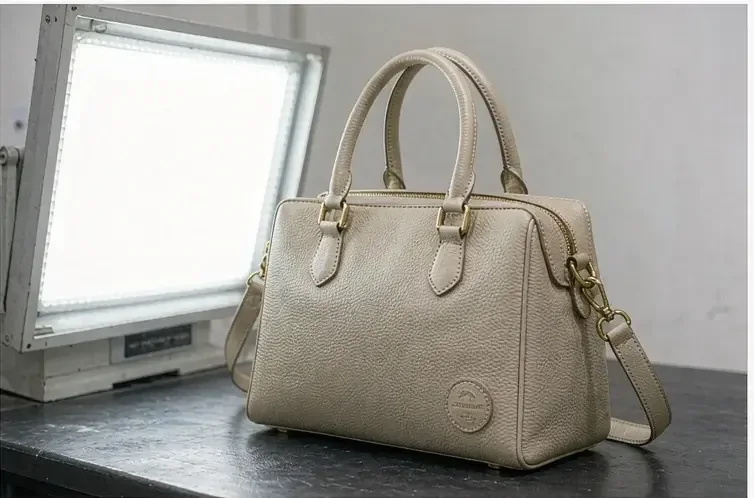
The Situation: A Quote That Looked Complete
A buying team preparing a first capsule of three structured styles received two quotes nine days apart. Both listed leather, hardware, bench time, testing and packing, both quoted the same trade term, and both landed within a few points of each other on the unit. On paper they were comparable, and the team was ready to sign the second one because it had arrived first.
What changed the decision was a single question asked late: which tannery lot is this priced against? The first house named the tannery, the lot and the usable area per hide. The second named a grade and a country. That difference is worth more than the difference between the two unit figures, because it decides whether the bag you approve is the bag that ships. The five questions below came out of that comparison, and each one is answerable in a single email.
Question 1 — Is the Leather Named by Lot or by Description?
A quote that names a grade and a country can be met from any lot that matches, which means shade and yield can move between the approved sample and the bulk run. A quote that names a tannery, a lot and a usable area per hide cannot move in the same way, because the material has already been identified and reserved.
- Tannery and lot
- Named source with lot number reserved against the order
- Usable area per hide
- 45-52 sq ft graded usable, logged against the lot
- Body thickness
- 1.2-1.4 mm full-grain calfskin, tolerance ±0.1 mm
- Shade tolerance
- ΔE of 1.5 or less against the approved swatch under D65 light
- Lining
- 0.9 mm split suede or equivalent, stated by weight and finish
The shade tolerance is the clause most often missing and most often needed. Panel-to-panel shade is judged under D65 in a light booth, and a ΔE limit of 1.5 is tight enough to hold across a shelf without making cutting uneconomic. Without a number, the argument at release is about taste rather than about measurement, and taste arguments are won by whoever holds the goods.
Question 2 — Does the Number Include the Control Steps?
Every quote contains a set of control steps, and the question is whether they are inside the number or available only as extras. First-off inspection, in-process checks, finished-goods inspection at a stated acceptance limit and the report format are the four that decide whether a run is controlled or merely inspected at the end.
- Ask for finished-goods inspection at AQL 2.5 under ISO 2859-1, and ask for the report format before bulk starts.
- Ask whether a signed first-off card exists, naming who approves dimensions, skive and edge build.
- Ask for conditioning before inspection, commonly 20 °C and 65% relative humidity held for 24 hours.
- Ask for stitch density of 8-9 per inch and a 0.45 mm thread, written into the pack rather than assumed.
- Ask whether third-party inspection is optional, and what it costs, before the release date arrives.
Conditioning sounds procedural and is decisive. Leather and lining measured straight off a line in a humid week read differently from the same bag measured after 24 hours at 20 °C and 65% relative humidity, and the difference shows up as argument rather than as defect. Naming the conditioning removes the argument.
Question 3 — What Happens When the Specification Moves?
Specifications always move, usually once, often at the sample stage and occasionally during bulk. The clause that matters is not whether change is allowed but who pays for it and how the calendar is adjusted, because an unpriced change is a change that lands on the unit price later.
| Change | Typical effect on cost | Typical effect on calendar | Clause to request |
|---|---|---|---|
| Hardware direction before first sample | None inside development | None if fixed before cutting | Confirm hardware before the first cut |
| Hardware change after first sample | Re-opens pattern and plating run | Adds 10-15 working days | Price the re-sample in advance |
| Leather grade change | Moves the largest cost line | Adds 6-10 working days for reservation | Name the replacement lot |
| Added colourway | Commits a second run of 500 pcs | Adds one changeover and one report | Treat as a separate commitment |
| Added destination market | Adds one report set per lot | Adds 6-10 working days at release | Fix destinations before costing |
The row most buyers miss is the last one. An added market is not a shipping decision but a testing one, since each destination can require its own report against its own lot. Naming every market before costing is the least costly clause in the entire document.

Question 4 — Who Carries the Cost of a Failed Report?
Reports fail for ordinary reasons: a dye lot drift on a restricted substance, a coating that lifts, a component that corrodes early. The question is who absorbs the re-test, the re-work and the calendar when that happens, because the answer determines whether a failure is a shared problem or an invoice.
- REACH Annex XVII covers chromium VI and azo dyes for goods entering the European Union.
- California Prop 65 requires a written warning position before goods land in that state.
- CPSIA applies to any style placed in a children's market, including small leather goods.
- ISO 11644 covers coating adhesion and ISO 3376 covers leather tensile behaviour.
- A hardware set at roughly USD 4.80 per unit is the component most often re-set during correction.
Ask for three things in writing: who pays for the re-test, whether re-work is charged at cost or at unit price, and whether the bulk slot is held while the issue is resolved. A house that holds the slot has told you it expects to solve the problem; one that releases it has told you it expects to renegotiate.
Question 5 — What Survives Delivery?
The last question is what remains after the goods ship: tooling ownership, retained patterns, storage duration, replacement component stock and the re-order terms. These are the clauses that decide whether a second season is a continuation or a fresh negotiation, and they cost nothing to agree at signing.
- Tooling ownership
- Dies, plates and bespoke moulds held for the brand, storage duration stated
- Spare hardware allowance
- 3% against plating defects and assembly loss
- Component holding
- Magnetic snap at 1.8 kgf holding force, retained stock for re-orders
- Bonding parameters
- 85-95 °C activation, recorded on the process card
- Trade term and alternatives
- FOB Xiamen, with CIF and DDP priced from the same unit
Bonding temperature belongs on the process card because it is invisible in a finished bag and decisive in a humid climate. Lining and reinforcement bonded at 85-95 °C hold through a summer in a coastal market; the same materials bonded cooler lift at the edge of a flap months later, by which time the tooling question is urgent.
What the Five Questions Exposed
Applied to the two quotes in the opening situation, the five questions produced a clear result without a single further negotiation on price. The first house answered all five in writing within a day; the second answered two and then asked for a call.
Named lot, not grade
The first house named tannery, lot and usable area; the second named a country, which leaves shade and yield open.
Control steps inside the number
The first quoted AQL 2.5 with a report format and conditioning; the second offered inspection as an optional extra.
Change priced in advance
The first listed what a hardware change costs in days and money; the second asked for a call when asked.
Failure liability written
The first committed to holding the bulk slot through a re-test; the second was silent on who pays.
Put the five questions to our quote
Send your pack, quantity per colourway and destination markets. You will receive a quote that answers all five in writing, with named lots and a report format, within two working days. Request a quote.
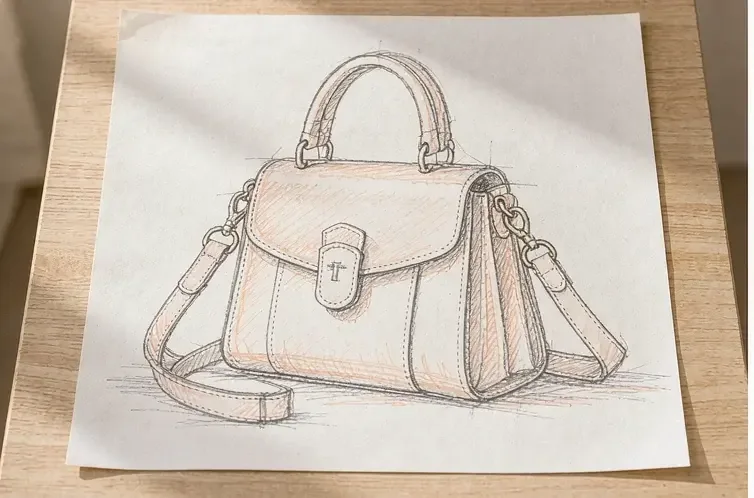
Turning the Five Questions Into Clauses
A question is useful at quotation and useless at contract unless it becomes a clause. Each of the five converts into one sentence that can be pasted into an order document, and each sentence is short enough that no one will object to signing it.
Five clauses to paste into the order document
- Leather supplied from the named tannery lot at 45-52 sq ft usable per hide, shade within ΔE 1.5 under D65.
- Finished goods inspected at AQL 2.5 under ISO 2859-1 after conditioning at 20 °C and 65% RH for 24 hours.
- Any specification change after first sample is priced and calendar-adjusted in writing before work resumes.
- Re-testing after a failed report is charged to the party responsible, and the bulk slot is held meanwhile.
- Tooling is owned by the brand and stored for a stated period, with a 3% spare hardware allowance retained.
Our own figures sit behind all five: MOQ 500 pcs per style and colourway, sampling in 6-10 working days or 12-15 for framed and hand-set work, bulk in 35-50 days, inspection at AQL 2.5 under ISO 2859-1, and FOB Xiamen with CIF and DDP available. Our validated partner factory Quanzhou Yingming Bags holds the current audit set with issue dates, and our luxury sampling process page shows how a first sample is built and checked.
The Rule That Came Out of It
The rule is simple and slightly uncomfortable: the quality of a handbag quote is measured by what it names, not by what it costs. A quote that names a lot, a standard, a tolerance and a clause is a description of a bag; one that names a price is an invitation to argue later.
Asked at quotation, those five questions take one email and reveal more than a visit would. Asked after delivery, they become correspondence. The buying team in the opening situation signed the first quote, paid slightly more per unit, and released on the planned date with a report already in hand.
Frequently Asked Questions
What is the most important question to ask before signing a handbag quote?
Ask whether the leather is named by tannery and lot or only by grade and country. A named lot with usable area per hide and a shade limit holds the approved sample against the bulk run, while a grade description can be met from any matching lot and allows shade to move.
How tight should a shade tolerance be?
A limit of ΔE 1.5 or less against the approved swatch, judged under D65 light in a booth, is tight enough to hold across a shelf without making cutting uneconomic. Without a stated number, shade arguments at release are decided by taste rather than by measurement.
Should inspection be included in the quoted unit price?
Yes. Finished-goods inspection at AQL 2.5 under ISO 2859-1, a signed first-off card and a shared report format should all sit inside the number. Offered as an optional extra, inspection becomes a decision made at release, which is exactly when it is most expensive to make.
Why does conditioning matter before inspection?
Leather and lining measured straight off a line read differently from the same bag after rest. Conditioning at 20 °C and 65% relative humidity for 24 hours removes that variable, so any disagreement at release is about the bag rather than about the weather that week.
What is a fair clause when a specification changes?
Any change after the first sample should be priced and calendar-adjusted in writing before work resumes. A hardware direction changed before cutting costs nothing; the same change after sampling re-opens the pattern and the plating run and typically adds 10-15 working days.
Who should pay when a compliance report fails?
The party responsible, and the clause should say so before it happens. Ask three things: who pays for the re-test, whether re-work is charged at cost or at unit price, and whether the bulk slot is held while the issue is resolved. A held slot signals intent to solve it.
How much spare hardware should a contract retain?
Three percent against plating defects and assembly loss is the working figure on a mid-volume run. Without it, a shortfall at the bench becomes an emergency re-order, and the component most often re-set during correction is the hardware set itself, around USD 4.80 per unit.
What should happen to tooling after delivery?
Tooling should be owned by the brand and stored for a stated period, covering dies, embossing plates and bespoke moulds. With that clause, a re-order two seasons later reuses the same tooling and starts earlier; without it, the second run buys the same die again.
Is adding a destination market a shipping or a testing decision?
It is a testing decision. Each market can require its own report against its own lot, so adding a market late means a fresh set of reports rather than a copy of an existing certificate. Naming every destination before costing is the least costly clause in the document.
What stitch and thread specification belongs in the pack?
Stitch density of 8-9 per inch with a 0.45 mm bonded thread is the working range for a structured seam. Both figures belong in the pack rather than in a conversation, because they are the specifications most often assumed differently by two houses quoting the same drawing.
How is lining attachment controlled?
Bonding parameters go on the process card, with activation at 85-95 °C recorded rather than left to habit. Lining bonded in that range holds through a humid season; the same materials bonded cooler lift at a flap edge months later, when the tooling question suddenly matters.
What holding force suits a magnetic closure?
Around 1.8 kgf for a medium flap, chosen so the bag opens with one hand and does not open inside a packed carton. The figure should be stated in the component order, since a closure that is too weak fails on the shelf and one that is too strong fights the customer.
How long does bulk take once the quote is signed?
Bulk runs 35-50 days from approved sample and confirmed materials, with the range set by construction complexity and by how quickly the leather lot is reserved. Inspection and release add 2-4 days, and sampling itself runs 6-10 working days before that.
What audit documents should accompany a signed quote?
BSCI and Sedex social audits with visible issue dates, a REACH Annex XVII position, a California Prop 65 warning position, CPSIA scope for children's markets and GRS documentation where a recycled claim is made. Logos without dates are not documents.
Which trade term should the contract fix?
Fix FOB Xiamen as the base and have CIF and DDP priced as alternatives from the same underlying unit. That keeps the comparison honest, because the unit covers the bag, its packing and the compliance work, while freight and port handling sit outside it.
People Also Ask
What should I check before signing a handbag production quote?
Check that the leather is named by tannery and lot, that inspection at AQL 2.5 sits inside the price, and that change, failure and tooling clauses are stated in writing.
Why do two similar handbag quotes differ so much in detail?
They differ in what they name. One may name a lot, a standard and a tolerance, while the other names only a price, which converts every later disagreement into a negotiation.
Who pays for compliance re-testing if a report fails?
The contract should name the responsible party before it happens. Ask who funds the re-test, whether re-work is at cost or unit price, and whether the bulk slot is held during resolution.
Should inspection be included or optional in a quote?
Included. Finished-goods inspection at AQL 2.5 under ISO 2859-1 with a shared report format should sit inside the unit rather than appear as an extra at release.
What happens to tooling after a handbag order ships?
It should be owned by the brand and stored for a stated period, so a re-order reuses the same dies and plates instead of buying them again.
Sources and further reading
Every figure on this page is either our own programme data or attributed below. Open the originals before you write them into a specification.
- ISO — International Organization for StandardizationISO Publisher of ISO 2859-1 for AQL sampling inspection, ISO 11644 for coating adhesion and ISO 3376 for leather tensile behaviour.
- European Chemicals AgencyECHA Authority behind REACH and the Annex XVII restrictions referenced when allocating responsibility for a failed report.
- Office of Environmental Health Hazard AssessmentOEHHA Administers California Proposition 65 and maintains the listed-substance position required before goods land in that state.
- Leather Working GroupLeather Working Group Tannery environmental audit protocol referenced when a quote names the source of full-grain calfskin.
- ICC — Incoterms rulesInternational Chamber of Commerce Publisher of the Incoterms framework behind FOB, CIF and DDP trade terms fixed in a signed order document.