Luxury Handbag OEM MOQ for New Brands: What 500 Pcs Per Colourway Actually Commits
What is the minimum order for a luxury handbag programme? It is 500 pcs per style and per colourway, and that figure is not arbitrary: a 500 pc run consumes 38-45 hides at 62-70% yield, amortises one tooling set across the run, and carries one round of per-lot testing. Sampling takes 6-10 working days, bulk 35-50 days, and the term is FOB Xiamen. New brands fit inside the number by running fewer styles in one colourway rather than by asking for a smaller run.
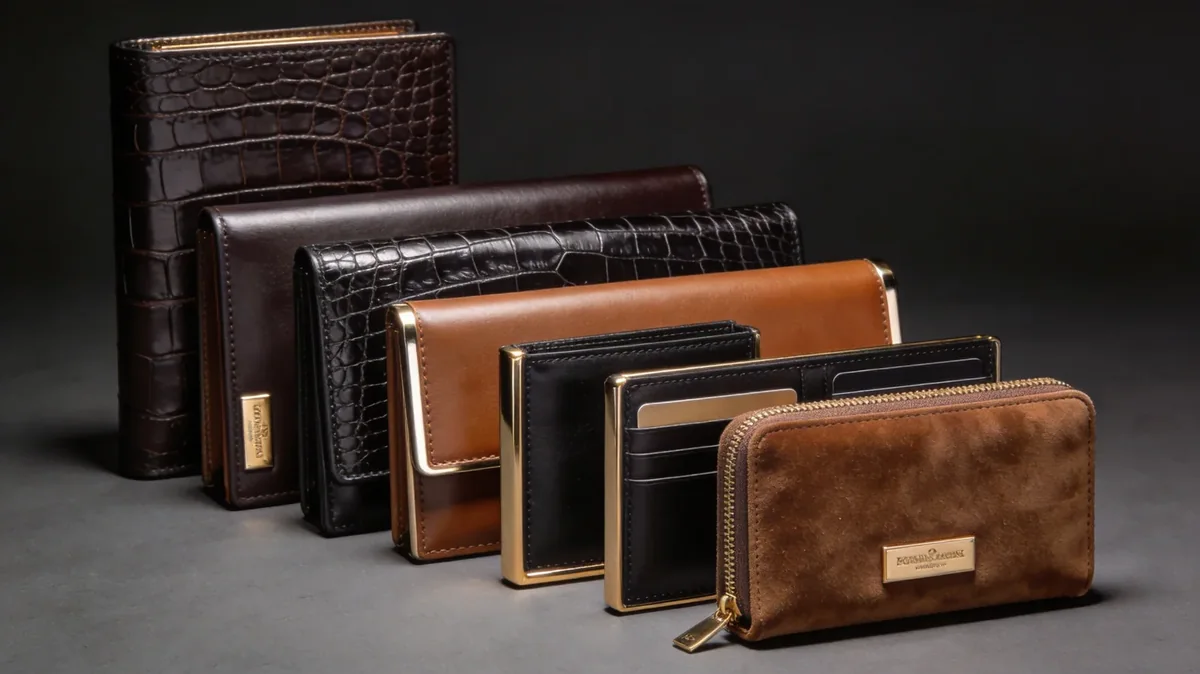
The Numbers Behind a 500-Pcs Minimum
A minimum exists because four costs are fixed regardless of quantity: the leather lot, the tooling, the per-lot testing and the line setup. Below roughly 500 pcs those four do not shrink, so the unit price rises steeply and the specification usually suffers first. Above it, they spread, and the unit price behaves predictably.
| Fixed cost | Why it does not shrink | At 500 pcs | At 100 pcs |
|---|---|---|---|
| Leather lot reservation | Hides are bought and graded by lot, not by the piece | 38-45 hides, one shade lot | Same lot bought, most of it unused |
| Tooling | Dies and plates are cut once per style | Amortised across 500 units | Amortised across 100 units |
| Per-lot testing | Reports are issued against a lot, USD 180-320 each | One report set per lot | Same report set, five times the unit load |
| Line setup and changeover | About 45 minutes per colourway change | Absorbed inside the run | Absorbed neither by run nor by price |
| Development and sampling | 6-10 working days regardless of quantity | Credited against bulk where agreed | Same fee, far smaller invoice to credit against |
The pattern in the last column is the whole argument. Nothing in that column is a saving; it is the same work spread across fewer units, which is why a smaller run produces either a higher unit price or a quieter specification. Our handbag maison programme page shows the same five lines in the format a buying team uses.
Where the Minimum Comes From: Leather Lots
Hides are graded and sold as lots, and a lot is what makes shade control possible. Reserving one lot is what allows every panel of one bag, and every bag in the run, to come from the same dye bath; buying spot hides per order removes that guarantee and the shade drift appears on the shelf rather than in the workshop.
- Hides consumed per 500 pc run
- 38-45 hides at 62-70% cutting yield, structured calfskin
- Usable area logged per hide
- 45-52 sq ft after defect marking
- Body leather thickness
- 1.2-1.4 mm full-grain calfskin, tolerance ±0.1 mm
- Shade rule
- One dye lot across all panels of a bag and across the run
- Exotic skins
- CITES Appendix II or III documentation travelling with the lot
A new brand often assumes the minimum is negotiable on leather alone, because a smaller bag needs less area. It does not, since the constraint is the lot rather than the metre. What does work is choosing a colour that a tannery already runs, which reduces the reservation cost without weakening the shade guarantee.
What One Colourway Commits in Cash and Calendar
One colourway at the minimum commits a leather lot, one tooling set, one development fee and one bulk slot. Two colourways commit two of each, which is the arithmetic that surprises first-time founders more than the headline number does.
- 500 pcs of one style in one colourway is one committed run of 500 units.
- 500 pcs of one style in three colourways is three committed runs, or 1,500 units.
- Three styles in one shared colourway is also 1,500 units, but one lot and one tooling family.
- A shared hardware family across three styles removes three separate plating runs.
- One interlining specification across the capsule removes a second material reservation.
The third and fourth lines are where new brands usually find room. Three silhouettes sharing a colourway, a hardware family and an interlining spec behave like a single programme in cost terms while presenting as a capsule, and that is a far better outcome than one silhouette in four colours.
How Sampling Costs Behave Near the Minimum
Sampling is charged per style and does not scale with the order, which means it is proportionally heaviest exactly where new brands feel it most. The useful question is not how to reduce the fee but how to spend it once rather than twice.
- Send dimensioned drawings rather than mood imagery, because undefined geometry adds billed research days.
- Fix the hardware direction before the first sample, since a mechanism swap re-opens the pattern.
- Confirm how many correction rounds sit inside the stated window: two is the working norm.
- Ask whether the development fee is credited against bulk, a clause that changes the effective first cost.
- Approve the lining and interlining at the same time as the outer, so one round covers both.
Our window is 6-10 working days for a standard build and 12-15 working days for framed or hand-set work, with two correction rounds inside it. A new brand that arrives with a complete pack spends those days once; one that arrives with a sketch spends them twice and pays for the second pass.
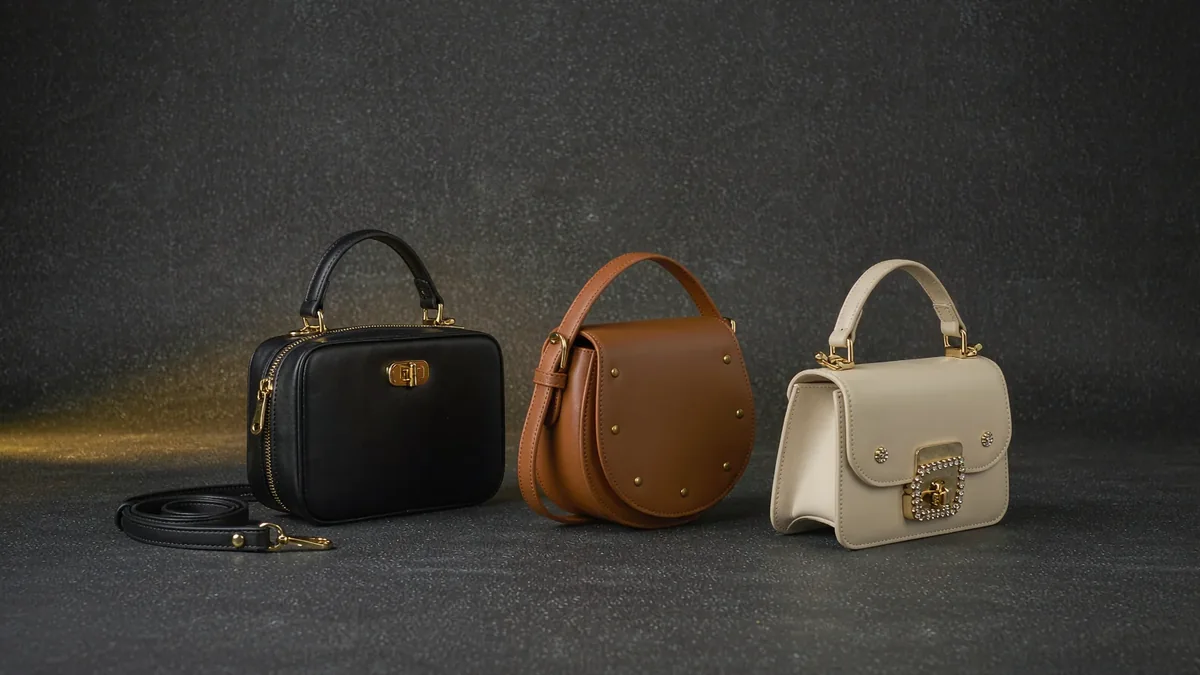
New brands sometimes ask whether the minimum can be shared across several styles inside one colourway. It can, provided those styles share a leather lot and a hardware family, because what is being reserved is a lot and a plating run rather than a quantity of finished units. A capsule of three silhouettes in one colourway therefore reads as 1,500 committed pieces while behaving as one reservation, one tooling set and one inspection plan, which is the closest thing to flexibility that the arithmetic genuinely allows.
Three Ways New Brands Fit Inside the Minimum
There are only three honest routes to a first capsule at the minimum, and all three work by reducing the number of distinct commitments rather than by reducing quantity. Each has a cost, and choosing deliberately is better than discovering it later.
One colourway, three silhouettes
Shares a leather lot and a hardware family across three styles, so 1,500 units behave like one programme in cost terms.
A tannery's running colour
Selecting a shade the tannery already produces lowers reservation cost while keeping the single-lot shade guarantee intact.
Shared hardware family
One plating finish across the capsule removes separate plating runs and pulls component lead time together.
The route that does not work is asking for 150 pcs and expecting the same specification. A smaller run can be produced, but something has to give, and it is almost always the leather lot, the plating thickness or the inspection plan — the three items a luxury customer notices first.
How the Calendar Moves With Quantity
Quantity affects the calendar less than specification does, which surprises founders who expect a smaller order to arrive sooner. The sampling window and the material reservation dominate the first six weeks, and both are driven by construction rather than by count.
| Stage | Working days | What sets the length | What you control |
|---|---|---|---|
| Pack review and costing | 2-3 | Completeness of drawings and destination list | Send a full pack on day one |
| Sampling, standard build | 6-10 | Pattern complexity and hardware direction | Fix hardware before the first cut |
| Sampling, framed or hand-set | 12-15 | Frame setting and hand operations | Approve the frame drawing early |
| Material reservation | 5-10 | Tannery stock and lot grading | Choose a running colour |
| Bulk production | 35-50 | Construction complexity and line position | Book the slot before sampling ends |
| Inspection and release | 2-4 | AQL 2.5 under ISO 2859-1 and report sign-off | Fix the report format in advance |
Booking the bulk slot before sampling ends is the single largest saving available to a new brand, and it costs nothing. Development runs on a different calendar from bulk, and a house that will not reserve a slot is telling you that your season is not yet real to it.
What a Lower Minimum Actually Costs
A reduced run does not reduce the work; it redistributes it. The lot is still bought, the tooling is still cut, the report is still issued and the line is still set, so the difference appears as a higher unit price, a thinner specification, or a clause that quietly removes a control step.
- The leather lot is bought in full and the unused portion is written into the unit price.
- Tooling amortises across fewer units, so the per-unit tooling line multiplies rather than divides.
- Per-lot testing at USD 180-320 per report lands on a smaller invoice and raises the unit visibly.
- Line changeover time is absorbed by neither the run nor the price, so it appears as delay.
- The specifications that suffer first are plating thickness, interlining weight and inspection depth.
Plan your first capsule at the minimum
Send your silhouettes, colourway plan and destination markets. You will receive a quantity plan, the committed leather lot and a reserved bulk slot within two working days. Request a quote.
A Quantity Plan for a First Capsule
A first capsule works best as three silhouettes in one colourway at 500 pcs each, sharing one hardware family, one interlining specification and one leather lot. That plan commits 1,500 units across three styles, which reads as a collection while behaving as a single programme in cost and calendar terms.
Six decisions that fix the first capsule
- Choose one colourway for the first drop and reserve a second for the re-order.
- Share one hardware family and one plating finish across all three silhouettes.
- Standardise on one interlining weight so panels cost the same and behave the same.
- Name every destination market before costing, since each adds a report per lot.
- Book the bulk slot before sampling closes, so 35-50 days start counting earlier.
- Agree tooling ownership in writing so the re-order does not buy the same die twice.
Our fixed figures hold for every capsule built this way: MOQ 500 pcs per style and colourway, sampling in 6-10 working days or 12-15 for complex builds, bulk in 35-50 days, inspection at AQL 2.5 under ISO 2859-1, seven production lines at about 200,000 pcs per month, export experience recorded since 2014, and FOB Xiamen with CIF and DDP available. Packing runs 12 pcs per six-ply export carton, with brass feet at 8 mm specified as standard on structured bodies.
Frequently Asked Questions
What is the minimum order quantity for a luxury handbag programme?
The minimum is 500 pcs per style and per colourway. That figure is set by four fixed costs that do not shrink with quantity: the leather lot, the tooling set, the per-lot testing report and the line setup. Below it, the same work spreads across fewer units, so the unit price rises or the specification thins.
Why is the minimum set per colourway rather than per order?
Because a colourway is a leather lot, a plating run and a line changeover. Each colourway reserves its own hides at 45-52 sq ft usable per hide and consumes about 45 minutes of changeover time. One style in three colourways therefore commits three runs rather than one, which is the arithmetic that surprises first-time founders.
How many hides does a 500 pc run consume?
A structured calfskin run of 500 pcs consumes roughly 38-45 hides at a cutting yield of 62-70%, with usable area logged at 45-52 sq ft per hide. The figure moves with panel size and with how tightly the nesting plan is drawn, which is why yield matters more to unit cost than hide price does.
Can a new brand order fewer than 500 pcs?
A smaller run can be produced, but the fixed costs do not fall with it. The leather lot is still bought in full, the tooling is still cut and the per-lot report is still issued. The difference appears as a higher unit price or as a removed control step, usually in plating thickness, interlining weight or inspection depth.
What is the best quantity plan for a first capsule?
Three silhouettes in one colourway at 500 pcs each works best. That commits 1,500 units while sharing one leather lot, one hardware family and one interlining specification, so it presents as a collection and behaves as a single programme in cost and calendar terms.
How much does per-lot testing cost?
Per-lot reports generally run USD 180-320 each, issued against a specific material lot rather than a shipment. Naming every destination market before costing keeps the number predictable, because a late market addition means a fresh set of reports against a fresh lot rather than a copy of an existing one.
Does quantity affect the production calendar?
Less than specification does. Sampling runs 6-10 working days for a standard build and 12-15 for framed or hand-set work, and material reservation adds 6-10 working days, both driven by construction. Bulk then runs 35-50 days. Booking the bulk slot before sampling ends is the largest calendar saving available.
How many correction rounds are included in sampling?
Two rounds is the working norm, inside the stated 6-10 or 12-15 working day window. Ask what happens to the calendar when the pattern changes after those rounds, because that clause decides whether the delay is absorbed or invoiced. Sending dimensioned drawings is the least costly way to spend the window once.
Is the development fee credited against the bulk order?
It can be, and the clause changes what the fee means. Development is charged per style and does not scale with quantity, so it is proportionally heaviest on a first order at the minimum. Always ask in writing whether the fee is credited once a bulk order is placed.
What happens to tooling on a re-order?
Tooling covers dies, embossing plates and bespoke moulds, and it is a one-off line amortised across the run. With an ownership clause in writing, a re-order two seasons later reuses the same tooling and starts earlier. Without one, the re-order pays for the same die again.
How does choosing a running tannery colour help?
Selecting a shade the tannery already produces lowers reservation cost without weakening the single-lot shade guarantee. Shade drift is the failure that arrives last and costs most, because panels cut across two dye lots look correct under studio light and separate on a shelf.
What packing specification comes as standard?
Structured bodies are packed 12 pcs per six-ply export carton, with brass feet at 8 mm specified as standard. Carton efficiency is worth designing deliberately, because it is the one line where a reduction improves the outcome by lowering freight without touching the bag itself.
How much capacity is available for a new brand's season?
Seven production lines run about 200,000 pcs per month, with export experience recorded since 2014. What matters to a new brand is not the headline figure but whether a bulk slot is reserved before sampling closes, so the 35-50 day window starts counting on a known date.
Which inspection standard applies at the minimum quantity?
Finished goods are inspected at AQL 2.5 under ISO 2859-1, with third-party inspection available as an option. The acceptance number, not the inspector, decides how many units are rejected, so the report format should be agreed before bulk starts rather than negotiated at release.
What trade terms apply to a first order?
FOB Xiamen is the base term, with CIF and DDP priced as alternatives from the same underlying unit so the comparison stays honest. The unit covers the bag, its packing and the compliance work; haulage, port handling and ocean freight sit outside it.
People Also Ask
What is a realistic first order for a new handbag brand?
Three silhouettes in one colourway at 500 pcs each is the realistic first order. It commits 1,500 units while sharing one leather lot, one hardware family and one interlining specification.
Why do handbag programmes have a minimum per colourway?
Each colourway is its own leather lot, plating run and line changeover. Reserving hides by lot is what makes shade control possible, so a second colourway commits a second full set of fixed costs.
Does a smaller bag mean a lower minimum order?
No. The constraint is the leather lot rather than the area, since hides are graded and sold as lots. A smaller pattern changes how many hides a run consumes but not the minimum commitment.
How long does a first handbag order take from pack to delivery?
Pack review takes 2-3 days, sampling 6-10 working days or 12-15 for complex builds, material reservation 6-10 working days and bulk 35-50 days, with inspection and release adding 2-4 days.
What is included in a first-order development fee?
The fee covers pattern research, the first sample and usually one corrected round, charged per style. Ask whether it is credited against the bulk invoice, since that clause decides the effective cost of the first order.
Sources and further reading
Every figure on this page is either our own programme data or attributed below. Open the originals before you write them into a specification.
- ISO — International Organization for StandardizationISO Publisher of ISO 2859-1 for AQL sampling inspection and ISO 3376 for leather tensile behaviour, both referenced in first-order costing.
- Leather Working GroupLeather Working Group Tannery environmental audit protocol referenced when a first capsule reserves hides from a named source.
- European Chemicals AgencyECHA Authority behind REACH and the Annex XVII restrictions that apply to the per-lot reports costed into a first order.
- Office of Environmental Health Hazard AssessmentOEHHA Administers California Proposition 65 and the listed-substance position required before a first shipment lands in that state.
- CITES — Convention on International Trade in Endangered SpeciesCITES Appendix II and Appendix III permit framework that must accompany exotic skin lots reserved for a first run.