How Luxury Handbag OEM Programmes Really Work: Nine Stages From Brief to Packed Carton
How does a luxury handbag programme actually run? In nine stages: brief and feasibility, quotation, pattern development, material approval, first prototype, correction and sealing, pre-production, bulk across 7 production lines, and inspection at AQL 2.5 under ISO 2859-1 before packing. Quotation takes 3-5 working days, sampling 6-10, and bulk 35-50 from the approved sample, quoted FOB Xiamen at 500 pcs per style and colourway. This guide walks the sequence with a worked case, and shows where the nine stages most often lose time.
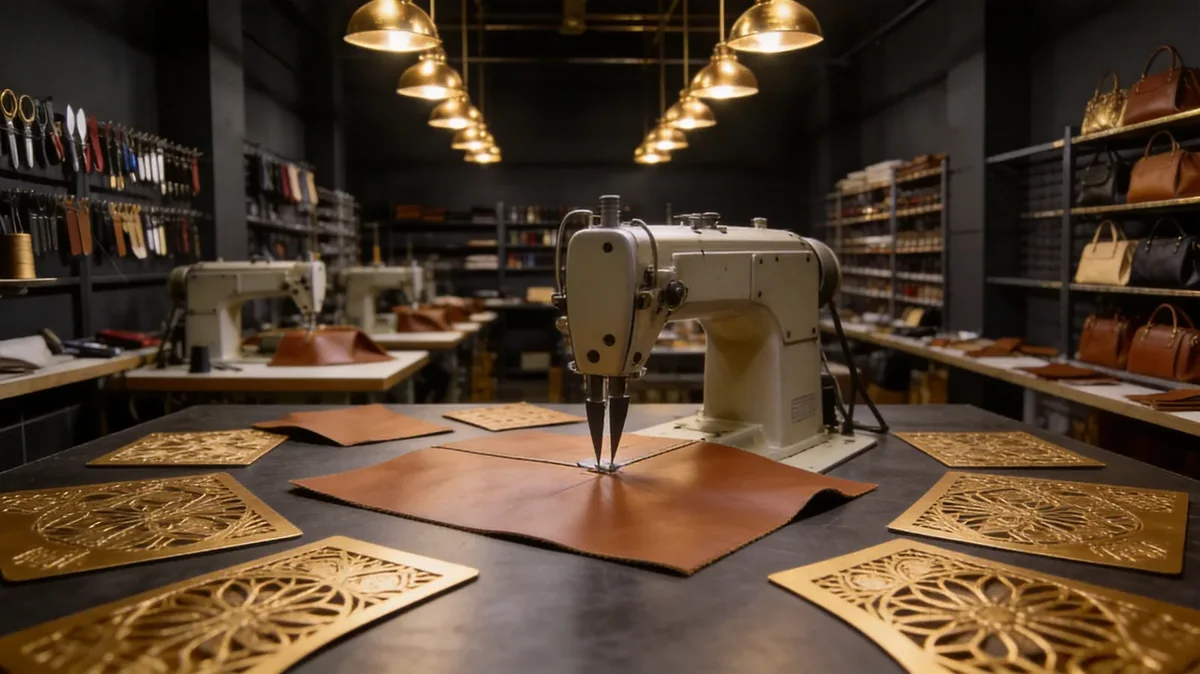
Nine Stages, and Why the Order Matters
A luxury handbag programme runs in nine stages, and the order is not arbitrary: each stage produces the input the next one needs. Feasibility settles what can be built before anything is costed. Quotation depends on a material schedule. Pattern work depends on agreed dimensions, and material approval depends on the pattern knowing how much hide to reserve. Running a stage early produces rework; running it late produces delay.
Most programmes that go wrong do so at a seam between two stages rather than inside one. The first prototype is cut before the hide is approved. The closure is chosen after the pattern is graded. Inspection is discussed after the cartons are packed. Each is a small sequencing error that costs a week, and three of them cost a season.
Case: A Designer Label Moving a Five-Style Line
Consider a designer label with five established styles — a top-handle, a shoulder bag, a bucket, a structured tote and an evening frame bag — moving a line that had been produced elsewhere. The brief arrived as a set of reference bags and a season plan: five styles, two colourways each, ten production units of 500 pcs, roughly 5,000 pieces, wanted on the rail in fourteen weeks. The drawing set was thin; the reference bags were excellent.
The first two weeks went well. Reference bags were measured, patterns were drafted, and four of the five styles moved into material approval quickly. The fifth — the evening frame bag — stalled, because the frame was a made-to-order brass component with no drawing, and nobody had budgeted the days to produce it. That single component became the critical path for the whole season.
Where the Case Went Wrong, and the Three Corrections
The diagnosis was straightforward once the schedule was laid out against the nine stages. The frame bag had entered pattern development without a hardware decision, so stage four could not close. The correction was to pull the frame decision forward, accept an 8-12 day tooling window, and run the other four styles through sampling in parallel while the frame was being cut.
- Hardware was decided at feasibility rather than at sampling, which moved the frame bag off the critical path.
- Four styles were sampled in parallel, so the 6-10 working day window covered four bags instead of one.
- A pre-production unit was built and photographed against the reference bag before any bulk cutting began.
The season landed in thirteen weeks: nine working days to first prototypes on four styles, twelve on the frame bag, one correction round each, and a 41-day bulk run. The label had expected the frame bag to be the easy one, because it was the smallest. It was the hardest, because it was the only one with a component nobody had drawn.
Stages One to Three: Brief, Feasibility and Quotation
Stage one is the brief: dimensioned drawings with tolerances, a material schedule, a hardware schedule, quantity per colourway, destination market and launch date. Stage two is feasibility — an honest answer on whether the silhouette can be built to that specification, and where the drawing fights the material. Stage three is quotation, returned in 3-5 working days against a complete brief.
- Stage 1
- Brief: drawings, tolerances, quantity, market, date
- Stage 2
- Feasibility: what can be built, and what must move
- Stage 3
- Quotation: 3-5 working days, valid 30 days
- Stage 4
- Pattern development: 2-4 working days per style
- Stage 5
- Material approval: 3-6 working days, ISO panel
- Stage 6
- Prototype: 6-10 working days, 12-15 with frame work
Tolerances belong in stage one, not stage four. A drawing without ±1.5 mm bands on cut panels cannot be costed, because nobody knows how much hide the marker will need or how much waste the cutting room must absorb. Houses that send tolerances at the brief stage get a quote inside the window; houses that send them later get a request for more information.
Stages Four to Six: Pattern, Materials and the First Prototype
Pattern development turns a drawing into a set of panels that can be cut, skived and assembled, and it runs 2-4 working days per style. Material approval runs alongside: the hide at 1.2-1.4 mm full-grain calfskin, the lining, a 0.8 mm interlining where the mouth of the bag needs support, and the hardware at 0.15-0.3 µm plating. Then the first prototype is cut, taking the programme to 6-10 working days, or 12-15 where a frame or clasp is made to order.
- ISO 105-X12 rub fastness, dry 500 cycles and wet 250 cycles, target grade 4-5 on the grey scale.
- ISO 11644 finish adhesion, dry and wet, floor of 4 N per 10 mm strip.
- ISO 3376 tensile strength, target above 12 N/mm² on the finished panel.
- Shade matched at ΔE ≤ 1.0 under D65 light against the approved swatch.
- Hardware verified by X-ray fluorescence for thickness and cycled 500 times for zipper pull.
- Restricted-substance declarations collected for REACH Annex XVII, Prop 65 and CPSIA before dyeing and plating.
Stage Seven: Correction, Second Sample and the Sealed Reference
The correction round is where a luxury programme earns its time. Corrections are recorded in writing, applied to the pattern, and a second sample is built in 5-7 days. When the brand approves it, one unit is sealed as the golden sample for that style and colourway: signed, photographed, with the tech pack, tolerance ledger and material certificates attached. Two copies exist — one held by the brand, one by the atelier.
That sealed unit is the reason the next season is cheaper. Against a live reference, a re-order runs 28-35 days instead of 35-50, because patterns, tooling and material approvals are already on file. Without it, every drop is a new project, and the brand pays for the same development work twice.
Stage Eight: Pre-Production and Bulk Across Seven Lines
Before the run starts, one pre-production unit is built on the actual bulk line, with the actual bulk materials, and photographed against the sealed sample. It is the last inexpensive place to catch a mistake. Bulk then runs 35-50 days across 7 production lines at about 200,000 pcs per month, with capacity allocated by drop date rather than promised in the abstract.
| Stage | Working window | Output | What delays it |
|---|---|---|---|
| Pre-production unit | 3-5 days | One unit, photographed against the sealed sample | Bulk materials not yet received |
| Cutting and skiving | 5-8 days | Panel sets at ±1.5 mm, edges skived to 0.6-0.8 mm | Hide lot short or shade off reference |
| Assembly | 14-20 days | Bodies assembled at 8-9 SPI | Hardware shortfall or a failed fitting jig |
| Finishing | 6-9 days | Three coats of edge paint, hand finishing | Drying cycle rushed to meet a date |
| Inspection and packing | 3-5 days | AQL 2.5 report, cartons to specification | Defect classification not agreed in advance |
Stage Nine: Inspection, Packing and Release
Final inspection runs at AQL 2.5 under ISO 2859-1, general inspection level II, with defects classified critical, major and minor before the inspector starts. On a 5,000-piece lot the sample is 200 units, accepted at 10 major defects and rejected at 11. A critical defect — a sharp edge, a broken load-bearing stitch, a failed closure — rejects the unit on its own, regardless of the count.
- Packing is agreed before the run: dust bag, tissue, carton specification, labelling and barcode placement.
- Carton counts are fixed so a retailer can receive and check without repacking.
- Third-party inspection is worth adding on the first drop of any new style.
- Export documentation is prepared alongside inspection so loading is not held by paperwork.
- Terms are FOB Xiamen as standard, with CIF and DDP available where a brand prefers delivered pricing.
What the Label Learned That Season
Three lessons came out of the case, and all three are sequencing rather than craft. The smallest bag was the hardest, because it carried the only component nobody had drawn. Parallel sampling across four styles cost the same calendar as one. And the pre-production unit caught a lining shade problem that would otherwise have been discovered at inspection, when the only remaining option was to re-cut 500 panels. A fourth lesson followed the season. The label had treated the quotation as a single figure to negotiate rather than a structure to read. Once the quote was split into hide, hardware, assembly, finishing and one-off tooling, the conversation changed: the frame tooling was accepted as a one-off, the hide moved down a grade on two styles where the difference was invisible, and the saving paid for a thicker plating on the closure. None of that was available while the quote stayed as one number.
Decide hardware at feasibility
A made-to-order frame adds 8-12 days. Deciding it at stage two keeps it off the critical path; deciding it at stage six puts the whole season behind it.
Sample in parallel
Pattern work and bench time are separate. Four styles sampled together finish inside the same 6-10 working day window as one.
Never skip pre-production
One unit built on the bulk line with bulk materials is the last low-cost place to catch a shade or fitting error.
Seal the reference
A golden sample per style and colourway converts the following season from a 35-50 day project into a 28-35 day re-order.
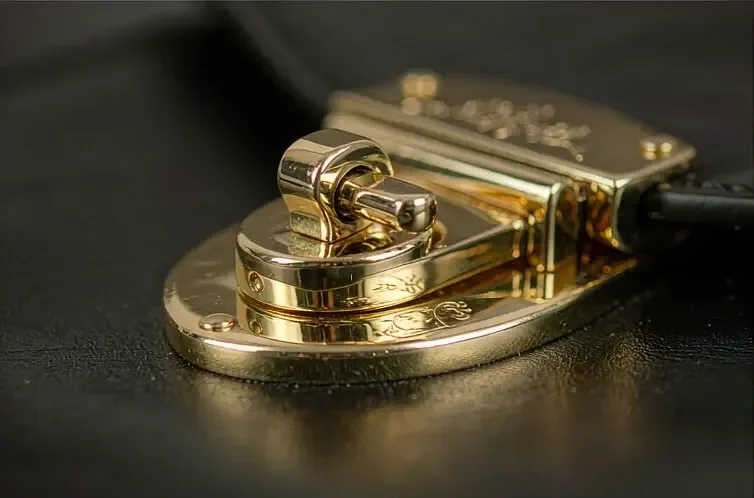
The pre-production unit. It costs 3-5 days and catches the two failures that are most expensive to find later: a bulk-material shade that does not match the sealed sample, and a hardware fitting jig that works on a prototype but not on the line.
Walk your season through the nine stages
Send your season plan and launch date, and our team will map it against the nine stages, flag the critical path and return a costed schedule through our quotation desk.
The nine stages in one line each
- Brief with tolerances; feasibility; quotation in 3-5 working days; pattern in 2-4; material approval in 3-6 with the ISO panel; prototype in 6-10, or 12-15 with frame work; correction and a sealed golden sample; pre-production and bulk in 35-50 days; inspection at AQL 2.5 and packing to your specification. Export experience since 2014, FOB Xiamen, 500 pcs per style and colourway.
Frequently Asked Questions
How many stages are there in a luxury handbag programme?
Nine: brief, feasibility, quotation, pattern development, material approval, first prototype, correction and sealing, pre-production and bulk, then inspection and packing. Each stage produces the input the next one needs, which is why running one out of order produces rework rather than speed. The sequence is fixed because pattern work, material approval and prototype assembly each consume the output of the stage before them.
How long does a full programme take from brief to delivery?
Roughly three months. Quotation takes 3-5 working days, pattern 2-4, material approval 3-6, prototype 6-10 and correction 5-7, then bulk runs 35-50 days. A made-to-order frame or clasp adds 8-12 days, and that component usually becomes the critical path for the season. Planning backwards from a launch date, open the conversation about three months ahead.
Why is a pre-production unit worth building?
Because it is the last inexpensive place to catch a mistake. Built on the actual bulk line with actual production 35-50 days, it reveals a shade that does not match the sealed sample or a fitting jig that works on a prototype but not on the line. Both cost far more if found at inspection.
What is a golden sample and when is it sealed?
It is the approved unit both sides sign and seal at the end of the correction stage. It carries the tech pack, tolerance ledger and material certificates, and one copy is held by each party. Against a live reference, a re-order runs 28-35 days instead of 35-50.
How long does quotation take?
Three to five working days against a complete brief, which means dimensioned drawings with tolerances, a material schedule, a hardware schedule and quantity per colourway. Missing tolerances and an undecided closure are the two gaps that most often push a quote past the window. A complete brief is the fastest way to shorten this stage.
Can several styles be sampled at the same time?
Yes, and they should be. Pattern work and bench time are separate resources, so four styles sampled in parallel finish inside the same 6-10 working day window as one. Sequencing them instead is the most common avoidable delay in a first season. Parallel sampling costs the same calendar as one and keeps the launch date intact.
What happens at material approval?
The exact hide, lining, interlining and hardware combination intended for bulk is tested: ISO 105-X12 rub fastness at grade 4-5, ISO 11644 adhesion at 4 N per 10 mm, ISO 3376 tensile strength, and shade at ΔE ≤ 1.0 under D65. Restricted-substance declarations are collected at the same time.
How long does bulk production take?
Thirty-five to fifty days from the approved sample and deposit. Inside that window, cutting and skiving run 5-8 days, assembly 14-20, finishing 6-9, and inspection and packing 3-5. Re-orders against a sealed reference run 28-35 days because the approvals are already on file. Capacity is allocated by drop date across 7 production lines rather than promised in the abstract.
What inspection standard applies at the end of a run?
AQL 2.5 under ISO 2859-1 at general inspection level II, with defects classified critical, major and minor before the inspector begins. On a 5,000-piece lot the sample is 200 units, accepted at 10 major defects and rejected at 11. A critical defect rejects a unit on its own.
Is third-party inspection worth adding?
Yes on the first drop of any new style, and on any shipment whose value makes a re-work costly. An independent inspector applies the same ISO 2859-1 plan on site and reports before release. For repeat styles with a stable record, in-house inspection at AQL 2.5 is normally sufficient.
When should the hardware decision be made?
At feasibility, not at sampling. A made-to-order frame or clasp adds 8-12 days and USD 450-900 in tooling, and it is the component most likely to become the critical path. Deciding it early keeps the rest of the season moving while the tooling is cut.
What are the delivery terms?
FOB Xiamen is the standard quotation basis, with CIF and DDP available where a brand prefers delivered pricing. Export documentation is prepared alongside inspection so that loading is not held by paperwork, and carton counts are fixed so a retailer can receive without repacking. The minimum order is 500 pcs per style and colourway on either basis.
People Also Ask
What are the stages of handbag development?
Brief and feasibility come first, then quotation, pattern development, material approval, prototype, correction and sealing, pre-production and bulk, and finally inspection and packing. Each stage feeds the next, so the sequence matters as much as the content.
How long does handbag sampling take?
Six to ten working days for a standard construction, and twelve to fifteen where a frame, clasp or minaudière shell has to be made to order. A correction round adds five to seven days, and several styles can be sampled in parallel.
What is a pre-production sample?
It is one unit built on the actual bulk line with the actual bulk materials before the full run begins. It is photographed against the sealed sample and is the final checkpoint before several thousand panels are cut.
Why does a made-to-order frame delay a bag?
Because the metal component has to be tooled before the bag can be assembled around it. That adds eight to twelve days, and if the decision is taken late, the whole season waits on one small part.
What does FOB Xiamen mean for a handbag order?
It means the quoted price covers goods loaded on board at the port of Xiamen, with freight, insurance and duty handled by the buyer. CIF and DDP are available where a brand prefers delivered pricing.
Sources and further reading
Every figure on this page is either our own programme data or attributed below. Open the originals before you write them into a specification.
- ISO — International StandardsInternational Organization for Standardization Publisher of ISO 2859-1 sampling procedures, ISO 105 colour fastness, ISO 11644 finish adhesion and ISO 3376 tensile strength.
- Leather Working GroupLeather Working Group Tannery audit protocol referenced at the material approval stage when a hide source is named for a season.
- Understanding REACHEuropean Chemicals Agency Annex XVII restrictions checked during material approval, before dyeing and plating begin.
- CPSC — Business EducationU.S. Consumer Product Safety Commission CPSIA requirements collected at material approval for goods entering the United States.