Luxury Handbag OEM for Designer Brands: MOQ 500, 6-10 working days of sampling and the Cost Structure
How does a brand-specified handbag programme work for a designer label? Your design is built to your own written specification: 500 pcs per style and colourway, sampling in 6-10 working days, bulk in 35-50 days, inspection at AQL 2.5 under ISO 2859-1, quoted FOB Xiamen. Unit bands for a structured full-grain calfskin bag sit between USD 44.00 and USD 78.00 depending on volume and hardware. This guide takes the programme apart number by number — minimums, sampling cost, tooling, hide consumption, cutting yield and the six cost lines that make a unit price.
What a Brand-Specified Programme Actually Covers
In a brand-specified programme the design, the material schedule and the tolerance set belong to you, and the atelier builds to them. That is the whole distinction: the specification arrives with the order rather than being offered with a catalogue. In practice it covers pattern development, material sourcing against your schedule, sampling and correction, tooling for any custom component, bulk assembly, inspection and packing to your presentation requirement.
The consequence for a designer brand is control and cost in the same package. You decide the hide, the closure and the stitch density; you also carry the tooling spend and the material risk that come with those decisions. Houses that understand this trade before the first quote rarely have an unpleasant conversation later, because every number on the quote traces back to a decision they made.
The Numbers a Designer Brand Should Fix First
Six numbers decide the shape of every quote that follows. Fix them before you ask for a price, because a quote produced against loose numbers is not comparable with the next one. Each of these has a working default, and departing from the default is what moves cost.
- Quantity per style and colourway
- 500 pcs minimum
- Leather substance
- 1.2-1.4 mm full-grain calfskin
- Stitch density
- 8-9 stitches per inch, Tex 40 thread
- Hardware plating
- 0.15-0.3 µm over nickel-free undercoat
- Inspection level
- AQL 2.5, ISO 2859-1, general level II
- Terms
- FOB Xiamen, CIF and DDP available
MOQ 500: Where the Minimum Comes From
The 500 pcs minimum per style and colourway is not a policy; it is arithmetic. Three fixed costs sit behind it. A hide purchase is made in lots, and a lot that yields 0.65-0.85 square metres of usable panel per structured bag does not scale down gracefully. Cutting yield runs 78-84% on a structured panel set, and the marker has to be made whether it cuts 200 or 3,000 units. Line set-up — thread, needles, edge paint formula, hardware fitting jigs — takes the same bench time regardless of quantity.
Below 500 pcs those three costs divide across fewer units and the per-bag figure rises steeply rather than quality falling. A designer brand wanting 150 pieces of a test silhouette is better served by a sampling run: three prototypes at USD 180-320 each, shown to buyers, followed by a real order once the shape is proven.
Sampling Economics: 6-10 Days and What a Prototype Costs
A first prototype takes 6-10 working days from a confirmed brief and material approval, and costs USD 180-320 for a structured full-grain calfskin bag with house hardware. Constructions needing a made-to-order frame, a clasp or a minaudière shell take 12-15 working days because the metal component has to be produced first. A correction round adds 5-7 days and, at most houses, the sample cost is credited against the bulk order.
| Sample type | Window | Indicative cost | Credited against bulk |
|---|---|---|---|
| First prototype, house hardware | 6-10 working days | USD 180-320 | Yes |
| Prototype with custom-cast closure | 12-15 working days | USD 320-520 | Yes |
| Correction round | 5-7 working days | USD 90-180 | Yes |
| Salesman set, three colourways | 10-14 working days | USD 420-760 | Partly |
Hardware and Tooling: 0.15-0.3 µm and USD 450-900 a Mould
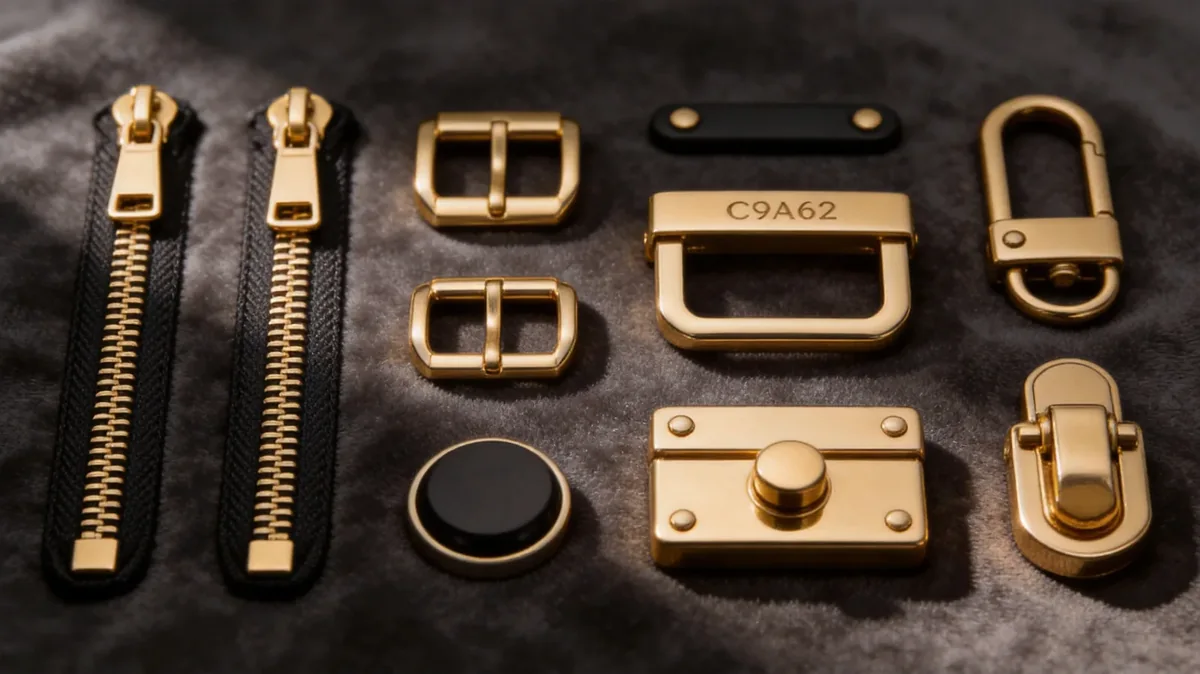
Hardware is the line item most often underestimated by a designer brand at the first quote. A house fitting costs nothing in tooling and follows the plating schedule already in use. A custom-cast closure carries a one-off of USD 450-900 for the mould and adds 8-12 days to the schedule, and it is the reason two quotes for the same bag can differ by several dollars a unit in the first season and converge later.
- Plating is specified at 0.15-0.3 µm of gold, palladium or ruthenium over a nickel-free undercoat, then sealed.
- Thickness is verified by X-ray fluorescence on incoming parts, with the reading filed against the order.
- Salt spray runs 24 hours as standard and 48 hours for humid or coastal destinations.
- Zippers are specified by size and chain — a #5 metal chain suits a structured flap — and cycled 500 times before use.
- A custom mould is held against your brand and reused on every later drop of the style at no further tooling cost.
Bulk Cost Structure: Six Lines That Make the Unit Price
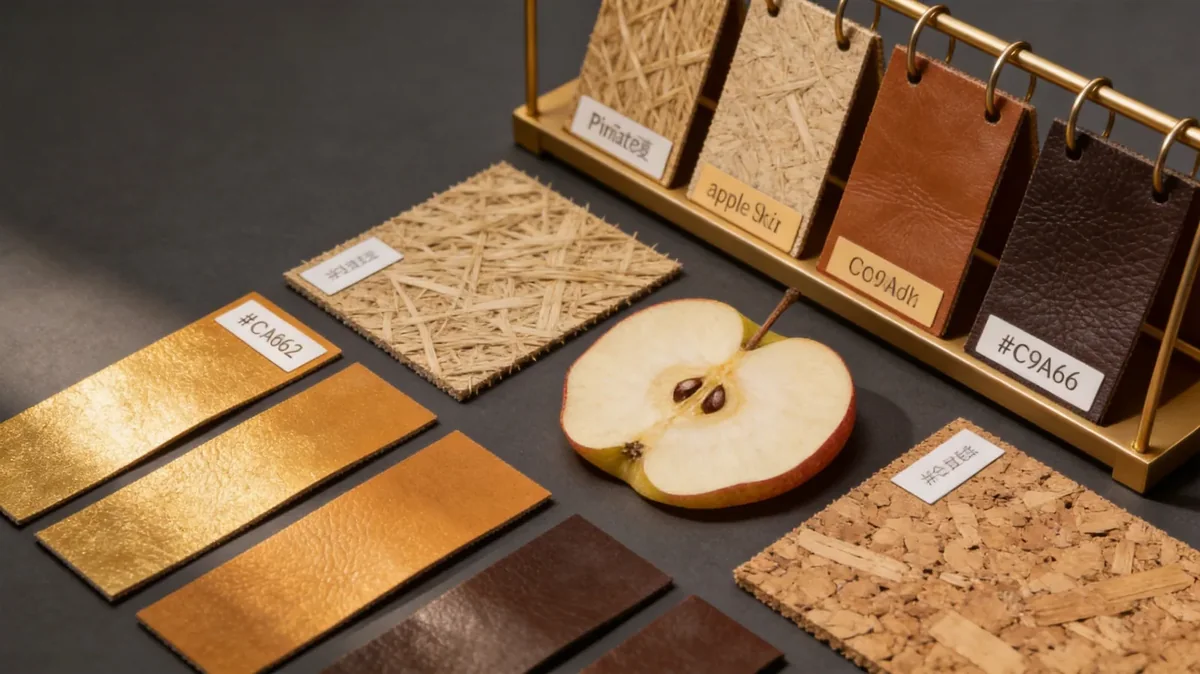
A unit price is six lines plus a margin, and knowing the six makes a quote readable. Hide is the largest and the most volatile, because it moves with the tannery market rather than with the order. Hardware is the second and the least volatile once the mould exists. Assembly and hand finishing are where a luxury bag differs most from a volume one, and they are the line most often cut when a brand asks for a lower number.
Two lines on that list buy more perceived quality per dollar than any other: the hide, and the hand-finishing time at the bench. Cutting either shows up first as edge paint failure and shade drift, which are the two complaints most often raised against a first capsule. A thicker plating or an extra finishing pass costs far less than a re-work after a failed inspection.
Timeline Arithmetic: 6-10 Plus 35-50, and What Adds Days
The schedule is two windows plus the time between them. Sampling runs 6-10 working days, bulk runs 35-50 days from the approved sample and deposit, and the gap between them is where most delays happen — material approval, hardware tooling and correction rounds. A designer brand planning a launch should open the conversation about three months before goods are needed on the rail.
- Day 0-2: brief review, tech pack confirmation and material intent.
- Day 3-10: first prototype cut and assembled, 12-15 where a metal component is made to order.
- Day 11-18: corrections, second sample, hardware fitting and approval.
- Sealed golden sample signed, one per style and colourway.
- Bulk window of 35-50 days across 7 production lines, capacity about 200,000 pcs per month.
- Inspection at AQL 2.5, optional third-party inspection, export documentation and loading.
Quality Numbers: AQL 2.5 and Where Defects Actually Come From
Final inspection runs at AQL 2.5 under ISO 2859-1, general inspection level II, with defects classified critical, major and minor. On a 3,000-piece lot the sample is 125 units, accepted at 7 major defects and rejected at 8. But inspection is a filter, not a cause: most defects in a luxury run trace to three origins, and each has a control that sits upstream of inspection.
Material origin
Shade drift and finish adhesion failure. Controlled by ISO 105-X12 rub fastness and ISO 11644 adhesion at 4 N per 10 mm before cutting.
Hardware origin
Plating wear and closure failure. Controlled by 0.15-0.3 µm thickness verification and 500 zipper pull cycles on incoming parts.
Assembly origin
Stitch irregularity and edge paint failure. Controlled by 8-9 SPI checked at each shift start and three coats applied on a fixed drying cycle.
Reading a Quote: What Each Line Tells You
A useful quote separates unit price from one-off costs, names the material by tannery and batch, states the plating thickness, and gives a validity period — thirty days is standard, because hide prices move. A quote that bundles everything into one figure is difficult to compare and impossible to negotiate honestly. Ask for the split, then argue about the lines you care about rather than about a number you cannot see inside.
Five checks before you sign a quote
- Is the hide named by tannery and batch, or only described as calfskin? Is plating thickness stated at 0.15-0.3 µm, or only the finish colour? Are tooling and sampling shown separately from the unit price? Is the inspection standard written as AQL 2.5 under ISO 2859-1 with the level named? And does the validity period cover the time you need to decide?
When the Numbers Say Wait
Sometimes the arithmetic argues against proceeding, and it is worth recognising the signs before a deposit moves. If the target unit price only works at a substance below 1.0 mm, the bag will crease. If it only works with two coats of edge paint, the edge will fail. If it only works above a quantity you cannot sell, the style is not ready. In each case the honest answer is to change the design rather than the specification, because a specification lowered to hit a number produces a complaint later that costs more than the saving. Two further signs are worth noting. If the quote only works with a house fitting where the design needs a custom closure, the silhouette will read as generic on the shelf. And if it only works by removing the second correction sample, the first bulk run is effectively the second sample, which is an expensive place to discover a pattern error.
Plating thickness. A quote that names a gold finish without naming 0.15-0.3 µm has not specified the part that determines whether the closure still looks right after a season. Ask for the figure and for the salt spray hours that verify it.
Get your design costed
Send drawings or reference images, target dimensions, material and hardware intent, quantity per colourway and destination port. Our team will return a line-split quote and a sampling plan through our quotation desk.
Frequently Asked Questions
What is the minimum order for a designer handbag programme?
The minimum is 500 pcs per style and per colourway, quoted FOB Xiamen. It reflects three fixed costs: hide purchase by lot, a cutting marker with 78-84% yield, and line set-up time that does not shrink with quantity. Below the minimum the per-unit figure rises steeply rather than the standard falling.
How long does sampling take for a designer handbag?
Six to ten working days from a confirmed brief and material approval for a standard construction. Where a frame, clasp or minaudière shell has to be made to order, the window is 12-15 working days. A correction round adds 5-7 days, and three or more styles can be sampled in parallel inside the same window.
How much does a handbag prototype cost?
A structured full-grain calfskin prototype with house hardware runs USD 180-320. With a custom-cast closure it runs USD 320-520 because the metal part is made first. Correction rounds cost USD 90-180, and sample cost is normally credited against the bulk order rather than charged twice.
Why do two quotes for the same bag differ so much?
Usually because of hardware and hide. A custom closure adds USD 450-900 in tooling that a house fitting does not, and a named tannery hide costs more than a generic calfskin described only by type. Plating thickness is the third common gap — 0.15-0.3 µm costs more than an unspecified flash finish.
How much leather does one structured handbag use?
A structured full-grain calfskin bag consumes roughly 0.65-0.85 square metres of hide, depending on panel count, the width of the gusset and whether the strap is cut from the same skin. Cutting yield on a structured panel set runs 78-84%, and the waste is the reason hide is the most volatile line on a quote.
What does hardware tooling cost and who owns the mould?
A custom-cast closure costs USD 450-900 for the mould and adds 8-12 days to the schedule. The mould is held against your brand, is not offered to other clients, and is reused on every later drop of that style at no further tooling charge. Pattern files are held on the same basis.
How is the unit price built up?
Six lines plus margin: hide at USD 18.00-26.00, hardware at USD 6.50-11.00, lining and interlining at USD 3.20-5.40, edge paint at USD 1.80-2.60, assembly and hand finishing at USD 9.00-14.00, and inspection, packing and documentation at USD 2.10-3.30. Asking for the split makes a quote negotiable.
What inspection standard applies to a designer drop?
AQL 2.5 under ISO 2859-1 at general inspection level II, with defects classified critical, major and minor. On a 3,000-piece lot the sample is 125 units, accepted at 7 major defects and rejected at 8. Third-party inspection is worth adding on the first drop of any new style.
How long does bulk production take?
Thirty-five to fifty days from the approved sample and deposit, quoted FOB Xiamen. The range depends on material availability, order size and how much hand finishing the construction needs. Re-orders against a sealed golden sample run 28-35 days because patterns, tooling and material approvals are already on file.
How long is a quote valid for?
Thirty days is standard, because hide prices move with the tannery market rather than with the order. Hardware and labour lines are more stable and usually hold longer. If you need more time to decide, ask which lines are firm and which are exposed, rather than asking for an open-ended quote.
Can I use my own leather or hardware?
Yes, and many designer brands do. Material supplied by the brand is inspected on arrival for substance, shade and finish adhesion before cutting, and any shortfall in quantity is declared early. The trade-off is that responsibility for material performance sits with the party who chose it.
What stops a design being copied?
A custom-cast closure is the strongest instrument, because copying it needs a new mould and a new tooling spend. Pattern files and tooling are held against your brand and not offered elsewhere. Where a component is a shared house fitting, exclusivity applies to the combination and finish rather than the part.
People Also Ask
What does a brand-specified handbag programme mean?
It means your design is built to your own written specification rather than selected from a catalogue. The pattern, material schedule, hardware and tolerance set belong to the brand, and the atelier builds, inspects and packs to them.
Why is there a 500 piece minimum for handbags?
Hide is bought by lot, a cutting marker yields 78-84% however many units it cuts, and line set-up takes the same time at any quantity. Below 500 pcs those fixed costs divide across too few units and the per-bag figure rises sharply.
How long does it take to make a luxury handbag order?
Sampling takes 6-10 working days, or 12-15 where a metal component is made to order, and bulk takes 35-50 days from the approved sample. Planning backwards from a launch date, open the conversation about three months ahead.
What is the biggest cost in a luxury handbag?
The hide, at USD 18.00-26.00 per bag on a structured full-grain calfskin build. It is also the most volatile line because it moves with the tannery market. Assembly and hand finishing at USD 9.00-14.00 is the second largest and the one most often cut first.
How do I compare two handbag quotes?
Ask both for the same split: hide named by tannery, hardware with plating thickness, assembly, finishing, and one-off tooling shown separately. Quotes bundled into a single figure cannot be compared honestly, because the differences are hidden inside the number.
Sources and further reading
Every figure on this page is either our own programme data or attributed below. Open the originals before you write them into a specification.
- Leather Working GroupLeather Working Group Tannery audit protocol referenced when a designer brand names a hide source that must stay available across drops.
- ISO — International StandardsInternational Organization for Standardization Publisher of ISO 2859-1 sampling, ISO 105 colour fastness, ISO 11644 finish adhesion and ISO 3376 tensile strength.
- Understanding REACHEuropean Chemicals Agency Annex XVII restrictions on substances in leather, coatings and plated hardware entering the European Union.
- Proposition 65California OEHHA Substance and warning requirements for handbags and metal hardware placed on the California market.