Consumer Expectations for Luxury Bag Traceability: What Shoppers Ask, What You Must Answer in Writing, and How the Record Is Built
What do luxury bag shoppers now expect on traceability, and what do you have to have in writing to answer them? They expect batch-level answers — tannery name, finish system, hardware plating record and supporting test results — delivered in one document rather than four conversations. Building that record costs about two extra days per drop, and depends on three things captured while the batch is being cut: lot codes carried from each hide, a plating record from the hardware line, and accredited laboratory results that match the batch rather than the collection.
The request that arrived before the order did
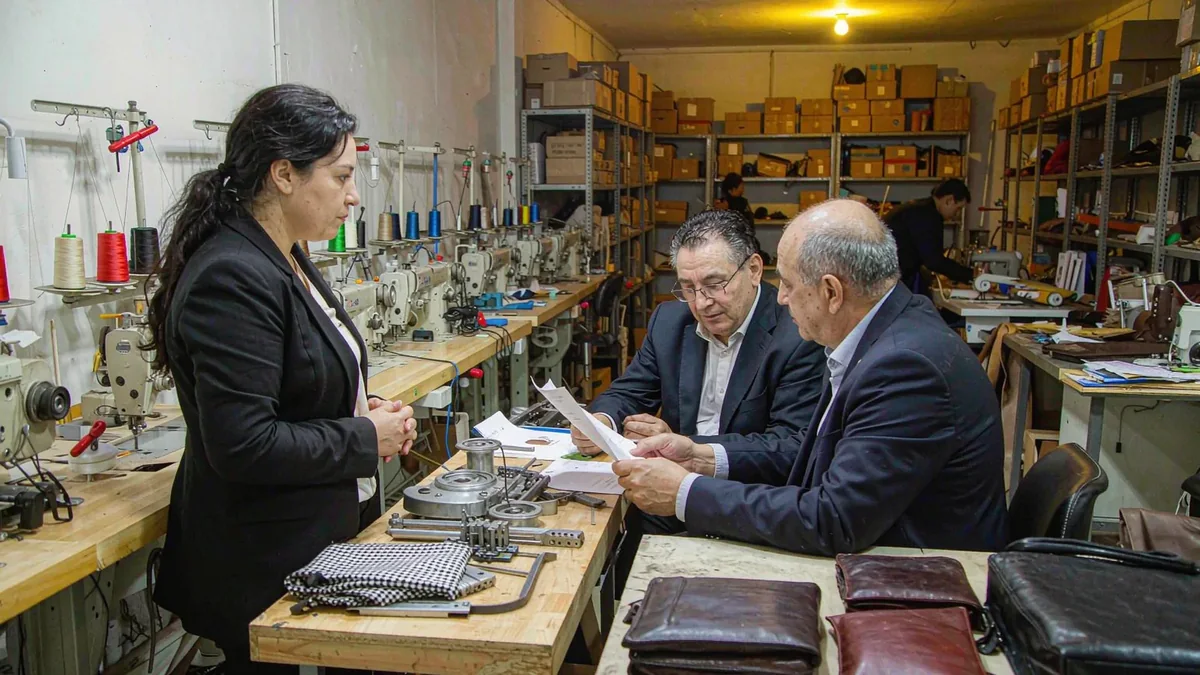
A buyer at a Copenhagen boutique group sent three questions before she had seen a single sample: which tannery supplied the calfskin, what finish system was applied to it, and whether we could put both in writing against a batch rather than a collection. She was not looking for a marketing claim. She wanted one sentence she could repeat across a counter and defend to a journalist later, which is a different and much harder thing to supply.
Her buying group had been asked the same questions often enough that they became a gate. If a label could not answer, it did not get shelf space, because the shop itself would be asked by its own customers and would need an answer that survived repetition. That is the real shape of traceability pressure today: it arrives one step earlier in the chain each year, and it arrives in writing.
The interesting part is how little of it was exotic. Nothing she asked for required new equipment, but rather required a handful of things to be captured at the moment they were known and kept for eighteen months. Most labels lose traceability not to a lack of anything confirmed but to timing — the answer exists for roughly ten days, then the lot code goes into the bin with the offcuts.
What traceability means once it is written down
Traceability is the ability to connect a finished bag back to the hide it was cut from and the components it was assembled with, using records created at the time rather than recalled afterwards. The distinction matters because memory-based traceability fails under pressure: it works for the first enquiry and collapses on the sixth, when the same question arrives about a batch from three seasons ago.
The four documents a batch-level answer rests on
- Hide record: tannery name, tannery rating, article reference, lot code and the date the lot entered work.
- Finish record: the applied system and its adhesion result under ISO 11644, plus colour fastness under ISO 105.
- Hardware record: base metal, plating specification with thickness in microns, and a salt spray duration result.
- Assembly record: which lots went into which finished cartons, recorded at packing rather than reconstructed later.
None of those four documents is expensive to produce at the point where the information is fresh. All four are expensive, slow and sometimes impossible to produce six months later. The cost difference is not really about money; it is about whether someone writes the lot code down on the day it is still in their hand.
Where the questions come from, and why they keep moving earlier
Three forces push provenance questions forward, and only one of them is consumer sentiment. The strongest is regulatory. European work on product passports and ecodesign expectations aims squarely at carrying product information through the chain in a durable way, and it is designed on the assumption that the data already exists somewhere. When it becomes mandatory, the labels that have been keeping records simply comply and everyone else starts making phone calls.
The second is chemical restriction rather than disclosure. REACH Annex XVII restricts certain substances in articles placed on the European market, and California Prop 65 carries separate warning obligations in the United States. Both are easier to answer from a record than from an investigation, and both are routinely asked about at precisely the moment an order is about to be confirmed.
The third is quieter and lasts longer. Shoppers who pay a great deal for a piece increasingly want to know that the rare material in it was lawfully obtained and competently finished. CITES documentation does that job for exotic skins, tannery audits do it for leather, and transaction certificates do it for recycled content programmes. Each certificate answers one question and each is issued against a shipment rather than a relationship.
Four claims that hold up, and four that do not
Holds: named tannery
Naming the tannery and its Leather Working Group rating, with the audit date, is specific, checkable and survives repetition. If the tannery changes for a later batch, say so in the update rather than quietly.
Holds: test result by method
Quoting a method and its result — ISO 11644 for finish adhesion, ISO 105 for colour fastness — carries its own verification path. The number invites the test rather than deflecting it.
Holds: chain-of-custody certificates
Recycled content programmes issue documentation per shipment. Those certificates tie a claim to a specific consignment, which is exactly what a counter question asks for.
Holds: bounded honesty
Saying what is documented and admitting what is not builds more credibility than claiming everything. A buyer checks one claim; if it holds, the rest are taken on trust.
Fails: unexplained adjectives
Words like responsible or conscious, unsupported by a method or a named source, are the fastest route to suspicion. They read as decoration, and they age badly when a journalist asks the follow-up.
Fails: percentage without a base
Any figure needs its base stated: percent of what, measured over which part, by which method. Unanchored percentages are the first thing a technical reviewer challenges.
Fails: certificate without a batch link
A document dated two years earlier and unconnected to the shipped batch answers nothing. Ask what the certificate covers before quoting it in a specification.
Fails: inherited claims
Repeating a material claim made by someone further up the chain, without their record, transfers the risk to you and leaves you unable to answer a direct question.
The test to apply to any claim before it goes into a specification is short and brutal: could the person who makes it produce evidence within forty-eight hours, and would that evidence name this batch? Claims that survive that question tend to be narrow, numeric and boring, which is precisely why they are worth having.
What a documented batch costs on the bench
Measured honestly, a documented batch adds preparation rather than production time. The line itself does not slow; there is a good chance nothing on the bench changes at all. What changes is the paper that travels with the batch and the discipline required to keep it attached to the right cartons through packing and despatch.
- Record preparation per drop
- Commonly 1-2 working days, mostly spent matching lot codes to carton lists before despatch
- Retention period for batch records
- Held for at least 18 months so that a late question can still be answered from paper rather than memory
- Leather Working Group tannery audit validity
- Ratings are issued against an audit cycle, commonly two years, so always quote the audit date with the rating
- Hardware plating on exposed metal
- Typically specified in microns, with a salt spray duration agreed for the finish rather than assumed
- Finish adhesion test conditions
- ISO 11644 reports adhesion of finish after defined conditioning, so results are only comparable when the conditions are quoted too
- Chemical and heavy metal screening
- Carried out by an accredited laboratory on the actual materials, not on a reference sample from another season
Note what those six lines have in common. Each is quick to capture once and expensive to invent later, and each converts a conversation into a document. A single spreadsheet started at cutting and finished at packing does most of the work, which is why the capability tends to belong to whoever keeps it rather than to whoever is most senior.
Building the record without slowing the line
- Capture lot codes when the hide is received, not after cutting, and keep one line per lot rather than one per shipment.
- Record which lots were cut into which bundles, so a bundle can be traced forward instead of backwards.
- Attach the hardware plating record and its salt spray duration to the same batch sheet, filed before assembly begins.
- File accredited laboratory results against the batch reference, not against the style, since a style can span several batches.
- Complete the carton-to-lot list at packing, then photograph it, because packing is the last moment all the pieces are in one room.
- Hold everything for eighteen months, which is long enough to answer a late query and short enough to remain manageable.
There is one place where teams reliably go wrong, and it is step four. Laboratory results are filed against a style because that is how samples are organised, while the question that arrives later always concerns a batch. The distinction seems pedantic until two batches of the same style used different lots, at which point the file answers a question and the answer is wrong.
How provenance questions change the development calendar
Documentation adds almost nothing to the physical calendar, but it does add a dependency: the materials have to be settled earlier than they otherwise would be. A plating specification cannot be recorded against a batch if the plating specification was decided after the hardware arrived. So the practical effect is honest: material decisions move two to three weeks earlier in development, and everything downstream stays the same.
That fits comfortably within normal timing. Sampling runs 6-10 working days for a standard piece and 12-15 for complex constructions; bulk runs 35-50 days from a confirmed sample and confirmed materials. Nothing in a documented programme changes those numbers, provided the material questions were answered during development rather than raised on the packing floor. Inspection is agreed at AQL 2.5 under ISO 2859-1 before the line starts, and despatch is FOB Xiamen.

Answering at the counter versus answering under pressure
There are two modes of answering provenance questions, and only one of them is comfortable. The counter answer is conversational, short and defensible: the tannery is named, the finish is a system rather than a mood, the hardware plating is specified in microns. The pressure answer is what happens when a claim reaches someone whose job is to test it, and it needs documents, dates and batch references behind every sentence.
Draft the sentence you would say across a counter, then write the file that supports it. Working in that order keeps the documentation proportionate: you file what the sentence needs, rather than building a claim out of whatever paperwork happens to be available.
The Copenhagen buyer eventually accepted an answer built exactly that way. It named one tannery, one finish system and one plating specification, quoted three test methods, and admitted calmly that one component came from a second source whose paperwork was still being reconciled. That admission is why she believed the rest of it, and why the order was confirmed.
Turning one request into a standing capability
Treat the first traceability request as a build rather than a favour. If the answer was assembled painfully once, it will be asked again within a season, and the second request always arrives with a shorter deadline than the first. Capturing the questionnaire, the documents you returned and the people who supplied them converts an interruption into a template that takes two working days instead of two months.
Get the batch record built before it is asked for
Tell us which markets you sell into and we will return the material declarations, tannery details and test methods we can document for your next drop, in writing, before development starts. Request a quote.
Frequently Asked Questions
What do luxury bag customers actually expect when they ask about traceability?
They expect a specific answer that names the tannery, the finish system and the hardware specification, and that ties each to the batch they are holding. A general statement about responsible materials reads as evasion. Naming one source, quoting one date and admitting one gap is far more convincing than a complete set of adjectives.
Is traceability the same thing as sustainability?
No. Sustainability describes how a material performs against environmental measures across its life; traceability only tells you where it came from and where it went. A material can be fully traceable and poor, or excellent and untraceable. Documenting provenance is the first step to any claim, not the whole of one.
Which documents should accompany a batch to Europe?
Material declarations supported by accredited laboratory screening for restricted substances, tannery identification with its Leather Working Group rating and audit date, hardware plating records, and the carton-to-lot list. European expectations also increasingly anticipate durable product information rather than a leaflet, so keep records structured rather than narrative.
Do we need California Prop 65 warnings on every order?
Only if a listed substance is present at a level that triggers a warning obligation, which depends on the material and its finish rather than on the destination alone. Screening establishes whether the obligation exists, and it has to be carried out on the actual production materials, not on a laboratory sample from a different season.
How long should batch records be kept?
Eighteen months is a practical floor and three years is comfortable, because questions about resale authenticity and material claims tend to arrive well after the goods have shipped. Retention costs nothing once the record exists, while an expired file converts a simple answer into an investigation nobody has time for.
Can a tannery rating be quoted without naming the tannery?
Technically yes, but it satisfies nobody. A rating without the site name and audit date cannot be checked, and a buyer will read the omission as caution rather than discretion. If commercial sensitivity is real, offer the name under a written confidentiality note rather than withholding it outright.
What does a transaction certificate cover?
It covers one consignment of claimed material, linking input to output for recycled content programmes, rather than confirming anything about the brand or its partners. That narrowness is its value: it is checkable. Always quote the certificate number against the shipment it was issued for, since it expires in usefulness long before it expires in date.
Do exotic skins need separate documentation?
Yes. Species listed in the CITES appendices require documentation that travels with the goods and often with re-export requirements at destination. Confirm the listing and the paperwork route during development, because documentation cannot be assembled after a skin is cut, and a finished piece without papers has no lawful route forward.
Does building a documented batch slow the production calendar?
The physical calendar does not move. Sampling stays at 6-10 working days, 12-15 for complex pieces, and bulk stays at 35-50 days. What changes is that material decisions move two to three weeks earlier, since a specification cannot be recorded against a batch if it was chosen after the components arrived.
What should we do when the answer is genuinely incomplete?
Say what the gap is and when it will close. A buyer who discovers the gap later, unaided, will assume everything else was assembled the same way; volunteered, it reads as competence. Offer the documented parts confidently and put a date against what is still open, then write again on that date.
People Also Ask
Why does traceability matter more now than five years ago?
Because three things arrived together: European expectations of durable product information, chemical restriction lists that carry real obligations, and shoppers who check provenance before paying. Each converts a nice-to-have into a gate that sits earlier in the buying sequence every year.
What is the least costly first step toward a documented batch?
Start one sheet per lot at cutting, listing tannery, article reference, lot code and date received, and add rows at packing for carton numbers. That single sheet answers most counter questions and costs minutes a day rather than a system implementation.
How is finish adhesion measured on leather?
ISO 11644 measures the adhesion of finish to leather under defined conditioning, and the result is only comparable when those conditions are quoted with it. Colour fastness is treated separately under ISO 105, since rub, light and perspiration behave differently from one another.
Are numeric claims about recycled content safe to publish?
Only with the base and the certificate attached: percent of what, by which programme, evidenced by which transaction certificate and shipment. An unanchored percentage invites exactly the audit that a well-documented claim deflects, and it is usually the first figure a reviewer tests.
Should the same level of documentation apply to small runs?
Yes, because small runs are where provenance questions are asked most often. A 500 pc drop sold through independents will face more thoughtful counter questions than a high-volume placement, and each independent has its own buyers asking the same three things.
Sources and further reading
Every figure on this page is either our own programme data or attributed below. Open the originals before you write them into a specification.
- Leather Working GroupLeather Working Group Publishes the environmental audit protocol and rating levels used for tanneries, along with the audit validity period that should accompany any quoted rating.
- ISO — standards catalogueInternational Organization for Standardization Publisher of ISO 11644 for finish adhesion, ISO 105 for colour fastness, ISO 3376 for tensile strength and ISO 2859-1 for inspection sampling.
- ECHA — REACHEuropean Chemicals Agency Authority behind REACH Annex XVII restrictions on substances in articles placed on the European market, which material declarations must be built to answer.
- OEHHA — Proposition 65Office of Environmental Health Hazard Assessment Administers the California Proposition 65 list and warning obligations that determine whether risk assessment and labelling are required for the United States.
- CITESCITES Secretariat Authority for appendix listings and the documentation that must accompany listed species across borders, including re-export requirements at destination.