Luxury Handbag Sampling Mistakes That Delay Production: 7 Errors, What Each Costs in Days and the 4 Fixes That Recover the Calendar
Seven sampling mistakes account for most delayed luxury programmes, and each has a measurable cost in days. Approving from a photograph costs 8. Feedback written as impressions costs 12. Choosing the material during sampling costs 15. An undeclared provisional component costs 10. Late feedback costs 21. Changing the silhouette at the second round costs 18. Skipping the sealed reference costs 25, and it is the only one that surfaces after the goods are made. Four fixes recover most of a slipped calendar, and all four are available before the first cut.
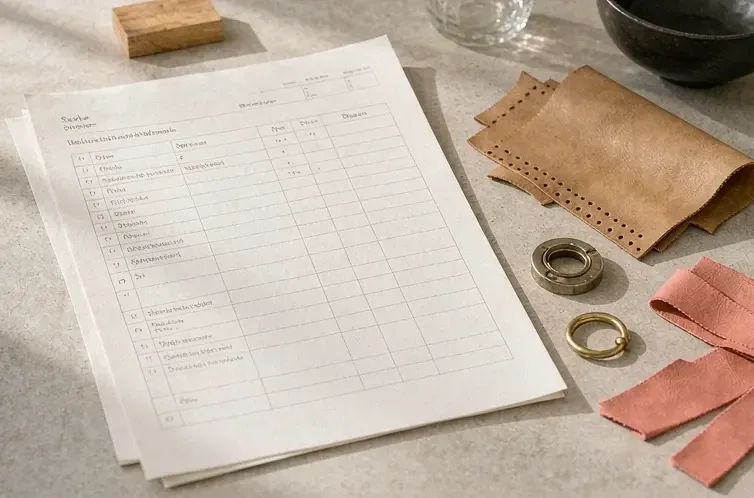
What a Delay Actually Costs
A delayed sample does not delay the sample. It delays bulk, and it delays bulk by more than the days it consumed, because material and hardware lead times restart at approval rather than running alongside the review period.
That asymmetry is the whole problem. A founder who holds a sample for three weeks believes they have spent three weeks of thinking. What they have spent is three weeks of thinking plus the hide booking window of 10-14 days that could have run in parallel, plus the position in the bulk queue that the programme has now lost.
For scale on the money side: one finished piece in a normal run sits around USD 4.80 in parts and labour at the bench, so a week of slippage on a 500-piece order is not a rounding error either. The point of counting days rather than feelings is that days can be recovered and feelings cannot.
Mistake One: Approving From a Photograph
A photograph flatters shade, hides grain and removes the hand of the material entirely. Approving from one costs around 8 days and produces a dispute that no correspondence resolves.
The mechanism is simple. Two hides of the same specification photographed under the same light look identical; held in the hand at a window they do not. The client sees the piece in daylight, on a body, next to a coat, and judges something the photograph never contained.
The fix is a sealed physical reference approved under a stated light source, with the light source recorded. A shade approved in a booth at D65 and recorded as such is a decision; a shade approved from a screen is an opinion, and opinions get reopened.
Mistake Two: Feedback Written as Impressions
Make the handle higher produces a second sample that is higher and still wrong. Raise the handle by 8 mm produces one that is right. The difference is about 12 days.
Impression feedback fails in a specific way. It is interpreted by somebody who did not hear the conversation, applied in good faith, and returned as a piece that technically satisfies the request while missing the intent. The founder then writes a second round of the same kind of comment, and the programme is now a round behind and still unspecific.
The discipline is to write every change as a number, or as a mark on the drawing. Where the change genuinely cannot be expressed as a number, attach a reference image of a piece that has the quality being asked for, rather than an adjective for it.
Mistake Three: Choosing the Material During Sampling
A sample made while the material is still being chosen approves a colour and a hand that bulk cannot be cut from. This is the most expensive of the early mistakes at around 15 days, because it invalidates a round that was otherwise successful.
| Mistake | Days typically lost | Where the days go |
|---|---|---|
| Approving from a photograph | 8 | Second round, shade argument, resubmission of hides |
| Feedback as impressions | 12 | One extra round, and the second comment is still unspecific |
| Choosing material during sampling | 15 | Hide booking window restarts, and the approved round is void |
| Undeclared provisional component | 10 | Approval covers a part bulk does not contain |
| Late feedback beyond five working days | 21 | Three weeks held, plus the queue position lost |
| Silhouette change at round two | 18 | Pattern rework plus a fresh prototype |
| No sealed reference at approval | 25 | Dispute at bulk, and no artefact to settle it |
The ordering of those numbers matters. The largest costs belong to the mistakes made latest, not to the ones that feel largest at the time, and that is exactly why they are not caught.
Mistake Four: An Undeclared Provisional Component
A provisional component is one used in the sample because the specified one has a lead time longer than the sample window. Declaring it costs a line on the parcel note. Not declaring it costs about 10 days and an approval that covers the wrong bag.
Two categories are common. Hardware is the first: a custom pull or an engineered lock will not exist in ten days, so the sample carries the closest stock fitting while the drawings carry the real one. Material is the second: a hide booked for the programme arrives after the sample is cut, so the first piece is made in the nearest available shade from the same tannery.
The buyer-side rule is short and worth adopting entirely: read the provisional list before approving anything, and where an element is provisional, approve the drawing rather than the sample. That single habit removes the commonest cause of a third round.
There is a second cost that rarely appears on any document, which is the cost to the relationship. A programme that slips twice becomes a programme where every subsequent date is quoted defensively, and defensive quotations are always longer than honest ones. Being the client whose feedback arrives on time is worth more in calendar terms than any negotiation conducted once trust has gone.
None of this is an argument for rushing. It is an argument for deciding when the decision is still reversible. Every choice on the list below costs little at the point it first appears and expensive at every point after it, and the whole craft of running a sampling programme is noticing which point you are at.
How Slippage Compounds Across Two Rounds
The mistake that founders make when reading a slipped calendar is to add the days up. They do not add; they multiply, because each round restarts something that was already running.
| Stage | On plan | After one week of slippage |
|---|---|---|
| Sampling | 6-10 working days | 13-17 working days, because the bench has moved on |
| Feedback | 5 working days | 12 working days, and the comment is still unspecific |
| Hide booking | 10-14 days, running alongside review | 10-14 days, restarting at approval |
| Bulk | 35-50 days from approval | 35-50 days from a later approval, plus a lost queue position |
| Total effect | Roughly 10 weeks | Roughly 14 weeks, from one week of hesitation |
The row to notice is the third. A hide booked at approval cannot be booked during review, and there is no way to overlap them once the review has overrun. The window is not lost to indecision; it is lost to sequencing.
This is also why the fixes are all about deciding earlier rather than working faster. Speed at the bench is rarely the constraint. The constraint is that a decision which arrives late cannot be acted on in parallel with anything, and parallel work is where calendars are actually won.
Mistake Five: Feedback Held Beyond Five Working Days
This is the mistake that costs the most in absolute terms, around 21 days, and it is also the only one entirely within the founder's control.
A sample held for three weeks moves bulk by three weeks, and then some: the hide booking window of 10-14 days restarts at approval rather than running alongside the review, and the programme loses its place in the bulk queue. What looked like a considered pause is a compound delay.
Five working days is the working figure. It is long enough for a considered opinion and short enough that the bench still remembers the piece. Beyond it, the person who made the sample has moved on, and the correction is being described to somebody who did not.
Mistake Six: Changing the Silhouette at the Second Round
Round two exists to settle the specification. Changing the silhouette at that point reopens the pattern, and reopening a pattern costs about 18 days and usually a further round.
- Round one is for
- Silhouette, proportion and structure. Argue here, at length, before anything else is settled.
- Round two is for
- Specification: material, hardware, stitch pitch, edge, interior layout.
- The reference is for
- Nothing. It records what was agreed and defines bulk.
- A silhouette change after the reference
- Is a new style, with a new pattern and a new programme.
- Feedback window
- Five working days, written as numbers and split into must-change and nice-to-change.
The distinction that saves the calendar is between a change to what the piece is and a change to how it is made. The first belongs at round one. The second belongs at round two. Mixing them produces a second round that does neither job properly and a third round to finish both.
Mistake Seven: Skipping the Sealed Reference
Skipping the sealed reference is the mistake that costs the most, around 25 days, and it is the only one that surfaces after the goods have been made rather than before.
Without a sealed piece held by each side, the definition of bulk is a memory and a set of photographs, and the two parties will remember differently. The dispute is not usually about whether the goods are good; it is about whether they match, and match is a question only a physical artefact answers.
Insist on three sealed references at approval: one held by each party and one held back. They are produced on the day of approval, because once bulk has started they cannot be made retrospectively.
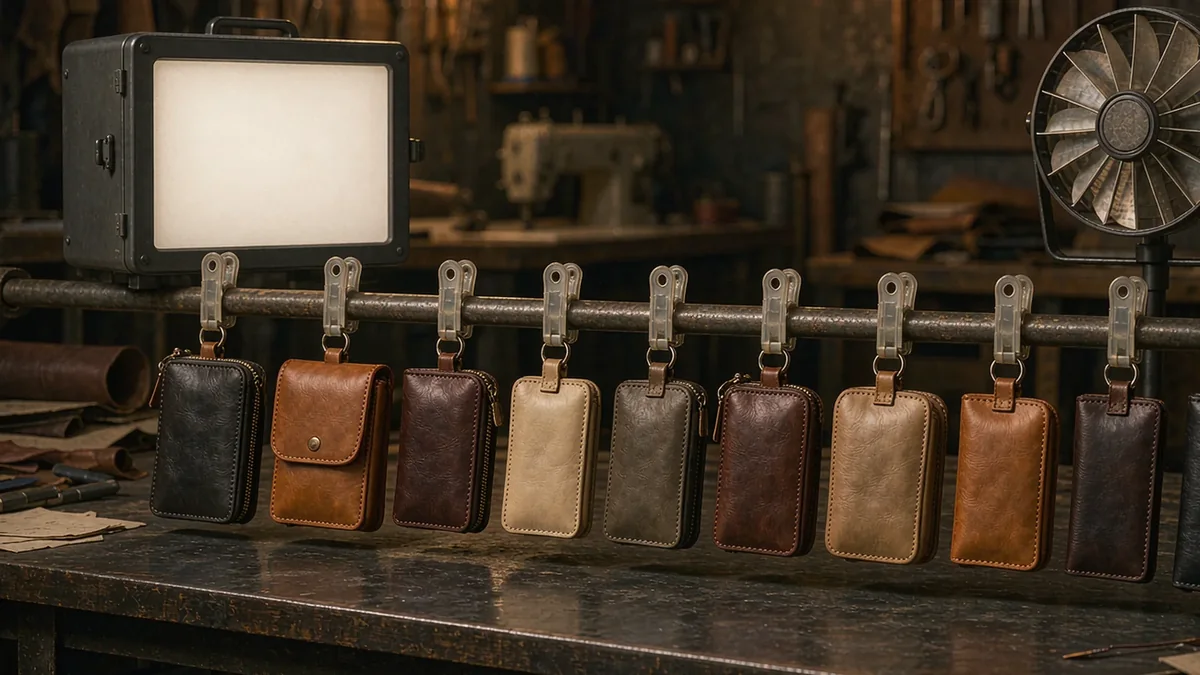
The Four Fixes That Recover the Calendar
Four fixes recover most of a slipped calendar, and none of them requires working faster. They require deciding earlier.
Four fixes, in order of effect
- Return feedback within five working days, always, even if the answer is approve with these two changes.
- Write every change as a number, or mark the drawing, and split comments into must-change and nice-to-change.
- Approve a physical sealed reference under a stated light source, and record that light source.
- Read the provisional list before approving, and approve the drawing wherever a component is provisional.
Applied together, they remove roughly two rounds from a four-round programme and hold the sampling window at 6-10 working days rather than stretching it to 12-15. Applied to a programme that is already slipping, they stop the bleeding from the point of adoption, though they cannot recover days already spent.
A Calendar Rebuilt Around the Fixes
A programme run with those four habits in place has a predictable shape, and the shape is worth writing down before the first cut so that slippage is visible when it happens rather than at the end.
Sampling holds at 6-10 working days, or 12-15 where the piece carries a frame, an exotic skin or engineered hardware. Feedback returns within five working days at each round. Approval produces three sealed references and a written specification sheet. Bulk then runs 35-50 days at MOQ 500 pcs per style and colourway, with inspection at AQL 2.5 under ISO 2859-1 and handover on FOB Xiamen terms.
Export experience on this programme runs since 2014 across 7 production lines with about 200,000 pcs per month of capacity, delivered through our validated partner factory Quanzhou Yingming Bags. A reorder against a held specification returns in 28-35 days, because the pattern, the tooling and the material approvals are already on file.
Every mistake on this list has a number attached, and that is deliberate. Programmes slip because nobody quantified the slippage while it was happening. Write the calendar down at the outset and the delay becomes visible on the day it occurs rather than in the week the goods were supposed to ship.
Run the next style on a written calendar
Send the drawings and the quantity and we will return a dated sampling plan with the feedback windows and the approval artefacts specified in advance. Request a quote.
Frequently Asked Questions
What is the most common cause of a delayed sampling programme?
Late feedback. Holding a sample for three weeks moves bulk by three weeks and more, because the hide booking window of 10-14 days restarts at approval rather than running alongside the review period.
How quickly should sample feedback be returned?
Within five working days. That is long enough for a considered opinion and short enough that the person who made the piece is still available to interpret the correction.
Why is approving from a photograph a mistake?
Because a photograph flatters shade, hides grain and removes the hand of the material. Two hides photographed under the same light look identical and held at a window do not, which is why approval needs a physical reference.
What light source should shade be approved under?
A standardised booth at D65, recorded on the approval document. Recording the source is what makes the approval repeatable, since the same piece reads differently under warm and cool light.
What is a provisional component?
One used in the sample because the specified part has a lead time longer than the sample window. Custom hardware and programme hides are the two common cases, and both should be declared in writing.
How should I approve a provisional component?
Approve the drawing rather than the sample. That way the approval covers what bulk will actually contain, and the round is not spent agreeing to a substitute nobody mentioned.
Can I change the silhouette at the second round?
You can, but it costs about 18 days and usually a further round, because it reopens the pattern. Round one is for silhouette and proportion; round two is for specification only.
What is a sealed reference and why does skipping it cost so much?
A physical piece made on the bulk tooling from the bulk material, sealed on approval and held by each side. Without it, the definition of bulk is a memory, and the dispute surfaces after the goods are made.
How many sealed references should be produced?
Three: one held by each party and one held back. They are produced on the day of approval, since they cannot be made retrospectively once bulk has started.
Why does choosing material during sampling cost 15 days?
Because the approved round is made from a hide that bulk cannot be cut from, so the booking window restarts and the successful round is void. Material should be chosen before the first cut.
Does a delay in sampling really delay bulk by the same amount?
By more. Material and hardware lead times restart at approval rather than running alongside the review, and the programme also loses its position in the bulk queue.
How fast is a reorder once the specification is held?
production 35-50 days against a sealed reference rather than 35-50 days for a first run, and sampling reduces to a confirmation round of 3-5 working days.
People Also Ask
Why does handbag sampling slip?
Usually late feedback, impression-based comments, or material chosen during the round rather than before it. Each adds a round, and each round restarts the material and hardware lead times.
How many sample rounds are normal?
Two plus the pre-production reference. A third round usually means the silhouette changed at round two rather than the specification, which is a different and more expensive correction.
What is the fastest way to recover a slipped calendar?
Return feedback inside five working days, write comments as numbers, and approve a sealed physical reference. None requires working faster; all require deciding earlier.
Is a sample ever approved in a substitute material?
Yes, where the programme hide has a longer lead time than the sample window. It must be declared in writing and the approval should attach to the hide submission rather than to the piece.
What should be in writing at approval?
A dated approval, three sealed references, a written specification sheet, the light source used, and a list of any provisional components with the drawings they were approved against.
Sources and further reading
Every figure on this page is either our own programme data or attributed below. Open the originals before you write them into a specification.
- ISO - International Organization for StandardizationISO Publisher of ISO 2859-1 for inspection and the colour-fastness methods referenced in shade approval.
- Leather Working GroupLeather Working Group Tannery audit and traceability protocol behind hide lot booking, whose window restarts when approval slips.
- SATRASATRA Technology Centre Independent testing organisation for leather and accessories, covering the physical tests a sealed reference supports.
- Sourcing JournalSourcing Journal Reporting on development calendars and the causes of slippage across the accessories trade.
- Business of FashionBusiness of Fashion Coverage of collection calendars and the commercial consequences of a slipped delivery window.