Premium Handbag Cost Structure Explained: Five Levers in the Order That Actually Moves the Number
How is the unit cost of a premium handbag actually built? Five levers decide it, and they are not equal: material typically carries 42-55% of the figure, hardware 12-18%, bench labour 18-26%, presentation packaging around USD 4.80 per unit, and compliance plus freight the remainder. Quantity then divides the set-up across the run, which is why the same body quoted at 500 pcs and at 1,500 pcs differs by far more than the material alone would explain. Below, the five levers are set out in the order worth deciding them, followed by a worked comparison of one body at two quantities and the three places cost arguments usually go wrong.
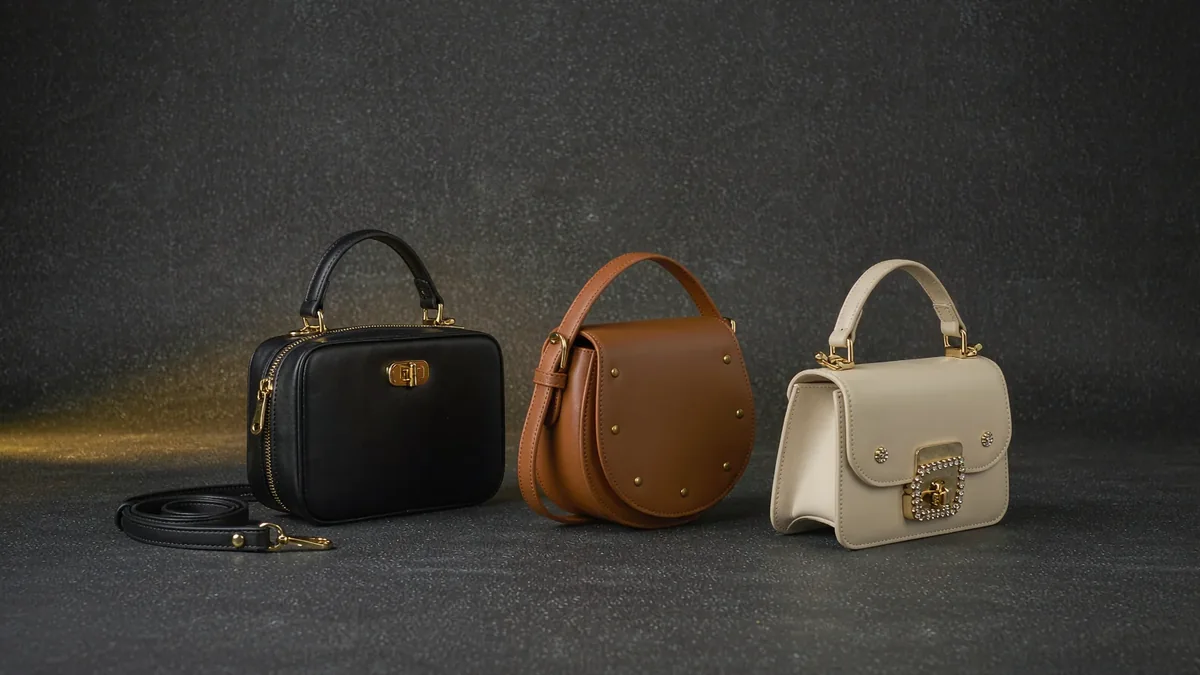
Decide in This Order: Five Levers, Biggest First
Cost conversations fail because they start with the wrong lever. A brand argues about a few cents on thread while a hardware decision worth several times that has not been made yet. The useful discipline is to decide in descending order of magnitude: material first, hardware second, bench content third, quantity fourth, then presentation and compliance. Each decision constrains the ones below it, which is why working in any other order produces rework.
- Material: which tannery, which lot, and what substance the body needs.
- Hardware: stock or bespoke, and the plating thickness you are willing to hold.
- Bench content: how many operations are genuinely hand work rather than line work.
- Quantity: pieces per style and colourway, which amortises everything set up once.
- Presentation, compliance and freight: packaging, per-lot testing and trade terms.
Lever One: Material, Usually 42-55% of Unit Cost
Material is the largest single line and the one with the longest lead time, which is why it is decided first. Full-grain calfskin at 1.2-1.4 mm from an audited European tannery sits at the upper end; corrected-grain bovine at 1.0-1.2 mm sits lower, and the gap between them is wider than any saving available further down the list. Substance matters twice, because thicker leather costs more per area and also lowers the yield from each hide.
| Material choice | Substance | Typical share of unit cost | Effect on the rest of the build |
|---|---|---|---|
| Full-grain calfskin, audited lot | 1.2-1.4 mm | Upper end of the 42-55% band | Best structured body; holds a three-coat edge without reinforcement |
| Vegetable-tanned vachetta | 1.4-1.8 mm | Upper middle | Patina development; heavier, so handles need more reinforcement |
| Corrected-grain bovine | 1.0-1.2 mm | Middle of the band | Suits linings and gussets; coating adhesion checked to ISO 11644 |
| Suede or nubuck | 1.0-1.2 mm | Middle to upper | Lower yield from cropping; nap direction raises cutting waste |
| Listed exotic skin | Varies by species | Highest, plus permit cost | Permit documents and lower yield; cut last in the sequence |
One habit saves real money here: reserving one lot per colourway. It removes shade drift between the launch drop and the re-order, and it also removes the second testing cycle that follows any material substitution, which is a cost nobody itemises on a quotation.
Lever Two: Hardware, 12-18% and the Widest Spread
Hardware carries the widest spread of any line, because the distance between a stock component and a bespoke one is measured in tooling as well as in metal. Stock brass at 0.15-0.3 µm plating arrives in 20-25 working days; a bespoke closure takes 30-40 including tooling, and the tooling is a one-off charge that has to be amortised across the run.
Where hardware cost actually moves
- Stock versus bespoke: tooling is the single largest step change on the whole quotation.
- Plating thickness: 0.15-0.3 µm is a measurable target, and thinner plating fails at contact points.
- Finish family: one finish across feet, rings and strap ends costs less than several to reconcile.
- Proving: a lock cycled at least 5,000 times before panels are cut avoids re-cutting later.
- Amortisation: bespoke tooling at 500 pcs costs roughly three times per unit what it does at 1,500 pcs.
Lever Three: Bench Content, 18-26% of Unit Cost
Bench labour is the line most often misunderstood, because it is quoted as a share rather than as a set of operations. What it actually buys is skiving every fold to 0.6-0.8 mm, running structural seams at 8-9 stitches per inch, building edges in three coats of roughly 0.12 mm, setting hardware against a reference and finishing each unit by hand. Remove any one of those and the percentage falls, along with the finish. The share also moves with the silhouette rather than only with the specification: a soft drawstring body with few folds and a simple turned edge sits at the lower end of the band, while a framed body with a reinforced top line, a lined gusset and hand-set hardware sits at the upper end.
- Skiving: one operation per fold, and a structured body has many folds.
- Stitch density: 8-9 per inch takes longer to run than 6-7, and the difference is visible at the corner.
- Edge build: three coats with curing intervals cost three intervals, not one.
- Final finishing: hand setting, cleaning and inspection of every unit before packing.
Lever Four: Quantity and How Set-up Is Amortised
Quantity does not change the material cost per unit very much; it changes everything that is paid for once. Marker making, pattern grading, tooling, line set-up, first-piece approval and laboratory testing are all fixed costs, and at MOQ 500 pcs per style and colourway they are divided across five hundred units rather than fifteen hundred. This is the lever that most surprises first-time buyers.
| Cost element | At 500 pcs per colourway | At 1,500 pcs per colourway | Why it behaves this way |
|---|---|---|---|
| Material per unit | Unchanged | Unchanged | Leather is bought by area; quantity does not alter price per panel |
| Pattern and marker | Spread across 500 | Spread across 1,500 | Made once, divided three times further |
| Hardware tooling | Highest per unit | Roughly a third per unit | A one-off charge amortised across the run |
| Line set-up and approval | Spread across 500 | Spread across 1,500 | Set-up time does not scale with quantity |
| Laboratory testing | Per lot, spread across 500 | Per lot, spread across 1,500 | A report covers a lot, not a quantity |
The practical reading is that a smaller first run is not three times cheaper per unit than a larger one; it is more expensive per unit, and the difference is set-up rather than profit. Brands who understand this usually launch one body in two colourways rather than three bodies in one.
Lever Five: Presentation, Compliance and Freight
The last lever is small per unit and easy to underestimate in total. A rigid presentation box with dust bag and tissue adds roughly USD 4.80 per unit before freight; compliance testing is booked per lot per destination market; and the trade term decides who carries freight risk and customs documentation. None of these changes the bag, and together they can move the landed figure more than a thread or lining decision.
- Presentation packaging: around USD 4.80 per unit for a rigid box, dust bag and tissue.
- Compliance: REACH Annex XVII for the EU, California Prop 65 for the United States, per named lot.
- Fibre naming: EU Regulation 1007/2011 applies to any textile element of the bag.
- Permits: CITES documents where a listed skin is used, and those take an authority's calendar.
- Trade terms: FOB Xiamen by default, with CIF and DDP available on request.
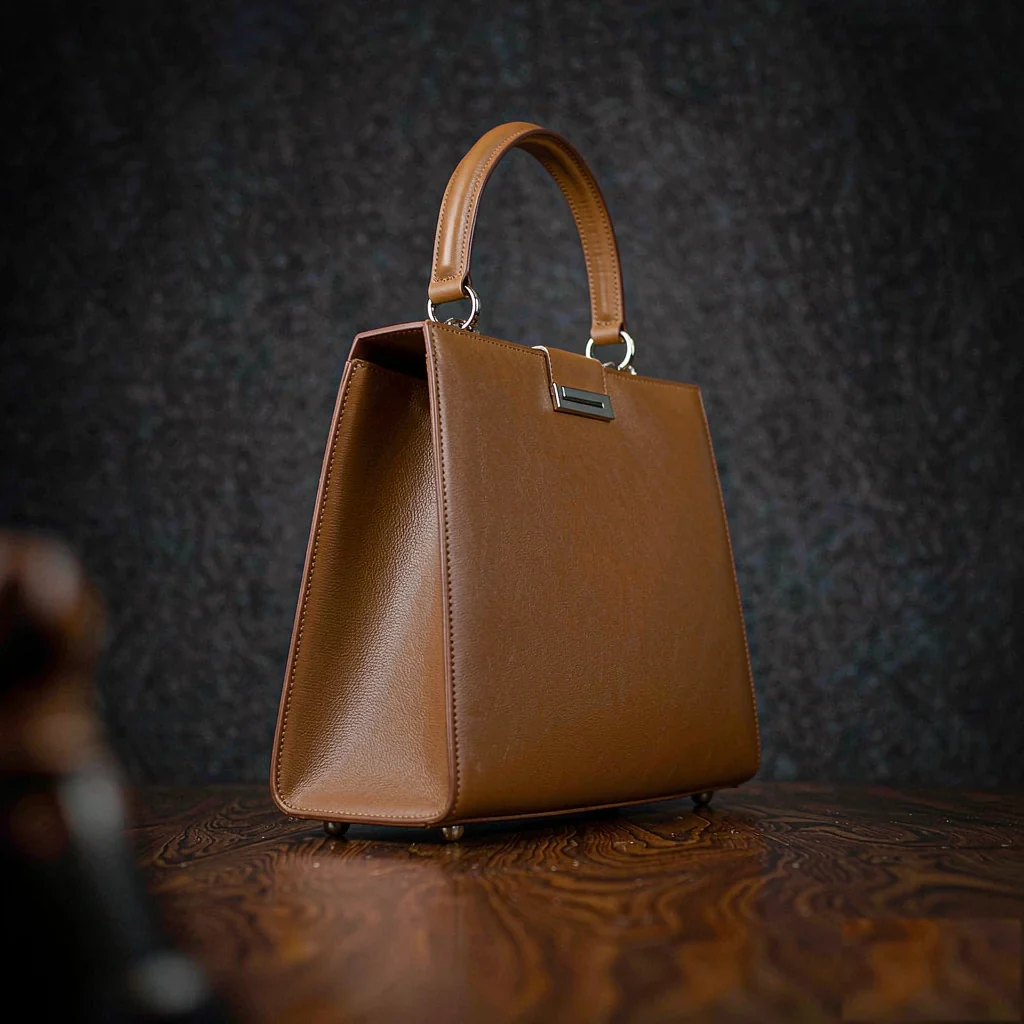
A Worked Comparison: One Body, Two Quantities
Take one structured top-handle in full-grain calfskin with stock brass hardware and a rigid box. At 500 pcs per colourway the fixed elements are divided five hundred ways; at 1,500 pcs the same elements are divided fifteen hundred ways while material, packaging and bench content per unit stay broadly flat. The result is a lower unit figure at the higher quantity, and a calendar that is barely longer.
500 pcs, one colourway
Lowest total commitment and the highest unit figure, because tooling, marker, set-up and testing are spread across five hundred. The right choice when sell-through is unproven.
1,500 pcs across three colourways
Same set-up, material and tooling logic, but divided further. Note that MOQ 500 pcs applies to each colourway, so this is three commitments of five hundred rather than one.
500 pcs with bespoke closure
The most expensive per unit of the three, because tooling is amortised across the smallest run. Usually better deferred to the second drop once the body has sold.
Notice that the third option is where most first capsules land by accident. A bespoke closure chosen for its look, on the smallest possible run, carries the tooling charge at its worst amortisation, and it also adds 30-40 working days to the calendar.
Where Cost Arguments Go Wrong
Three arguments account for most wasted negotiating time: comparing unit prices across different quantities, comparing quotations that do not itemise the same things, and asking for a reduction on a line that is too small to matter. Each is avoidable with one question asked earlier rather than a position held later.
- Ask for the quantity each figure assumes, since set-up amortisation changes the number more than any price reduction would.
- Ask what is excluded: packaging, testing, tooling and freight are the four most often omitted.
- Ask which lever is largest in your specific build, then negotiate that one rather than the smallest.
- Ask what happens to the figure if the closure moves from bespoke to stock, which is usually the single biggest step.
There is also a fourth argument that is worth refusing to have: one about removing a finishing operation to reach a target figure. Removing a coat, a skive or a stitch per inch does reduce cost, and it moves the failure from the workshop to the customer, which is the most expensive place a defect can appear.
What a Quotation Should Itemise
A quotation that can be compared is one that separates the five levers rather than presenting a single number. Ask for material with its lot reference, hardware with plating thickness, bench content described operation by operation, quantity per style and colourway, packaging per unit, testing per lot, and the trade term. Anything bundled together is a decision you are being asked to make without information. It is also worth asking for the calendar alongside the figure, since a quotation that omits the sampling window and the bulk range is not comparable with one that states 6-10 working days and 35-50 days explicitly.
Our own programme quotes on those lines, with MOQ 500 pcs per style and colourway, sampling at 6-10 working days and bulk at 35-50 days on FOB Xiamen terms, carried out across 7 production lines with about 200,000 pcs per month of capacity and export experience since 2014 through our validated partner factory Quanzhou Yingming Bags, an SGS-validated site.
See the five levers itemised for your body
Send your drawings, material direction and quantity per colourway. You will receive a quotation separated lever by lever, with the effect of quantity shown, within two working days. Request a quote.
Frequently Asked Questions
What is the largest component of premium handbag unit cost?
Material, typically 42-55%. Full-grain calfskin at 1.2-1.4 mm from an audited European tannery sits at the upper end, corrected-grain bovine lower, and the gap between them is wider than any saving available on hardware or thread. Substance costs twice, through price per area and through lower cutting yield per hide.
How much does hardware add to the unit cost?
Usually 12-18%, with the widest spread of any line. Stock brass at 0.15-0.3 µm plating arrives in 20-25 working days, while a bespoke closure takes 30-40 including tooling. Tooling is a one-off charge, so at 500 pcs it costs roughly three times per unit what it would at 1,500 pcs.
Why does quantity change the unit figure so much?
Because everything paid for once is divided across the run. Marker making, pattern grading, tooling, line set-up, first-piece approval and laboratory testing do not scale with quantity, so at 500 pcs each carries three times the per-unit weight it would at 1,500 pcs.
Does MOQ apply per style or per colourway?
Per style and per colourway. A launch of one body in three colourways is three commitments of 500 pcs rather than a single one. That is why many first capsules launch one body in two colourways, which keeps the commitment manageable while still reaching volume where tolerance holds.
How much does presentation packaging cost per unit?
Around USD 4.80 per unit for a rigid box with dust bag and tissue, before freight and duty. It is a modest line individually and a meaningful one across a run, which is why packaging is usually settled once the unit cost is known rather than while the silhouette is still moving.
Is compliance testing charged per order or per lot?
Per lot, per destination market. REACH Annex XVII applies to the EU, California Prop 65 to the United States, EU Regulation 1007/2011 governs fibre naming, and CITES documents apply to listed skins. Because reports name a lot, substituting material after testing means paying for a second cycle.
What is included in bench labour as a share of cost?
Skiving every fold to 0.6-0.8 mm, running structural seams at 8-9 stitches per inch, building edges in three coats of roughly 0.12 mm with curing intervals, setting hardware against a signed reference, and finishing and inspecting each unit before packing.
Can the unit figure be reduced without changing the finish?
Yes, mainly through quantity and through moving from bespoke to stock hardware. Both reduce cost per unit without touching the build. What cannot be reduced safely is a finishing operation: removing a coat, a skive or a stitch per inch moves the failure from the workshop to the customer.
Which lever should a brand negotiate first?
The largest one in its specific build, which is almost always material or hardware. Negotiating thread, lining or packaging first consumes goodwill for a fraction of the amount available from a decision about substance, lot reservation or whether the closure really needs tooling.
Why do two quotations for the same bag differ so much?
Usually because they assume different quantities or exclude different things. Packaging, testing, tooling and freight are the four most often omitted. Ask each house to state the quantity the figure assumes and to itemise those four before comparing anything.
How long does a costed proposal take to prepare?
Around two working days once drawings, material direction and quantity per colourway are supplied. The delay is rarely in the arithmetic; it is in confirming hide availability for a named lot and component lead times, both of which are quoted by third parties.
Which trade terms apply and do they change the figure?
FOB Xiamen is the default, with CIF and DDP available on request. The term changes the figure materially because it decides who carries freight risk and who prepares customs documentation, so it should be fixed at quotation rather than adjusted at handover.
People Also Ask
What percentage of handbag cost is materials?
Typically 42-55% of unit cost for a premium build. The share rises with substance and with tannery provenance, and it rises again indirectly because thicker leather yields fewer panels per hide.
Why is a small first order more expensive per unit?
Because fixed costs are divided across fewer pieces. Tooling, marker making, line set-up and laboratory testing are paid once, so at 500 pcs each carries three times the per-unit weight it would at 1,500 pcs.
Is bespoke hardware worth the tooling cost?
Only once the run is large enough to amortise it, or once the closure has become the signature of the body. On a first drop of 500 pcs it is usually better to prove the body on stock brass and commission the closure later.
How do you compare two handbag quotations fairly?
Ask both to itemise the same five levers and to state the quantity assumed. Packaging, testing, tooling and freight are the lines most often omitted, and their absence can make a higher figure look lower.
Does compliance testing need repeating for each order?
It is booked per named lot and per destination market, so a re-order on the held lot may be covered while a re-order on a fresh lot is not. This is a strong argument for reserving material rather than re-matching it.
Sources and further reading
Every figure on this page is either our own programme data or attributed below. Open the originals before you write them into a specification.
- ISO - International Organization for StandardizationISO Publisher of ISO 2859-1 for inspection and ISO 11644 for coating adhesion, both of which generate per-lot testing that appears in the compliance line of a quotation.
- Leather Working GroupLeather Working Group Tannery audit protocol; provenance under this protocol is one of the variables that moves the material share of unit cost.
- ECHA - European Chemicals AgencyEuropean Chemicals Agency Administrator of REACH, whose Annex XVII restrictions drive per-lot testing costs for goods placed on the EU market.
- CITES - Convention on International Trade in Endangered SpeciesCITES Appendix listings determine permit requirements for listed skins, which add both cost and calendar time to a build.
- FashionUnitedFashionUnited Reporting on European leather and material pricing trends, useful context for the material share ranges given above.