Premium Handbag Manufacturing for Designer Collections: What a 500-Piece Capsule Actually Gets You
What does premium handbag production actually give a designer collection? It gives repeatability: the 500th piece measures to the same tolerance as the first, inside a programme set at MOQ 500 pcs per style and colourway, 6-10 working days for sampling, 12-15 where the construction is complex, and 35-50 days for bulk on FOB Xiamen terms. That is not the same promise as an atelier working one piece at a time; it is a recorded standard a young label can pay for and a buyer can audit. A Milan capsule that revised its brief twice is used below to show where the standard protects a season and where it asks for compromise, followed by the finish tolerances, hardware choices and compliance papers that decide whether a capsule lands.
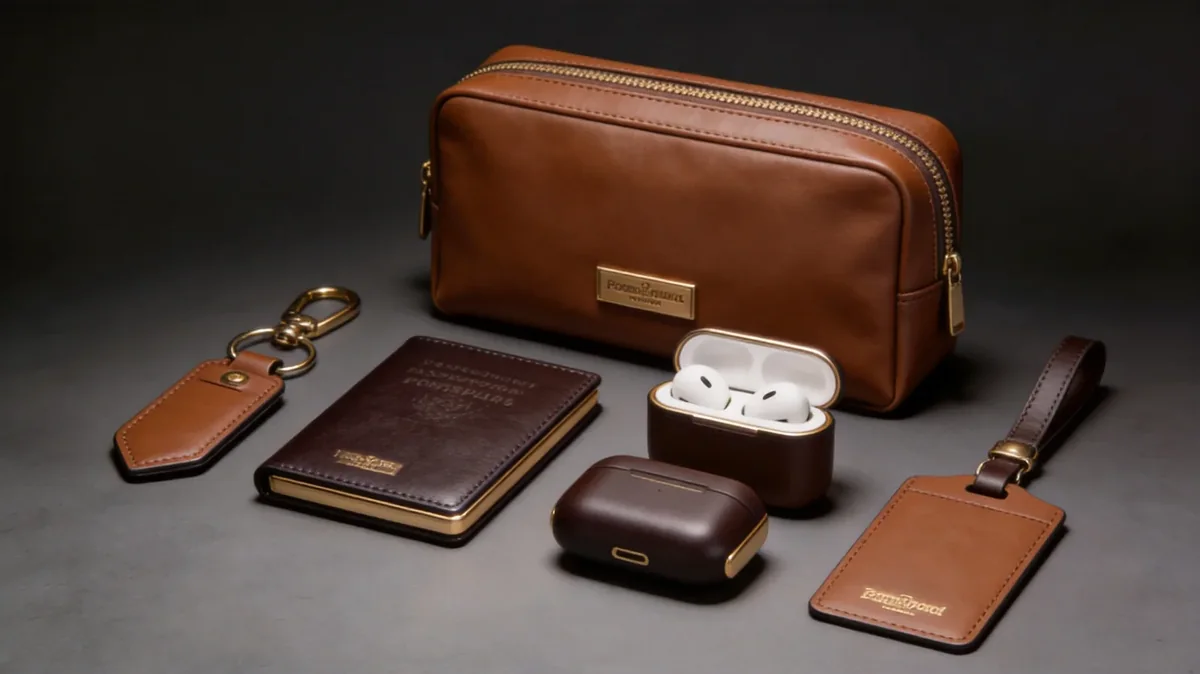
A Milan Capsule That Revised Its Brief Twice
The capsule began as a soft hobo in 1.2 mm suede and ended as a structured top-handle in full-grain calfskin, with two revisions in between and one winter season at risk. The first revision changed the body; the second changed the closure. Neither was unreasonable on its own, and together they moved the sampling window from 8 days to 13 and pushed bulk intake back by about nine days.
What saved the season was not speed but sequence. Because the pattern and the first toile were finished before the closure was chosen, the second revision touched one gate rather than four, and the hide lot already reserved stayed usable. A capsule that revises geometry after panels are cut is a different and considerably more expensive situation.
- Revisions made before the toile is cut cost pattern time only, usually two to three working days.
- Revisions made after panels are cut cost material, since the reserved lot rarely re-cuts at the same yield.
- A held hide lot tolerates a change of hardware far better than it tolerates a change of panel geometry.
- The expensive revision is the quiet one: a lining swap that forces a fresh compliance test on the lot.
What Premium Means Once It Is Measured
Premium is a measurable position rather than a mood. On the bench it means full-grain calfskin held to 1.2-1.4 mm, every fold skived to 0.6-0.8 mm, stitch density at 8-9 stitches per inch, and an edge finish built from three thin coats rather than one thick one. Each of those numbers can be checked on a finished piece without asking anyone for an opinion.
Numbers that separate premium work from middling work
- Leather substance: full-grain calfskin at 1.2-1.4 mm, since split leather rarely holds a structured body.
- Skiving: folds reduced to 0.6-0.8 mm so corners sit flat instead of standing proud.
- Stitch density: 8-9 stitches per inch on structural seams, and 9-10 on handles.
- Edge build: three coats of roughly 0.12 mm each, sanded between passes.
- Plating: 0.15-0.3 µm on brass components, proved at 24 hours of neutral salt spray.
The Seven Gates From Brief to Bulk
Every capsule passes through the same seven gates: brief and technical pack, material reservation, pattern and toile, sampling, spec freeze, bulk, then audit and packing. The gates do not change for a smaller label; only the resourcing inside them does, which is why a first capsule should be planned around the sequence rather than around a date someone hopes to hit.
- Brief and technical pack: 3-5 days, or 2-3 where a reference style already exists.
- Material reservation: 15-20 working days to hide arrival on a newly named European lot.
- Pattern and toile: 2-3 days, usually two toiles on a structured body.
- Sampling: 6-10 working days, extending to 12-15 where a custom lock must be proved.
- Spec freeze: 1-2 days for signature, after which any change is recorded and priced.
- Bulk: 35-50 days from intake, covering cutting, skiving, assembly and finishing.
- Audit and packing: 3-5 days, including correction and re-check at AQL 2.5.
Material Decisions That Survive a Season
Material choice is where a capsule either holds up in a buyer's hands or does not. Full-grain calfskin, vegetable-tanned vachetta and corrected-grain bovine each behave differently at the fold, under a load test and after six months on a shelf, and the differences become visible well before they become structural.
| Material | Substance | Where it works | What to watch |
|---|---|---|---|
| Full-grain calfskin | 1.2-1.4 mm | Structured bodies, top handles, panel-heavy shapes | Shade drift between lots; hold one lot per colourway |
| Vegetable-tanned vachetta | 1.4-1.8 mm | Handles, trims, unstructured bodies meant to patina | Darkens with handling; age a swatch before committing |
| Corrected-grain bovine | 1.0-1.2 mm | Linings, gussets and interior panels | Coating adhesion; verify to ISO 11644 on the lot |
| Suede and nubuck | 1.0-1.2 mm | Soft bodies, bucket and drawstring shapes | Nap direction across panels and cropping marks |
| LWG-audited tannery lots | 1.2-1.4 mm | Any style sold into the EU or the UK | Certificate scope must name the tannery, not an agent |
Two of those rows decide most disputes. Shade drift between lots is the most common reason a re-order looks different from the launch drop, and coating adhesion on corrected grain is the most common reason an interior panel lifts within a year. Both are preventable by holding one lot per colourway and testing it before any panel is cut.
Hardware Is the Part That Dates a Bag
Leather ages; hardware dates. A closure taken from a stock catalogue in 2019 still reads as 2019 in 2026, whereas brass with a proved finish cycle and sensible plating thickness looks deliberate a decade on. That is why hardware deserves its own sampling round instead of being settled at the same meeting as the lining colour.
- Stock brass components arrive in 20-25 working days; bespoke developments take 30-40 including tooling.
- A turn-lock should be proved on the bench for at least 5,000 open and close cycles before panels are cut.
- Plating below 0.15 µm tends to show wear at contact points within a season of retail handling.
- Feet, D-rings and strap ends should share one finish family, or the bag reads as assembled from parts.
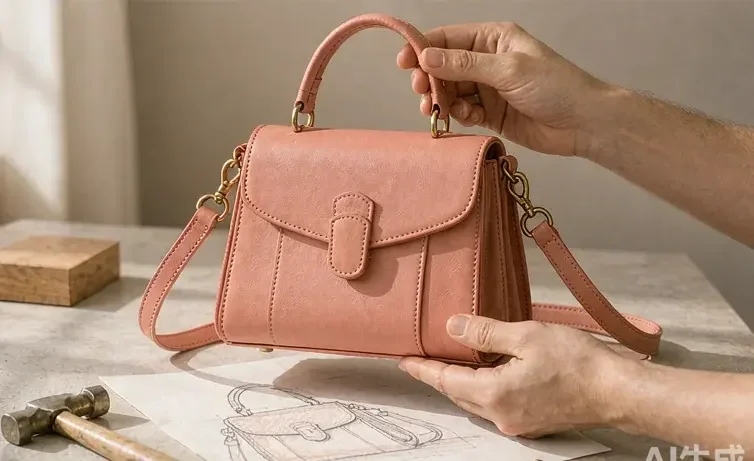
Tolerance, Not Taste: How Finish Is Judged
Finish arguments are settled with instruments rather than adjectives. Seam alignment is checked against the pack, edge thickness against a gauge, and colour against a blue wool reference under controlled light. Where a buyer disputes a delivery, the record built at these checks is what resolves it, and the absence of that record is what turns a small defect into a lengthy argument.
- Panel thickness after skiving
- 0.6-0.8 mm at folds, read on a dial gauge at five points per panel
- Stitch density
- 8-9 stitches per inch on structural seams, tolerance ±0.5 per inch
- Edge build
- Three coats of about 0.12 mm each, sanded between passes
- Colour fastness to rubbing
- ISO 105-X12, dry and wet, target grade 4 or better
- Finish adhesion on coated leather
- ISO 11644, checked per lot rather than per hide
A capsule that records those five values at sampling has something a buyer can accept or reject on evidence. A capsule that records nothing ends up negotiating, and negotiation at the end of a run always costs more than measurement at the start of one.
Where Designer Capsules Commonly Overspend
First capsules overspend in three predictable places: bespoke hardware commissioned before the body is settled, exotic accents that raise the permit burden, and presentation packaging specified before the unit cost is known. None of the three improves the bag in a buyer's hands in proportion to what it costs.
Bespoke closure too early
Tooling for a custom lock runs 30-40 working days and commits you before the body is frozen. Prove the body on stock brass first, then commission the closure for the second drop.
Exotic accent on a first drop
A listed skin brings permit documents that must reconcile with the commercial invoice, and its panel is usually cut last. Launch in calfskin and introduce the second version a season later.
Packaging decided too soon
A rigid presentation box with dust bag can add USD 4.80 per unit before freight. Settle packaging once the unit cost is known, not while the silhouette is still moving.
Compliance Papers Before the Shipment
Compliance is booked per lot and per destination, which is why it belongs in the plan rather than at the port. REACH Annex XVII restricts certain substances in articles placed on the EU market, California Prop 65 governs listed substances for the United States, and EU Regulation 1007/2011 governs fibre naming on any textile element of the bag.
- Book testing when the lot is named, since reports are issued against that lot and not against a material family.
- State every destination market at quotation, because one lot may need two sets of paperwork.
- Keep CITES documents aligned with the commercial invoice wherever a listed skin is involved.
- Ask for the tannery's Leather Working Group scope and check that it names the tannery itself.
What to Send Before Day One
Day one produces a real calendar only when it begins with enough information. Dimensioned drawings or a reference piece, the material direction, quantity per style and colourway, destination markets and the date the goods must reach the warehouse are the five inputs that make everything else computable.
- Dimensioned drawings, or a reference piece with every intended change written down beside it.
- A material direction, ideally a named tannery lot or a swatch you are willing to have matched.
- Quantity per style and colourway, remembering that MOQ 500 pcs applies to each combination.
- Destination markets and the immovable date, so the run can be planned backwards from it.

The programme runs across 7 production lines with about 200,000 pcs per month of capacity and has held export experience since 2014, carried out through our validated partner factory Quanzhou Yingming Bags, an SGS-validated site. Inspection is drawn at AQL 2.5 under ISO 2859-1, and third-party inspection can be arranged alongside the internal audit.
Bring your capsule before the brief moves again
Send your drawings, target dimensions, quantity per colourway and the date you cannot move. You will receive a gate-by-gate calendar with every finish tolerance recorded, within two working days. Request a quote.
Frequently Asked Questions
What does premium handbag production deliver that a standard run does not?
It delivers recorded repeatability rather than a similar appearance. Panel substance, fold thickness, stitch density and edge build are measured at sampling and again during bulk, so the 500th piece can be compared against the first with instruments. A standard run is judged on whether the bag looks right, which is a weaker guarantee once several hundred units are involved.
How many pieces does a designer capsule have to order?
MOQ 500 pcs applies per style and per colourway, so a launch in three colourways of one body is three separate commitments. Most first capsules start with one body in two colourways to keep the commitment manageable while still reaching the volume at which the line can hold tolerance consistently.
How long does sampling take for a structured body?
Six to ten working days for a standard build, covering the first sample, measurement against the pack, a written correction list and one corrected round. A structured body with reinforcement and a framed opening usually takes 12-15 days, because the panels and the closure have to be proved together before any leather is committed to bulk.
Can a capsule change its brief after sampling has started?
Yes, but the cost depends entirely on which gate the change lands in. A hardware change before panels are cut costs days; a geometry change after cutting costs the reserved lot, because panels cannot be re-cut at the same yield. The written correction list at sampling exists precisely to move changes into the earliest gate.
Which leather substance suits a structured top-handle bag?
Full-grain calfskin at 1.2-1.4 mm is the usual answer, because it holds a panel without reinforcement becoming bulky and still takes a clean edge. Below about 1.0 mm the body needs heavy interlining to stand, which adds weight at the fold and tends to crack the edge finish over a season.
How is edge finish measured on a premium bag?
By build rather than by eye. Three thin coats of roughly 0.12 mm each are applied and sanded between passes, giving an edge that sits flush with the panel and stays flexible at the fold. A single thick coat looks acceptable on a sample and then cracks at the corner once the bag is carried.
Why does hardware need its own development window?
Because it is the only element whose lead time is set outside the workshop. Stock brass arrives in 20-25 working days and bespoke tooling takes 30-40, while a lock also needs a proving cycle on the bench. Settling hardware late pushes the whole capsule, since panels cannot be cut to a closure that has not been dimensioned.
What inspection standard applies at the end of the run?
AQL 2.5 under ISO 2859-1, with general inspection level and lot size agreed before bulk begins. For a 500 pcs lot at level II the plan uses code letter H: 50 units drawn, accept 3, reject 4. Third-party inspection can be arranged alongside the internal audit where a retailer asks for it.
Which compliance documents are needed for the EU and the US?
REACH Annex XVII restrictions apply to articles placed on the EU market, EU Regulation 1007/2011 governs fibre naming on textile elements, and California Prop 65 governs listed substances for the United States. Reports are issued against a named lot, so testing is booked once the material is reserved rather than once the goods are finished.
How much does presentation packaging add per unit?
A rigid presentation box with a dust bag and tissue typically adds USD 4.80 per unit before freight and duty. That is a meaningful share of a first capsule's landed cost, which is why packaging is usually settled after the unit cost is known and after the silhouette has stopped moving.
What should a brand send before the first meeting?
Dimensioned drawings or a reference piece with the intended changes noted, a material direction or swatch, quantity per style and colourway, every destination market and the date the goods must arrive. Those five inputs allow a calendar, an inspection plan and a compliance list to be prepared rather than estimated.
How is a re-order different from the first run?
Every development gate is already closed: the pattern exists, the lot can be held and the compliance reports may already cover the material. What remains is bulk and packing, so a genuine re-order on a frozen pattern reliably lands near the short end of the 35-50 day range.
People Also Ask
What is MOQ in premium handbag production?
MOQ 500 pcs per style and per colourway. It reflects the point at which cutting yield, line set-up and finish consistency settle enough for the tolerance recorded at sampling to hold across the whole run rather than across the first dozen pieces.
Why does premium handbag production take longer than a standard run?
Because drying, curing and proving steps cannot be compressed. Skived folds, three-coat edges, plated components and per-lot laboratory reports each carry their own interval, and removing those intervals moves error into bulk where it is far more expensive.
How do you measure handbag finish quality?
With instruments against the technical pack: panel thickness on a dial gauge, stitch density per inch, edge build by coat count, colour fastness to ISO 105-X12 and coating adhesion to ISO 11644. Measurements taken at sampling become the reference for the bulk audit.
Which leather is best for a structured handbag?
Full-grain calfskin at 1.2-1.4 mm. It holds panel geometry without heavy interlining, skives cleanly to 0.6-0.8 mm at folds, and takes a multi-coat edge that stays flexible at the corner where structured bodies usually fail first.
When should a designer brand start a production programme?
About four months before a launch date for calfskin with stock hardware, and closer to six months where a bespoke closure or a listed skin is involved. Both of those are governed by tooling schedules and permit authorities outside the workshop.
Sources and further reading
Every figure on this page is either our own programme data or attributed below. Open the originals before you write them into a specification.
- ISO - International Organization for StandardizationISO Publisher of ISO 2859-1 for sampling plans, ISO 105-X12 for colour fastness to rubbing and ISO 11644 for finish adhesion, all referenced in the tolerance table above.
- Leather Working GroupLeather Working Group Tannery audit protocol used when a European lot is reserved; the certificate scope should name the tannery itself rather than an agent.
- ECHA - European Chemicals AgencyEuropean Chemicals Agency Administrator of REACH, whose Annex XVII restrictions apply to articles placed on the EU market and are tested per named material lot.
- CITES - Convention on International Trade in Endangered SpeciesCITES Appendix listings decide which permit documents accompany a listed skin; those documents must reconcile with the commercial invoice before shipment.
- California Proposition 65Office of Environmental Health Hazard Assessment The California list governing warnings and listed substances for goods sold into the United States, booked per destination market at quotation.
- FashionUnitedFashionUnited European fashion market reporting on capsule launch timing and retail buying calendars, used here for the seasonal planning advice.